Sports
Troy Aikman ‘never lost at anything.’ He’s just now starting to enjoy it.


DALLAS — After he’s revved the room and made his pitch, Troy Aikman walks to the back and starts tending bar. “What can I get ya?” he asks, flashing that famous half-smile over and over, probably because he knows the only beer on tap is his.
It’s a Monday afternoon, late summer, just north of Dallas. Inside the events room at Andrews Distributing, employees of the biggest beer distributor in Texas are not merely allowed to enjoy a cold one at the end of the workday; they’re encouraged. Aikman, the Dallas Cowboys icon, Hall of Famer and “Monday Night Football” analyst, has just wrapped a raucous sales rally for Eight, the beer company he founded in 2022, and now he’s manning the tap.
“How about that pour?” Aikman says, serving one up.
He knows he doesn’t have to be here, playing celebrity bartender, posing for photos, signing autographs, sharing stories about how Jimmy Johnson’s urgency shaped his Cowboys teams and how his own father’s work ethic shaped him. He’s calling a game in Canton in three days and has a trip to New York to celebrate his daughter’s birthday in between. A video message would’ve sufficed.
But that’d be too easy. He hates easy.
He and his team worked on the recipe for two years. Cases would show up on his doorstep from Oregon State University’s fermentation science program, which he partnered with, and they’d do blind taste tests over Zoom. “Can we make it cleaner?” Aikman kept asking.
He was never going to just slap his name on the label. He respects the business too much. Aikman’s first gig in the beverage industry came in college, after his coach at Oklahoma, Barry Switzer, lined him up a summer job before he transferred to UCLA. Imagine this scene today: One of the most talented quarterbacks in the nation spending his offseason loading trucks, delivering cases, stocking shelves and building out displays in grocery stores across the state.
“My NIL deal,” Aikman jokes.
Star athlete or not, working wasn’t a choice. Kenneth Aikman had his son shingling the roof at 12 and clocking in for his first job at 13. “He treated me as a man from the time I was 6,” Troy says. In high school he’d spend his Friday nights on the football field and his Saturday mornings installing tires, changing out dead batteries and fixing window units at the Western Auto down the road. A lesson he learned then is printed on every can of his beer now: No shortcuts.
Aikman believes it to be the spine of his success: without that wiring, there are no Super Bowls, no 23-year broadcasting career, no booming business ventures. On paper, his was the archetype American success story, the country kid who made good because he was raised right. GQ once put him on the cover above the headline, “God’s Quarterback.”
But there’s another side to the story that God’s Quarterback rarely talks about. The success everyone saw masked the inner turmoil no one knew about. Aikman’s wrestled with it for decades, warring against his own happiness, chasing a finish line he isn’t even sure exists.
Then one day he looked up and realized his second marriage was crumbling.
“A failure,” Aikman calls it. “That was my rock bottom.”
Even now, years later, he’s embarrassed talking about it.
“For me,” he says over breakfast one morning in Dallas, “contentment was always a four-letter word. I never wanted to be content. I didn’t wanna be around anyone who was content. That’s just not a place I could land.”
He’s 57. He hasn’t taken a warm shower in years. He starts each morning with a cold one and a 20-minute walk in low-level sunlight to set his circadian rhythm. He’s in bed by 9 p.m. unless he’s calling a game.
He lifts four days a week and adheres to a recovery routine that would probably make half the starting quarterbacks in the league feel guilty: cold plunges, stints in the sauna and hyperbaric chamber, plus regular red-light and plasma therapies. For years Aikman jogged every summer afternoon at 3 p.m. — when it’s typically pushing 100 degrees in Dallas — partly because he craved the challenge, partly because he liked how it felt afterward. He needed to hurt.
“If I didn’t keep myself in shape,” he says, “I’d feel like a fraud.”
He tracks his sleep. He reads about biohacking. “I’m obsessed,” he admits. He carries around a gallon jug of water everywhere he goes, filling it up three times a day. Wanting more flexibility, he took up yoga this spring, and for the first three months it absolutely wrecked him. “It’s a b—-,” he says. “Hardest thing I’ve ever done.” Class would finish and he’d just lie there, soaked in sweat, unable to move. The quarterback who once finished a game as a rookie after being knocked out cold — Aikman had blood dripping from his ear on the sideline — couldn’t even muster the strength to stand.
He’s come to love it. “I feel like I can do everything I did when I was in my 30s,” he says.
Even play in an NFL game?
“If I had to, yeah,” he says.
The work is what always separated him. He didn’t have Dan Marino’s arm or Steve Young’s improvisation. But the work never scared him. The punishment, either.
Daryl Johnston, a teammate for 11 seasons in Dallas, remembers Aikman walking up to him during the 1993 NFC Championship Game against the 49ers, looking confused. “38-21?” Aikman asked, reading the scoreboard aloud. “How’d we get on them so quick?” Johnston stood there, stunned.
The starting quarterback didn’t even know the score?
Then, after he watched Aikman slip an ammonia cap under his nose and inhale, Johnston put it together. The QB had taken a vicious shot to the head early in the game. Ninety minutes of his memory was gone. The Cowboys won their second straight Super Bowl seven days later.
“I’ve always felt that my success as an athlete, and as a broadcaster, is not because I’m the most talented guy in the room,” Aikman says. “It’s because I’m willing to do what most people are not.”
He’s also willing to say what others won’t. It’s why Aikman remains one of the top TV analysts in sports: he not only prepares like he’s still playing, but he’s blunt when others tend to back away, unafraid to call it like he sees it. He’s at his best when he says what the fans at home are thinking.
“Troy might be the most honest guy ever,” says Norv Turner, his former offensive coordinator in Dallas.
The routine never changes. Aikman needs it. After the game ends Monday night, he takes notes while he watches a replay on his flight home — Aikman owns his own jet and flies private to and from every game — then starts prep for the following week first thing Tuesday morning. He designed his own spotting boards before his first year in the booth, back in 2001, and he’s been using them ever since. He prints them out on Thursdays, color codes them, then adds notes all the way up until kickoff. He refuses to go into a game anything less than completely prepared.
“It took me about a week of us working together to realize why the guy had won three Super Bowls,” says his on-air partner and close friend, Joe Buck. The pair are the longest-tenured broadcast team in NFL history. Their 23rd season together begins Monday night outside San Francisco, where they’ll call 49ers-Jets.
A few years ago, Aikman sent the spotting boards he uses for broadcasts to Greg Olsen, who was taking his old job at Fox; this spring, he sent them to Tom Brady. (Courtesy of ESPN)
In March 2023, after Aikman and Buck’s first year at the network, ESPN replaced a director and producer on the MNF team. Rumors swirled that Aikman was behind the decision; not true, says a company source. With its first Super Bowl broadcast looming in February 2027, ESPN wanted and needed a better fit for the duo it’s paying a combined $33 million annually. Execs learned Aikman wanted to be coached hard, no different than when he was growing up in Oklahoma or suiting up for the Cowboys. The personalities simply hadn’t meshed.
Aikman’s style isn’t for everyone. He knows this. But he’s not above showing others what works for him: a few years ago, Aikman sent his spotting boards to Greg Olsen, who was stepping into his old job at Fox; this spring he did the same with Tom Brady, who’ll slide into Olsen’s seat beginning Sunday. It was important to Aikman to pay it forward. It’s what John Madden did with him.

GO DEEPER
How Tom Brady prepared for his Fox NFL broadcasting debut
He doesn’t know how Brady will do as a broadcaster, but he expects the transition will take time. “It’s not an easy thing to settle into right away,” Aikman says.
Analysts live in 15 to 20-second soundbites. Then the ball is snapped. Someone told Aikman early on that calling a game is like a prizefight — “Body blows, body blows, body blows,” he explains, “then every once in a while you have a chance at a knockout punch.” It took years for him to learn that.
“There’s this idea that ‘I have this wealth of knowledge about the game, and now I get to take people behind the curtain,’” Aikman says. “You don’t have that kind of time. And it’s gotten harder over the years because teams are playing faster.
“Whether it’s Tom or Greg or Tony (Romo), you sort of figure that out as you go.”
Aikman also doesn’t downplay the competitive juices simmering in an industry that has seen salaries explode in recent years. It’s there, whether it’s discussed publicly or not. Two years after Romo made headlines, signing an extension with CBS that pays $18 million a year, Aikman jumped to ESPN on a similar deal. Brady hasn’t even called a game yet and is already the highest-paid commentator in history, starting a 10-year, $375 million deal with Fox.
“That’s the competitive nature of me, and I know these guys are competitive as well,” Aikman says. “Every one of us wants to be the best. But whether it’s a new guy coming in or other guys being well-received, it doesn’t affect or change my approach. I go about it the same regardless.”
Maybe it doesn’t change his approach. But Romo’s deal, Olsen’s popularity, the hype surrounding Brady’s debut … it’s caught his attention, right?
Buck, who knows Aikman about as well as anyone, has no doubt.
“We’ve never really talked about this, but it’s only natural. It’s what drives him to watch all that film.”
He’s raging on the sideline at Texas Stadium during a loss late in his career, ripping into his offensive line. “That’s a f—— embarrassment!” he screams. “F—— junior league!”
He’s standing next to an assistant coach, fuming about how far they’d fallen. “I’m tired of being the guy who’s gotta run down everybody’s throat all the time … why don’t we have a coach who does that?”
Aikman hates these clips.
“Man, I don’t want my daughters seeing that stuff,” he’ll tell his old teammates.
“Troy,” Johnston will remind him, “that was part of your greatness.”
Most only remember the trophies. Aikman remembers how much the beginning humbled him and how much the end hurt. He went 0-11 as a rookie and used to walk off the field grumbling, “What’s it take to win a game in this league?” Two years later, fully healthy, he stood on the sideline and watched Steve Beuerlein start the first playoff game of the Jimmy Johnson era.
Turner had met him a year earlier. Aikman’s arm was in a sling. The Cowboys’ new OC decided to make a joke to lighten the mood.
“We gotta get you to get the ball out a little quicker,” Turner told him.
Aikman didn’t laugh.
Even as the dynasty took off, he struggled to enjoy parts of the climb. Aikman still remembers the visitor’s locker room at Candlestick Park, just after they’d beaten the 49ers to advance to their first Super Bowl. Johnson stood on a table and screamed “How ’bout them Cowboys!” Players yelled. Players hugged.
The QB walked to the shower, muttering under his breath, “Well, if we don’t win in two weeks, this won’t mean sh–.”
He felt an immense weight before the game, mindful of how it’d shape his legacy. He knew there was no going back. “In three and a half hours,” Aikman told himself on the field, “this is either going to be the greatest day of my life or the worst.”
He carved up the Bills’ secondary for four touchdowns in a 52-17 rout. A few hours later, the game’s MVP couldn’t find anyone to celebrate with. Aikman walked into the Cowboys party with his girlfriend at the time, looked around, saw nothing but fans wanting autographs and sponsors wanting photos — “Jerry (Jones) making money,” he says — and walked out. He went back to the hotel, looking for his teammates. His girlfriend fell asleep. He called room service and ordered some beer. He called his parents’ room. No answer. Called his sister’s room. No answer.
“No way in hell I was going to bed,” he says.
He ambled down to the lobby, bumped into some members of the Dallas media and threw back beers with them until the sun came up. He showed up to his MVP press conference the following morning having not slept a wink, head still ringing, “trying not to say anything stupid.”
He decided he was in charge of the Cowboys’ Super Bowl parties from there on out.
“We got better as we went along,” he says with a laugh.
He was the first quarterback to win three Super Bowls in four seasons, and his story was irresistibly American: he was the son of a rancher from Oklahoma, the No. 1 pick with the icy demeanor who’d stand in the pocket, take the hit and fire it on the money.
His name seemed dreamed up by the Football Gods. He was Clint Eastwood in shoulder pads.
But there always seemed to be a joylessness to him. He was so … robotic. Cowboys owner Jerry Jones once said that fans would write him letters, asking why his star quarterback didn’t have more fun on the field.
“I wasn’t out there to be anybody’s friend,” Aikman says.

“I wasn’t out there to be anybody’s friend,” Aikman says of his playing days. (George Gojkovich / Getty Images)
By the time they won their third title, in January 1996, Aikman knew they were slipping. “Hanging on by a thread,” Johnston says. They escaped Super Bowl XXX with a 27-17 win over the Steelers largely because Pittsburgh quarterback Neil O’Donnell tossed two errant second-half interceptions. Aikman barely threw for 200 yards.
The Cowboys were lined up in victory formation for the final snap when Steelers linebacker Kevin Greene let them hear it. “You know we kicked your ass!” Greene screamed from across the line of scrimmage. “You know we should’ve won this game!”
Aikman smirked.
“Yeah, well guess who’s getting the trophy?” he shouted back. “Set hut!”
But in postgame interviews, he could barely allow a smile. “Relief” was the word he kept using.
Johnson had been gone for two years, following a nasty falling out with Jones, two men wrestling over credit while their egos destroyed a dynasty from within. Everything the coach had built — everything Aikman had bought into — was slowly unraveling. His father had taught him there was a certain way of doing things; Johnson had done the same. No shortcuts, remember. Now Aikman was realizing that without that drive, he was miserable.
He once fumed when Switzer, hired to replace Johnson after the second title, called off practice when half the wide receivers room showed up hungover. “What am I supposed to do, cut Michael Irvin?” Aikman remembers Switzer asking him.
“No, you don’t cut Michael Irvin,” Aikman told him. “But you cut that guy, and that guy, and that guy.”
By 2000, Aikman’s last year in Dallas, he was taking pain-killing shots before every game just to slog through another beating. The Cowboys went 5-11. He decided midway through the season he’d never play for them again. It wasn’t the back issues. It wasn’t the concussions. He was disgusted at what America’s Team had become.
What pissed him off most — and what still irritates him to this day — is that it wasn’t the 49ers or Packers that dethroned them. The NFL’s team of the 90s sabotaged themselves.
“Not one time did you ever read Michael Irvin complaining that he wasn’t getting enough credit, or Emmitt Smith complaining he wasn’t getting enough credit, or me complaining I wasn’t getting enough credit,” Aikman says, getting a bit heated over breakfast. “Every player on those teams did what we had to do to win.
“And yet the two guys who led the organization couldn’t do it. That’s the part that was bullsh–.”
Turner puts it this way: “Deep down, Troy thinks they could’ve won a couple more.”
Ask Aikman which of the current coaches he’d like to play for, and his answers aren’t all that surprising: Kyle Shanahan, Sean McVay, Matt LeFleur.
Then he thinks about it a little more, and his response is telling.
“Tom (Brady) is gonna laugh at this,” he finally says. “But I would have loved to play for Bill Belichick.”
Dad would always ask him what he wanted to be when he grew up, and Troy would always give him the same answer: professional athlete. As a kid, he’d spend nights alone in his bedroom, practicing his signature, perfecting it for the day he started getting autograph requests.
Kenneth Aikman took no issue with his son’s ambition — he just wanted him to know what it’d require. Around the house, he was rigid and unrelenting. When he laid down orders, he didn’t repeat himself.
“In some ways it was really good for me,” Troy says. “But you give up a lot of childhood in the process.”
The family moved from California to Oklahoma when Troy was 12. His dad hired two carpenters and built their house from the ground up. “A modern-day Wyatt Earp,” Troy has called him in interviews. “He instilled the fear of God in me growing up.”
His older sisters, too. Once, after one of them left a rotting banana peel on the kitchen counter, dad grew furious. “If I find another one,” he warned, “you’re gonna eat it.” Not long after, he did. And he stuck to his word.
It’s not a story Aikman tells often.
He was actually better at baseball than football growing up, and he wasn’t even planning on going out for the high school team until his dad asked him about it. “You know football sign-ups are today, right? You’re signing up, right?”
Troy didn’t have it in him to tell him no. He needed to show the toughest man he knew that he was tough, too.
The resolve he built as a teenager never eased. Time and success only hardened it. He’d play half the NFC Championship Game with no memory of it. He’d unload on coaches and teammates when the standard wasn’t being met. He’d get pain-killing shots just so he could be on the field for a five-win team.
Even in retirement he felt a pull, like there was more to prove. He almost came back three times. He was ready to play for the Chargers in 2001; San Diego signed Doug Flutie instead. Then-Eagles coach Andy Reid called him in 2002 after Donovan McNabb broke his leg; Philadelphia was 7-3 and needed a quarterback for the playoff push. Aikman mulled it overnight but decided against it. A year later, the Dolphins thought they were a quarterback away. Turner was calling the plays. Aikman was in. He started training. Ultimately, Miami general manager Rick Spielman couldn’t get comfortable with Aikman’s injury history.
Broadcasting scratched an itch, but slowly Aikman learned the void would never again be filled. “You know the thing about this business that kills me?” he told Buck their first year together. “There’s no scoreboard.”
GO DEEPER
2024 NFL media preview: What to expect from Tom Brady, Netflix and Bill Belichick
He poured himself into other pursuits. A restaurant. A car dealership. For a time he was part-owner of the San Diego Padres, then a NASCAR team. He quit golf for a while because it drove him nuts. “I can run a little hot sometimes,” Aikman says.
He moved on to the next thing, and the next thing, and the next thing. It was all he knew to do. Standing still scared him to death.
“There have been times when I’m like, ‘Bro, just chill, you don’t have to chase all this stuff,’” Buck says. “But any idea of him just drifting into a peaceful retirement, sitting on a beach somewhere, that’s just the furthest thing from his mind.”
Years passed. The more Aikman ran from contentment, the more it robbed him of his own happiness. His first marriage fell apart. Then his second. So he went to work on himself, trying to balance something that took years for him to accept: the traits that made him a Hall of Famer were the same ones keeping him from life’s simple joys.
He started meditating daily. He learned he could skip one workout a week and not beat himself up over it. He realized everyone doesn’t think like a quarterback, and that being content wasn’t a sign of weakness — or worse yet, a character flaw.
“It’s taken decades,” Aikman admits. “Not to get weird on you, but it’s taken a lot of personal work … finding it within myself to give myself grace. There was a lot of, ‘Why do I feel this way?’ There’s also been a curiosity that’s allowed me to unlock a lot of locked doors.”
That doesn’t mean the man’s lost his edge. A few years ago, he and Buck were standing on the sideline during a Cowboys walkthrough, prepping to call a game the next day. One of the coaches asked Aikman if he wanted to take a few snaps with the scout team. Are you kidding? He stepped into the huddle, on the wrong side of 50, determined to torch Dallas’ first-team defense.
“I’m gonna challenge them,” he told Buck. “You don’t run the scout team to be bad.”

Buck and Aikman kick off Year 23 of their partnership Monday night. (Courtesy of ESPN)
Aikman’s newest venture taps into some of the same competitive urges. Eight’s launch in 2022 was the biggest of any independent beer in the history of the state. But Aikman wasn’t thrilled with Year 2, so he spent a month recruiting Dave Reny, who at the time was working for Yuengling, to be his new CEO.
At first, Reny hesitated. He liked where he was at.
“Dave,” Aikman told him, “I’ve never lost at anything in my life. I’m not about to lose at this.”
In between the beer and the booth, Aikman devotes his time to his two 20-something daughters, Jordan and Alexa. “He couldn’t be a better dad,” Buck says. He’s got a soft side, his on-air partner vows, even if most don’t believe it. The tough-as-nails, fire-breathing quarterback who’s bitingly honest when he’s calling a game is actually an easy cry. When Aikman gave a speech at Buck’s wedding a handful of years ago, the entire room was left in tears, Aikman included.
Buck still remembers the first time they spoke, back in 2001, a few weeks after Fox paired them together. He nervously called up his new partner. “I know we don’t know each other real well, but I’ve got my St. Louis Children’s Hospital charity golf tournament coming up,” Buck said, “and I don’t know if there’s any chance you could come …”
“I’ll be there,” Aikman told him.
“That side of him’s never changed,” Buck says.
The loyalty runs both ways. During Aikman’s negotiations with ESPN in 2022, the two spoke every day. Aikman made it clear: he wasn’t making the move unless they made the move together.
“He lost a lot of sleep thinking he was going to have to start over,” Buck says. “Fox flashed Olsen and Brady at me before I left. I told them, ‘I’m sure Greg’s gonna be great. I’m sure Tom’s gonna be great. But I know what I’ve got with Troy.’
“We get along. We fit. We genuinely like each other, and that’s a really comforting feeling when you’re doing a Super Bowl for 115 million people.”
Aikman’s never had a problem fighting for his own. Last winter — after resisting for almost 30 years — Jones finally relented and inducted Johnson into the Cowboys Ring of Honor. What few knew was how central a role Aikman played behind the scenes. His coach deserved it. It was a wrong Aikman needed to see righted.
Free, daily NFL updates direct to your inbox.
Free, daily NFL updates direct to your inbox.
Sign Up
Back at the beer distributor in Dallas, Aikman finishes bartending and slips out the back. His plane’s waiting for him. After a busy summer traveling and promoting Eight, he’s anxious to get back to the rhythms of the season. He’s learned to enjoy it more than he did in the past.
More than that, he’s learned he’s allowed to enjoy it.
“I’ve found contentment, if you can believe it,” Aikman says. “And it’s a really good feeling.”
For him peace was a process, long and aggravating, thrilling in moments but draining in others, a journey littered with the triumphs everyone saw and the inner storms no one knew about. Only now does he know one doesn’t come without the other.
That would’ve been too easy, anyway. Troy Aikman’s always hated easy.
(Illustration: Meech Robinson / The Athletic; photos courtesy of JJ Miller Photography and ESPN, Brian Bahr / Getty Images)



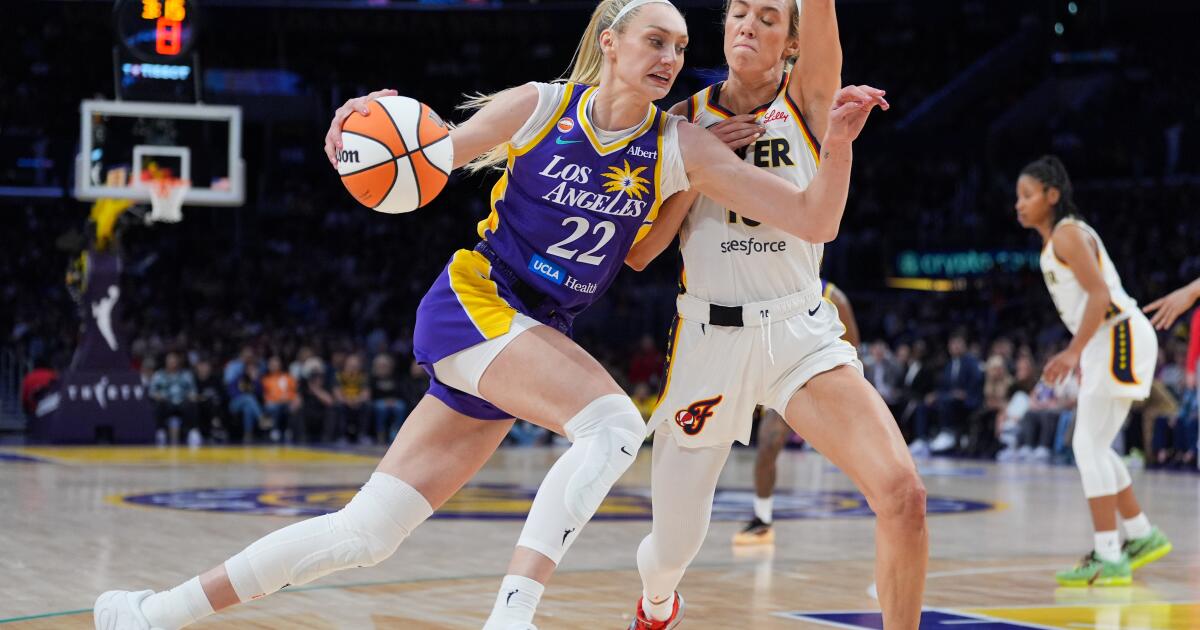
Cameron Brink said she’d appreciate some grace. She really would.
Sparks fans should give her some, because where else is she going to get it?
Certainly not from WNBA refs. Not from opponents with more to play for than ever. Certainly not from the game itself; basketball moves fast, and a bummer can become a bust in a blink.
But Brink, 24, is not on the brink of bust territory, no. Block that thought. Technically, it’s Year 3, but after a torn ACL derailed her as a rookie two summers ago, it’s practically like Year 2 for the former Stanford star. And by design, the WNBA is testing her confidence, her decision-making and her patience as she tries to reestablish herself as one of the WNBA’s best young players.
So, grace.
The recognizable 6-foot-4 forward — she’s the long-blond-haired hooper in the New Balance ads — was the No. 2 overall pick in 2024.
Now she’s her team’s No. 3 option in the post. She’s coming off the bench behind Nneka Ogwumike and Dearica Hamby for the Sparks, who are a modest 6-6 after wins this week over the expansion Portland Fire and the struggling Seattle Storm.
Against the Fire, Brink scored two points and picked up four fouls in nine minutes. Then she went to Seattle and had 15 points in 18 minutes but was pulled with more than five minutes left in the fourth quarter after getting her third, fourth and fifth fouls in 86 seconds. (WNBA players get six fouls before being disqualified.)
For the season, Brink has been called for 49 fouls in 208 minutes. A foul about every four minutes!
They’re silly fouls and they’re phantom calls. Egregious and ticky-tack. Costly and common. A real fouled-up buffet. She sets screens that get scrutinized as if by the most vigilant TSA agent. And sometimes, yes, she’s doing the accidental tripping. Other times, the officials are.
Her reputation precedes her, so everyone gets a superstar’s whistle when being defended by Brink. Opponents bake it into their game plans.
That can’t continue.
All that fouling is hindering Brink’s development because it’s robbing her of important in-game reps — which she needs, foremost, to figure out how to stop fouling.
Sparks forward Cameron Brink, left, blocks the shot of the Tempo’s Laura Juskaite during a game last month.
(Jeff Lewis / Associated Press)
“At the pro level,” said Tara VanDerveer, Brink’s coach at Stanford, “every young player always has a lot of work to do. And I saw her make a three. I see her block shots. She rebounds, she can handle the ball, she’s unselfish, she’s a terrific talent. But there’s always things players need to work on.”
We know what Brink’s thing is.
“She has to be disciplined,” VanDerveer said. “And if you want something so badly, if you want to be an All-Star someday or make the Olympic team, you’ve got to be dependable … and I think anyone can change, if it’s behavior they recognize is not in their best interests or not in their team’s best interests. It’s hard, but it’s something I think people can do.
“That’s what Cam is working on.”
And, VanDerveer added, “I’m really so excited that Nneka is there, because she will give her such great guidance and mentorship.”
And grace. Brink is getting that from Ogwumike — also a former Stanford star, the Sparks legend returned to L.A. this season after two seasons in Seattle — and her other teammates.
“I just do my best to lead by example,” Ogwumike, 35, said. “But then also let [Brink] know that she’s very capable, that she’s more than capable, which is exactly why she’s here with us and it’s exactly why we need her on this team.”

Sparks forward Cameron Brink, wearing a facemask, controls the ball while defended by Sun forward Raegan Beers.
(Joe Buglewicz / Getty Images)
But how long will Brink get grace from the Sparks in the what-have-you-done-for-me-lately business of basketball?
The foul trouble tells us why a win-now team wouldn’t trust her, why the Sparks would give meaningful minutes to two veteran post players ahead of her. Why they wouldn’t prioritize Brink’s development alongside winning as they strive to snap a previously unthinkable five-year playoff drought.
And what about fans? How patient will you all be with a player who was drafted immediately after Caitlin Clark and five spots in front of Angel Reese?
These days, that might depend on what the parlay calls for.
Or, preferably, whether you remember Brink’s first 15 WNBA games. All starts, all signs pointing to stardom. She showed up in 2024 throwing lavish block parties. Her 2.3 blocks per game were message-sending spikes, like what Lisa Leslie used to enthrall Sparks crowds with.
From the jump, she had guys coming to games at Crypto.com Arena wearing her No. 22 jersey and little girls arriving in groups with No. 22 painted on their cheeks and “I love Cam Brink” signs in hand.
And then the torn ACL cost her 25 games of her rookie season and another 25 last season, plus her spot on the United States’ Olympic 3×3 women’s basketball team in Paris in 2024.
She had to start over. Lost a lot of ground. But you see that masked woman stuck on the Sparks’ bench for all but 17 minutes per game?
You can’t miss her. She’s looking uncomfortable in protective facial gear that either hinders her breathing or her peripheral vision, her only options to protect the torn septum she suffered in a victory over the Las Vegas Aces last month.
She’s the one with the 6-8 wingspan who’s averaging 9.2 points, 4.3 rebounds and 1.5 blocks while shooting 52.1% from the field in her limited minutes.
She’s still Cameron Brink. Between fouls, she’s fluid and fast and covers more of the court than almost anyone in the WNBA, able to leap from defending guards to centers in a single bound.
“It’s just looking at every day as a new opportunity to learn and grow and not getting too bogged down when things don’t go exactly as you planned,” Brink told me. “Because more times than not, things are not going to go how you want them to. And that’s life. So I just want to be able to put my best effort out there every single night.
She knows what the Sparks need from her: “To perform, just come on the floor and compete.”
To prove she can stay on the floor to compete.

NEWYou can now listen to Fox News articles!
When will Team USA lose in the 2026 FIFA World Cup? Or, will it not lose at all?
Let’s check out the odds for the Americans’ stage of elimination at FanDuel Sportsbook, as of June 11.
Team USA — Stage of elimination odds
Last 32: +170 (bet $10 to win $27 total)
Last 16: +220 (bet $10 to win $32 total)
Group stage: +500 (bet $10 to win $60 total)
Quarterfinals: +500 (bet $10 to win $60 total)
Semifinals: +1200 (bet $10 to win $130 total)
Runner-up: +2800 (bet $10 to win $290 total)
Outright winner: +6000 (bet $10 to win $610 total)
This page may contain affiliate links to legal sports betting partners. If you sign up or place a wager, FOX Sports may be compensated. Read more about Sports Betting on FOX Sports.
The outlook appears to be … ho-hum?
If the odds ring true, the Americans are expected to make it out of the group stage but fall in the first knockout stage game.
How would that result stack up against previous results? Well, at the 2022 World Cup, Team USA made it to the Round of 16, which was viewed as a stellar accomplishment.
The U.S. men’s national team currently has 60-1 odds to lift the 2026 FIFA World Cup trophy this summer (Photo by Omar Vega/USSF/Getty Images).
In 2018, the USA did not qualify for the World Cup, and in 2014 and 2010, the Americans also made it to the Round of 16. Their best result this century occurred in 2002, when the Americans made it all the way to the quarterfinals before being eliminated.
In 1998, Team USA lost in the group stage, in 1994, it fell in the Round of 16, and in 1990, it also fell in the group stage.
With the expanded World Cup format, 32 teams will advance to the knockout stage (out of 48), giving teams a much better chance of getting out of the group stage than in previous tournaments. In past years, only 50% of the field advanced to the knockout round, but now 66.6% of teams will move on.
With that being said, anything less than a knockout round appearance on home soil would be viewed as a major failure this summer for Team USA.
The second result on the oddsboard is the “Last 16,” meaning the USA would make it out of the group stage and win one knockout stage game, before falling in the second knockout stage game. The third result is that the Americans failed to make it out of the group stage, and the fourth is that they made it to the quarterfinals, meaning they won two knockout stage games.
Making the semis, losing in the championship game and winning the championship are the three results with the longest odds.
The U.S. begins its World Cup journey on Friday as the Stars and Stripes face Paraguay at Los Angeles Stadium. Getting off to a fast start in the group is crucial for the team’s World Cup dreams of making a deep run this summer.
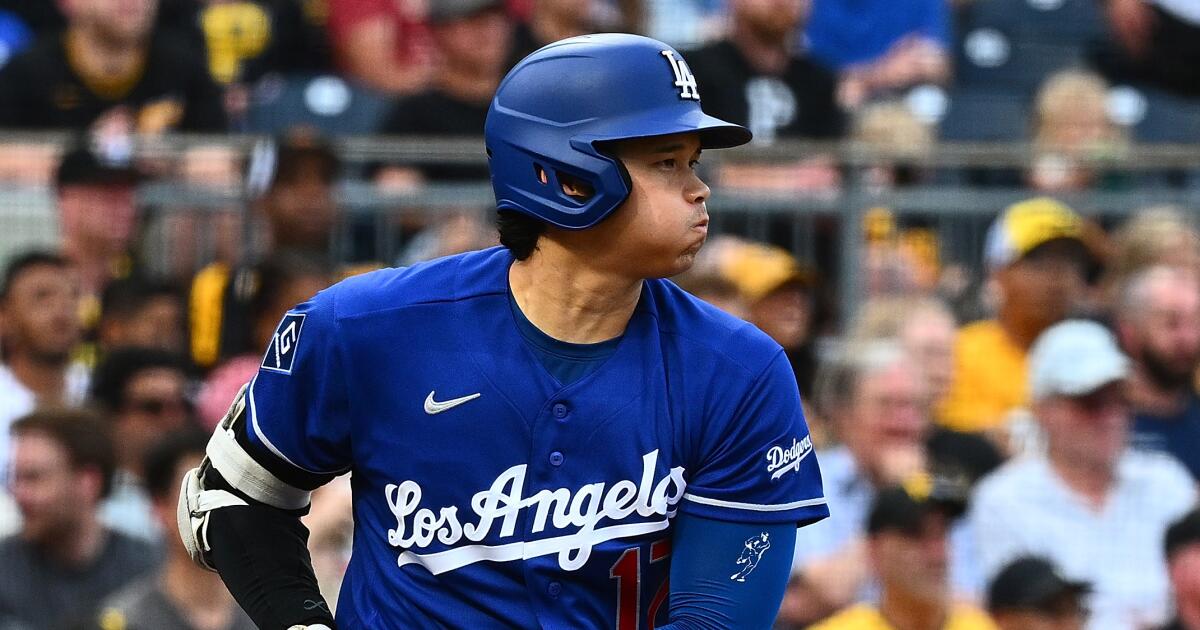
PITTSBURGH — The Dodgers couldn’t have asked for better timing, as Shohei Ohtani’s leadoff spot came back around.
They were clinging to a two-run lead in the top of the seventh inning against the Pirates on Thursday. With one out and runners on first and second, the Dodgers superstar, who had already reached base four times, was due up.
Instead, Santiago Espinal stepped up to the plate as a pinch-hitter.
Ohtani left the game with inflammation in his left knee, the Dodgers announced. They did not immediately offer an explanation for the injury.
Before leaving, Ohtani hit a solo home run — his second homer in as many games — a single and drew two walks.
It was an impressive performance, coming a day after he took on two-way duties. On the mound Wednesday, he allowed three earned runs in 6⅔ innings.
Earlier in the game Thursday, Dodgers starting pitcher Justin Wrobleski exited with a bruised right hamstring, the team said.
The fifth inning had already begun to spiral on him. After throwing four scoreless innings, he surrendered two solo home runs to Rafael Flores Jr. (the first of his major-league career) and Brandon Lowe.
Then Bryan Reynolds hit a line-drive comebacker off Wrobleski’s leg. The ball ricocheted to the edge of the infield grass, where first baseman Freddie Freeman picked it up.
Wrobleski was already racing toward first base. But after turning to catch the throw, he missed the base and stumbled backward into Reynolds, who tripped over Wrobleski’s extended left foot.
Wrobleski limped away, and an athletic trainer followed him, circling back to the mound. But as he was setting up to throw a warm-up pitch, manager Dave Roberts came out to make a pitching change.
-
 Lifestyle4 minutes ago
L.A. Affairs: Dating an L.A. braggart taught me a lesson in positive self-talk
-
 Politics11 minutes ago
House Democrats ask new ICE director to roll back policy limiting oversight visits
-
 Science14 minutes ago
Warning of cuts to medical services, L.A. health officials ask state for emergency funds
-
Sports19 minutes ago
Commentary: Cameron Brink is trying to navigate a fouled-up situation
-

 World29 minutes ago
Nigeria killed more than 13,000 ‘terrorists’ in past year, president says
-
 News56 minutes ago
Which billionaire said they learned a ‘significant lesson’ this week? The quiz knows
-

 Los Angeles, Ca2 hours ago
Fire breaks out under roller coaster at Six Flags Magic Mountain
-

 Detroit, MI3 hours ago
Mayor Sheffield absent from People Mover board during alleged wrongdoing

