West
San Francisco to begin 'Equity Audit' of controversial statues: Concentration of 'White Supremacy'

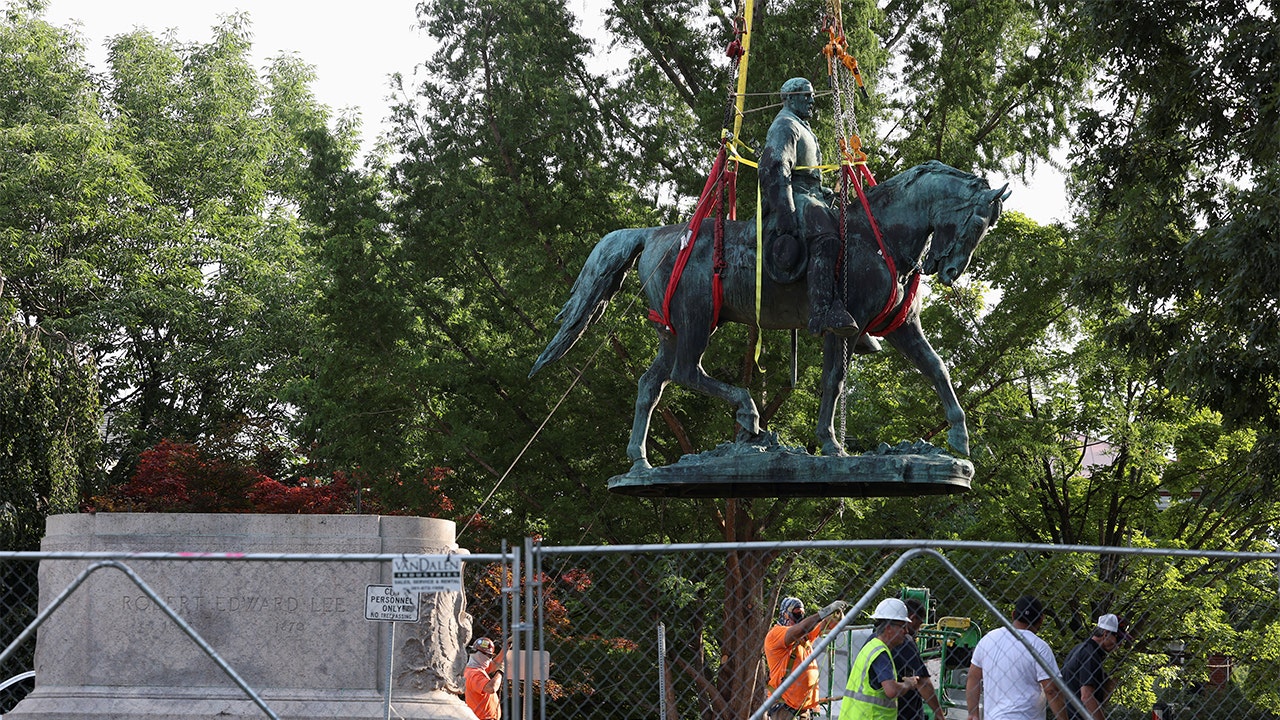
The San Francisco Art Commission is planning on spending $3 million to begin efforts to remove and replace controversial monuments.
In a meeting last week, senior project manager Angela Carrier gave more details regarding the “Shaping Legacy” plan, a strategy to address more than 100 examples of monuments and memorials that show “a concentration that talks more about power, privilege, White supremacy, patriarchy, and colonialism.”
“We have taken this moment to acknowledge and reckon with this moment of our past, how these monuments and memorials no longer represent the values that we say the city stands for and continues to ignore the stories of communities of color and reinforce inequities in race, gender and culture,” Carrier said.
IT’S TIME TO RESURRECT STATUES OF HEROES TORN DOWN BY THE MOB. THEY ARE OUR NATIONAL TREASURES
The San Francisco Art Commission provided an update regarding its “Shaping Legacy” project last week aimed at possibly removing and replacing statues and monuments deemed controversial. (REUTERS/Evelyn Hockstein)
The plan was described by the commission as a “multi-year equity-focused commitment to critically examine the monuments and memorials in San Francisco’s Civic Art collection.” The first step will include an “Equity Audit” and review of monuments in the collection.
“We will engage communities that have historically been excluded from the discussion,” Carrier told the committee, according to the San Francisco Chronicle. “The work of reckoning, repair and healing is not easy work.”
The project will be funded by a $3 million grant from the Mellon Foundation. It is part of a larger plan called the “The Monuments Project” which will invest $250 million by 2025 to reimagine the public landscape.
CLICK HERE FOR MORE COVERAGE OF MEDIA AND CULTURE
San Francisco began reviewing statues after protesters began defacing them during Black Lives Matter protests. (AP Photos)
“This work requires that we focus on race as we confront inequities of the past, reveal inequities of the present and develop effective strategies to move all of us towards an equitable future,” Carrier said.
The initiative to review controversial statues began in 2018 after the commission agreed to renew debate over the “Early Days” sculpture that featured a Native American kneeling in front of a Spanish cowboy. The statue was later removed.
By 2020, following the George Floyd riots, Democratic Mayor London Breed formed the San Francisco Monuments and Memorials Advisory Committee on statues. The committee later recommended an equity audit in 2023.
A statue known as “Early Days” that depicts a Native American at the feet of a Catholic missionary and Spanish cowboy stands on Fulton Street as part of the Pioneer Monument on March 12, 2018 in San Francisco, California. (Photo by Justin Sullivan/Getty Images)
“What the audit will do is decide which monuments are considered offensive today, and if so, what should replace them,” former arts commissioner Dorka Keehn said in 2020. “A broader question is, ‘how long should any monument be in existence?’”
Read the full article from Here


SAN FRANCISCO (KRON) — San Francisco Supervisor Jackie Fielder hosted her first community listening session Thursday night since returning from a three-month medical leave.
Dozens of District 9 residents packed the Bernal Heights Neighborhood Center to welcome back Fielder and voice concerns about issues affecting their communities.
“We are thankful that you took time for yourself to equip yourself to be sitting here today,” one attendee told Fielder. “So I thank you and commend you for returning.”
Fielder returned to City Hall last month after taking a three-month medical leave.
“I’m just grateful for the outpouring of support that I had and glad to be back on the job,” Fielder said. “Mental health is really prevalent, and I’m not going to shy away from the fact that I had a mental health crisis. This is a challenging job, and I’m very privileged to be here.”
Fielder said she is hosting a series of town hall-style meetings to give residents an opportunity to voice their concerns.
“To me, the biggest issue locally is the homeless issue, and it’s citywide,” San Francisco resident Maggie Weis said.
Fielder was joined by members of the San Francisco Municipal Transportation Agency and San Francisco Police Department to answer questions about pedestrian safety, city budget cuts and other issues.
The supervisor said one of her priorities moving forward is expanding access to clean, well-maintained public restrooms.
“[We’re] still seeing a lot of feces around the district and city,” Fielder said. “Would love to see our city have more public bathrooms and be able to maintain them as well.”
The next listening session is scheduled for July 23 at 6 p.m. at La Fénix in the Mission.
Watch the full report from KRON4’s Sara Stinson in the video player at the top of the story.

DENVER — Denver Mayor Mike Johnston is launching a $100 million plan to boost the local economy and support 10,000 jobs over the next three years.
Johnston announced the four-part program Thursday morning, flanked by business leaders while praising downtown businesses like brunch eatery Snooze.
▶️ WATCH: Denver7’s Alex Dowd reports on the plan
Denver mayor promises to create 10K jobs in next 3 years
Snooze Co-Founder Adam Schlegel said his business benefited from a similar program when U.S. Sen. John Hickenlooper was mayor in the early 2000s.
“The city really was the one that stepped up,” Schlegel said. “We wouldn’t have started if it wouldn’t have been for the economic development office. We ended up getting an incentive from the city to open up, particularly in this space [downtown]. It was a fiscal incentive to do it, in addition to coaching.”
Both of those are offered in the new four-part Denver Jobs Agenda. With funding from the Denver Downtown Development Authority and the Office of Economic Development and Opportunity, Johnston aims to develop start-ups in the city, grow existing businesses and draw in new companies while working to advance the Denver-area workforce across industries.
At the end of the last fiscal quarter, Denver’s unemployment rate hovered around 3.6% — under the national rate of 4.2% — according to U.S. Bureau of Labor Statistics, while office vacancy sits just under 40%, according to commercial real estate broker CBRE.
Johnston and other speakers made multiple references to more jobs bringing more people downtown.
“Denver has so many things going for it, so it will come back,” Schlegel said. “It’s not coming back as fast as I want, or as much as anyone will, but will it have a long-term future? 100%. It’s things like this, though, that I think give us a lot of hope that it can happen sooner than waiting it out.”
▶️ Watch the full press conference
Press conference: Denver mayor announces Denver Jobs Agenda
Chris Berthiaume, the city’s director of workforce industry initiatives, says the three workforce development centers across Denver serve around 20,000 people each year. He’s confident this new initiative will help more of those visitors find employment.
“We want to focus on things like aerospace, cybersecurity, green construction,” Berthiaume said. “This new initiative really just tightens the focus on sectors that we know are growing. Colorado is home to a huge aerospace culture. Quantum technology is emerging and coming. Green workforce are jobs that we know drive around Denver. Construction is everywhere. We need to make sure we have a skilled workforce that’s ready to take on those jobs.”
While also finding employers to hire them and stay within the community for the long haul.
“I think the reason businesses work — certainly restaurants work — is that you are integral to the community specifically where you are,” Schlegel said. “There are so many people in our community that really believe in Denver and want to see what it can be, and so it will get there.”
It’s well on the way. Denver’s Economic Development Corporation says they’re working with 52 active prospects that could bring more than 12,000 jobs to the area.
Coloradans making a difference | Denver7 featured videos
Denver7 is committed to making a difference in our community by standing up for what’s right, listening, lending a helping hand and following through on promises. See that work in action, in the videos above.

Global entertainment company Webtoon is returning to the hallowed halls of San Diego Comic-Con with a larger-than-life slate of panels featuring top talent and fresh announcements.
They will be shining the spotlight on some of today’s most engaging webcomic creators, including Derek V. Song (Fantasy High) and Punko (Cinderella Boy).
Let’s take a look at their schedule:
Thursday, July 23 – 10am – Room 29AB
Creature Craft: Visionaries of Horror Comics Share Their Secrets
This panel features Punko, creator of Stagtown and Cinderella Boy on WEBTOON; Cullen Bunn, creator of Ripcord and Deluge for Ignition Press; and Cat Staggs, co-creator of Death Mask, and artist on Tales for a HalloweeNight for Storm King Comics. Rotem Rusak, Editor-in-Chief at Nerdist, will moderate.
Friday, July 24 – 10am – Room 32AB
Love in Every Universe: The Great Romance Trope Debate
Join ROSEOAK, creator of Not So Silent on WEBTOON, Alessandra Ferreri, Head of Content at Wattpad, E.M. Wilson, author of Situationship, and Becca Erin Title, founder of Meet Cute Romance Bookshop. The panel is moderated by Crystal Bell, the Culture Editor at Mashable.
Friday, July 24 – 1pm – Room 32AB
Adapting Fantasy High for WEBTOON with Derek V. Song
Featuring Derek V. Song, writer of Fantasy High. Fans will get a behind-the-scenes look at adapting the beloved Dimension 20 series for WEBTOON and learn more about bringing the world of Fantasy High to a new visual format.
Saturday, July 25 – 11:30am – Room 24ABC
What’s Next from WEBTOON Entertainment
Featuring Ryan Lee, Head of Content at WEBTOON; Sydney Bright, Head of Global Animation at WEBTOON Productions; Erik Kozura, Producer at WEBTOON; ROSEOAK, creator of Not So Silent; Derek V. Song, writer of Fantasy High; Punko, creator of Stagtown and Cinderella Boy; and Ucheomaaa, creator of Vibe Check! on WEBTOON. Journalist, comic critic, and 2026 Eisner judge, Tiffany Babb, will moderate. his panel will deliver a slew of announcements, exclusive first looks, and Creator appearances from its platform and entertainment businesses. Additionally, the panel will give fans a window into what’s next from WEBTOON’s most exciting stories and projects, with news from WEBTOON Originals, WEBTOON Productions, WEBTOON Unscrolled, and more.
-

 World1 minute ago
With US unleashing attacks, Iranian official threatens that the Islamic Republic will deliver a ‘hard slap’
-

 Politics6 minutes ago
WATCH: Trump’s Energy chief reveals what escalating Iran tensions could mean for gas prices
-

 Health13 minutes ago
Coffee may have powerful effect on liver health, major study suggests
-

 Sports16 minutes ago
Oba Femi vs Brock Lesnar at SummerSlam is a ‘generational matchup,’ WWE legend JBL says
-
 Business28 minutes ago
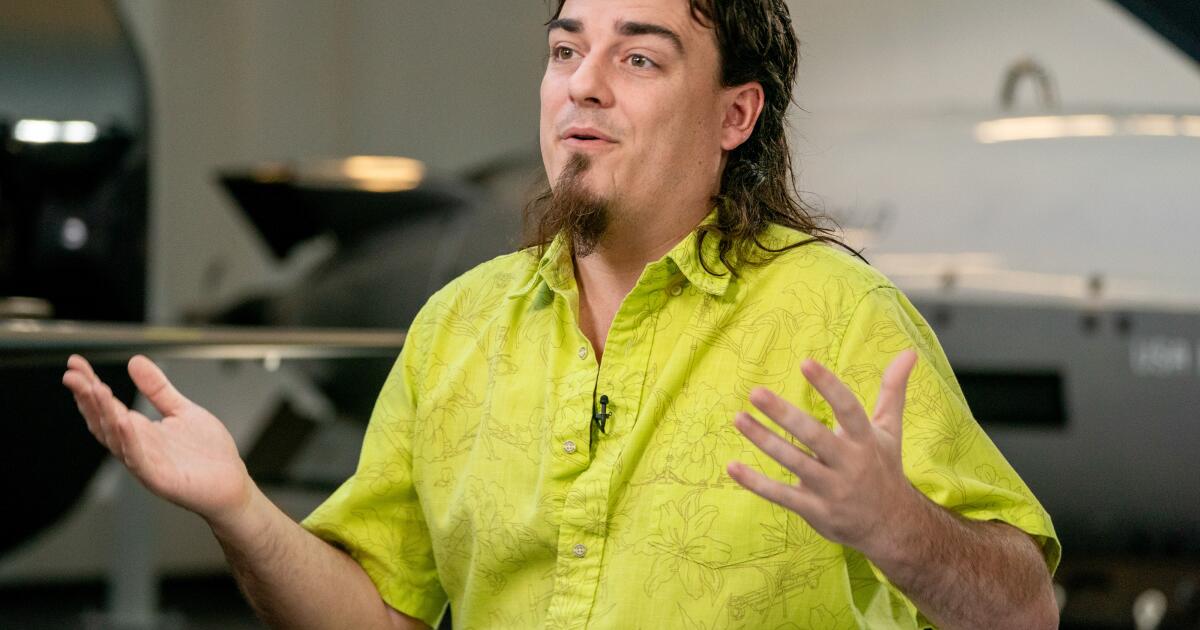
Billionaire exodus? California drew 10 times more venture capital than any other state this year
-
 Entertainment31 minutes ago
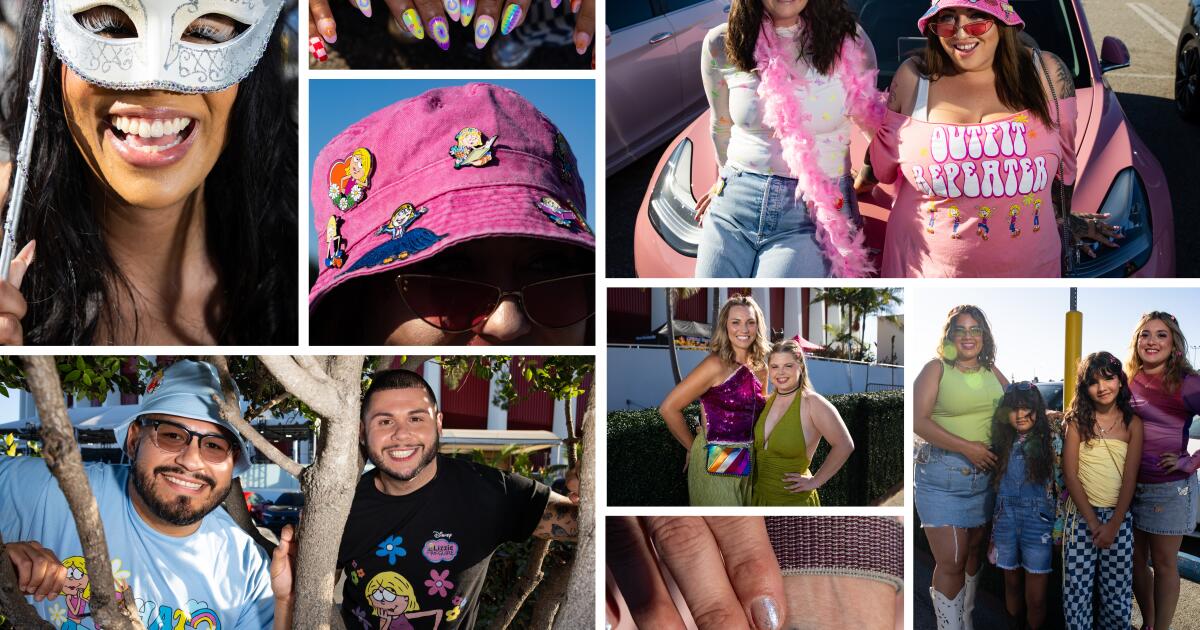
Disney Channel maximalism to pop-star glam: What fans wore to Hilary Duff’s L.A. show
-
 Lifestyle36 minutes ago
L.A. Affairs: It’s hot when a man drives to me. But would this new guy make the trek from the Valley?
-
Politics43 minutes ago
Black mold and $1 wages: Settlement forces immigrant detention centers to protect workers


