Northeast
Pennsylvania man identified nearly 50 years after his remains were found in an Appalachian Trail cave

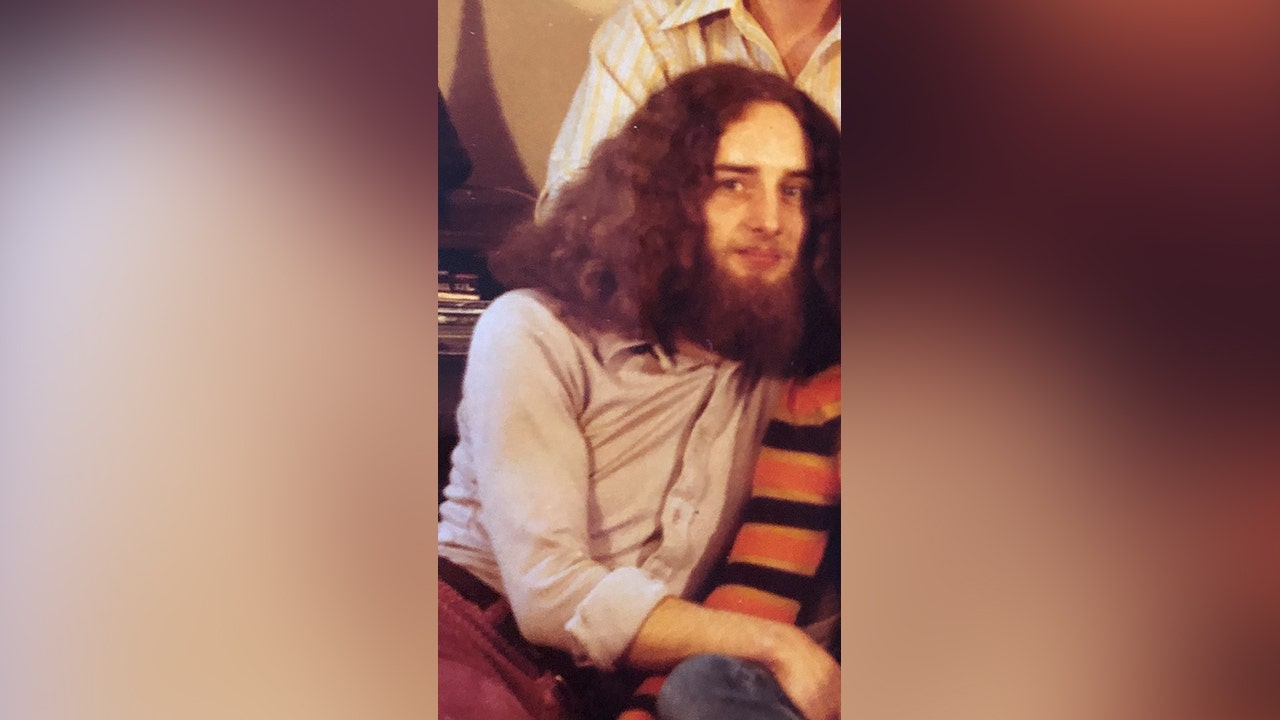
Officials in Berks County, Pennsylvania have identified human remains found in a cave used by hikers on the Appalachian Trail nearly 50 years ago.
Berks County Coroner John A. Fielding III told reporters during a press conference that hikers discovered the remains of a man in a cave near The Pinnacle, who disappeared on the Appalachian Trail on Jan. 16, 1977.
“For 47 years, this man remained unidentified, a nameless figure in a long-forgotten case,” Fielding said. “But today, I am honored to announce that through the unyielding determination of federal, state, and local agencies, the Berks County Coroner’s Office has confirmed the identity of this individual. His name is Nicolas Paul Grubb, a 27-year-old man from Fort Washington, Pennsylvania.”
FOX 29 in Philadelphia reported that investigators believe Grubb took his own life, adding it was determined he overdosed on Phenobarbital and Pentobarbital.
SERIAL KILLER CONFESSES TO 1986 MURDER OF TEEN MOM IN SOUTHERN CALIFORNIA
The Berks County Coroners Office in Pennsylvania identified remains found nearly 50 years ago on the Appalachian Trail as Nicolas Paul Grubb. (Berks County Coroners Office)
According to Drugbank.com, Pentobarbital is a barbiturate used to treat short-term insomnia, while Phenobarbital is a barbiturate used to treat all types of seizures, except for absent seizures.
Investigators, over the past 15 years, compared Grubb’s remains to 10 people, using fingerprints and dental x-rays.
In 2019, Grubb’s remains were exhumed from a cemetery in Berks County to conduct genealogical analysis, but four years later, investigators were still unable to identify him.
NORTH CAROLINA INMATE CONFESSES TO FATAL 1989 HIT-AND-RUN WHILE HE WAS ON PRISON WORK RELEASE
The FBI matched a fingerprint card to Nicolas Paul Grubb within an hour of receiving the evidence. (Kurt “CyberGuy” Knutsson)
Investigators also attempted to perform facial approximations, but the facial bones were broken or missing pieces from the exhumation process.
After submitting the original fingerprint card to the national database for missing unidentified and unclaimed remains, the coroner’s office said, an FBI expert determined a match within an hour.
“This identification brings a long-awaited resolution to his family, who have been notified and expressed their deep appreciation for the collective efforts that made it possible,” Fielding said. “It is moments like these that remind us of the importance of our work to provide answers, to bring closure, and to give the unidentified a name and a story.”
Fielding also said every day since Grubb was identified, his team continues to learn more about the young man.
“Nicky, as he was known to his family, served our nation as a member of the Pennsylvania Army National Guard in the early 1970s,” the coroner said. “He was also known to have lived in Colorado for a short time.”
Read the full article from Here


STATE COLLEGE, Pa. (WJAC) — It was a strong opening day in State College for the 60th anniversary of the Central Pennsylvania Festival of the Arts.
The festival kicked off with the traditional children’s day festivities.
Kids lined South Allen Street, displaying and selling their latest creations.
6 News spoke with one of the young businessmen there — Trevor Winterich — who was busy with his 3D toys.
On Thursday, the festival’s sidewalk sales open, featuring artists and performers from across the country.
BE THE FIRST TO COMMENT
The festival will then wrap up on Sunday.

PROVIDENCE, R.I. (WJAR) — They come from all walks of life, including many professionals in the community, taking time out of their busy days to welcome students to school with enthusiasm and handshakes.
“We learn a lot of new handshakes, too,” Kobi Dennis said. “High-fives. Pounds with an explosion. We get a little bit of everything.”
It’s the Handshake Initiative, the brainchild of now Central Falls Police Chief Anthony Roberson.
Everybody can use some encouragement, and students in Rhode Island get that the minute they head toward the school building.
Initially, the students and parents didn’t know what to think.
“I was confused because I thought it was going to be a normal day,” said one student.
“Their parents were getting out of their cars trying to see what’s going on,” Reservoir Avenue School Principal Cynthia Torres said.
But now, they crave it.
“It makes me feel motivated,” another student said.
Dennis adds in an etiquette component.
“Teaching the kids how to shake hands, look one another in the eyes with a firm grip — girl or guy — firm grip and say ‘hello’ and introduce yourself, that’s part of the initiative as well,” Dennis said.
Providence school superintendent Dr. Javier Montañez said it sends a strong message.
“We hear you, we see you, and we’re here for you,” Montañez said.
Torres strategically uses them on standardized test days.
“They say, ‘I’m going to do really good today,’” she said.
“It makes me feel encouraged to do better in school,” a student said.
They’ve connected with thousands of students across Rhode Island.
“It’s about shaking hands and building relationships, but it’s also about letting young people know that there are professionals in the community cheering for them every single day,” Dennis said.
Do you know of a nonprofit organization or volunteers doing great work in your community? Fill out a short nomination form for “Community Treasures.”
Vermont
Poll: Most young Vermonters say they’re likely to leave state amid affordability concerns – VTDigger

Theo Wells-Spackman is a Report for America corps member who reports for VTDigger.
Nearly two-thirds of Vermonters ages 18 to 34 say they’re likely to leave the state within five years in search of adventure or a cheaper place to live, according to a poll from the University of New Hampshire.
Overall, the poll estimated that 86% of Vermonters find the state at least somewhat unaffordable.
“The issue of affordability has been a very important thing across New England,” said UNH political science professor Andrew Smith, who runs the institution’s survey center. The poll, released Tuesday, includes response data for five New England states, excluding Maine.
In general, the survey found, most residents say Vermont is a good place to live — or even a great one.
Nevertheless, about 40% of Vermonters of all ages want to leave the state, according to the report from Smith’s team. Housing prices and other cost-of-living concerns are the foremost drivers of the trend, researchers found, followed by tax rates. Connecticut and Rhode Island showed similar overall rates of desired departure.
Among young people, though, Vermont’s numbers stand out.
Smith’s research found that 63% percent of Vermonters between 18 and 34 say they’re somewhat or very likely to move out of the state in the next five years. That’s a much higher rate of planned departure than in any other state surveyed. Responses varied from 28% in New Hampshire to 44% in Connecticut.
But according to Smith, New England often sees a beneficial “boomerang effect”: former residents eventually returning to their home states, often as higher earners.
In a Wednesday press conference, Gov. Phil Scott said that although he hadn’t seen the poll, he wasn’t surprised by reports that many Vermonters are considering a move.
“I think there’s a lot of frustration out there,” he said. “We have a lot of work to do to make Vermont the affordable state that these folks need.”
About half of young Vermonters who said they want to move away cited the cost of living as a primary reason, while roughly as many said they were looking for a “new adventure or more excitement.” By contrast, less than a quarter of those older than 64 foresee leaving, according to the poll.
Outmigration of young people could worsen the state’s existing workforce shortage, according to Kevin Chu, who leads the research nonprofit the Vermont Futures Project. Scott’s administration has made workforce development a priority in light of what his office called a “growing demographic crisis.”
Chu added that by design, services such as public education and healthcare are supported disproportionately by working households that tend to pay higher taxes and insurance premiums. When the base of income earners shrinks, the problem can then intensify for those bearing the brunt of rising costs, he added.
“There’s a demographic reality in which the economic burden is being shouldered by a small and shrinking pool of young working-age people,” Chu said.
Tuesday’s poll also indicated that Vermonters who have completed more education say they’re less likely to leave the state. For Chu, that’s likely because such households tend to earn more — and also because they tend to be older.
Julie Lowell, deputy director of the Montpelier research nonprofit Public Assets Institute, offered a grain of salt in relation to Tuesday’s report. While migration is crucial to keep track of, Vermont’s overall population turnover tends to be about 5% or less each year, she said. And although the state does have an unusual number of young people intending to leave, that age group is always the most mobile in any study, she said.
In recent years, more of Vermont’s older population has possessed more wealth to contribute to public services, Lowell added. For example, she said, her organization has found that more Vermonters aging out of the workforce has not appeared to decrease state tax revenues in recent years.
But it’s true that many Vermonters are struggling to make ends meet, she said. The state’s lowest earners have seen low wage growth in relation to other New England states, she said, and basic needs are getting harder to cover.
“We’re seeing prices, in large part driven by housing and healthcare, really outpacing our increases in household incomes,” Lowell said. “Many people are feeling insecure.”
-

 Pennsylvania2 minutes ago
60th annual Central Pennsylvania Festival of the Arts now underway in State College
-

 Rhode Island5 minutes ago
Handshake Initiative instills confidence, motivation in students
-

 South-Carolina10 minutes ago
ESPN recruiting writers break down five-star Josh Dobson’s fit with South Carolina
-

 South Dakota17 minutes ago
South Dakota man faces abuse charges after authorities called to NW Iowa casino
-

 Tennessee20 minutes ago
Data centers driving up Tennessee power bills, report finds
-

 Texas25 minutes ago
Family demands investigation after US man killed by ICE agent in Texas
-

 Utah32 minutes ago
Turn your miles into meals
-

 Vermont35 minutes ago
Poll: Most young Vermonters say they’re likely to leave state amid affordability concerns – VTDigger

