Colorado
Rockies blanked by Yankees as Aaron Judge, Giancarlo Stanton homer


The Yankees overpowered the Rockies in the Bronx on Friday night. Given the ongoing struggles of Colorado’s offense, it took only a couple of mighty swings.
Yankees designated hitter Giancarlo Stanton hit a solo home run off Kyle Freeland in the fourth, and Aaron Judge hit a solo blast off Freeland in the sixth en route to a 3-0 win.
It was Judge’s 49th homer of the season. The crowd at Yankee Stadium serenaded him with “MVP!” chants.
A fielding error on a bad-hop grounder to Ryan McMahon cost the Rockies another run in the fifth.
The Yankees, owners of the best record in the American League, improved to 76-53. Colorado, now 47-82, officially clinched its sixth consecutive losing season. The Rockies are on pace to lose 103 games.
The Yankees had only five hits, but it was more than enough as they notched their second straight shutout. They blanked the Guardians, 6-0, on Thursday.
Freeland pitched 6 2/3 innings and gave up two earned runs on five hits. With his sinker and slider working, he got 11 outs via groundballs. He struck out three and walked two. It was a solid performance, but it wasn’t nearly enough, given Colorado’s empty at-bats.
“Kyle threw well, but their guy pitched just a little bit better,” manager Bud Black told reporters in New York. “But that’s what the Yankees do, especially with the guys at the top of the order. They homer.
“If you look at Kyle’s pitches (on the homers), they weren’t horrible. The fastball to Judge was inside, but Judge is Judge. He’s talented. And the pitch to Stanton was out away from him, and if he gets his arms extended, it can go.”
Judge has hit five home runs in his last four games, seven in his last eight games, and eight in his last 11.
The Rockies, shut out for the 13th time this season, managed only four hits. The franchise record for being shut out in a season is 15 in 2021.
They had a couple of chances to crack New York lefty Carlos Rodon but couldn’t deliver the clutch hit.
In the third, Nolan Jones led off with a single and advanced to third on Ezequiel Tovar’s two-out double. But Rodon struck out Brendan Rogers to snuff out the rally. In the fifth, Jordan Beck reached on a one-out single, and Tovar drew a two-out walk. But after an eight-pitch battle, Rodon got Rodgers to chop out to shortstop Anthony Volpe.
Rodon pitched six innings, allowed four hits, walked one and struck out five.
“Kyle gave us a chance to win; we just couldn’t solve their pitching,” Black said.
Want more Rockies news? Sign up for the Rockies Insider to get all our MLB analysis.
Originally Published:



Ranchers in the path of the Aspen Acres Fire are not only rushing to get their animals out, but they’re also helping others save their herds as the fire approaches.
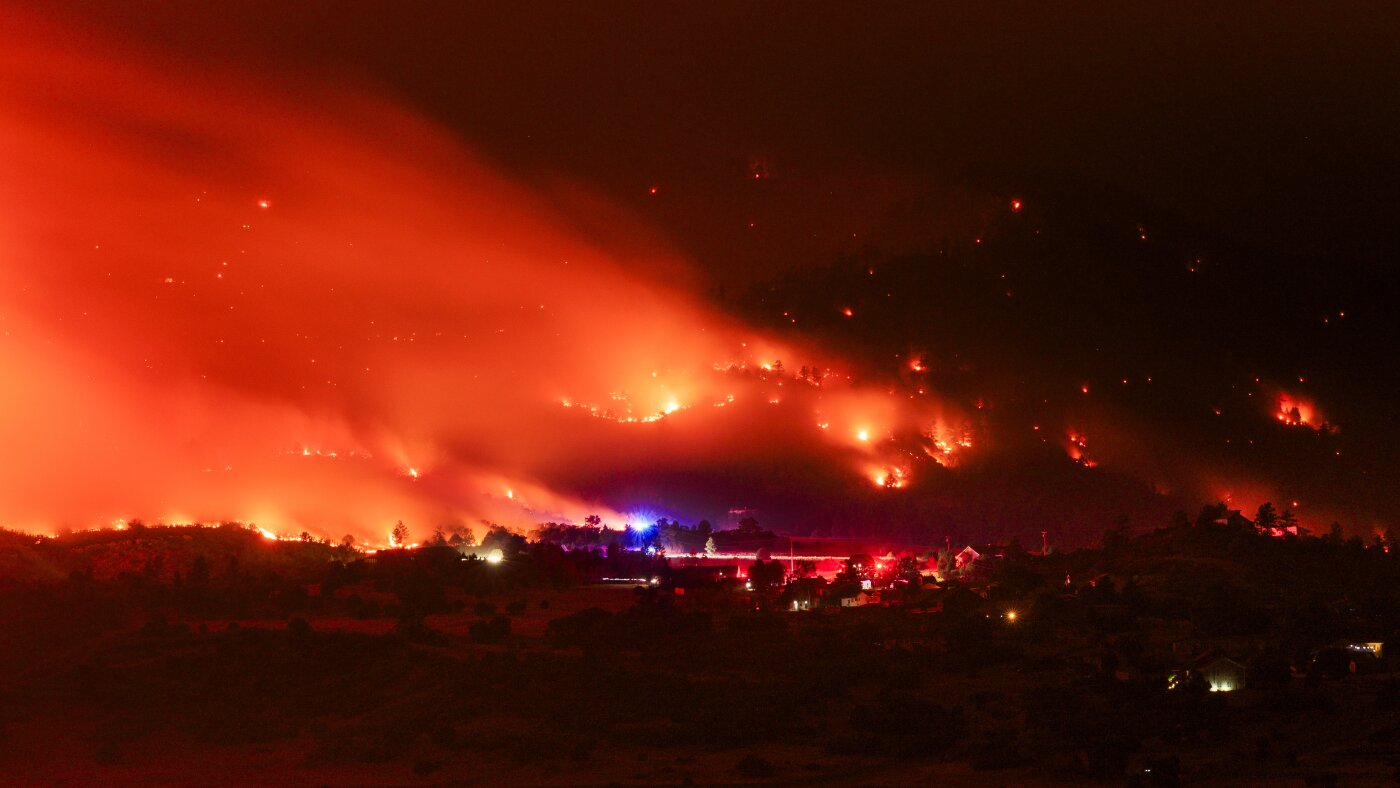
The Aspen Acres Fire has grown to over 86,000 acres, but firefighters are gaining ground. The fire has reached approximately 6% containment. Firefighters have been working to protect people and property, but the very active, fast-moving fire has destroyed more than 150 homes and other structures so far.
Ranchers around Beulah, Colorado City and Rye have been rushing to get their animals out as the fire spread across the area. Neighbors like Luke Woduick have also come together to help each other evacuate livestock from danger. Woduick says ranchers worked quickly to cut fences and move livestock out of the fire’s path as conditions rapidly changed.
“I can’t even explain how bad it is. I just feel for all those animals just trying to escape; there’s a lot of animals that didn’t get out. It’s a total catastrophe,” said Woduick. “It’s just, losing an animal is just, you feed these animals, and you tend to them, and you water them, and you scratch on them, and you love on them. But, to actually see some of them die from this fire, it’s sad.”
The Pueblo County Sheriff’s Office has asked evacuees to cut fences and give the animals a chance to survive if they can’t take them. They also told all trucks and trailers helping with animal rescue, “If you see flames, cut fences for the animals and leave immediately.”

Pueblo CART Livestock Division – Community Animal Response Team has been helping to coordinate livestock rescue and evacuation centers. They say the shelter at the state fairgrounds is currently housing 1,330 animals, but there’s plenty of room for more.
Despite losing his own ranch in Beulah, Woduick says he spent days helping others relocate livestock, transporting them to the Pueblo County Fairgrounds. He worries more for the residents who have lost their homes than for himself.
“I just lost my ranch, so, in a couple of years, the grass will grow. I have no complaints. Other people, they got all the heartache,” Woduick said.

Pueblo residents like Joey Musso are also doing what they can. Musso and his family own a local restaurant in Pueblo. On Saturday, they closed early to provide food for first responders and volunteers.
“This is devastating, and just to hear what people are going through right now, it’s just absolutely heartbreaking,” said Musso.
Despite flames destroying homes and communities, Musso says showing support for one another is crucial right now.
“Truly, nobody comes together like Puebloans and people in Colorado. I mean, it’s just amazing what everybody’s doing. It’s just one huge joint effort where people are taking care of one another,” Musso said.
Fire trucks from California are the latest in a string of support from across the country sent to help Colorado. Officials are hopeful they will contain the fire within the next few days.
Colorado
WATCH LIVE: Memorial service to honor firefighters killed on Colorado-Utah border – East Idaho News

GRAND JUNCTION, Colo. (AP) — Three firefighters who were killed battling flames on the Colorado-Utah border are being remembered as brave heroes who were trailblazers in their industries.
Wildfires have spread across the West fueled by months of dry weather and a record lack of snow, forcing residents from their homes as crews work to tamp down the flames.
Emily Barker, Nick Hutcherson and Sydney Watson were killed Saturday, June 27, and two others sustained burn injuries when they were overcome by flames from fast-moving fires in Mesa County. They deployed emergency protective shelters, which are considered a “last resort” for firefighters when there is no other way out.
RELATED | 3 firefighters killed in blazes along Colorado-Utah border are identified
They were assigned to a Helitack crew that can be dropped into remote areas by helicopters and whose mission is to prevent new fires from growing into out-of-control blazes.
Their deaths came almost 13 years to the day since an elite crew of 19 wildland firefighters died when they were trapped in a steep canyon in Yarnell, Arizona.
A memorial service will be held for the three firefighters at 11 a.m. Sunday at Las Colonias Park Amphitheater in Grand Junction, Colorado.
Emily Barker
Barker, 38, had so much spirit, and the people around her always strived to be a better person by her presence, said Sarah Brubeck Schnurbusch, a friend and former roommate.
Barker was from Clinton, Michigan, and liked hiking, skiing, dirt biking and playing hockey. She loved firefighting.
“I’ve never seen someone so excited to go to work,” Brubeck Schnurbusch said. She added that her friend was an expert who helped pave the way for many women in the industry.
She said she is hopeful that Barker’s death opens people’s eyes to the hard work firefighters are putting in day in and day out.
“I just hope that Emily knows the impact that she left on everybody else, and how many people really truly love her,” she said.
RELATED | Firefighter killed battling wildfire previously worked in eastern Idaho and was featured in EastIdahoNews.com story
Nick Hutcherson
Hutcherson, 27, served in the U.S. Navy and had plans to become a physical therapy doctor, according to the Kaibab National Forest in northern Arizona where he was assigned. He was also an active member of the Northern Arizona Deaf and American Sign Language community and was a dedicated Muay Thai practitioner who trained at Southside Combat Academy in Flagstaff.
Hutcherson was from Glendale, Arizona.
The Kaibab National Forest said it is heartbroken over his death. Hutcherson exemplified the agency’s commitment to serving the public and the courage wildland firefighters bring to the job, it said.
The combat academy described Hutcherson as a warrior and said it is forever grateful to have known him and to have fought alongside him.
“We lost a good one,” read a social media post. “If you met Nick, you loved Nick. He was such a gentle and genuine soul. We are still in disbelief.”
Sydney Watson
Watson, 27, was from Warrior, Alabama, and graduated from the University of Tennessee Southern, according to the university.
A former pitcher on the softball team and “a quiet, composed leader,” Watson was assigned to the U.S. Wildland Fire Service Rifle Helitack crew, the university said in a statement.
In 2023, Watson participated in a program in North Carolina organized by the Women-in-Fire Prescribed Fire Training Exchanges, the collaborative group wrote in a statement.
In her application for the program, she said she wanted to see more women on the fire line and to work with and learn from other women in the fire industry, the statement said.
“It’s hard for people outside of the firefighting world to understand why we do what we do. We do it because we love it. Sydney loved it,” the group wrote.
=htmlentities(get_the_title())?>%0D%0A%0D%0A=get_permalink()?>%0D%0A%0D%0A=htmlentities(‘For more stories like this one, be sure to visit https://www.eastidahonews.com/ for all of the latest news, community events and more.’)?>&subject=Check%20out%20this%20story%20from%20EastIdahoNews” class=”fa-stack jDialog”>

RYE, Colo. (KOAA) — Bishop Castle faces an uncertain, but hopeful, future as the Aspen Acres wildfire burns nearby and its caretaker recovers in the hospital following a fall.
Daniel Bishop, who cares for Bishop Castle — the landmark his father built brick by brick — was admitted to the hospital more than a week ago after a fall. Soon after, evacuation orders came, putting the beloved structure in the Aspen Acres wildfire red zone.
“The whole backdrop of my life just changing from one drastic nightmare to the next,” Daniel said.
His wife, Sage Bishop, described the toll the back-to-back crises have taken on the family.
“We’re used to being in the mountains and working with our hands and doing things and our lives have been turned upside down,” Sage said.
And while recovering, Bishop says he didn’t know what would come of the iconic Colorado landmark.
“By the time the whole scene was printed, it was a nightmare,” Daniel said.
Many people online have been asking whether Bishop Castle survived the fire. The Bishop Castle Facebook page posted that, according to the incident management team, Bishop Castle is still standing.
For Daniel, that news brings only partial relief.
“I generally don’t celebrate until I really know it’s time to celebrate. Until I lay my eyes on the property and know exactly what’s happened,” Daniel said.
He also said fires can be unpredictable, so getting excited about the condition of the castle feels too soon.
“The truth is the fire is still burning, and fires are very predictable, and it could turn around and come back from the other direction,” said Daniel.
But he did say there is some reassuring news on the ground.
“There are actual fire crews there doing their job to protect the castle, there are actually people in there. Boots on the ground and helping out,” Daniel said.
He said he still worries for the many people whose homes are nearby. People who continue to support the family.
“God bless the first responders for every piece of structure, everybody’s property that they managed to save, because we are the fortunate ones in all of this right now. There are so many that have lost everything they had,” Daniel said.
Even with the uncertainty, the family is definitely certain about one thing… Sage said the outpouring of concern from the public has meant a great deal to the family.
“The support from people that care about us is amazing,” Sage said.
The family says Daniel is progressing very well and appreciates the support and kind words from the community. He said he couldn’t get through this without those at Encompass Health Rehabilitation.
___
47,000 Acres, 0% Containment, and New Evacuations
The Aspen Acres Fire continues to rage out of control, growing to over 47,000 acres with zero containment. New mandatory evacuations have been issued for the Red Creek area as the fire threatens thousands of structures across multiple counties.
47,000 Acres, 0% Containment, and New Evacuations
News Tips
What should KOAA5 cover? Is there a story, topic, or issue we should revisit? Have a story you believe should make the light of day? Let our newsroom know with the contact form below.
____
Watch KOAA News5 on your time, anytime with our free streaming app available for your Roku, FireTV, AppleTV and Android TV. Just search KOAA News5, download and start watching.
-
 News25 minutes ago
Thunderstorms, heat and wind will hamper efforts to contain Colorado wildfires
-

 New York2 hours ago
10-Minute Challenge: The Ceiling at Grand Central
-

 Los Angeles, Ca2 hours ago
1 killed, multiple people injured in Tarzana 4-car crash
-

 Detroit, MI2 hours ago
Power outage forces flaring at Marathon’s Detroit refinery; portion of Schaefer Road closed
-

 San Francisco, CA2 hours ago
San Francisco’s fireworks show ends in hours of gridlock involving Waymo cars
-

 Dallas, TX2 hours ago
FIFA Fan Fest in Dallas paused due to lighting in the area Sunday evening
-

 Miami, FL2 hours ago
Venezuelan Independence Day: Aid efforts continue after devastating earthquake
-

 Boston, MA3 hours ago
Timeline: Looking back on Jaylen Brown’s Celtics career – The Boston Globe

