Idaho
Attorney for murder suspect Bryan Kohberger to lead defense in second Idaho capital case


The lead attorney for Bryan Kohberger, the man charged with killing four University of Idaho students in November 2022, now will simultaneously lead the defense in a second high-profile North Idaho capital murder case.
Anne Taylor, Kohberger’s top public defender, was assigned Wednesday to head up the defense for Skylar Meade, according to court records obtained by the Idaho Statesman. The Idaho prisoner is charged with killing a Juliaetta man in Nez Perce County after escaping from corrections officers at a hospital in Boise during a shootout in March.
Like Kohberger, Meade, 32, faces the death penalty if found guilty by a jury. Kohberger’s murder trial is scheduled to start in June 2025, while Meade is set to be arraigned Thursday at the Nez Perce County Courthouse.
Initially, Lewiston-based private attorney Rick Cuddihy was assigned to represent Meade. But Cuddihy is qualified only to act as co-counsel in a death penalty-eligible defense, which required appointing a lead to join him on Meade’s case. Taylor is one of 13 public defenders in the state approved by the Idaho Public Defense Commission to work as the lead in a death penalty case. She’s also the only one of the group based in North Idaho.
Taylor left her position last month as chief of the Kootenai County Public Defender’s Office and has transitioned into private practice, court records showed. Attorney Jay Logsdon, who is co-counsel on the Kohberger defense team, is now acting as Kootenai County’s interim chief for the Public Defender’s Office.
A representative at Taylor’s office declined to comment when reached by phone Wednesday by the Statesman. Taylor also did not respond to an email seeking comment.


BLACKFOOT — A large contingent of Blackfoot Police officers has cordoned off an area near the Taco Bell on Parkway Drive in Blackfoot.
Police responded around 5 p.m., according to multiple witnesses who contacted EastIdahoNews.com.
EastIdahoNews.com has reached out to Blackfoot Police for details.
We will update this story as we learn more.
=htmlentities(get_the_title())?>%0D%0A%0D%0A=get_permalink()?>%0D%0A%0D%0A=htmlentities(‘For more stories like this one, be sure to visit https://www.eastidahonews.com/ for all of the latest news, community events and more.’)?>&subject=Check%20out%20this%20story%20from%20EastIdahoNews” class=”fa-stack jDialog”>

MISSOULA, Mont. — An Idaho Falls angler is back in the Idaho record books after landing a record-setting lake trout at Payette Lake.
Idaho Fish and Game said Dylan Smith caught and released a 43.25-inch lake trout on May 2, setting a new state catch-and-release record for the species. The fish surpassed the previous record of 42 inches.
The catch marks Smith’s second appearance in Idaho’s record books. He previously held the state catch-and-release lake trout record after landing a trophy fish in 2018 before that mark was later broken.
According to Fish and Game, Payette Lake has become one of Idaho’s premier lake trout fisheries thanks to years of management efforts aimed at improving both lake trout and kokanee populations.

Pride Month looks different this June along Boise’s Harrison Boulevard, where a long-standing tradition of hanging Pride flags on lamp posts has been put on hold after a new state law restricted which flags can be flown on government property.
For several years, Pride flags lined lamp posts along Harrison Boulevard in Boise’s North End neighborhood. But Idaho House Bill 561, signed by Gov. Brad Little in March, restricts which flags can be flown on government property, including the City of Boise’s Harrison lamp posts.
In response, a group of neighbors formed Pride North End and launched a distribution effort to help residents show support from their own front yards. The group has been making Pride flags and yard signs available to people who want to display them at home.
“I thought that I would…be a personal example of ‘yes, this is what I do.’ This is what I believe in,” said Edna Schochat, a North End resident.
Pride North End has already distributed more than 900-yard signs and 250 flags. The group’s original donation goal was around $2,000 to order 100 flags and 200 yard signs, but it has exceeded that GoFundMe goal, reaching $10,000 worth of donations.
The group plans to continue holding public flag and sign distributions through the end of the month.
“We cannot just say something without doing something that proves that we mean what we say,” Schochat said.
Pride North End said any leftover funds after materials are distributed will go to local LGBTQ+ nonprofits. A link to the group’s GoFundMe can be found here.
-
 News14 minutes ago
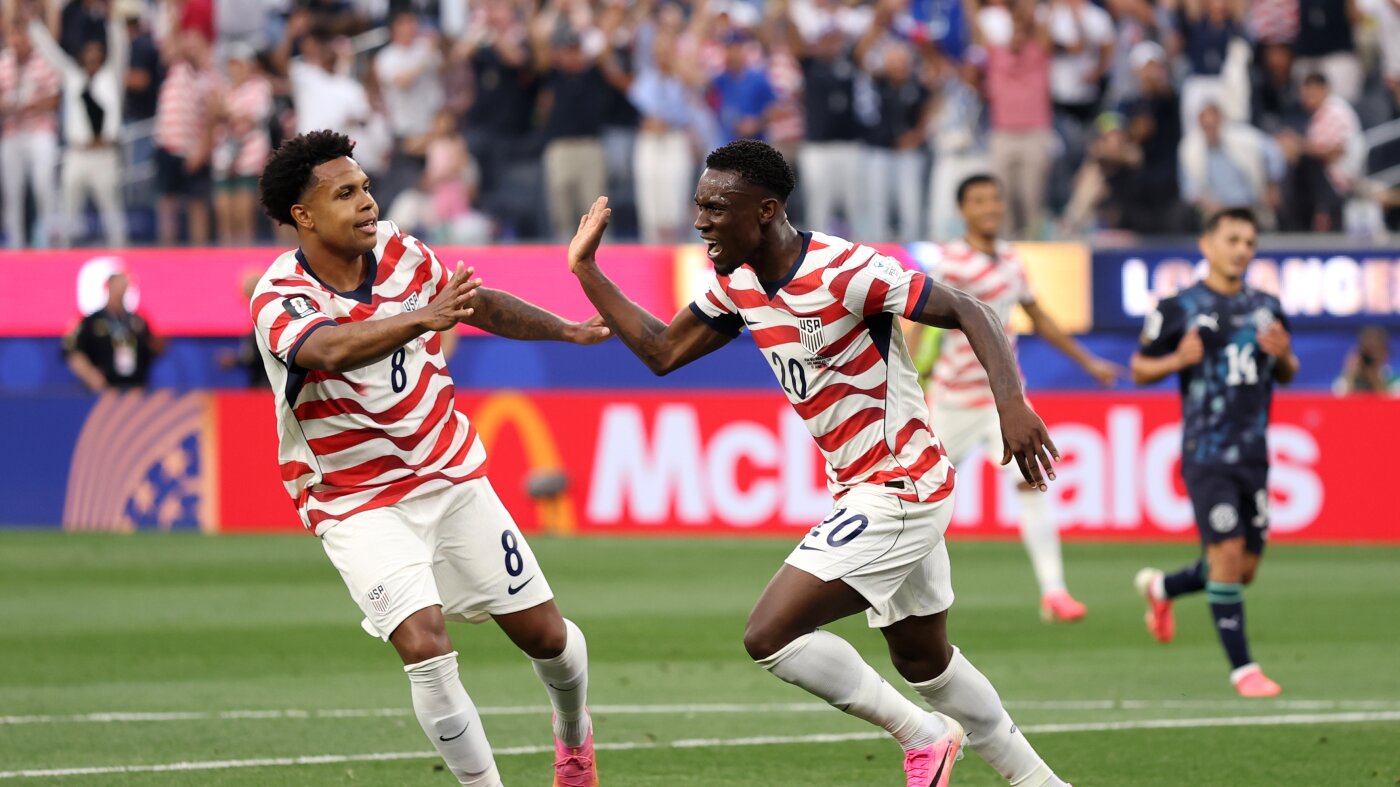
With a Round of 32 spot already clinched, the U.S. takes on Turkey in the World Cup
-

 Los Angeles, Ca2 hours ago
Hospital needs help identifying man found unconscious in downtown Los Angeles
-

 Detroit, MI2 hours ago
Large police presence for an investigation on Detroit’s west side
-

 San Francisco, CA2 hours ago
No tolerance for hate or crime at SF Pride this weekend, officials say
-

 Dallas, TX2 hours ago
Alanna Smith injury update: Dallas Wings player in concussion protocol
-

 Boston, MA2 hours ago
Boy, 13, hospitalized after being found unresponsive in swimming pool at Beverly home
-

 Denver, CO2 hours ago
Denver Nuggets draft Trevon Brazile in the second round of the NBA Draft – Denver Stiffs
-

 Seattle, WA2 hours ago
Council eyes street barricades in fight against violence, sex trafficking in north Seattle

