Lifestyle
How to have the best Sunday in L.A., according to Andrew Bird

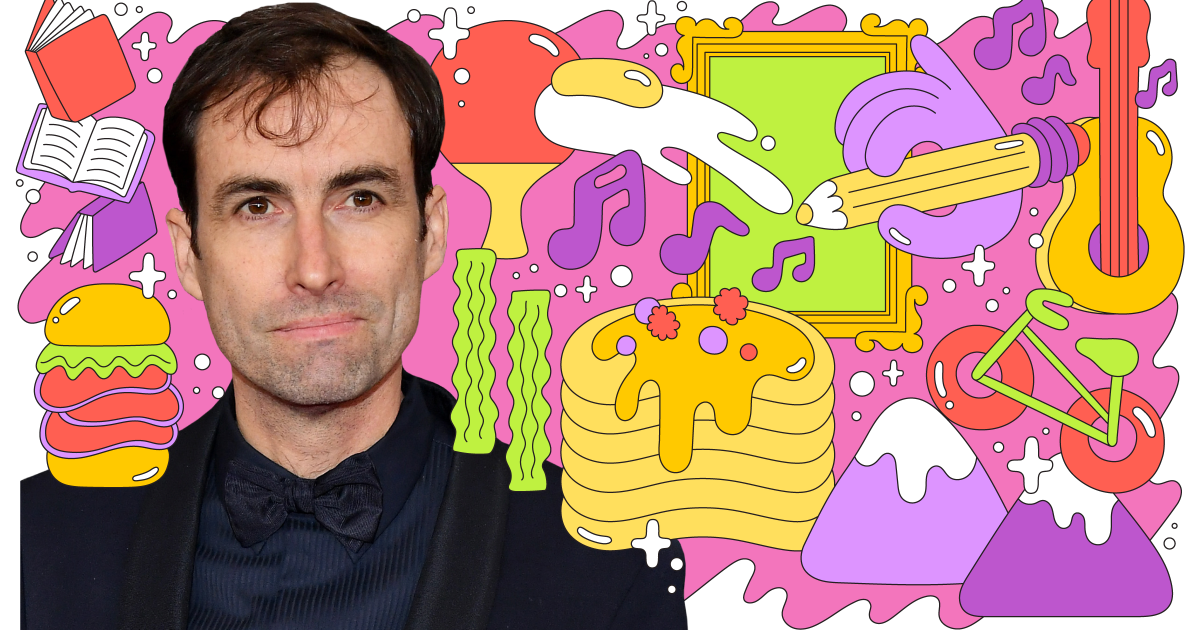
For Andrew Bird, Sundays hold special meaning. Those were the days when jazz would be etched into his subconscious before sunrise — as a 20-something living in Chicago, he’d doze off to late-night music broadcasts on local radio, listening to greats like Lester Young and Coleman Hawkins.
Now, two decades later, Bird’s latest album “Sunday Morning Put-On” (with Ted Poor on drums and Alan Hampton on bass) pays homage to those early influences.

In Sunday Funday, L.A. people give us a play-by-play of their ideal Sunday around town. Find ideas and inspiration on where to go, what to eat and how to enjoy life on the weekends.
These days, Sundays look a bit different for the singer, songwriter, multi-instrumentalist and whistler, but they’re still a time for decompressing. “I don’t really have a typical 9-to-5, ‘Thank-God-it’s-Friday’ lifestyle, but Sunday is the closest thing to that,” said Bird, who has released 16 studio albums since his debut in 1996. “It’s the one day I can carve out time for non-work, creative things.”
Bird and his wife, Katherine Tsina, along with their 13-year-old son, have set down roots in Northeastern L.A., which they’ve called home for the last 11 years. Bird is currently on tour and will play two shows at the Hollywood Bowl in August, with Pink Martini.
For Bird, an avid mountain biker, being able to be outside any day of the year is one of the best things about living in L.A. “I love mountains,” he says. “I’m just a lot healthier here than I was anywhere else.”
This interview has been lightly edited and condensed for length and clarity.

8:30 a.m.: Wake up with pancakes and jazz
We’ll make breakfast, coffee, put on a jazz record and take it pretty easy. Sometimes we’ll make pancakes, like Dutch baby pancakes with lots of fruit on top. That’s kind of a special Sunday treat. Other than that, eggs and bacon, and lots of stone fruit berries.
9 a.m.: Grab my bike and hit the trails
If I’ve got a mountain biking ride scheduled with some other folks, we’ll either meet up at Dirt Mulholland or JPL (I just say JPL for all of the trails that are in Altadena via the Arroyo Seco River). That’s my ideal spot, it’s about 15 minutes away. I’ll ride up the Gabrielino Trail where there’s horses, hikers, bikers, but it all depends on the temperature. If the weather report says 75 to 80 degrees, it’s borderline too hot. Up above when it’s exposed, it’s really more like 90 degrees. I’ve come close to having heatstroke up there.
If it’s too hot, you stay down on the river bed, which right now has a lot of water in it so you get wet going across six or seven river crossings on your bike. It’s really an almost jungle-like environment. It’s really like another world. If you’re used to Griffith Park, which is just scrub and piles of loose sand and quartz, this feels much more tropical and remote.
11 a.m.: Refuel with fresh pasta or sandwiches
After that, not too far away is this deli that I’ve just been really into lately called Ferrazzani’s. It’s part of Semolina Artisanal Pastas company and they make fresh pasta right there. Next door, there’s an Italian market that has cheese and guanciale and fresh pasta and they make like five different sandwiches. They’re all just delicious. It’s a nice spot.

1 p.m.: Have a family sketch session
There was one day when [my family and I] went to the Norton Simon Museum and sketched modern art and that was a pretty awesome day, I have to say. The scale of it reminds me of a Chicago museum in a lot of ways, like a mini Art Institute. And I like the building itself, with all the heath piles on the outside.
My mom was an artist and she used to take me and a bunch of my friends down to the Art Institute and we’d bring sketch pads and sketch whatever we found interesting. I started doing that with my family and I don’t know why more people don’t do it. It makes it a whole different experience and you get to compare your sketches with everyone else that’s sketching the same thing. I’m really not a visual artist, but that one little tradition from childhood is something I really enjoy.
4 p.m.: Stroll through Atwater Village
We spend a lot of time in Atwater Village on Sundays. They have a farmers market and my wife has a shop there, Avion Clothier. That’s been kind of a hub for us for the last nine, 10 years it’s been open. It’s just a cool spot.
In Atwater there’s Alias Books, Proof Bakery and wide sidewalks with cafes. It has street life, which is a rare thing in L.A. and it’s designed like an old western town with a super wide boulevard that you could have a parade on, wide sidewalks, and then normal commerce as opposed to the beige corner strip mall stuff that’s all over Hollywood. If you build it, they will come. It’s pretty hoppin’ these days.
6 p.m.: Sunday family dinner
Afterward we have Sunday family dinner with my wife and son and my sister-in-law who lives down the street. We tend to make homemade bolognese. It’s a joint effort but most of the credit goes to my wife. I’m a line cook.

7:15 p.m.: Watch a movie or jam with my son
And then the extended family comes over and hangs out and we maybe watch a movie all together. Sometimes we kind of split off and my son and I will watch “Rick and Morty” while my wife watches something that’s more her speed. Or my son and I will play ping-pong or tennis or something like that. He just turned 13 and he’s a really good guitarist and singer, but he hasn’t shown any desire to make that his life’s work at the moment. He got really good at the guitar during the pandemic — he plays finger-picking style guitar.
It’s kind of a tricky dynamic because as a professional musician, every time he says he wants to jam, I’m like, “Oh great, OK,” and it lasts about 10 or 15 minutes. Then he goes into a passive resistance mode. So still trying to figure that out. The key is to just kind of be very hands off but it’s hard to repress your pride [as a parent]. He has a good ear and he’s a good musician. But then you say like, “Hey, are you gonna go for a solo in the choir?” And that’s met with like, “Back off.”

9:30 p.m.: Wind down — in bed or on a tour bus
[Bedtime] depends on what phase of the year I’m in with touring or what have you. But when I’m at home, I generally start reading at like 9:30 or 10 p.m. and I’m asleep by 11, maybe. I read a lot at night. Right now I’m reading Don Carpenter’s “Hard Rain Falling.” It’s a ‘50s noir, prison, tough guy sort of novel.
If I’m on a bus tour, I’m in the bunk as soon as the bus starts rolling, by 12:30 or 1 a.m. It’s hard to describe sleeping with 10 other people in like 400 square feet as “luxurious,” but you have a day sheet that tells you what your obligations are for that day, where you have to be, what time. And otherwise you’re kind of off the hook. Life is very simple. So I sleep much better on tour.



Once rivals on the tennis court, Martina Navratilova, left, and Chris Evert have become close friends in retirement. They are pictured above at the French Open in 1986.
Trevor Jones/Getty Images Europe
hide caption
toggle caption
Trevor Jones/Getty Images Europe
Chris Evert and Martina Navratilova were the most successful women’s tennis champions of their generation. Both were 18-time Grand Slam tournament winners — and each other’s greatest rivals.
Evert, a Florida native, became a tennis star in her teens. Navratilova was born in communist Czechoslovakia, and emerged as a player after Evert was established. They first faced off during a match in Akron, Ohio, in 1973, when Evert was 18, and Navratilova was 16. Evert won, but Navratilova left an impression.
“I remember thinking to myself, holy cow, when this young girl gets into better shape, she is going to be a force to be reckoned with,” Evert says. “She had so much talent. Her hands were quick, she had a big first serve, she had a big forehand, and she just was so powerful.”

Two years later, on the day she lost a semifinals match to Evert at the U.S. Open, Navratilova defected to the U.S. In the years that followed, her tennis game improved. Though she and Evert had initially been friendly, the friendship cooled as their rivalry heated up.
“Playing Chris was difficult because how can you not like Chris? What’s not to admire?” Navratilova says. “She was like the epitome of cool.”
The new Netflix documentary Chris & Martina: The Final Set tells the story of how Evert and Navratilova re-established their friendship and how they both faced cancer in retirement. Evert was diagnosed with ovarian cancer in 2021; Navratilova was diagnosed with throat and breast cancer in 2022.
“I can’t get away from her,” Evert jokes. “We had a 15-year career, and then we got cancer at the same time. It really is freaky, but I always say: If I want someone to be in the trenches with me, it’s Martina because she has been so supportive and so understanding.”

Navratilova agrees: “We have such a level of trust that we know whatever we say to each other, it stays there. We give each other the best advice we know how to. And there is no ulterior motive, no playing games.”
At the time that this interview was taped, Evert and Navratilova were both in remission from cancer. But late last week, Evert disclosed she’d recently been diagnosed with a recurrence of ovarian cancer.

“We know whatever we say to each other, it stays there,” Martina Navratilova says of her friendship with Chris Evert.
Netflix
hide caption
toggle caption
Netflix
Interview highlights
On supporting each other through cancer
Evert: There are a lot of phone calls between us. … I don’t cook, but Martina would bake bread for me, and her wife Julia would cook, make some chicken soup. … I got a lot of food from Martina. She got a necklace from me.
Navratilova: I get jewelry from Chris, she gets food from me.
Evert: Martina’s and my relationship — because we’ve had one for 50 years — is not the type where we have to talk to each other every day to maintain the closeness. I always knew she was there. She always knew I was there if we needed to talk, and that was that.
On the weakness they experienced with cancer
Navratilova: Chris’ diagnosis and treatment was much more life-threatening than mine, percentage wise, but my treatment was more difficult physically. … I was in New York for seven weeks and I literally sat on a yoga mat, maybe half an hour of the seven weeks, and did some stretching. I couldn’t even do the down dog pose because I would have fallen down. I had absolutely zero strength left.
Evert: The chemo kicked my butt, let’s put it that way. … It left me very weak, very, very weak. After chemo I would have three or four days of intense nausea and I just would feel tingling in my body and it just wasn’t nice. I didn’t have the energy. To walk six blocks was a big deal for me. And it was foreign. You know, it felt like it wasn’t my body, for sure.
On watching the old footage of their matches together for the documentary
Navratilova: For me, it was fun watching with Chris, because we had different reactions to what happened on the court. But what impressed me is how well we played with those wooden rackets. Because you know what? Those rackets are not easy to play with. But you try to put yourself in there physically, what it was like, mentally, what it is like. And it’s like, “Oh, I should have gone down the line,” or, “I can’t believe I missed that shot.” Or “Chris, you had such a great pass.” It was amazing. So it was impressive. … I wish I could still have that six-pack, but anyhow.

Evert: I remember feeling genuinely happy for her. I remember it was her first Wimbledon. That’s always been her dream since she defected. Her family couldn’t be there to watch her. She was all alone. And I just was happy for it. And I knew that this was gonna be one of many for her to win.
On defecting to the U.S. in 1975 when she was 18 years old
Navratilova: I was thrilled to be in the States. I always loved American cars. And when you ordered a ham sandwich, you got, like, two inches of ham and two slices of bread. Whereas growing up, you had thick bread and one slice of ham. So I thought I was in heaven. And it was $2.30 for that sandwich. I still remember it. I couldn’t believe how much ham I was getting.
Lauren Krenzel and Nico Gonzalez Wisler produced and edited this interview for broadcast. Bridget Bentz, Molly Seavy-Nesper and Beth Novey adapted it for the web.

-

 North Dakota4 minutes ago
North Dakota water damage expert trains mold detection dog
-

 Ohio7 minutes ago
Central Ohio under extreme heat warning as heat index over 105 expected
-

 Oklahoma19 minutes ago
Oklahoma’s Kyle Dillingham, Peter Markes to perform at Great American State Fair
-

 Oregon21 minutes ago
Baker County was 1st official jurisdiction in Eastern Oregon – La Grande Observer
-

 Pennsylvania26 minutes ago
Editorial: Classrooms reflect Pennsylvania’s demographic reality
-

 Rhode Island34 minutes ago
Rhode Island wins 5 gold medals at 2026 Special Olympics
-

 South-Carolina36 minutes ago
Hricik launches no-money pledge campaign for SC attorney general
-
South Dakota41 minutes ago
SD Lottery Powerball, Lotto America winning numbers for June 29, 2026

