Denver, CO
A worst act of terror: The mission to build a memorial to remember the bombing of Flight 629 in Colorado


WELD COUNTY, Colo. – It was one of Colorado’s darkest days, yet when asked, most Coloradans will say they never heard of it.
It was an act of terror in the skies just a few miles north of Denver that killed dozens of people and quickly faded from the headlines, but forever burned into the Weld County community.
It was just after 7 p.m. on November 1, 1955.
United Airlines Flight 629 – a 4-engine DC 6 passenger aircraft – loaded with crew, passengers, cargo and fuel for the hop from Denver to Portland, Oregon, quickly departed Stapleton Airport to the northwest.
A few minutes later, Stapleton tower controllers noticed a bright flash in the sky and witnesses near Longmont heard and saw the huge explosion in the night sky.There was little anyone could do as the wreckage rained down onto the Weld County beet fields.
FBI
Keith Cunningham, the Longmont police chief rushed every available officer and firefighter to the fields along with ambulances.
Just a few minutes later, a patrolman radioed: “No ambulances are necessary,” the Rocky Mountain News reported,
Conrad Hopp was just a teenager. He was sitting down for a meal in his home on a farm just east of Longmont.”And then we hear this loud explosion that shook all the windows in the house,” Hopp said. “We looked outside, and we could hear the roar of the engines — that’s how you knew it was a plane — and the ball of the fire coming through the air.”
He jumped up from the supper table into history.
“By the time we got to my car we lost sight of the plane behind the barn,” he said.
Denver7

Nearby, Martha Hopp, Conrad’s girlfriend and also just a teen, was also sitting down for supper.
“I ran outside and I remember all the roads were white with lights,” Martha remembered. “Everybody was already out on the roads doing the same thing.”
It wasn’t just unformed first responders rushing to the scene, but everyday ordinary citizens who took to the roads to do anything they could to save victims.
“18-year-olds encountering bodies, baseball teams dropping what they were doing. The American Legion was running coffee, and then there was Johnson’s Corner, all this activity going on,” said Marian Poeppelmeyer, who lost her dad on Flight 629. “I understand there were more than 200 people on the field, from eyewitnesses I’ve been able to meet.”
Denver7

Martha remembers by the time she reached the road and saw all the headlights there was debris everywhere.
“So we drove the truck around each body so that it could be found easily,” said Martha.
Conrad was doing the same.
“So we could drive around and then signal so someone could stay by the body and then we’d look for another one, ” he said. “I don’t think I probably went to bed for two days. We were busy even the next day looking for bodies, we didn’t find them all that night.”
Denver7
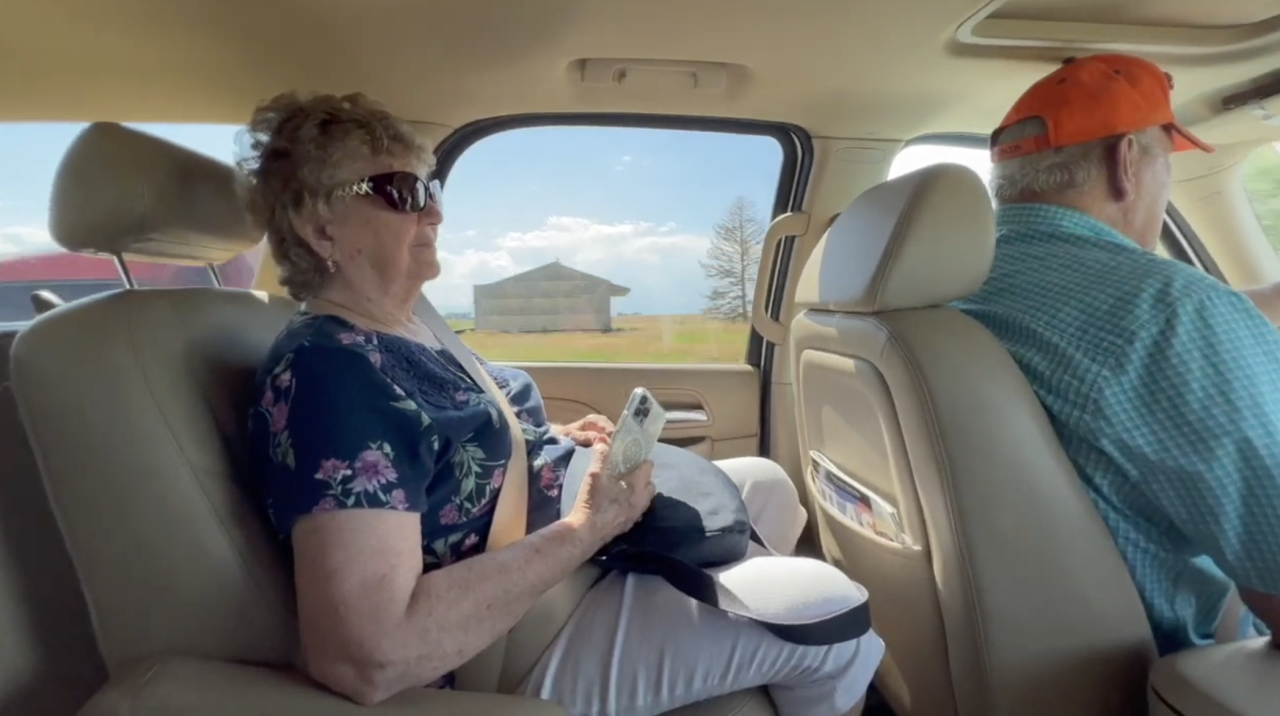
Conrad, just barely 18-year-old, would carry that trauma well into his adult life.
“Finding a body was fairly simple but later on to try and pick that body up and put it in a body bag, that was the tough part.”
While the Weld County community was responding and processing the mayhem, aviation investigators, the FBI and local law enforcement were trying to piece together how a state-of-the-art, widely used passenger plane could suddenly explode into pieces.It wouldn’t take the FBI long to piece it all together.
Their suspect quickly came into focus. An announcer – in a vintage Denver7 news clip – painted the picture.
“John Gilbert Graham, you remember him? He planted a bomb in a suitcase carried by his mother on the United Airliner.”
Denver District Attorney’s Office

It had never happened before in the United States.
As part of the investigation, every piece of baggage carried on board by a United Flight 629 passenger was scrutinized,
The FBI focused on the destroyed luggage of Daisie E. King, a 54-year-old Denver woman.
King, according to the FBI, was carrying several items with her on the plane that were recovered.Those items included personal letters, a checkbook, an address list, two keys for safe deposit boxes and newspaper clippings about her family, including her 23-year-old son, John “Jack” Gilbert Graham.
Graham had been charged with forgery several years earlier and was placed on a “most wanted” list by the Denver County District Attorney, that newspaper clipping showed.
FBI
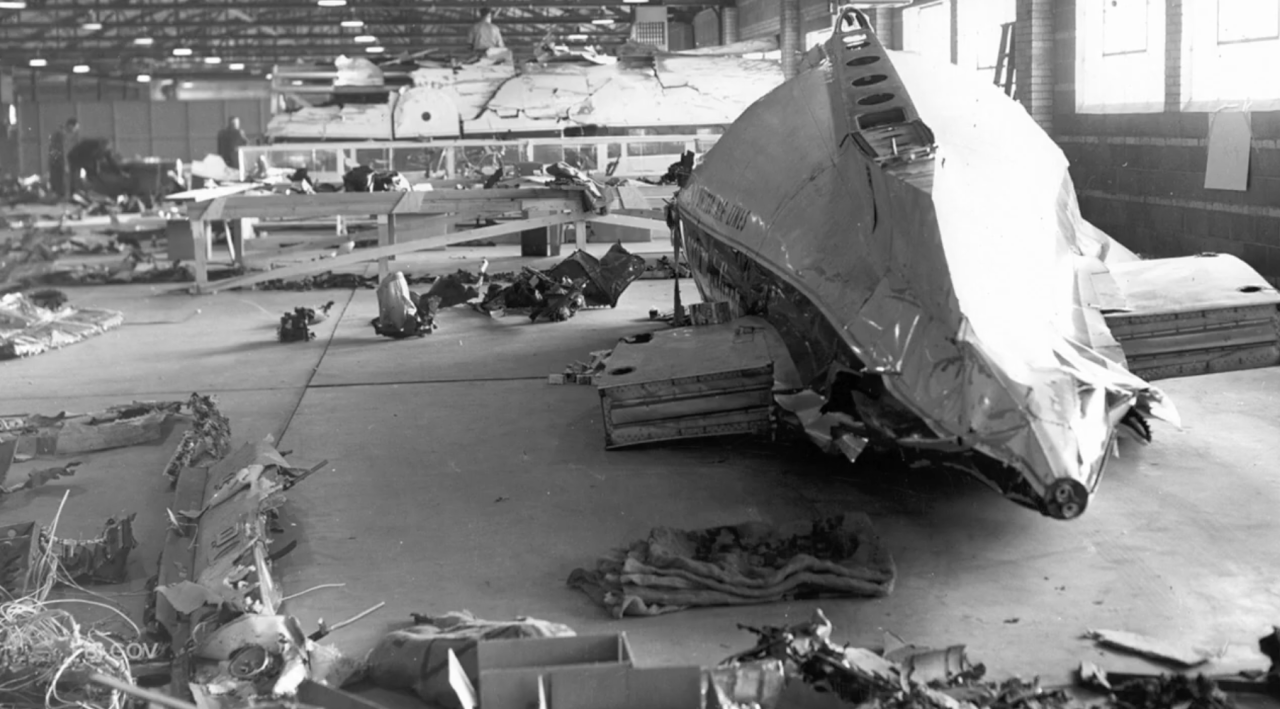
The investigation focused on King and the fraught relationship with her son.
Graham, the FBI learned, was to receive an inheritance but the mother and son had argued for years. He had lived with other family members through the years and left home at 16.
While Graham returned to Denver to help run his mother’s drive-in restaurant, they still “fought like cats and dogs,” according to the FBI.
On the day of Flight 629’s demise, Jack Graham was planning to give his mother an early Christmas present, believed to be a set of small tools. He had apparently searched all day for the special gift, a neighbor later told investigators.
Denver7
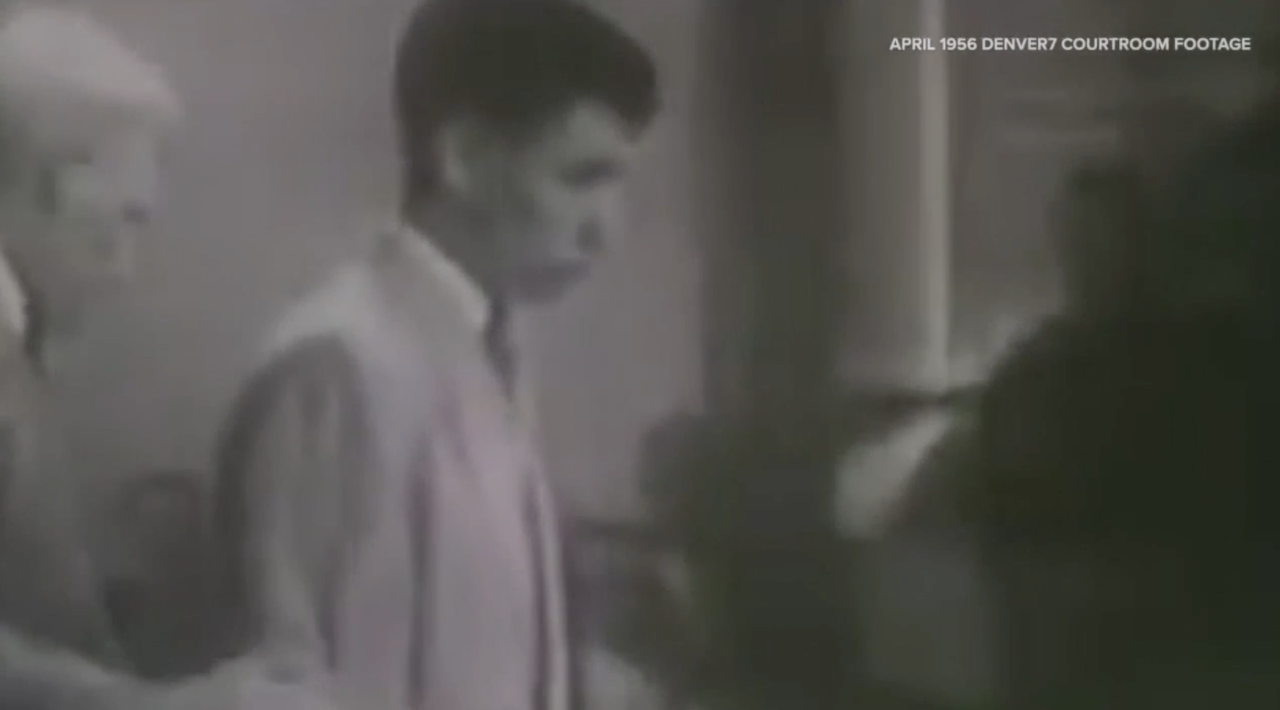
Graham, his wife recalled to the FBI, brought the package into the house and carried it to the basement, where his mother had been packing her luggage.
King finished packing, and the family loaded into Graham’s 1951 Plymouth and headed across town to the airport.
He later admitted to the explosion of Flight 629. He said he built a time bomb, with 25 sticks of dynamite and placed it into his mother’s luggage.
Justice was swift. Just 14 months after the terror and a quick trial, Graham was executed.
Rocky Mountain News via Denver Public Library

The dark headlines began to fade into history.
Marian Poeppelmeyer, who never got to know her father, adds that during tragedies, too much focus lands on the perpetrator and not the victims.
Through the power of faith she found healing to write a book about her traumatic journey. Over the last 2 years, Marian has bonded with the Hopps’ and other Weld County citizens who tried to save anyone they could.
The explosion of United Airlines Flight 629 was one of the first attacks on a commercial airliner in the United States. Murdered were 44 people – a five-person crew and 39 passengers including a 13-month-old boy.
Denver7
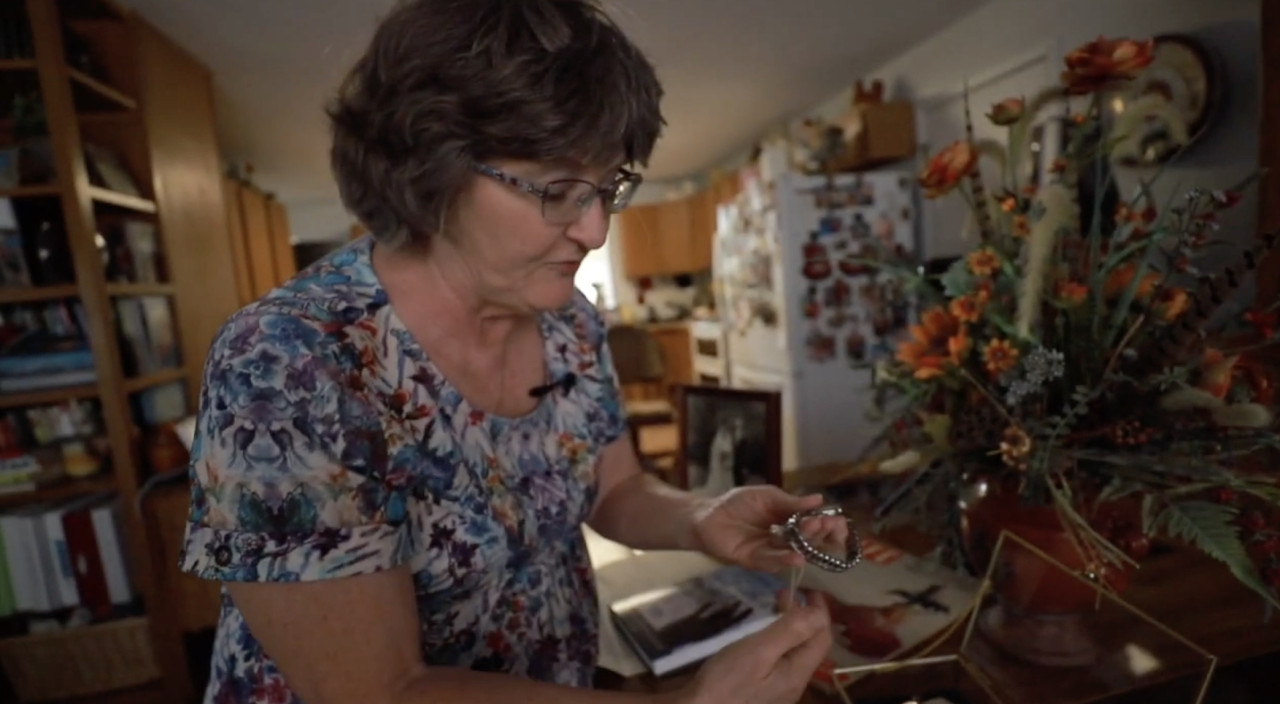
But nearly 69 years later, driving through Longmont or the roads surrounding those Weld County beet fields there’s no sign or monument marking the deadliest act of mass murder in Colorado history.
“It’s important to me because nothing has ever been done for the passengers who lost their lives and nothing has been done for the families whose lives were totally shattered by what happened on November 1, 1955,” Marian said through tears.
Visiting those beet fields where her dad died has been a healing step but she dreams of the day when there’s a place to also honor not only the victims but the heroic citizens and first responders.
“’I’ve encountered people here who have never known the history. And why? Because it got shoved underneath and became quiet. It was too traumatic for this area. How do you even speak of it?” she added.
Denver7
Marian, who lives out of state, first traveled to Weld County a couple of years ago to visit the scene and met Becky Tesore, a local resident. The two quickly bonded over shared faith and Tesore felt called to serve and help in any way for the future of a Flight 629 memorial.
“I was at a publishers conference and this lady came up to me and said, Becky, you live in Weld County, I need a place to stay – and it was Marian Poeppelmeyer,” said Tesore. “And she had her book at the conference, ‘Finding My Father’ – which is a great book on healing – I just love it. And so we got to know each other.”
The two grew a greater movement in the community attracting fellow citizens who felt called to serve and right a wrong. “I would say 99.5% of the people do not know about Flight 629,” Tesore said. “It kind of shocks them and it pulls them in, and they’re like, I’m so glad I now know and then I give them our website, which is like flight629memorial.org.’
Denver7

Together, Marian and Becky drove hundreds of miles around the area going to appointments, speaking to local groups and inspiring others to believe in a tribute to the victims, families and heroes of United Flight 629.
A group of local citizens formed the Flight 629 Memorial and Unsung Heroes Across America Committee of which Tesore serves as Vice President. The memorial board’s president, Greg Raymer, has worked hard on a weekend concert event at Rialto Theater in Loveland to help raise money.
The first fundraising event is a concert at the theater on Saturday, August 3, 2024 runs from 7 p.m. to 9 p.m. and features Christine Alice and the Canyon Echos. The group hopes to raise money from the event and further share the story of Flight 629.
“Tickets are $25 until the day of and then we’ll be back at $30,” said Becky. Tickets can be purchased at this link and they say every dollar helps so that the history of Flight 629 can finally be properly honored – for today and future generations.
“They weren’t taught they weren’t talking about it. One of our members Conrad Hopps said he didn’t tell his kids till years later, so he is so thankful that he’s getting healed of it.” added Becky. “And we don’t want this generation to pass away without seeing the results of what they did that night by going out. Many were traumatized by the events that they saw.”
In the video player below, Watch Marian Poeppelmeyer share her journey of healing through trauma
The bombing of United Airlines 629 and a journey to forgiveness
As fundraising efforts ramp up, including the launch of a Flight 629 GoFundMe page, Becky and the committee are working toward an important date.
“The mission is to try and have a memorial or ribbon cutting by November 1, 2025 as that will be the 70th year. We are really going to try and get the memorial up,” Becky said. “And we have seen God do amazing things in the process of this journey, so we’re still believing for it.”
She says the committee needs $26,000 to order material for the memorial.
Marian is returning to Colorado over several days in August to speak at local community centers about her father’s tragedy and her healing journey. She’ll share her story on Monday, August 12 between 2 and 4 p.m. at the Carbon Valley Parks and Recreation Center in Firestone.
The night a Denver man blew up his mother’s flight
She’ll also be at the Carbon Valley Public Library on Wednesday, August 14 from 6 p.m. to 8:30 p.m.She has appearances scheduled in Greeley and Longmont, all of which are detailed on her Facebook page.
“It took great courage to do what 18-year-olds did, what teenagers did and what fathers and mothers did on the field that night,” said Marian.
And while the future site and logistics of the memorial are still a work in progress, all are on the same path to create a space where those who through the years suffered trauma, like so many first responders and citizen heroes do, have a place to remember what happened in those beet fields, honor the lives cut short and find the gift of healing.
“It’s not just about me, my dad is about 43 other families that were involved,” Marian reflected. “And it’s about the history and legacy of Weld County.”
Watch the full video special report in the video player below:
A mission to build a memorial honoring the bombing of Flight 629 in Colorado
Coloradans making a difference | Denver7 featured videos
At Denver7, we’re committed to making a difference in our community. We’re standing up for what’s right by listening, lending a helping hand and following through on promises. See that work in action, in the featured videos in the playlist above.


The Nuggets are declining Jalen Pickett’s fourth-year team option for the 2026-27 season, releasing him from his contract, league sources told The Denver Post.
Former Nuggets general manager Calvin Booth drafted Pickett with the 32nd overall pick in 2023. The 6-foot-2 reserve combo guard has struggled to break into Denver’s everyday rotation throughout his first three years in the league.
His $2.41 million salary next season would’ve offered the Nuggets a sliver of cap relief, but they chose instead to move on from the former Penn State star. Monday was the deadline to make a decision on his option.
Pickett, 26, averaged 5.2 points, 2.3 rebounds and 2.3 assists in 16.1 minutes per game last season. He appeared in 50 games, highlighted by a career-high 29-point, seven-assist performance in January to lead the Nuggets in an upset over Philadelphia without their entire starting lineup.
Pickett is shooting 38.7% from the 3-point line on two attempts per game in his first three years. He also boasts a sturdy 3.63 career assist-to-turnover ratio.
But he’s remained a deep bench option under two different head coaches in Denver, from Michael Malone to David Adelman. Booth was fired in April 2025. Then, new co-general managers Jon Wallace and Ben Tenzer signed veteran point guard Tyus Jones off the buyout market late last season when the Nuggets wanted ball-handling depth. Jones received playoff minutes over Pickett during their first-round series against the Timberwolves.
Want more Nuggets news? Sign up for the Nuggets Insider to get all our NBA analysis.


Firefighters say a car crash was the cause of a large fire that broke out north of the Denver International Airport on Saturday afternoon.
The Brighton Fire Rescue District says a vehicle was traveling through the area of E. 120th Avenue and N. Watkins Road around 2 p.m. when it crashed. Fortunately, the people inside the vehicle did not suffer serious injuries, but the fire department says the vehicle’s catalytic converter caught the nearby grass on fire.

The 120 Fire quickly grew, and firefighters responded with engines, brush trucks and water tenders to attack it from multiple sides. Multiple agencies responded to assist as the winds continued to push the fire across the grassland.

It covered around 237 acres by the time firefighters brought it under control around 3:30 p.m. BFRD says firefighters continued to put out hotspots and monitor a large cottonwood tree that was smoldering nearly 30 feet up the trunk.
With Independence Day approaching, the fire rescue district shared a reminder that a single spark can ignite a fast-moving grass fire. They added that aerial fireworks are illegal in Brighton and pose a serious fire risk in the current conditions.
-

 Los Angeles, Ca3 minutes ago
Stolen Sea Scouts boat found in Marina del Rey, suspect arrested
-

 Detroit, MI25 minutes ago
Michigan House passes bill to restrict big investors from amassing single-family homes
-

 San Francisco, CA33 minutes ago
San Francisco rolls out heightened security measures ahead of World Cup knockout match, 4th of July
-

 Dallas, TX40 minutes ago
Klyde Warren Park reveals expansion plans, construction timeline
-

 Miami, FL43 minutes ago
Person hospitalized after fire breaks out at North Miami Beach apartment building
-

 Boston, MA48 minutes ago
Scottish soccer fan who died in Boston was ‘Tartan Army to his core,’ fundraising page says – The Boston Globe
-

 Denver, CO55 minutes ago
Nuggets decline Jalen Pickett’s team option for 2026-27 season, sources say
-

 San Diego, CA58 minutes ago
Former City Manager, Jack McGrory: Straight Talk About San Diego, Part 2

