Midwest
Missouri halts release of man with overturned murder conviction as he was about to go free

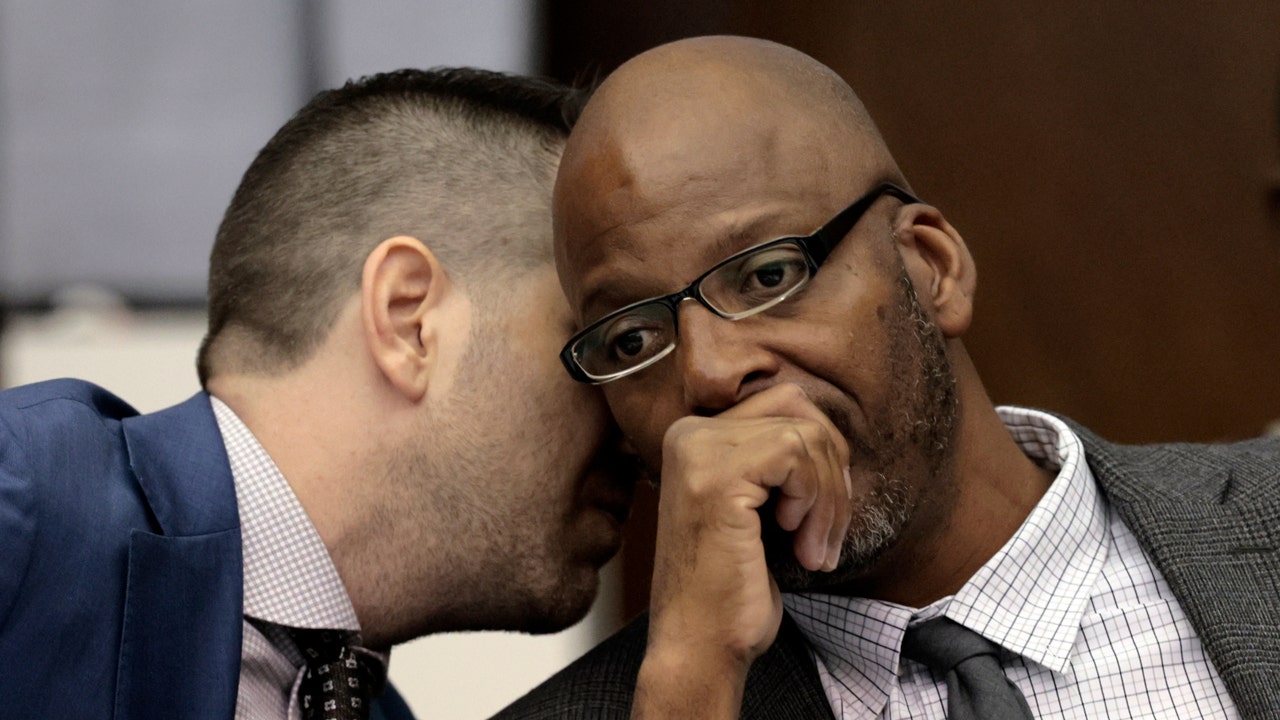
- While Christopher Dunn, whose murder conviction was overturned, was signing paperwork to be released from prison, the Missouri Supreme Court issued a ruling that put his freedom on hold.
- Among the key evidence used to convict Dunn of first-degree murder was testimony from two boys who were at the scene of the shooting. Both later recanted their testimony, saying they had been coerced by police and prosecutors.
- Attorney General Andrew Bailey’s office has opposed challenges to several convictions.
The Missouri Supreme Court halted the immediate release Wednesday of a man whose murder conviction was overturned — just as the man was about to walk free.
A St. Louis Circuit Court judge had ordered Christopher Dunn, now 52, to be released by 6 p.m. CDT Wednesday and threatened the prison warden with contempt if Dunn remained imprisoned. But Republican Attorney General Andrew Bailey has been fighting Dunn’s release.
The situation was chaotic as the deadline set by the judge approached. Corrections Department spokesperson Karen Pojmann told The Associated Press that Dunn was out of the prison facility and waiting for a ride. His wife told the AP she was on his way to pick him up. Minutes later, Pojmann corrected herself and said that while Dunn was signing paperwork to be released, the Missouri Supreme Court issued a ruling that put his freedom on hold.
77-YEAR-OLD PHILADELPHIA MAN RELEASED AFTER SERVING DECADES IN PRISON FOR A MURDER HE SAYS HE DID NOT COMMIT
St. Louis Circuit Judge Jason Sengheiser overturned Dunn’s murder conviction Monday, citing evidence of “actual innocence” in the 1990 killing. He ordered Dunn’s immediate release then, but Bailey appealed, and the state Department of Corrections declined to release Dunn.
St. Louis Circuit Attorney Gabe Gore had filed a motion Wednesday urging the judge to immediately order Dunn’s freedom.
“The Attorney General cannot unilaterally decide to ignore this Court’s Order,” Gore wrote.
Christopher Dunn, right, listens to his attorney Justin Bonus, left, during the first day of his hearing to decide whether to vacate his murder conviction on May 21, 2024, at the Carnahan Courthouse in St. Louis. A Missouri judge on July 24, 2024, overturned the conviction of Dunn, who has spent more than 30 years in prison for a killing he has long contended he didn’t commit. (Laurie Skrivan/St. Louis Post-Dispatch via AP, Pool, File)
An attorney for the Department of Corrections told a lawyer in Gore’s office that Bailey advised the agency not to release Dunn until the appeal plays out, according to a court filing. When told it was improper to ignore a court order, the Department of Corrections attorney “responded that the Attorney General’s Office is legal counsel to the DOC and the DOC would be following the advice of counsel.”
Dunn’s attorney, Tricia Rojo Bushnell, the executive director of the Midwest Innocence Project, expressed her frustration.
“What is this bringing to taxpayers in Missouri? What is this use of our resources and our state’s time getting us?” she said. “All it’s doing is keeping innocent people in prison.”
Dunn’s wife said while driving to the prison that they were numb when he didn’t get out earlier this week.
“If you know a little about the story, you know we’ve had a lot of disappointments where we thought we’d finally get his freedom and it was snatched away,” Kira Dunn said. “So we were just bracing ourselves.”
Dunn’s situation is similar to what happened to Sandra Hemme.
The 64-year-old woman spent 43 years in prison for the fatal stabbing of a woman in St. Joseph in 1980. A judge on June 14 cited evidence of “actual innocence” and overturned her conviction. She had been the longest held wrongly incarcerated woman known in the U.S., according to the National Innocence Project, which worked to free Hemme.
Appeals by Bailey — all the way up to the Missouri Supreme Court — kept Hemme imprisoned at the Chillicothe Correctional Center. During a court hearing Friday, Judge Ryan Horsman said that if Hemme wasn’t released within hours, Bailey himself would have to appear in court with contempt of court on the table. Hemme was released later that day.
The judge also scolded Bailey’s office for calling the warden and telling prison officials not to release Hemme after he ordered her to be freed on her own recognizance.
Dunn, who is Black, was 18 in 1990 when 15-year-old Ricco Rogers was killed. Among the key evidence used to convict him of first-degree murder was testimony from two boys who were at the scene of the shooting. Both later recanted their testimony, saying they had been coerced by police and prosecutors.
At an evidentiary hearing in 2020, another judge agreed that a jury would likely find Dunn not guilty based on new evidence. But that judge, William Hickle, declined to exonerate Dunn, citing a 2016 Missouri Supreme Court ruling that only death row inmates — not those like Dunn sentenced to life in prison without the possibility of parole — could make a “freestanding” claim of actual innocence.
A 2021 law now allows prosecutors to seek court hearings in cases with new evidence of a wrongful conviction.
Although Bailey’s office is not required to oppose such efforts, lawyers for his office said at the hearing that initial testimony from two boys at the scene who identified Dunn as the shooter was correct, even though they recanted as adults.
He also raised opposition at a hearing for Lamar Johnson, who spent 28 years in prison for murder. Another St. Louis judge ruled in February 2023 that Johnson was wrongfully convicted, and he was freed.
Another hearing begins Aug. 21 for death row inmate Marcellus Williams. Bailey’s office is opposing the challenge to Williams’ conviction, too. Timing is of the essence: Williams is scheduled to be executed Sept. 24.
Steven Puro, professor emeritus of political science at St. Louis University, said Bailey is in a highly competitive race for the attorney general position with the primary quickly approaching on Aug. 6.
“Bailey is trying to show that he is, quote, ‘tough on crime,’ which is a very important Republican conservative position,” he said. “Clearly, he’s angering members of the judicial system that he will have to argue before in the future. But he’s making the strategic notion that he needs to get his name before the voters and try to use that to win the primary election.”
Michael Wolff, a former Missouri Supreme Court judge and chief justice, agreed, saying it seems this has become political for Bailey.
“But one of the things is that no matter what your beliefs are, if a court orders something to happen, it’s not your purview to say no,” he said. “The court has to be obeyed.”
Read the full article from Here



A look at President Trump’s picks in 2026 Michigan election
Detroit Free Press reporter Clara Hendrickson breaks down President Donald Trump’s endorsements in Michigan.
Michigan’s upcoming GOP gubernatorial primary doesn’t offer voters competing conservative visions for the state’s future. Instead, the contest appears poised to test President Donald Trump’s strength among his party’s base in a battleground state he has both won and lost.
Just days before absentee voting began in the state, Trump intervened in the race with his endorsement of U.S. Rep. John James, of Shelby Township, on June 22, saying he “has proven that he has the Courage and Wisdom to deliver strong results for the incredible people of his wonderful State, and our Nation.” Mere hours after Trump’s announcement, Michigan Senate Minority Leader Aric Nesbitt, R-Porter Township, dropped his bid for governor, joining other Republicans who previously criticized James but announced their support for him after the Trump endorsement. Former Attorney General Mike Cox and businessman Perry Johnson promised to stay in the fight for the GOP gubernatorial nomination.
Some have cast James as the all-but-assured nominee now that he has Trump’s endorsement. Most Trump-backed candidates for governor have won their primaries this year, according to election tracker Ballotpedia.
“It was already most likely his, but now with the Trump endorsement it is going to make it hard for any other candidate … to come out of this primary who is not John James,” said Andrea Bitely, founder and principal at Bitely Communications who previously served as chief communications officer for former Detroit Mayor Mike Duggan’s since-ended independent campaign for governor.
But Michigan Democratic Party Chair Curtis Hertel, in a statement, pointed to losses in Iowa and Georgia for Trump’s picks in GOP contests to declare the “MAGA primary far from over.”
After previously calling Trump’s support “invaluable” in a Republican primary, Johnson, in a Facebook post, celebrated GOP voters who have rejected Trump’s endorsed candidates, saying they “chose the candidate they believed could actually win.” Johnson cited Trump’s track record of picking election losers in Michigan. “President Trump received bad advice yet again,” he said. “If we want a Republican governor in Michigan, defeating John James in this primary is critical.”
Every Trump-backed Republican running for statewide office in Michigan has prevailed in the primary but none went on to win in November. Trump, in his bids for president, won the state in 2016 and 2024 but lost in 2020.
Not arguing over policy
Even as the Republican candidates have fought over their loyalty to Trump ahead of the upcoming Tuesday, Aug. 4, primary, the intraparty contest has displayed unity on a policy agenda for Michigan.
The Republican candidates have centered their campaigns on similar promises. For instance, they all want to eliminate the state income tax — pitching it as a form of economic relief that will spur population growth — and lower property taxes.
“I think the issue they all seem to be fighting with each other about is who Donald Trump loves more,” said Allie Walker, president of communications firm Truscott Rossman, before Trump weighed in on the race.
Kristin Combs, a Republican operative and founder of the Lansing-based political consulting firm Bright Spark Strategies, echoed Walker. “They’re all trying to be the bigger fan of Trump, the bigger champion of Trump policies,” she said before Trump endorsed James.
The candidates have all sung from the president’s songbook, spreading election disinformation and vowing an immigration crackdown.
Democrats have cast the midterm election as a referendum on Trump’s policies. But Republican political consultant Jamie Roe says voters in Michigan will look forward, not backward this fall. “I think that this is going to be a referendum on the direction voters want to take our state in the future,” Roe said.
The GOP nominee will face the winner of the Democratic primary between Secretary of State Jocelyn Benson and Genesee County Sheriff Chris Swanson.
Republican candidates have cast the choice in dire terms as they argue Michigan needs a conservative leader to replace Whitmer. “Our state’s going to s—,” Cox told the Detroit Free Press Editorial Board in an interview. “Michigan is on fire,” said James in his interview. “Michigan’s government is pathetic,” Johnson says in a campaign video in which he promises to “save our state.”
In their pitch to turn Michigan around, each candidate touts a biography they say provides a unique electoral strength.
Cox moves off the political sidelines
The last time Cox — a Livonia Republican — ran for office was in 2010 when he lost the GOP gubernatorial primary. As he mounts a return to politics, he is quick to note that he is the only Republican running for governor who has ever won statewide.
Michigan voters twice elected him to serve as attorney general, an office he held from 2003-10. Before that, he worked as a Wayne County prosecutor and led its Homicide Unit. On the campaign trail, Cox has highlighted his prosecutorial background and agenda to curb violent crime in Michigan. If elected governor, he said public safety would be a priority. “Cox recognizes safety as the foundation for jobs, education, and prosperity and will work every day as Governor to make Michigan safe again,” his campaign platform reads.
While businessman Johnson is the main self-funded candidate in the race, Cox has also poured millions of his own cash into his campaign. Cox ‒ despite his tenure in Michigan politics – has tried to paint his opponents as the insiders in the race. In one ad, he attacks James and Johnson as “career politicians and elites who are failing us.”
After Trump endorsed James, Cox touted his record supporting the president and expressed confidence in his campaign. “I look forward to being President Trump’s favorite governor when I win,” Cox said in a statement.
James ‒ the congressman railing against DC in pivot to state
James is the only candidate in the race who has served in Congress but he has tried to distance himself from the moniker of a Washington, DC candidate. “Well, we know Washington’s full of crap,” James says in one campaign ad. “I hate politics, but I love this country. I love my state,” James told the Detroit Free Press Editorial Board.
James – a conservative darling – makes regular appearances on Fox News and has received financial backing from members of the DeVos family, the wealthy west Michigan family with a history of backing Republican causes.
On policy, James is the only candidate in the race with an agenda that heavily focuses on Whitmer’s handling of the COVID-19 pandemic, casting it as a government overreach in need of a remedy even years later. His proposed “COVID Legal Enforcement Accountability & Relief” or “CLEAR Initiative” promises to refund individuals and businesses fined for COVID-related violations.
After losing two U.S. Senate elections in 2018 and 2020 in which he had Trump’s endorsement, James won a competitive seat in the U.S. House of Representatives in 2022 for part of Macomb County and Oakland County’s Rochester and Rochester Hills. His bid for governor leaves open the race for his seat.
A recent ad from the pro-James PAC Mission Michigan casts Cox and Johnson as insufficiently loyal to Trump compared with James, garnering pushback from the congressman’s opponents. James’ camp has gone beyond the ad wars with a last-ditch attempt to derail Johnson’s campaign that floundered in late May when election officials certified the candidates for the ballot. Citing an affidavit from a Johnson campaign consultant, the pro-James PAC Mission Michigan alleged deficiencies with the petition sheets containing Michigan voters’ signatures submitted by Johnson to land a spot on the August primary ballot.
The affidavit stated that the petition sheets were run through a printer to add a statement that the Johnson campaign paid for them after voters had signed them. Mission Michigan said the disclosure is legally required even though James’ petition sheets lacked the information altogether, according to the Michigan Department of Elections.
The state’s elections panel — which wasn’t provided a copy of the affidavit — dismissed calls to investigate Johnson’s petitions. Michigan Elections Director Jonathan Brater said election law did not provide a basis for rejecting Johnson’s petitions because of an alleged retroactive addition of a disclosure. But Brater didn’t rule out the possibility that it violated the state’s campaign finance law. The Bureau of Elections never received a campaign finance complaint against Johnson for his petition sheets.
The certification battle was just one twist in the ongoing campaign war between James and Johnson.
Johnson promises to run government like a business
Not long after launching his campaign, Johnson sued James for suggesting to voters in a campaign logo that he is the incumbent. Johnson won a preliminary injunction barring James from using a “John James Governor” logo.
Johnson, of Bloomfield Hills, has never held elected office. He has used his wealth to self-fund a campaign in which he argues that he can bring a business acumen to state government.
The self-proclaimed “quality guru,” known for his work with the auto industry at the turn of the 21st century, has promised to run state government like a business. He has proposed, for instance, a “Michigan Efficiency Government Audit” or “MEGA Audit” which would enlist “private-sector efficiency experts” to review state government and identify opportunities to cut spending and eliminate ineffective programs.
Johnson has poured his own money into the race with more than $23 million in ad spending, according to AdImpact data obtained by the news outlet Bridge Michigan. He has framed his bid as a form of philanthropy, saying he wouldn’t take the governor’s salary if elected. “… I’m at a point in my life when I want to give something back,” he said in an interview on Michigan Public’s podcast “It’s Just Politics”.
Johnson ran for governor in 2022, but he didn’t make the ballot after a signature scandal ended his bid, leading to criminal convictions for leaders of circulator companies that defrauded the GOP campaigns.
The next election cycle, he launched a long-shot, short-lived bid for president before endorsing Trump. From the stage of the Republican National Convention in 2024, Johnson praised Trump. “He has the heart of a lion, the brain of a genius and he’s done it before. President Trump is ready to save our country to make America great again again,” Johnson said.
But to “make Michigan great again” – as all of the Michigan GOP gubernatorial candidates have vowed – Johnson has bet against the president’s electoral strategy this time.
Contact Clara Hendrickson at chendrickson@freepress.com or 313-296-5743.

When thousands of immigration agents flooded Minnesota earlier this year, a loose network of neighbors sprang into action. They fed each other. They got kids to and from school safely. They tracked the surge that tore through their communities.
After organizing, block by block, to monitor Donald Trump’s extraordinary crackdown on their state, the same neighbors are shifting their focus to a different threat. What if the US president tries to steal an election?
Defending democracy can feel abstract – almost theoretical – until it is required. But a controversial, aggressive and deadly deployment of federal agents felt like a distant prospect on the streets of Minnesota, too, until the president ordered Operation Metro Surge.
With November’s midterm elections approaching, one of the groups that taught Minnesotans to document immigration enforcement has now launched democracy defense trainings, encouraging people to knock on every neighbor’s door to help them vote and, if need be, respond to attacks on the election.
“There is a general, very visceral concern that this administration is planning to ensure that the elections go their way by any means necessary,” said Jess, who trained about 2,500 people on constitutional observation across dozens of lessons during the immigration crackdown.
Jess, a former federal worker who was fired during Elon Musk’s so-called “department of government efficiency” drive last year, asked to use her first name only for fear of retaliation.
‘Basic stuff’
Dozens of neighbors poured into a stuffy Minnesota church basement on a steamy Tuesday evening in June, finding their seats on tables marked with the geographical area where they live.
They had lived through an assault by the Trump administration on the state which killed two local residents and deported many hundreds more.
They knew to take Trump’s threats seriously. They wanted to learn how they could protect elections.
“We’ve got to make sure that everybody who wants to vote can vote, and everybody’s vote is counted, and those votes and the will of the majority is respected,” said David Brauer, who helped lead the training for Monarca, a project of social justice group Unidos MN.
“Basic stuff, but so crucial right now. But that’s just the first step. Once they’re cast, we know we’ll have to defend them.”
The training is designed to get citizens thinking about what Trump and his allies could do to undermine the voting process and election results. The exercises are theoretical, for now, but based on reality: the president has already sought to undermine the results of California’s elections and said they will be investigated, a sign of more to come in the midterms.
Defending democracy, aside from voting, is often seen as the work of elections officials who count and confirm vote totals, or of nonprofits that file lawsuits over restrictive voting laws. Officials in some states have worked to put laws in place to try to fend off federal overreach. They’re beefing up election security measures and solidifying processes to inform the public of how elections work, anticipating misinformation coming from the White House, like it did in California’s recent primaries.
But in an era of explicit partisan gerrymandering that diminishes voting power for Black people, and of a president who frequently denies the results of election which don’t go his way, defending democracy requires all hands on deck.
Advocates of the block-by-block strategy say it helps keep eyes on election processes. After all, people vote by precinct – where they live.
In 2020, when Trump and his allies sought to overturn the results of the presidential election he lost to Joe Biden, institutional guardrails held: then vice-president Mike Pence did not halt congressional proceedings that confirmed the results, and pressure on state officials to impede their results largely did not work.
Times have changed, though. Trump has filled his government with loyalists, and there’s a growing apprehension that institutional protections may not hold.
In Minnesota, the president’s threats carry weight. Organizing within the community can feel daunting. People are burnt out after months of day-to-day activism. They worry about how the administration could seek to criminalize their activities. (The Department of Justice has charged nearly 40 people over a protest at a church, and another 15 more with broad conspiracy charges for their responses to Immigration and Customs Enforcement, not to mention the hundreds detained and deported from the state.)
Protect Democracy, a nonprofit that advocates against authoritarianism, called the charges against the anti-ICE activists one sign of how the administration could seek to undermine the vote this year. It’s part of a “disrupt” strategy that seeks to deploy federal power against opponents, the group said after the charges against the 15 Minnesotans were filed.
“The Department of Justice is attempting to intimidate critics and punish those who organize to expose the administration’s abuses,” said Jess Marsden, Protect Democracy’s counsel and director of impact programs. “They know how much easier it is to tilt the electoral playing field if people stay home and stay quiet, which is why it’s important to name these abuses now, push back against attacks, and prepare for additional action ahead of November.”
‘What do you do?’
The democracy defense trainings started in Minnesota in late April. Already hundreds have signed up, according to Luis Argueta Jr, communications director of Unidos MN, who said he is not aware of similar ground-level trainings elsewhere in the country. He has been hearing from groups in other states, though, curious about how the sessions are going.
On the night of the training at the suburban church, there were trainings at four other locations in the Twin Cities, Argueta said. Word of mouth has spread among community groups, just like it did around the previous trainings on constitutional observing.
Attacks on democracy have been a “continuous concern”, with people routinely worried about immigration agents at the polls, Argueta said. He’s heard fear from newly naturalized citizens, in particular, over voting, including a concern that if they vote, their loved ones who are not naturalized could be somehow exposed.
While the bulk of immigration agents left the state, some people have remained fearful of harassment or detention if they leave, he said. A plan to convert a private prison into a detention facility amplified worry again, as did additional apprehensions this summer throughout the state.
“So, what do you do?” Argueta said. “Do you sit around and wait and hope that nothing happens, or do you start building something, do you start organizing and making sure that people are able to actually step up and defend?”
In the church basement, Brauer told the crowd that they, like him, might be a “checklist person”, who wants to simply check off five tasks and then win democracy. That’s not how it works, he said. The purpose of the training is not to solve the fundamental problems of democracy, but to get organized and have a plan to respond to whatever the Trump administration throws at it.
The audience shared with each other what made them proud of Minnesota during the federal occupation, and what democracy defense meant to them. It was motivating and empowering to see people move outside their comfort zone, one attender said, even if they were nervous or scared. They would need to embrace discomfort again to defend democracy.
‘As many people as possible’
Threats to elections are already playing out. Louisiana threw out tens of thousands of votes in order to redraw maps to dilute Black voting power. Republican leaders have said they want to see immigration agents or troops at polling places. The federal government has seized ballots in Georgia as part of an endless quest to prove fraud in the 2020 election.
But what defending democracy could look like on the ground isn’t exactly clear yet. It could be get-out-the-vote efforts that ensure your neighbors have a ride to the polls. It could be signing up to work as election judges, or sitting near your polling place to monitor whether immigration agents show up. It could be protesting or lobbying local officials if they face pressure to undermine the vote. It could be anticipating larger threats to the election.
All of these conversations could come up on a neighbor’s doorstep when they’re asked what they’d be willing to do if someone tries to attack the vote.
The group worked through a scenario to figure out what they could do to defend the vote. In the theoretical exercise, the Department of Justice announced in August 2026 that – in order for people’s votes to be counted – voters needed to appear on newly issued federal voter rolls, resulting in confusing messages just before early voting began.
What should we do, a trainer asked the audience, and how would an organized network allow them to respond effectively to the threat?
One person from the audience said there was no way the federal government could move that fast – a natural reaction, the trainer noted, because people want to argue away the threat. Another said they would get loud, and make sure Minnesota’s elected leaders did the same.
Emilia González Avalos, executive director of Unidos MN, acknowledged that these conversations with neighbors can be difficult, especially if there are outward indicators that you might disagree politically, but there is value in “breaking down the dehumanization amongst us as an exercise of power building”.
The strength built block by block will be reflected to defend access to the polls, she said, and ensure results are ratified.
“We don’t need perfect leaders,” she said. “We just need a regular person that can take responsibility of something, anything, whether it’s a smaller block or a small floor in a building, that’s fine, but take responsibility of something. We need as many people as possible right now.”

Sarah Laub tried everything to get her son with learning disabilities a better education.
She drove him to a private school an hour and a half away from their home in rural Missouri before being directed to the local public school. When he continued to struggle, she tried homeschooling.
The local school district in Stockton, a town with a population under 2,000, just couldn’t provide everything her son needed, despite teachers’ best efforts.
“They really did not have the funds to provide him with everything he needed, and he really, really struggled,” Laub told The Independent.
As her son approached high school, she researched schools near Kansas City and decided to move her family to Blue Springs, a growing suburb with 20 schools awarded a National Blue Ribbon by the U.S. Department of Education. There, her son learned to enjoy his education and immerse himself in activities like theater.
“Seeing the difference that funding made and the difference in resources that a rural school versus a suburban school had was so infuriating,” Laub said. “All kids deserve to have access to those resources.”
For years, she fought for her son to get what he needed, but now she’s bringing her anger to a larger fight — one she believes has vast implications for public schools statewide.
Laub is part of a coalition called Parents for Missouri Public Schools that is organizing families against a proposed constitutional amendment that would allow state lawmakers to raise sales and use taxes in order to repeal the state’s income tax. Fueled by parents worried about the future of their kids’ schools, the organization is one of many groups labeling Amendment 5 an affront to public education.
The fight over Amendment 5 has largely been framed as a tax debate, with those in favor of the proposal pitching it as a way to drive more business to Missouri. But for public school advocates, the central question is what happens to classrooms if the state phases out a tax that supplies a major share of general revenue and replaces it with sales taxes under the purview of the state legislature.
“Amendment 5 could dramatically harm the bottom line of public education funding in a time in which public schools cannot take another hit,” Molly Fleming, a professional organizer behind Parents for Missouri Public Schools, told The Independent.
State funding of public schools came up $138 million short this fiscal year due to the state budget’s overreliance on lottery and gaming taxes, reducing the amount of per-pupil funding by a couple hundred dollars. The discrepancy has a disproportionate effect on schools who rely more heavily on state support, which tend to be Missouri’s rural districts.
The budget lawmakers passed this spring, which has yet to be signed by Gov. Mike Kehoe, keeps funding flat, coming $190 million under what the state’s formula for determining aid to public schools called for. And officials are predicting lean years ahead as the state reserves dwindle.
“The cut to public-school funding was a very serious thing for me to want to be able to get involved,” Sierra Kilpatrick, a mother of five in North Kansas City and regional organizer with Parents for Missouri Public Schools, told The Independent. “I need to do something, so I don’t feel helpless. I can go out and talk about this.”
Supporters of Amendment 5 argue Missouri should move away from taxing income and toward a system they say would make the state more competitive, attract investment and let residents keep more of what they earn. They have framed the proposal as a way to force lawmakers to modernize the tax code while giving them flexibility to replace lost revenue.
“Other states with no income tax have grown at a pace much faster than Missouri,” Gov. Mike Kehoe said in a recent radio interview. “We’re losing population, they’re gaining population. That isn’t sustainable.”
But opponents say the measure asks voters to trust lawmakers to replace the state’s largest revenue source without guaranteeing that public schools will be protected if the math does not work.
A woman at a pro-Amendment 5 town hall in Grandview earlier this month asked if public schools would face additional cuts, saying she worried lawmakers might not prioritize stable education funding if given more control over taxation.
Republican state Rep. Bishop Davidson of Republic, who sponsored the tax cut amendment, said he thinks public education would benefit from revenues being tied to consumption rather than income.
“States that rely on consumption taxes rather than income tax revenue have more stable budgets and more predictable budgets,” he said.
Davidson’s claim is largely true, with research showing that income tax revenues decline faster in a recession than sales taxes. But policy analysts have varying recommendations to fight volatility, advising states to plan ahead with large reserves or diversify its tax portfolio by not leaning too heavily on one tax system.
Amendment 5 calls for local governments to cut tax rates to keep revenue neutral, since it assumes more goods and services will be subject to both state and local sales tax. It includes a provision barring municipalities from lowering local funding of public schools under these clawbacks, but it does not prescribe any protections at the state level.
The Missouri Budget Project, a left-leaning public policy think tank opposing Amendment 5, estimates that the change could cut school budgets by 18%.
“It really does feel like a tax break for billionaires and millionaires versus safeguarding funding for public schools,” Fleming said. “There are a lot of parents who also are worried about their own bottom line, or worried about increased gas taxes, or whatever it may be.”
Fleming has an extensive background in organizing work, including the formation of a group called Parents for KC Kids which advocated for the passage of Kansas City Public Schools’ bond measure last year. Voters widely approved the $474 million bond, the first capital improvement bond to pass in the city since the 1960s.
Around 90% of those involved in Parents for KC Kids had never campaigned before, Fleming said. The group raised just over $11,000, according to Missouri Ethics Commission filings, contributing to a decisive victory through volunteer efforts and word of mouth.
The families who got involved in the campaign kept their advocacy work going, helping lay the foundation for Parents for Missouri Public Schools.
“When the bond passed, it was like a trigger went off in everyone’s head that, oh my gosh, we can do important things,” said LaNeé Bridewell, a mom in the district. “It is kind of like a bug. We got bit by the bug, and that first one gave us momentum and clarity about our ability to make change.”
Kathryn Evans, a Kansas City mom and nonprofit consultant, was used to helping charitable organizations advocate for themselves but hadn’t yet gotten involved in school matters apart from the parent teacher association. She joined the bond fight to help secure better facilities for neighborhood schools. But after the win, she hasn’t stopped seeing needs.
“Once we won that campaign, I became more aware that there are a lot of threats,” she told The Independent. “We just won a lot of money for our schools so that we can have nicer buildings and facilities, but there are plenty of threats to public education fundamentally.”
Across the state, parents in the Francis Howell School District in St. Charles County took on a similar battle this year.
In April, the county voted on a proposed property tax freeze, which would have stalled local revenue that public schools rely on, with 59% of voters rejecting the measure. The proposal was part of a bill passed by state lawmakers last year that also sought to incentivize sports teams to stay in Missouri.
Jamie Martin, who is president of a group called Francis Howell Forward, partnered with Fleming to educate her neighbors on why frozen property tax rates could harm local schools.
“Because of the property tax fight, I had learned a lot about taxes and how they’re divided up and how they work and how they fund schools,” Martin told The Independent. “So when I saw Amendment Five come on the horizon, I was like, ‘Oh, that is going to have major impacts for public schools,’ and public schools are something I care a lot about.”
Earlier this month, Martin led a training for parents in St. Charles to learn about Amendment 5. Her profession as an education researcher has put her at the front of countless training sessions, but the energy in this room stood out.
“These parents are ready, not just to hear the information and to complain, but these parents are ready to act,” she said.
Over the past few weeks, volunteers with Parents for Missouri Public Schools have held regional meetings in community centers, homes and restaurants. They ask attendees to spread information in a way that fits their schedule, whether it be in social media posts, play dates or more formal campaigning by flyering or making calls.
“The goal is to educate people on this so that they can go out into their communities and educate more people by word of mouth,” Kilpatrick said.
Although summer schedules are busy, Evans said, volunteers are finding ways to work advocacy into their schedules, motivated by the hope of helping their kids’ education.
“We as parents have the highest stakes, but we also have a lot of agency to make a difference in the outcome because of our relationships with each other,” she said. “We are going to be connected as a parent community because we all care about our kids.”
The coalition is also working to influence school boards to pass resolutions warning about potential impacts of Amendment 5. In the past week, school boards in Lee’s Summit and Kansas City have adopted such statements.
Parents for Missouri Public Schools has not taken a partisan stance, instead focusing on the impact to school funding and parents’ personal budgets.
“We are not affiliated in any way with any party,” Evans said. “There is a shared interest in protecting public schools, and that spans all kinds of differences.”
So far, the group has reported one contribution large enough to trigger 48-hour disclosure requirements: a $10,000 contribution from St. Louis-based Missouri Wins Investor Network. Smaller donations will be included in the committee’s July 15 report.
“It is pretty rare that we have an opportunity in Missouri to bring people together across such broad differences to all walk together towards something that we want to protect,” Evans said. “In this case, it is protecting public schools, protecting everyday Missourians.”
-

 Michigan15 seconds ago
Michigan GOP primary for governor sees fierce fights but little debate
-

 Massachusetts5 minutes ago
Battenfeld: AG Andrea Campbell’s errors sting Massachusetts voters
-

 Minnesota12 minutes ago
Anti-ICE organizers shift focus to defend democracy from Trump assault
-
Mississippi15 minutes ago
A new law could create a list of immigrants illegally living in Mississippi. Advocates are alarmed
-

 Missouri20 minutes ago
Missouri parent groups organize with school funding concerns
-
Montana27 minutes ago
Montana Lottery Powerball, Lotto America results for June 27, 2026
-

 Nebraska30 minutes ago
Five-Star Forward Dawson Battie Returning to Nebraska for Official Visit
-

 Nevada35 minutes ago
Nevada National Security Site Museum hosts Cold War history presentation


