Midwest
New report identifies best and worst US states for religious liberty

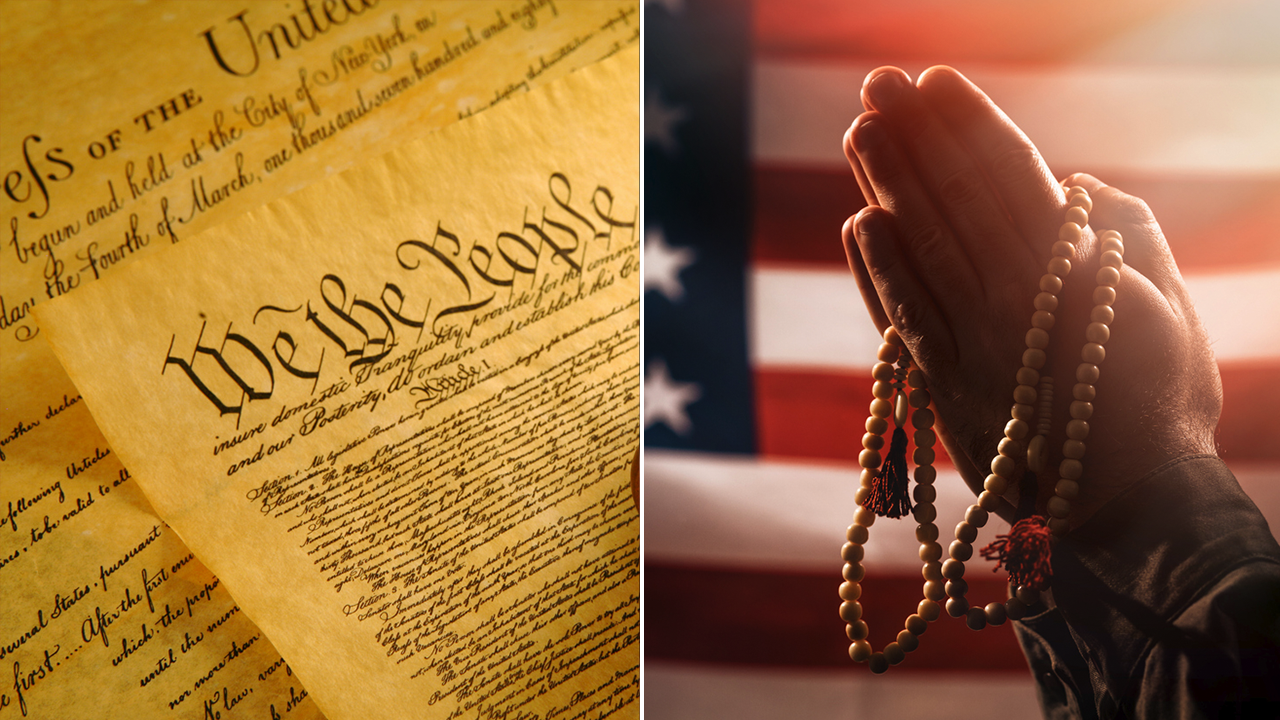
It is the First Amendment of the Constitution that protects religious freedom, with the Establishment Clause and Free Exercise Clause further safeguarding that right.
A recent report by First Liberty Institute, the Texas-based nonprofit Christian conservative legal organization, shows which U.S. states are making good on that promise — with others falling behind.
The nonprofit compared how the 50 states protect religious liberty through legislation.
SOUTH CAROLINA PRIEST SAYS MESSAGE OF UNITY IN PSALM 133 IS NEEDED NOW MORE THAN EVER
The third annual “Religious Liberty in the States” report ranked the states on an index based on 39 legal provisions that states can adopt to protect religious liberty.
After determining whether states have the statutes, the protections are accumulated into 16 “safeguards,” which are averaged to produce one index score per state.
The First Amendment of the Constitution protects religious freedom by prohibiting Congress from establishing a religion or interfering with its free exercise. (spxChrome)
New “safeguards” this year include absentee voting, health-care provisions, health insurance mandates, marriage and wedding issues, religious ceremonial life safeguards, and the Religious Freedom Restoration Act.
“This dynamic index will increasingly represent how well states protect religious liberty in the present and will be less tied to what states did decades ago,” said Paul Mueller, associate director of the project, in a press release.
FLORIDA RABBI REVEALS THE 25 THINGS HE’S LEARNED IN LIFE: ‘HONOR YOUR OWN VALUE’
“Therefore, we expect states to move up (or down) in the annual index ratings based on how actively they choose to protect religious liberty.”
First Liberty Institute released its annual “Religious Liberty in the States” report, which ranked Illinois as the best state for protecting religious liberty. (iStock)
Illinois is again considered the No. 1 state for religious liberty in this report, but its score slipped from 85% to 80% due to its failure to adopt new protections to prevent houses of worship from closing, the organization noted.
Following the Prairie State, Florida, Montana and Arkansas are listed among the top.
Mississippi capped off the top five best states.
First Liberty Institute released its third annual “Religious Liberty in the States” report. (Ildar Abulkhanov)
“Now is the time for every state to do all they can to protect our first freedom,” said Kelly Shackelford, First Liberty Institute’s president, CEO and chief counsel, in the release.
“The Religious Liberty in the States index empowers citizens with the knowledge they need to push to ensure their religious liberties are more fully protected.”
For more Lifestyle articles, visit foxnews.com/lifestyle
Listed at the bottom by First Liberty are California, ranked 48th, and Alaska, at 49th place.
The worst state for religious liberty based on the report is West Virginia at 25%.
First Liberty Institute noted that the state’s score rose from the previous year from 14%, due to the adoption of the Religious Freedom Restoration Act.
The worst state for religious liberty based on the new report is West Virginia, according to a First Liberty Institute report. (spxChrome; Ildar Abulkhanov)
West Virginia’s Gov. Jim Justice, a Republican, signed the law in March prohibiting the state from substantially burdening someone’s constitutional right to freedom of religion unless doing so “is essential to further a compelling governmental interest,” the Associated Press reported at the time.
First Liberty noted on its website, “Many states are making big improvements, and the data clearly shows it. But there’s still plenty of room for progress.”
It added, “The majority of states are doing less than half of what they could be doing. Only 12 states had 50% or higher of the religious liberty protections. As [stated in] the report, most states on average adopt less than half of the safeguards that protect religious liberty.”
Fox News Digital reached out to First Liberty Institute for additional comment.
Read the full article from Here


Energy Storage Safety Products International (ESSPI), based in Newlab Detroit at Michigan Central, has launched Med Hawk, a new division of the company focused on bringing its ground-based transportation monitoring system to the skies.
With this launch, ESSPI will provide drone operators with insight and analytics when aircraft are transporting medical supplies beyond visual line of sight (BVLOS).
“The drone industry has built the foundation for incredible unmanned aircraft, but now ESSPI is working to demonstrate how we can make those same drones work for us,” says Ron Butler, CEO of ESSPI. “Using Med Hawk’s real-time data and monitoring systems, we are able to help ensure that medical supplies are delivered quickly and safely, ultimately helping to save lives.”
Med Hawk has partnered with Brighton autonomous drone logistics company Blueflite to demonstrate its drone battery monitoring and data logging capabilities and is utilizing the Michigan Central AAIR to replicate deliveries in real-world deployment scenarios.
“Blueflite is excited to work with ESSPI in flight testing their innovative and unique cold storage solution for medical logistics,” says Andrew Zeimen, program manager at Blueflite. “We are looking forward to flying with a Michigan designed and manufactured product on our mission to continue making drone delivery accessible to those that need it, where and when they need it most.”
ESSPI technology is built on the understanding that batteries often exhibit measurable environmental changes before catastrophic failure, the company says. Designed through three years of collaborative development with the U.S Department of Transportation, ESSPI’s DNOC framework — Detection, Notification, Operation, and Communication — allows Med Hawk to provide real-time visibility, data logging, and alerts so drone operators can take action before issues escalate.
Advanced aerial mobility is expanding access to medical deliveries, improving emergency response capabilities, and driving efficiencies across logistics and supply chains. Michigan Central and the Michigan Department of Transportation created AAIR to help scale these technologies, providing 28 square miles of dense, urban environment for testing and scaling new drone technologies into market-ready solutions.
“The diversification of ESSPI’s market offering showcases the transition we’re seeing many companies make, identification and commercialization of products which will make aerial mobility a viable platform to scale their business, while providing solutions for communities that better serve their needs,” says Matt Whitaker, director of the mobility innovation platform at Michigan Central. “What we are seeing with ESSPI and Blueflite is exactly what the Michigan Central ecosystem was built for. To create the foundation for talent and inspiring collaboration between member companies, leading to the next generation of advanced mobility innovation being born in Detroit.”
The collaboration is said to reflect broader momentum across Michigan Central’s aerial mobility ecosystem, which has supported more than 1,200 drone flights and multiple BVLOS deployments focused on logistics, infrastructure inspection, public safety, and delivery applications.
For more information about ESSPI, visit esspi.com/.
For more information about blueflite, visit blueflite.com/.
For more information about Michigan Central AAIR, visit here.


JD Vance emphasizes unity in July Fourth speech
JD Vance highlighted unity and shared purpose in a Fourth of July speech celebrating 250 years of America’s strength and future.
Vice President JD Vance will be in Milwaukee on July 8 at the Wisconsin Air National Guard’s 128th Air Refueling wing, Republican Party of Wisconsin Chairman Brian Schimming said.
It will be an official event, Schimming told the Milwaukee Journal Sentinel.
The Republican vice president was last in Wisconsin about four months ago, when he spoke at Pointe Precision in Plover on Feb. 26, two days following President Donald Trump’s State of the Union address. That visit was part of a campaign by the White House to put the president and top administration officials in front of voters in battleground districts.
In August 2025, Vance visited La Crosse to promote provisions of the Trump administration’s sweeping tax and spending law.
And he made multiple stops in Wisconsin during the 2024 campaign.
The White House has not yet released details about Vance’s visit.

In his farewell column, Souhan credited a long list of Star Tribune colleagues and editors, including Patrick Reusse, Rachel Blount, Julie Engebrecht and Curt Brown, for shaping his career.
He described the decision to leave as “for reasons more personal than professional.” Souhan wants to be closer to his family, including his first grandson, and to support his wife’s career in education.
-

 New York30 minutes ago
How a Museum Security Guard and Artist Lives on $51,000 in Parkchester
-

 Los Angeles, Ca33 minutes ago
Heat advisory issued as Southern California temps near triple digits this week
-

 Detroit, MI53 minutes ago
Detroit Battery Safety Provider Reaches to the Skies with Med Hawk
-

 San Francisco, CA1 hour ago
A Locals-Approved Modern Guide to Fisherman’s Wharf: Seafood, Beer Gardens + Iconic Bay Views
-

 Dallas, TX1 hour ago
New glitzy Houston steakhouse Juliet opens next to Delilah this summer
-

 Miami, FL1 hour ago
Allapattah man faces charges over armed robbery after crash in Miami’s Liberty City
-

 Boston, MA1 hour ago
Somehow, This is a Fitting, Confusing End to Jaylen Brown’s Boston Celtics Career
-

 Denver, CO1 hour ago
Denver Broncos 2026 schedule

