Arizona
Mark Kelly: What to know about the Arizona senator who could be Kamala Harris' running mate


2024 Election: Mark Kelly on list of potential VPs
Among the names being thrown about as a possible running mate for Kamala Harris’ presidential campaign is Arizona Senator Mark Kelly, and the former chair of the Maricopa County Democratic Party say they expect a running mate to be selected soon. FOX 10’s Kenzie Beach has more on what Kelly could bring to the Democratic ticket.
PHOENIX – Since Vice President Kamala Harris launched her presidential campaign following President Joe Biden’s decision to end his re-election campaign, Arizona Senator Mark Kelly’s name has been listed, among others, in a list of potential running mates.
Here are 5 things to know about Arizona’s senator.
1. He served in the Navy
Mark Kelly in Navy uniform (Courtesy: Mark Kelly)
Per Kelly’s Senate website, he was a Navy pilot who “made multiple deployments on the aircraft carrier USS Midway and flew 39 combat missions in Operation Desert Storm.”
“Senator Kelly is the recipient of the Defense Superior Service Medal, Legion of Merit, two Distinguished Flying Crosses, and multiple Air Medals,” the website reads. “He has logged more than 5,000 flight hours in more than 50 different aircraft and has over 375 carrier landings.”
2. He was an astronaut

Mark Kelly, in a photo taken during his time as an astronaut (Courtesy: NASA via DVIDS)
Per his biography on NASA’s website, Kelly, who was Captain in the U.S. Navy, flew with NASA for the first time as a pilot on STS-108 in December 2001. The mission involved bringing a new crew to the International Space Station, as well as food, clothes and science equipment.
Kelly, the biography states, was also on the crew of the second Space Shuttle flight after the destruction of Space Shuttle Columbia in 2003. That mission, known as STS-121, had multiple objectives, including an analysis of safety improvements that debuted in the STS-114 mission, which was also called the Return to Flight mission by NASA.
NASA’s website states Kelly retired from the agency and from the U.S. Navy in October 2011.
3. He has a twin who took part in a NASA study with him
Scott Kelly, in a photo taken after he returned to Earth from a space mission in 2011. (NASA/Bill Ingalls)
Mark Kelly is not the only member of his family who worked as an astronaut: Scott Kelly is Mark’s twin brother.
In his NASA biography, Scott is listed as having logged “more than 520 days in space on four space flight.” In 2015, NASA officials said Scott spent a year onboard the International Space Station while Mark remained on Earth, as part of a study of identical twins that “helped scientists better understand the impacts of spaceflight on a human body.”
Scott NASA officials say, retired from the agency in 2016.
4. Kelly’s wife also served in Congress
Former Arizona Congresswoman Gabby Giffords (left) and Mark Kelly (right), in a photo taken in 2013. (U.S. Army photo by Staff Sgt. Bernardo Fuller)
Kelly’s wife is Gabby Giffords, a former Arizona lawmaker and Congresswoman who was gravely wounded during a shooting in Tucson in 2011 that left a total of six people dead and 13 people injured.
The Associated Press wrote in 2019 that Giffords was a rising Democratic star before the shooting.
According to his campaign website, Kelly and Giffords were married in 2007. Giffords was featured in a Senate campaign ad for Kelly in 2020.
5. He never held public office prior to 2020
In their report on Kelly’s candidacy for the U.S. Senate in 2019, the Associated Press stated that Kelly never held political office prior to that point in time.
Kelly ran against then-incumbent Senator Martha McSally in 2020 for the Senate seat that was once held by late Sen. John McCain. McSally, who was appointed to the position, lost to Kelly in that election.
In 2022, Kelly ran for a Senate term in his own right, and won against Republican Blake Masters.
What are political experts saying about Kelly as Kamala Harris’ running mate?
We spoke with former Maricopa County Democratic Party Chair Steven Slugocki about Kelly, and his potential to be the next Democratic vice presidential candidate.
“He’s done a lot of work for the people of Arizona,” said Slugocki. “He led the CHIPS Act, which has made Arizona the leader in semiconductors in the world.”
Kelly, according to Slugocki, also brings border experience to the ticket, something that could give him a leg up on the other possible running mates.
“Obviously, being a border state, [Kelly] knows this better than anybody. He’s done a lot of great work there. He knows firsthand how critical the border is. He has been on the border. He has been working on this issue since he got elected. So, he has that firsthand experience that others may not.”
However, some fear Kelly does not have the national name recognition for the short campaign.
“He may not be well known in Pennsylvania or Michigan. You know, that is something we’d have to tell his story,” said Slugocki. “We’d have to get out and get the message of why he is such a strong addition to those ticket, so that maybe as of right now, that’s a weakness, but that’ll turn into a strength once people get to know him.”



For Dana Kennedy, the state director at the Arizona branch of the American Association of Retired Persons, aging is not only a political issue, but a personal one. A social worker by profession, Kennedy brings her own experience of caring for aging family members and clients to her work advocating for Arizona seniors at the state Capitol and beyond.
Kennedy sat down with the Arizona Capitol Times to discuss the biggest issues impacting aging Arizonans and her personal connections to her advocacy work.
The questions and answers have been edited lightly for style and clarity.
Can you tell me a bit about your career trajectory?
I became a social worker in Orange County, California, during the Orange County bankruptcy. I did home health and hospice, so I basically connected family members to the services to help keep them in their own home. With the county going bankrupt, people were going to have to pay for (services), so I made the tough decisions (about whether) they were able to stay safe in their own home or not. That’s when I realized our long-term care system was broken. With a bachelor’s degree in social work, you really need to get your master’s, but I wanted to focus on macro policy and help solve our long-term care policy problem. So I ended up going to Boston University, and I got my master’s in social work. In both undergrad and grad school, I got certificates in gerontology, the study of aging. I’ve always been an aging nerd. I became an AARP member when I was 20. After graduate school, I went to (Washington) D.C., and that’s a very broken system as well. I wanted to work on long-term care policy, and people are like, that’s not a sexy issue, that’s never going to happen. Fast forward to being the state director at AARP, it’s my dream job.
What do the day-to-day responsibilities look like in your role?
It changes all the time. Within one week I have been at the Capitol doing a press conference regarding a bill that we were trying to get unstuck, then the following weekend I was in Long Beach representing AARP at the National Conference for Mayors. Then the following week I was down at the Corporation Commission because we’re intervening in the rate case. So I can go anywhere from working with mayors to working with state legislators to working on utility issues. At the same time, I’m also a caregiver. I just lost my dad, but I was flying back and forth to California to help my dad transition to hospice and then pass away, and I’m bringing my mom out next week for a clinical trial at Banner Alzheimer’s Institute. So I work on all these really important issues, but at the same time I’m helping myself as well as our staff navigate aging issues, because we’re all going through it. And if we’re not going through it, we will one day. So it’s really a fascinating job, and it’s everything that I ever wanted to do.
What initially drew you to issues affecting seniors?
I’m the first person in my family to go to college … and I worked my way through college. I was a paid caregiver, and I took care of a person who became disabled giving birth to her first child. She was in a wheelchair, and then her mom had a stroke, so I took care of both of them. It was such a hands-on experience. At the same time, my great-grandfather came to live with me and my mom when I was in high school. I watched the role reversal of what my family went through, (where the children) act like the parent, even though they’re not the parent. It didn’t really work out with my great-grandfather living with my grandparents, so he came to live with my mom and myself. So I always had this desire to work with aging, and I really wanted to work with families to help them deal with the transition of dealing with aging parents, that role reversal.
Can you talk a bit about how your personal experiences with aging family members inform the work you do?
It’s so important. (My great-grandfather) lived to be 99 years old, and he was completely cognitively intact until his last day. But I helped my family navigate him being able to make his own decisions. I know what’s best for my family. It doesn’t mean that my family is going to take my advice. That’s where it gets really hard with parents and the aging population because they still have autonomy until they’re not able to make decisions. When you go from mild cognitive impairment to all the sudden moderate cognitive impairment to severe cognitive impairment, then it’s that slippery slope of wondering, how do I take their keys away? They need somebody to come into the home to help with transferring, but they don’t want anybody to come into the home. And they get to make that decision until they’re not able to. I think (my experience) allows me to understand that everybody gets to make their own decisions, but at the end of the day, we need to make sure that they have the tools to be able to make that decision.
What is the most pressing issue impacting Arizona’s aging population?
It’s a national issue, and it’s Social Security. The Social Security solvency issue is front and center. We’ve all heard that Social Security is always going to be there. But Congress has kicked the ball down the road all these years, and all of a sudden we’re at a critical point. What’s going to happen if Congress doesn’t act? There’s going to be an automatic cut to Social Security. We have a population issue. People pay into Social Security, it’s a pay as you go system, and people aren’t having as many babies and we’re also not allowing immigrants into this country right now. So we need people to continue to pay into Social Security.
What has been your biggest accomplishment in this role?
There’s a few things that I’m really proud of. During COVID, we were the very first state in the nation to get visitation policies for people in long-term care facilities, and I’m really proud of that. We worked with Governor (Doug) Ducey on that. Families were locked out and residents were locked in and it was really hard. I’m also really proud that you know we got the (Medicare Drug Price Negotiation Program), which lowers the cost of prescription drugs for everybody. We also supported Proposition 104. That was a city tax issue, and it was when I first started at AARP, but that provided $31.5 billion in transportation infrastructure over 30 years. People don’t realize that transportation is such an important issue as you age. Most likely you’re going to lose your keys one day. What happens when you lose your keys and you can no longer drive? You become socially isolated. Social isolation is like smoking a pack of cigarettes every single day, it’s really damaging.
What has been the most challenging part of this role?
I don’t understand why I have such a hard time getting some bills passed. (This session) we wanted to allow cameras in a long-term care facility and (that bill) died. Three years in a row it died. That for me is a really hard pill to swallow. I’ve done three full distance Iron Men, so I don’t give up. I’m persistent. I have a very, very strong mental game and giving up is just not in my DNA. If there’s a will, there’s a way, and I’m going to find it. As long as I have to read another report of somebody being abused and neglected in a long-term care facility, I will continue to advocate to be able to provide tools to stop that abuse and neglect.

Odds of winning the Powerball and Mega Millions are NOT in your favor
Odds of hitting the jackpot in Mega Millions or Powerball are around 1-in-292 million. Here are things that you’re more likely to land than big bucks.
The Arizona Lottery offers multiple draw games for those aiming to win big.
Here’s a look at Saturday, June 20, 2026 results for each game:
Winning Powerball numbers
16-20-44-48-50, Powerball: 15, Power Play: 2
Check Powerball payouts and previous drawings here.
Winning The Pick numbers
08-14-30-36-38-39
Check The Pick payouts and previous drawings here.
Winning Pick 3 Evening numbers
Evening: 8-9-7
Winning Fantasy 5 numbers
02-17-23-38-39
Check Fantasy 5 payouts and previous drawings here.
Winning Triple Twist numbers
14-20-21-27-28-30
Check Triple Twist payouts and previous drawings here.
Feeling lucky? Explore the latest lottery news and results
What time is the Powerball drawing?
Powerball drawings are at 7:59 p.m. Arizona time on Mondays, Wednesdays and Saturdays.
How much is a Powerball lottery ticket today?
In Arizona, Powerball tickets cost $2 per game, according to the Arizona Lottery.
How to play the Powerball
To play, select five numbers from 1 to 69 for the white balls, then select one number from 1 to 26 for the red Powerball.
You can choose your lucky numbers on a play slip or let the lottery terminal randomly pick your numbers.
To win, match one of the 9 Ways to Win:
- 5 white balls + 1 red Powerball = Grand prize.
- 5 white balls = $1 million.
- 4 white balls + 1 red Powerball = $50,000.
- 4 white balls = $100.
- 3 white balls + 1 red Powerball = $100.
- 3 white balls = $7.
- 2 white balls + 1 red Powerball = $7.
- 1 white ball + 1 red Powerball = $4.
- 1 red Powerball = $4.
There’s a chance to have your winnings increased two, three, four, five and 10 times through the Power Play for an additional $1 per play. Players can multiply non-jackpot wins up to 10 times when the jackpot is $150 million or less.
Are you a winner? Here’s how to claim your lottery prize
All Arizona Lottery retailers will redeem prizes up to $100 and may redeem winnings up to $599. For prizes over $599, winners can submit winning tickets through the mail or in person at Arizona Lottery offices. By mail, send a winner claim form, winning lottery ticket and a copy of a government-issued ID to P.O. Box 2913, Phoenix, AZ 85062.
To submit in person, sign the back of your ticket, fill out a winner claim form and deliver the form, along with the ticket and government-issued ID to any of these locations:
Phoenix Arizona Lottery Office: 4740 E. University Drive, Phoenix, AZ 85034, 480-921-4400. Hours: 7:30 a.m. to 5 p.m. Monday through Friday, closed holidays. This office can cash prizes of any amount.
Tucson Arizona Lottery Office: 2955 E. Grant Road, Tucson, AZ 85716, 520-628-5107. Hours: 7:30 a.m. to 5 p.m. Monday through Friday, closed holidays. This office can cash prizes of any amount.
Phoenix Sky Harbor Lottery Office: Terminal 4 Baggage Claim, 3400 E. Sky Harbor Blvd., Phoenix, AZ 85034, 480-921-4424. Hours: 8:30 a.m. to 5 p.m. Monday through Sunday, closed holidays. This office can cash prizes up to $49,999.
Kingman Arizona Lottery Office: Inside Walmart, 3396 Stockton Hill Road, Kingman, AZ 86409, 928-753-8808. Hours: 8 a.m. to 8 p.m. Monday through Friday, 8:30 a.m. to 5 p.m. Saturday and Sunday, closed holidays. This office can cash prizes up to $49,999.
Check previous winning numbers and payouts at https://www.arizonalottery.com/.
This results page was generated automatically using information from TinBu and a template written and reviewed by an Arizona Republic editor. You can send feedback using this form.

FLAGSTAFF, AZ (AZFamily) — A hurry to a LARPing tournament ended with a very real arrest in northern Arizona.
On June 11, troopers stopped a driver clocked at 106 mph in a 65 mph zone in Flagstaff, according to the Arizona Department of Public Safety.
The driver told troopers she was running late for a “LARPing tournament” in Colorado.
LARP stands for live-action role-playing, a hobby where participants dress in costume and act out characters in fictional settings.
She was arrested for criminal speeding and booked into the Coconino County jail.
“Speeding to save a fictional realm is no excuse for drivers on Arizona highways,” DPS said in a Facebook post.
See a spelling or grammatical error in our story? Please click here to report it.
Do you have a photo or video of a breaking news story? Send it to us here with a brief description.
Copyright 2026 KTVK/KPHO. All rights reserved.
Source link
-

 Michigan11 seconds ago
Michigan bills establishing American Freedmen infrastructure introduced in House
-

 Massachusetts7 minutes ago
Joyous occasion: Boston celebrates new beginnings, local pride
-

 Minnesota10 minutes ago
Over a dozen cases dropped against Minnesota protesters accused of assaulting federal agents during ICE operation
-

 Mississippi15 minutes ago
Fort Worth youth baseball team rescued after floodwaters trap families in Mississippi
-

 Missouri22 minutes ago
MoDOT scheduled road work across Northwest Missouri for June 22–28
-
 Montana25 minutes ago
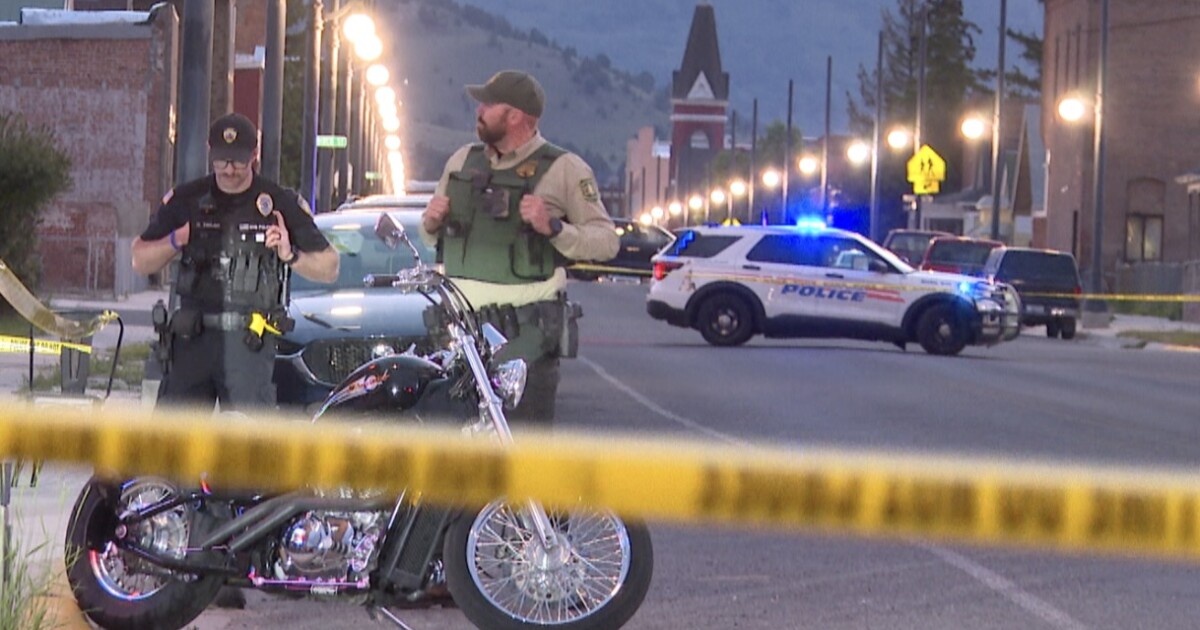
Anaconda shaken by second bar shooting within a year
-

 Nebraska28 minutes ago
Defensive Back Brennan Drummond Commits to Nebraska
-

 Nevada37 minutes ago
Desert state booms as workers flock from California amid game-changing discovery: ‘Remarkable’

