Idaho
Experts say a teen needs psychiatric residential care. Idaho still won’t pay for it. • Idaho Capital Sun


This story was first published by InvestigateWest on July 1, 2024.
In a dark and sterile hospital room, the light from a cellphone highlighted the exhaustion on Brandon Wheeler’s face as he checked for an email offering help for his son. It wasn’t there.
He looked over at the hospital bed where Austin crammed another handful of Sour Patch Kids candies into his mouth. It was one of the only foods Wheeler’s son could taste after burns from a cigarette lighter — abuse he suffered as a toddler — destroyed most of his taste buds.
That abuse is why Wheeler adopted Austin, who is being referred to by his middle name in this story. And it’s why Wheeler has returned to the Idaho Falls emergency room for the fifth time in a year seeking care after his now 15-year-old son attacked a resident at his group home and threatened to kill himself.
“When do I get to go home?” Austin asked.
“I don’t know, buddy,” Wheeler said. “We’ve got to get you some help first.”
Finding care for Austin has been a yearslong obstacle course full of barriers. Without adequate treatment, Austin’s anger, depression and violent outbursts worsened, and now his doctors say he needs 24-hour care at a psychiatric residential treatment center.
There aren’t any options in Idaho, but Wheeler found a solution: A Montana center is willing to help, and Wheeler just needs the state of Idaho to provide the Medicaid funding to cover it.
But Idaho won’t pay.
The state is denying those benefits for Austin and more than 200 other kids like him every year. Instead, the state points those families back to community resources that have already turned them away, aren’t equipped to treat them or don’t exist, trapping low-income kids with life-threatening symptoms in a state of crisis. Those kids are passed from one facility to the next until they turn 18. And then, too often, they end up in prison. Or worse.
Over the past five years, health care providers have told Idaho Medicaid that 1,927 youth need the highest level of psychiatric treatment available, according to data provided by the state. Fewer than one-third of those directives were funded by the state. That has deprived 1,357 children with the most severe needs of their recommended care.
State health leaders say it’s not about the money. It’s about keeping kids at home as long as possible and exhausting all other options before granting the most extreme, and potentially traumatizing, kind of care.
Parents, children’s behavioral health advocates and attorneys say Idaho is violating a federal law called the Early and Periodic Screening, Diagnostic and Treatment, or EPSDT. It requires states to pay for all “medically necessary services” for children and young adults under 21 who are covered by Medicaid. Federal investigators opened an ongoing probe into the state’s compliance triggered by a complaint from an Idaho nonprofit last year.
Marsha Lillie-Blanton, who developed reporting and oversight measures in 2010 for the Centers for Medicare and Medicaid Services to ensure states are complying with federal health care requirements, called EPSDT the nation’s strongest Medicaid benefit.
“By federal law, kids’ medically necessary needs have to be met. Period,” she said.
States across the country are falling short of that responsibility, especially when it comes to behavioral health. Kids’ mental health is declining, and health care attorneys say some states are relying too much on expensive and intense inpatient care, like psychiatric residential treatment. Removing kids from their homes for treatment should be a last resort.
But in Idaho, attorneys and children’s behavioral health advocates say, the state isn’t providing enough of that care.
For some kids, like Austin, it may be the only thing that can save them.
‘Threat to himself and others’
Austin’s many diagnoses, each requiring specialized treatment, have made finding care in Idaho feel futile to Wheeler. Austin has been diagnosed with post-traumatic stress disorder, autism, depression and behavioral disorders that cause him to be defiant and aggressively act out.
Behavioral health services are limited across Idaho, especially for low-income children like Austin who are covered by Medicaid. Help is scarcer in rural communities like Chester in southeast Idaho where Austin lives. And Austin’s options are even more restricted because he has developmental disabilities, too. He is 15 but looks and acts more like a 10-year-old.

Disability centers that could ease Austin’s cognitive challenges won’t admit him because of his defiant behavior. Behavioral health facilities can’t or won’t help him because of his disabilities or because he is too aggressive. Emergency rooms and respite care are temporary and provide only immediate stabilization, not the long-term care that Austin’s doctors say he needs.
Austin was born in a Texas hospital with heroin in his system. He lived at his grandparents’ remote home where he endured emotional, physical and sexual abuse, Wheeler said. His lips were stapled shut. His tongue burned with cigarette lighters. He was left in a swing outside for days at a time without food or water.
Austin was 4 when child protective services came. Wheeler said it took them three days to find Austin, who had been living in the woods, alone, eating bugs and using a plastic tarp to stay warm.
“He’s a survivor in every kind of way,” said Wheeler, who with his wife, Shanna, took in Austin and his sister after seven failed foster placements. Austin was 9.
A yearlong stay at a residential treatment center in Texas improved Austin’s coping skills, calming his behaviors and making him more manageable at home. After moving to Idaho in 2018, a young neighbor told Austin that he was being abused, triggering Austin’s aggressive behavior. One night, he broke into his dad’s gun safe and said he was going to “take care of it.” That led to another yearlong stay at a group home with 24-hour supervision. He was able to return home for a few years after that until Shanna Wheeler died from breast cancer, sending him into another crisis.
Austin refused to eat and lost nearly 40 pounds. He screamed and wailed uncontrollably, without knowing why. His night terrors returned. Thoughts of suicide and violent outbursts escalated.
In April 2023, one year after his mom died, Brandon Wheeler took Austin to the emergency room after he bit the hands of two of his siblings, causing wounds that required medical attention, and threatened to hurt himself.
Another episode of self-harm and violence sent him back to the ER in May.
And again in June.
And July.
That’s when one of the people caring for Austin confirmed that he needed the highest level of care and sent a letter recommending psychiatric residential treatment to the state.
“He absolutely is a threat to himself and others, most importantly his siblings and his family. He threatens to harm people regularly by grabbing knives, threatening to make weapons, threatening to burn people, threatening to jump out of windows and punch walls,” Kade Anderson, a physician’s assistant specializing in psychiatric care at Ascend Mental Health Center who treated Austin, wrote to the state. “Please reconsider that this is a medical necessity for his benefit and for the benefit of his family.”
Dr. Mark Jennings, a child psychiatrist who treated Austin last year after threats of suicide and violence toward family members, also wrote to the state saying that Austin “has not been successful in an outpatient setting.” Jennings wrote that residential care will help by “providing a structured environment that will maintain safety for the child.”
The federal law protecting children’s care guarantees access to routine medical and dental check-ups, screenings to detect potential problems, diagnostic assessments to identify those problems, and treatment to control or correct them. Most medical, mental health and dental care promised under the law is funded without families knowing it, said Juliet Charron, deputy director of Idaho Medicaid and Behavioral Health.
The law requires Idaho to fund all medically necessary care even if it’s not covered under the state’s Medicaid plan. For that treatment, like psychiatric residential care, the state requires physicians to get preapproval.
Idaho’s Children’s Medicaid team decides which services are funded, but they don’t have enough staff to keep up with the requests. So, the state contracts with Telligen, an Iowa-based company that employs health care workers who review the requests and make recommendations. The company works with at least seven other states. On its website, Telligen highlights its work in Idaho ensuring “services are authorized only when medically necessary” and touts its success saving the state nearly $5 million in 2019. Telligen declined to speak to InvestigateWest for this story.
A mental health counselor and two social workers who work for the state are part of the Medicaid team that decides which care to fund but rarely deviates from Telligen’s recommendations, said Angie Williams, a bureau chief for the Idaho Department of Health and Welfare.
“While the final decision fully rests on Idaho Medicaid, as Telligen is the contractor, these decisions are such a high risk that it is most appropriate for (Telligen’s) child psychiatrist to review all information and make the decision on medical necessity for psychiatric residential treatment facility level-of-care,” Williams wrote in an email.
A child psychiatrist employed by Telligen who reviewed some of Austin’s records but has never treated or even spoken to him disagreed with his medical providers. The request was denied.
Instead, Telligen’s doctor recommended placement in a facility for intellectual disabilities, or in-home care utilizing local providers for behavioral therapy, medication management and respite care. Those are the same centers that have refused to care for Austin. Or, that were unable to prevent the decline that led to Austin’s ER visits and his need for more intense treatment.
Idaho is more likely to deny psychiatric hospitalizations for kids than other care that’s guaranteed under the law but requires preapproval, state data shows. Since 2019, Idaho Medicaid has agreed to fund 29% of requests for psychiatric residential treatment compared to 75% of all other EPSDT care requests. And that’s intentional, Charron said.
Removing children from their homes is a last resort, Charron said. The state prefers community care services in which kids can receive therapy, medication monitoring, help applying for food or housing assistance, and for individualized education plans with schools.
Residential care has historically put children at risk of abuse, neglect and isolation, which is why state and national standards prioritize treating children at home.
“That’s always the goal,” Charron said, “to keep them at home.”
Health care advocates say Idaho has history of four decades of failing kids
Poor access to treatment leaves children in Idaho and nationwide at increased risk of suicide, according to a Mental Health America report. Children with untreated mental illness are more likely to rely on public assistance. Fail or drop out of school. And end up behind bars.
Austin has been detained by police at least a dozen times. He usually ends up at an emergency room for a few days before being sent home. But in 2020, a prosecutor filed charges against Austin after he punched holes in the wall at school, broke a desk and a chair, and stabbed his teacher with a fork. All 12 charges were dropped after mental health evaluation found Austin incompetent to stand trial.
“We got lucky,” Wheeler said. “If he hadn’t been found incompetent, they would have sent him to juvenile detention, and that would have been it.”
For more than four decades, Idaho has failed to fulfill its obligation to care for children in their communities, resulting in worsening symptoms and the need for hospitalization, attorneys and children’s health care advocates said.
In 1980, a 15-year-old known as Jeff D. sued the Idaho governor and other state officials for failing to provide adequate treatment to indigent children at one of Idaho’s psychiatric hospitals. Attorneys in the landmark case argued that community treatment is a constitutional right guaranteed to children and the state’s failure to provide that “in the least restrictive environment” led to the need for restrictive, residential care.

In 2010, 30 years into that legal battle, Lillie-Blanton’s federal oversight team discovered that Idaho was violating the EPSDT law, according to emails obtained by InvestigateWest.
“Our concerns are that the state’s prior authorization process for EPSDT services may impose a significant barrier to access for such services,” reviewers stated in an email to the director of Idaho’s Department of Health and Welfare.
The state worked with federal compliance officers for more than two years, rewriting state policy to comply with the law, emails show.
Then, in a 2015 court settlement, the state promised to deliver “publicly-funded community-based mental health services to children” by taking full advantage of Medicaid benefits, including those required under the sweeping federal law. The goal was to treat children earlier and at home to avoid the need for residential care later. But children who need more than counseling or a specialized plan to keep them on track at school are still forced to leave home for treatment.
Charron, who began working for Idaho’s Medicaid and Behavioral Health departments in 2021, said intensive at-home services are pivotal in preventing hospitalization or crisis. That’s also the care that Idaho is most lacking, she said.
“Because of a lack of those services in our state, families are getting to the point where they’re in crisis and, yes, sometimes that means they end up needing a psychiatric residential treatment facility or another residential treatment center,” Charron said.
That gap in care leaves more than 300 Idaho kids per year to deteriorate beyond the capabilities of their families and local treatment centers, and, according to their health care providers, in need of psychiatric residential treatment. In 2023, doctors filled out the preapproval application for 333 kids asking the state to fund that care.
Williams, who oversees requests for that treatment, said some of the families asking for that care don’t understand what it is or what alternatives are available. And clinicians aren’t well-versed in other options available to patients causing them to overlook other options and prematurely recommend the highest level of care, which can be traumatizing for children who are already struggling. The state works with families and providers to determine the best treatment before approving or denying their request, Williams said.
“What you’re not seeing in those denials is the approval for other services that are more appropriate,” she said. “We’re not just denying them without any services.”
But the services provided to Austin still fell short. A team of state employees who work in Medicaid, developmental disability services and behavioral health have been working with Wheeler to find alternatives for Austin and help him access that care.

Community providers couldn’t offer the level of care or the frequency that Austin needs to be safe at home, they determined. Four behavioral health centers refused to admit Austin for short-term care. He was also rejected by all of the state’s long-term residential care facilities that accept Medicaid, which would still remove Austin from his home but are less restrictive than the psychiatric facility the state refused to fund.
Now, the team has decided that Austin may need the highest and most expensive level of care that Wheeler has been advocating for since August. But they cannot override the previous denials to pay for that care.
Disability Rights Idaho filed a complaint with federal overseers in August accusing the state of refusing to pay for needed treatment for children and calling for an investigation and accountability for the state’s “failure to comply with federal law.” Staff at the nonprofit advocacy group said they have been interviewed by federal investigators.
Director of Disability Rights Idaho Amy Cunningham helped rewrite state policy after federal compliance officers found Idaho in violation of EPSDT in 2010.
Despite court orders and federal pressure, Cunningham said, “Idaho has just never gotten it right.”
For states that violate children’s federal health care protections, ‘sanctions are rare’
Idaho isn’t the only state failing to care for kids at home.
Families in Georgia, New York, Iowa, Michigan and Colorado are suing state leaders and health departments they say violated their children’s right to treatment. These children, like Idaho youth, face intensifying symptoms, unnecessary hospitalizations and commitment to the juvenile delinquency system, according to the lawsuits.
Geron Gadd, an attorney for the National Health Law Program who represents the families suing Georgia, said federal law is clear when it comes to states’ obligation to provide community treatment to kids. And, the law clearly requires states to fund psychiatric residential treatment, but only when it’s medically necessary, she said. That’s where it becomes murky.
“There are sometimes disagreements about what a child needs, and that can lead to a valid denial of coverage of psychiatric residential treatment,” Gadd said. “It is therefore key that people who really know the child’s strengths and needs make the determination and that meaningful choices are available to children and their families. Too often, children who need intensive home and community-based services receive clinical recommendations for psychiatric residential treatment only because the state fails to provide medically necessary home and community-based services.”
Does having no other option make a psychiatric institution medically necessary? That’s for the courts to decide, Gadd said.
The Centers for Medicare and Medicaid Services is charged with ensuring that states provide needed treatment to kids through EPSDT and other federal benefits. But there is little enforcement.
When Lillie-Blanton oversaw quality control, she said her small team struggled to monitor 50 states. She developed reporting requirements in 2010 to more easily identify states not complying with federal programs. The task remained overwhelming.
“Our ability to do a really detailed review was not what you would want,” Lillie-Blanton said.
For states that violate children’s federal health care protections, Lillie-Blanton said, “sanctions are rare.”
Federal oversight is focused on working with states to correct Medicaid violations instead of punishing them, she said. Federal funds could be reduced but rarely are because the calculations are too complicated. And stopping Medicaid funding altogether would punish low-income residents who are covered under the program more than the states that misuse it, she said, so that’s not an option either.
Closer to adulthood, closer to jail
Lax enforcement leaves families little recourse against states they feel aren’t complying with the law.
Brandon Wheeler appealed the state’s decision not to fund his son’s care. That was denied.
With nowhere else to turn, Wheeler is seeking help from an attorney.
In the meantime, his son continues to suffer.

In May, staff at a group home where Austin was staying called police after he attempted to put a girl in a chokehold and threatened to stab her with a broken CD, according to the Idaho Falls police report. Austin also told officers that he was going to use a piece of metal to harm himself.
Police drove Austin in handcuffs back to the emergency room — his fifth visit in 13 months.
After a week in the ER, Austin was moved to a behavioral health center in Utah where he stayed for three weeks before transferring to an Idaho residential facility that provides medication management and occasional group therapy and houses kids in the corrections system.
A counselor who evaluated Austin when he moved into the facility wrote that his “needs will be better served in a psychiatric residential treatment facility,” according to an email obtained by InvestigateWest that was sent last week to the team seeking care for Austin. She also said in the email that the facility could not keep him past July 15.
Wheeler doesn’t know what’s next for his son, but he will continue to fight.
Beginning July 1, Texas-based Magellan Health will take over reviewing the state’s requests and coordinating resulting care. A company spokeswoman declined to speak to InvestigateWest. Charron said the final decision will remain in the state’s hands.
Wheeler plans to reapply after the transition. In the meantime, Howard Belodoff, a legal aid attorney who represents Jeff D. and the other Idaho children who sued the state in 1980, is helping Wheeler appeal Idaho’s refusal to fund Austin’s care. The next step is a chance to plead Austin’s case to an administrative hearing officer who could uphold or overturn the state’s denials.
If that doesn’t work, Wheeler said, he’s willing to sue the state if that’s what it takes to get treatment for his son.
But that might take too long. Austin will be 16 in August, a year closer to adulthood and, Wheeler fears, a year closer to a jail cell.
“The reality is when you turn 18, they don’t care if you have special needs, you’re going to get thrown in jail,” Wheeler said. “I get that we want these kids to be treated at home, but that’s not always possible, and I’d much rather go visit him in a psychiatric facility than in the state pen.”
InvestigateWest (invw.org) is an independent news nonprofit dedicated to investigative journalism in the Pacific Northwest.



FILER, Idaho (KMVT/KSVT) — Filer High School quarterback Tristan Rea announced his commitment to College of Idaho.
Rea finished the season with 25 touchdowns, 136 completions and 2,023 passing yards.
He earned KMVT Player of the Week honors twice. Against Battle Mountain, he went 14 for 23 passing with five touchdowns and 359 passing yards. He also ran the ball four times, pushing his total yardage to just under 400.
The Coyotes ended their season with an 11-2 record at the NAIA semifinals.
Copyright 2026 KMVT. All rights reserved.

Idaho reaches beyond its rugged wilderness into hospitable towns built around lakes and old main streets. Sandpoint pairs Lake Pend Oreille with the Panida Theater. McCall brings Payette Lake, Brundage Mountain, and its Winter Carnival. Wallace keeps silver-mining history alive beside the Route of the Hiawatha. Driggs opens into Teton Valley, while Stanley sits beneath the Sawtooths near Redfish Lake. The towns ahead combine outdoor access with festivals and welcoming downtowns that make each trip feel easy.
Sandpoint
Sandpoint serves as a premier example of Northern Idaho hospitality, balancing a tranquil lakeside atmosphere with a creative arts scene. The town sits on the shores of Lake Pend Oreille and provides a friendly environment for families. After spending a morning boating or swimming in the largest lake in the state, visitors often head to Schweitzer for skiing or mountain biking. This outdoor energy carries over into the local culture at the historic Panida Theatre, which acts as a hub for live performances. To round out the day, the Cedar Street Bridge Public Market includes boutique shops and cafes for those seeking community warmth and water-based recreation.
McCall

McCall is a mountain resort known for its friendly “lake life” culture and alpine scenery. The town remains a popular destination for those seeking nostalgia and modern recreation, starting with Ponderosa State Park. Here, travelers find diverse hiking trails and beaches for swimming in Payette Lake before attending the McCall Winter Carnival. This popular annual event showcases snow sculptures and festive parades that celebrate the season. Beyond the winter festivities, Brundage Mountain Resort is a favorite for its consistent powder. For a different perspective, McCall Lake Cruises gives a guided sightseeing tour that shares the history of the region while drifting across the water.
Driggs
Driggs embodies the authentic Western spirit, serving as the commercial heart of the Teton Valley. It gives a relaxed, community-focused alternative to busier resort areas, particularly for guests visiting the nearby Grand Targhee Resort in Wyoming. Known for deep snow and a family-oriented vibe, the resort is a major draw, yet the local culture shines during the annual Driggs Plein Air Festival. This event invites artists to paint the landscape outdoors, while the nearby Teton Geo Center has interactive exhibits on regional history. To see the valley from above, the Teton Aviation Center allows enthusiasts to take scenic glider rides or visit the on-site museum to view historic aircraft.
Wallace
Wallace is a historic silver mining town that prides itself on a quirky personality and well-preserved architecture. The entire town is listed on the National Register of Historic Places, allowing guests to step back in time. On the Sierra Silver Mine Tour, visitors travel underground on a trolley to learn about mining heritage before cycling the Route of the Hiawatha. This rail-to-trail mountain bike path crosses the Bitterroot Mountains, leading back to a landmark manhole cover downtown that marks The Center of the Universe. To finish the historical journey, the Wallace District Mining Museum houses artifacts detailing the Silver Valley and the Great Fire of 1910.
Moscow
Moscow offers a welcoming college-town ambiance, driven by the presence of the University of Idaho. It is frequently referred to as “Fest City” due to a calendar packed with community performances and events. The University of Idaho Arboretum and Botanical Garden has walking paths through diverse plant collections, which provide a bridge to the award-winning Moscow Farmers Market. Held every Saturday, this market features local produce, crafts, and live music. Musical heritage continues at the Lionel Hampton Jazz Festival, which brings performers to the area. Additionally, the Appaloosa Museum celebrates the history of the horse breed and its cultural ties to the Nez Perce people.
Bonners Ferry
Bonners Ferry is often cited as one of the friendliest towns in the state, with a calm environment near the Canadian border. Nature lovers typically begin at the Kootenai National Wildlife Refuge, which gives exceptional opportunities for birdwatching and spotting moose. After exploring the refuge, the Boundary County Museum downtown displays artifacts from the Kootenai Tribe and early settlers. The town is also a key stop on the International Selkirk Loop, a scenic drive that displays the views of the Cabinet Mountains and Selkirk ranges. Nearby, the Kootenai River is a local focal point, popular for calm-water fishing and photography from the community’s many historic bridges.
Stanley
Stanley is a remote mountain town that offers a warm welcome to travelers passing through the rugged Sawtooth Mountains. Redfish Lake has a historic lodge and white-sand beaches with views of Mount Heyburn, serving as a gateway to the Sawtooth National Recreation Area. This paradise for backcountry travel has over 700 miles of hiking trails for every skill level. Between hikes, the Stanley Baking Company and Cafe is a local institution where residents mingle over homemade pastries. For a different experience, Boat Box Hot Springs has a riverside soaking tub made from a repurposed mining cauldron, giving a viewpoint to admire the wide river views.
Sun Valley
Sun Valley is a world-renowned destination that maintains a tight-knit, walkable feel. The Sun Valley Resort, site of the world’s first chairlift in 1936, offers skiing and summer golf, but the local culture reaches far beyond the slopes. Fans of literature can visit the Ernest Hemingway Memorial near Sun Valley Lodge and Hemingway’s grave at Ketchum Cemetery to pay their respects. For music lovers, the Sun Valley Pavilion is an outdoor venue that hosts free orchestral concerts during the summer months. To conclude a trip, a visit to Bald Mountain, known locally as “Baldy,” offers challenging ski runs and panoramic views of the skyline, making it a primary cultural destination.
Priest River
Priest River is a scenic timber town situated where the Priest River meets the Pend Oreille River. Logging history built this community, and the Priest River Museum and Timber Education Center provides a deep dive into that heritage. After learning about the local industry, residents and visitors alike gather at The Mudhole for an afternoon of picnicking and swimming. Just a short drive north, Hill’s Resort on Priest Lake is a primary destination for those visiting the area for its traditional lodge feel. The nearby Selkirk Mountains have extensive forest service roads and trails for off-roading, hiking, and seasonal huckleberry picking in a largely undeveloped environment.
Preston
Preston is a thriving agricultural community in Southeast Idaho that rose to fame through the film Napoleon Dynamite. Visitors can follow a tour map to see filming locations, including the local high school, before shifting focus to the Preston Night Rodeo. This major highlight of the summer calendar provides entertainment for all ages. For those interested in regional history, the Bear River Massacre National Historic Landmark gives an educational look at a significant event in the West. Finally, Bear River Hot Springs, formerly Riverdale Resort, has hot spring pools and waterslides five miles north of Preston in the Riverdale Valley, providing a friendly atmosphere for families and road trippers.
The Heart Of Idaho Communities
The hospitable towns of Idaho demonstrate that the state is more than just a wilderness destination; it is a collection of welcoming communities. Lakeside retreats like Sandpoint and McCall illustrate how residents embrace their natural surroundings to create an inviting environment for families and outdoor enthusiasts. Meanwhile, historic centers such as Wallace and Moscow highlight a commitment to preserving local heritage and fostering a community spirit. These destinations show a blend of traditional values and modern amenities, proving that Idaho’s best assets are its people and their enduring spirit of neighborly kindness.

BY KAREN BOSSICK
Ketchum’s annual Wagon Days celebration received the prestigious Esto Perpetua Award from the Idaho State Historical Society this week.
The award, named for Idaho’s state motto “Let it be perpetual,” recognizes individuals and organizations dedicated to preserving the stories, places and traditions that define the Gem State.
This particular award honors the region’s mining legacy and pioneering spirit preserved through Ketchum’s nationally recognized Big Hitch Parade with its museum-quality stagecoaches, freight wagons, and carriages. It also acknowledges Wagon Days’ full lineup of cultural programming that includes talks about the history of mining in the area, an afternoon of cowboy poetry, Sun Valley history bus tours, horsemanship demonstrations, Shoshone-Bannock dancing, close-up looks at the Lewis Ore Wagons that ferried silver and ore and a street dance featuring country western music.
“Wagon Days is one of Ketchum’s most treasured traditions,” said Ketchum Mayor Pete Prekeges. “It’s a unique opportunity for our community and visitors to come together and experience the history, culture, and spirit that define this valley.”
This year’s Wagon Days celebration, held Sept. 4 and 5 over Labor Day Weekend, will feature the Big Hitch Parade at 1 p.m. Saturday.
That will be followed by a Wagon Days Street Party at Ketchum Town Square featuring Susie Brown, a Billboard Top-15 hit songwriter and recording artist, who has shared the stage with such notables as Blake Shelton, Brad Paisley, Rascal Flatts and Carrie Underwood.
Originally from Alpine, Utah, she began playing fiddle at 4 and went on to master multiple instruments, including guitar, mandolin, ukulele, accordion and bass before achieving national prominence as the lead singer of The JaneDear Girls on their breakout hit “Wildflower.”
Reserved seating for the Big Hitch parade along Main Street near Sun Valley Road is now available for $30 a seat at https://www.wagondays.com/.
-
 Sports2 minutes ago
Commentary: She broke baseball’s glass ceiling. Now Kim Ng is taking softball to the next level
-

 World12 minutes ago
What is ‘Kushner Island’ and why are Albanians protesting about it?
-
 News39 minutes ago
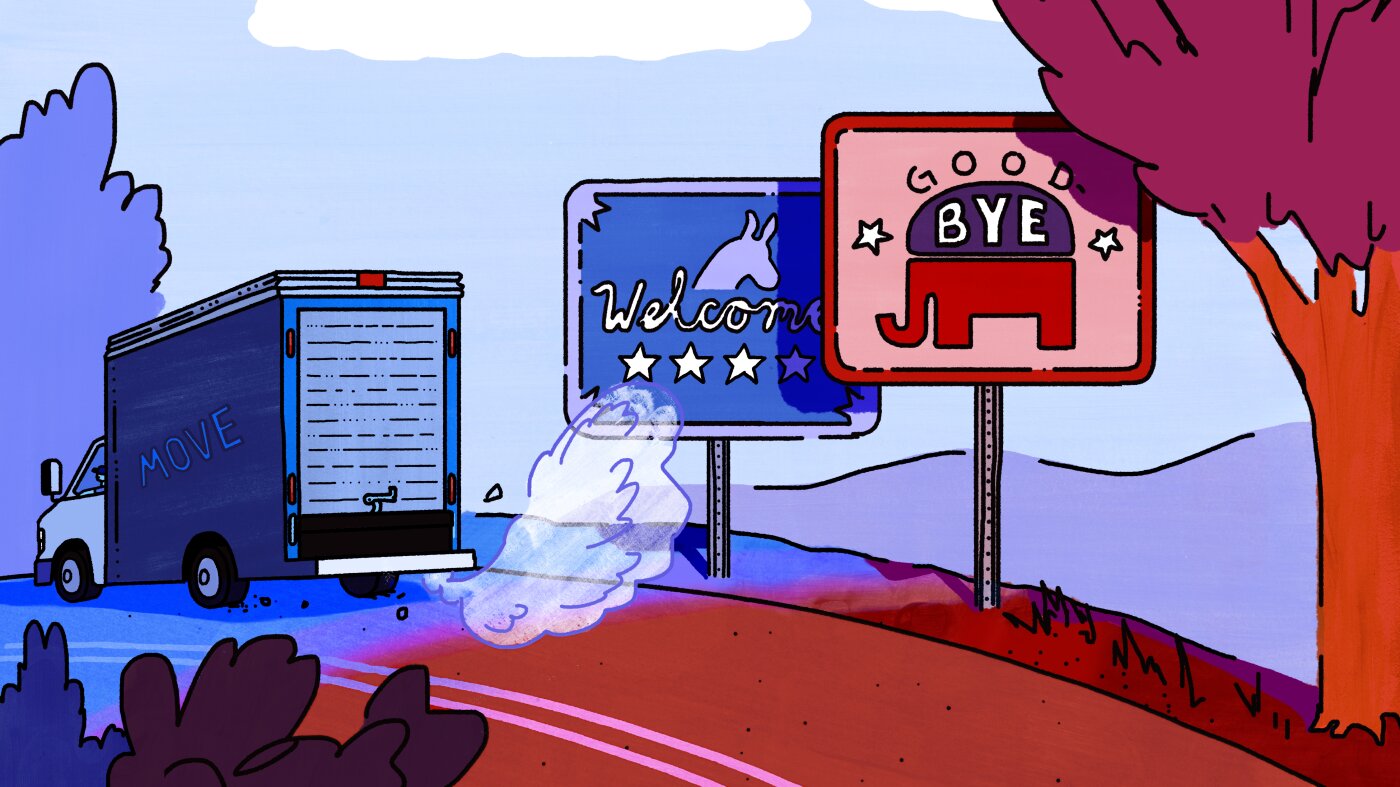
The red state, blue state divide is real. But it’s driven by more than just politics
-

 New York2 hours ago
How a Family of 4 (and One Kid in College) Live on $85,000 a Year in the Bronx
-

 Los Angeles, Ca2 hours ago
Los Angeles church fire forces firefighters into defensive mode
-

 Detroit, MI2 hours ago
Detroit’s Inbolt Launches Vision-enabled Robot Programming
-

 San Francisco, CA2 hours ago
These are California’s treasured views: Stunning scenic spots to visit
-

 Dallas, TX3 hours ago
One World One Game: A Cultural Preview for FIFA 2026 – Dallas Weekly

