Lifestyle
L.A. Affairs: I discovered my dad's secret children. It changed us forever


We all have a past — little ghosts of heartache and regret that can haunt us forever.
But for some people, the ghosts can become demons.
My father was one of those people. In his 94 years, he was married four times and had at least seven kids besides me. Three of them I grew up knowing: my half-siblings Donna, Karen and Michael, born after World War II when my father separated from the Army and came to Los Angeles with dreams of being the next Perry Como.
The other kids, he kept hidden from me at all costs.
That was because he had left them when he met my mom, his fourth wife. He married her in 1982 and had me — when he was 57 — in 1984.
I was the only child he ever raised to adulthood. Growing up, knowing little of my father’s past, I idolized him. He was a decorated veteran. An usher at the Cathedral of St. Vibiana. My grade-school football coach. Leader of the neighborhood watch.
He put the “all” in all-American.
But he was almost a little too perfect. Like most people with skeletons, my father was adept at hiding them. As I became an adult and started to make my own mistakes — as I started to understand the weight a person’s decisions can carry — I found myself longing to find a single chink in his armor; some flaw of his that would let me put my own problems into context. I didn’t want to idolize him anymore. I wanted to connect with him.
But he never let me — until our doorbell rang one summer afternoon in 2010 and forced him to.
It was a woman, about 10 years older than I was, with light brown skin. Her name was Maria. She asked if this was where Ned Manley lived. I said it was. My dad came to the door and talked to her quietly on the front lawn of our Temple City corner lot. I watched from the window. When she left, she glanced back at me for just a moment — and I knew my life had changed forever.
Maria was one of three daughters my father had during a decade-long affair in the 1970s with a Mexican immigrant in East Los Angeles. At the time, he was on his third marriage. When he met my mom at Sunday Mass in 1979, he fell in love. And then, for reasons I still don’t fully understand, he left Maria and her siblings and never looked back. He managed to hide everything — the affairs, the kids — not only from my mother and me but also from Donna, Karen and Michael.
When I confronted him, he confessed. He said Maria had spent years looking for him. She wanted a relationship now. His fear was palpable. He begged me not to tell my half-siblings. Not to tell my mother, a devoted churchgoer and faithful wife. The news would devastate her.
I was angry at him for putting me in this impossible situation. I told him I wanted no part of it. I tried to get him to come clean. I tried to tell him that it would be OK. But then, slowly, my anger began to melt. His fear began to form a strange, unshakeable bond between us. As the weeks went by, I realized — uncomfortably — that if anything, I loved him now more than ever. For the first time in my life, I saw my dad as human. As fallible.
So I kept his secret for 11 long years. He met with Maria whenever he could and emailed her every week, making up for lost time until he was on his deathbed in 2021. Just before he died, with the specter of Maria and her sisters possibly coming to his funeral, I told my family about them. My mom and half-siblings said they understood. They told me this was not my fault. They tried to welcome their new family members with open arms. But their eyes told a different story. They were hurt; shocked to find out that a man they thought they knew so well could have hidden something like this. Not to mention the hurt that Maria and her sisters still felt — a hurt that eventually led to us keeping in touch only with Christmas cards or the occasional text.
I don’t blame them for feeling this way. But my own feelings toward my father were — and still are — different. Because I am the only person he never left. He gave me every ounce of blood and sweat he had, quietly trying to atone for the long-buried mistakes of his past. And we connected in his last years in a way we never would have if Maria hadn’t come to our door. Through his mistakes, I came to understand my own. I understood why I had pushed away many people who loved me. I understood why I liked to leave people and situations that were good for me. I understood the anxiety I had about getting into committed relationships, and why, when I was in them, I felt tempted to have my own affairs.
But most of all, I understood why I reveled in secrets. I understood why I liked to keep my real feelings from my family, my friends and my romantic partners. And I understood — long before I married my wife in 2019 and had two beautiful children with her — why I needed to stop.
After my father died, genealogical and family records revealed that he had a seventh child, a son named Lionel born during his third marriage. We are still looking for him. And I am still unraveling my father’s secrets, one by one. But his final years taught me, in their own way, that it’s never too late to open up, to be vulnerable, to start over. He turned on a light deep inside me that let me know it’s always OK to be honest and come home — wherever home may be.
The author is a recent law school graduate and screenwriter. He lives in Covina with his wife and two children. Visit his website at darrenmanley.co.
L.A. Affairs chronicles the search for romantic love in all its glorious expressions in the L.A. area, and we want to hear your true story. We pay $400 for a published essay. Email LAAffairs@latimes.com. You can find submission guidelines here. You can find past columns here.


Wendell Pierce stars in Othello at the Shakespeare Theatre Company in Washington, D.C.
Teresa Castracane
hide caption
toggle caption
Teresa Castracane
Wendell Pierce says there’s a joke actors have about the five stages of their careers:
“There’s ‘Who is Wendell Pierce?’ ‘Get me Wendell Pierce.’ ‘Get me someone like Wendell Pierce.’ ‘Get me a younger Wendell Pierce.’ And then the last and final and fifth stage is: ‘Who is Wendell Pierce?’” he says.
After starring roles on The Wire and Treme, and a 2023 Tony Award nomination as the first Black actor to play Willy Loman in the Broadway revival of Death of a Salesman, Pierce is working as hard as ever. He says he’s motivated by the “ticking clock of mortality” — but also by the desire to challenge himself as an actor.
Though many entertainers shy away from the label “journeyman actor,” Pierce proudly embraces the term: “It’s not just to go from job to job, but [to] be intentional about the jobs I take,” he says. “I try to do the trifecta, as I call it — television and film and theater — every year.”

Pierce currently plays a captain on CBS’ Elsbeth and a CIA officer in the film Tom Clancy’s Jack Ryan: Ghost War. He’s also starring in the Shakespeare Theatre Company production of Othello in Washington, D.C.
Pierce likens tackling Shakespeare to detective work. First, he says, there’s the “mining the text for all of its understanding and everything that Shakespeare is telling you not only about the characters, but how to portray them and what’s happening.”
More than that, though, there’s also the emotional aspect of connecting with the character — and the physical and vocal strength required of a three-hour production. “The challenge is physical, it’s intellectual, and it’s emotional, and that’s the great thing about doing Shakespeare, and even specifically doing Othello,” Pierce says. “I always think of these … iconic roles and large roles like the beginning of a hike up Mount Everest.”
Interview highlights
On how many years ago, jazz helped him crack the code on Shakespeare

I went to the club to hear Arthur Blythe, a great alto saxophonist. And he’s pretty avant-garde, but he had this really hip, swinging tune. I was humming along with it. And then he went into his solo, which was free and wild and all over the place. And I was just looking around the club, still humming the song in my head. And when he finished his solo, we were right exactly on the same note in the melody of the song.
And that’s when I had this epiphany that while he was free and wild and doing his solo, he was aware of the structure of the song, and knew exactly where he was at all times, and came back to it. So he was free within the form, and then I understood that’s what Shakespeare is like: To have freedom within the form, don’t allow the verse to constrict you, but let it be the guard rails of where you’re supposed to be. But you have the opportunity to take it wherever you would like to take it. That’s really what all great art is about, a merger of technical proficiency and expression, and unlimited expression, but being able to be technically proficient and exact. And that opened up Shakespeare to me, that night, in September, 1981, in New York, listening to jazz at the Village Vanguard.
On why he almost quit The Wire
During the course of The Wire, people would challenge us all the time — “You are only demonstrating the thuggery and the crime and you’re perpetuating this idea that, the stereotype that Black folks are criminally inclined and violent and all.”

I remember a woman on the train challenging me, African American woman who worked on Wall Street. And I said, “I accept your criticism. … I welcome the challenge and the criticism so I can make sure that we don’t fall victim to that criticism. … But we have judges, the mayor, the president of the city council, the city council members, police officers, lawyers, doctors, teachers, who are all African American. But you’re only seeing the criminals. Imagine how tough it is for a little kid in those neighborhoods. They don’t see the lawyers or the doctors. If you don’t see them as an educated woman, a professional, and you can only see the thuggery, imagine how susceptible those young kids are to it. And that’s what we’re trying to tell and the story we’re trying to tell.”
Now, in the fourth season, I almost quit because at our wrap party a young lady comes up to me. She says, “Mr. Pierce, I was on the show this year. I really wanted to work with you. We didn’t have anything together. I just wanted to tell you how much I enjoy your work and all.” And I said, “Who did you play?” And she says, “I look younger than I am, so I was one of the kids in the middle school.” … She played this out of control young woman who slashes another girl’s face. … She was like, “I’m going to Brown University on full scholarship.”

And I thought to myself, why are we not telling your story? … And I thought about the criticism and I said, that woman was right. And I said, I should leave the show because we’re perpetuating a stereotype. And then the episode came on for the fourth season and it was so impactful. And we see exactly where we lose our kids. And we see that inflection point where we can save them and put them on the right track. And where we make them the young woman who goes to Brown on a full scholarship, and where we lose them and send them into that pipeline, into the penal system, and calling our dysfunction out in our society that creates the criminality, that doesn’t celebrate the education of this young woman going to school and all. So it wasn’t arbitrary, and then that’s the only thing that made me come back.

U.S. Attorney General Eric Holder, left, and Wendell Pierce participate in a panel discussion during a Federal Interagency Drug Endangered Children (DEC) Task Force event at the Justice Department May 31, 2011 in Washington, D.C. The event was organized to announce a public awareness campaign, addressing the challenges faced by children and families affected by drug abuse.
Chip Somodevilla/Getty Images
hide caption
toggle caption
Chip Somodevilla/Getty Images
On taking care of his late father in his last 10 years

He was two months away from his 99th birthday. He passed in my hands, we were holding hands. I was there with him. I had my father for a long time. I got closer to my father in the last 10 years of his life than I ever had before. My mother passed, and one of her dying wishes was, “Wendell, take care of your father.” She knew. While I was working in Budapest, if I got four days off, I would go home to New Orleans, and spend time with him. It was a blessing. I was traveling the world and being an actor and at the same time my home base is New Orleans, and here I would have my father with me for all those years and he was fuel to my fire. He was reminding me of everything that he taught me and as I attack these challenges of these great roles and the different roles that I play, he is very much in my process.
This is a man who fought in [the Battle of] Saipan in World War II, fought for the country that he loved when this country wasn’t loving him back and came back and his voting rights weren’t even protected and here he was risking his life in The Double V campaign in the Black community — victory abroad and victory at home. So he very much believed in that.
On the erasure of Black history

The idea of trying to eliminate any sort of contributions that the African-American community has made to this country in the year that we try to celebrate 250 — it is so insulting. … It feels like a visceral attack.
My brother was purged out of his job here in Washington, D.C. I know so many people and so many Black women in particular, this attack on minorities and women in a world where people are trying to erase them, we realize that that is our call to duty of our generation. We know now that we have to mark our passing on the tree and declare who we are, who we were, what our accomplishments are and have been and what we have created. And exercise our right of self-determination and declaration of accomplishment. We owe that to our ancestors, we owe that to the generations yet to come because there are those who do not have our best interest at heart.
Ann Marie Baldonado and Nico Gonzalez Wisler produced and edited this interview for broadcast. Bridget Bentz, Molly Seavy-Nesper and Beth Novey adapted it for the web.

“Do you have an extra ticket?” a man shouted outside SoFi Stadium last Thursday.
The World Cup has been drawing fans from around the globe. But for many, getting a seat in the stadium has come at a steep price.
-
Share via
Some were lucky enough to nab $400 to $500 tickets through official World Cup lotteries, others paid thousands of dollars to catch the action IRL. Tickets for the upcoming USA versus Turkey match were selling for more than $1,400 on resale sites.
The demand has been so high that authorities have been warning fans about how to avoid ticket scams.
As crowds flocked into the stadium, we asked attendees about how much they paid to get into the most-watched sporting event in the world. Here’s what they shared.
Their responses have been lightly edited for length and clarity.
Luis Moreno, Luis Moreno Jr., Angelica Castellano, Diana Moreno and Ramon Aguilera of Orange County

Luis Moreno, Luis Moreno Jr., Angelica Castellanos, Diana Moreno and Ramon Aguilera sport Mexico gear.
How much did you pay for your tickets?
Diana: We don’t want to say because I don’t want our parents to know.
*Whispers* We paid retail. It was like $500 per ticket. For Father’s Day, we wanted to make sure he got to enjoy it.
Why did you want to attend the World Cup?
Castellano: We went in ‘86 in Mexico, ‘94 in Pasadena and now here. We’re excited because I want to enjoy it with my kids. If we didn’t come, I would’ve been sad because they need to see how it is.
Diana: Now, it’s our turn. Even though [today’s match] is not our country, we still had to come and experience it. We’ll watch our team play later on the big screen.
Did you have to give up anything to be here?
Diana: Work, but that doesn’t matter. This is more important. Time with family.
Luis Jr.: Sleep. [Laughs]
Diana: It’s Thursday. We’re out here watching the game, we’re drinking, so there’s no complaints.
Was it worth it?
Diana: Absolutely. No matter what happens today. The fact that we’re here, it’s already a success.
Tell me about your outfit. You’re rocking Paisaboys, an L.A. brand.
Diana: I got the Paisaboys shirt on, repping. I know they have a collaboration with Nike. I got my Nike shoes on and I’m just ready to have a good time. My mom sewed her top last night. She wanted to add a little touch to it.
Angelica: Yes! This is an old, old, old jacket.
Diana: My dad’s outfit is sponsored by me. All Adidas, Father’s Day gift.
Luis Sr.: I got lucky this year.
Adam Chapman and Sarah Harrell of Washington, D.C.

Adam Chapman and Sarah Harrell.
How much did you pay for tickets?
Harrell: We went to two games: USA versus Paraguay [in Los Angeles] and Senegal versus France in New Jersey/New York.
Chapman: The L.A. tickets were way more expensive. We bought them presale for like $1,940, but the [seats] were still very high in the arena and the resale prices are actually cheaper than the ones we bought on presale. It’s horrible. [Laughs]
Why did you want to come to the World Cup?
Chapman: This is my first men’s World Cup. I went to the women’s World Cup in Australia a couple years ago. The last time the U.S. had a men’s World Cup here was like forever ago. We’re probably not going to have another in our lifetime, so I really wanted to make sure we had a chance to go to some games.
Did you have to give up anything to be here?
Harrell: We’re moving the day we get back, so we were packing until the moment we got here. Some of this gear was last-minute purchasing in order to make that work. Also, we took a six-hour plane ride, middle seats. We really committed to get here. We got cat sitters, we both took days off from work, the whole thing.
Was it worth it?
Chapman: Yeah, just for the experience. It’s more money than we would’ve wanted to pay but yeah.
Harrell: We bought the tickets like a year and a half ago, so it’s been on the calendar forever. We ended up getting to bring my brother and his best friend to celebrate his 40th birthday, so it sort just worked out for all of us.
Laila Samimi and Elizabeth Cambage of Los Angeles

Laila Samimi and Elizabeth Cambage.
How much did you pay for your ticket?
Cambage: Nothing. Sorry.
Samimi: We were blessed.
Why did you want to attend the World Cup?
Cambage: This is my first fútbol game ever. I wanted to come cause it’s L.A. Yay sports! It’s a once-in-a-lifetime opportunity. Let’s get out there and get into it.
Samimi: I’m born and raised in L.A. so I’m happy to see the World Cup here.
Tell me about your outfit inspiration.
Samimi: I’m wearing Honor the Gift, Russell Westbrook’s brand, a Nike top, my shorts are from a random boutique in L.A. and Jordan shoes.
Cambage: I just went crazy at the Nike store. I’m not gonna lie. We just came from the Nike store. I’m reppin’ USA today. Yes, I am Australian, but I do live in America and USA is AUS. [Laughs]
Kenan Sahbaz of St. Louis and family

Bosnia and Herzegovina fans cheer on their team.
How much did you pay for your ticket?
I got mine directly through the FIFA website. We paid $500 a piece. I brought my son, my cousins and their kids.
Why did you want to attend the World Cup?
Sahbaz: This is our very first World Cup. It’s a historic event for our very small country, Bosnia and Herzegovina. This is a huge accomplishment in the past 12 years. This is going to be the first time we’ve made it here again. We’ve got a really good squad and I think we can do some amazing things for our country. This is a time when we really need some support and joy in the country, and no better way to do it than at the World Cup.
Who’s your favorite player?
Kids: Džeko.
Did you have to give up anything to be here?
Sahbaz: A lot. Work. Time. We were initially going to go on vacation to the Bahamas, but I asked him either the Bahamas or the World Cup. So when we found out that we made it, it was the World Cup. We canceled everything else. We even went to the qualifiers in Wales and that was a once-in-a-lifetime experience as well. There was just no way we were going to miss it.
Was it worth it?
Sahbaz: 100%. Win or lose, we still win today.
Daniel Henriquez and David Njenga of Seattle

David Njenga, left, sports Kenya gear, while Daniel Henriquez cheers for El Salvador.
How much did you pay for your ticket?
Henriquez: This match was $500 each. We bought it in like October of last year.
Why did you want to attend the World Cup?
Njenga: Because this is the World Cup. You have to go to a World Cup. This is my second one. I was in Qatar for the last World Cup.
Henriquez: The energy! World Cup baby!
Njenga: There’s people from all over the world. We are all assembled here to enjoy this moment.
Henriquez: This is what happens when all the world comes together. This is our utopia. We all love each other. We’re all here for one thing, to support our country.
Did you have to give up anything to be here?
Njenga: My job. I have to be at work right now, but I took the day off. I don’t mind.
Henriquez: I’m a nurse for the fire department. My boss was awesome. She gave me a day off. I love my boss Nancy. Go Nancy!
Was it worth it?
Njenga: It is worth every penny. It’s not even the money. It’s the experience. After this, we head to San Francisco for another game.
Henriquez: Then we’re heading to Vancouver and then we have another game in Seattle.
Njenga: We’re going to six games [in total]. Our Houston tickets were the cheapest. They were about $400.
Cindy Vazquez of Granada Hills

Cindy Vazquez Zavala reps Mexico with her outfit.
How much did you pay for your ticket?
It was free.99. Shh!
Why did you want to come to the World Cup?
This is my first World Cup. The Jordan team invited me to attend this game, so lucky me. That’s why I’m wearing Jordans today. I’m in the industry so they invited a few employees from neighborhood stores to come.
Tell us about your outfit inspiration.
Today there’s a Mexico game, so I still gotta rep even though I’m attending this match [Switzerland versus Bosnia and Herzegovina]. The outfit is a Nike T90 jersey and my lace is from Amazon. I got the little [soccer] ball, the little World Cup and teddy bear from the gas station. I needed it.
Did you have to give up anything to be here?
I actually had to request PTO to attend, but the store is still running without me. Right after this game, I actually have to jet back. I work at Feature, which is a sneaker boutique in Studio City. S/O Feature for allowing me to come here!
Fabian Almiron of Spain

Fabian Almiron, originally from Paraguay but currently living in Spain, rides Metro to the game.
How much did you pay for your ticket?
I paid $1,100 for the first game [June 12], $290 for the Turkey game [June 19] and the last game with Australia was $170 [June 25].
Why did you want to come to the World Cup?
This is my first World Cup. I live in Spain, but I’m rooting for Paraguay. I’m very excited to be seeing them participate after 16 years.
Did you have to give up anything to be here?
I used like 20 to 25 days of vacation time to come see the World Cup.
Was it worth it?
Yes!
Sunny Kwong, Sam Mallari, Antonio Evangelista, Michael Evangelista of San Diego and Los Angeles

Antonio Evangelista, Sam Mallari, Michael Evangelista and Sunny Kwong are decked out in Bosnia and Herzegovina gear.
How much did you pay for your ticket?
Michael: We paid $400 each. We got lucky with the last chance lottery. They released the tickets a few months ago.
Why did you want to attend the World Cup?
Michael: We’re rooting for Bosnia this time. This is our first World Cup.
Antonio: It’s a lifelong dream. I’ve loved the sport ever since I was in the Philippines.
Did you have to give up anything to be here?
Michael: Most of us had the day off. I worked in the morning at like 6 a.m. and then I’m going to work afterward. I really wanted to carve out time to be there.
Mallari: I took time off because this is my first soccer game ever and I wanted to experience the World Cup with true fans.
Was it worth it?
Michael: 100%. It’s honestly a once-in-a-lifetime experience. It’s been awesome to be here with my dad. We watched the last World Cup finals and we were literally in tears. I know he’s been playing soccer ever since he was in the Philippines military.
Antonio: 20 years.
Becky Clift of Orange County and William Wagner of San Diego

Colleagues William Wagner and Becky Clift sport traditional festival inspired outfits to cheer on Switzerland.
How much did you pay for your ticket?
Clift: They were gifted to us.
Wagner: We’re a fortunate group.
Why did you want to come to the World Cup?
Clift: The World Cup in America is super fun, so we wanted to support it and be a part of it. This was the game that we got tickets for, so we decided to dress up a little bit and have some fun.
Wagner: We’re both soccer people. We both speak the world’s language, so we’re happy to be a part of it here.
Tell me about your outfit inspiration.
Wagner: I have a very close Swiss friend who was equipped for this. One quick phone call and here I am.
Clift: Then I had to get mine so I could support.
Did you have to give up anything to be here?
Wagner: A full day of work. We’re both engineers. We know each other through work.
Was it worth it?
Wagner: We’ll find out.
Clift: Heck yeah!
Jorge Morales of Topanga

Jorge Morales holds out a ball he got at the World Cup opener in Mexico City.
How much did you pay for tickets?
It was between $800 to $900 for my USA versus Paraguay tickets. I bought them through Seat Geek.
Why did you want to come to the World Cup?
I wanted to experience it not just in Los Angeles, but I also wanted to experience it in Mexico. I’m going to three games in Los Angeles and four in Mexico City. Going to my first World Cup in Mexico City was a whole different ballgame. Mexico played in their home country and they won. It was like pandemonium. Even though it was raining over there at the time, it was still a lot of fun. Everyone was hugging each other. I’m looking at you, New York Knicks fans. [Laughs]
Did you have to give up anything to be here?
I’m used to traveling, so I’m like this ain’t nothing. I just wanted to experience a World Cup game and the fact that it’s in three countries, you’re not going to experience that any other time. It’s the one and only World Cup where you’re going to see three countries hosting it.
Alexi Kulik, Marcella Harkness, Luke Kulik and Ian Harkness of San Diego

Switzerland fans Alexi Kulik, Marcella Harkness, Luke Kulik and Ian Harkness.
How much did you pay for your ticket?
Ian: $450 per ticket.
Alexi: We won the ticket lottery. That’s the only way ‘cause the resale is expensive.
Why did you want to attend the World Cup?
Marcella: This is our first World Cup!
Ian: I was at the Switzerland versus Qatar game. Similar outfit. We got it dialed this time. Lots of fun. Tough ending, but what are you going to do?
Luke: We wanted to support Switzerland. Everyone in the family is Swiss. It’s fun to go to a World Cup game. We were just excited to get tickets. I think it’s a great way for the family to spend time together and a good excuse to get out of work.
Did you have to give up anything to be here?
Luke: Time off work. Time to come here. We drove up here. I don’t think we gave up much. We just enjoy being here.
Ian: $450.
Alexi: And we woke up at 5 a.m., so that we could come up here and spend the day together.
Was it worth it?
All: Yes!
Anja Gegic, Dino Gegic, Benjamin Mustafic, Nordin Kapic, Armin Kapic of Los Angeles

Bosnia and Herzegovina fans Anja Gegic, Dino Gegic, Benjamin Mustafic, Nordin Kapic and Armin Kapic.
How much did you pay for your ticket?
Nordin: $3,000. We’re like literally on the field.
Anja: $450. In L.A., we got it like that.
Why did you want to attend the World Cup?
Anja: This is our second time ever qualifying for the World Cup. We are so proud to be here and support our country today.
Nordin: I mean, look around. Why would you not want to be here today?
Armin: We’re hoping for the win!
All: 2-0!
Bendicht Hügli and Lucia Grajales of Mexico City

Lucia Grajales and Bendicht Hugli, both currently living in Mexico City, hold a Swiss flag.
How much did you pay for your ticket?
Hügli: The ticket was $650. That’s stealing. That’s robbery. When I went in ‘86, I think the tickets were 10% of the price I paid for this year.
Why did you want to attend the World Cup?
Hügli: I had some business in San Diego. I saw Switzerland is going to be here, so let’s hit it and break the bank to get tickets. I went to the World Cup in Mexico City in ’86. I saw 12 games. I’m going to one this time.
Was it worth it?
Hügli: We’ll see. If Switzerland plays lousy, then I’m going to be pissed, but I think they’ll do better than in the first game.
Flavia Sacco and Isidoro Garcia of Washington, D.C.

Flavia Sacco and Isidoro Garcia root for Paraguay.
How much did you pay for your ticket?
Isidoro: I think it was around $500 per ticket. Again, we were very lucky because Paraguay was the first game.
Flavia: It was early bird without knowing who was going to play.
Isidoro: We’re also going to the Paraguay versus Turkey game in San Francisco and the third one in Mexico City.
Why did you want to come to the World Cup?
Flavia: We’re rooting for Paraguay. I’m from Paraguay, born and raised.
Isidoro: This is my second World Cup. I went to the one in Qatar. We were very excited about it. Actually, we were very lucky too because we bought Paraguay’s tickets when they were selling them blank. So we just bought the three tickets for Paraguay before knowing the group stage and then it turned out to be in the U.S., so it was awesome.
Flavia: We were hoping it would be on the East Coast because that’s where we live and it ended up being on the other side of the country, but we already had the tickets and we really wanted to go to a game, so we flew. We’re coming straight from the airport. We have our 5-month-old baby who is at the hotel with my mom.
Did you have to give up anything to be here?
Isidoro: I guess time with our daughter. Even though it’s only going to be a few hours, we miss her a lot. She’s very tiny. Every [moment] is precious with her.
Was it worth it?
Isidoro: Yes, even though it’s a few hours and hopefully Paraguay will pull it off.
Jorge Espinosa of Los Angeles

Jorge Espinosa of Los Angeles.
How much did you pay for tickets?
For the USA versus Paraguay ticket, I think I paid like $1,800, and for another match, I think I paid about $1,020, so a little less. I think that’s when the prices started to go down.
Why did you want to come to the World Cup?
I’ve always wanted to go. I missed my chance to go to Brazil in 2014. I really wanted to go, but I had just taken a huge trip to Asia, so I couldn’t really go. I didn’t have any money left and I’ve been thinking about the World Cup being here since it was awarded to the U.S. I was really bummed out when it was awarded to Qatar instead of the U.S. and also instead of Australia. I’m really excited about it. It feels unreal.
What does it mean for the World Cup to be in your hometown?
It means so much. I remember when they had it here in ‘94. I didn’t get a chance to go to any of the games, but the energy that you feel around the city is like next level. The events they’ve been hosting are so awesome. You get to meet more people from other walks of life and other countries.
Did you have to give up anything to be here?
I just pretty much had to pick up more debt, but I get points so it’ll help fly somewhere. Also, debt disappears when you die so they can try coming after me for that World Cup money, but they never will. [Laughs]
Was it worth it?
I looked at the price and was like, “It’ll never be this cheap in my life, ever.” It’s only ever going to go up, and, hey, it’s in my backyard.
Additional reporting and translation by Dante Estrada.

Facts by day, fiction by night! At the end of a long day in the newsroom, many of our journalists head home and escape into novels of all types. We asked our NPR colleagues what fiction they’ve enjoyed reading so far this year, and these are the titles they shared. (You can also check out their nonfiction picks here; and sign up for our Books newsletter for weekly recommendations.)

A Bad, Bad Place by Frances Crawford
The opening chapter of A Bad, Bad Place is delivered in a short burst. We are presented with three characters — Janey, her nana, Sid Vicious (the rescue dog) — and one heck of a predicament. As 12-year-old Janey states: “It’s Sid’s fault that I found the dead body.” It becomes her job to unwind the mystery of her discovery in her rough neighborhood in 1979 Glasgow, Scotland. Recalling what she saw (and admitting what she didn’t tell police) is key. Frances Crawford shapes this world with such care and love, even in tough circumstances. Read this book. — Shannon Rhoades, supervising senior editor, Weekend Edition

A Perfect Hand by Ayelet Waldman
The hero of A Perfect Hand is Miss Alice Lockey, lady’s maid to Lady Jemima Alderwick. Alice falls in love with Charlie Wells, who is the valet to the eccentric Lord Wynstowe, but for the two to be together, they must devise a plot to bring about an unlikely romantic union between their employers, who, naturally, hate each other. What starts as a classic marriage plot, though, evolves into a very different, more complex story. Alice, you see, has been reading about the burgeoning women’s rights movement in her 19th-century England. And maybe, just maybe, she has begun to imagine a future for herself that — gasp! — might not involve marriage after all. — Samantha Balaban, senior producer, Weekend Edition

Cherry Baby by Rainbow Rowell
This is the first novel I’ve read that asks: How do you navigate being fat in a GLP-1-crazed world? And on top of unwanted fame and changing marital expectations? Fortunately, Cherry, Rainbow Rowell’s hero, is proudly fat and fierce, which helps when her husband, Tom, creates a semi-autobiographical comic with a character who looks so much like Cherry (double chin and all) that strangers recognize her. It becomes a hit, and Tom goes to Hollywood, leaving Cherry behind with the dog. But she refuses to stay downtrodden — I found Cherry’s spirit irresistible. — Emiko Tamagawa, senior producer, Here & Now

Cry Havoc by Rebecca Wait
There’s a whole genre of books set in quaint British boarding schools (the Harry Potter series, Tom Brown’s School Days, etc.). Cry Havoc is nothing like any of them. Set in a dilapidated, fifth-rate girls school in the 1980s, this dark and hilarious novel follows a teenage student, Ida Campbell, as she eats inedible school dinners, rooms with a hostile and self-destructive roommate and grapples with a bizarre epidemic that causes members of the student body to jerk their arms and legs uncontrollably. The book also contains one of the most brilliant, side-splitting scenes set at a school play ever written. — Chloe Veltman, correspondent, Society & Culture Desk

Dear Monica Lewinsky by Julia Langbein
This is the only novel of the hundreds I have read where I reread the ending three times: It was that satisfying! Julia Langbein’s comic romp takes us through the summer of 1998, when a college student is out of her depth in a study abroad program surveying the iconography of minor medieval French churches. She’s also out of her head with desire for one of her teachers, mirroring a certain political scandal erupting in the U.S. Who’s she gonna call on decades later when the teacher’s retirement sends her into a middle-aged tailspin? Saint Monica Lewinsky, of course! Insightful, hilarious and, in the end, everybody gets exactly what they deserve. — Melissa Gray, senior producer, Weekend Edition

Discipline by Larissa Pham
Discipline follows the story of an artist whose relationship to her work has been ruined by a lecherous older professor. When she writes and publishes a revenge-plot book about a character much like him, he reads it — and the two have an astounding confrontation about what happened between them. I enjoyed the taut style and the meditation on harm, justice and truth — a really great debut. — Liam McBain, producer, It’s Been a Minute

Enemies to Lovers by Alisha Rai
Pick this one up if you’re looking for a gulpable, plotty adventure. Meet the unlikely crime-solving duo: Krish is an upstanding citizen, while Sejal was born into a crime family and makes a living running small cons on bad men. Their worlds collide when Krish’s FBI agent brother disappears while investigating a crime syndicate. Sejal is his only lead in the case, and the two reluctantly team up. Romance and high jinks ensue as they embark on a cross-country road trip filled with car chases and shared hotel rooms. Pairs well with popcorn. — Lauren Migaki, senior producer, Society & Culture Desk

The Fourth Princess: A Gothic Novel of Old Shanghai by Janie Chang
I love a good story that mixes two women who are orphans, a mysterious guardian, a dilapidated gothic mansion with secrets of its own — that throws in a dash of Chinese superstition, romance and, of course, murder. The first woman in the story, Caroline, was born to what she thought were fabulously wealthy parents, but she finds out after they die that they were broke. So she decides to assume the identity of a dead, wealthy friend, marries well and lives a glorious life. The other, Lisan, is found wandering the streets of Shanghai as a child — a wealthy man takes her in. Caroline ends up hiring Lisan — and a tale ensues full of lies, secrets and daring escapes. — Jeanine Herbst, news anchor

Ghost Town by Tom Perrotta
Tom Perrotta’s latest novel is a memory piece set in the summer of 1974. Jay Perry, a once serious writer who has struck it rich with a kids book series-turned-TV show featuring a paranormal crusader called Ghost Teacher, is invited back to his suburban New Jersey hometown, which he left some 50 years earlier. Most of the novel follows the life of young “Jimmy” during the life-changing summer when he lost his mother, experimented with sex and a Ouija board, and learned the consequences of hanging out with the wrong guys. Perrotta’s view of strip mall suburbs as places where banality, goofiness, grace and tragedy converge is singular. — Maureen Corrigan, book critic, Fresh Air

Into the Blue by Emma Brodie
This book is for everyone who loves a rom-com but secretly hungers for the rom-traum — aka the kind of romance that makes you suffer a little (or a lot!). Into the Blue is the perfect blend of sexy, angsty and gut-wrenching. It follows AJ Graves, an aspiring comedy writer, and Noah Drew, the broody scion of an acting family, as they fall in love in the summer of 2000. The duo is doomed to feel the ache of that unforeseen connection for the decade to come. Their journey is twisted over tangled years of yearning and (seemingly) insurmountable external challenges. It’s tragically compelling and deliciously poignant. Angsty lovers, feast away! — Kalyani Saxena, associate producer, Here & Now

The Jellyfish Problem by Tessa Yang
When marine biologist Josephine “Jo” Ness receives a call from an old friend about a massive, glowing jellyfish terrorizing an island off the coast of Maine, she can’t help but see it for herself. Whether it’s Jo’s obsession with jellies, her nostalgia for that particular friendship or an escape from the grief she has been drowning in since the death of her best friend, dive buddy and jellyfish research partner, Aldo, something is pulling her to that island. The scientific discovery of a lifetime awaits. But if Jo gives in to that thing pulling her into the dark waters, will she be able to leave? — Dhanika Pineda, assistant producer, Weekend Edition

John of John by Douglas Stuart
The latest novel from Booker Prize winner Douglas Stuart sweeps you away to the remote islands of the Scottish Hebrides. Cal returns to his conservative small town after textile college. Cal is gay, which he keeps a secret from his family, and you learn very quickly that his father, John, who is a farmer and a weaver, is keeping secrets too. Stuart’s characters are so lovable, even when they’re treating each other poorly. I was particularly taken by Cal’s tender relationship with his sassy grandmother, Ella, who always has her hands in the other characters’ lives. It’s a beautiful novel about duty, faith and the isolation of keeping secrets from the people closest to you. — Anna Bauman, producer, Fresh Air

Lady Tremaine by Rachel Hochhauser
The most familiar iteration of “Cinderella” is full of flat characters like the one-dimensional wicked stepmother. Rachel Hochhauser’s novel, instead, breathes life, dimension and cultural context into her Lady Tremaine. We first meet this stepmother outdoors hunting — possibly poaching — with her falcon, a welcome and heartening echo of Agnes in Maggie O’Farrell’s Hamnet. Tremaine’s story is one about what it means to gain and lose privilege in a world where money and men are the only protections. It’s a triumphant ode to the countless lost histories of women who gave their all to fight for the dignity of other women — stepdaughters included — in predatory patriarchal societies. — Tayla Burney, director, Network Programming and Production

Last Night in Brooklyn by Xochitl Gonzalez
Last Night in Brooklyn is a bittersweet fever dream of a novel — a sticky summer something that sits somewhere between a telenovela and Succession. For 26-year-old Brooklyn native Alicia Canales Forten, observing the life of her glamorous and enigmatic neighbor beats coming to terms with her withering personal relationships. But this neighbor, dubbed La Garza, quickly turns Alicia’s life (and Brooklyn itself, circa 2007) into something she no longer recognizes. Xochitl Gonzalez’s prose is warm enough to seduce but cool enough to rip it all away — lest any of us gets too comfortable looking into the proverbial neighbor’s window. A truly gorgeous read! — Ivy Buck, production assistant, Society & Culture Desk

The Missed Connection by Tia Williams
To start, I must say this is my favorite Tia Williams book. If you know this author, you know she excels at writing dynamic characters in her romances. This time is no different. In this book, Sasha sits next to a dreamy man on a plane, but they miss the chance to exchange contact info. With a connection this strong, she has to find him, right? Well, that’s exactly what she sets out to do with the assistance of a detective who previously helped her during a traumatic time. That search sets Sasha off on an exciting, funny, freeing and even a little bit sexy adventure, which she hasn’t had in a while. — Brittney Melton, Up First newsletter writer

Little, Brown and Company
New Skin by Sarah Wang
New Skin by Sarah Wang opens with Linli Feng at home in Los Angeles, reluctantly taking care of her mom, Fanny, who is recovering from an infection after too many back-alley plastic surgeries. What starts as an obligatory stint at home spirals into chaos, with Fanny competing on a reality TV show to fix her botched face, while Linli navigates their tortured relationship amid the shadowy underworld of bargain-basement beauty. It’s not just dark comedy and body horror — it’s also a compelling meditation on immigration, labor and intergenerational trauma. The writing is beautiful, and I couldn’t put it down. — Neena Pathak, senior editor, It’s Been a Minute

Offseason by Avigayl Sharp
I had no idea what I was in for when I cracked this open. Sure, I got the gist from the jacket copy: A young woman, her personal and professional aspirations a fresh shambles, tries a new tack with a fill-in gig teaching at an all-girls school, in a seasonal tourist town that’s past its annual sell-by date. But this synopsis utterly fails to capture what awaited me. In fairness, I can’t imagine a synopsis that could have. Avigayl Sharp’s slim, mischievous shape-shifter of a debut novel rendered me a bit of a shambles myself, swinging from giggles to cringes, from dread to discomforting recognition, to the occasional thousand-yard stare. More than one passerby interrupted my reading to ask whether I was OK; in truth, I still may not be. — Colin Dwyer, contributor to NPR’s The Book Ahead

On the Calculation of Volume (Book IV) by Solvej Balle, translated by Sophia Hersi Smith and Jennifer Russell
What would you do if you were stuck repeating a single day of your life? Would you learn all the sounds it makes? The changes in air pressure? Would you explain to your partner what has happened every morning, as time creates a division between you? Maybe you would try to move through each day with an objective, with the aim of seeing different places and experiencing changing seasons. Or maybe you would look for a way out of the day, for rifts in the loop. These are the explorations that wash over Tara Selter in On the Calculation of Volume. Now on its fourth installment to be translated into English, each book is a journey through November 18ths that will make you admire the details in your own days. — Lillian King, producer, Wait Wait…Don’t Tell Me!

The Paris Match by Kate Clayborn
I’ve long admired Kate Clayborn for her crystalline prose and deeply heartfelt stories. Here, she delivers one of my favorite recent romances with the introduction of practical-minded Layla Bailey, who’s in Paris for the wedding of her former husband’s sister. She’s determined to be the dutiful, amicable ex. But Griffin Testa — the frustrating, broody best man — sees through her carefully constructed defenses. Layla and Griffin have their swoony moments, but they also have real, grown-up conversations about the pain they’re harboring and how to be together. These are adults who are putting in the work, and the emotional payoff is well worth it. — Wailin Wong, co-host, The Indicator from Planet Money

Railsong by Rahul Bhattacharya
Railsong is a sweeping novel set in 20th-century India. Charu is a young girl growing up in government housing. Her father, a railway employee, fights against convention and gives her the made-up, caste-less surname of Chitol — setting her up for an extraordinary life. The novel follows her journey from modern-day West Bengal to Mumbai, as she tries to find her own place in the world amid personal and political upheaval. This book made me nostalgic for a life and time I’ve never known. — Anandita Bhalerao, associate producer, Digital Platforms

Rebel English Academy by Mohammed Hanif
This tale is made up of quite a cast of characters: a lusty, drunk intelligence officer, men who seem to spontaneously combust, a runner who can’t escape the rape she experienced, and a gay man living in a mosque who only wants to teach revolution in English and, maybe, fumble about in a darkened movie theater with a stranger. Author Mohammed Hanif, always droll, takes a headline from Pakistan from the 1970s — the hanging of a populist leader, who was also a feudal lord — and turns it into a saturated, layered snapshot of a time and place. You don’t need to be interested in Pakistan or South Asia to read Hanif. Just bring your curiosity and your willingness to see the multitudes contained in one person, and one place. — Diaa Hadid, correspondent, International Desk

The Shampoo Effect by Jenny Jackson
Told from multiple perspectives, The Shampoo Effect is the story of a writer infiltrating (or dating into) a tight-knit group of adults who have been friends since childhood. The plot — which is mostly about domestic life, parenthood, relationships and its entanglements — has lots of twists and turns. A surprise pregnancy! A scandalous past! It’s a quick read, but delightfully satisfying. — Elissa Nadworny, correspondent and guest host

She Waits Where Shadows Gather by Michelle Tang
Mostly happily married, Carlos and Avery move from Canada to their native Philippines, dreams in tow. He wants to sell his childhood home; she hopes to expand their family. But Carlos’ parents just want him to figure out why his grandfather, who died 10 years ago, has returned to the house. Tragedy strikes before anyone gets what they want, trapping the family in the horrors of their superstitions, secrets and sacrifices. Michelle Tang’s debut novel introduces the unfamiliar reader to Filipino folklore in a page-turner where faith, love, skepticism — and ghosts — must play nice to survive. This cozy gothic horror is the perfect book for readers who can’t abide an unsolved mystery, or for those who will stay up all night entrusting their nightmare’s doom to the dawn. — Nikki Birch, video producer

Son of Nobody by Yann Martel
Academia noir, as a subgenre, tends toward the fantastical. Yann Martel’s latest novel, Son of Nobody, set at a major research university, is dark, but it’s also entirely realistic in its portrayal of shattered scholarly aspirations and shattered families. No vampires or mystical portals to other realms. Harlow Donne is a grad student, husband and father who heads off to the U.K. on a classics fellowship, leaving behind his wife and young daughter. Whether he does or does not make an important discovery while there is a major plot point. Regardless, Harlow learns the price of abandonment. — Jason DeRose, religion correspondent, National Desk

This House Will Feed by Maria Tureaud
Meshing gothic horror and history, this book challenges everything you thought you knew about the Irish potato famine, also known as the Great Hunger. The story follows Maggie O’Shaughnessy, a famine survivor who agrees to pose as an eccentric aristocrat’s dead daughter for food and shelter, only to find herself trapped in a haunted estate. The author brilliantly incorporates real historical documents and invokes the supernatural and Irish folklore to open readers’ eyes to the devastating reality of this period of mass starvation. — Julie Rogers, senior manager, Research, Archives & Data strategy
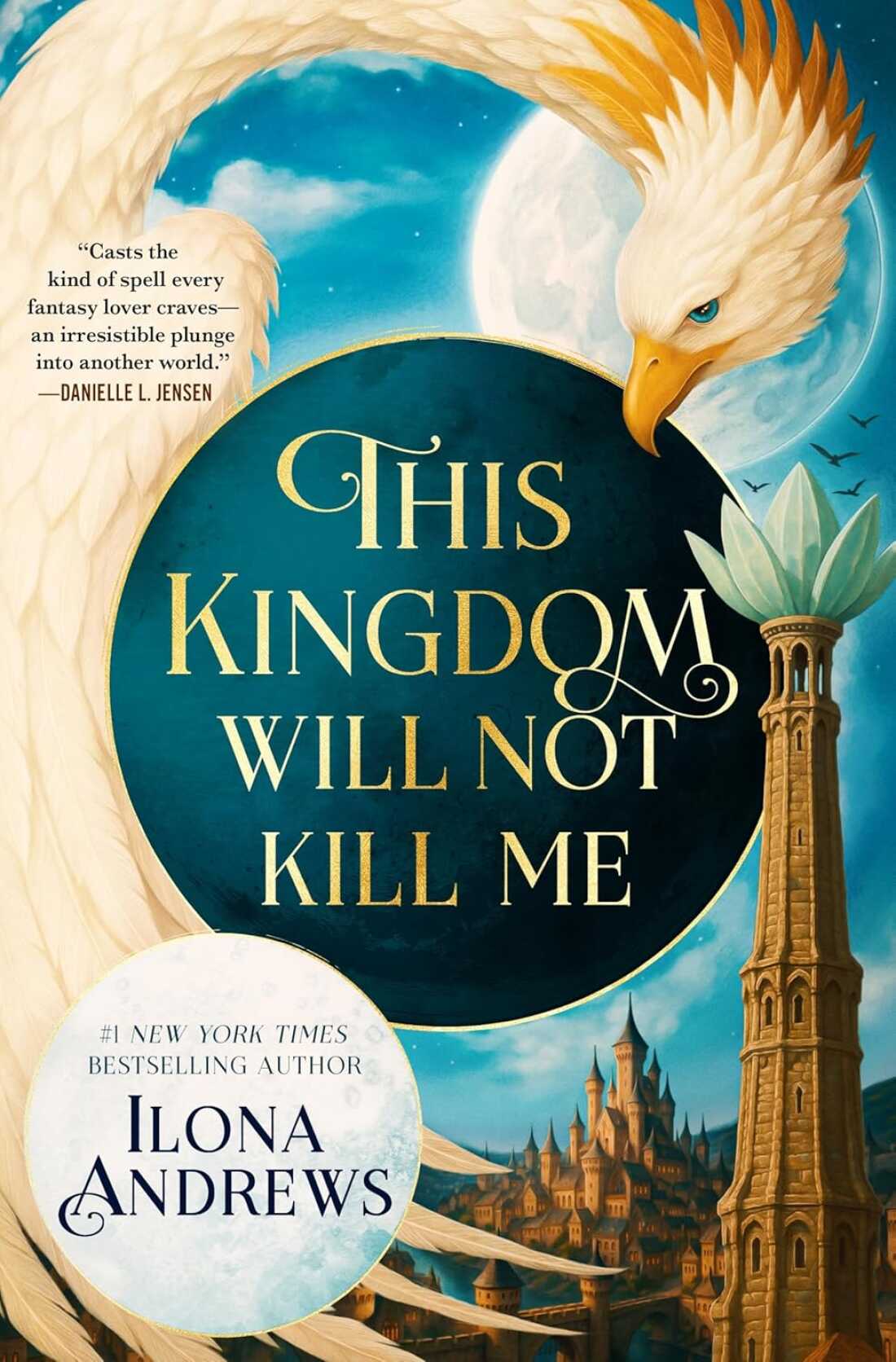
This Kingdom Will Not Kill Me by Ilona Andrews
This is a fun read for anyone who has ever imagined themselves inside a beloved book (and let’s be honest, my fellow Hufflepuffs, who hasn’t?). Modern-day normie Maggie wakes up to find she has been magically transported into the world of her favorite fiction series. But unlike other literary protagonists stuck in this common plot device, Maggie lands in fantasyland with no transferable skills, allure or, even, clothing. Gambling her extensive fangirl knowledge of the original series’ timeline, which changes with every butterfly she steps on, Maggie has to save the kingdom she knows is doomed without becoming a main character herself. Be warned that this is Part 1 of a series in progress. — Liz Baker, producer, National Desk

This Story Might Save Your Life by Tiffany Crum
When podcast hosts Benny and Joy start a survival-story-themed podcast, they have no idea it will become a massive hit. Their lives are busy with tours, captivated audiences and new episodes when one day, Joy and her husband, Xander, go missing. Benny is the main suspect, and he’ll do anything to prove his innocence. He begins a whirlwind investigation to find out what happened to his best friend. This Story Might Save Your Life has the standard trappings of a thriller, but it’s also a surprisingly warm treatise on friendship and found family. — Hafsa Fathima, assistant producer, Pop Culture Happy Hour

Vigil by George Saunders
Vigil is about ghosts and regrets. It’s also about climate change! In it, a parade of restless spirits comes to visit a dying oil company CEO. Some want him to repent for his many lies. Others reinforce his feeling that he has nothing to apologize for. The plot moves through time and space (ghosts aren’t bound by the same rules as the living). This book left me disturbed in a good way. It demands that the reader confront big questions: What does it mean to lie? What do we owe each other? At what point is it too late to apologize? — Rebecca Hersher, climate correspondent, National Desk

Villa Coco by Andrew Sean Greer
Before I read Andrew Sean Greer, I’d never stopped to ponder the rich relationship between humor and honesty. As he did in his Pulitzer Prize-winning book, Less, Greer uses an American abroad to explore how many years, and sometimes miles, you must put behind you before your confusion, despair and grief can become funny stories. And believe me, this sunny book is packed with hysterical stories from some of the most vivid and entertaining characters: You’ll wish you could pull them from the pages and plop them around a dinner table. But the line that stayed with me the longest was this: “The price for seeing things as they really are. It is our youth.” As honest, hilarious and heartbreaking as life itself. — Elena Burnett, producer, All Things Considered
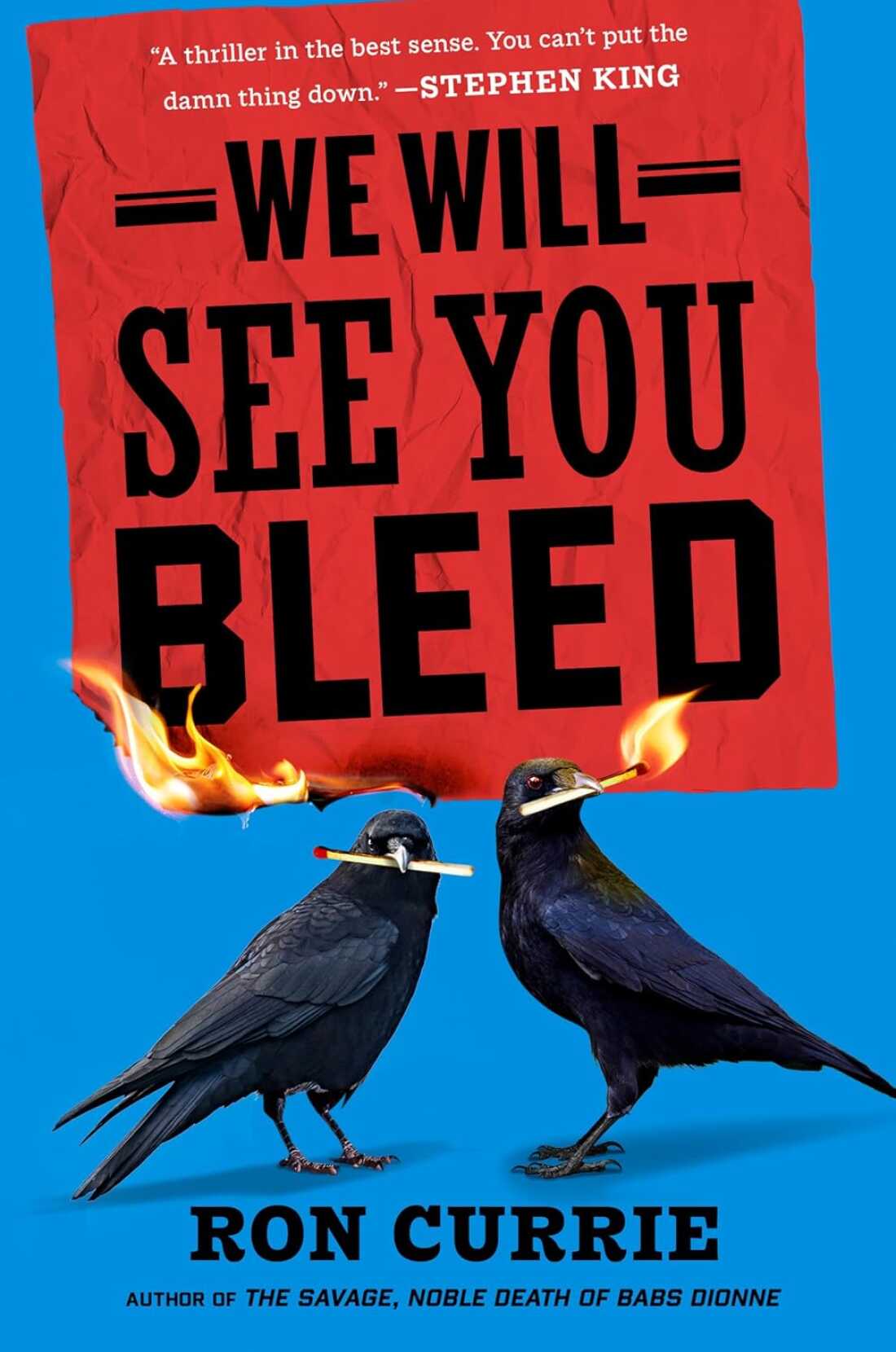
We Will See You Bleed by Ron Currie
Rather than a sequel to his celebrated Canuck-noir novel, The Savage, Noble Death of Babs Dionne, Ron Currie goes back in time to paint Waterville, Maine, in the summer of 1984. It’s a mill-town revolt in the early days of globalization — the death of an industry and of a way of life for local Franco-Americans — and the birth of Babs’ not-quite-benevolent crime syndicate. It’s a brilliant Maine thriller, unfolding 40 miles and an entire world away from the state’s much chronicled rocky coast. — Graham Smith, senior producer, Investigations Desk

Yesteryear by Caro Claire Burke
A hugely popular tradwife influencer — think Ballerina Farm’s Hannah Neeleman — awakens one morning, in what appears to be 1855, and must actually live the life she has been cosplaying on Instagram. This premise couldn’t feel more perfectly targeted to skewer today’s cultural and political moment if it were designed in a lab. It’s a thriller that keeps you guessing to the final twist, but it’s also an unexpectedly complex meditation on power, control, ambition, motherhood — and the fundamentally contradictory demands placed on women, whether or not they wake before dawn each day to bake sourdough. — Shannon Bond, correspondent
-

 Detroit, MI13 minutes ago
Trailblaze Detroit: Blazing New Trails while Backpacking Metro Detroit | Visit Detroit | Visit Detroit
-

 San Francisco, CA23 minutes ago
Giants open to moving big names before Trade Deadline
-

 Dallas, TX28 minutes ago
Reports: Mavericks acquire Sergio De Larrea in four-team Draft night trade
-

 Miami, FL35 minutes ago
Miami Gardens police make arrest in cold case murder from 2019
-

 Boston, MA38 minutes ago
Woman killed in Mattapan carjacking crash honored at vigil
-

 Denver, CO43 minutes ago
Nuggets trade 26th pick in NBA Draft to Spurs, moving out of first round
-

 Seattle, WA50 minutes ago
NBA Commissioner says Las Vegas, Seattle remain expansion targets for 2028-29 season
-

 San Diego, CA53 minutes ago
Padres cap wild game against Braves with extra-innings win

