Politics
Nearly 3 million Californians at risk of losing home internet service as subsidy expires


Four years ago, Claudia Aleman and her family had only one way to get online — through their cellphones. Without internet service on a computer, her youngest daughter couldn’t get homework assignments in on time, her parents couldn’t keep up with online doctor visits, and the English classes she wanted to sign up for were out of reach.
Then came a game-changer: The federal government started offering a subsidy that covered $30 of the family’s $80 monthly internet bill.
But while opening mail at her home in South Gate two months ago, Aleman came across a letter from the Federal Communications Commission announcing that the Affordable Connectivity Program they had come to rely on would end in May unless Congress approved more funding.
Claudia Aleman of South Gate said her family did not have a computer with internet service until the federal subsidy was created.
(Genaro Molina / Los Angeles Times)
“My husband is the only one who works, and everything is so expensive right now,” Aleman said. “Sometimes we don’t have $30 to spare.”
“The program made a significant difference in our lives,” she added. “Without it, life is going to be difficult, and I’m sure I’m not the only one who feels this way.”
The program, which was created after the pandemic forced many Americans to turn to the internet to connect with work and school, has 23 million enrollees nationwide — 1 in 6 U.S. households — including nearly 3 million in California.
Since 2021, it has provided a $30 monthly subsidy for low-income households and $75 for those on tribal lands. But the $14.2 billion funded through the Infrastructure Investment and Jobs Act has run out.
April was the last month of full program benefits, but households could receive a partial discount in May.
In a letter to Congress this month, FCC Chairwoman Jessica Rosenworcel warned that not funding the program would have widespread impact, especially for senior citizens, veterans, schoolchildren and residents of rural and tribal communities.
“Households across the country are now facing hard choices about what expenses they have to cut, including food and gas, to maintain their broadband access, with some households doubtful they can afford to keep their broadband service at all,” she wrote.
Internet service providers have their own programs for low-income households. People can enter their address on the FCC’s broadband map to find providers in their area. The California Public Utilities Commission also provides a list of providers with low-cost internet plans.
But finding a cheaper alternative can be difficult. Rural households sometimes have just one provider, and families who can’t afford it have little recourse.
Rep. Salud Carbajal (D-Santa Barbara) is among 228 bipartisan co-sponsors of the Affordable Connectivity Program Extension Act of 2024, which would provide an additional $7 billion to keep the program afloat for another year. Among the co-sponsors are 22 Republicans, including Rep. Young Kim (R-Anaheim Hills).
“You’ve got to have your head in the sand to not understand the value of what this is doing to enhance our economy, enhance the skills and opportunities for so many Americans,” Carbajal said. Allowing the program to expire, he said, “will undo the progress we’ve made in closing the digital divide. It would take us back to the dark ages.”
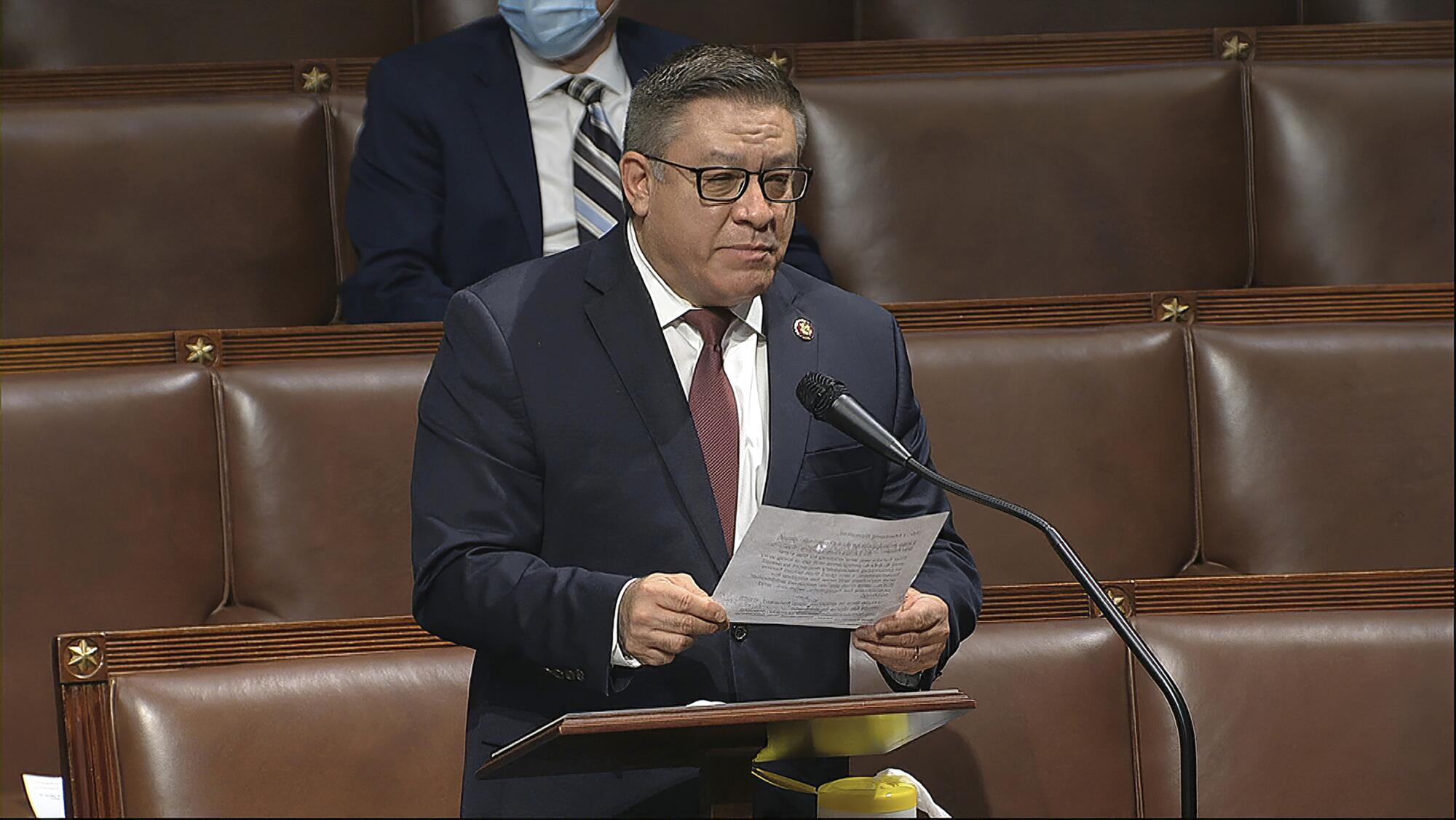
Rep. Salud Carbajal (D-Santa Barbara) has sponsored legislation to fund the internet subsidy for another year.
(House Television via AP)
But the bill hasn’t been brought for a standalone floor vote in the GOP-led House amid criticism from some Republicans who say the program subsidizes households that already had internet service. They also pointed to findings from the FCC’s internal watchdog last year that providers failed to comply with the program’s rules and improperly claimed funds.
In a statement last year, Sens. John Thune (R-S.D.) and Ted Cruz (R-Texas) said the program was “subject to massive waste, fraud, and abuse of taxpayer dollars.”
In an FCC survey of 5,300 households conducted in December, more than two-thirds of respondents said they had inconsistent or no internet before joining the federal program, the majority citing affordability. About one-third of respondents said they had both mobile and home internet service.
In October, the Biden administration sent Congress a supplemental request for $6 billion to keep the program running, but it didn’t pass.
Letting the program lapse, even if it could be restarted later, would require additional spending on outreach and re-enrollment, Carbajal said. He also worries that people who benefit from it will feel a sense of whiplash and lose trust in the federal government.
California recently dedicated $70 million in federal funding toward affordable internet service, devices and training. Carbajal said he’s glad to see his state acting, but it’s not enough.
“We can’t look at it from a parochial standpoint,” he said. “I’m not just looking out for the Central Coast and my state — I’m looking out for the entire nation.”
Still, Carbajal said he’s optimistic something will take hold before May 1. Similar circumstances have played out favorably at the last minute, he said.
In Los Angeles, the federal program has played an important role in the county’s effort to close the digital divide, which was exacerbated by the COVID-19 pandemic. Through local promotion, enrollment in Los Angeles grew to nearly 1 million households.
County officials partnered with the nonprofit EveryoneOn to get the word out. Chief Executive Norma Fernandez worries families will be confused when they see their internet bill go up and won’t understand why the program ended.
“We tried so hard and provided tons of hands-on support to get people connected and then we’re going to pull it away from them,” she said. “It’s going to cause hopelessness.”
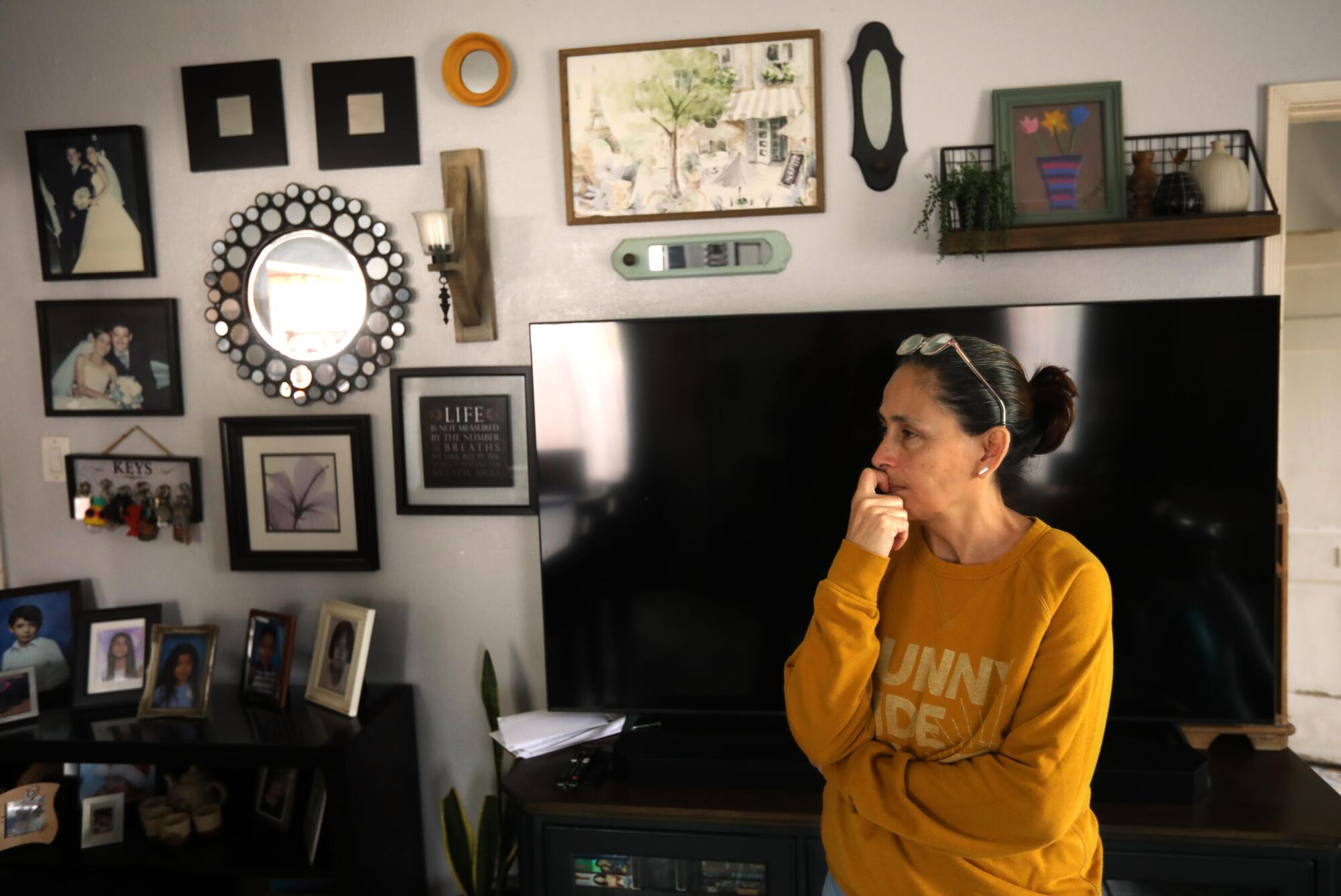
Claudia Aleman’s family has benefited from subsidized internet service through the Affordable Connectivity Program that is running out of funds.
(Genaro Molina / Los Angeles Times)
For Aleman’s family, the pandemic changed everything. When schools first shut down, they relied on a Los Angeles County Unified School District program that offered free internet to eligible students.
But the service was unreliable — access would frequently drop or freeze up. So Aleman started leaving her daughter Miranda, now 11, with her sister and neighbors who had reliable internet access so that she could attend online classes and do her homework.
“I think my daughter lost an entire school year,” she said.
Their need for internet access at home hasn’t changed since schools reopened. Most of Miranda’s assignments are still online.
Life improved almost immediately after they enrolled in the federal subsidy program in 2022 and got internet access through AT&T. Miranda started turning in assignments on time. Aleman’s older daughters, 17 and 21, could do their schoolwork at home instead of at the library or relatives’ homes.
It also made a difference for her parents. Her father, who is diabetic, takes nutrition courses online, and her mother, who is asthmatic, needs regular video checkups with her doctor. And Aleman could finally stay in regular contact with family in Mexico.
Since learning that the program would end, Aleman said she has been applying for jobs to help her husband cover bills. In May, her husband will pay the internet bill, possibly with credit cards.
Beyond that, she said, “there’s always the library.”

Politics
Fetterman unleashes on ‘dirtbag’ wing of Dems after far-left victories: ‘Orgy of socialism’

NEWYou can now listen to Fox News articles!
Sen. John Fetterman, D-Pa., unloaded on his own party on Sunday evening, blasting a series of victories for progressives he called “anti-America.”
“Big night for the dirtbag left,” Fetterman said, referring to New York’s recent primaries, where two members of the Democratic Socialists of America (DSA) won primaries.
“I’ve said the party is becoming an orgy of socialism. Clearly anti-America, anti-Western Civilization,” Fetterman said.
Fetterman’s striking calls give a rare look at how some moderates may view the developments on their far-left flank that have dominated the party’s momentum in recent months, sparking concern that their high visibility is dragging the party further and further left.
FETTERMAN WARNS DEMOCRATS ‘DRIFTING FIRMLY INTO COMMUNISM’ AFTER SOCIALIST PRIMARY WINS
Sen. John Fetterman, D-Pa., speaks to reporters outside the Senate Chamber during votes on Nov. 10, 2025, on Capitol Hill in Washington, D.C. (Andrew Harnik/Getty Images)
His comments come on the heels of a handful of key progressive victories.
In Maine, Graham Platner, a controversial Democratic candidate for U.S. Senate, has attracted controversy for denying knowledge of the meaning behind a Nazi-linked tattoo, for off-color comments about race and calling himself a “communist” in a deleted Reddit post.
In New York, one DSA member, Claire Valdez, won a primary on a platform of abolishing ICE and a Green New Deal-style approach to climate change. Similarly, Darializa Avila-Chevalier, another DSA candidate, beat out incumbent Rep. Adriano Espillat, D-N.Y., a high-ranking Democrat and the chair of the Congressional Hispanic Caucus.
WINNERS AND LOSERS EMERGE AFTER SOCIALIST EARTHQUAKE ROCKS NYC PRIMARIES
Graham Platner, Democratic Senate candidate for Maine, speaks at a primary election night event at the Blue Hill YMCA in Blue Hill, Maine, on June 9, 2026. Platner won the party’s Senate primary after a campaign marked by accusations of past misbehavior and voter concerns. (Graeme Sloan/Bloomberg via Getty Images)
Both Chevalier and Valdez had the backing of New York Mayor Zohran Mamdani, himself a socialist.
The wins have captured national attention and drawn criticisms from Republicans who have pointed to their success as emblematic of the direction of the Democratic Party.
Fetterman, who has not shied away from confrontations, has been one of the few Democrats to express alarm about the kind of candidates carrying the party’s banner.
“I mean, you look at some of the things that people have said. Abolish prison, abolish the border, abolish ICE, I mean these crazy people — I have colleagues in my caucus that refuse to even call this out,” Fetterman said.
FETTERMAN REACTS TO MAMDANI’S REFUSAL TO ACCEPT SUPREME COURT’S IMMIGRATION RULING
U.S. Sen. John Fetterman, D-Pa., walks through the Senate Subway during the Senate War Powers vote on April 22, 2026, in Washington, D.C. (Heather Diehl/Getty Images)
CLICK HERE TO DOWNLOAD THE FOX NEWS APP
“Between P-hustle in Maine and some of the other winners in New York, they should form their own party and run on all the things that they’ve had to delete on social media,” Fetterman said, referring to Platner.
“That’s where our party has moved,” he added.
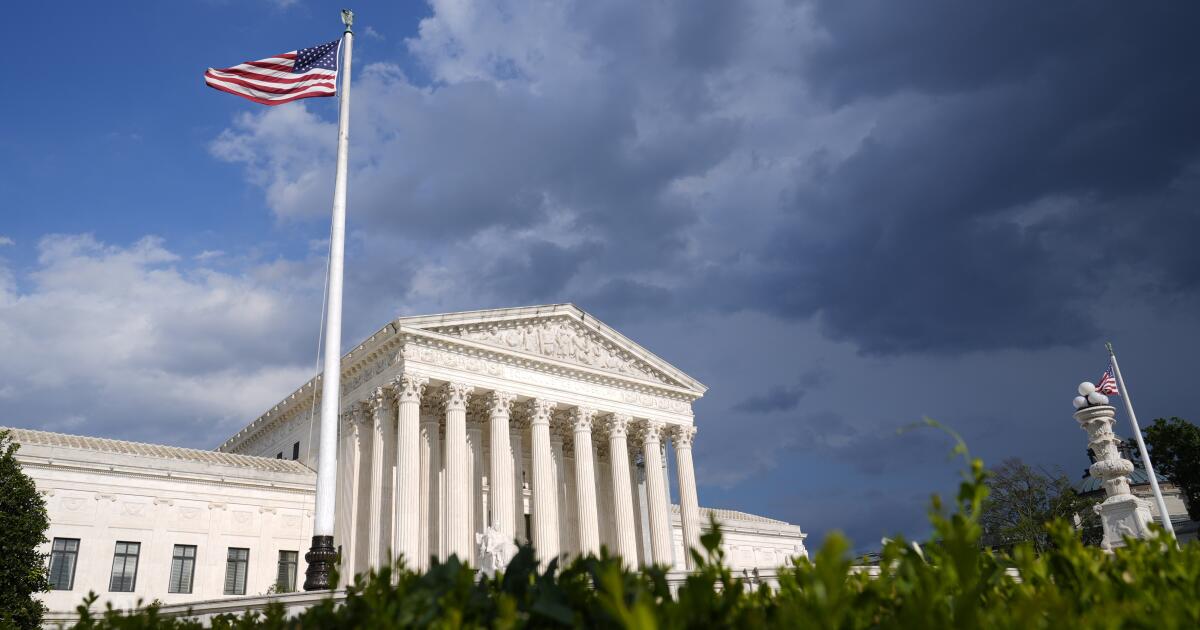
WASHINGTON — The Supreme Court cast doubt Monday on whether police may obtain cellphone data to find crime suspects.
In a 6-3 decision, the justices said this location information showing where a cellphone user has traveled is personal and private and subject to the protection of the 4th Amendment’s ban on unreasonable searches.
Justice Elena Kagan said these “records serve as a personal journal of a user’s movements.”
She said the information “resembles other private materials — think of emails, documents, photographs, or calendars—that even if stored on Google’s servers, a user reasonably views as his own…and reasonably expects to be shielded from the inquisitive eyes of the government.”
Because an “individual has a legitimate expectation of privacy in his cellphone location data,” she said police investigators need a valid search warrant from a magistrate.
The court stopped short of deciding the proper basis for a search warrant in such cases. Instead, the justices sent the case back to judges in Virginia.
But the outcome casts doubt on “geofence warrants.”
In recent years, police have gone to Google and cellphone companies seeking tracking data on cellphones that were at a crime scene. Sometimes, they have had a warrant from a magistrate.
Civil libertarians say the use of this tracking data raises the specter of mass surveillance on innocent people.
Police and government lawyers say no one has a reasonable right to privacy when they are walking on a sidewalk or driving down the street.
The case before the court arose from the armed robbery conviction of a Virginia man who stole $195,000 from a credit union in a small town near Richmond.
By the time police arrived, the robber had fled. But surveillance cameras showed he was carrying a gun and a cellphone.
Lacking other leads, detective Joshua Hilton asked a judge to issue a special type of warrant seeking information from Google.
Referred to as a “geofence warrant,” it seeks data from phones in a particular area at a particular time.
The detective sought data on phones that were within 150 yards of the credit union within one hour of the late afternoon robbery.
After examining and paring down the data, the detective asked for the phone records of Okello Chatrie. Then, with a search warrant of his home, investigators found two robbery-style demand notes, a semi-automatic pistol and about $100,000 in cash.
A judge refused to suppress the evidence from an allegedly unconstitutional search, and Chatrie entered a conditional guilty plea.
The full 4th Circuit Court of Appeals split evenly on the legality of the geofence warrant, and the Supreme Court agreed to decide the issue in Chatrie vs. U.S.
Usually investigators obtain warrants to search the home or vehicle of a known crime suspect.
The new and disputed geofence warrants seek to find a suspect by examining data on the cellphones that were at the scene of a crime.
The FBI used this cellphone data in 2021 to identify suspects who broke through police barricades on Jan. 6, 2021, and pushed their way into the Capitol to disrupt the official counting of electoral votes.
Chief Justice John G. Roberts Jr. and Justices Sonia Sotomayor, Neil M. Gorsuch, Brett M. Kavanaugh and Ketanji Brown Jackson agreed on the outcome in Chatrie vs. U.S.
In a 21-page dissent, Justice Samuel A. Alito Jr. said the court had “carefully set the stage for its planned performance: striking a pose as a great champion of privacy in the digital age. I cannot support this irresponsible escapade.”
Justice Clarence Thomas agreed.
Justice Amy Coney Barrett agreed in a one-paragraph dissent. “Chatrie had no reasonable expectation of privacy in data about his public movements that he voluntarily disclosed to Google,” she said.
The Supreme Court ruled 6-3 that President Trump could fire independent regulators for any reason. But the justices carved out an exception for the Federal Reserve, preventing the immediate removal of Lisa D. Cook, a Federal Reserve governor.
-

 San Francisco, CA7 minutes ago
Headlines, June 30 – Streetsblog San Francisco
-

 Dallas, TX10 minutes ago
LIVE | Ivory Coast, Norway meet for World Cup knockout match at Dallas Stadium
-

 Miami, FL15 minutes ago
Every Dolphins head coach’s start in Miami from worst to best
-

 Boston, MA22 minutes ago
Historian clears up one of the biggest myths about the Boston Tea Party
-
Denver, CO25 minutes ago
Nemanja Jokic, the older brother of\u00a0Denver …
-

 Seattle, WA30 minutes ago
3 Seahawks Rookies Who Must Step Up Right Away
-

 San Diego, CA37 minutes ago
Adobe Falls: The elusive waterfall that briefly returns after San Diego rains
-

 Milwaukee, WI40 minutes ago
Steve Czaban returns with new home in Milwaukee sports-talk radio

