Entertainment
David Mamet slams Hollywood's 'garbage' DEI initiatives. 'It’s fascist totalitarianism'

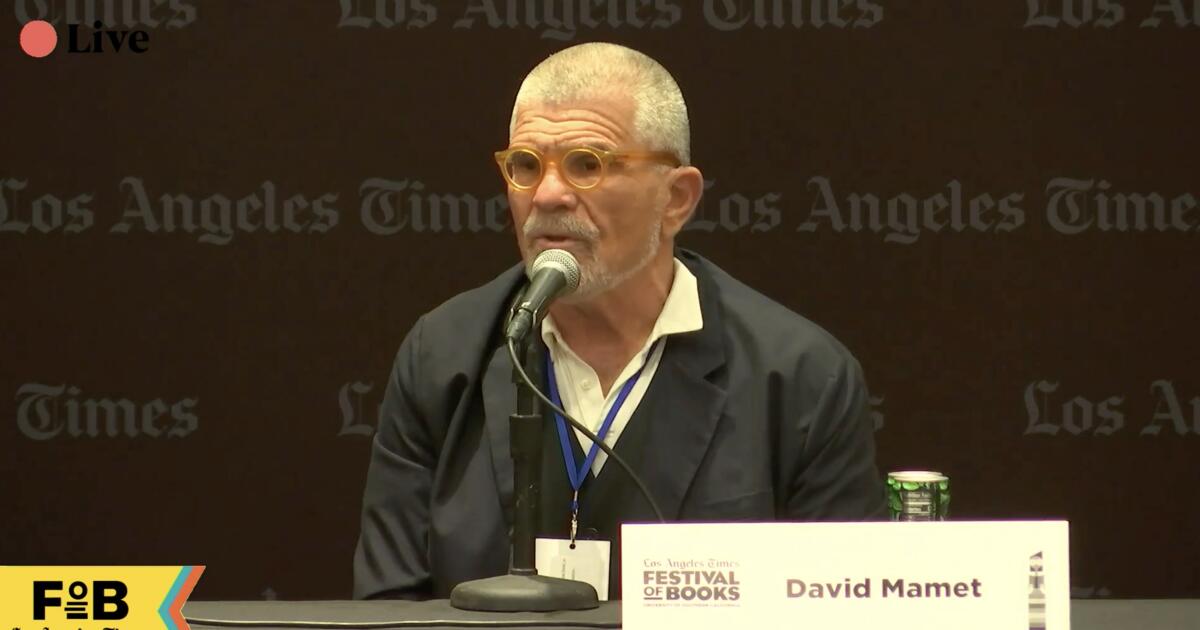
David Mamet is not done lambasting the liberal establishment in Hollywood.
“DEI is garbage,” said the Pulitzer Prize-winning author to a packed house at the Los Angeles Times Festival of Books. “It’s fascist totalitarianism.”
The playwright and director did not shy away from his trademark expletives or controversy as he spoke about his tell-all memoir, “Everywhere an Oink Oink,” with Times deputy entertainment editor Matt Brennan at USC’s Newman Recital Hall.
His book, published in the fall, details his last 40 years in the moviemaking business and falling out of grace as his politics shifted him from a progressive “red diaper baby” of two communist Jewish parents raised on the South Side of Chicago to a present-day Trump-loving conservative.
For more than a decade, Mamet’s political and social statements have made as many headlines as his film and theater work. His latest gripe is with the new diversity rules that the Academy of Motion Pictures instituted for Oscar-eligible films to help advance the representation of LGBTQ+, women, ethnic minorities and disabled people.
The idea that “I can’t give you a stupid f— statue unless you have 7% of this, 8% of that … it’s intrusive,” Mamet said.
Although Mamet acknowledged that discrimination barred groups from participating in Hollywood for years, he thinks the pendulum has swung too far in the opposite direction. In his book, Mamet describes the leaders of these diversity, equity and inclusion initiatives as “diversity capos and “diversity commissars.”
“The [film industry] has little business improving everybody’s racial understanding as does the fire department,” Mamet said to a few loud laughs in the crowd. He argued that his colleagues are better off selling popcorn than trying to improve representation for women, queer talent and other marginalized groups.
Mamet did not mince his words. He used the outdated term “transsexuals” when talking about transgender people and railed against gender-neutral bathrooms. “It politicizes the human excretory function,” he said to even louder guffaws in the crowd.
He proudly claimed his defense of free speech in an amicus brief he wrote to the Supreme Court this year in NetChoice LLC vs. Paxton. “We see great attacks on freedom of speech in this country,” Mamet said.
Film executives and writers were not safe from Mamet’s critiques either. He blamed film studios for the “hegemony” that’s smothered the voices of independent filmmakers. “There’s no room for individual initiative,” Mamet said. He added that the film industry is experiencing the “growth, maturity, decay and death” that “happens to everything that’s organic.”
Back in 2007, Mamet was a vocal opponent of the writers’ strike and complained last year when writers reached an impasse with studios as they bargained for pay raises and protections against the use of artificial intelligence.
“There’ll be less work,” Mamet conceded. “But the scripts will be better.”
Does Mamet think of his children as nepo babies who’ve benefited from his illustrious career? Not at all, he said. He feels gratified that they’ve learned from being on set with him.
“They earned it by merit,” he said of daughter Zosia Mamet, who starred in “Girls.” They haven’t benefited from any type of privilege, he said, and he thinks that DEI initiatives are taking away hard-earned opportunities. “Nobody ever gave my kids a job because of who they were related to.”
Mamet said he’s been pushed out of Hollywood less by his politics than by his age. Young directors want to work with friends of their own generation.
“Nobody’s going to pay me a lot of money anymore,” Mamet said. “Nobody’s going to let me have a lot of fun.”

Entertainment
Don Was produced the Rolling Stones, Bob Dylan and Ozzy. At 73, he found his voice in Detroit — and the Dead
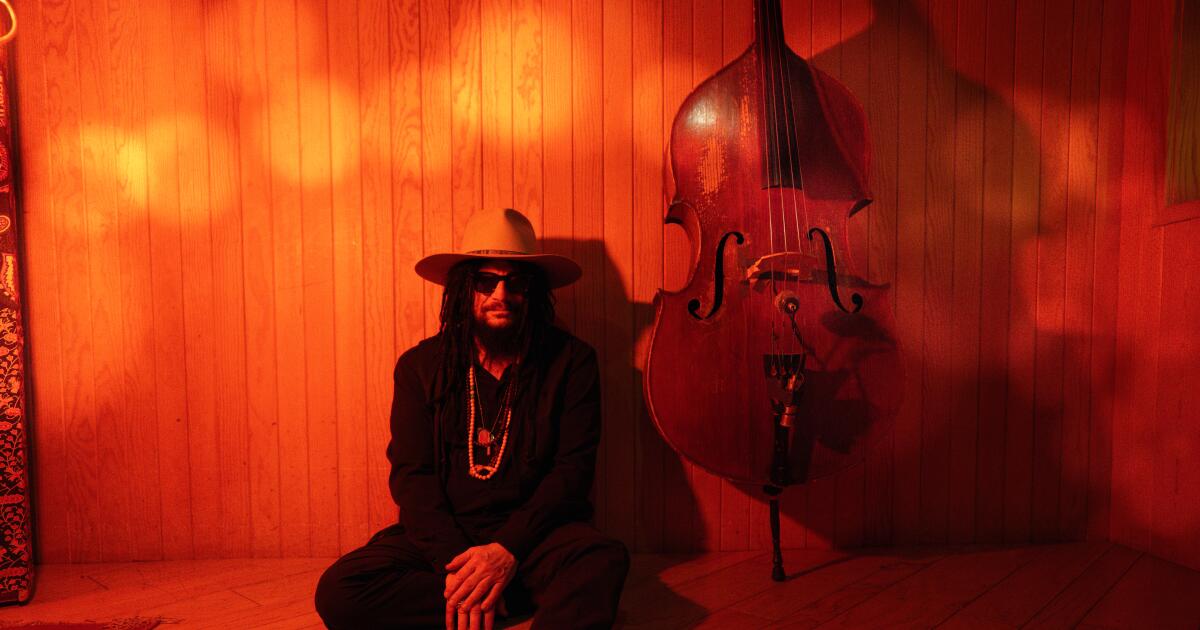
The bass legend and superproducer Don Was didn’t expect to be covering Curtis Mayfield’s Civil Rights-era anthem “This Is My Country” on the road in 2026. But lately, the chaos in the United States made the song seem regrettably apropos.
“It wasn’t supposed to still feel potent. It was supposed to be something that served a moment,” said Was, who included the defiant single on his 2025 album “Groove In the Face of Adversity.”
“It’s shocking to be here in 2026 and, whatever distance we traveled from 1966 until now, to see it all get reset,” Was said. “That song’s a more powerful statement now than it was then. It was inconceivable that it would still be relevant — this is supposed to be the utopian age of Aquarius. This is not the way it was supposed to turn out.”
Was remembers the tumult, violence and hope that came out of that era in his hometown of Detroit. The city’s music, famed for rough-hewn virtuosity from blues to soul to techno, is the spring that waters “Adversity.” It is, remarkably, the 73-year-old’s first solo album after a career spanning the pioneering electro-pop band Was (Not Was) and deep producer relationships with the Rolling Stones, Bob Dylan and Bonnie Raitt.
He also spent years in Bob Weir & Wolf Bros with the late Grateful Dead founder, and will play from the Dead’s landmark “Blues for Allah” on his tour that stops at Lodge Room on July 7.
With a backing band of studio killers dubbed the Pan-Detroit Ensemble, “Adversity” has an expansive modern atmosphere, yet a lived-in, filament-bulb quality in the playing that carries through funk, jazz, rock and R&B. It’s largely a covers record, but you wouldn’t know it from the depth of the revisions — veering from the Yusef Lateef standard “Nubian Lady” to Hank Williams’ “I Ain’t Got Nothin’ But Time,” closing with funk group Cameo’s “Insane.”
“I’ve been carrying it around in my head for 30 years,” Was said. “This first album to me is really a handshake, a ‘nice to meet you,’ this jambalaya of Detroit sounds.” While much of the source material comes from elsewhere, the cumulative mood is extremely personal to an artist who has spent his life helping the greats find true expression.
“I’ve come to admire artists who are willing to go in deep inside their most personal thoughts for the sake of helping the listener understand their own lives,” he said. “To help them deal with the trauma of being human — especially in these times, man.”
Tops on that list is the late Grateful Dead founder Bob Weir — who died in January at 78 — as a model for a band staying fearless and uncompromising. Was, still heartbroken about the loss of his friend and bandmate, recalled their first time on tour.
“When Bobby called asking me to play bass with the Wolf Bros, I thought at the very least, this is going to be a master class in losing self-consciousness and forgetting about fear,” Was said. “If the band stumbled, the audience wouldn’t walk out. They appreciated the fact that you were trying to do something new for them. Then there’d be a couple moments every night with an incredible exchange between the musicians and you can feel the audience becoming a member of the band.”
Playing the Dead’s “Blues for Allah” on this tour — an LP rooted in Middle Eastern scales, pirouetting time signatures and improvisational telepathy — put him in communion with his old friend.
“I used to think that songs like ‘King Solomon’s Marbles’ were just jams and conversations on the spot. But when we really got into it, there’s a form underneath and you can take tremendous liberty with that form,” Was said.
Was’ production career was built on a similar principle.
His early band Was (Not Was) remains a visionary electro-pop act with subtle, salient politics. “Out Come the Freaks” is a favorite on Pride month dance floors — “If you just wanted to do poppers and dance all night, it worked, and if you wanted to think about the government careening out of control, it worked too,” Was said of the band’s club material.
The late Ozzy Osbourne sang on the band’s international hit “Shake Your Head,” alongside a winking, very game Kim Basinger. The actor was a replacement after Madonna backed out, leaving the proto-rave tune one of the era’s most unlikely collaborations.
He recalled Ozzy fondly. “In 1975, this folk group I was in booked us to open for Black Sabbath at the Toledo Sports Arena, playing for a bunch of 14-year-old white boys on amphetamines,” Was said. “They weren’t having it. I’ve heard the tape of that show, and the drummer was bleeding from being hit by so many bottles that we had to stop playing. That was my first exposure to Ozzy, so I was a little afraid to do the session, but he was up for an adventure.”
Don Was and the Pan-Detroit Ensemble
(Gemma Corfield)
A Stones confidant and producer from 1994’s “Voodoo Lounge” up until 2023’s “Hackney Diamonds” (where Andrew Watt took the helm), Was had nothing but praise for the band, and still admits to a twinge of fandom in their presence.
“There’s never been a day in the studio with the Rolling Stones where I didn’t look around the room and go, ‘Oh my God,’” he said. “I’ve known Mick for over 30 years, but the last time they played L.A. at SoFi Stadium, Mick came walking down that stage and I was like, ‘Wow, there he is, it’s 1965 again.’”
With Dylan, he recalled the mercurial genius’ impish side. “I was producing Dylan, and George Harrison came in to play guitar. Bob was messing with him, Bob pushed the engineer aside and he ran the tape machine. George had never heard the song before, didn’t know what key it was in, and Bob just starts the tape. George played a respectable solo, but clearly it was rough. Bob, just to be funny, stopped the machine and said ‘That’s it, perfect.’ George turns to me and said, ‘What do you think, Don?’ And Bob goes, “Yeah, what do you think, Don?’ I’m looking at these two guys and time slowed down. I remembered trying to sell my car to get a ticket to go to New York to see the Concert for Bangladesh. Now they’re asking me what I think. I was paralyzed.”
“A voice appeared in my head,” he said, “Telling me, ‘He’s not paying you to be a fan.‘ So I said to George, ‘It was good, man. Let’s see if we can beat it.’ You can’t allow the iconography to dictate the outcome in the studio. You have to put that aside.”
As president of Blue Note Records, the estimable jazz label he’s led for more than a decade, Was relentlessly looks forward. He’s released restless modern records by Domi & JD Beck, Fathers, Makaya McCraven and Julian Lage (the hotshot jazz guitarist now playing with Dylan). He’s refreshingly optimistic about challenging music in streaming’s ruthless economy.
“Don’t make music for the delivery system,” Was said. “I don’t think about streaming, I think about touching people. If you do that, nothing has changed fundamentally in the music business. If your purpose is to get under people’s skin and make them feel something, that’s the same job it was for Mozart. How people listen can keep changing, but I don’t think the palette of human emotion changes, and that’s who you’re addressing.”
Was came from a working-class industrial city, making music reflective of Detroit’s technological upheaval and economic neglect. “Adversity” is a beacon to keep playing in spite of everything.
“I think that the salvation of musicians is that no matter what happens, what technological advancements come along, there’s still nothing like the experience of being in the same room as people who are playing together,” Was said. “It’s always been tough, man. It’s harder these days to buy a Ferrari as a musician, but I don’t know that that’s necessary. I have total confidence that the opportunity is there for anybody who is willing to give the audience a meaningful experience.”

When I spend time around fellow writers, regardless of their achievements, conversation is much the same as in any other context. When I watch groups of fictional writers in films, they are continually striving to outdo one another, to show off their brilliant intellects. It’s a constant process of trying too hard, and it’s exhausting. To his credit, Dustin Hoffman, who plays established literary genius David in this torrid tale of family conflict, doesn’t come across this way, rising above the clumsy script thanks to his patient approach. The same cannot be said of the other actors, all of whom have proved their talent elsewhere yet seem seduced by the notion that this is how intelligent people behave.
The plot here is fairly simple, and not without potential. David’s son Jacob (Tom Sturridge) is a copywriter and successful creator of jingles, but after his wife Elise (Alison Brie) wins a major award, he starts getting insecure, wanting to prove that he can make it as a proper literary type. The obvious way to do this seems to be to write a biography of David, but David has no interest in engaging with this. He provides a number of reasonable justifications for this. Underlying them is the fact that we all tend to frame ourselves in different ways for different people. What one might be willing to say to the great anonymous public is not necessarily something one might feel able to say to one’s son.

This stalemate is broken by the arrival of John (André Holland, fresh from the similarly awkward – but smarter – The Dutchman), an old friend of Jacob whom David remembers fondly. At Elise’s instigation, a secret deal is made: John will look after the increasing fragile older man during the day and, in the process, extract his stories from him, giving them to Jacob for his book. John agrees to this because he needs the money Jacob offers him, and it seems like a sweet deal. It immediately sets up a power imbalance, however.
Complicating matters further are John’s past as a literary protégé who failed to fulfil his promise; the fact that he was once in a relationship with Elise, whose dissolution she regrets; and the pressure that she’s under to match her great success, from an agent who subscribes to the popular but rather tedious belief that inspiration is most easily found in bad behaviour.
Another way writers in films differ from those in the real world is that for them, critical success comes with money, so they don’t have to write very much. A good deal of this film is spent listening to them whine about how hard it is, as if under the misapprehension that it’s not really a form of work. Sturridge is particularly unfortunate; between this and Jacob’s whining about issues with his parents, he doesn’t get much else to do. Brie has a little more to work with as the film flirts with the idea that we’re caught up in Elise’s imaginary scenarios, but this doesn’t really convince. Holland manages to salvage something, but it’s only Hoffman who is really able to interject some energy into proceedings – ironic given that he spends a lot of his scenes in a haze of cannabis smoke.
It’s not terrible. Writer/director Alex Vlack frames scenes nicely enough and all the technical work is carried out to a good standard. There’s just little reason for viewers to invest. Like its characters, it’s intent on trying to communicate cleverly, but has very little to say.
Reviewed on: 04 Jul 2026

Comedy saved Teruko Nakajima’s life.
In 2016, Nakajima received psychiatric care at Cedars-Sinai Medical Center, diagnosed with depression, PTSD and suicidal ideation. Her doctors searched for ways to manage her stress by exposing her to various activities, including video games, serene Icelandic landscapes and an aerial silks performance. The last brought her anxiety down, revealing that the arts were the answer. Her doctor prescribed the arts, comedy specifically, so she went to the Upright Citizens Brigade for class.
She found a calling and a safe space in comedy.
“I didn’t know I was born a comedian,” Nakajima said. “Finally, I really felt I was accepted as a comedian, validated for who I am.”
Nakajima shares her healing journey to the stage in “Made in America,” which just had an encore performance at UCB on Tuesday after its award-winning run in 2022 (it is also available for streaming on UCB’s website through Tuesday). The one-woman show arrives in time for the United States’ 250th anniversary on Saturday, documenting Nakajima’s search for the American dream as a first-generation Japanese American woman. “Made in America” premiered in 2022 at the Hollywood Fringe Festival during Joe Biden’s presidency and following the Jan. 6 United States Capitol attack. In 2026, its musings on identity and belonging pierce through today’s political landscape shaped by Donald Trump’s second presidency.
“I wanted to let people know this is an American story,” she said.
“Made in America” is about Nakajima’s life. It begins in her mother’s womb. She felt so safe there, she yearned to return. Growing up, she experienced an emotionally and physically abusive life at home, recalling her father breaking furniture and her mother’s alcohol-induced belittling comments. But her name, Teruko, translates to a “shining child.” Thus, she proclaims in the show, “I’m a superstar!”
The beauty in “Made in America” is Nakajima’s ability to find the humor in her trauma. When the show transitions to her life in America, she talks about her life as a dominatrix in New York City and her struggles with romance in Los Angeles. Her comedic jabs at the American economy and humorous reflections juxtapose somber moments of stillness in the midst of her struggles. This balance puts her life into perspective, revealing a positive personality beneath a dark saga.
Nakajima performs “Made in America” at Upright Citizens Brigade Theater.
(Nick Rasmussen)
“I look very happy-go-lucky and cheerful, but actually, I am a very dark person because I have a dark history,” she said. “I always wanted to leave my story behind. I wanted to leave my mark in this world before I died, so I needed to make something.”
The first class Nakajima took at UCB was John Flynn’s storytelling course. There, she started building pieces of the show without realizing it. As they added up, the idea for a show surfaced. After class one day, she asked Flynn to direct it. Flynn, who has been teaching at UCB in New York and L.A. for about 20 years, agreed.
“She disarms people,” Flynn said. “There’s something about her that is just so unique and so delightful that you won’t forget her.”
Flynn first met her at his storytelling open mic. She walked in with her emotional support dog Titi (also known as Tiny Teruko), wearing her signature red heart-framed glasses, without lenses. Soon, these glasses would make him double over in laughter when she performed and cried, dabbing her eyes with tissue through the frame.
“When you start to learn her story and the experiences she’s had, it is amazing that she is so positive,” he said. “She’s such a sort of undeniable positive energy that she just radiates all the time, which is so compelling and why people are so drawn to her.”

Revived at UCB amid Trump’s second term and the nation’s 250th birthday, Nakajima’s show doubles as a defiant immigrant love letter to America — and a refuge for audiences feeling alone.
(Nick Rasmussen)
Nakajima puts all of herself into the show. Aside from comedy, she has been a cheerleader in Japan, a salsa dancer in New York and a sculptor on the side — she loves sculpting MLB players’ butts; Derek Jeter is her favorite. In the show, she folds these aspects of her life into a single story, dancing from section to section. Comedy is more than just laughs; it’s storytelling.
“I am so good at cheering people up, since I was very little,” she said. “I had no competition with others because I’m the one and only. Nobody looks like me.”
Together, Flynn and Teruko parsed through her life stories to give the show an arc. For Flynn, it’s like carving away at what is already there to create something fun and cohesive, like a sculpture. “What’s fun about directing one-person shows like this is that it’s usually just two people in a room putting something together,” Flynn said.
Bringing the show back this year, the work gets sharper and tighter, but the biggest shift is in its conclusion. Once optimistic about the future of life in America, the show now has a stronger desire to make change. There was a sense of hope in 2022 for women like Nakajima, an immigrant who sought safety in a new country and struggled with abuse from her family and strange men. Today, as Trump’s immigration policies lean on deportation and discrimination, she simply wants to be seen.
“America, thank you for not giving up on me,” Nakajima said toward the end of the show. She is proud to be American, not just because she gets to have the same nationality as her dog Titi, but primarily because of the new life it offered her. America promised happiness. Whether it actually comes is another story, but in this one, the promise itself gave her a sense of purpose.
“After the show, people come to me in person and through messages,” she said. “A lot of people said, ‘I felt like I am not alone.’ That gives me so much hope and unity. I feel safe and like I have something to look forward to because I’m not the only one.”
Flynn realized how much he took for granted while working on the show with Nakajima. “I think, even though these are scary times and things seem to be going in directions that aren’t the best, there are still great people, and there’s something that is still there and is not dying and is still fighting,” Flynn said.
When she began her acting journey, Nakajima thought she’d turn to drama, but there’s something more unguarded in comedy.

Nakajima holding up her dog Titi during a performance of “Made in America.”
(Nick Rasmussen)
“I’m very authentic and invincible through comedy,” she said.
By the end of “Made in America,” Nakajima is no longer trying to find her way back to her mother’s womb. She is confident in her place in the world. She remembers that she is a star. She brings out her dog Titi, who was hidden on stage throughout the entire performance, and shares that UCB gave her a new outlook on life. Comedy breaks away her stresses and allows viewers to be vulnerable with her.
“I always wanted to feel safe,” she said. “I never had that. Finally, I found a safe space, and then I realized that I’m actually important. I’m actually worthy. I’m so happy right now to be able to express myself through comedy because it’s the truth.”
-

 Lifestyle7 minutes ago
Sunday Puzzle: Five plus two, two plus five
-

 Technology19 minutes ago
Xbox is a disaster
-

 World22 minutes ago
World leaders, dignitaries pay tribute to America on historic 250th birthday
-

 Politics27 minutes ago
Expert who fled Cuba warns of ‘vicious cycle’ that will lead to ‘communists in double digits’ in Congress
-

 Health34 minutes ago
July 4 heat delays America 250 celebration as State Fair guests share love of USA
-

 Sports37 minutes ago
Toronto Maple Leafs top pick Gavin McKenna reveals that he’s changing his jersey number
-

 Technology42 minutes ago
China’s robot-run hotel opens to public in 2027
-
 Business49 minutes ago
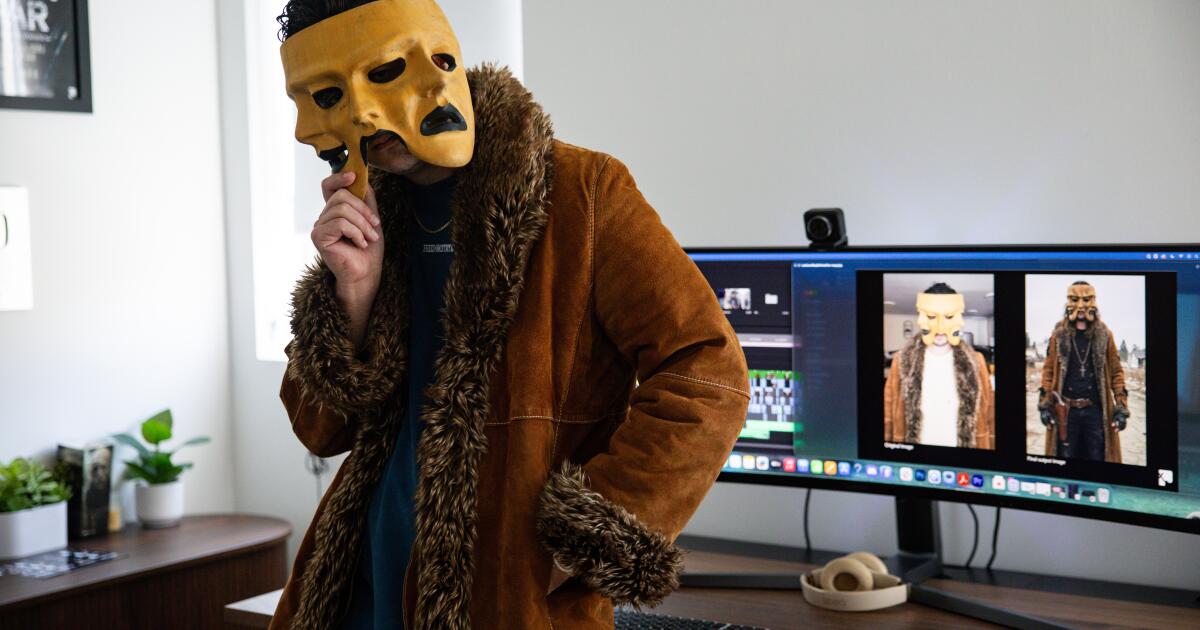
China-backed AI tool behind fake Brad Pitt fight making Hollywood inroads

