Business
Why 'economic headwinds' are suddenly to blame for everything

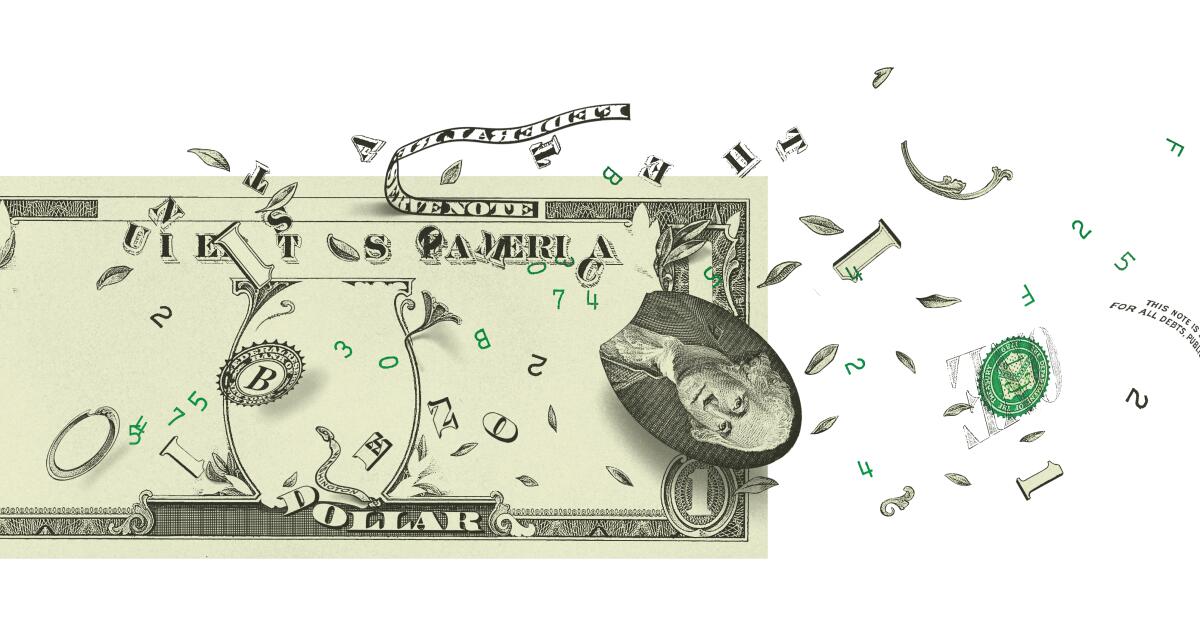
An atmospheric disturbance is whipping through the job market.
When Volvo announced it was cutting more than a thousand jobs last year, its CEO cited a particular phenomenon for the cuts. When the founder of the Messenger announced to his hundreds of employees that they were all laid off without severance, less than a year after the online publication booted up, the same weather pattern got the blame.
Chief executives at accounting firms, cookie companies and Crypto.com have all laid off thousands of workers in the last year, and pointed the finger at one metaphorical culprit: economic headwinds.
The phrase evokes a solemn CEO scanning the sky from the deck of the corporate ship. Eye on the horizon, he senses a change in the weather, a different snap to the rippling canvas, a new chop to the sea. With a grim set to his jaw, he concludes that only one course of action can save the voyage: massive layoffs.
Headwinds have always blown around in business English, but the phrase economic headwinds serves a special purpose: a majestic waving of the hand, an abandon to the fates, an inkling of force majeure.
“It’s a useful term, because we can’t control the wind,” said Thomas C. Leonard, a historian of economics at Princeton University. “If you’re a corporation trying to sell unhappy outcomes to shareholders or regulators, it’s a way of saying it’s a tough environment, but more importantly it’s a tough environment beyond our control.”
It’s a phrase heard often these days in the tech and media sectors, which face real challenges.
Tech companies that could raise and spend cash freely when interest rates were close to zero are struggling to stay afloat. The ad market has hit the doldrums — in part because all those companies that used to have cheap cash to pump into ads now have to keep their powder dry — which has taken the wind out of the sails of many media businesses, which had been facing financial problems for decades. And in L.A., Hollywood studios have been slow to pick up the pace of production after last year’s strikes, as they face questions over the viability of the streaming business model.
Executives in these industries are using the term precisely because of the contrast between their challenges and the wider world, Leonard said.
“The wild thing is, notwithstanding the headwinds in media and technology, the economy is doing unbelievably well,” Leonard said. Inflation is down, unemployment is at historically low levels, the U.S. is outperforming other rich countries, the stock market is booming, and even inequality of wealth and income is falling, Leonard said.
This presents a conundrum for those tasked with swinging the ax: how to explain why your company is ailing when everybody can see blue skies above?
By leaning on economic headwinds, executives can acknowledge a problem while avoiding getting into the messy details — say an outdated business model or internal failings.
EDGAR, the online database of the Securities and Exchange Commission, confirms that economic headwinds are being evoked more now than ever. In the 2000s, only a slight breeze was blowing, with public filings showing a handful of economic headwinds mentions. Things picked up in 2008 and 2009, as the financial crisis battered corporate America, but conditions seemed to subside in the middle of the last decade.
Then high interest rates rolled in. Since 2022, when the Federal Reserve started ratcheting up the federal funds rate to cool down the economy, EDGAR has been logging record after record. Nearly 500 companies mentioned economic headwinds in 2022. In 2023, that more than doubled to over 1,000.
A scan of the Newspaper Archive, which stretches back to the 18th century, tells a similar story. Through the booms and busts of the Gilded Age, the cataclysms of the Great Depression and the whirlwind of the 1970s oil crisis and stagflation, economic headwinds were barely worth mentioning. Most early mentions are riffs on the metaphor of the ship of state, with entire nations beating against the breeze, or come as puns in stories about airplanes or shipping companies.
But something changes after Y2K. Press usage of the phrase follows the same trajectory as the SEC record — with mentions up through the recession, followed by a dip, and now heading to new heights.
The collective experience of the last few years — pandemic, recession, inflation and now interest rate hikes — may have led to a turning of the rhetorical tides, said Robert Reich, professor of public policy at UC Berkeley and former secretary of Labor.
“The dominant economic assumption for really the entire post-World War II era has been that Keynesian macroeconomic management can tame the uncertainties and extremes of the economy,” Reich said. But since 2020, it’s been difficult to avoid the sense that things are spiraling out of control. “Most people felt at sea, and there’s something not necessarily comforting but seemingly realistic about these metaphors now.”
The economy stopped feeling like a precision machine in need of a tuneup, pointed surely toward growth, and started feeling more like an unpredictable journey to an unknown shore.
“Seeing the economy as a boat, one of those old galleons, or a three-masted schooner, tossed on the great waves of uncertainty and the waves of this roiling system makes much more sense to people,” Reich said.
It’s also “a wonderfully convenient way of avoiding responsibility” when things go sideways, Reich added.
Nautical metaphors are nothing new for the world of commerce — trade, finance and the joint-stock company can all trace their roots to seafaring merchants engaged in risky adventures to haul holds full of goods across the world in capital-intensive ships. And business euphemisms aren’t just limited to the seas. Few parts of the natural world have been spared from the corporate lexicon, with its changing landscapes and seismic shifts. Even the cosmos is fair game, especially in a tech world known for its moon shots and escape velocities.
Such fanciful phrases might serve a more grounded purpose: smoothing things over with investors. Research has shown that euphemisms actually work to soften bad news in the financial markets.
Kate Suslava, a professor of accounting at Bucknell University, spent years tracking how the use of metaphors in corporate earnings calls changes how the stock market reacts to new information. She found that investors aren’t total rubes — the stock prices of companies whose executives used negative metaphors like speed bumps or economic headwinds, or mentioned the need to tighten our belt or sharpen our pencils to get back to work after a series of missteps, indeed went down on the day of the earnings call.
What surprised her was that over the following months, the stock prices of the companies in question continued to drift down. “Investors take it as bad news, but it should be even worse news,” Suslava said. “If the market was efficient, they would completely capture it on the date of the call.”
In other words, a softening metaphor gets investors to under-react to the bad news. “Which is exactly the point of euphemisms,” Suslava said. “They work.”



The nation is awash in data center hate and California is no exception.
Temporary bans have cropped up across the state as residents from Imperial County to San José fight proposals in their communities. Monterey Park became the first city in the country earlier this month to permanently ban data centers by a popular vote. And a recent poll sponsored by the environmental group Net-Zero California showed 70% of state residents don’t want data centers in their communities.
But unlike in Virginia, Texas, Ohio and other states where residents are fighting 400-plus megawatt hyperscaler facilities in their backyards, California has some major barriers keeping data centers at bay.
Sky high industrial electricity prices are more than double the national average. Long wait times to connect to the grid have some new data centers sitting empty in Silicon Valley. And the state regulates the size of the backup generators that keep the centers running when the grid goes down. That has limited most facilities to a fraction of the size that artificial intelligence increasingly demands.
That all means that California is seeing less of a boom — fewer proposed data centers, and smaller in size — than in the country’s hot spots.
“California isn’t even on the map today,” said Mehdi Paryavi, chairman of the International Data Center Authority. “Taxes are high, land is expensive, water is scarce, energy is difficult to find, communities are pushing back. There are all kinds of problems.”
Northern California and Southern California were hubs for an earlier generation of data centers. “But over time, as the sector has grown, the overwhelming majority has been developed elsewhere,” said Andrew Batson, head of data center research at real estate intelligence firm JLL.
“Almost all the data center demand being generated from California is being serviced by adjacent states,” from places such as Phoenix and Las Vegas, Batson said, “where power is much cheaper, land is more affordable, and regulations are quite less.”
Still, “California can’t outsource all it’s data center capacity,” and the state expects to see growth over the coming years.
Fifty-one facilities are currently planned in the state, according to a recent study from the Pew Research Center, an 18% increase over the 277 operating today. According to a study from UC Riverside, data center electricity use in the state doubled between 2019 and 2023.
But some grid operators elsewhere are already seeing overwhelming loads, such as the Pennsylvania-New Jersey-Maryland Interconnection that expects about 40% to be added to its total demand, largely from data centers, by 2035. Compare that to the California Energy Commission which expects data centers to drive an increase of about 2 gigawatts by 2030, and 5 GW by 2040. That’s about 4 and 9% of its 52 GW peak load respectively.
“It’s a significant amount of demand growth, but it’s not dwarfing all the other factors,” said Mark Specht, a senior energy manager at the Union of Concerned Scientists who put out a report on California data center growth last month. “Some of the projections we’re seeing for increased electricity demand from electric vehicles in 2045 is actually higher than the demand from data centers.”
California regulations are part of what’s keeping data centers relatively small: A state rule requires any backup generator bigger than 100 megawatts to be certified as a power plant.
Specht’s report found none of the current data centers in California and almost none of the proposed ones require that certification because they fall under the 100 MW cap. (Exceptions include a 417 MW planned facility in Santa Clara and a 330 MW one in Imperial County blocked Tuesday by a moratorium vote.)
One hundred MW could power a small city’s peak demand, yet the average U.S. data center is expected to demand over 600 MW by 2030, according to the energy intelligence company Cleanview.
A San Francisco Chronicle analysis showed that California facilities currently make up about 5% of national data center power demand, but that share is expected to fall to 1% if building proceeds as planned across the country.
Still, the growth that does exist is raising concerns among utility ratepayer advocates and environmentalists, not to mention the general public.
“There are real costs at stake,” said Mark Toney executive director at The Utility Reform Network, a ratepayer advocacy group.
He noted Pacific Gas & Electric anticipates a massive amount of new demand from data centers — about 10 GW worth — or enough to power 7.5 million homes. That would require grid upgrades he estimates at about $10 billion, partly borne by ratepayers. Interest has been high in PG&E territory because it serves the San Francisco Bay area, where California’s projected data center buildout is concentrated around San Jose, now that Santa Clara has reached capacity.
Data center electricity projections come with uncertainty, and PG&E says its confirmed large load in the pipeline — mostly data centers — is closer to 5.3 GW.
Whatever demand materializes, TURN and others are fighting to shield ratepayers from the costs of PG&E’s buildout, a battle playing out at the Public Utilities Commission.
PG&E spokesperson Rob Stillwell said data centers help reduce rates by spreading the costs of grid maintenance over more customers. He noted data centers already have to pay the up front costs of connecting to the grid, under a temporary rule.
But TURN says those don’t include all of the infrastructure and broader grid updates that PG&E will have to invest in to support data centers.
And the rule only applies for PG&E territory and doesn’t require data centers to bring their own clean power.
TURN is now backing a bill from State Sen. Steve Padilla (D-Chula Vista) that would require all data centers to pay for 100% of the costs of new transmission upgrades as well as new clean energy to cover at least half their required electricity. The industry is opposing the effort.
Another Padilla bill would approve data centers faster if they use more clean energy. One from Assemblymember Rebecca Bauer-Kahan (D-Orinda), would require data centers to disclose their energy use to the state. And bills by Assemblymember Diane Papan (D-San Mateo) would require them to project and report their water use as part of permitting and licensing.
Yet politicians have been hesitant to regulate. Last year, similar bills were either watered down, didn’t make it through the legislature or were vetoed by Gov. Gavin Newsom.
At a panel in January, gubernatorial candidates were asked how they would balance environmental concerns about data centers with their potential to drive economic activity.
“We have to make sure that those data centers are paying their fair share,” said Xavier Becerra, adding that businesses need to move away from diesel backup generators.
Former candidate Tom Steyer of San Francisco answered with a dodge or a dose of realism, depending on your view.
“What data centers are looking for is cost to compute and speed to compute, and the good news is that California’s energy is so expensive on a cost basis, they’ll never come here,” Steyer said. “We may talk all we want about data centers, but they’re not coming.”

Bed Bath & Beyond is looking to stage a comeback as the decades-old company reopens stores in partnership with the Container Store in 22 cities, including two in Southern California.
To the delight of die-hard fans and coupon collectors, for a limited time the new stores will accept the chain’s blue and white coupons, no matter how old they are.
Customers can use their expired coupons until July 13. The company is also holding a contest to find the oldest coupon out there, with a prize of a home renovation worth $100,000.
“For decades, our customers treated these coupons like treasure,” said Bed Bath & Beyond Inc. President Amy Sullivan in a statement Monday. “They tucked them into purses, filing cabinets, cookbooks and memory boxes because they believed they would be valuable someday. We think they were right.”
Bed Bath & Beyond, which sells home goods including towels and kitchen gadgets, filed for bankruptcy in 2023 and shut down all its locations. Following its bankruptcy, Bed Bath & Beyond was bought by Overstock.com, which has since rebranded to Beyond, Inc.
The company announced the first phase of its brick-and-mortar reopenings last week. In addition to stores in New York, Colorado, Illinois and other states, two locations will open in California in the coming weeks in Costa Mesa and Century City in Los Angeles.
Over the last few years, social media users lamented that they could not use their expired Bed Bath & Beyond coupons.
“Found my entire stash of Bed bath and beyond coupons today,” one Reddit user said earlier this year. “Sad I never got to use them.”
Another Reddit user said they found a large stack of expired coupons two years ago. “I know I should probably toss them out at this point, but they were fun to collect,” they wrote.
In 2025, Beyond, Inc.’s executive chairman Marcus Lemonis vowed he would never reopen stores in California due to the “over-regulated, expensive” business environment. He ruled out future retail stores in the state in a statement posted on X last August.
Less than a year later, however, the company announced 12 planned storefronts in the Golden State, including five in Southern California. The new stores, dubbed Bed Bath & Beyond + The Container Store, will offer home organizational products as well as bed sheets, pillows and more.
Gov. Gavin Newsom welcomed the retailer back to the state.
“With a thriving economy growing faster than all other developed nations, California always reaches out with an open hand — not a closed fist,” he posted on X in April.
The Container Store filed for bankruptcy in 2024 and emerged from it in early 2025. Bed Bath & Beyond acquired the Container Store in April for about $150 million in stock and convertible notes, part of the company’s attempt at a comeback after its own bankruptcy.
“Our customers don’t think about their homes in categories,” Lemonis said in a statement. “By bringing Bed Bath & Beyond and The Container Store together, we’re creating a destination where customers can buy products, organize their spaces, design custom solutions and access services all under one roof.”
Business
Music mogul Clive Davis, producer and label executive who signed musicians like Janis Joplin, Bruce Springsteen and Whitney Houston, has died

Music mogul Clive Davis, the celebrated producer and label executive who signed and nurtured genre-defining musicians such as Janis Joplin, Bruce Springsteen and Whitney Houston, died Monday at his home in New York City, according to Davis’ representative Aliza Rabinoff. He was 94.
Davis had recently been hospitalized with an upper respiratory infection.
“To the world, our father was the iconic music legend whose vision, instincts and relentless pursuit of excellence shaped the soundtrack of countless lives,” his family said in a statement. “He discovered, mentored and championed the greatest artists in modern music history, leaving an indelible mark on culture that will endure for generations.
“To his family, Clive was Dad and Granddaddy, the steady presence at the center of our lives, the source of wisdom, strength, encouragement and unconditional love. No matter how extraordinary his professional accomplishments, he never lost sight of what mattered most: the people he loved.”
Known for an unfailing ear for innovative music and an innate ability to navigate the shifting currents of popular music, Davis ruled Columbia, Arista and J Records. He most recently served as the chief creative officer for Sony Music Entertainment.
The Grammy Award-winning producer’s career spanned six decades and was marked with both success and turbulence as he developed an astonishing stable of talent, with Rod Stewart, TLC, Carlos Santana, Aretha Franklin, Barry Manilow, Alicia Keys and Christina Aguilera among others. He also co-founded Bad Boy Records with Sean “Diddy” Combs, home to hip-hop artists such as the Notorious B.I.G.
Admirers said the veteran producer’s longevity as a high-profile record company chief was due largely to his knack for matching artists with can’t-miss songs, which often soared up the charts and raked in Grammy nominations by the armful. His annual pre-Grammy party was a not-to-be-missed industry event, even when it went virtual amid the COVID-19 pandemic in 2021.
Davis’ driving goal was “to find a song that fits naturally, so there’s no sense of artificiality when they sing it,” he told The Times in 2014.
Born April 4, 1932, in Brooklyn, Davis’ parents died when he was still a teen and he moved in with a sister. He received full scholarships to New York University and Harvard Law School and graduated with honors from both. He began his professional career as a corporate lawyer working with CBS Records and was eventually recruited into the label’s executive offices.
The label was then home to a young Bob Dylan, who tangled with Davis when the young folk singer pushed to include a song called “Talkin’ John Birch Society Blues” on his 1963 album “The Freewheelin’ Bob Dylan.”
Davis, as Columbia’s general counsel, felt certain lines in the protest song were libelous and told the infuriated songwriter that it wouldn’t make it onto the record, he wrote in one of his two memoirs. Though furious, Dylan relented.
Davis credited attending the Monterey Pop Festival — the 1967 seminal music festival that featured adventuresome acts such as the Who, Jimi Hendrix and Jefferson Airplane — for opening his eyes to the emerging psychedelic music scene. The festival brought him in contact with Joplin, who then was the lead singer of the rock band Big Brother and the Holding Company. It was his first — and likely his best, he said repeatedly — signing.
During his reign at Columbia/CBS, the company threw open its doors to rock and folk music, issuing early albums from Springsteen, Santana, Aerosmith, Laura Nyro and Billy Joel.
When Springsteen turned in the first recording of his debut album, “Greetings From Asbury Park, N.J.,” Davis asked him if he could come up with some additional material because he didn’t hear any potential hits.
“I went to the beach and wrote ‘Blinded by the Light’ and ‘Spirit in the Night,’” Springsteen said later. “That was a good call. They ended up being two of my favorite songs on the record.”
But Davis’ penchant for spending lavishly caught up with him and he was pushed out of CBS amid accusations that he used company money for his son’s bar mitzvah and other personal expenses — charges that were never proven. He quickly founded Arista Records where his winning streak of mainstream hits continued.
Clive Davis in 2016
(Kirk McKoy / Los Angeles Times)
After signing a 19-year-old Houston, she became one of the most successful female vocalists in recording history. In 1999, he spearheaded Santana’s comeback album, “Supernatural,” returning the guitarist to contemporary pop radio and winning eight Grammys in the process.
His Midas touch was questioned however when the German R&B duo Milli Vanilli achieved international success and a Grammy only to tumble into infamy when it was discovered that neither of the group’s members sang vocals on their music. The duo was later stripped of their Grammy. Davis insisted he was unaware of the deception.
Despite his successes, Davis was forced out of Arista in 2000, officially because at 71 he was past retirement age. But he didn’t let up, creating J Records, a subsidiary of BMG, and scored hits with artists such as Alicia Keys and Busta Rhymes. Four years later, he was named chief executive of BMG North America, which included control of Arista.
He worked closely with several “American Idol” winners and runners-up at the peak of the singing competition’s popularity, including Clay Aiken and Ruben Studdard. In 2007, he openly feuded with original “Idol” winner Kelly Clarkson over creative control of her second album. He publicly apologized but insisted the album could have been far better.
In 2009, Davis performed another feat by returning a slumping Houston to the top of the charts with the comeback album, “I Look to You,” debuting at No. 1 on the Billboard charts. The singer, who was slated to attend his annual pre-Grammy bash, drowned in a bathtub at the Beverly Hilton the night before the event. Toxicology tests later revealed there was cocaine and other drugs in her system.
“For a while, I did believe that she had stopped drugs,” Davis said of Houston’s final years, devoting much of his second memoir to the pop titan. She visited him at home in L.A. just before she died and he came away believing she was clean and primed to mount a comeback. “There was no comprehension on her part or my part that she was flirting with death.”
As a producer, Davis notched four competitive Grammy Awards, two with Santana, one with Clarkson and one with Jennifer Hudson, but shepherded several nominations and wins for artists. He also received the Grammy Trustees Award in 2000 and the President’s Merit Award in 2009.
The Grammy Museum in Los Angeles named its 200-seat venue the Clive Davis Theater and the Rock & Roll Hall of Fame inducted Davis into its non-performers category in 2000. NYU named its art school’s music division the Clive Davis Institute of Recorded Music. He was portrayed by Stanley Tucci in the 2022 biopic “Whitney Houston: I Wanna Dance with Somebody.”
“Clive was one of the first to recognize the invaluable impact that the Grammy Museum could have, not just within the music industry but for music lovers, as well,” Grammy Museum President and Chief Executive Michael Sticka said Monday in a statement. “Not only did he recognize our impact, but he generously supported it as the first person to donate seven-figures to further our mission and work.”
Davis was twice married and published his first memoir, “Clive: Inside the Record Business,” in 1975. He followed it with “The Soundtrack of My Life” in 2013 in which he revealed that he was bisexual. He wrote that he first had a sexual encounter with a man during the disco era in New York City and began leading a “bisexual life” after separating from his second wife, Janet Adelberg, with whom he had two of his four children. He had two long-term partners later in life.
“My family knew and my closest friends knew,” he told Rolling Stone in 2013. “But bisexuality is and was misunderstood: ‘You’re either gay or straight, or you’re lying.’ But that’s not true. Maybe I should have had the courage earlier to air the issue. But I knew I would air it when I wrote my autobiography.”
Davis is survived by his four children; Fred, Lauren, Mitchell and Doug; eight grandchildren; two great grandchildren; and longtime partner Greg Schriefer.
-

 San Francisco, CA3 minutes ago
San Francisco Supervisor Jackie Fielder to return following mental health leave
-
Dallas, TX6 minutes ago
Impact: How Jeffery Simmons’ extension could affect Quinnen Williams
-
Miami, FL11 minutes ago
Jaylen Brown bidding war? Haslem drove this? All the fallout from Antetokounmpo trade to Miami
-

 Boston, MA18 minutes ago
Your next Uber ride in Boston could be a taxi
-

 Denver, CO21 minutes ago
Nuggets 2026 NBA mock draft tracker 2.0: What national experts predict Denver will do
-

 Seattle, WA26 minutes ago
How to watch Bosnia vs. Qatar in next Seattle World Cup match
-
 San Diego, CA33 minutes ago
San Diego Unified leaders propose policy to limit technology in classrooms
-
 Milwaukee, WI36 minutes ago
Racine’s Greek community reflects on Giannis’ celebration of Greek culture

