Lifestyle
A magic mineral? What magnesium can — and can’t — do for you


Over dinner in Hollywood, a friend confides that she’s spritzing it on the soles of her feet at night and getting “the best sleep of my life.” At Erewhon in Silver Lake, a noticeably focused and relaxed employee tells me she stirs it into tea for focus and relaxation. In my TikTok feed, a woman tries to end her three-day battle with constipation by chugging it straight from the bottle. (Disclaimer: Don’t.) Her giddy victory speech, full of graphic details that absolutely cannot be repeated here, has 27.8 million views and counting.
All three of these people name the same ingredient as the key to their sweet relief — not some newly patented molecule or ancient herbal extract but one of the most common elements on earth: magnesium.
After decades of middle-of-the-alphabet anonymity on vitamin store shelves, the humble metal suddenly is taking a star turn in the wellness community, popping up in thousands of posts and even inspiring its own viral recipe, the Sleepy Girl Mocktail. (Tart cherry juice and magnesium powder, with an optional ring light.) Since the online debut of that elixir on TikTok last year, Google searches for “magnesium sleep” have more than doubled, while combined mentions on several other platforms — YouTube, X, Reddit, and Tumblr — have jumped 87%, according to the social media analytics company Sprout Social.
“Lypo-Spheric” magnesium gel, for squeezing into your beverage. A box of 30 packets goes for $70 at Erewhon.
Magnesium’s online success also has been spurred in part by a Cambrian explosion of products and formulations, each adapted for a different niche in the wellness ecosystem. At Alo Yoga in the Grove, you can pick up Magnesium Reset Spray for misting over tense muscles. (“It’s our most popular wellness product,” an employee there told me.) At Malibu Vitamin Barn, you can grab packs of “Lypo-Spheric” magnesium gel, perfect for squeezing into your morning latte. Erewhon sells more than 30 forms of magnesium, each claiming a different benefit: magnesium carbonate for healthy sleep, magnesium bisglycinate for stress relief, ozonated magnesium oxides for better digestion, magnesium L-Threonate for cognitive support — the list goes on. A mere $250 will get you a massage supercharged with “heat activated” magnesium oil at the Conrad Hotel downtown.
Financially speaking, the wellness industry has finally succeeded where centuries of alchemists failed: turning magnesium into gold. Total sales of the supplement in its myriad forms are projected to top $1.5 billion in 2024, according to the Nutrition Business Journal, and there are no signs of slowing down.
“In the last year, we’ve brought in a lot of new magnesium products, and it keeps gaining traction,” said Maren Giuliano, VP of health and wellness at Erewhon, where sales of the supplement are up by more than 50% over last year. “It’s definitely hot right now.”
In the wellness world, this isn’t even magnesium’s first moment in the sun. (Actually, all magnesium started out inside a sun, or rather, inside decaying supernovas where helium and carbon nuclei were fused by unimaginably powerful forces to form new atoms, some of which have had the honor of ending up in Goop’s magnesium-rich Detoxifying Superpowder.)
The first recorded magnesium craze started in 1618, when a farmer in the English town of Epsom noticed that his cows wouldn’t drink from a bitter pool of water. Perhaps seeking some 17th-century form of clout, he decided to drink it himself. He quickly noticed the laxative effect for which Epsom salts would become world-famous, drawing hordes of stopped-up tourists to the town for decades to come.
Over the years, the supplement has been ascribed many medical powers, some more credible than others. In 1934, the New York Times announced a breakthrough discovery by a Johns Hopkins professor who found that “magnesium tends to sweeten the human disposition and that ‘grouchiness’ may be caused in part by the absence of this mineral salt in the system.”
Alo Yoga’s Magnesium Reset Spray, for misting over tense muscles or on the soles of your feet before bed.
In our current magnesium moment, the supplement is being marketed as a miracle cure for just about everything from muscle cramps to insomnia. The promise that magnesium can soothe, ground and calm us — like a gravity blanket for the mind — is especially alluring in anxious times when prices are surging, wars fill the news and the embers of the pandemic are still smoldering.
As a result, healthcare professionals are fielding a steady stream of questions from patients who are curious about what magnesium can do for them. The answer, according to experts interviewed for this article, could be summed up as: more than you might think, but less than you might hope.
So, what is it good for? Biologically, your body can’t run without magnesium. Unless you have a serious chronic illness, you probably have about 25 grams of it in you right now, mostly in your bones.
“Magnesium plays many essential roles in the body,” said Dr. Zhaoping Li, director of UCLA’s Center for Human Nutrition. “It’s part of the muscle relaxation process, it’s involved in neurotransmitters. It is an essential part of all cell types. So as you can imagine, lacking it would have wide-spectrum negative impacts on health.”
Pure Encapsulations magnesium capsules, used as a dietary supplement. (Jessica Miller / For The Times)
That doesn’t mean you necessarily need to take magnesium supplements, though. While the USDA says that less than half of Americans get their daily recommended dose of magnesium from food, Dr. Li said that medically speaking, deficiency isn’t common in otherwise healthy people. “If anyone has a regular diet, this is not something you would easily lack. The source of magnesium [in food] is pretty wide.”
As for magnesium’s reputation as a slayer of stress and bringer of sleep, the jury is still out, according to Steven Chen, associate dean for clinical affairs at USC’s Alfred E. Mann School of Pharmacy and Pharmaceutical Sciences.
“The science is not extremely strong in this area,” he said. “But there are associations between magnesium supplementation and improvement in depression, improvement in anxiety, in migraine headaches. There are some research reports that suggest that’s the case.”
Still, magnesium success stories are increasingly easy to find.
“It’s like night and day for some people,” said Amanda Cohen, a doctor of Chinese medicine and owner of Sourcepoint Wellness in Atwater Village. “They’re like, ‘I finally slept through the night.’” Cohen has used magnesium in her practice for more than a decade because it has a large range of applications for patients and is generally well tolerated. “It’s already in our bodies, so we’re just supporting it, whether it’s through food or a small dose.”
Despite their different backgrounds, the practitioners I spoke to all agree on a few points. First, supplemental magnesium isn’t a cure-all, no matter how many social media posts may say otherwise. Second, you should consult a healthcare professional before starting any supplements to rule out harmful effects or interactions. (This is especially important for people with any kind of kidney impairment, since excess magnesium is flushed out in urine.) And finally, in sufficient doses, magnesium will almost certainly make at least one thing happen for you. “Magnesium citrate is used before colonoscopies to really get the bowel going,” said Dr. Li. Or, in Cohen’s words, “It can be very moving.” Turns out the lady in the TikTok video wasn’t wrong.
Moon Juice’s $42 Magnesi-Om powder, used for relaxation and sleep.
Regardless, magnesium seems poised to stick around in wellness circles — even in L.A., where new health trends arrive with the steady rhythm of ocean waves. When I dropped by Moon Juice in Venice on a clear January day, an employee gave me free samples of the company’s new Magnesi-Om powders, which sprawl across nearly half a wall of display space.
“These are very calming, great for anxiety,” she advised. “And they come in different flavors, in case you don’t like one.”
A few minutes later, I walked up the street to an herbal apothecary that offers rose quartz crystals alongside dropper-bottle tinctures labeled “Happiness.” When I asked if they sell anything with magnesium, an employee turned apologetic.
“No,” she sighed. ”But I wish we did. It’s amazing.”
Adam Markovitz is a writer and editor based in Los Angeles.



Inde Navarrette and Michael Johnston in Obsession.
Focus Features
hide caption
toggle caption
Focus Features
Two big horror films, Obsession and Backrooms, just smashed all box office expectations. So much of their success has been driven by Gen Z, which is now the biggest moviegoing demographic. But what makes a movie a Gen Z movie? Today we’re bringing you an episode of NPR’s It’s Been a Minute. Host Brittany Luse talks about this trend with Sam Adams and Reanna Cruz.
If you want to hear more about these movies, check out these episodes:
In ‘Obsession,’ love hurts. It really, really, really hurts.
‘Backrooms’ brings YouTube horror to the big screen
Zendaya brings ‘The Drama,’ we bring the spoilers
Connect with Pop Culture Happy Hour:
Letterboxd / Facebook
Our weekly newsletter
Support Pop Culture Happy Hour+

I regret to inform you I’ll need to keep this introduction brief. Not because there’s any lack of things to say about July’s crop of notable new releases; it features award-winning journalists and several different flavors of anxiety about our bleak ecological future and data-dominated present, as well as the welcome returns of several beloved novelists.
No, these books certainly deserve some love, dear readers. It’s just that I’m finding it a bit tough to type while bearhugging a box fan. And since it seems that may be my last best chance to get through this latest U.S. heat wave here on the east coast without sweating through my shirt, I feel some urgency to get back at it.
So enough with the ado. With any luck, you’ll soon be cracking open one of these great reads on the beach — or in front of a decent air-conditioning unit, at any rate.
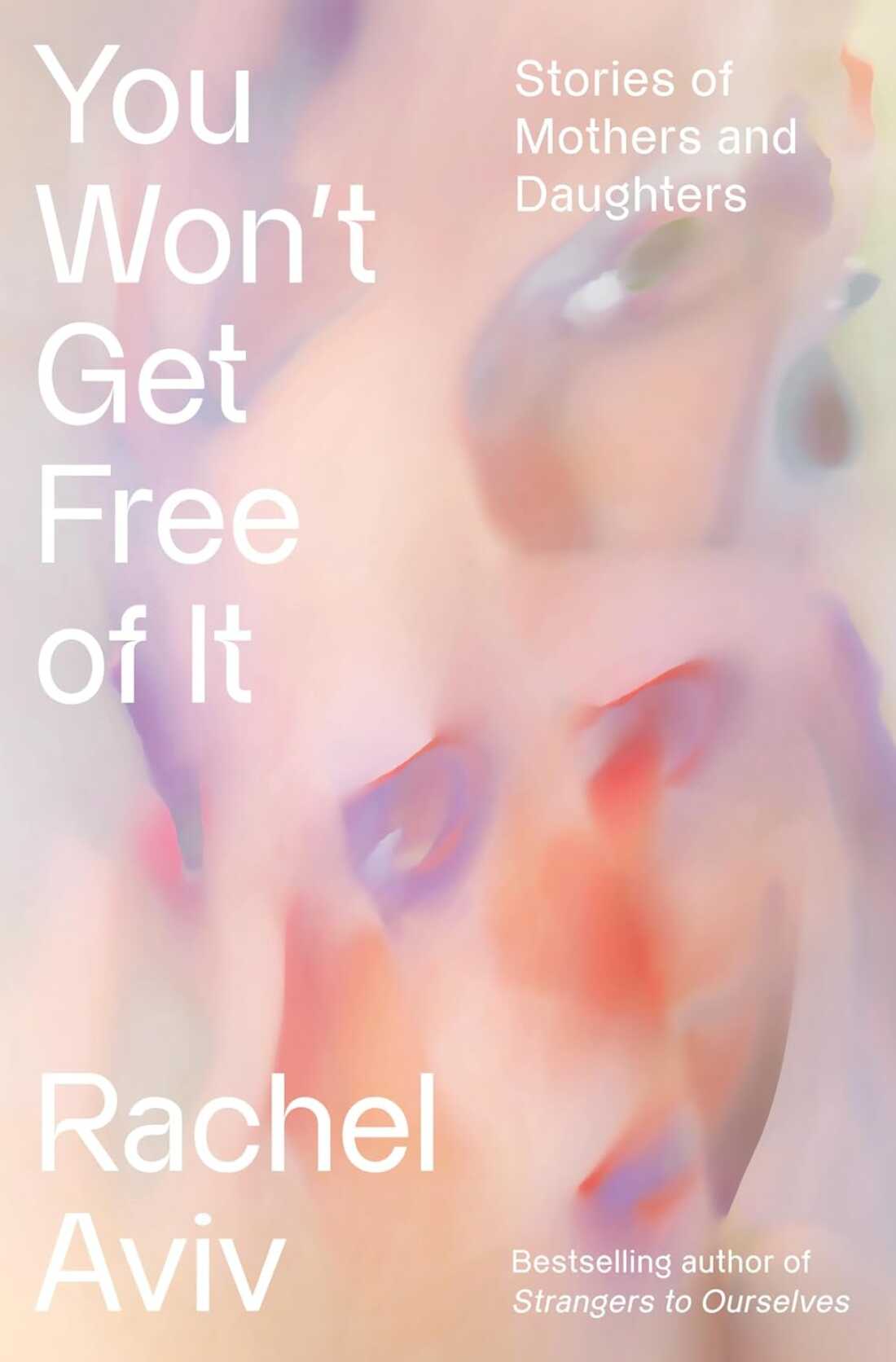
You Won’t Get Free of It: Stories of Mothers and Daughters, by Rachel Aviv (July 7)
Aviv, New Yorker staff writer and finalist for this year’s Pulitzer Prize, has a fairly extensive purview in her role as reporter at large. Still, when reviewing her latest work, Aviv noticed a crucial throughline: “I realized that, to some degree, I’d been writing about mother-daughter pairs for the last decade,” she explained to the Paris Review. Seeing this, she decided to collect and revise half a dozen of those stories, which cover ground from a daughter’s troubling fugue states to the immigrant nannies who must leave their own children behind, to Alice Munro’s daughter, whose claims of sexual abuse went unheeded yet regularly resurfaced in her mother’s fiction.
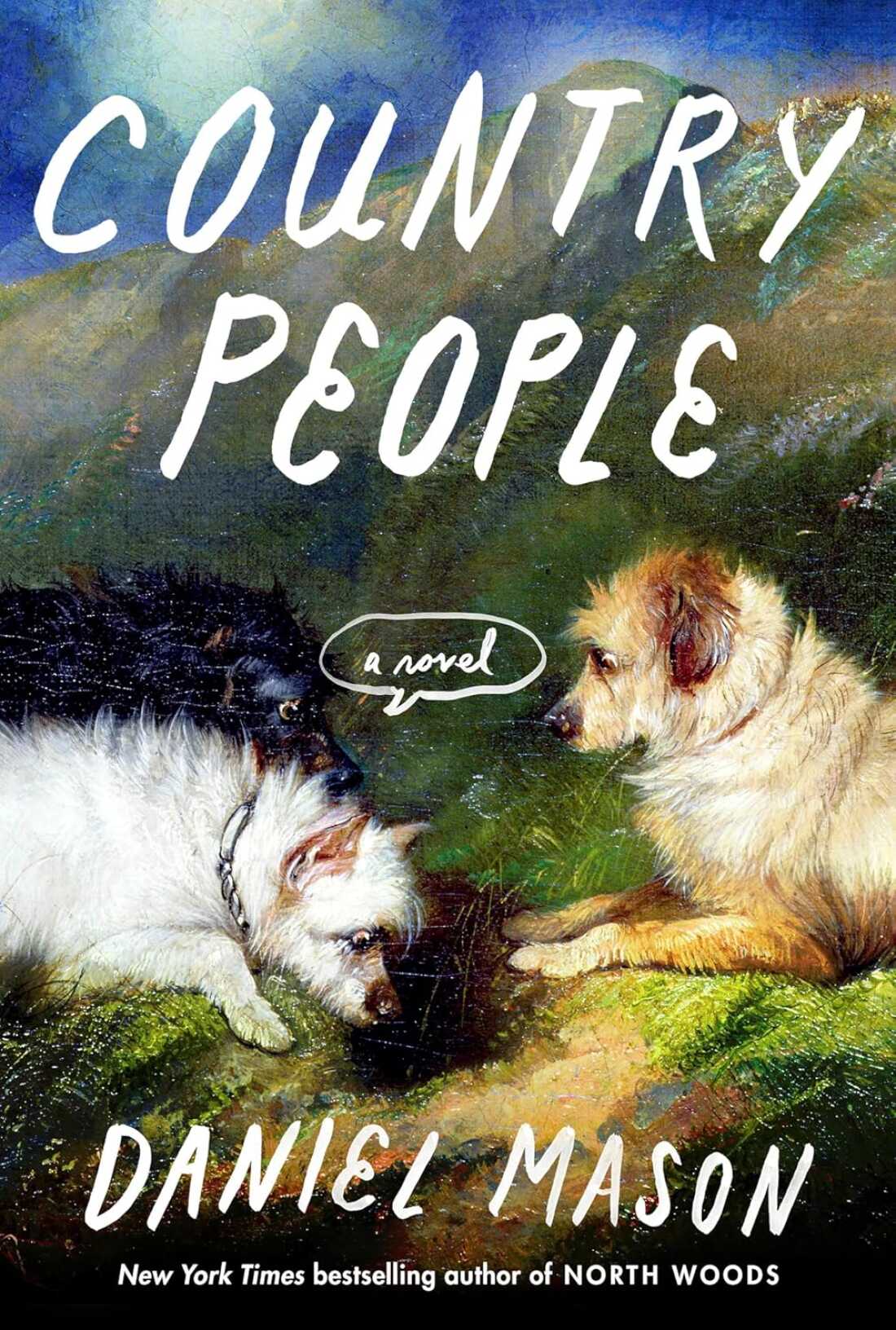
Country People, by Daniel Mason (July 7)
In Mason’s first novel since North Woods, 2023’s critical darling and book club stalwart, readers are plopped right back in the New England woods but the time scale has shrunk considerably. Whereas North Woods spanned centuries, his new novel confines itself to a single year, during which Miles, loving family man and lackadaisical Ph.D. candidate, plans to finally buckle down on that derelict degree of his and reassert his worth to one and all! At least, that’s the idea. But plans don’t stand much of a chance when there are eccentric neighbors to befriend and mysterious local legends to investigate.

Catch the Devil: A True Story of Murder, Deception, and Injustice on the Gulf Coast, by Pamela Colloff (July 14)
This is the first book from Colloff, a veteran investigative journalist for ProPublica and The New York Times Magazine. She has won multiple National Magazine Awards for stories focused on miscarriages of justice – such as her 2019 piece about Paul Skalnik, a grifter, fabulist, sexual predator and snitch, whose fabrications can be linked to dozens of wrongful convictions in Florida, including some sending the innocent to death row. Here Colloff expands upon that investigation, which gets a lot more room to breathe in the transition from magazine article to full-length book. What emerges in this disturbing account is a portrait of one man’s callous cruelty, and the law enforcers who had no problem tolerating a deal with the devil, provided it kept juicing the conviction rate.

Cloudthief, by Nathaniel Rich (July 14)
Though it’s his fiction we’re discussing here, it’s important to note Rich’s reporting has earned plaudits, too, as well as a few film adaptations. No matter the medium, climate change is usually on his mind, as well as the blunt, rather bleak, prognosis he offered on Fresh Air in 2019: “There’s a huge range of outcomes … ranging from the not very good to the apocalyptic.” Which is to say I’m surprised to find myself describing his newest response to global catastrophe as a rollicking good time – and not just because I’ve never said those words, in that order, in my life. This spry, funny caper features a freelance environmental reporter who inadvertently breaks bad, careening under the influence of lust and a light wallet toward the novel’s big centerpiece: the planned heist of a massive data center.

Data Empire: The Power of Information to Organize, Control, and Dominate, by Roopika Risam (July 14)
And now, for another book centered on data – albeit from a rather different angle. This illuminating history from Risam, a Dartmouth professor, traces the practice of collecting information – and the power conferred by possessing it – from the bones that were humans’ first archives, to the omnipresent systems that shape (or outright determine) life today. As Risam asks, “What has it meant – and what will it mean – when records that once served only to help us remember, come to rule?” A pressing question (see: those data centers), which you’re probably better served trying to answer with the help of Risam than, say, Alexa or Claude.

It Will Come Back to You: Stories, by Sigrid Nuñez (July 14)
For someone with nine novels to her name, Nuñez got a later start than you might expect, having published her first book when she was already in her mid-40s. More than three decades later, now a spry 75 years old, the National Book Award winner has gotten around to publishing her first collection of short stories. The 13 stories here have been culled from across her career, but each one resonates clearly with the warm timbre of her voice: simple, unadorned prose and mundane setups, from which she consistently manages to tease out glimpses of truth, elusive and profound.

They Stole a City: Wilmington’s White Supremacist Coup and the Families Who Live with Its Legacy, by Lauren Collins (July 14)
The only coup d’etat to succeed on U.S. soil is, at most, a distant historical afterthought these days. To be honest, I can’t recall reading a single textbook entry that even remarked on the 1898 race massacre in Wilmington, N.C., an action led by white supremacists that left many (historian estimates say up to 300) Black Wilmingtonians dead and permanently scarred a community newly aware of its simmering animus and vulnerability to violent overthrow. So I’m grateful for Collins’ new chronicle of the infamous event, which fills in some serious gaps in the American collective memory and explains how its perpetrators cultivated the disorienting silence that persists in the historical record today.

Yellow Pine, by Claire Vaye Watkins (July 21)
I don’t think I’ve ever actually laid eyes on the Mojave Desert but after reading Watkins’ latest novel, it feels like I can picture it more vividly than some streets I’ve actually lived on. No, it’s “not a beginner’s wilderness,” as Watkins concedes in Yellow Pine, but this landscape so redolent of death is also deceptively robust with life, if only you’re patient enough to find it. Too bad, then, that it’s also on fire. And choked by drought, irradiated by military test sites and soon to be sacrificed to a massive new solar array named, inexplicably, Yellow Pine. But those aren’t the only complications confronting the book’s main character, Rose, whose aspirations of becoming a kind of climate hermit warp a bit under the pressure of a rekindled love and the pendulum swing of rage and despair at the state of the world.

Cool Machine, by Colson Whitehead (July 21)
Ray Carney is back, for what regrettably appears to be the last time. The lifelong Harlemite, hard-luck furniture dealer and ambivalent crook starred previously in Harlem Shuffle and its sequel, Crook Manifesto. His perspective is our window on the changing eras of the historically Black neighborhood, from the mid-1950s on. In this, the final installment in Whitehead’s brisk, exceedingly entertaining Harlem Trilogy, readers catch up with Carney around the start of the 1980s, following him deeply into Reagan’s decade. The novel also represents the end of an era for Whitehead, whose attention has been exclusively occupied with these characters since he won Pulitzer Prizes for consecutive novels, The Underground Railroad and Nickel Boys.

Beginning Middle End, by Valeria Luiselli (July 28)
The gifted young Mexican writer returns this month with her fourth novel, the second she has written in English and her first since Lost Children Archive launched to widespread plaudits more than seven years ago. Her new book, like her previous one, also concerns the travels of a small family – only this time, the road leads not through the American Southwest but Sicily. And the history sought by its mother-daughter main characters is not a record of bureaucratic cruelty but something much more intimately personal: the links shaped and tested by generations of shared heritage and experience.



-
Cleveland, OH5 minutes ago
Rachelle M. Hale Obituary Jul 3, 2026 – Slone and Co. Funeral Directors
-

 Austin, TX12 minutes ago
Texas Stock Exchange launches in Dallas, big implications for Austin start-ups
-

 Alabama15 minutes ago
Alabama adds commitment from in-state linebacker to 2028 class
-

 Alaska20 minutes ago
Opinion: Alaska’s whale-strike risk is growing while regulators keep studying the obvious
-

 Arizona27 minutes ago
Arizona Lottery Mega Millions, Pick 3 Evening results for July 7, 2026
-
Arkansas30 minutes ago
Arkansas Lottery Mega Millions, Cash 3 winning numbers for July 7, 2026
-

 California42 minutes ago
California still hasn’t released Newsom’s Baby2Baby diaper contract as lawmakers weigh longer public records delays
-

 Colorado45 minutes ago
Colorado River, public lands reopen as Snyder Fire containment increases

