


With No. 11 Maryland men’s lacrosse staring at a five-goal deficit and struggling to slow down No. 9 Penn State’s high-flying offense, John Tillman knew he needed to make a change.
Maryland
Exclusive: If Commanders leave for D.C., Maryland has a plan in place


Maryland Gov. Wes Moore’s vibe screams positivity. The state’s two teams squaring off in October brought out his optimism.
“The entire football universe is going to descend upon our state,” Moore told The Athletic ahead of the Washington Commanders visiting the Baltimore Ravens. “We’re one of the few states in the country that has two football teams.”
Moore’s goal is to ensure that two-team status continues for years. With the Commanders’ ownership group seeking a new stadium and new Congressional legislation creating an opening for Washington D.C. officials to bring the NFL back to its former home site, the governor’s actions show an executive unwilling to assume final decisions will go his way. Elon Musk inserting himself into the discussion on Wednesday is another example of how the stadium story shifts repeatedly.
The 118th United States Congress released the contents of a continuing resolution on Tuesday centered on funding the federal government through mid-March. Tucked inside is a measure to turn control of the RFK campus in the nation’s capital over to the District of Columbia. The 174-acre property is where Mayor Muriel Bowser hopes to build a state-of-the-art stadium with the Commanders.
Maryland’s delegation negotiated terms, including funding to reconstruct the collapsed Frances Scott Key Bridge, in exchange for its willingness to allow the bill to move forward for a vote that, at least on Tuesday, was considered a lock for approval. At the same time, Moore sought assurances from the Commanders directly for the state.
Minutes before Congress released the contents of the continuing resolution, the governor signed a Memorandum of Understanding, obtained by The Athletic and previously agreed upon by Commanders managing partner Josh Harris.
Moore isn’t ceding the Commanders to D.C. In a statement shared with The Athletic on Tuesday, Moore said, “Our position on the stadium hasn’t changed. We are not afraid of competition, and we believe that we can continue to build on decades of partnership with the team here in Maryland. We are confident that Landover is still the best, and fastest, path to a new stadium for the Washington Commanders.”
He may be right. While Maryland has been aggressive and cohesive with its funding plan for a new stadium and building commercial property in the surrounding area, D.C. officials have not stated whether they would contribute significant money to a project that likely exceeds $2 billion. Virginia, home to the team’s practice facility, is considered a long shot for a stadium.
Harris previously expressed a target date of 2030 for a new stadium. On the field, the Commanders (9-5) have clinched the franchise’s first winning season since 2016 and are tracking for their first playoff berth since 2020.
Raised in the nearby Maryland suburbs and a lifelong fan of the three-time Super Bowl championship organization, Harris may look for the nostalgia that only the RFK site could provide. Should that transpire, Maryland has an agreement with the franchise to cover its interests.
The MOU only applies if the Commanders leave the state. Hosting “future training camps” is among the agreed-upon terms. In addition:
- The Commanders “will continue to maintain the Stadium in a first-class manner until Demolition begins.” In contrast, the old RFK Stadium, now a rusted and decrepit building, has remained an eyesore for several years. The demolition would begin “within 90 days following the first home NFL game at the Commanders’ new home stadium.” Expenses for the demolition and removal of debris would be the obligation of the Commanders. The 200-acre property in Landover was part of the $6.05 billion purchase price Harris and his partners, including NBA legend Magic Johnson, paid in July 2023. Since buying the team, the organization invested roughly $75 million into 27-year-old Northwest Stadium, considered one of the league’s worst venues.
- If Harris announces specific exit plans, the “Commanders will collaborate with the State, the County (Prince George’s), and other appropriate State and local agencies to transform the Stadium Site into a vibrant mixed-use development.” This may include residential, retail, commercial use and a “sports and fitness complex.”
- The Commanders must “provide ample opportunity for community, State, and County input throughout the design process” and obtain necessary local approvals before the first NFL home game at a new stadium.
- The organization and Maryland will work together to “redevelop the Stadium Site to catalyze region-wide economic growth consistent with the development vision along the region known as the Blue Line Corridor.”
- Before selling any or all portions of the stadium site to another private entity, “the Commanders will consult in good faith with the State and the County.”
- The Commanders will work in good faith to program football-related activities on the redeveloped site. Possibilities include “future training camps,” flag football, and/or open practice, and to allow for reasonable public and community use of the new facilities.”
The RFK campus story faced its share of twists and turns even before Musk, the mega-billionaire and confidant to President-elect Donald Trump, expressed concerns via his account on X over the RFK campus portion of the Congressional bill. He also shared numerous social media posts from members of Congress with like-minded objections.
The law firm Berlin Rosen, assisting the Commanders’ organization, issued a statement countering Musk’s contention of taxpayer funding as part of the property transfer.
“The bill does not provide funding for a new stadium in D.C.,” the statement read in part. “It just transfers administrative jurisdiction over RFK Memorial Stadium to the District of Columbia and expressly prohibits the use of federal funds for a new stadium.”
As for the Landover site, logically, Harris and his partners would not let the expansive and lucrative property next to the Capital Beltway sit unused for an extended time. The MOU gives Maryland officials a voice in that planning. Ideally, Moore won’t have to oversee such changes and can look forward to the Commanders and Ravens tangling on opposite ends of the stretch of I-95 that separates the venues. However, the governor and his congressional colleagues ensured the worst-case scenario would not blight the state and its constituents. That isn’t a total victory, but it puts points on the board depending on how anyone in the political tussle keeps score.
Required reading
(Photo: Tom Brenner for The Washington Post / Getty Images)


The Terps’ head coach switched to a zone defense early in the second quarter. That move immediately changed the tide of the game.
Maryland held the nation’s eighth-best offense scoreless for the ensuing 35 minutes, allowing time to slowly climb back. AJ Larkin’s second goal of the game left the Terps down one with seven minutes remaining.
But Penn State ultimately cracked the Terps’ compact defense. Three goals in a three-minute span iced the game and dealt Maryland a 10-6 defeat at the Panzer Stadium. The loss marked its third consecutive year with a defeat in their Big Ten opener.
Brian Ruppel barely had a second to catch his breath early in Saturday’s contest. After practically willing No. 11 Maryland men’s lacrosse to a triple-overtime win last weekend, the senior netminder could only do so much.
Waves of Nittany Lion chances flooded the cage and long defensive possessions left Ruppel exposed in the cage. Ruppel faced five shots in the first five minutes, and Penn State was just getting started.
Maryland allowed a season-high 42 shots, with 21 challenging Ruppel in net. While he tallied 11 stops — his fourth consecutive double-digit save performance — it wasn’t enough to lead his team to victory.
Will Schaller’s injury against Virginia left the Terps in a precarious situation. Without a clear next defensive option, Tillman turned to senior Riley Reese to make his first career start, against a top-10 offense.
It went about as bad as Terps’ fans could’ve expected in the first half. Penn State generated quality chances on nearly every possession, beating defenders with ease. The trio of Peter Laake, Mikey Alexander and Reese struggled to keep pace with the Nittany Lions’ quick ball movement, leaving Ruppel stranded on an island.
While the Big Ten’s leader in saves per game fared well early on — he only allowed two goals in the opening 11 minutes — Penn State’s potent attack struck soon after. The Nittany Lions netted three unanswered goals to close out the first quarter.
Maryland trailed 5-2 after 15 minutes, marking its third quarter this season conceding five scores. It happened just three times all of last year.
After committing a season-high 19 turnovers to close out nonconference play, that wasn’t the main problem on Saturday. The Terps simply couldn’t get possession of the ball to give their defense a chance to recover.
Penn State corralled five straight faceoffs following Henry Dodge’s opening win. That stretch left Maryland’s defense on the field for nearly all of the final four minutes. Even when the Terps gained possession, the offense continued to stall out.
After Penn State produced the first two scores, Erksa stopped the bleeding on a man-up opportunity. Leo Johnson flipped a pass to Erksa standing on the doorstep, and he buried a shot at the near post to put Maryland on the board.
Four minutes later, Johnson got his own goal. The Yale transfer charged from behind the cage and fired a bouncing shot past Penn State goalie Preston Hawkins. But that was Maryland’s last goal for the ensuing 18 minutes.
While Ruppel singlehandedly kept the Terps within striking distance, the offense couldn’t find much success against Hawkins. The redshirt freshman turned in his best performance of the season with 14 saves and a 70% save percentage, outdoing his Nittany Lion counterpart.
1. Eric Spanos held scoreless. After missing the previous three contests, Spanos’ return to the starting lineup was a welcoming sight for fans. But the senior attacker was held off the scoresheet despite firing seven shots. That marked his first scoreless performance since last year’s Big Ten Tournament meeting against Penn State.
2. Maryland lost the faceoff battle. The biggest talking point heading into Saturday’s game was the matchup between two of the nation’s top faceoff units. While Maryland hadn’t lost in that department all season, Reid Gillis and Colby Baldwin controlled the X. The duo won 11 of the 19 bouts, keeping the country’s top faceoff specialist silent.
3. Ranked woes continue. When Tillman crafted one of the hardest nonconference schedules in the country, the hope was to prepare his team for Big Ten play. But the Terps have struggled against ranked opponents this season. Maryland’s 0-4 record in top-20 clashes has dimmed its postseason aspirations.

Maryland baseball found itself with a runner on base against No. 1 UCLA at the top of the seventh inning after Aden Hill singled to right field.
Brayden Martin took the box after him, hitting a fly ball to center field. With no outs, Hill sped toward second base and began rounding the bases.
But UCLA’s center fielder Will Gasparino caught the ball.
Hill couldn’t beat Gasparino’s throw back to first. As the double play took shape, Maryland’s chance of catching up from four runs behind disappeared.
UCLA then blew its lead wide open, scoring six runs in the bottom of the seventh frame to end the game early, 12-2.
In the bottom of the first with runners on the corners and an out, UCLA’s Roman Martin smashed a ground ball down the left field line for an RBI double. He brought home his teammate Roch Cholowsky to take the lead.
Shortly thereafter, Cashel Dugger obliterated Maryland pitcher Lance Williams’ breaking ball, sending it clear over Bud Coombs’ head in right field for a grand slam. With two outs, the Terps suddenly faced their largest first-inning deficit of the season.
Williams managed to escape a second grand-slam set-up unscathed, striking out a batter to finish the inning.
Martin took the batters box in the top of the third after Aden Hill slid into second base in the previous at-bat. The junior utility man knocked an RBI-double along the left field line, allowing Hill to cross home to put the Terps on the board.
In the bottom of the fifth inning, Martin began his own trek around the diamond, reaching first on a fielder’s choice that took Bud Coombs off the bases.
The Bruins loaded the bases, and Williams faced Dean West for the fourth time. After a strike — it followed three straight balls — Williams issued his first walk of the game, bringing home yet another Bruin to increase UCLA’s lead.
Lance Williams’ outing on the mound lasted more than half the game, mildly improving over five innings. In the bottom of the first, the junior gave up 10 bases, five of which came from hitting the batter. Williams began to settle in by the end of the fifth, only allowing one RBI.
The Terps had no problem making it to the bases on Friday, but struggled early to come all the way around the horn. Across five innings, Maryland recorded eight base hits, yet only two runners made it home.
To change that trend, though, Ty Kaunas stepped to the plate in the top of the sixth. The freshman shortstop sent the ball through the 5-6 hole for an RBI single, bringing Paul Jones II home and closing UCLA’s lead to four runs.
Brayden Ryan took over for Williams at the bottom of the sixth, and his tenure on the mound started smoothly. The redshirt junior didn’t allow any runs in the sixth and recorded one strikeout.
After Hill’s base-running mishap in the top of the next inning, though, Ryan didn’t fare much better.
After posting one more strikeout, Ryan let three straight singles pass him by, loading the bases yet again. Just two pitches later, West wore another pitch, allowing Dugger to bank a second run on the day and UCLA’s lead to increase.
Another two-run single one batter later and a hit batter ended Ryan’s day on the mound. Andrew Koshy took over to do damage control, but he hurled a wild pitch of his own for a runner to advance and score.
With two outs left in the inning, UCLA’s Payton Brennan singled through the right side for a two-run RBI, sparking NCAA’s run-rule to end the game early.
1. Bruin batters beware. Maryland’s pitching staff hit eight batters total. Six of the nine UCLA hitters got hit at least once, and two wore a pair of pitches. The Terps almost hit the Bruins with the ball (8) as many times as they hit the ball (9).
2. Scoreboard 180. The last time a UCLA-Maryland game ended early was just one season ago, in 2025. The Terps were on the flip side of the coin though, beating the Bruins, 13-3.
3. Go-to reliever. Koshy has had the most mound appearances for the Terps despite never starting a game, and he’s posted a 5.87 ERA. The junior averages 1.4 allowed runs per game, and he hasn’t allowed a run since March 13.

Redshirt freshman Kyndal Walker scored a career-high 20 points and she had plenty of help from Maryland teammates as the Terrapins defeated Murray State 99-67 in the first round of the NCAA Tournament on Friday.
AP Photo/Chris Seward

AP Photo/Chris Seward
AP Photo/Chris Seward
CHAPEL HILL, N.C. (AP) — Redshirt freshman Kyndal Walker scored a career-high 20 points and she had plenty of help from Maryland teammates as the Terrapins defeated Murray State 99-67 in the first round of the NCAA Tournament on Friday.
Mir McLean provided 19 points and 14 rebounds and Addi Mack added 18 points, while Yarden Garzon had 12 points and Saylor Poffenbarger added 10 points for fifth-seeded Maryland, which hammered the Racers on the boards.
“Clearly we had a lot more size on them,” Maryland coach Brenda Frese said. “I think it begins there. It also just comes down to will and a want and a desire.”
The Terrapins (24-8), who matched their highest point total in a regulation game this season with the aid of 50% shooting from the field, will meet the North Carolina-Western Illinois winner in Sunday’s second round.
Halli Poock poured in 27 points and Haven Ford and Keslyn Secrist each scored 17 points for No. 12-seed Murray State (31-4), which finished with a school-record win total even though its 15-game winning streak ended.
“I’m disappointed it had to end like this, but we have a lot to be proud of,” Poock said.
Maryland’s 24 offensive rebounds were more than Murray State’s overall rebounding total in what finished as a 51-21 gap on the boards. The Terrapins compiled 33 second-chance points.
“That’s been us all season,” McLean said. “We shoot very well and also rebound very well, which makes our shooters more confident to shoot because we can always get the ball back.”
Murray State coach Rechelle Turner was expecting a challenge on the boards.
“They were relentless on the glass,” Turner said. “I thought our first stop defense was pretty good, but it’s hard to defend 33 second-chance points, 24 offensive rebounds.”
The Racers outscored Maryland 24-22 in the third quarter.
“Our energy started picking up and stuff like that and just trying to chip away,” Ford said. “We left the third quarter with confidence.”
Maryland put it away with a 14-2 run to start the fourth quarter. Murray State had given up a season-high points total with more than four minutes remaining.
Keyed by Walker, Maryland reserves outscored Murray State’s bench players by 33-0.
Maryland’s lead grew to 38-19 in the second quarter on the way to a 51-35 halftime edge. The Terrapins shot 50% in the first half with a 25-10 rebounding advantage.
Secrist scored six straight points for Murray State and the Racers used an 8-2 spurt at the end of the third quarter to close within 73-59.
Freshmen are factors
Walker, Mack and Rainey Welson (7 points) combined to give Maryland 45 points from freshmen.
“It’s just nice to finally be out here and be in this moment,” Walker said. “So I was super excited, and I think it kind of just showed today. Just having the opportunity to go out there and play and just playing free and having fun.”
The trio shot a combined 17 for 33 from the floor.
Board business
McLean’s rebound total marked the most for a Terrapin in an NCAA Tournament game in nine years since Brionna Jones had 15 in a 2017 matchup with Oregon.
Poffenbarger’s 11 rebounds gave her a double-figure total for the seventh time this season and the fourth time in the last seven games.
Up Next
Maryland will play at least two NCAA Tournament games for the 20th time in the last 22 tournaments.
___
AP March Madness bracket: https://apnews.com/hub/ncaa-womens-bracket and coverage: https://apnews.com/hub/march-madness
Copyright
© 2026 The Associated Press. All rights reserved. This material may not be published, broadcast, written or redistributed.

Crypto1 minute ago
ASML: The Foundational Tech Firm vs. Cryptocurrency Market Volatility – News and Statistics – IndexBox

Finance8 minutes ago
The CFO who turned Adobe’s finance department into an AI lab | Fortune

Fitness14 minutes ago
Psychology says people who stay fit after 60 without formal exercise aren’t lucky – they practice 10 daily habits that turn their entire life into low-grade movement their body interprets as purpose, not obligation

Movie Reviews26 minutes ago
Quiz: Guess the Disney Movie From the One-Star Review That Roasted It

World38 minutes ago
‘Hamnet’ Spoofed in ‘SNL U.K.’ Sketch in Which Shakespeare Returns From London With Ketamine, ‘Team Anne Boleyn’ Tote and ‘C—y Little Earring’

Florida1 year ago
Florida High School Football Rankings: Top 25 teams – Oct. 21

Oregon2 years ago
How old is Bo Nix? What to know about Oregon quarterback ahead of 2024 NFL Draft

Connecticut2 years ago
Cleary's 21 help Le Moyne down Central Connecticut State 69-64 in OT

Virginia2 years ago
99th annual Pony Swim held in Virginia

Indiana2 years ago
Indiana Members Credit Union announced as new anchor tenant at Bottleworks District

News44 minutes ago
Video: Former F.B.I. Director Robert Mueller Dies at 81

Politics2 hours ago
Trump gives Iran 48-hour ultimatum to reopen Strait of Hormuz or face strikes on power plants

World3 hours ago
Macron pushes tougher EU digital action ahead of key votes
News3 hours ago
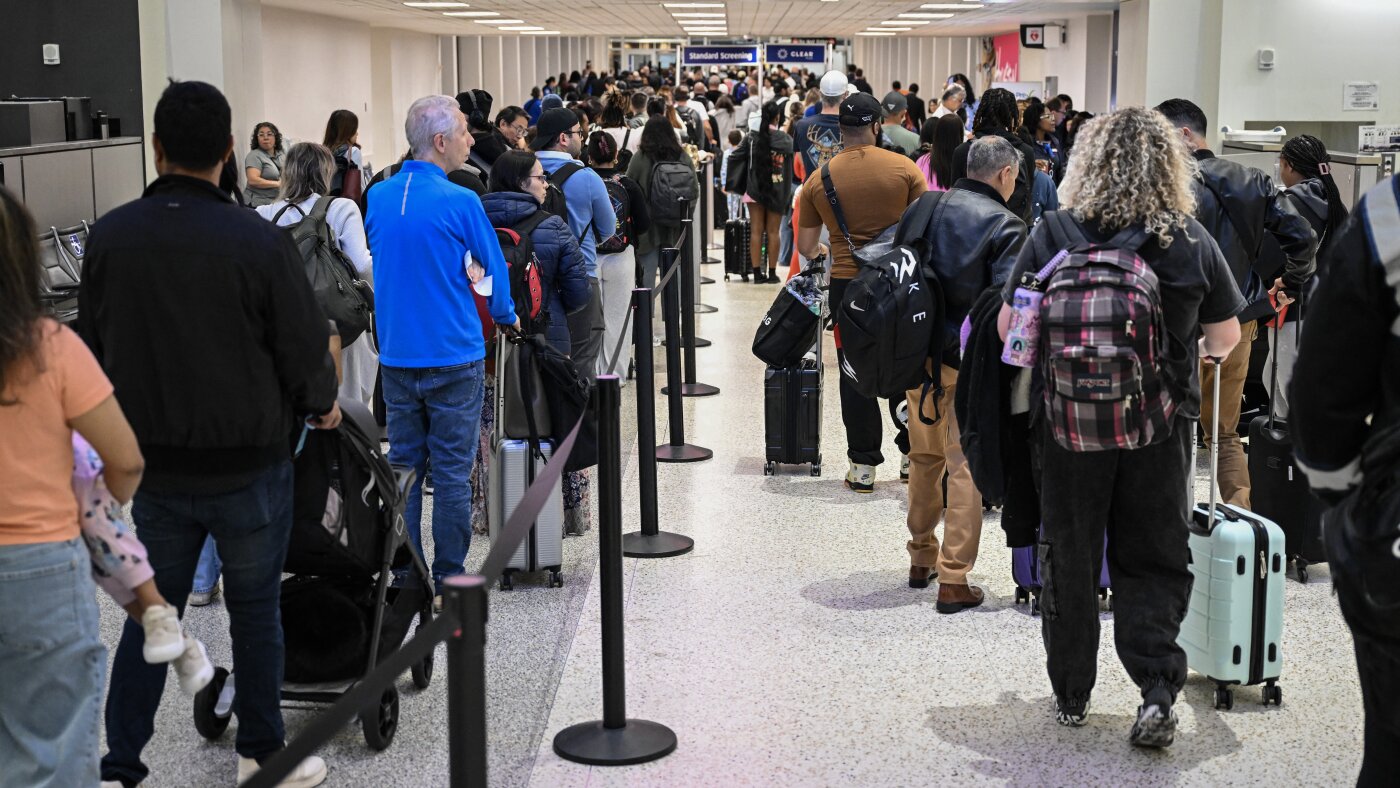
Airport security lines are long. Here’s what to know if you’re flying

Politics14 hours ago
Schumer gambit fails as DHS shutdown hits 36 days and airport lines grow
-

 Detroit, MI3 days ago
Drummer Brian Pastoria, longtime Detroit music advocate, dies at 68
-

 Oklahoma1 week ago
Family rallies around Oklahoma father after head-on crash
-

 Nebraska1 week ago
Wildfire forces immediate evacuation order for Farnam residents
-

 Georgia6 days ago
How ICE plans for a detention warehouse pushed a Georgia town to fight back | CNN Politics
-

 Alaska7 days ago
Police looking for man considered ‘armed and dangerous’
-
 Science1 week ago
Federal EPA moves to roll back recent limits on ethylene oxide, a carcinogen
-

 Minnesota1 week ago
Many with Minnesota ties make Forbes list of world’s richest people
-
 Science1 week ago
H5N1 bird flu spreads to sea otters and sea lions along San Mateo coast, wildlife experts say