Louisiana
The Louisiana Legislature returns Monday. Here’s what state leaders are focused on.


When the Louisiana Legislature gathers Monday in the State Capitol, it will begin debate on contentious issues ranging from improving roads and bridges to embracing the “Make America Healthy Again” movement to reducing the cost of car insurance.
State lawmakers are also trying to find a way to revive key pieces of a recently failed constitutional amendment that was aimed at rewriting an entire section of the state constitution governing state finances.
And they will have to craft a state budget amid unpredictable federal spending cuts and the specter of potential slashes to Medicaid.
Here are what state leaders say are among their top priorities.
Overhauling DOTD
Gov. Jeff Landry and legislative leaders in both the House and Senate are throwing their support behind an effort to restructure the Department of Transportation and Development.
“We’re hoping to see projects done faster — still the same quality work, still all the safety measures in place,” said Senate President Cameron Henry, R-Metairie.
Henry emphasized the effort is not centered on firing DOTD employees but is instead focused on speeding up project timelines and streamlining procedures.
“The goal is to improve DOTD and its current situation as it relates to project delivery, communication with stakeholders and accountability,” said House transportation committee Chair Rep. Ryan Bourriaque, R-Abbeville.
Bourriaque, a key player in plans for the transportation department overhaul, said stronger accountability measures are aimed at keeping project timelines on track and reducing permitting delays.
Kate Kelly, communications director for Landry, said “DOTD reform” also is among the governor’s top priorities this session.
Just months into his administration last year, Landry ordered his transportation secretary, Joe Donahue, to put together a plan to “rehabilitate” the oft-maligned department.
That resulted in a review of the agency by a private consultant as well as a 44-page Strategic Improvement Plan issued by DOTD, which conceded inefficient and inconsistent project delivery is a pressing problem.
House Speaker Phillip DeVillier, R-Eunice, said the root of DOTD’s problems lies in an old system where “if you want something in your district, you have to vote a certain way.”
“Infrastructure has always been done through politics,” he said. “That’s what you see DOTD is built upon. What we’re trying to do now is shift it and actually take care of our infrastructure for a change and make it a priority of the state.”
‘Make America Healthy Again’
Landry has voiced support on social media for “MAHA” — a slogan promoted by U.S. Department of Health and Human Services Secretary Robert F. Kennedy Jr. that echoes President Donald Trump’s “Make America Great Again” catchphrase.
The governor recently posted that he looks forward to working with Trump and Kennedy, who has drawn criticism for his skepticism of vaccines, “to bring the MAHA movement to the forefront in Louisiana.”
Sen. Patrick McMath, R-Covington, champions the MAHA cause.
He is sponsoring a sweeping nutrition bill that would ban the purchase of soft drinks using federal food aid payments, prohibit the use of ultra-processed ingredients in public schools and require restaurants to tell customers if they cook with seed oils like canola or corn oil.
The plan would take time and money to implement, McMath has acknowledged. But it also is part of a campaign to pressure food companies to change ingredients in ultra-processed products.
DeVillier said he is “excited” to learn more about McMath’s plan.
Henry said he expects “good things to come” from the nutrition legislation and called McMath’s proposed timeline for changes “very realistic.”
Taxes and spending
During a tax-focused special session in November, lawmakers approved major changes, including reducing individual and corporate income tax rates and increasing the state sales tax rate.
They also proposed Amendment 2, a sweeping revision to the Louisiana Constitution’s tax and finance provisions. But voters rejected the plan by wide margins on March 29.
Lawmakers hoped to implement dozens of policy changes through Amendment 2. But now they have narrowed their focus and say they want to put at least a few of those before voters again.
One would free up money for more immediate spending needs by combining two state trust funds: the Budget Stabilization Fund, with a balance of $1.07 billion, and the Revenue Stabilization Trust Fund, with $2.73 billion.
The money funneled into those accounts can be spent in only certain cases, such as when the state is facing a budget shortfall or other emergency circumstances.
“We have more money in savings now than we’ve ever had,” DeVillier said. And the only way to accomplish certain goals “is by taking the resources that we have today and putting them to work,” he said.
DeVillier said some of that money could be used on road construction, water sector improvements, long-delayed maintenance projects at universities and lowering sales and income taxes.
Henry also backs combining the two accounts to free up more money.
Aside from the trust fund plan, Henry, DeVillier and Rep. Julie Emerson, a Carencro Republican who chairs the House tax-writing committee, all signaled that an effort to phase out a property tax on business inventory will also resurface during the session.
Education
A high-profile element in the failed Amendment 2 was a plan to permanently increase the salaries of teachers by $2,000 and support staff by $1,000.
During the past two budget years, lawmakers twice approved that pay as a temporary stipend. But this year, the latest revenue projections show that lawmakers need to account for an expected $194 million shortfall.
With that budget hole looming, state leaders say aren’t sure they can come up with the roughly $200 million needed to make the raises permanent.
“That’s a part of the conversation that we’re having,” said DeVillier, a sentiment echoed by Henry.
Landry this month sent a letter to teachers, writing “no existing alternative recurring resources exist to fund the permanent salary increase you deserve.”
But, Landry said, “my door is open to finding a solution.”
Rep. Jack McFarland, R-Jonesboro, chair of the House Budget Committee, said he’s “encouraged by members and the public that the teacher stipend is a priority.”
“Our education system is on the rise in Louisiana,” he said. “Teachers are playing a large role in that.”
Another issue stirring controversy for this session is funding for Landry’s signature education initiative, the LA GATOR Scholarship program, new taxpayer-funded school vouchers families can use to for private schools or other education expenses.
Landry wants $93.5 million for GATOR scholarships for the next budget year, up from current-year funding of about $44 million for the state’s existing school voucher program.
Henry said he was “not remotely” expecting the $93.5 million ask and only supports spending up to $50 million.
Budget worries
Dramatic federal funding cuts and fears that Congress will slash Medicaid spending have sparked worry in Louisiana.
Some, like McFarland, say they are remaining calm, proceeding with the facts available to them at any given time — and keeping an eye on what is happening in Washington.
“I can’t budget for something that I don’t know yet that the federal government’s gonna do,” he said.
McFarland said he has spoken with some members of Louisiana’s congressional delegation.
“I think everyone’s fully aware in D.C. that Louisiana has a significant population that depends on Medicaid,” he said.
Last week McFarland said that despite widespread talk about cuts to health care and education, “I haven’t seen those yet.”
State health officials this month said they anticipate losing $86 million from eight federal grants eliminated by the Trump administration.
At a budget meeting last week, then interim state health Secretary Drew Maranto spoke to legislators about the possibility of federal funding cuts.
“If the feds make changes, we obviously would have to implement them,” he said. “The program as it is currently designed is unchanged.”
Asked if he has spoken with Louisiana’s congressional delegation, Maranto — whose last day in that position was Friday — would only say that he has “engaged with the federal delegation over the last few weeks and will continue to do so.”
Henry has said he has discussed the issue with U.S. House Majority Leader Steve Scalise, with whom he is close.
Henry said he told Scalise that if federal funding is cut for a given program, the problem it is designed to address still exists — and states must then come up with the funding.
Auto insurance rates
Ahead of the session, Landry and DeVillier have both made lowering auto insurances rates a key priority — albeit in distinct ways.
Landry this week unveiled the types of legislation he believes will achieve that goal — something he said would require accountability on the part of both insurance companies and trial lawyers who represent accident victims.
DeVillier last summer directed some House legislative leaders to convene months’ worth of meetings aimed at determining why Louisiana’s auto insurance rates are so high.
“My committee chairs have done a very good job digging into this, and I’m hopeful that the insurance crisis that we have in Louisiana is going to be addressed this session,” he said.
Henry emphasized the “tough” balancing act that state lawmakers are forced to make in debates over insurance rates.
While lawmakers are wary of insurance companies that want policyholders to cede their power to challenge the fairness of claims payments, Henry said, they also want to avoid over-regulating insurers and driving them away, reducing competition.
“We’re just trying to find a happy medium in all of this,” he said.
Staff writers Patrick Wall and Emily Woodruff contributed to this report.



Bill Advances Honoring Shreveport Civil Rights Icons
Louisiana lawmakers move forward with bill honoring Shreveport civil rights icons Reverend Harry Blake Senior and Virginia Green Evans.
(The Center Square) − Louisiana lawmakers have filed more than 20 bills this session touching on artificial intelligence, but only a narrow slice of them has moved so far.
The clearest momentum has come on bills dealing with child exploitation. Senate Bill 42 by Sen. Rick Edmonds, R-Baton Rouge, which prohibits using artificial intelligence to create child sexual abuse materials, passed the Senate 36-0 and was sent to the House the next day.
Senate Bill 110 by Sen. Heather Cloud, R-Turkey Creek, bars using a child’s image to train an artificial intelligence model to produce child sexual abuse materials, also advanced out of the Senate and is now pending in the House Administration of Criminal Justice Committee. But the broader regulatory push has moved far more slowly.
Rep. Josh Carlson, R-Lafayette, told The Center Square the efforts have run into familiar resistance from business groups wary of state-by-state regulation.
“Anything that effects business they say is bad for business,” Carlson told The Center Square.
Carlson has a bill that would create a Louisiana AI Bill of Rights, restrict certain chatbot uses involving minors, create disclosure rules for bots and AI-generated advertising, and bar the state from contracting for AI products tied to foreign countries of concern. Carlson is still working to get his bill added to the Commerce committee’s agenda.Another bill that has managed to make progress is HB190 by Rep. Laurie Schlege, R-Metarie. It passed the House 98-0. Two days after, an op-ed submitted to The Center Square from Citizens for a New Louisiana charged the law as “one that threatens to stifle innovation, burden small businesses and startups.” The op-ed suggested amending the bill, but Schlegel hasn’t budged so far.
Senate Bill 246 by Sen. Jay Luneau, D-Alexandria, was scheduled for Senate floor debate Monday but was postponed twice, first to Tuesday and then to Wednesday. The delay followed Luneau’s promise to the Louisiana Association of Business and Industry that he would amend the bill after the group sent a memo warning it could create “unnecessary compliance burdens for businesses operating across the state.”
“AI systems are inherently interstate and global, making them better suited for a consistent federal framework rather than fragemented state oversight,” the memo continued. “SB246 risks placing Louisiana at a competitive disadvantage while duplicating efforts more appropriately handled by Congress.” The memo mentioned a December executive order from the Trump administration which instructed federal officials to identify “onerous” state AI laws and said states with such laws could be barred from receiving certain remaining BEAD broadband funds, to the maximum extent allowed by federal law.
Louisiana has $800 million in Broadband Equity, Access, and Deployment program funding that could be revoked. Responding to questions about concerns that his bill might violate that order, Edmonds told The Center Square, “I don’t see this as over regulation.” He said that, so far, he has heard no concerns with his bill.
Edmonds acknowledged concerns that overregulation could inhibit the use and development of AI, but said that his bill was specific and would not.

LAKE CHARLES, La. (KPLC) – The Venture Global CP2 construction site in Cameron has been cleared after a bomb threat was made Sunday, according to a spokesperson from Venture Global.
The bomb threat came in around noon on Sunday, according to officials. Louisiana State Police hazmat and bomb squads were called to investigate.
No shelter in place was deemed necessary and no roads were closed, according to the Cameron Parish Sheriff’s Office.
A Venture Global spokesperson released the following statement:
“Venture Global was made aware of a bomb threat at our CP2 site and immediately activated our established emergency response protocols. We are coordinating closely with state and local authorities as they investigate. The safety and security of our employees and the surrounding community remain our highest priority.”
Copyright 2026 KPLC. All rights reserved.

NEW ORLEANS (WGNO) — For the fifth consecutive year, the Louisiana Children’s Museum hosted its annual environmental festival, Mud Fest, on Saturday, March 28.
From 10 a.m.-4 p.m., parents and their little ones had the opportunity to have fun in the sun and enjoy the “highlight” of the museum’s spring season.
This event was inspired by the iconic New Orleans festival culture which includes good food, live music and a nice, high-energy atmosphere. Mud Fest is tailored for the “youngest environmental stewards” to have fun and make all the mess they want with mud.
Due to the Crescent City being surrounded by wetland habitats, we interact with water daily in both our rural and urban communities.
The festival generates positive associations with our region and also builds critical thinking skills for future educators, engineers, fishermen and farmers. According to LCM, engaging with nature, water and plants “builds a child’s confidence and fosters a lifelong connection to the Earth.”
“As the Louisiana Children’s Museum celebrates its 40th anniversary, events like Mud Fest reflect our long-standing commitment to hands-on learning that sparks curiosity and connects children to the world around them,” LCM CEO Tifferney White said.
This year, Mud Fest had performances from young musicians of the School of Rock, the Louisiana Sunspots and more. There were also a storytelling stage and various family-friendly activities for visitors to engage in.
Mud Fest partnered with Pontchartrain Conservancy, STEM NOL, Whimscapes and Sugar Roots to put on the event.
Stay up to date with the latest news, weather and sports by downloading the WGNO app on the Apple or Google Play stores and by subscribing to the WGNO newsletter.
Latest Posts

Could Miami Dolphins trade up in first round of 2026 NFL Draft?

Tech entrepreneur Paul English gives $1m to kick-start AI program in Boston Public Schools – The Boston Globe

Three former Denver mayors urge a “yes” vote on license plate cameras (Opinion)

The Man Behind Saint Bread, the Wayland Mill, and Tivoli

Deputy ID’d Who Died In Baker Run | Jeep Launches Off Bridge | Protest Turns Violent: SoCal In Brief

Florida High School Football Rankings: Top 25 teams – Oct. 21

How old is Bo Nix? What to know about Oregon quarterback ahead of 2024 NFL Draft

Cleary's 21 help Le Moyne down Central Connecticut State 69-64 in OT

99th annual Pony Swim held in Virginia

Indiana Members Credit Union announced as new anchor tenant at Bottleworks District

Video: Iran to Allow More Oil Ships Through Strait of Hormuz, Trump Says

Dem senator warns deportation could let Virginia woman’s illegal immigrant killer ‘escape accountability’

Newsletter: G7 ministers to hold talks on war’s economic fallout
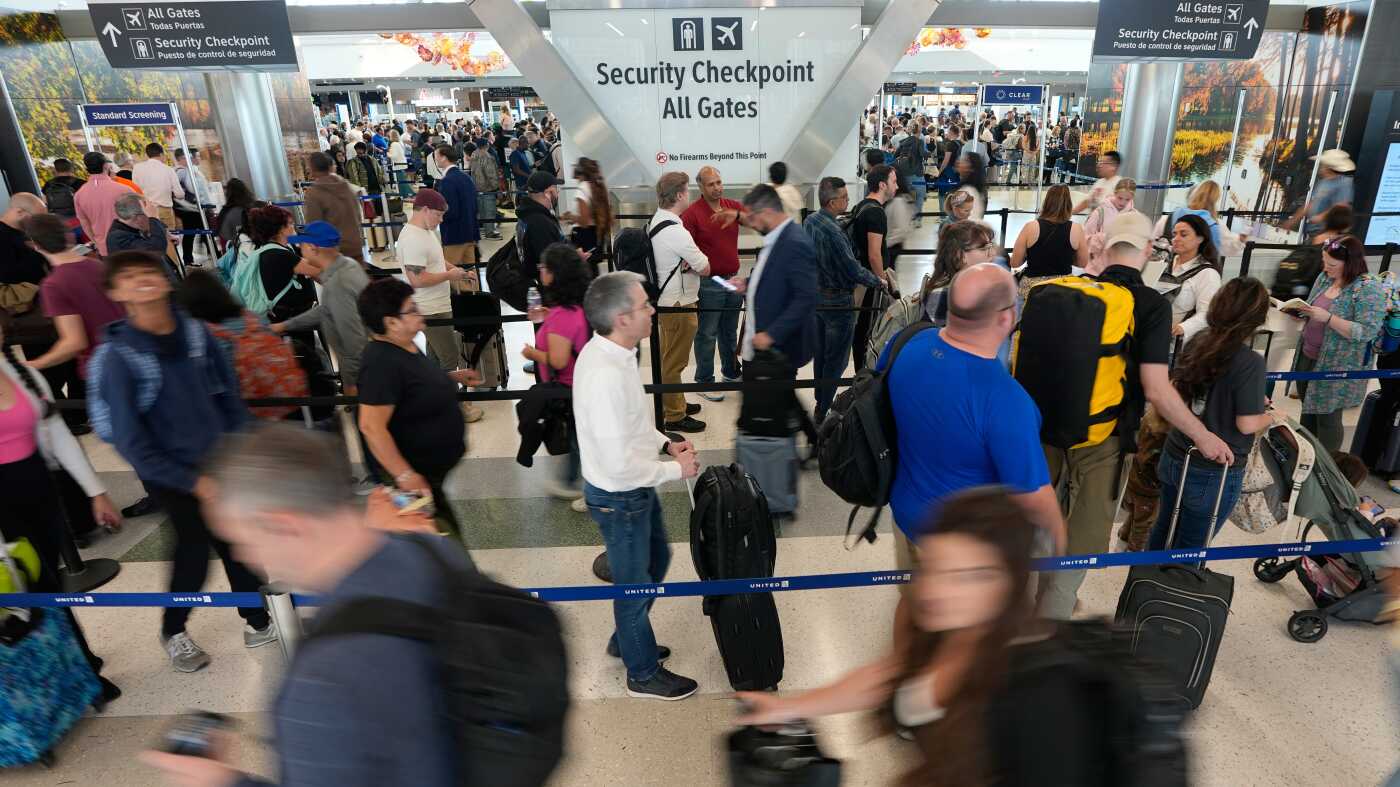
ICE officers could remain at airports after TSA workers are paid

Scathing report claims nation’s oldest labor union ‘betrayed’ MAGA members through ‘shocking’ spending
-

 Sports1 week ago
IOC addresses execution of 19-year-old Iranian wrestler Saleh Mohammadi
-

 Miami, FL4 days ago
Jannik Sinner’s Girlfriend Laila Hasanovic Stuns in Ab-Revealing Post Amid Miami Open
-

 New Mexico1 week ago
Clovis shooting leaves one dead, four injured
-

 Politics1 week ago
Schumer gambit fails as DHS shutdown hits 36 days and airport lines grow
-

 Tennessee7 days ago
Tennessee Police Investigating Alleged Assault Involving ‘Reacher’ Star Alan Ritchson
-

 Minneapolis, MN4 days ago
Boy who shielded classmate during school shooting receives Medal of Honor
-

 Science1 week ago
Record Heat Meets a Major Snow Drought Across the West
-

 Politics1 week ago
Trump gives Iran 48-hour ultimatum to reopen Strait of Hormuz or face strikes on power plants