Politics
Column: In Arizona, relief along the border now that Trump is back in charge

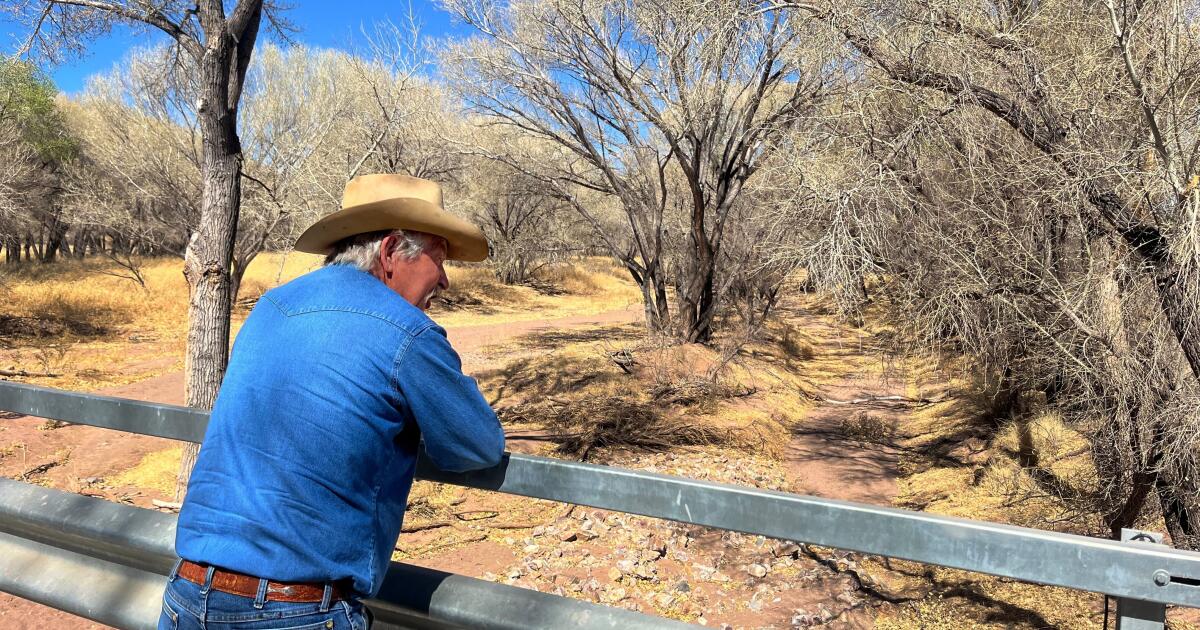
NACO, Ariz. — John Ladd sleeps better knowing Donald Trump is in the White House.
Not just in some figurative sense. When Ladd lies his head down at his ranch house a mile and a quarter from the U.S.-Mexico border, he no longer worries about hundreds of trespassers a day trampling his pastures, tearing up fencing or setting his cattle loose.
He doesn’t fret as much as he once did about stumbling across a dead body — 18 have turned up over the years — or finding a migrant sitting in his living room, which happened once back in 2002.
Views of the 47th president, from the ground up
“The amazing thing is as soon as Donald Trump got elected, the border issue of illegal entries coming into the U.S. has dramatically stopped,” the 69-year-old Ladd said, overstating things somewhat. “And we’re delighted with that.”
Back in the White House for just over a month, Trump has rapidly and ruthlessly delivered on his promise to turn America upside down, firing government workers en masse, eliminating whole agencies and slashing certain programs to the marrow.
The promised benefit — a leaner, less costly and more efficient federal government — is purely theoretical at this stage.
But one place where Trump’s return to power has been tangibly felt, and greatly welcomed, is here in the far southeastern corner of Arizona, where the U.S. and Mexico sit uneasily side-by-side. After growing to record levels under President Biden, illegal border crossings began falling during the final months of his term, a trend that has accelerated since Trump moved back into the Oval Office.
Ladd’s 16,400-acre ranch, which has been in the family since the 1890s, stretches for 10½ miles along the border. It’s three miles from there to State Route 92, a trek through mesquite and grassland, floodplains and furrows that serve as a rough-hewn pathway to the two-lane blacktop and the interior that lies beyond.
At its peak, Ladd said, as many as 700 migrants a day passed through his property. That number fell drastically during Trump’s first term, then shot way back up during the Biden administration, despite hidden cameras, motion-detecting sensors and the installation of soaring steel fence posts — the border wall, as it’s known — across the southern length of his ranch. Today, under Trump, daily crossings have fallen to around 10 or so, Ladd said, and Border Patrol agents tell him they’ve grown bored.

A Border Patrol camera is hidden in a mesquite bush on Ladd’s ranch.
(Mark Z. Barabak / Los Angeles Times)
He paused alongside the wall, the rust-colored soil at his feet spreading for miles around, his view bracketed by the San Jose Mountains to the south and a majestic limestone bluff to the north. The stillness was so profound it was almost a physical presence.
“If we didn’t have to deal with the border,” Ladd said, “there’s no finer life.”

-
Share via
::
In a large corral carpeted with hay and cow patties, Ladd pulled up two metal chairs, taking care to brush one off for his guest. He then talked about the last several decades watching from the front line as the nation’s contradictory, cross-purposes approach to immigration haphazardly played out.
For a long time, Ladd said, he started each day with an inventory to see if anything — a vehicle, farm equipment — was stolen. He checked to see if anyone was hiding under a car, in a truck bed, in one of several outbuildings — “always looking over your shoulder” — before helping wrangle any cows wandering where they shouldn’t.
His beef-raising operation involves rotating cattle through nine enclosed pastures, from birth to market. Ladd said half of each day was spent mending barbed-wire fencing that was yanked down or cut open overnight. He sank a small fortune into repairs, Ladd said, before finally giving up. He also spent a lot of money hauling away trash; roughly 20 tons over the years.
Most people, Ladd said, have no idea what it’s like living on the border, under constant siege. It’s not just fear of the cartels engaged in human smuggling. Something as small as a gate left open could wreak havoc — and carry hefty liability — if Ladd’s cattle wandered into traffic. “As long as they don’t have illegals in their backyards,” he said, “people don’t care.”
Outside the corral, a Red Angus peered in before ambling over to use a tractor for a scratching post.

Ladd’s 16,400-acre ranch has been in his family since 1896.
(Mark Z. Barabak / Los Angeles Times)
When it comes to the country’s dysfunctional immigration system, Ladd went on, there’s plenty of blame and hypocrisy to go around. (He confesses to some of the latter himself.)
Clinton, Obama, the Bushes, he said, rattling off past presidents, all promised to fix the problem. None did. Even Ronald Reagan, Ladd’s all-time favorite president, disappointed. If anything, he said, Reagan made things worse by signing a 1986 law granting amnesty to about 3 million people who came to the U.S. illegally. Then he failed to deliver the border enforcement he promised, or the crackdown on employers who hired undocumented workers.
“It’s a scam,” Ladd said, differentiating between what politicians say and what they do. “Republicans want cheap labor. Democrats want cheap votes. Americans want cheap tomatoes.”
And who can blame them, given how accustomed America has grown to the fruits of a low-cost, undocumented workforce?

A pair of “carpet shoes” abandoned at the foot of the border wall. Some migrants wear them crossing into the U.S. to avoid leaving tracks.
(Mark Z. Barabak / Los Angeles Times)
Ladd said one of his sons, who grew up on the ranch and now lives in Phoenix, recently needed some palm trees cut. He went to three landscapers, Americans all, who wanted between $600 and $1,000 for the job. He hired someone, presumably in the country illegally, who agreed to do it for $100.
“He said, ‘Dad, I have to ‘fess up to you,’” Ladd recounted with a small laugh. “He said, ‘What would you have done?’ I thought, ‘Hell, I’d have probably hired the guy, too.’”
::
Ladd piloted his dust-streaked pickup along the border wall, discussing each stage of fencing as though it was a tree ring marking a distinct political era.
The 13-foot-tall barrier built under Clinton, which replaced a chain-link fence that separated the U.S. and Mexico. The 18-foot-tall blockade installed under Obama. And, finally, topping them all, the 30-foot pillars put in place under Trump, which completed the wall across Ladd’s property.
He noted where smugglers had blowtorched openings big enough to crawl through and pointed out the spray-painted notation of when those gaps were closed. In some places, away from surveillance cameras, there were as many as half a dozen repairs.
The difference Trump has made fighting illegal immigration, Ladd suggested, is in tone — harsh, threatening, unwelcoming under any circumstances — and policies like “Remain in Mexico,” which forced migrants seeking asylum to stay in that country while their cases were processed. That’s proved a greater deterrent than any physical blockade.

The border wall, which has been constructed under several presidents, runs the southern length of Ladd’s ranch.
(Mark Z. Barabak / Los Angeles Times)
Ladd doesn’t agree with each and every one of Trump’s words or deeds, but he does more often than not. “I admire him,” Ladd said, “because he says stuff that nobody else will say. I admire him for having the fortitude to say it.”
And when the president utters obvious falsehoods, like claiming Ukraine was responsible for Russia’s invasion? “I don’t like Russia, but I agree with Trump going to Putin to end the war,” Ladd said, adding a poke at Ukraine’s leader, Volodymyr Zelensky.
Or when Trump claimed that Mexico would pay for the border wall, which hasn’t happened and was never remotely plausible? “I don’t take him literally,” Ladd said, as he rolled past the steel stanchions reaching into a cobalt-blue sky. “Sometimes I don’t think he takes himself seriously, either.”
It remains to be seen whether the drastic drop-off in illegal border crossings will continue. It’s not unusual for traffic to fall this time of year. And some migrants may simply be waiting to see how court battles over Trump’s immigration policies play out.
But for now, Ladd is enjoying more peace of mind than he’s had in years. And he ranks Trump just behind Reagan as his all-time favorite president.



NEWYou can now listen to Fox News articles!
House Democrats ramped up pressure on Department of Homeland Security (DHS) Secretary Kristi Noem on Tuesday, calling for her firing and warning that impeachment proceedings would follow if she remains in office, citing deadly actions by federal agents in Minnesota.
The calls came from both House Democratic leadership and Judiciary Committee Democrats, marking a coordinated escalation from public condemnation to formal impeachment threats.
In a joint statement, House Democratic Leader Hakeem Jeffries, Democratic Whip Katherine Clark and Democratic Caucus Chair Pete Aguilar accused the Trump administration of using federal law enforcement to carry out deadly violence.
“Taxpayer dollars are being weaponized by the Trump administration to kill American citizens, brutalize communities and violently target law-abiding immigrant families,” the leaders said. “The country is disgusted by what the Department of Homeland Security has done.”
NOEM SAYS SHE GRIEVES FOR FAMILY AFTER CBP-RELATED SHOOTING IN MINNEAPOLIS, VOWS THOROUGH INVESTIGATION
House Democrats ramped up pressure on DHS Secretary Kristi Noem on Tuesday. ( Al Drago/Getty Images)
The leaders warned that unless Noem is removed, impeachment proceedings would follow.
“Kristi Noem should be fired immediately, or we will commence impeachment proceedings in the House of Representatives,” the statement said.
“We can do this the easy way or the hard way.”
The demands come as Noem faces widespread criticism after federal agents killed two U.S. citizens in Minnesota this month.
Separately, Rep. Jamie Raskin of Maryland, the ranking Democrat on the House Judiciary Committee, called on Judiciary Committee Chairman Jim Jordan, R-Ohio, to immediately begin impeachment proceedings if Noem is not fired or forced to resign.
“Unless Secretary Noem resigns or is fired, the Judiciary Committee’s Chairman, Jim Jordan, should immediately commence House Judiciary Committee impeachment proceedings to remove her from office,” Raskin said.
BORDER PATROL COMMANDER GREGORY BOVINO TO LEAVE MINNESOTA, AS TOM HOMAN TAKES OVER
Federal agents try to clear demonstrators near a hotel, using tear gas during a noise demonstration protest in response to federal immigration enforcement operations in Minneapolis. (Adam Gray/AP Photo)
Raskin accused Noem of overseeing what he described as unlawful killings and a subsequent cover-up.
“Far from condemning these unlawful and savage killings in cold blood, Secretary Noem immediately labeled Renée Good and Alex Pretti ‘domestic terrorists,’ blatantly lied about the circumstances of the shootings that took their lives, and attempted to cover up and blockade any legitimate investigation into their deaths,” he said.
Separately, Sen. John Fetterman, D-Pa., called on Trump to fire Noem directly on Tuesday.
In a post on X, the senator accused Noem of “betraying” the department’s central mission.
In a joint statement with other Democratic leaders, Hakeem Jeffries, D-N.Y., accused the Trump administration of using federal law enforcement to carry out deadly violence. (Roberto Schmidt/Getty Images)
However, President Donald Trump confirmed on Tuesday that he has no plans to ask Noem to step down from her role.
Trump was asked about Noem’s status during a gaggle with reporters outside the White House. He told the press that he still thinks Noem is doing a “great job.”
CLICK HERE TO DOWNLOAD THE FOX NEWS APP
“Is Kristi Noem going to step down?” a reporter asked.
“No,” Trump responded bluntly.
He later said he believes she is doing a “very good job,” citing her role in closing down the border.
Fox News’ Anders Hagstrom contributed to this report.
Politics
Trump signs executive order to ‘preempt’ permitting process for fire-destroyed homes in L.A.
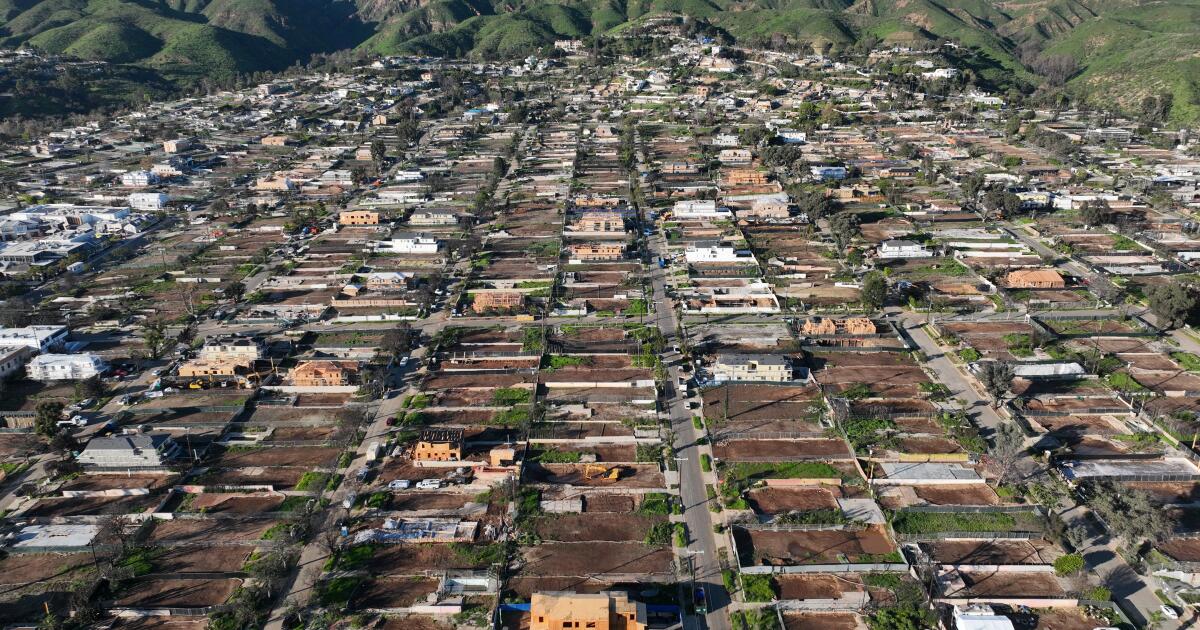
President Trump has announced an executive order to allow victims of the Los Angeles wildfires to rebuild without dealing with “unnecessary, dupicative, or obstructive” permitting requirements.
The order, which is likely to be challenged by the city and state, claimed that local governments have failed to adequately process permits and were slowing down residents who are desperate to rebuild in the Palisades and Altadena.
“American families and small businesses affected by the wildfires have been forced to continue living in a nightmare of delay, uncertainty, and bureaucratic malaise as they remain displaced from their homes, often without a source of income, while state and local governments delay or prevent reconstruction by approving only a fraction of the permits needed to rebuild,” Trump wrote in the executive order, which he signed Friday.
The order called on the Secretary of Homeland Security and the Federal Emergency Management Agency to “preempt” state and local permitting authorities.
Instead of going through the usual approval process, residents using federal emergency funds to rebuild would need to self-certify to federal authorities that they have complied with local health and safety standards.
The order comes as the city and county approach 3,000 permits issued for rebuilding. A December review by The Times found that the permitting process in Altadena and Pacific Palisades was moving at a moderate rate compared to other major fires in California. As of Dec. 14, the county had issued rebuilding permits for about 16% of the homes destroyed in the Eaton fire and the city had issued just under 14% for those destroyed in the Palisades fire.
While Mayor Karen Bass did not immediately provide comment, the executive order drew intense pushback from Gov. Gavin Newsom.
A spokesperson for Newsom, Tara Gallegos, called Trump a “clueless idiot” for believing the federal government could issue local rebuilding permits.
“With 1625+ home permits issued, hundreds of homes under construction, and permitting timelines at least 2x faster than before the fires, an executive order to rebuild Mars would do just as useful,” Gov. Gavin Newsom wrote in a post on X, citing the number of permits issued solely by the city of Los Angeles.
Newsom said that the federal government needed to release funding, not take over control of the permitting process. The governor said that what communities really lack is money, not permits.
“Please actually help us. We are begging you,” Newsom wrote.
Instead of descending into the permitting process, Newsom called on the president to send a recovery package to congress to help families rebuild, citing a letter from a bipartisan delegation of California legislators that called for federal funding.
“As the recovery process continues, additional federal support is needed, and our entire delegation looks forward to working cooperatively with your administration to ensure the communities of Southern California receive their fair share of federal disaster assistance,” wrote the California legislators on Jan 7.
Los Angeles City Councilwoman Traci Park, who represents Pacific Palisades, responded in a statement that read: “If the federal government is interested in expediting recovery from the most expensive disaster in this country’s history, they can start by committing to real financial support — to close insurance gaps, to repair critical infrastructure damaged in both the fire and the debris removal process, to help this region rebuild two entire communities from the ground up.”
Park also said that “dangling SBA loans and hazard mitigation funding in front of victims while summarily denying FEMA claim and other support to municipalities behind the scenes is subterfuge, not support. The City can only approve permits that have been submitted and the reality is that many disaster victims are still not ready to move forward with their rebuilds. This federal government can fix that by allowing desperately needed financial assistance to flow down to the Los Angeles region and let us get to work.”
Los Angeles County Supervisor Kathryn Barger, who represents Altadena, said she would “welcome any effort to responsibly accelerate rebuilding.”
Barger said permits take 30 days to move through the county’s plan check, but often encounter delays due to “complex multi-party work of architects, engineers, and builders.”
She also called for more federal funding and long-term disaster aid.
“The most urgent need in the Altadena region is financially driven,” she said in a statement to The Times.
Some in the Palisades agreed that money was a bigger issue than permitting.
“When I talk to people it seems to have more to do with their insurance payout or whether they have enough money to complete construction,” said Maryam Zar, a Palisades resident who runs the Palisades Recovery Coalition.
Zar called the executive order “interesting” and said that it was fair of the president to call the recovery pace slow and unacceptable.
Jonathan Zasloff, a UCLA Law professor who focuses on land use, called the executive order “childish and irresponsible policy.”
Zasloff, who lost his Palisades home in the fire, said that the president does not have the authority to get rid of state and local law just because he doesn’t like them. Instead, Zasloff said, the president should focus on fully funding disaster recovery so that the city and county can have adequate staff to process permit applications.
“My house burned down in the Palisades. Getting rid of the building codes would make it easier to rebuild something, but it could also make things a lot more dangerous,” he said.
Politics
Mamdani’s early moves as mayor clash with affordability pledge: ‘Ripple effects are significant’

NEWYou can now listen to Fox News articles!
New York City Mayor Zohran Mamdani ran on a message of making the Big Apple more affordable for everyday Americans, but some of his actions in the first few weeks of his tenure have served to undercut that reality.
In the early days of his time as mayor, Mamdani has already shown a penchant for vehemently defending low-wage, unskilled delivery-app workers in a manner that industry executives and business experts think will hit consumers’ pocketbooks. He sued a delivery app startup earlier this month for allegedly violating the city’s worker-rights laws, and warned the broader range of delivery app companies operating in the city to abide by ramped up worker rights being imposed at the end of the month, or else.
At a press conference announcing the lawsuit and accompanying demand letters issued to delivery app companies warning them to follow the updated worker protections, Mamdani also accused the delivery-app startup, MotoClick, of stealing workers’ tips. Among the reforms Mamdani has signaled he plans to vigorously enforce is a mandated tipping framework that estimates show could push more than half-a-billion in additional costs on consumers annually.
The updated protections will also add more delivery-app companies, such as those that deliver groceries, to the list that must follow the delivery-app worker rights laws, including a mandated minimum wage higher than what some emergency medical services (EMS) personnel in the city make.
‘ZOHRANOMICS’: NYC MAYOR ZOHRAN MAMDANI’S SOCIALIST MATH DOESN’T ADD UP
Zesty is now in beta in San Francisco and New York as DoorDash tests and refines its personalized matching experience. (iStock)
“We know affordability is not just about the cost of goods — it’s about the dignity of work,” Mamdani’s Commissioner of the Department of Consumer and Worker Protection (DCWP) Sam Levine told companies including DoorDash, GrubHub and Uber. “Today’s lawsuit against Motoclick is not just an action against one company, it’s a warning to every app-based company from this Administration. You cannot treat workers like they are expendable and get away with it. We will seek full back pay and damages. We will seek full accountability.”
Mamdani pointed to a recent report put out by Levine, which showed disobeying city mandates going into effect later this month, requiring apps to give the opportunity for customers to tip before or at the same time that an order has been placed, significantly impacts the amount of incoming tip revenue. Levine’s report that Mamdani touted estimates alternative tipping frameworks, such as only allowing tips upon completion of a delivery, have altered tipping revenue by an estimated $550 million per year.
Mamdani also stood by in tacit agreement during the press conference as delivery-app worker advocates called for an increase to their already mandated minimum wage they have that is approximately $4.50 higher for delivery-app drivers than the city’s base minimum wage of $17 per hour. The workers said they wanted a mandate that they get paid $35 per hour, to which Mamdani replied: “closed mouths don’t get fed.”
Mamdani campaigned on raising the base minimum wage to $30 per hour for all New Yorkers by 2030.
New York City Mayor Zohran Mamdani at a press conference defending worker rights for delivery-app drivers on Thursday, Jan. 15, 2026. (Michael Nagle/Bloomberg via Getty Images)
Meanwhile, his eager enforcement to protect delivery-app drivers will include making sure a wider breadth of delivery-app companies, such as those who deliver groceries like InstaCart and Shipt, abide by New York City’s extended minimum wage laws for their workers – plus the other mandates related to the tipping structure and more.
DCWP has indicated plans to set a minimum pay rate for all delivery apps by early 2027.
HOURS AFTER TAKING OFFICE, NYC MAYOR MAMDANI TARGETS LANDLORDS, MOVES TO INTERVENE IN PRIVATE BANKRUPTCY CASE
“The challenges facing delivery workers, small businesses, and consumers are real, and deeply interconnected. That’s why this issue cannot be reduced to a single policy lever or viewed in isolation,” a spokesperson for the Bronx Chamber of Commerce told Fox News Digital. “Small businesses across the Bronx and throughout New York City are already under extraordinary pressure. When additional costs are layered on without a full economic analysis, those costs are predictably passed down to consumers or absorbed through reduced hours, reduced staffing, or closures. When businesses close, communities lose jobs, services, and economic anchors, and the ripple effects are significant.”
The Chamber of Commerce spokesperson added that Mamdani has an opportunity “to lead by tackling affordability in a holistic way,” which they said would require “comprehensive cost analysis and coordinated solutions that support workers while ensuring the small business ecosystem and consumer affordability are not unintentionally harmed.”
Signage reading ‘Days of a New Era’ is juxtaposed behind New York City Mayor Zohran Mamdani during a press conference he attended about reining in ‘junk fees.’ (Adam Gray/Bloomberg via Getty Images)
When reached for comment about the discrepancy between Mamdani’s message of making New York City more affordable for everyone, versus his push to protect delivery-app worker rights that could impact consumer pricing, a New York City Hall spokesperson argued that “the insinuation that putting more money in the pockets of delivery workers undercuts affordability is absurd.”
“Delivery Workers are important members of our city’s economy, and deserve to be paid fairly – anything less is unacceptable,” the spokesperson added. “As Mayor Mamdani continues to stand up for everyday New Yorkers and actualize his ambitious agenda to make New York City truly livable for families. Affordability has been, and will continue to be, a guiding light.”
CLICK HERE TO DOWNLOAD THE FOX NEWS APP
But DoorDash’s head of public policy for North America, John Horton, said that ensuring delivery-app workers “earn double what many first responders in the city make” is not a policy solution they believe will make New York City more affordable. Currently, a local fire technician and emergency medical services union in the city is in the midst of a public awareness campaign to raise their wages because they make less than delivery-app drivers at $18.94 per hour.
Delivery-app workers in New York City must be paid $21.44 per hour according to local worker protection mandates. (iStock)
“A thriving New York will take a partnership between elected officials, the business community and workers to ensure we are all working in the best interests of New Yorkers in the midst of the city’s affordability crisis,” Horton added.
Fox News Digital followed up with Mamdani’s campaign to inquire about the complaint that EMS and some firemen in the city are making less than delivery-app workers, but did not receive a response in time for publication.

Polaris to lay off 200 Wisconsin workers, close facility in Osceola

W.Va. Senator calls for CPS reform after death of 11-year-old girl from Taylor County

Sage-grouse local working groups swiftly disbanded by Game and Fish

Crypto Crime Wave Fueled by Chinese-Language Money Laundering | PYMNTS.com

Global brand in an EFL world – Wrexham’s finances explained as club eye Premier League

Florida High School Football Rankings: Top 25 teams – Oct. 21

Cleary's 21 help Le Moyne down Central Connecticut State 69-64 in OT

How old is Bo Nix? What to know about Oregon quarterback ahead of 2024 NFL Draft

99th annual Pony Swim held in Virginia

Indiana Members Credit Union announced as new anchor tenant at Bottleworks District

Video: F.A.A. Ignored Safety Concerns Prior to Collision Over Potomac, N.T.S.B. Says

Democrats demand Kristi Noem be fired or warn impeachment will follow

EU Commissioner Virkkunen urges US to respect EU digital rules

Families of killed men file first U.S. federal lawsuit over drug boat strikes

Video: New Video Analysis Reveals Flawed and Fatal Decisions in Shooting of Pretti
-

 Sports1 week ago
Miami’s Carson Beck turns heads with stunning admission about attending classes as college athlete
-

 Illinois5 days ago
Illinois school closings tomorrow: How to check if your school is closed due to extreme cold
-

 Pittsburg, PA1 week ago
Sean McDermott Should Be Steelers Next Head Coach
-

 Lifestyle1 week ago
Nick Fuentes & Andrew Tate Party to Kanye’s Banned ‘Heil Hitler’
-

 Pennsylvania1 day ago
Rare ‘avalanche’ blocks Pennsylvania road during major snowstorm
-

 Sports1 week ago
Miami star throws punch at Indiana player after national championship loss
-

 Cleveland, OH1 week ago
Northeast Ohio cities dealing with rock salt shortage during peak of winter season
-
 Science1 week ago
‘It is scary’: Oak-killing beetle reaches Ventura County, significantly expanding range