Connect with us

News

Racketeering lawsuit against former top US bankruptcy judge dismissed

Published

on

Racketeering lawsuit against former top US bankruptcy judge dismissed

Unlock the Editor’s Digest for free

A federal court on Friday dismissed a racketeering lawsuit against a former US bankruptcy judge and two prominent law firms that arose from the judge’s admission of a secret romantic relationship with one of the firm’s attorneys.

Alia Moses, the chief judge for the US Western District of Texas, ruled Michael Van Deelen, who held a small number of shares in energy company McDermott and brought the suit, had not suffered financial hardship as a result of a relationship between the judge overseeing the group’s restructuring and his girlfriend who was a partner at Jackson Walker, one of the law firms representing McDermott.

McDermott filed for bankruptcy in 2020, and Van Deelen’s shares were wiped out in its reorganisation plan, which was approved by David Jones, who was at the time one of the country’s most prominent bankruptcy judges, overseeing some of the biggest and messiest Chapter 11 cases in the US.

Advertisement

Van Deelen sued Jones, his girlfriend Elizabeth Freeman and the two law firms working on the case: Kirkland & Ellis and Texas firm Jackson Walker, which appeared frequently in cases as local counsel, often working alongside Kirkland.

He alleged a conspiracy to bring blockbuster cases to Jones’s court in Houston, accusing the judge of approving large fees for both law firms. Kirkland & Ellis had earned more than $160mn in fees awarded by Jones in cases where Freeman appeared for Jackson Walker as co-counsel, according to the plaintiffs review of court filings.

Jones resigned from the bench in October 2023 after admitting to his relationship with Freeman. Van Deelen had supplied housing records, sent to him by an anonymous individual, to prove the existence of the relationship between Jones and Freeman.

The four defendants had argued Van Deelen could not show he had suffered losses in the McDermott case. In a June court hearing, lawyers for Jones and Freeman also said recusal decisions were at the judge’s discretion and that because the couple was not married, the standards for stepping aside may not have applied to Jones.

Moses on Friday ruled Van Deelen had “not shown that the defendants’ actions deprived him of anything he had not already lost before Jackson Walker and Kirkland had requested fees”.

Advertisement

Nevertheless she criticised Jones for not recusing himself in the McDermott case. “Whether through hubris, greed or profound dereliction of duty, Jones flouted these statutory and ethical requirements by presiding over dozens of cases from which he was obviously disqualified. The legal deficiency of the plaintiff’s claims does not erase these failures,” she wrote.

Kirkland & Ellis had sought to impose sanctions on Van Deelen for bringing the case. But, “it was the plaintiff’s audacity that brought this scandal to light”, the judge wrote. “Had the anonymous letter arrived in anyone else’s mailbox, perhaps Jones would still be on the bench, awarding millions of dollars to Kirkland and Jackson Walker.”

A lawyer for Van Deelen declined to comment. The defendants did not immediately return requests for comment on Friday.

Moses noted the office of the US Trustee, the Department of Justice agency that represents the public’s interests in bankruptcy court, was still seeking to claw back $13mn in fees awarded to Jackson Walker from cases in which Jones was the judge and Freeman had appeared as a lawyer.

Jones was on Friday separately ordered to undergo seven-and-a-half hours of “ethics related continuing legal education” in the US Trustee action. The judge found Jones had in “bad faith” sat for a July “interview” with Jackson Walker without the court’s permission.

Advertisement

News

Donald Trump has no ‘phase two’ plan for Iran war, says US senator

Published

on

Donald Trump has no ‘phase two’ plan for Iran war, says US senator

To read this article for free

Register now

Once registered, you can:

• Read free articles
• Get our Editor’s Digest and other newsletters
• Follow topics and set up personalised events
• Access Alphaville: our popular markets and finance blog

Continue Reading

News

Man accused of plot to assassinate Trump testifies Iran pressured him, says Biden and Haley were other possible targets

Published

on

Man accused of plot to assassinate Trump testifies Iran pressured him, says Biden and Haley were other possible targets

The allegation sounded like the stuff of spy movies: A Pakistani businessman trying to hire hit men, even handing them $5,000 in cash, to kill a U.S. politician on behalf of Iran ‘s powerful paramilitary Revolutionary Guard.

It was true, and potential targets of the 2024 scheme included now-President Donald Trump, then-President Joe Biden and former presidential candidate and ex-U.N. Ambassador Nikki Haley, the man told jurors at his attempted terrorism trial in New York on Wednesday. But he insisted his actions were driven by fear for loved ones in Iran, and he figured he’d be apprehended before anything came of the scheme.

“My family was under threat, and I had to do this,” the defendant, Asif Merchant, testified through an Urdu interpreter. “I was not wanting to do this so willingly.”

Merchant said he had anticipated getting arrested before anyone was killed, intended to cooperate with the U.S. government and had hoped that would help him get a green card.

U.S. authorities were, indeed, on to him – the supposed hit men he paid were actually undercover FBI agents – and he was arrested on July 12, 2024, a day before an unrelated attempt on Trump’s life in Butler, Pennsylvania.  During a search, investigators said they found a handwritten note that contained the codewords for the various aspects of the plot, CBS News previously reported

Advertisement

Merchant did sit for voluntary FBI interviews, but he ultimately ended up with a trial, not a cooperation deal.

“You traveled to the United States for the purpose of hiring Mafia members to kill a politician, correct?” Assistant U.S. Attorney Nina Gupta asked during her turn questioning Merchant Wednesday in a Brooklyn federal court.

“That’s right,” Merchant replied, his demeanor as matter-of-fact as his testimony was unusual.

The trial is unfolding amid the less than week-old Iran war, which killed Iranian Supreme Leader Ayatollah Ali Khamenei in a strike that Trump summed up as “I got him before he got me.” Jurors are instructed to ignore news pertaining to the case.

The Iranian government has denied plotting to kill Trump or other U.S. officials.

Advertisement

Merchant, 47, had a roughly 20-year banking career in Pakistan before getting involved in an array of businesses: clothing, car sales, banana exports, insulation imports. He openly has two families, one in Pakistan and the other in Iran – where, he said, he was introduced around the end of 2022 to a Revolutionary Guard intelligence operative. They initially spoke about getting involved in a hawala, an informal money transfer system, Merchant said.

Merchant testified that his periodic visits to the U.S. for his garment business piqued the interest of his Revolutionary Guard contact, who trained him on countersurveillance techniques.

The U.S. deems the Revolutionary Guard a “foreign terrorist organization.” Formally called the Islamic Revolutionary Guard Corps, the force has been prominent in Iran under Khamenei.

Merchant said the handler told him to seek U.S. residents interested in working for Iran. Then came another assignment: Look for a criminal to arrange protests, steal things, do some money laundering, “and maybe have somebody murdered,” Merchant recalled.

“He did not tell me exactly who it is, but he told me – he named three people: Donald Trump, Joe Biden and Nikki Haley,” he added.

Advertisement

In 2024, multiple sources familiar with the investigation told CBS News Merchant planned to assassinate current and former government officials across the political spectrum.

Merchant allegedly sketched out the plot on a napkin inside his New York hotel room, prosecutors said, and told the individual “that there would be ‘security all around’ the person” they were planning to kill.

“No other option”

After U.S. immigration agents pulled Merchant aside at the Houston airport in April 2024, searched his possessions and asked about his travels to Iran, he concluded that he was under surveillance. But still he researched Trump rally locations, sketched out a plot for a shooting at a political rally, lined up the supposed hit men and scrambled together $5,000 from a cousin to pay them a “token of appreciation.”

This image provided by the Justice Department, contained in the complaint supporting the arrest warrant, shows Asif Merchant. 

Advertisement

AP


He even reported back to his Revolutionary Guard contact, sending observations – fake, Merchant said – tucked into a book that he shipped to Iran through a series of intermediaries.

Merchant said he “had no other option” than to play along because the handler had indicated that he knew who Merchant’s Iranian relatives were and where they lived.

In a court filing this week, prosecutors noted that Merchant didn’t seek out law enforcement to help with his purported predicament before he was arrested. He testified that he couldn’t turn to authorities because his handler had people watching him.

Prosecutors also said that in his FBI interviews, Merchant “neglected to mention any facts that could have supported” an argument that he acted under duress.

Advertisement

Merchant told jurors Wednesday that he didn’t think agents would believe his story, because their questions suggested “they think that I’m some type of super-spy.”

“And are you a super-spy?” defense lawyer Avraham Moskowitz asked.

“No,” Merchant said. “Absolutely not.”

Continue Reading

News

Satellite images show Iran school strike hit more buildings than earlier reported

Published

on

Satellite images show Iran school strike hit more buildings than earlier reported

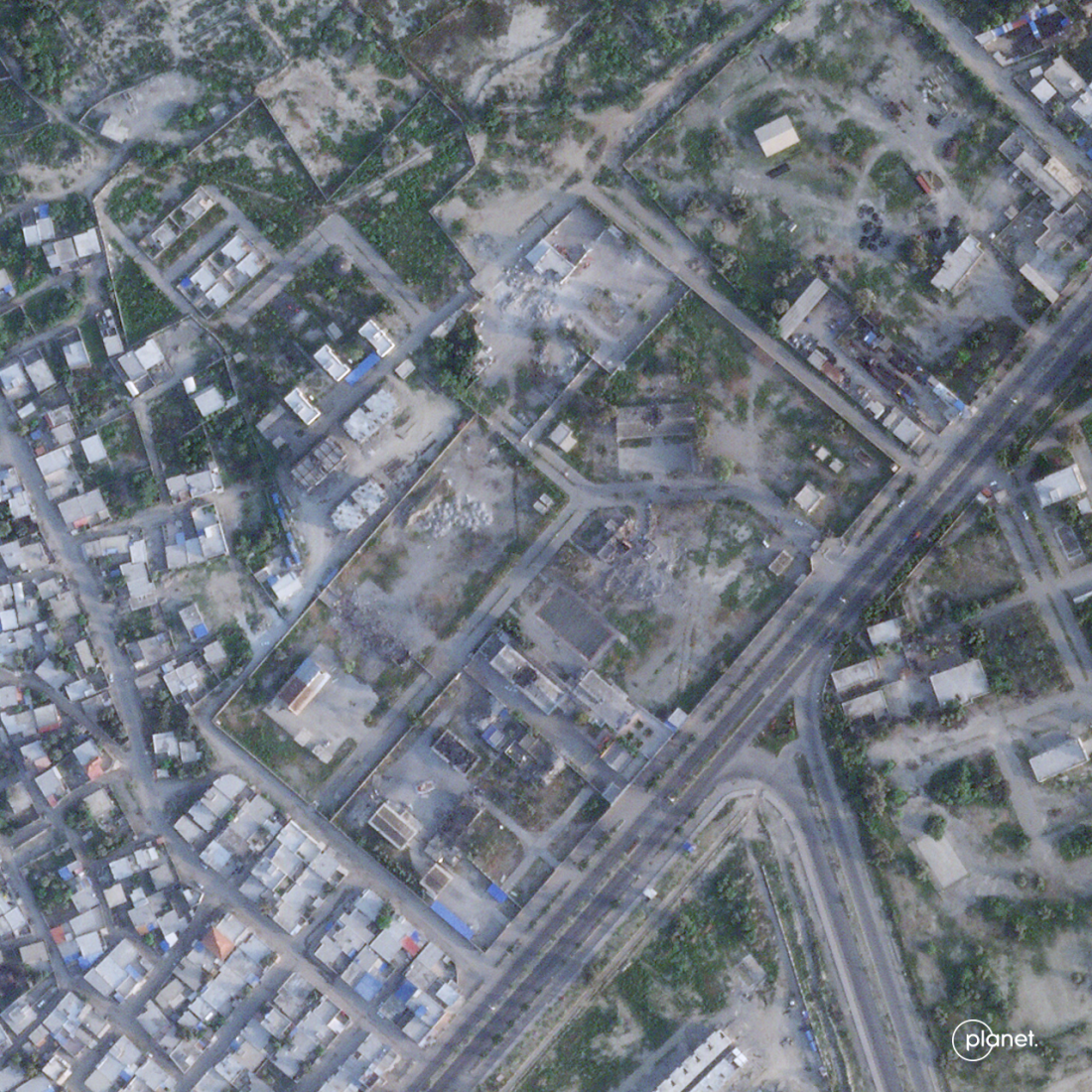
The bombing of an Iranian elementary school that killed some 165 people, many of them schoolgirls, included more targets near the school than has been initially reported, a review of commercial satellite imagery by NPR has found.

The images suggest that the school was hit on Saturday as part of a precision airstrike on a neighboring Iranian military complex — and that it may have been struck as a result of outdated targeting information.

The new images come from the company Planet and are of the city of Minab, located in southeastern Iran. They show that a health clinic and other buildings near the school were also struck. Three independent experts confirmed NPR’s analysis of the additional strike points.

Advertisement

The strike points “look like pretty clean detonation centroids,” said Corey Scher, a postdoctoral researcher at the Conflict Ecology laboratory at Oregon State University.

“These certainly appear like detonation sites,” agreed Scher’s colleague, Oregon State associate professor Jamon Van Den Hoek.

Jeffrey Lewis, a professor at Middlebury College who specializes in satellite imagery, said the imagery was consistent with a precision airstrike.

The images show “very precise targeting,” Lewis told NPR. “Almost all the buildings [in the compound] are hit.”

A satellite image of an Iranian Revolutionary Guard compound taken on March 4.

A satellite image of an Iranian Revolutionary Guard compound taken on March 4, several days after an airstrike destroyed a school on the edge of the compound. The image reveals that half a dozen other buildings in addition to the school were struck.

Planet Labs PBC

Advertisement


hide caption

toggle caption

Planet Labs PBC

Advertisement

Iranian state media said 165 people died in the bombing, which struck a girls’ school. The school was located within less than 100 yards of the perimeter of an Iranian Revolutionary Guard naval base, according to satellite images and publicly available information. The clinic was also located within the base perimeter, although both facilities had been walled off from the base.

Israel has denied involvement. “We are not aware at the moment of any IDF operation in that area,” Israel Defense Forces spokesperson Nadav Shoshani told NPR on Monday. “I don’t know who’s responsible for the bombing.”

At a press conference Wednesday morning, U.S. Defense Secretary Pete Hegseth said that the U.S. is looking into what happened at the school. “All I know, all I can say, is that we’re investigating that,” Hegseth said. “We, of course, never target civilian targets.”

Given Minab’s location in the southeastern part of Iran, Lewis believes it’s more likely the U.S. would have conducted the strike than Israel. As one gets farther south and east in Iran, “a strike is much more likely to be a U.S. strike than an Israeli strike because of the type of munitions and the geographic location,” he said.

Esmail Baghaei, the spokesman for Iran’s Foreign Ministry, called the strike “deliberate” and said that the U.S. and Israel bombed the school in part to tie up Iranian forces in the region with rescue efforts. “To call the attack on the girls school merely a ‘war crime’ does not capture the sheer evil and depravity of such a crime,” he said.

Advertisement

But Lewis said it’s more likely that the strike was the result of an error. Satellite images show that the school and clinic buildings were both once part of the base. The school was separated from the base by a wall between 2013 and 2016. The clinic was walled off between 2022 and 2024.

Lewis believes it’s possible American military planners had not updated their target sets.

“There are thousands of targets across Iran, and so there will be teams in the United States and Israel that are responsible for tracking those targets and updating them,” he said. “It’s possible that the target didn’t get updated.”

The Pentagon did not immediately respond to NPR’s request for additional information about the strike.

NPR’s Arezou Rezvani and NPR’s RAD team contributed to this report.

Advertisement
Continue Reading
Advertisement

Trending