Midwest
Former Mexican drug cartel leader who generated 'new era' of organized crime is released from US prison

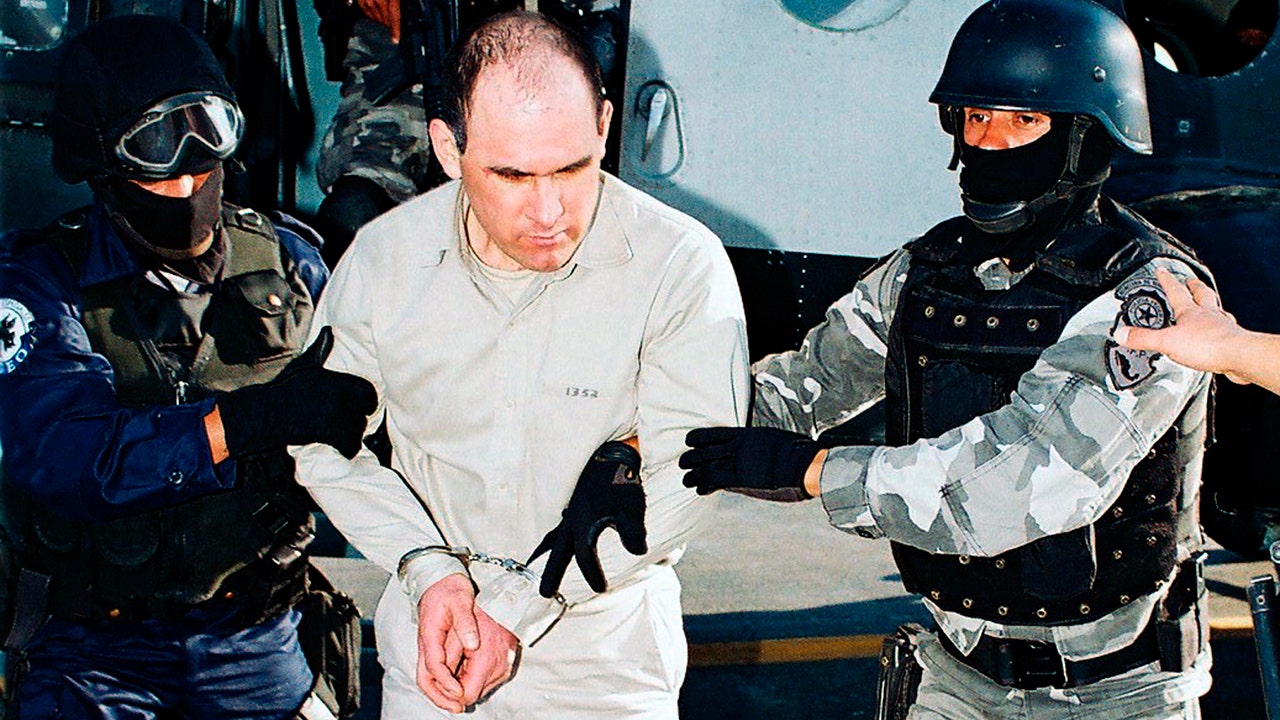
Osiel Cárdenas Guillén, a former drug cartel leader described as having “generated a new era of organized crime” in Mexico, has now been released from U.S. prison and may be heading back over the border, reports say.
Cárdenas Guillén, the past leader of the Gulf cartel who created the Zetas — a gang of former Mexican special forces soldiers who became his private army and hit squad — was transferred into the custody of U.S. Immigration and Customs Enforcement on Friday at a federal prison in Terre Haute, Indiana, officials told Reuters.
In 2010, Cárdenas Guillén was sentenced to 25 years in prison on charges including threatening to assault and murder federal agents and was ordered to forfeit $50 million from his criminal enterprise. It’s unclear why he did not serve his full sentence. However, the move into ICE custody suggests he will be deported to Mexico, where an official says he faces two arrest warrants, according to The Associated Press.
Leo Silva, a former U.S. Drug Enforcement Administration agent who previously worked in Mexico to combat the Zetas, told Reuters that the Cárdenas Guillén “generated a new era of organized crime” and “unleashed this mentality of creating fear in the country.”
MEXICAN DRUG LORDS’ AMERICAN RACEHORSE RING HID DEADLY CRIME ENTERPRISE
Osiel Cárdenas Guillén is escorted by members of Mexico’s Federal Agency of Investigations in Mexico City in January 2007. (Reuters/Attorney General’s office)
The news agency cites Silva as directly blaming Cárdenas Guillén for the rise in grisly cartel-related violence in Mexico over the last 20 years.
The Zetas that he created committed acts of terror that regularly involved slaughtering dozens of people, decapitating them or dumping heaps of hacked-up bodies on roadways, The Associated Press reports.
Cárdenas Guillén’s own nickname was “El Mata Amigos,” or “The one who kills his friends,” and the 57-year-old once moved tons of cocaine and made millions of dollars through the Gulf cartel, based in the border cities of Reynosa and Matamoros.
EL CHAPO’S SON PLEADS NOT GUILTY IN CHICAGO COURT AFTER ARREST IN TEXAS WITH CARTEL LEADER ‘EL MAYO’
A gun decorated with gold belonging to Osiel Cárdenas Guillén is displayed in the Drugs Museum, used by the military to showcase to soldiers the lifestyles of Mexican drug lords, at the headquarters of the Ministry of Defense in Mexico City in October 2016. (Reuters/Henry Romero)
He was eventually captured in 2003 and extradited to the U.S. four years later. By 2010, the Zetas had formed their own cartel, spreading terror-style attacks across Mexico as far south as Tabasco until their top leaders were killed or arrested in 2012-2013.
The AP reports that one of Cárdenas Guillén’s most brazen acts was when he surrounded and stopped a vehicle carrying two U.S. DEA agents and one of their informants in 1999 in the border city of Matamoros, across from Brownsville, Texas.
Osiel Cárdenas Guillén is shown in January 2007 before being extradited to the U.S.
His gunmen pointed their weapons at the agents and demanded they hand over the informant, who would almost certainly be tortured and killed. The agents toughed it out and refused, reminding him it would be a bad decision to kill employees of the DEA. Cárdenas Guillén eventually called off his gunmen, but not before reportedly saying “You gringos, this is my territory.”
The Associated Press contributed to this report.
Read the full article from Here


Missouri state Auditor Scott Fitzpatrick has launched a review of the Regional Arts Commission of St. Louis’ finances.
The audit is in response to complaints from a whistleblower who alerted the office to possible misuse of funds, Fitzpatrick said Tuesday. The auditor’s office then reviewed documents provided by RAC during an initial investigation before launching a full audit.
“We have verified the veracity of the whistleblower complaint, and have seen with our own eyes at this point records that give us enough concern that we want to proceed with an audit,” Fitzpatrick said.
The auditor’s report could be released late this year or in early 2027, he added. It would then be up to state and local authorities to follow up on any potential misconduct.
In an unsigned statement, RAC said it receives an annual audit from a firm selected by the offices of the St. Louis mayor and St. Louis County executive and that it shares the results publicly. “[We] are confident the findings from the state will mirror the success we have come to expect at the local level,” the statement says.
“We welcome the opportunity to provide documentation and context regarding our financial practices and grantmaking processes. As always, RAC will continue to focus on serving the St. Louis region’s arts and cultural community and maintaining the public’s trust,” the statement adds.
Potential issues identified in the state auditor’s initial investigation include the possibilities that RAC’s administrative expenses exceed what is allowed by statute, that leaders issued bonuses disallowed by the state constitution and that large grants were issued with no follow-up to ensure the money was used properly.
Fitzpatrick said his actions are not related to the commission’s choice of grant recipients.
Changes to the grant process
RAC distributes annual grants to arts organizations in St. Louis and St. Louis County. It is funded by a tax on hotel and motel stays. The commission distributed $3.7 million last year.
The organization suspended grant applications for fiscal 2026 due to “continuing financial volatility” and a new five-year plan, according to a note on its website. It will use applications received in 2025 as a guide for its 2026 grants.
Regional Arts Commission of St. Louis
“This pause allows RAC to support eligible and high-scoring 2025 grantees and applicants while navigating financial challenges and planning for a stronger, more sustainable grant program in the future,” the note says.
RAC publishes a list of its annual grants online.
Vanessa Cooksey became president and CEO of the organization in 2020 after it spent a year without a permanent leader. Previous chief Felicia Shaw had stepped down in November 2019. Neither Shaw nor RAC provided a public explanation for Shaw’s departure.
Some smaller organizations had complained that during Shaw’s tenure they stopped receiving annual grants.
The Regional Arts Commission had a $13.4 million budget in 2024, according to tax documents. Cooksey received a $196,253 salary and $28,652 in additional compensation.
Continuing a process begun by Shaw, Cooksey oversaw changes to grant applications that she said were meant to simplify the process – including removing a longstanding split between its funding mechanisms for large and small organizations.
A key arts funder after the coronavirus pandemic
In November 2022, the St. Louis Board of Aldermen voted unanimously to direct $10.6 million from the American Rescue Plan Act to RAC. A measure that would have allocated another $1.6 million failed to pass the St. Louis County Council, so RAC was statutorily required to distribute ARPA funds only to groups based in St. Louis.
RAC has distributed $9.5 million of the ARPA money so far, funding 195 individual artists and 75 organizations.
Arts leaders said in 2022 that the sector supports more than 19,000 jobs and generates nearly $600 million a year – more than all local sports franchises combined.
The federal money was a boon to St. Louis artists and arts organizations following a steep decrease in funding at the height of the coronavirus pandemic due to decreased tourism in the region.
Tax revenues earmarked for RAC decreased from $9.5 million in fiscal 2019 to $2.8 million the next year. Tax revenue directed to RAC have increased but still lag behind the pre-pandemic total. The commission reported $7.5 million in tax revenue received in fiscal 2024.
RAC presented a new five-year plan with much fanfare in March 2020 but had little initial opportunity to implement it. Not long after, St. Louis officials put limits on public gatherings to tamp down spread of the virus that causes COVID-19.
Commission officials released a new five-year strategic roadmap in December 2025.

People across Nebraska and Kansas reported feeling an earthquake Sunday afternoon.
According to the U.S. Geological Survey, a quake measuring 4.1 on the Richter Scale struck around 1 p.m. about 3 miles east of the Webster County village of Cowles, which is in south-central Nebraska near the Kansas border.
A quake of that magnitude is considered “light” and not likely to cause damage.
But the USGS received dozens of reports from people who said they felt the quake, some as far away as Omaha and Manhattan, Kansas. Numerous people took to social media to report feeling the quake.
Two aftershocks of 2.6 magnitude later occurred near the original quake site, one about 90 minutes after the initial quake and one later Sunday night.
Earthquakes are relatively rare in Nebraska, but the state does usually record one or two minor ones per year. The last time Nebraska recorded a quake of a magnitude 4 or above was in December 2023, also in Webster County.
North Dakota
The Democratic Spirit: Reflections on North Dakota History and the Declaration of Independence at 250 – America250

A state and national public forum comprising a lecture, and then a question-answer session. Kwame Anthony Appiah’s lecture commemorates the 250th anniversary of the Declaration of Independence and explore its enduring significance in American life. Appiah’s scholarship on ethics, identity, and cosmopolitanism offers a unique lens for examining democratic ideals in a diverse society. By connecting these themes to North Dakota’s historical narrative, the forum fosters civic engagement, intellectual discourse, and cultural understanding within our community.
Missouri auditor to probe St. Louis arts funder after whistleblower complaint

Christi Jacobsen enters race for Western House seat

4.1-magnitude earthquake hits south-central Nebraska

Kalshi Enforcement Action Belongs in Nevada Court, Judge Says

Up to 4 inches of snow expected in NH tonight. See latest forecast

Florida High School Football Rankings: Top 25 teams – Oct. 21

Cleary's 21 help Le Moyne down Central Connecticut State 69-64 in OT

How old is Bo Nix? What to know about Oregon quarterback ahead of 2024 NFL Draft

99th annual Pony Swim held in Virginia

Indiana Members Credit Union announced as new anchor tenant at Bottleworks District

Fraud-plagued Minnesota sues Trump admin for withholding $243M in Medicaid payments

Is Iran expanding attacks to target energy and civilian sites in the Gulf?

Trump claims US stockpiles mean wars can be fought ‘forever’; Kristi Noem testifies before Congress – US politics live

War in the Middle East: Iran’s broad retaliation in the Gulf • FRANCE 24 English

Trump sends official notification to Congress on strikes against Iran
-

 World6 days ago
Exclusive: DeepSeek withholds latest AI model from US chipmakers including Nvidia, sources say
-

 Massachusetts6 days ago
Mother and daughter injured in Taunton house explosion
-

 Denver, CO6 days ago
10 acres charred, 5 injured in Thornton grass fire, evacuation orders lifted
-

 Louisiana1 week ago
Wildfire near Gum Swamp Road in Livingston Parish now under control; more than 200 acres burned
-

 Oregon4 days ago
2026 OSAA Oregon Wrestling State Championship Results And Brackets – FloWrestling
-

 Florida2 days ago
Florida man rescued after being stuck in shoulder-deep mud for days
-

 Technology1 week ago
Arturia’s FX Collection 6 adds two new effects and a $99 intro version
-

 News1 week ago
Video: How Lunar New Year Traditions Take Root Across America