Lifestyle
These films took the top prizes at Sundance – plus 11 films our critic loved


Alia Shawkat stars in Atropia, the feature debut of writer-director Hailey Gates. Atropia won the Grand Jury Prize for dramatic films.
Sundance Institute
hide caption
toggle caption
Sundance Institute
At this year’s Sundance Film Festival, talk on the ground frequently turned to the devastating fires in Los Angeles, which have affected many attendees in the film industry. A campaign to “Keep Sundance in Utah” was out in full force in preparation for the festival’s possible move in 2027; Boulder, Colo., and Cincinnati, Ohio are in the running to become the event’s new home after the festival’s lease ends. If Sundance stays in Utah, much of the festival will relocate to Salt Lake City, though current host Park City could still host some events.
But the movies are why everyone comes together each year in this snowy ski town, and the slate offered some gems we could be talking about throughout the year, assuming they land distribution. Awards were announced on Friday, with the top prizes going to Hailey Gates’ war satire Atropia, which won the U.S. Dramatic Grand Jury Prize, and Seeds, Brittany Shyne’s film about Black farm workers in the South, which won the U.S. Documentary Grand Jury Prize. (You can see the full list of winners here.) I was on the ground for the first few days of the fest and then caught up with more films at home during the virtual portion. Here are a few of my favorites.
True crime is dead (long live true crime)
As the true crime genre has exploded in popularity, plenty of valid critiques have framed it as a form of morally dubious schadenfreude, murder-as-entertainment, as it were. Two excellent documentaries at Sundance this year took unique approaches to questioning the form.
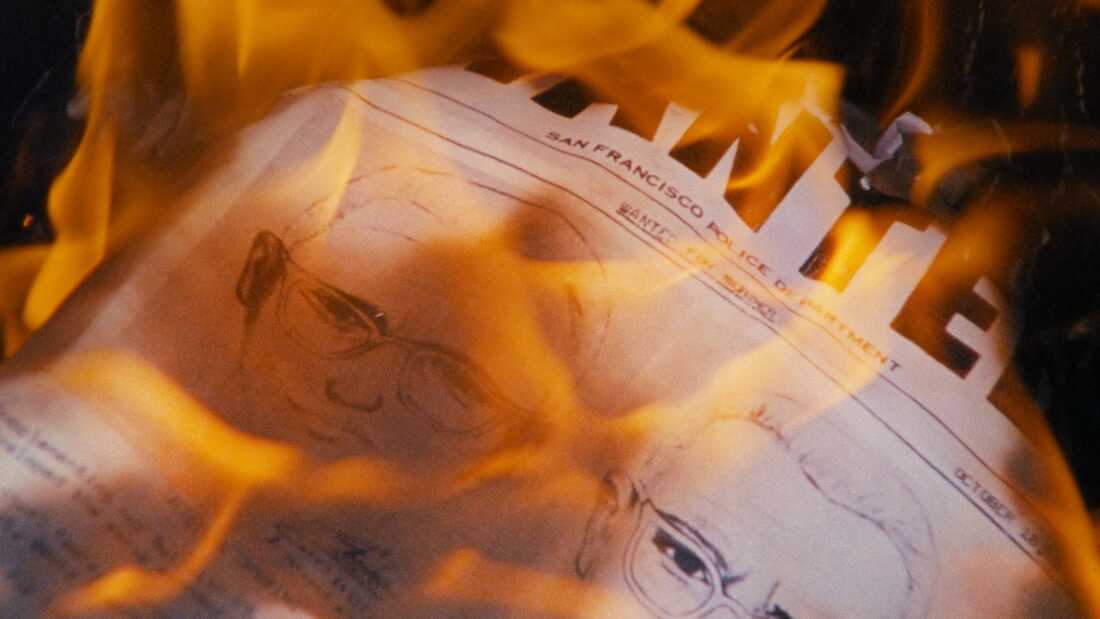
A still from Zodiac Killer Project by Charlie Shackleton.
Sundance Institute
hide caption
toggle caption
Sundance Institute
For his film Zodiac Killer Project, filmmaker Charlie Shackleton initially set out to make a documentary about Lyndon E. Lafferty, a former California Highway Patrolman who published a book in 2012 claiming he knew the Zodiac Killer’s identity. Lafferty’s family ultimately refused to grant Shackleton the rights, so instead he made a film about the film he would have made … which becomes an engrossing deconstruction and affectionate skewering of the visual and narrative tropes that accompany pretty much every true crime doc or dramatization these days. Shackleton’s narration is wry and astute but also wistful; he’s self-aware enough to know he’s drawn to this stuff just like so many of us, even as he understands its limitations and drawbacks. The film won Sundance’s NEXT Innovator Award.

And then there’s Predators, David Osit’s sharp focus on the popularity of To Catch a Predator and its present-day online descendants. Osit evaluates the mid-00s reality show’s legacy by complicating its hard-nosed perspective on vigilante justice; he wonders what was truly gained in exposing possible sex offenders, and whether the “benefits” really outweighed the costs for everyone involved, from the young actors cast as underage kids to the men who were shamed and arrested on national TV. Osit even gets the host of To Catch a Predator, Chris Hansen, to sit down for an interview, which only crystallizes how fraught the show’s mission was.
One other true crime doc was memorable in a different way: Geeta Gandbhir’s The Perfect Neighbor, about the 2023 killing of a Black woman by her white neighbor in Marion County, Fla. The majority of the film plays out through police body cam footage or interrogation room video, which captures months’ worth of simmering tensions within the neighborhood leading up to the fatal encounter, as well as the arrest and trial that followed. At times the access to such detailed documentation veers a bit too closely into feeling exploitative of Black trauma, but Gandbhir’s complication of narratives around community relationships and policing through the astounding footage still makes this worth a viewing. Gandbhir won the U.S. Documentary Directing Award.
Stars are born
The psychological thriller Lurker explores familiar themes around celebrity obsession and the trappings of fame – think All About Eve meets Ingrid Goes West meets The Other Two – yet it’s so well-executed and smart about its perspective that it feels incredibly fresh. Matthew (Théodore Pellerin) is a retail worker who worms his way into the inner circle of emergent pop star Oliver (Archie Madekwe) and, of course, upends the entire group dynamic to the -nth degree. Both actors have been around for a minute (Pellerin was recently in Becoming Karl Lagerfeld and Madekwe was in Saltburn), but their moody chemistry together as the star-struck barnacle and the self-serious artist crackles on screen, and could very well mark a turning point in their careers. It’s a promising feature debut for writer-director Alex Russell, who previously wrote for The Bear and Beef; the latter series’ darkly comic sensibilities definitely course throughout Lurker.

Tonatiuh and Diego Luna in Kiss of the Spider Woman.
Sundance Institute
hide caption
toggle caption
Sundance Institute
On a completely different note: Bill Condon’s adaptation of the Broadway musical Kiss of the Spider Woman – based on Manuel Puig’s 1976 novel – was one of the splashier titles to debut at the festival this year. In the early 1980s during Argentina’s military dictatorship, two prisoners share a cell: political activist Valentin (Diego Luna) and queer window dresser Molina (Tonatiuh). To distract from their imprisonment and abuse, Molina reimagines a movie starring their favorite actress, Ingrid Luna (Jennifer Lopez), which gives Condon the chance to pay homage to classic Hollywood musicals like Singin’ in the Rain, and, more recently, Chicago (for which Condon wrote the screenplay). Luna and Lopez are great, but this is Tonatiuh’s movie – he takes a role that could easily be a caricature of queer flamboyance and pathos, and grounds it with depth and soul.

And another standout performance can be found in Cole Webley’s family drama Omaha. Set sometime in the late 2000s, a financially struggling widower (Past Lives‘ John Magaro) takes his children Ella (Molly Belle Wright) and Charlie (Wyatt Solis) on an unexpected road trip to Nebraska. The film is heavy on immaculately lit imagery of desert highway and small-town life and a little too lean on narrative details until the very end, but the adolescent Wright is particularly affecting as a child who’s old enough to sense her dad’s holding something back yet too young to fully grasp the severity of their situation.
Sweeping ambition
Kahlil Joseph’s BLKNWS: Terms & Conditions arrived on the back of a small wave of behind-the-scenes controversy, when it was unexpectedly pulled from Sundance just before the festival, and then added back onto the schedule a few days later. Hopefully this dustup doesn’t overshadow the work itself, which is intricate, rich, and supremely ambitious. Borne out of Joseph’s video installation BLKNWS, the film uses the Encyclopedia Afrikana (an uncompleted project of W.E.B. Du Bois which inspired a book by Henry Louis Gates and Anthony Appiah decades later) as a basis to traverse eras, continents, and historical figures. A deliberately-paced Afrofuturistic narrative thread involving an international cruise liner is opaque and meandering, occasionally to the point of being inaccessible in a Terrence Malick-y way. But its most affecting moments are the essayistic montages of archival footage, which stitch together a clear-eyed mediation on memory, lineage, and the meaning of freedom.
Let’s get weird
I really dug the war satire Atropia, the feature debut of writer-director Hailey Gates. In 2006, wannabe Hollywood actress Fayruz (Alia Shawkat) works a gig playing an Iraqi civilian in a 24/7 U.S. military live training simulator, used to train soldiers on facing “the enemy” before they’re shipped overseas. The film (and especially the excellent Shawkat) juggles a bunch of different tones – farce, romance, social critique – and it succeeds at some better than others. But it’s scrappy and oddball enough to withstand some of its more scattered ideas around the stupidity of war.

Laura Casabé’s The Virgin of the Quarry Lake is a unique coming-of-age horror tale set in Argentina in the early 00s. Teenager Natalia (Dolores Oliverio) harbors a deep crush on her friend, but her plans to pursue him romantically are thrown out of whack when an older woman enters their inner circle. Casabé uses magical realism and the macabre to explore desire, jealousy, and insecurity within a protagonist who’s both extremely relatable and scary to contemplate.
Together is a fun body horror-comedy about a couple (real-life husband-and-wife Dave Franco and Alison Brie) stuck in a rut but unwilling to do anything about it. When they move to the country, they stumble upon a cursed cave that forces all of their unspoken issues to the forefront in the most visceral and icky ways possible. Writer-director Michael Shanks’ third act fumbles a bit in its predictability, but Brie and Franco lock into the offbeat humor of the film’s premise, and the special effects are a marvel.

Dylan O’Brien and James Sweeney in Twinless, which Sweeney also wrote and directed. The film won the festival’s audience award for U.S. dramatic films.
Greg Cotten/Sundance Institute
hide caption
toggle caption
Greg Cotten/Sundance Institute
And in Twinless, writer-director James Sweeney also stars as Dennis, a snarky gay Portlander who forms a bromance with a dim but kindly straight dude (Dylan O’Brien) he meets in a grief support group for people who have lost their twins. There are some twists and turns in this dark comedy, and your tolerance for those directions may vary – but for me at least, watching these two opposites attract and trauma-bond was exciting and satisfying. It took home the U.S. Dramatic Audience Award.



In 2021, Zhao made history as the first woman of color to win the best director Oscar for her film Nomadland. Her Oscar-nominated drama Hamnet has made $70 million worldwide.
Bethany Mollenkof for NPR
hide caption
toggle caption
Bethany Mollenkof for NPR
It took a very special kind of spirit to make Hamnet, which is nominated for best picture at this year’s Academy Awards. Chloé Zhao brought her uniquely sensitive, mind-body approach to directing the fictionalized story about how William Shakespeare was inspired to write his masterpiece Hamlet.
Zhao adapted the screenplay from a novel by Maggie O’Farrell, and for directing the film, she’s now nominated for an Oscar. She could make history by becoming the first woman to win the best director award more than once.
Zhao says she believes in ceremonies and rituals, in setting an intention, a mood, a vibration for any event. Before Hamnet premiered at the Toronto International Film Festival last year, she led the audience in a guided meditation and a breathing exercise.

Zhao also likes to loosen up, like she did at a screening of Hamnet in Los Angeles last month, when she got the audience to get up and dance with her to a Rihanna song.
She, her cast and crew had regular dance parties during the production of Hamnet. So for our NPR photo shoot and interview at a Beverly Hills hotel, I invited her to share some music from her playlist. She chose a track she described as “drones and tones.”
Our photographer captured her in her filmy white gown, peeking contemplatively from behind the filmy white curtains of a balcony at the Waldorf Astoria.
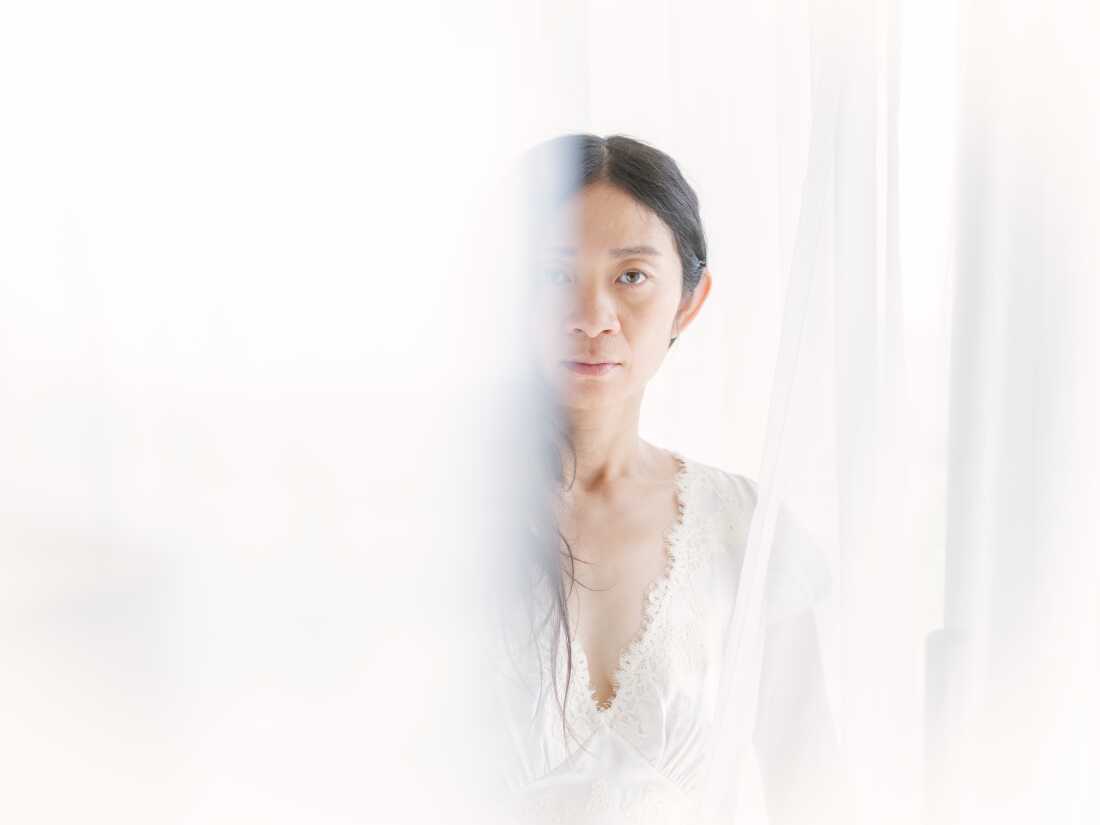
Zhao says she believes in ceremonies and rituals, and makes them a part of her filmmaking process.
Bethany Mollenkof for NPR
hide caption
toggle caption
Bethany Mollenkof for NPR
Then Zhao and I sat down to talk.
“I had a dream that we were doing this interview,” I told her. “And it started with a photo shoot, and there was a glass globe –”
“No way!” she gasped.
It so happens that on the desk next to us, was a small glass globe — perhaps a paperweight.
I told her that in my dream, she was looking through the globe at some projected images. “We were having fun and it was like we didn’t want it to stop,” I said.
“Oh, well, me and the globe and the lights on the wall: they’re all part of you,” Zhao said. “They’re your inner crystal ball, your inner Chloé.”
“Inner Chloé?” I asked. “What is the inner Chloé like?”
“I don’t know, you tell me,” she said. “Humbly, from my lineage and what I studied is that everything in a dream is a part of our own psyche.”
Dreams and symbols are very much a part of Zhao’s approach to filmmaking, which she describes as a magical and communal experience. She said it’s all part of her directing style.
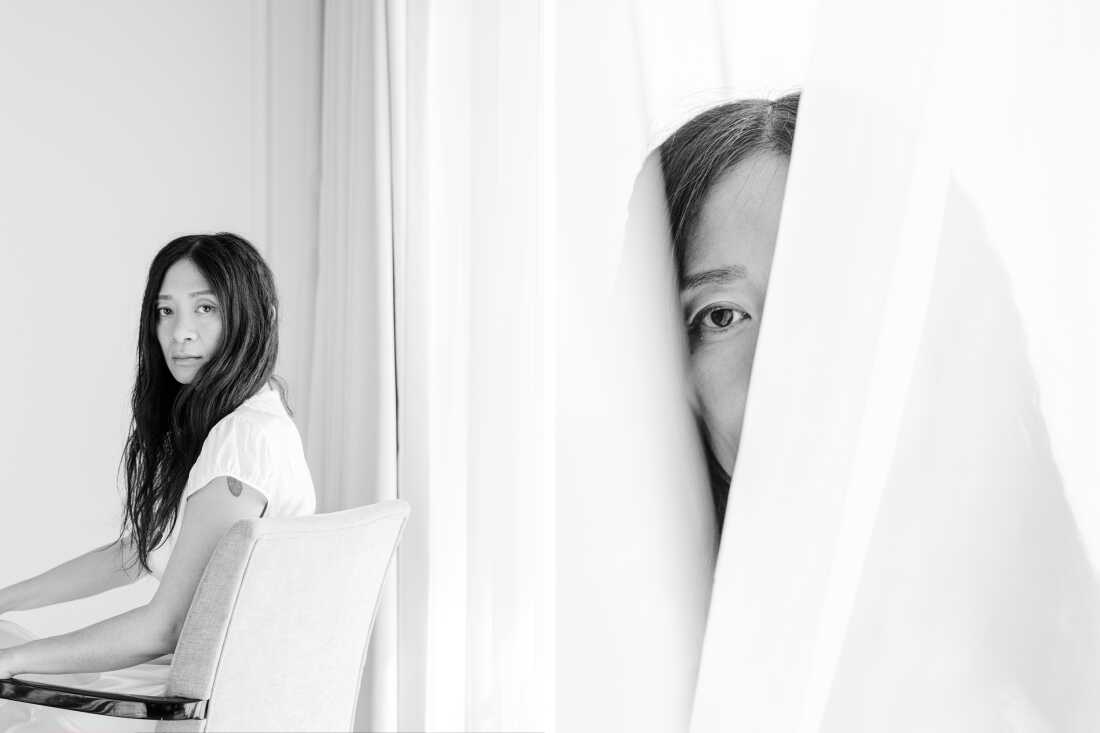
Chloé Zhao used painting and dance to connect with actors on the set of her latest film Hamnet.
Bethany Mollenkof for NPR
hide caption
toggle caption
Bethany Mollenkof for NPR
“If you’re captain of any ship, you are not just giving instructions; people are also looking to you energetically as well,” she explained. “Whether it’s calmness, it’s groundedness, it’s feeling safe: then everyone else is going to tune to you.” Zhao says it has taken many years to get to this awareness. Her own journey began 43 years ago in Beijing, where she was born. She moved to the U.S. as a teen, and studied film at New York University where Spike Lee was one of her teachers. She continued honing her craft at the Sundance Institute labs — along with her friend Ryan Coogler and other indie filmmakers.
Over the years, Zhao’s film catalogue has been eclectic — from her indie debut Songs My Brothers Taught Me, set on a Lakota Sioux reservation, to the big-budget Marvel superhero movie Eternals. She got her first best director Oscar in 2021 for the best picture winner Nomadland. Next up is a reboot of Buffy the Vampire Slayer.
“A creative life,” she notes, “is not a linear experience for me.”

Zhao still lingers over the making of Hamnet, a very emotional story about the death of a child. During the production, Zhao says she used somatic and tantric exercises and rituals to open and close shooting days.
She also invited her lead actors Paul Mescal and Jessie Buckley to help her set the mood on set. They danced, they painted, they meditated together.
“She created an atmosphere where everybody who chose to step in to tell this story was there for a reason that was deeply within them,” actress Jessie Buckley told me.

Buckley is a leading contender for this year’s best actress Oscar. She said that to prepare for her very intense role as William Shakespeare’s wife, Zhao asked her to write down her dreams “as a kind of access point, to gently stir the waters of where I was feeling.”
Buckley sent Zhao her writings, and also music she felt was “a tone and texture of that essence.”
That kind of became the ritual of how they worked together, Buckley said. “And not just the cast were moving together, but the crew were and the camera was really creating dynamics and a collective unconscious.”
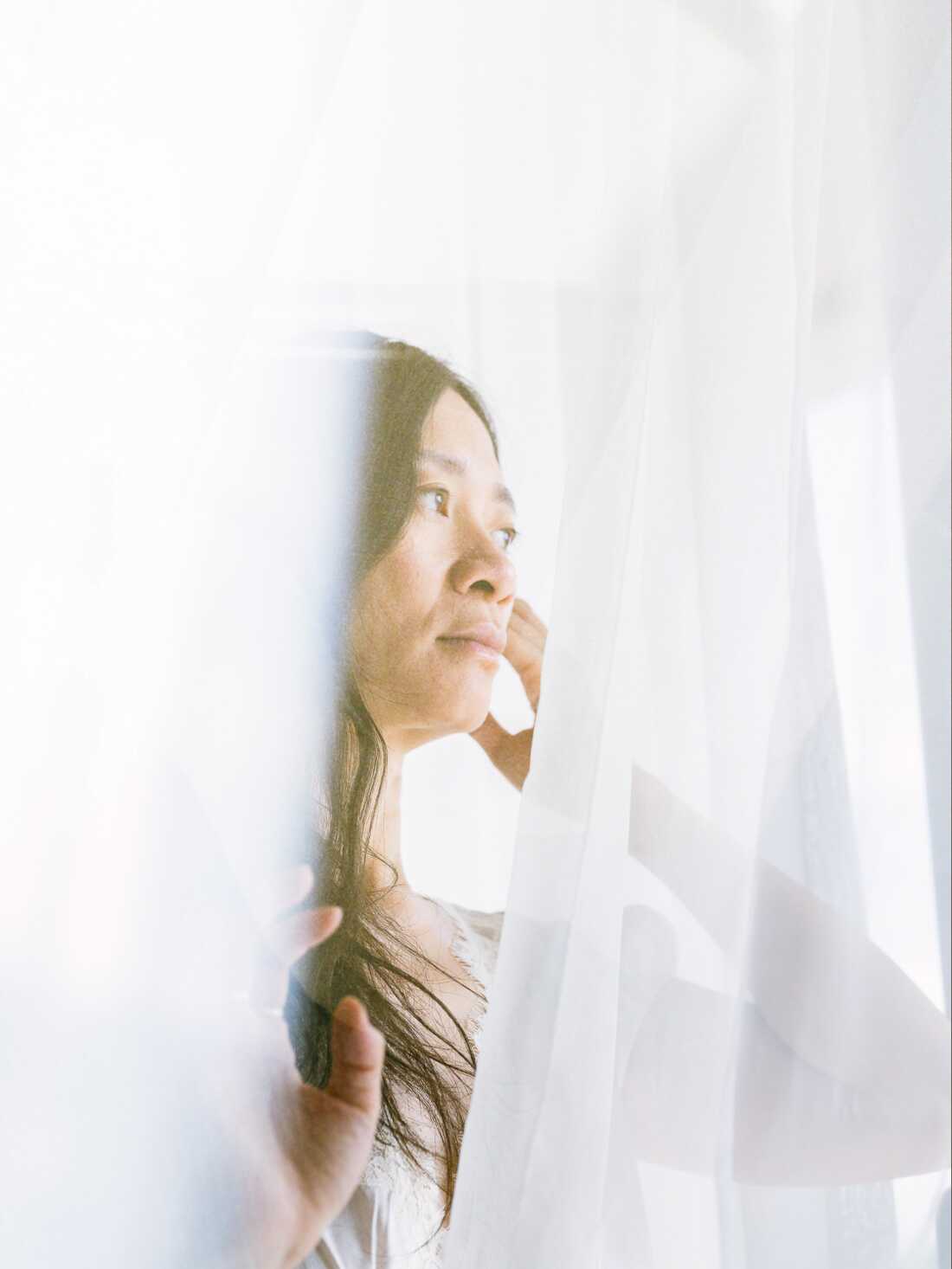
Filmmaker and Hamnet producer Steven Spielberg calls Zhao’s empathy her superpower.
Bethany Mollenkof for NPR
hide caption
toggle caption
Bethany Mollenkof for NPR
That was incredibly useful for creating Hamnet — a story about communal grief. Steven Spielberg, who co-produced the film, called Zhao’s empathy her superpower.
“In every glance, in every pause and every touch, in every tear, in every single moment of this film, every choice that Chloé made is evidence of her fearlessness,” Spielberg said when awarding Zhao a Directors Guild of America award. “In Hamnet, Chloé also shows us that there can be life after grief.”
Zhao says it took five years and a midlife crisis for her to develop the emotional tools she used to make Hamnet.
“I hope it could give people a two-hour little ceremony,” she told me. “And in the end, I hope that a point of contact can be made. That means that there’s a heart opening. But it will be painful, right? Because when your heart opens, you feel all the things you usually don’t feel. And then a catharsis can emerge.”
As our interview time came to a close, I told Zhao I have my own little ritual at the end of every interview; I record a few minutes of room tone, the ambient sound of the space we’re in. It’s for production purposes, to smooth out the audio.
Zhao knew just what I meant. She told me a story about her late friend Michael “Wolf” Snyder who was her sound recordist for Nomadland. “He said to me, ‘I don’t always need it, but just so you know, I am going to watch you. And when I tell that you are a little frazzled, I’m going to ask for a room tone … just to give you space.’” she recalled. “‘And if you feel like you need the silence space, you just look at me, nod. I’ll come ask for a room tone.’”
I closed our interview ceremony with that moment of silence, a moment of peace, for director Chloé Zhao.
Lifestyle
This spring, have a tea ceremony inside of an art installation and shop the latest Givenchy

Givenchy by Sarah Burton introduces the Snatch
Givenchy’s “The Snatch” handbag.
(Marc Piasecki / Getty Images)
Echoing the designer’s ready-to-wear sculptural designs, the Snatch from Givenchy by Sarah Burton is sensually shaped by the contours of the person who carries it. Its supple leather, fluid silhouette and three sizes allow it to slip effortlessly and intimately into the hand, over the shoulder or across the body. Now available. givenchy.com
Guess Jeans opens new L.A. store

Guess Jeans store interior.
(Josh Cho)
In a move familiar to many millennials these days, Guess Jeans has returned home in its 45th year. The new flagship store in West Hollywood is both a return to its California roots and an envisioning of its future still ahead. While the brand may be an established icon, the store boldly reimagines the retail space as a living laboratory for design, craftsmanship and collaboration, with dedicated workshop and customization spaces. 8700 Melrose Ave., Los Angeles. guess.com
Louis Vuitton’s new Color Blossom collection


Louis Vuitton’s new Color Blossom collection highlights sodalite.
(Louis Vuitton)
Taylor Swift’s sky may be opalite, but the starry blue hues in the new jewels of Louis Vuitton’s Color Blossom collection belong to sodalite. Rarely used in jewelry, the dark navy of sodalite adds an unexpected layer of depth to Color Blossom’s existing luminous gemstone lineup. Sun and star motifs rendered in gold enhance the gem’s night sky coloring, while the classic flower designs celebrate the 130th anniversary of the Louis Vuitton Monogram. Sodalite pieces available March 6, entire collection available April 4. louisvuitton.com
Loro Piana debuts Library of Knits


Loro Piana’s Library of Knits comes in over 20 shades.
(Lora Piana)
L.A.’s (many) winter showers bring spring wildflowers, and a bouquet of Loro Piana’s new Library of Knits fits right into the vibrant spectacle. The exquisitely soft cashmere pieces in classic styles now come in over 20 shades inspired by Sergio Loro Piana’s personal wardrobe. With a spectrum ranging from blues and greens to corals and creams, it’s hard to choose just one for a frolic in the fields. Now available. loropiana.com
Margesherwood X Peanuts

The Margesherwood X Peanuts collaboration features instantly recognizable motifs.
(Marge Sherwood)
Love is famously in the air this time of year, apparently even for cartoon characters. This enduring love is illustrated (literally) in the Margesherwood X Peanuts collaboration. Inspired by the heart-fluttering love letters Sally writes to Linus, the designs feature instantly recognizable motifs that marry the Peanuts’ charm with Margesherwood’s refined silhouettes. The zig-zag of that famous yellow shirt winkingly graces a crescent baguette, while the black stripes of Linus’s red red shirt wrap around a slouchy shoulder bag. For the true heads and lovers, there’s even a petite hobo emblazoned with Sally’s pet name for Linus: “FOR MY SWEET BABBOO.” Now available. margesherwood.com
Ryan Preciado at Hollyhock House

Ryan Preciado’s site-responsive “Diary of a Fly” at Hollyhock House features Oaxacan-woven textiles.
(Roman Koval)
Ryan Preciado’s new site-responsive installation at Hollyhock House, “Diary of a Fly,” is titled after a late-1930s musical composition by Béla Bartók that imitates the frenzied pace of a fly — a fitting name since his show reconceptualizes the experience of the springtime pest flitting around a house. Instead of hovering around overripe fruit or stalking a trash can long neglected, however, viewers are invited to take in Preciado’s Oaxacan-woven textiles and brightly colored sculptures situated throughout the city’s only UNESCO World Heritage Site. Open through April 25. 4800 Hollywood Blvd., Los Angeles. hollyhockhouse.org
Veronica Fernandez at Anat Ebgi

Veronica Fernanadez’s “Prey” filters childhood memories through experience and emotion.
(Veronica Fernandez)
In the figurative paintings of Veronica Fernandez’s first solo exhibition, “Prey,” the artist’s childhood is recalled through dreamlike and fantastical scenes, with memories filtered through experience and emotion. Many of her works place a child at the center of the scene among family, friends and caretakers, who usually appear shadow-like at the edges of the paintings. As a kid, Fernandez endured periods of homelessness. But rather than depict a childhood of adversity, her paintings empower the kids within them to claim their own space, imbuing her memories with strength and light. Open through April 4. 6150 Wilshire Blvd., Los Angeles. anatebgi.com
Dior launches J’Adore Intense

Dior’s J’Adore Intense captures the scent of solar flowers with Rihanna as its muse.
(J’Adore)
Florals for spring can be groundbreaking, especially when they’re created with none other than Rihanna as their muse. Dior’s J’Adore Intense captures the scent of solar flowers — jasmine, ylang-ylang, rose, violet — right before they burst into fruit. The result is a warm, bold, addictive fragrance that drips with sensuality and femininity, down to the curves of its signature gold and glass figure-eight amphora. In other words, it’s Rihanna in a bottle. Available now. dior.com
Rocky’s Matcha X Oscar Tuazon at Morán Morán


Rocky’s Matcha hosts Japanese tea ceremonies in an ensō-inspired tea house from Oscar Tuazon at Morán Morán.
(Stade New York)
The single, uninhibited brushstroke of the ensō, the circular form in Zen art, serves as a record of a moment. Commissioned by Rocky’s Matcha, Oscar Tuazon’s “Circle House” at Morán Morán shares both the ensō’s form and its call to mindfulness. In the artist’s tea house, constructed from cardboard, wood and tatami mats, architecture is inseparable from ritual: visitors will soon be able to partake in a Japanese tea ceremony inside the installation, thereby participating in a choreography of attention not unlike the act of gliding an ink brush across a sheet of washi. Open through December 31. 641 N. Western Ave. Los Angeles. Subscribe to rocky’s newsletter for tea ceremony information. rockysmatcha.com and moranmorangallery.com
Celebrate Mr. Wash’s new book, “Artists in Space”

Celebrate the launch of Mr. Wash’s new book of studio visits and interviews with other L.A. artists.
(Mr Wash)
Make your first BBQ of the season a meaningful one at the Art By Wash Studio & Community Center, where Compton artist and criminal justice advocate, Mr. Wash, will celebrate the release of his book “Artists in Space.” Proceeds from the book, which features interviews and studio visits with 20 Angeleno residents, go toward establishing the new community center where individuals returning home from incarceration will have access to art classes, creative residencies and housing. Mr. Wash will be in conversation with Patrisse Culllors and Evan Pricco (co-publisher and founder of the Unibrow) as well as displaying new works. The event is on March 7 from 2-6 p.m. 15 W. Rosecrans Ave., Compton. artbywash.com
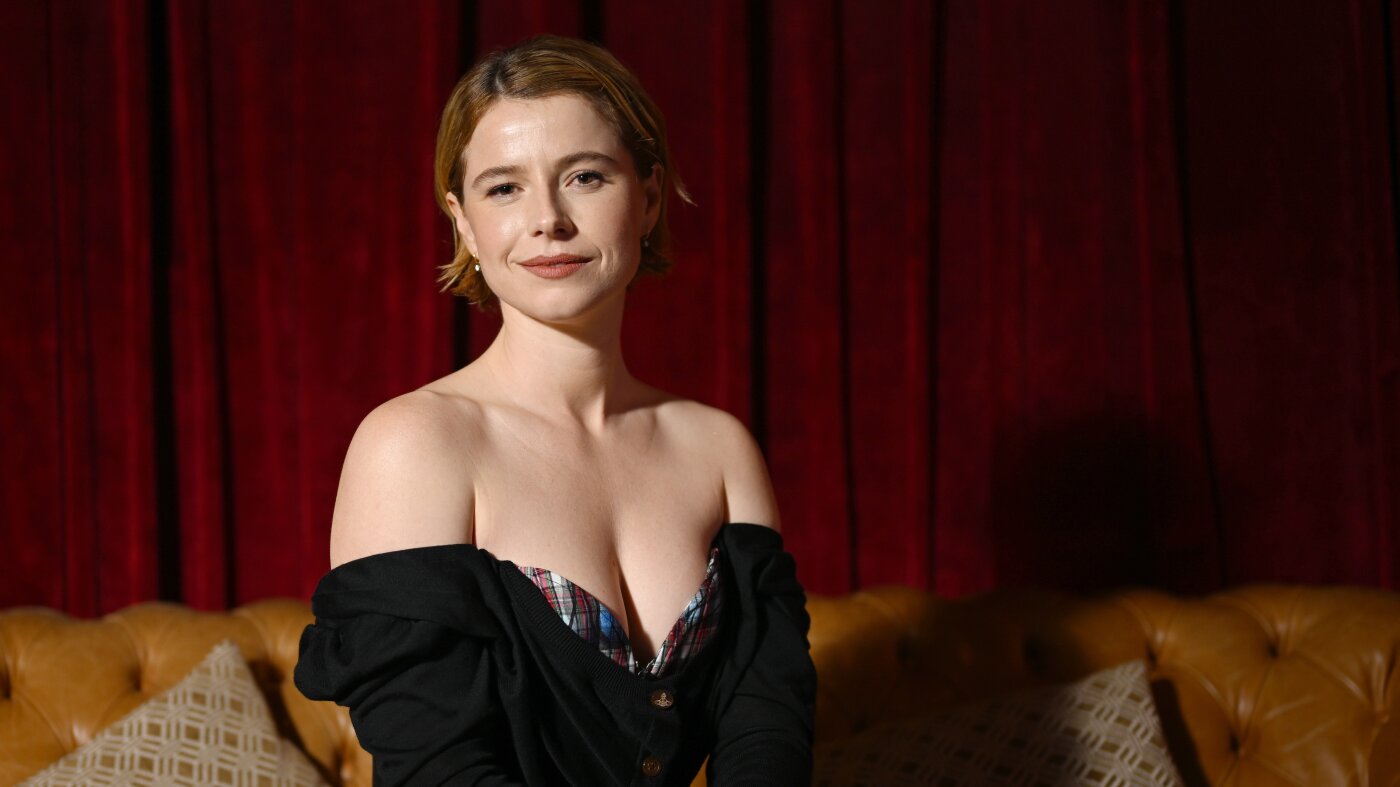
Jessie Buckley has been nominated for an Academy Award for best actress for her portrayal of William Shakespeare’s wife in Hamnet.
Kate Green/Getty Images
hide caption
toggle caption
Kate Green/Getty Images
Actor Jessie Buckley says she’s always been drawn to the “shadowy bits” of her characters — aspects that are disobedient, or “too much.” Perhaps that’s what led her to play Agnes, the wife of William Shakespeare, in Hamnet.
Buckley says the film, which is based on Maggie O’Farrell’s 2020 novel, offered a chance to counter a common narrative about the playwright’s wife: that she “had kept him back from his genius,” Buckley says.

But, she adds, “What Maggie O’Farrell so brilliantly did, not just with Agnes and Shakespeare’s wife, but also with Hamnet, their son, was to bring these people … and give them status beside this great man. … [And] give the full landscape of what it is to be a woman.”
The film is nominated for eight Academy Awards, including best actress for Buckley. In it, she plays a woman deeply connected to nature, who faces conflicts in her marriage, as well as the death of their son Hamnet.
Buckley found out she was pregnant a week after the film wrapped. She’s since given birth to her first child, a daughter.

“The thing that this story offered me, that brought me into this next chapter of my life as a mother was tenderness,” she says. “A mother’s tenderness is ferocious. To love, to birth is no joke. To be born is no joke. And the minute something’s born into the world, you’re always in the precipice of life and death. That’s our path. … I wanted to be a mother so much that that overrode the thought of being afraid of it.”

Jessie Buckley stars as Agnes and Joe Alwyn plays her brother Bartholomew in Hamnet.
Courtesy of Focus Features/Courtesy of Focus Features
hide caption
toggle caption
Courtesy of Focus Features/Courtesy of Focus Features
Interview highlights
On filming the scene where she howls in grief when her son dies
I didn’t know that that was going to happen or come out, it wasn’t in the script. I think really [director] Chloé [Zhao] asked all of us to dare to be as present as possible. Of course, leading up to it, you’re aware this scene is coming, but that scene doesn’t stand on its own. By the time I’d met that scene, I had developed such a deep bond with Jacobi Jupe, who plays Hamnet, and [co-stars] Paul [Mescal] and Emily Watson, and all the children and we really were a family. And Jacobi Jupe who plays Hamnet is such an incredible little actor and an incredible soul, and we really were a team. …

The death of a child is unfathomable. I don’t know where it begins and ends. Out of utter respect, I tried to touch an imaginary truth of it in our story as best I could, but there’s no way to define that kind of grief. I’m sure it’s different for so many people. And in that moment, all I had was my imagination but also this relationship that was right in front of me with this little boy and that’s what came out of that.
On what inspired her to pursue singing growing up
I grew up around a lot of music. My mom is a harpist and a singer and my dad has always been passionate about music, so it was always something in our house and always something that was encouraged. … Early on, I have very strong memories of seeing and hearing my mom sing in church and this quite intense mercurial conversation that would happen between her, the story and the people that would listen to her. And at the end of it, something had been cracked between them and these strangers would come up with tears in their eyes. And I guess I saw the power of storytelling through my mom’s singing at a very young age, and that was definitely something that made me think I want to do that.
On her first big break performing as a teen on the BBC singing competition I’d Do Anything — and being criticized by judges about her physical appearance
I was raw. I hadn’t trained. I had a lot to learn and to grow in. I was only 17. I think there was part of their criticism which I think was destructive and unfair when it became about my awkwardness, or they would say I was masculine and send me to kind of a femininity school. … They sent me to [the musical production of] Chicago to put heels on and a leotard and learn how to walk in high heels, which was pretty humiliating, to be honest, and I’m sad about that because I think I was discovering myself as a young woman in the world and wasn’t fully formed. … I was different. I was wild, I had a lot of feeling inside me. I could hardly keep my hands beside myself and I think to kind of criticize a body of a young woman at that time and to make her feel conscious of that was lazy and, I think, boring.
On filming parts of the 2026 film The Bride! while pregnant
I really loved working when I was pregnant. I thought it was a pretty wild experience, especially because I was playing Mary Shelley and I was talking about [this] monstrosity, and here I was with two heartbeats inside me. Becoming a mom and being pregnant did something, I think, for me. My experience of it, it’s so real that it really focuses [me to be] allergic to fake or to disconnection.
Since my daughter has come and I know what that connection is and the real feeling of being in a relationship with somebody … as an actress, it’s very exciting to recognize that in yourself and really take ownership of yourself.
I’m excited to go back and work on this other side of becoming a mother in so many ways, because I’ve shed 10 layers of skin by loving more and experiencing life in such a new way with my daughter. I’m also scared to work again because it’s hard to be a mother and to work. That’s like a constant tug because I love what I do and I’m passionate and I want to continue to grow and learn and fill those spaces that are yet to be filled — and also be a mother. And I think every mother can recognize that tug.
On the possibility of bringing her daughter to travel with her as she works
I haven’t filmed for nearly a year and I cannot wait. I’m hungry to create again. And my daughter will come with me. She’s seven months, so at the moment she can travel with us and it’s a beautiful life. And she meets all these amazing people and I have a feeling that she loves life and that’s a great thing to see in a child. And I hope that’s something that I’ve imparted to her in the short time that she’s been on this earth is that life is beautiful and great and complex and alive and there’s no part of you that needs to be less in your life. You might have to work it out, but it’s worth it.
Lauren Krenzel and Susan Nyakundi produced and edited this interview for broadcast. Bridget Bentz, Molly Seavy-Nesper and Beth Novey adapted it for the web.

Building the No Neck Army: The Army’s Holistic Health and Fitness Program – Modern War Institute

‘Hoppers’ review: Pixar’s best original movie in years
Iran Live Updates: Global Markets Tumble After U.S. Warns War Could Last Weeks
For filmmaker Chloé Zhao, creative life was never linear

Apple’s website leaks MacBook ‘Neo,’ which could be its new cheaper laptop

Florida High School Football Rankings: Top 25 teams – Oct. 21

Cleary's 21 help Le Moyne down Central Connecticut State 69-64 in OT

How old is Bo Nix? What to know about Oregon quarterback ahead of 2024 NFL Draft

99th annual Pony Swim held in Virginia

Indiana Members Credit Union announced as new anchor tenant at Bottleworks District

Fraud-plagued Minnesota sues Trump admin for withholding $243M in Medicaid payments

Is Iran expanding attacks to target energy and civilian sites in the Gulf?

Trump claims US stockpiles mean wars can be fought ‘forever’; Kristi Noem testifies before Congress – US politics live

War in the Middle East: Iran’s broad retaliation in the Gulf • FRANCE 24 English

Trump sends official notification to Congress on strikes against Iran
-

 World6 days ago
Exclusive: DeepSeek withholds latest AI model from US chipmakers including Nvidia, sources say
-

 Massachusetts6 days ago
Mother and daughter injured in Taunton house explosion
-

 Denver, CO6 days ago
10 acres charred, 5 injured in Thornton grass fire, evacuation orders lifted
-

 Louisiana1 week ago
Wildfire near Gum Swamp Road in Livingston Parish now under control; more than 200 acres burned
-

 Oregon4 days ago
2026 OSAA Oregon Wrestling State Championship Results And Brackets – FloWrestling
-

 Florida2 days ago
Florida man rescued after being stuck in shoulder-deep mud for days
-

 Technology1 week ago
Arturia’s FX Collection 6 adds two new effects and a $99 intro version
-

 News1 week ago
Video: How Lunar New Year Traditions Take Root Across America