Fitness
The best Fitbit in 2024


When you buy through our links, Business Insider may earn an affiliate commission. Learn more
Fitbit’s wearables do almost everything. From tracking step counts and running mileage to monitoring sleep patterns and stress levels, the best Fitbit can help improve your well-being. And there are a variety of Fitbit models designed for different types of users.
Our top pick is the Fitbit Sense 2. Although it’s an average smartwatch, it’s a quality health and fitness tracker offering multi-day battery life, a suite of health-monitoring tools, and comprehensive activity tracking. For a budget pick, we recommend the Fitbit Inspire 3. It’s an entry-level wearable with basic health and fitness tools for less than $100.
We chose our list based on tracking accuracy, fit and comfort, battery life, and ease of use. Although every Fitbit offers similar activity-tracking capabilities, some are better for certain users. Picking the best Fitbit depends on how you intend to use it and the advanced features you need.
Top picks for the best Fitbits
Best overall: Fitbit Sense 2 – See at Amazon
The Fitbit Sense 2 is not only the brand’s flagship, but it’s also the best wearable in its lineup, featuring accurate activity tracking, decent smartwatch capability, and a variety of useful health insights.
Best fitness-tracking: Fitbit Charge 5 – See at Amazon
The Charge 5 hits a nice price point while offering stellar activity tracking in a smaller footprint than a standard smartwatch.
Best budget: Fitbit Inspire 3 – See at Amazon
Fitbit’s Inspire 3 is an excellent entry-level wearable that offers basic health and fitness tracking in a small, comfortable, and budget-friendly package.
Best budget smartwatch: Fitbit Versa 3 – See at Amazon
With automatic activity tracking and a huge screen, the Versa 3 has nearly all the perks of the Fitbit line at a wallet-friendly price point plus a stylish design.
Best stylish: Fitbit Luxe – See at Amazon
With a stainless steel casing, the Fitbit Luxe is a sleek and unassuming activity tracker with broad appeal for users of any kind.
Best for kids: Fitbit Ace 3 – See at Amazon
Fitbit designed the Ace 3 from the ground up specifically for kids as it includes unique parental controls, programmable activity tools, and a variety of fun cartoon themes.
Best overall

Fitbit Sense 2
Fitbit’s Sense 2 combines the brand’s advanced health and fitness features with decent smartwatch capability, unique sleep tracking, and a clean design reminiscent of the Apple Watch.
Fitbit’s flagship, the Sense 2, nails everything a quality fitness tracker should be. It offers a variety of activity tracking and useful fitness insights, tracks sleep, stress, and menstrual cycles, and has built-in GPS and a battery that lasts around five to six days on a single charge.
It does lack in one major area, however: smarts. Though it’s touted as a “smartwatch,” it doesn’t quite stack up in that department the way an effective smartwatch should. For starters, it doesn’t offer third-party app support, which is disappointing, and it doesn’t allow access to things like Google Assistant. It also can’t store or play music.
Rick Stella/Insider
But those drawbacks don’t equate to being a dealbreaker. The Sense 2 offers a suite of useful health and wellness insights that put it on par with some of the best in the industry. There’s a skin temperature sensor, ECG readings, and a real-time stress tracker.
The stress tracker is especially interesting as it not only charts your body’s stress levels but also provides feedback on how to lower it and can paint a picture of how your body handles stress overall.
It’s also an accurate fitness tracker. Its built-in GPS synced well during our tests and it’s compatible with a variety of activities and exercises. Plus, its interface is easy and intuitive to use, making it a great watch for beginners.
Read our full review of the Sense 2.
Best fitness-tracking
Fitbit Charge 5
Maybe an Apple Watch is too much — but if you still want to track fitness, then the Fitbit Charge 5 is an excellent option. For Prime Day, you can get is for under $100.
If you want a tracker to record your workouts and daily movement, but don’t care about fancy features like answering calls via your watch or connecting with Alexa or Google Assistant, the Charge 5 is your watch.
This tracker records and displays all the stats you want from your workout: current and average exercise pace, distance, heart rate zones, total time, steps taken, and calories burned. Within the Fitbit app, you can also see a map of your run, complete with intensity zones showing where your heart rate climbed highest and dipped lowest.
One of its best features is its built-in GPS, which is often a rare inclusion on wearables this small. This allows it to natively provide accurate activity tracking, which is a huge plus for those who don’t like to tote their smartphone while working out.
Fitbit
It’s not completely without smart features, either. You can sync your calendar and get app updates, as well as text, email, and phone call notifications. The Charge 5 also offers in-depth sleep tracking that charts sleep patterns and habits and allows you to see how much REM, deep, and light sleep you get each night.
The battery life on the Charge 5 is longer than both the Versa and the Sense, too. Plus, the design is smaller and takes up less space on your arm, which is nice for folks with smaller wrists. It’s also compatible with a variety of the best Charge 5 bands, which help upgrade its look or make it more useful for certain activities.
Best budget
Fitbit Inspire 3
The Inspire 3 may be one of Fitbit’s most basic watches but it still packs a powerful fitness-tracking punch with tons of trackable activities, advanced health features like skin temperature sensing, and a comfortable, lightweight design.
Fitbit’s Inspire line of entry-level activity trackers is the brand’s most basic offering. Its latest model, the Inspire 3, features a slim, vertical screen that sits comfortably on your wrist while offering a suite of advanced health and fitness tracking features right at your fingertips. It even has a skin temperature sensor and can track your sleep habits. The original Fitbit has come a long way.
But what makes the Inspire 3 especially attractive is its price, which makes it attractive for beginners or those new to wearing activity trackers. At under $100, it delivers a wearable experience similar to the Sense 2 without the large touchscreen, downloadable apps, or built-in GPS. It’s also compatible with a range of the best Inspire 3 bands to change up its look a bit.
Shannon Ullman/Insider
That may seem like the Inspire 3 lacks key features, but those are typically hallmarks of a smartwatch, and the Inspire 3 is a bona fide fitness tracker. That is, it offers straightforward health and fitness features in an easy-to-use and intuitive package. It uses the same fitness tracking tech as all of Fitbit’s other wearables, tracks heart rate, skin temperature, and sleep patterns, and even offers the brand’s new Daily Readiness Score feature.
That’s a lot in such a small, budget-friendly package. Advanced athletes may view the lack of built-in GPS as a dealbreaker but for anyone looking for a basic, straightforward activity tracker, the Inspire 3 is the best Fitbit has.
Read our full review of the Inspire 3.
Best budget smartwatch
Fitbit Versa 3
A quality smartwatch doesn’t have to cost a fortune and Fitbit’s Versa 3 is the best example of why. It offers a robust smartwatch experience with a variety of health and fitness tracking, third-party app support, and a long-lasting battery.
The Versa is Fitbit’s line of true smartwatches. And while the Fitbit Versa 4 is the latest model, the older Fitbit Versa 3 is the better option.
What makes the Versa 3 especially attractive is its compatibility with third-party apps, which Fitbit scrapped when developing the Versa 4 (perhaps Google wants people to look to the Google Pixel Watch for a true smartwatch experience).
But it’s not just the third-party app support that gives the Versa 3 an edge over the Versa 4. It’s also a more reliable fitness tracker. Whereas the Versa 4 is plagued by connectivity and tracking issues, the Versa 3 tracks activities like a charm, leaning on its built-in GPS to deliver consistently accurate data.
Mark Knapp/Insider
Plus, it has a similarly large display, useful for glances at real-time stats while you work out. You can easily check total workout time, average pace, and heart rate zones by tapping the watch face, even mid-activity.
Factor in its other health features like sleep monitoring, menstrual cycle tracking, and 24/7 heart rate monitor, and the Versa 3 is much more powerful than the latest model. It’s one of the best smartwatches Fitbit sells and the best version of the Versa.
Read our full review of the Versa 3.
Best stylish
Fitbit Luxe
The Fitbit Luxe is the company’s latest fitness band that comes with a sleek design and advanced health features like stress management and the ability to measure heart rate variation.
Although the Fitbit Luxe looks similar to the Inspire 3, it has a few subtle design features that give it some style. There’s a stainless steel casing that achieves a nice, clean look for either the office or a night out, a bright AMOLED screen, and the ability to swap out the band for something like a chic mesh or metal option.
As a quality health and fitness wearable, the Fitbit Luxe tracks basics like running and cycling. It offers insights into sleep patterns, stress management, and fitness trends. Some features require a paid subscription to Fitbit Premium (as is the case for several watches in this guide), but even the basic features are highly useful.
Lisa Eadicicco/Insider
One area where it lags is in the smartwatch department, but it was never designed to be one in the first place. However, it can still display text and phone call notifications, and you can use things like timers and alarms, but that’s about the extent of it. It also has a battery that lasts upward of six days.
Read our full review of the Fitbit Luxe.
Best for kids
Fitbit Ace 3
The Fitbit Ace 3 is the perfect entry-level activity tracker for kids aged 6 or older. This version comes with a Minion-themed clock face and a bright yellow Minions-themed watchband.
Most fitness trackers are inherently designed for adult use. Then, there’s the Fitbit Ace 3, an activity tracker designed entirely for kids ages six and up, outfitted with features such as parental controls, a custom kid-friendly stat viewer, and fun customization options.
What makes the Ace 3 great for kids is its whimsical approach. There are band options with Minion-themed designs, as well as colorful custom watch faces. It is also water-resistant up to 50 meters or 164 feet, so kids can wear it in the pool.
Fitbit
One of the Ace 3’s best features is its focus on gamification. The wearable offers various challenges and badges that can motivate kids as they achieve a certain step goal or complete an activity.
It’s also a great communication tool for parents as it delivers text notifications. What’s particularly great about this is that parents can utilize the parental controls to manage exactly what connections are permitted on the watch. These controls are set up via the Fitbit app and require a family account, but they can be customized at any time, with or without the watch nearby.
These parental controls ultimately make it a better purchase for kids than, say, the Inspire 3. While the Inspire 3 offers a similar tracking experience, the ability to customize and tailor everything from the wearable’s settings to the specific activity goals makes the Ace 3 a more family-friendly option.
What is Fitbit Premium?
Fitbit Premium is the brand’s monthly membership option that offers access to more in-depth health and fitness features like nutrition insights, advanced sleep tracking, and the Daily Readiness Score.
It also provides access to guided meditations, exclusive video workouts, in-depth goal setting, various unique challenges, and other health insights such as blood oxygen level readings, heart rate variability, and breathing rate.
All Fitbit Premium features are accessible via the Fitbit app and do a lot to elevate the base Fitbit experience, especially for wearables like the Sense 2 or Versa 4. The brand does offer a free trial to new Fitbit users, allowing you to test out the service before committing to its recurring membership fee (which costs $10 per month).
How we test Fitbits
In addition to testing past iterations of Fitbit trackers and smartwatches when they launched, I tested each on the list below for several days (some weeks, even) wearing them 24/7 in most cases. I wore each during different workouts, from runs and walks to strength sets and yoga. I also wore the trackers to bed and for mindfulness sessions.
Here are the key features I looked for when testing:
Workout tracking
To successfully record stats during a workout and easily check these as you go, it’s important that a watch clearly displays numbers, and quickly and continuously connects to the GPS, particularly if it’s built into the watch. I judged the trackers and watches on whether I could easily see my current pace, distance, and time, and if I had quick access to metrics like average pace and heart rate.
Additionally, I ran another fitness tracking app on my phone to test the accuracy of the watch’s distance and pace. For every Fitbit featured, the numbers were always relatively close (and within the normal range you’d find if you compared almost any other fitness tracker).
Because Fitbit offers automatic tracking, I did a few workouts without manually pressing the start button to confirm that it picked up my movement, which it almost always did.
Tracking and comfort while sleeping
I wore these watches and trackers to bed to test the automatic sleep tracking. I checked these stats in the morning to make sure they recorded my time in bed and wake-up times throughout the night. I also wore the devices when occasionally taking naps throughout the day, which they also picked up on.
The devices needed to be comfortable enough to wear all night to get those stats, too. While the bands occasionally stuck to my skin if I got sweaty at night, it never disturbed my sleep — I only noticed this after waking up.
Battery life
I tested the battery life of each Fitbit by charging it to 100% battery and wearing it through workouts, nights of sleep, and throughout the day to see how long each would last. They all surprised me, too — the life lasted even after several workouts, including those using the built-in GPS (which typically drains batteries quickly).
App usability
One huge perk of Fitbit is the built-in stress-reducing apps, so how easy these were to use was a key part of testing. I tried Fitbit’s mindfulness program, the Relax app, on all devices, and the EDA scan app on the Sense 2, which contributes to stress management numbers. I looked for ease of use, visuals, and the stats provided after recording a mindfulness session, like changes in heart rate.
FAQs
Are Fitbits worth it?
Yes, especially if you want a reliable fitness wearable. A Fitbit can be beneficial for anyone who keeps active each day, even if that activity is walking a few blocks around the neighborhood or lifting weights at home.
They do an excellent job of counting steps, tracking a wide range of activities, and providing other useful health information like sleep insights and calories burned. You don’t need to be an avid fitness pro or athlete to get a lot out of a Fitbit and with so many options in the brand’s lineup, finding one that’s “worth it” means just picking out the option that best fits your lifestyle.
Plus, Fitbits are device agnostic, so they’re compatible with devices running iOS or Android. This makes them one of the best Android smartwatches you can buy, as well as one of the best fitness trackers.
Is a Fitbit better than an Apple Watch?
This ultimately comes down to personal preference. The Apple Watch Series 9 and Ultra 2 are undoubtedly more powerful and full-featured but if you don’t need access to a suite of apps, then a Fitbit will suffice. Both watches offer deep tracking capability for activities like running, cycling, and lifting weights, and each comes standard with a user-friendly interface.
One area where Apple outdoes Fitbit is in terms of its ecosystem. Anyone using an iPhone can get more out of an Apple Watch compared to a Fitbit (but as touched on below, it’s not always enough to be considered a dealbreaker).
And although the Apple Watch now offers a deep well of fitness and activity tracking capability, it still leans more heavily toward being a smartwatch (similar to Fitbit’s Versa line), so if it’s basic fitness tracking you’re after without the frills, something like Fitbit’s Charge would be more your speed.
What are the advantages of owning a Fitbit?
Perhaps the biggest advantage of a Fitbit is that no matter the price point or type (tracker versus smartwatch), it comes with all the foundational features you want in a health and fitness tracker. This includes the ability to automatically track sleep and activity, which is the best thing about the brand, in my opinion.
Then, all the models track pace, distance, and calories burned during your workouts, and calculate your heart rate training zones, including fat burn, cardio, and peak. For sleep, you not only get the total hours you slept, but the time you spent in deep and REM sleep, plus the percentage of time you spent below your resting heart rate.
With some models, these stats are easier to access than others — namely, the Sense 2 and Versa 3 because their larger screens are easier to read at a glance. But even with the smaller, more narrow faces of the Charge 5, the numbers are very large which is nice to have. The Inspire 3 is the hardest to glance stats quickly off of.
The Fitbit app, accessed via your phone, is easy to navigate and displays steps, miles, active zone minutes, daily calorie burns, mindfulness days, exercise, and activity per hour. It also reminds you to take 250 steps per hour. Additionally, you can track your menstrual cycle, food and water intake, and weight (though these require more manual entries).
What are the disadvantages of owning a Fitbit?
The main disadvantage of owning a Fitbit would be its lack of ecosystem outside of the wearable itself and the Fitbit app. The Apple Watch or, for instance, the Samsung Galaxy Watch 5 Pro, each offers advanced compatibility with iOS- and Android-compatible smartphones, respectively. That allows each to offer features specific to those devices and operating systems.
However, this shouldn’t be seen as a total dealbreaker. Not being able to customize text responses or notifications doesn’t have to preclude you from buying a Fitbit.
What’s the battery life like on a Fitbit?
Each Fitbit in the line has top-notch battery life, lasting days even with auto-activity and auto-sleep tracking turned on, so you don’t have to worry about charging it every night.
Officially, the battery for all Fitbits featured lasts six to 10 days, depending on the device and your usage. In my experience, the Versa 2, Versa 3, and Sense last an average of six days on one charge, the Charge 5 for seven days, and the Inspire 3 for up to 10 days.
Are Fitbits customizable?
Almost all Fitbits offer plenty of customization options. Each wearable comes with a basic band but all have different colors and material bands you can purchase, from stainless steel mesh for a professional look to expressive prints to more breathable sports bands. The only watch on our list that doesn’t offer a sport-specific band is the Inspire 3.
You can also customize the watch faces for aesthetics and readability, and to personalize shortcuts on the devices and what’s displayed on the main app page. The Sense 2 and Versa 3 have the most options for watch faces. You can even download third-party designs or use your photos, which you can’t do with the other models.
What’s the lifespan of a Fitbit?
This depends on the model. While Fitbit releases new models annually, that doesn’t always mean the prior generation version becomes unusable. For example, when the Fitbit Versa 4 was released in 2022, the prior generation Versa 3 was still available for purchase and, in some ways, was the better wearable overall (which is why it’s in our guide and the Versa 4 isn’t).
So, even if you own a Fitbit that’s a generation or two older than the current model, rest assured that it’s only outdated by its model number and not regarding its actual performance or capability.

Fitness
Need a More Efficient Fitness Routine? Remove the Guesswork With These 5 Workout Splits Tailored By Goal.

If you’ve ever walked into the gym and drawn a blank on what to do, you’re not alone. But instead of just whipping out a few reps on whatever piece of equipment is free, let us introduce you to workout splits.
As the name suggests, workout splits divide your workout sessions for the week based on body part, body region, or movement type, says Rebecca Stewart, CPT, a certified personal trainer, mobility coach, and pain-free performance specialist. “Splits are a way of organizing your workouts that’s most effective for your goals and lifestyle,” she explains. For example, someone focused on strength gains can plan their workouts around the big three lifts like squats, bench press, and deadlifts, while someone focused more on aesthetics, such as bodybuilders, might split their workouts by body part.
Meet the experts: Rebecca Stewart, CPT, is a certified personal trainer, mobility coach, and pain-free performance specialist. Sarah Pelc Graca, CPT, is a certified personal trainer and founder of Strong with Sarah Weight Loss Coaching.
Workout splits are also great for those who want to progress specific lifts or get stronger in certain areas, which they may not be able to do as quickly with full-body training, Stewart says. (Although the full-body split exists, too.) Plus, divvying up your workouts into splits prevents overtraining issues like fatigue and muscle breakdown since each body part is allowed adequate time to recover (at least 48 hours).
Ready to get stronger? Here are the 5 best workout splits to try based on your lifestyle and goals, according to trainers.
5 Best Workout Splits For Every Workout Goal
1. Push/Pull/Legs Split
Best For Beginners
Monday: Push day (chest, shoulders, and triceps)
Tuesday: Cardio
Wednesday: Legs and core
Thursday: Rest
Friday: Pull day (back and biceps)
Saturday: Cardio or recovery (yoga, stretching, etc.)
Sunday: Rest
The push/pull/legs split is a great beginner workout plan that builds strength and muscle while still allowing generous recovery time. “Push/pull/legs is super effective because it’s built around how your body naturally moves, instead of just isolating one muscle at a time,” says Sarah Pelc Graca, CPT, a certified personal trainer and founder of Strong with Sarah Weight Loss Coaching.
It makes your workouts more efficient, mimicking everyday functional movements, like lifting groceries, pushing a heavy door, or climbing stairs. The workout structure also allows for better recovery since you’re not overworking the same muscles day after day, though you’re still training them frequently enough to see great progress, Pelc Graca says.
Benefits:
- Allows for ample recovery
- Builds strength and muscle mass
- No overlap in muscle groups
- Focuses on weaker muscles with more intensity
Downsides:
- Typically requires more equipment
- May take longer in the gym
- Less flexibility
2. Upper/Lower Split
Best For Weight Loss
Monday: Lower body (hinge focus)
Tuesday: Upper body (push focus)
Wednesday: Cardio or recovery (yoga, stretching, etc.)
Thursday: Lower body (squat focus)
Friday: Upper body (pull focus)
Saturday: Rest
Sunday: Rest
The upper/lower split can help with weight loss for a few reasons. First, “since you’re alternating muscle groups in an upper/lower split, your body gets just enough recovery while still staying active most days of the week,” Pelc Graca says. Plus, these workouts usually include big compound moves that work multiple muscles (like squats, rows, and push-ups). So, you’ll “burn more calories and build lean muscle” very efficiently, she says.
Also, when you organize upper/lower workouts by movement patterns like push, pull, squat, and hinge, you’re hitting your body in a well-rounded way which will help you increase strength, gain muscle, and lose fat, Stewart adds.
Join Women’s Health+ today for member-exclusive workout and meal plans.
Benefits:
- Builds strength and muscle mass
- Weekends are free
- Hits each muscle group twice a week
- Allows for adequate recovery between muscle groups
Downsides:
- Lack of flexibility
- Skipping a workout can create gaps in your progress
- May take longer in the gym
3. Full Body Split
Best For Those With A Busy Schedule
Monday: Full body
Tuesday: Rest
Wednesday: Full body
Thursday: Rest
Friday: Full body
Saturday: Rest
Sunday: Rest
The full body split focuses on working all major muscle groups in each session. “It’s ideal for those with limited time who still want to see meaningful progress in strength and muscle development,” says Pelc Graca. “For a lot of people, especially those short on time, this is one of the most efficient and effective ways to train because two to three full-body workouts a week leads to great results when you’re consistent and focused on quality movement,” Pelc Graca says.
Benefits:
- Efficient for busy schedules
- Great for beginners and general fitness
- Promotes full-body strength and muscular balance
- Easy recovery with rest days between workouts
Downsides:
- Workouts may be lengthier because they cover the full body
- Limited exercises per muscle group compared to more targeted workout splits
4. Body Part Split
Best For Hypertrophy
Monday: Back
Tuesday: Chest and abs
Wednesday: Lower body
Thursday: Rest
Friday: Shoulders
Saturday: Arms and abs
Sunday: Rest
This one is often referred to as a “bodybuilder split” due to the emphasis on training each part of the body individually, says Stewart. “This split promotes muscle growth because you’re able to train each portion of the body with more intensity and more reps and sets than you could in a full-body workout,” she explains.
That said, this split is lengthier and if you miss a workout, it can throw off your entire plan. “I’d generally only recommend this plan for advanced lifters that want to dedicate more time to the gym,” Stewart adds.
Benefits:
- Allows for adequate recovery
- Focuses on training muscle groups individually
- Builds strength and muscle mass
- Helps identify and fix muscle imbalances and weaknesses since it works the different areas evenly
Downsides:
- May require more time in the gym
- Lack of flexibility
- Skipping a workout can throw off the plan
- Less suitable for beginners
5. Functional Training Split
Best For Experienced Lifters, Athletes Training For Performance, Or Those Training For Longevity
Monday: Full body pull day (hinge focused)
Tuesday: Full body squat and push day
Wednesday: Rest
Thursday: Rotational core work (such as Russian twists and planks)
Friday: Full body carrying and conditioning (such as farmer’s carry and sled pushes)
Saturday: Rest
Sunday: Rest
The functional training split is structured around movement patterns you normally do in everyday life (instead of isolating individual muscle groups). This split is helpful for athletic or performance-based training, and those who want to train to move well for as long as possible “since it blends strength and function for real-life application,” says Pelc Graca. So, when you train a farmer’s carry, it may mimic bringing in a heavy load of groceries, and when you do a sled push, it’ll make pushing a shopping cart or bulky piece of furniture easier IRL.
Just note that functional splits can be a bit more complex, which is why they’re usually better for folks who have some lifting experience. “These workouts are built around how we move in real life using complex moves—lifting, rotating, carrying, and bracing—instead of just working individual muscles, so they often involve more coordination and full-body control,” Pelc Graca says.
Benefits:
- Builds functional strength and coordination
- Improves athletic performance and injury prevention
- Activates the core in most sessions
Downsides:
- Less traditional, so may feel unfamiliar for gym-goers used to body part training
- Requires thoughtful programming to balance volume and intensity
How To Find The Best Workout Split For You
While a lot comes down to your personal preferences and goals, here are a few tips to consider when thinking about your optimal training split:
Goals
Whether you’re aiming for muscle growth, weight loss, or overall fitness, select a plan that best suits your specific goals right now, says Stewart. For example, push/pull/legs splits are excellent for muscle growth, while upper/lower splits are typically best for weight loss, she adds.
Schedule
Decide how much time you can realistically dedicate to exercise each week and choose a plan accordingly, says Stewart. “A training schedule is going to be very different for someone who can train two to three days for 30 minutes, versus someone who wants to spend an hour in the gym five to six days a week,” she adds.
Injuries Or Weaknesses
If you have a shoulder injury, a whole day dedicated to shoulders isn’t going to be in your best interest, says Stewart. On the flip side, if you want to grow your bicep strength, for example, having a dedicated arm day might be better for your goals, she adds. Listen to your body and find a plan that feels best.
Recovery Needs
Depending on the demands of your job and lifestyle, you may need more or less recovery time. “Rest days away from the gym are important not only physically but also mentally so you don’t get burnt out on your training schedule,” says Stewart. Plus, regardless of the split chosen, Pelc Graca says it’s important to incorporate deload weeks (where you dial things back, whether it’s lifting lighter weights, doing fewer sets, or focusing on easier movement) or rest weeks every four to eight weeks to support long-term progress and injury prevention.
No matter what results you want to achieve or how experienced you are, workout splits are the key to organizing your exercise schedule to ensure you hit your goals. But here’s the ultimate secret: The most effective split is the one that best suits you and your lifestyle.
Andi Breitowich is a Chicago-based writer and graduate student at Northwestern Medill. She’s a mass consumer of social media and cares about women’s rights, holistic wellness, and non-stigmatizing reproductive care. As a former collegiate pole vaulter, she has a love for all things fitness and is currently obsessed with Peloton Tread workouts and hot yoga.
Fitness
Fitness expert shares low-effort movement routines for days you’re too tired to exercise: ‘Even a few minutes of…’

We all have those days when exhaustion hits, and the thought of a full workout feels impossible. Skipping exercise entirely can make it harder to stay consistent, but even small movements count. Spoorthi S, fitness expert at cult shares with HT Lifestyle simple, low-effort routines to keep your body active and energised, even on the laziest days.
“If the idea of a ‘proper workout’ feels exhausting before you even begin, you’re not lazy, you’re likely fatigued,” explains Spoorthi S. “Long work hours, mental overload, poor sleep, and constant stimulation drain the nervous system, making intense exercise feel overwhelming. But an important thing to note is that movement doesn’t always have to be intense to be effective.” (Also read: Hyderabad eye surgeon explains why most vision loss in India is preventable but often detected too late )
“Low-effort movement routines can help you stay active, improve circulation, reduce stiffness, and even restore energy without demanding willpower or motivation. When energy is low, the goal should shift from ‘burn calories’ to ‘just move a little.’ Gentle movement stimulates blood flow, improves joint lubrication, and activates the parasympathetic (rest-and-recover) nervous system. This can reduce stress hormones like cortisol and actually help you feel more energised post-movement, rather than depleted,” she adds.
“Think of these routines as maintenance, not training,” says Spoorthi S.
Low-effort movement routines to try
1. A quick mobility refresh
“Especially ideal for those who sit for long hours. Simple movements like neck and shoulder rolls, spinal flexion and extension, hip rotations, and ankle mobility can reduce stiffness and improve overall movement quality,” she suggests.
2. Easy-paced walking
“A relaxed 10–20-minute walk outdoors supports mood, digestion, and circulation. There’s no need to chase step counts or pace, consistency matters more than intensity,” Spoorthi explains.
3. Short movement breaks during the day
“Every hour or so, take one to two minutes to stand up and move. Light squats, wall push-ups, gentle twists, or even walking around the room help prevent fatigue and maintain energy levels,” she adds.
4. Slow movement paired with breathing
“Combining controlled, slow movements with deep breathing helps downshift the nervous system. This reduces mental overload and creates a sense of calm without complete rest,” says Spoorthi.
5. Gentle stretches to wind down
“Low-intensity stretches for the hips, hamstrings, and back in the evening help the body relax, release tension, and prepare for better sleep and recovery,” she advises.
“Remember, the goal on low-energy days isn’t to push hard, it’s to keep moving gently and consistently. Small, mindful movements can go a long way in maintaining health, mobility, and energy,” concludes Spoorthi S.
Note to readers: This article is for informational purposes only and not a substitute for professional medical advice. Always seek the advice of your doctor with any questions about a medical condition.
This report is based on user-generated content from social media. HT.com has not independently verified the claims and does not endorse them.

A FITNESS trainer has warned against a viral exercise trend loved by stars including Molly-Mae Hague’s sister Zoe, saying it could lead to “physiological shock”.
The Hyrox craze – dubbed a “race for everybody” by organisers – has swept the globe since the competition was launched in Germany in 2017, with millions of people now taking part in over 30 countries, including the UK and China.
Competitors are tasked with running 1 kilometre, before hitting a functional workout station of various different exercises – which is repeated eight times.
“(Hyrox is) designed to accommodate all participants and 99 per cent of our athletes reach the finish line,” it reads on the Hyrox website.
Following the race, participants appear on a leaderboard, which are then added up ahead of a World Championship at the end of the season.
Videos of the competitions regularly appear on TikTok, with Zoe and other famous faces including ex Love Island star Molly Smith and 90s popstar Suzanne Shaw sharing their own experiences on social media.
Read more Fitness stories
BIG CHANGE
I went to a Chinese ‘weight loss prison’ & shed loads in 4 weeks
WEIGH TO GO
My daughter weighed 10st at 10 so I put her on a diet, trolls say it’s my fault
However, exercise pro and personal trainer Emma McCaffrey has warned against taking part in the competition if you’re a beginner, insisting it’s a “high-intensity competitive event” rather than a “starter programme”.
“Jumping from the sofa to a one km run and a functional station circuit repeated eight times is a massive physiological shock,” she told the Daily Mail.
Emma added that the loud music, “high-octane environment” and “influencer pressure to perform” often leads to beginners ignoring their body’s natural signals to stop.
“As we’ve seen with cases of heart stress and panic attacks, ‘powering through’ can have serious, even fatal, consequences when the cardiovascular system isn’t conditioned for that level of load,” she said.
Meanwhile, weight loss coach Rachael Sacerdoti called it a “recipe for burnout and injury”.
She added that people “suddenly exposing” their bodies to “high-force, high-velocity training” without the proper preparation and conditioning can lead to injuries – with problems in achilles, patella and rotator cuff among the most common.
“When you’re exhausted, your form breaks down, and that’s when injuries happen,” she warned.
“Most beginners don’t have the strength, technique or movement patterns to maintain good form under that level of fatigue.”
Among those who have suffered following a Hyrox event include fitness fan Ashley Whelan, who had a heart attack after his first-ever Hyrox event.
The 37-year-old had trained for months before the competition and, while he didn’t feel 100% on the day itself, he thought it was just “race day nerves”.
However, after he completed his last lap, his heart rate shot up to a whopping 220 beats per minute.
And once he’d finished the event, he started to experience pain in his chest, arm and back – with on-site paramedics quickly completing an ECG test which showed he was in the middle of a heart attack.
What your trainer choice says about you…
Deputy Fashion Editor, Abby McHale, says “the ‘in’ trainers to be seen in can move as quickly as the next big fashion trend”.
Adidas = fashion ‘sheep’
Adidas has taken over as the top ‘it’ trainer brand of the past few years and they don’t seem to be going anywhere anytime soon.
Starting strong with the Sambas, a trainer which this year will have been around for 75 years, the trainer style became so popular that videos were going viral last year showing a multitude of people wearing them on the same train.
Skechers = boring
The American brand has been around on the footwear market for the best part of three decades, but has never been seen as the trendiest of trainers. No matter what celebrity has been promoting the product the brand still does come with a certain stigma.
Practicality is at the heart, cushioned soles, easy to slip on and breathable, they come with a lot of functions for those who think comfort is key.
Vans = living in the past
Originally made as a skateboarding brand, it went mainstream in the 2000s with its classic black and white checker board trainers that were deemed the height of cool.
Whilst they were never the style of trainers worn to the likes of the gym, they were great worn with the likes of jeans, trousers and dresses for the skater girls. However these days they’ve fallen slightly off the radar, which means if you’re still wearing them you live in the past.
Hoka = fitness fanatic
A trainer brand specialising solely in running shoes the brand was launched in 2009 and has become a staple in runners wardrobes all across the world.
Consistently voted as some of the best running shoes you can buy, they have trainers categorised depending on what kind of exercise you are doing, from road running to hiking and even recovery trainers.
And while they may be great when it comes to exercise, that is where they should stay.
Nike = millennial
A long standing competition with Adidas, Nike has also been one of the market leaders when it comes to trainers, with the Air Force 1’s being the brands best selling shoe of all time.
They may have been the in shoe back in 2018, but they’re not in 2025, meaning if you still rock a pair you want to keep to a trend but aren’t a stickler, you know a good made trainer when you see one and love the cleanliness the all white style brings.
Veja = tight
The French footwear brand has been around since 2005 but only gained major popularity a few years ago.
They have been seen on every celebrity going, even royalty hopped on board the trend with both the Princess of Wales and the Duchess of Sussex seen out in a pair.
However, the buzz around these has now died down and the fashion crowd have moved onto their next pair of trainers. Meaning that those left wearing Veja’s are the kind of people who get their wear out of everything until it falls apart.
He was rushed to hospital, and was found to have a left coronary artery blockage, for which doctors had to shock him with a defibrillator to try and get his heart to beat regularly again.
Ashley has since made a full recovery, but is now warning others to listen to their bodies while taking part in events such as Hyrox.
“It’s still up in the air as to why I got this clot but when I’ve looked into it, deep emotional stress and high-intensity exercise can cause it,” he said.
He said he credits the “strength of” his mind and body to get him through the terrifying health scare, and knows he is “so lucky to be alive”.
“I’m living proof that it can happen to ultra-fit people as well,” he added.
“It’s a case of listening to your body.”
Hyrox has been contacted for comment.
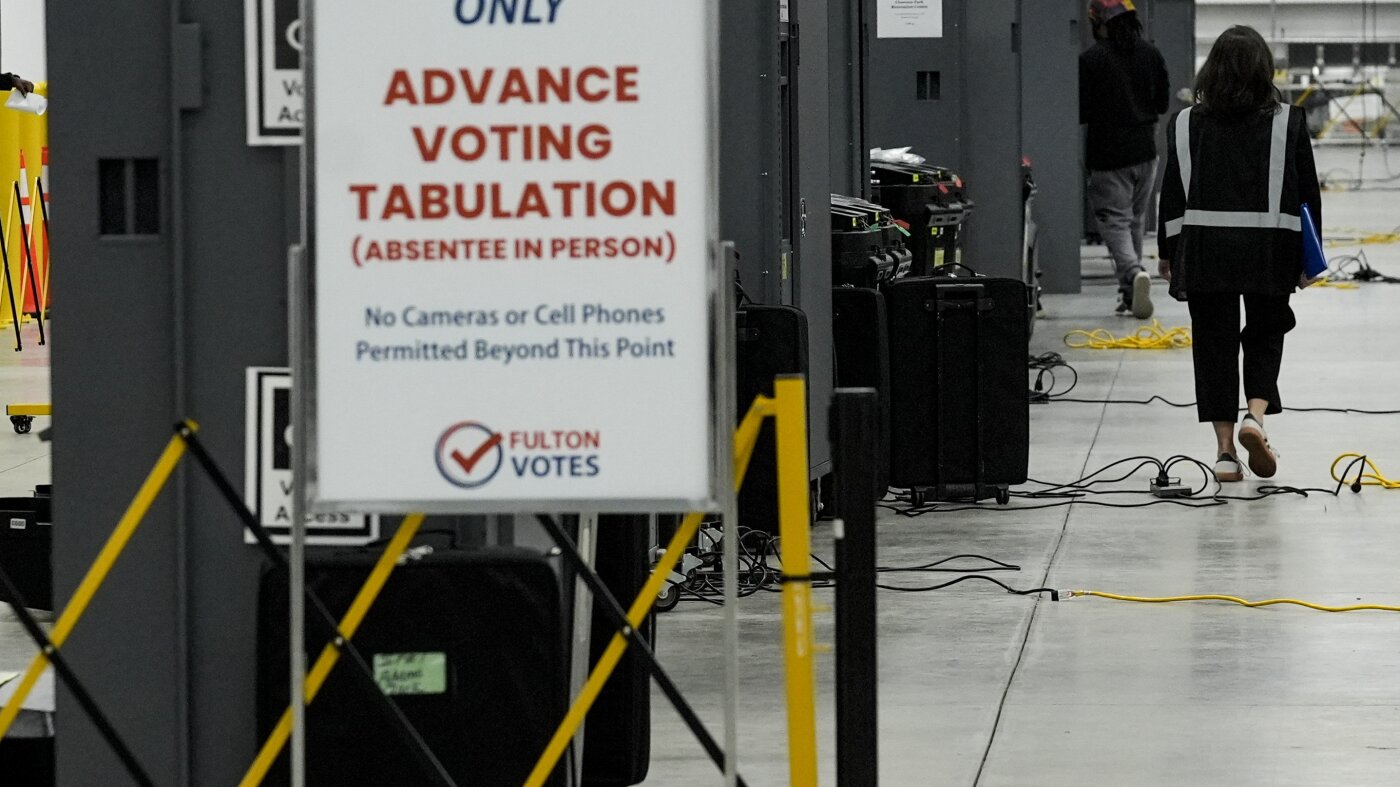
The FBI conducts a search at the Fulton County election office in Georgia

Knife-wielding nut allegedly asked Christian his religion – then stabbed him and dog before police shot him

House Republicans blast Noem impeachment resolution as ‘partisan stunt,’ as Dems fail to reach across aisle

Brother killed after teen becomes ‘enraged’ over video game, stabs sibling: police

Rep Maxwell Frost allegedly assaulted at Sundance Film Festival in racially charged incident

Florida High School Football Rankings: Top 25 teams – Oct. 21

Cleary's 21 help Le Moyne down Central Connecticut State 69-64 in OT

How old is Bo Nix? What to know about Oregon quarterback ahead of 2024 NFL Draft

99th annual Pony Swim held in Virginia

Indiana Members Credit Union announced as new anchor tenant at Bottleworks District
The FBI conducts a search at the Fulton County election office in Georgia

Graham pushes back on Tillis’ criticism of Noem, Miller for labeling man killed by Border Patrol a ‘terrorist’

North Korea’s Kim to outline plans to boost nuclear arsenal

Rep. Ilhan Omar rushed by man on stage and sprayed with liquid at town hall event

Video: F.A.A. Ignored Safety Concerns Prior to Collision Over Potomac, N.T.S.B. Says
-

 Illinois6 days ago
Illinois school closings tomorrow: How to check if your school is closed due to extreme cold
-

 Pittsburg, PA1 week ago
Sean McDermott Should Be Steelers Next Head Coach
-

 Pennsylvania2 days ago
Rare ‘avalanche’ blocks Pennsylvania road during major snowstorm
-

 Lifestyle1 week ago
Nick Fuentes & Andrew Tate Party to Kanye’s Banned ‘Heil Hitler’
-

 Sports1 week ago
Miami star throws punch at Indiana player after national championship loss
-

 Cleveland, OH1 week ago
Northeast Ohio cities dealing with rock salt shortage during peak of winter season
-

 Technology6 days ago
Ring claims it’s not giving ICE access to its cameras
-
 Science1 week ago
Contributor: New food pyramid is a recipe for health disasters