Entertainment
LA Librería, L.A.'s only Spanish-language children's bookstore, celebrates new space


Inside LA Librería’s new West Adams location, a hush falls over the thick crowd of multigenerational families. Angelica Sauceda, a librarian at Anaheim Public Libraries, faces an audience of young readers ready to hear the bilingual story of “La Siesta Perfecta.”
“Es hora,” she calls out. It’s story time.
On Sunday, the only children’s Spanish-language bookstore in Los Angeles invited customers to celebrate the grand opening of their biggest storefront yet. Back in 2012, founders Chiara Arroyo and Celene Navarrete set out with the goal of providing quality, imported Spanish-language titles to local schools and bilingual families. And their newly opened 2,400-square-foot location marks the moment they have been patiently waiting for — the ability to bring their community together in a space that finally fits.
“When we were an appointment-only showroom, people were always knocking on the door trying to get in. When we opened a small storefront, we didn’t have enough space for events. Most of the time, all the kids would have to be inside and all the parents wait outside,” said Arroyo. “We needed more space to move.”
Children listen during story time at LA Librería on Sunday, where customers were invited to celebrate the bookstore’s largest space yet.
(Sarahi Apaez / Los Angeles Times)
Arroyo and Navarrete first crossed paths at their children’s elementary school, Edison Language Academy. Navarrete, a professor of coding and computer information systems at Cal State Dominguez Hills from Mexico, and Arroyo, a former film critic from Spain, both volunteered at the school’s book fair. Given the dual-immersion aspect of the school, they remember how few Spanish titles were being sold.
“We were surprised. We didn’t like the selection very much. Some [books] had mistakes or were full stereotypes,” Arroyo said. “Given how many people in L.A. are interested in learning Spanish or raising children in a multicultural environment, it was shocking that you couldn’t even find books in Spanish in a bilingual program.”

LA Librería co-founders Chiara Arroyo and Celene Navarrete at Sunday’s celebration of their larger space. In the early days, they operated their bookstore out of an old hair salon.
(Sarahi Apaez / Los Angeles Times)
Instead of complaining, they took action. With Navarro’s background in technology and Arroyo’s experience in the publishing industry, the two were able to muster enough books together for the next fair, where they had their own curated Spanish-language literature table. Hand-picking each storybook, the pair says they are able to understand the market and the community’s needs so well because they encounter the same difficulties with their own bilingual families. As the word got around, they began selling at schools all around L.A. until officially becoming La Librería in 2012.
As busy parents, the duo couldn’t commit to being in a store for eight hours a day, so they started off with an appointment-only showroom model. Operating out of an old hair salon in West Adams, the demand for their collection only continued to increase. In 2015, they settled into a small office space on Washington Boulevard in Mid-City where they were able to open up a more typical-looking bookstore. They began to host readings and events, but given how many people would show up, they say the space quickly became unsustainable.
“When we were selling at these fairs, many people didn’t even know these kinds of books existed until they saw them. Let alone know they are available in a city like Los Angeles and in their schools,” said Arroyo. “To have access to these books in your family’s language is a huge thing and can open up a discussion, especially because the language has been so stigmatized in the past.”
Skimming the shelves while carrying her daughter, new mother Crystal Morales recalls her own relationship to Spanish. Because of the language’s marginalization, she was taught to understand her parents’ tongue but never to speak it. Now living in La Verne, she wants to ensure her baby can speak both English and Spanish fluently.
“I don’t remember having any Spanish books in my [childhood] home, and now I would say half of the library at home is in Spanish. I am definitely a ‘no sabo kid’ and I don’t want my daughter to grow up the way I did,” Morales said. “Now Spanish is so embraced and the more bilingual you are, the more of an asset it is.”
Today, LA Librería is housed in a 2,400-square-foot space whose hybrid look is part modern style and part old-fashioned facade. With glass front-facing windows and raw wooden bookshelves, the store is filled with anything from graphic novels and picture books to poetry anthologies and adult novels — a new venture for the duo. With over 250 publishers in their index, the shop prioritizes a selection specifically meant for L.A.’s Spanish speakers up to the age of 15.
“We have learned that the book industry puts Latinos in the same box and we try to do the opposite. We try to represent and diversify the selection,” Navarrete said. “They don’t know about the diversity in Latin America. We wanted to reflect that in the collection.”

Averi Johnson, 3, reads a book from LA Librería.
(Sarahi Apaez / Los Angeles Times)
Sheila Pastor, a Spanish teacher in Santa Monica, had barely started browsing the stacks and was already carrying four books. Having taught Spanish for over a decade, the educator says she’s rarely able to find a resource as diverse and accessible as LA Librería. She plans on bringing her students in the coming weeks to experience the store for themselves and participate in a few workshops.
“In the past, I haven’t been able to find many resources, so I often create them myself through board games and stuff,” she said. “I like to see that there’s something for everyone. There’s these huge books with big pictures for the little ones and stories that the older ones will like too.”
When looking through the vast selection, visitors can find stories from almost every Latin American country and even a few in Indigenous languages like Nahuatl and Zapotec.
“When you go to a bookstore in Mexico, you are not asking if they have a book from a different country. Other stores don’t really import from other places. But that’s what makes Los Angeles unique,” Arroyo said.
Going forward, Arroyo and Navarrete plan to expand LA Librería’s workshop programming, host professional development events and continue bringing more publishers into their selection. As they continue establishing themselves as a community hub, literary representation remains their focus.
“People want books from their own countries,” Navarrete said. “And we are confident to tell them, that’s our commitment.”



Movie Name : Annagaru Vostaru
Streaming Date : Jan 28, 2026
Streaming Platform : Amazon Prime Video
123telugu.com Rating : 2.5/5
Starring : Karthi, Krithi Shetty, Sathyaraj, Rajkiran, Anand Raj, Shilpa Manjunath and Others
Director : Nalan Kumarasamy
Producer : K.E.Gnanavelraja
Music Director : Santhosh Narayanan
Cinematographer : George C. Williams Isc
Editor : Vetre Krishnan
Related Links : Trailer
Karthi’s Pongal release Vaa Vaathiyaar has shockingly arrived on Amazon Prime Video within two weeks of its theatrical release. What’s even more startling is that the Telugu dubbed version, Annagaru Vostaru, skipped the theatrical release and headed to OTT directly. Let’s see how the movie is.
Story:
Set in a fictional place, Ramarao (Karthi) is born at the exact time of Sr. NTR’s death. His grandfather (Rajkiran), a devoted fan of Sr. NTR, firmly believes Ramarao to be his idol’s reincarnation and raises him with strong moral values.
However, as Ramarao grows up and becomes a cop, he chooses the opposite path. Ramarao gets suspended after threatening a movie producer for a bribe. One day, his grandfather learns about Ramarao’s true nature, leading to a life-changing situation for the protagonist. What happens next forms the crux of the story.
Plus Points:
The movie has a very interesting idea that instantly grabs our attention. What if an iconic star, worshipped by people like a demigod, comes back to deal with evil forces and becomes the saviour of the masses? This is the core idea on which Annagaru Vostaru is based.
Karthi is one of those rare actors who never goes wrong with his performances, even when the films themselves aren’t entirely satisfactory. He performs to the tee and tries his best to hold the film together with his charismatic screen presence. Some moments in the first half are engaging, and the interval episode leaves a fairly good impact.
Minus Points:
A good concept alone isn’t enough to make a successful film. There needs to be a gripping screenplay to keep the audience hooked, and this is where Annagaru Vostaru falters. The narration is largely underwhelming due to the lack of a proper structure. The characters, especially the antagonists and the female lead, aren’t introduced properly.
As a result, it becomes difficult to connect with the proceedings, despite Karthi giving it his all. The second half, in particular, leaves a lot to be desired. The narrative turns repetitive and predictable, and by the time the film reaches the climax, it runs out of steam. Apart from Karthi, the rest of the cast doesn’t get scope to shine.
Additionally, there is very little chance for the film to work with Telugu audiences. OTT platforms lately have been releasing only a single version of multilingual films, swapping audio tracks for the same visual file. While this strategy may work for some films, it defeats the very purpose of movies like Vaa Vaathiyaar/Annagaru Vostaru.
We are told about NTR in the dialogues, but what we see on screen is MGR, clearly meant for Tamil audiences, making the overall experience underwhelming. It is surprising that a platform like Prime Video did not consider this crucial aspect.
Technical Aspects:
Music composed by Santosh Narayanan turns out to be one of the weakest links of Annagaru Vostaru. Not even a single song is catchy, and the background score, which was expected to be quirky, largely misses the mark. George C. Williams’ cinematography is good, and the production values are neat. However, the editing could have been much better.
Director Nalan Kumarasamy, who earlier delivered an impressive film like Soodhu Kavvum, comes up with a fascinating idea for Annagaru Vostaru, but his screenplay is ineffective and uneven. It is disappointing to see a good idea not reach its full potential, and Annagaru Vostaru unfortunately falls into that category.
Verdict:
On the whole, Annagaru Vostaru (Vaa Vaathiyaar) has an interesting premise, but due to its underwhelming screenplay, the film fails to leave the desired impact. Karthi shines as Ramarao, brilliantly portraying a cinematic, Robin Hood–esque superhero, but the narration by director Nalan Kumarasamy doesn’t pack a punch. While a few moments in the first half are decent, the second half turns tiresome due to repetition. Hence, Annagaru Vostaru ends up being far from satisfactory.
123telugu.com Rating: 2.5/5
Reviewed by 123telugu Team
Entertainment
Melissa Gilbert speaks out after Timothy Busfield’s release from jail: ‘One step at a time’
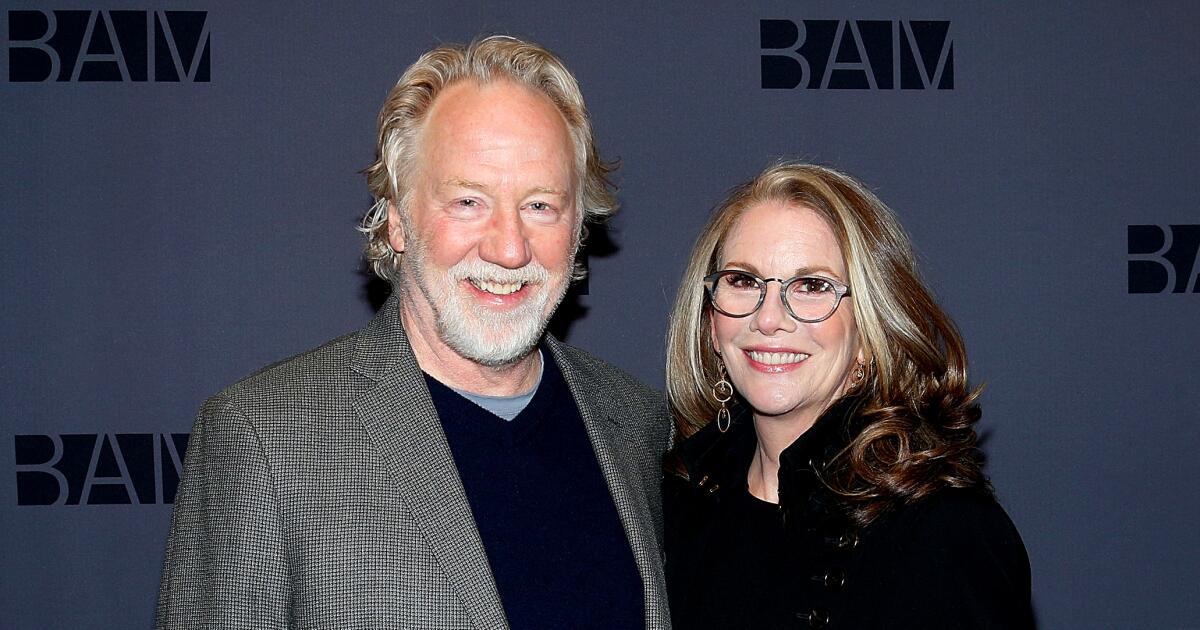
Melissa Gilbert has returned to social media to some extent amid an “extraordinarily difficult time” stemming from the child sex abuse case involving her husband Timothy Busfield.
The “Little House on the Prairie” alumna, 61, spoke out on Monday, issuing a statement of gratitude and reflection to the Instagram page of her lifestyle brand, Modern Prairie. She made her Instagram comeback after seemingly deactivating her personal account earlier this month, when allegations against her husband became public.
“This season has reminded me, very clearly, how important it is to slow down, prioritize what truly matters, and allow ourselves moments of rest,” she captioned a photo of herself sitting pensively on a couch. “Stepping back from the noise, the news, and even our daily responsibilities from time to time gives us space to recharge, reflect and find our center again.”
Earlier this month, a New Mexico judge issued a warrant for Emmy winner Busfield, 68, on two felony counts of criminal sexual contact with a minor and a single count of child abuse. An affidavit accuses Busfield of inappropriately touching two child actors, who are brothers, during his time as an actor, director and producer on the Fox drama “The Cleaning Lady.”
According to the complaint, one child actor said Busfield first touched his “private areas” multiple times on set when he was 7 years old. The actor said that, when he was 8 years old, Busfield touched him inappropriately again several times, according to the affidavit. The complaint also detailed a police interview with Busfield in which he suggested that the boys’ mother might have sought “revenge” on the director for “not bringing her kids back for the final season.”
Amid the allegations against Busfield, Gilbert’s Modern Prairie issued a statement on Instagram distancing itself from the disturbing claims. “Modern Prairie unequivocally condemns abuse in all forms and remains committed to values of safety, integrity, and respect.” the statement said.
Busfield turned himself in to law enforcement on Jan. 13, denying the “horrible” allegations and asserting: “I did not do anything to those little boys.” A publicist for Gilbert at the time said the actor would not comment on her husband’s case, denounced “any purported statements” and said that she was focused on caring for her and Busfield’s family. Busfield has three adult children from two previous marriages and is the stepfather to Gilbert’s two adult sons from her two previous marriages.
Busfield, known for his roles on “The West Wing” and “Thirtysomething,” was jailed at the Metropolitan Detention Center in Albuquerque but was granted release on his own recognizance on Jan. 20. At the hearing, to determine whether Busfield would be released pending trial, Gilbert could be seen crying and saying, “Thank you, God” upon the judge’s decision.
Gilbert thanked her Modern Prairie community for their patience and “for helping me feel safer, more grounded, and deeply held,” amid the scrutiny surrounding her family.
“I’ll be easing back into things thoughtfully and with care — moving forward one step at a time,” she said. “More to come and so much gratitude always.”
Movie Reviews
‘See You When I See You’ Review: Cooper Raiff Gives a Deeply Felt Lead Turn in a Tragicomedy That’s Sad for the Wrong Reasons

After a 14-year hiatus during which he focused on directing television and acting, Jay Duplass made a welcome return to features in 2025 with The Baltimorons, a gentle May-December romance with an After Hours vibe and an unassuming charm that sneaks up on you like a surprise hug. I wish See You When I See You had a similar effect, but despite its sincerity and the raw pain of shattering real-life experience that infuses it, this feels like a knockoff struck from the template of a thousand bittersweet, funny-sad indie grief dramas branded with the old-school Sundance stamp.
Dysfunctional family whose members seem to have forgotten how to communicate? Check. Belabored metaphor that never adds up to much (in this case a sage grouse at risk of extinction)? Check. Surreally stylized flourishes that are both awkwardly realized and inorganic to the prevailing mood and style? Check. Random nostalgic nods to ‘90s bands? Check. Treasured childhood memory tarnished by soul-crushing trauma? Check. Tinkly piano score poised to underline every emotional beat? Check. The list could go on.
See You When I See You
The Bottom Line Not if I see you first.
Venue: Sundance Film Festival (Premieres)
Cast: Cooper Raiff, Hope Davis, Lucy Boynton, Ariela Barer, Kumail Nanjiani, Poorna Jagannathan, David Duchovny, Kaitlyn Dever
Director: Jay Duplass
Screenwriter: Adam Cayton-Holland, based on his book, Tragedy Plus Time: A Tragi-Comic Memoir
1 hour 42 minutes
All this is a shame since first-time screenwriter Adam Cayton-Holland, adapting his 2018 memoir Tragedy Plus Time, is clearly drawing from a very personal well in depicting with candor the spiraling chaos of a young comedy writer as he struggles to move forward after his beloved younger sister’s suicide. The authenticity of the writer-protagonist’s feelings is undermined by the banal familiarity of a specific indie-film model.
It’s doubly regrettable because Cooper Raiff pours a ton of heart and humor, along with PTSD, into the author’s stand-in, Aaron Whistler. He’s likable and funny, and even when the character is pushing people away like a flailing mess, he never forfeits the audience’s compassion.
Duplass could not have wished for better preparation for material of this nature than his work as producer and director of six episodes — including the pilot — of HBO’s sublime Bridget Everett series Somebody Somewhere. That series started from a similar place, with a central character trying to regain her footing after the shattering loss of a sibling and tending to deflect her sorrow with humor. Every single member of the ensemble felt fully lived-in and relatable, something that can be said for only some of the principal roles here.
It’s been two months since Leah (Kaitlyn Dever) took her own life and her devastated family has still not been able to agree on funeral arrangements — if they are to have one at all. The urn containing her ashes sits conspicuously on the mantlepiece in her parents’ loveless bedroom.
Leah’s mother Page (Hope Davis) has become closed-off and sour, doing her best to ignore her own grave health situation; her husband Robert (David Duchovny) pours himself into his work as a civil rights attorney, avoiding the subject of Leah; their other daughter Emily (Lucy Boynton), who has her own young son to care for, urges Aaron to see a therapist and goes from impatience to anger at the extent to which his grief has hijacked everyone else’s loss. Aaron and Leah were always members of a private club from which Emily felt excluded.
A big part of Aaron’s trauma is that he was the one who found his little sister’s body; when he is forced, after a DUI charge, to sign up for a mental health diversion program, he’s uncooperative and hostile with the therapist, who tells him nothing he didn’t already know. Later, when he finds an empathetic therapist with whom he connects (Poorna Jagannathan), Aaron initially remains blocked, only able to revisit the night he found Leah dead up to a point.
Raiff is very good in these scenes, which makes it frustrating that the memory flashes throughout of time spent with Leah are so clunky and obvious. Dever is always a compelling presence, but Leah seems more like a bundle of exposed nerve endings than a real person — the dangerous, out-of-control highs, the precipitous lows, the psych ward stints. The worst part, though, is a thuddingly literal device so poorly handled it yanks you out of the movie every time — a hole opens up in the ceiling or sky at a certain point in Aaron’s recollections, and Leah is sucked up into the atmosphere.
There are sweet interludes when Aaron reconnects with his girlfriend Camila (Ariela Barer), who is furious about him ghosting her for months until she learns the reason. Still, it’s clear to her that Aaron is not OK, causing her to pull away again.
The scenes that work less well and seem virtually superfluous are those with Kumail Nanjiani as Adeel, an environmental activist who drags Aaron along with him to break into a fracking site that is disturbing the breeding ground of…the sage grouse.
Duplass can’t be accused of lacking sensitivity as a director, and in the moments when See You When I See You works best, the movie has an infectious warmth. Until it turns into treacly cliché. The performances mostly are better than the material deserves — Raiff in particular, but also Davis and Boynton. No one enjoys beating up on a film in which the writer has invested so much of himself and his pain. But Cayton-Holland and Duplass have somehow made an authentic tragedy feel phony and unaffecting.

Execution of Texas man convicted of 1998 double murder scheduled for Wednesday

Nina Dobrev Wears a Bathrobe While in Utah for Sundance Film Festival

Two Vermont teens named to National Brotherhood of Snowsports team

President Trump endorses Tom Tiffany for Wisconsin governor

West Virginia wills its way past Kansas State, 59-54 – WV MetroNews

Florida High School Football Rankings: Top 25 teams – Oct. 21

Cleary's 21 help Le Moyne down Central Connecticut State 69-64 in OT

How old is Bo Nix? What to know about Oregon quarterback ahead of 2024 NFL Draft

99th annual Pony Swim held in Virginia

Indiana Members Credit Union announced as new anchor tenant at Bottleworks District

Graham pushes back on Tillis’ criticism of Noem, Miller for labeling man killed by Border Patrol a ‘terrorist’

North Korea’s Kim to outline plans to boost nuclear arsenal

Rep. Ilhan Omar rushed by man on stage and sprayed with liquid at town hall event

Video: F.A.A. Ignored Safety Concerns Prior to Collision Over Potomac, N.T.S.B. Says

Democrats demand Kristi Noem be fired or warn impeachment will follow
-

 Sports1 week ago
Miami’s Carson Beck turns heads with stunning admission about attending classes as college athlete
-

 Illinois6 days ago
Illinois school closings tomorrow: How to check if your school is closed due to extreme cold
-

 Pittsburg, PA1 week ago
Sean McDermott Should Be Steelers Next Head Coach
-

 Lifestyle1 week ago
Nick Fuentes & Andrew Tate Party to Kanye’s Banned ‘Heil Hitler’
-

 Pennsylvania2 days ago
Rare ‘avalanche’ blocks Pennsylvania road during major snowstorm
-

 Sports1 week ago
Miami star throws punch at Indiana player after national championship loss
-

 Cleveland, OH1 week ago
Northeast Ohio cities dealing with rock salt shortage during peak of winter season
-

 Technology6 days ago
Ring claims it’s not giving ICE access to its cameras