Entertainment
From Iowa to Florida, national lawsuits against local book bans begin to gain traction


Lawsuits challenging book bans in Florida and Iowa are proving to play a key role in the growing fight for student’s access to literature.
On Wednesday, a U.S. District Judge ruled that the federal lawsuit challenging Escambia County School Board for censoring library shelves can move forward. The publishing conglomerate Penguin Random House, alongside free-speech advocacy group PEN America as well as banned authors and parents, filed the lawsuit against the Florida school district last May.
Judge Kent Wetherell said the plaintiffs have standing to pursue their claims that the school district is violating the 1st Amendment by scrubbing library shelves of books based on a political or ideological disagreement with the ideas the books express. Judge Wetherell also shot down the state’s argument that its decisions to ban books are immune from the 1st Amendment.
In May, Dan Novack, Penguin Random House vice president and associate general counsel, told The Times the publishing house was suing to stop “one of the most unsubtle attempts at viewpoint discrimination” they’d ever seen.
Shalini Goel Agarwal, counsel at Protect Democracy, said in a statement that “after targeting books centering people of color and LGBTQ+ individuals and ignoring its own review committees’ recommendations, the government baldly asserted that this could not be viewpoint discrimination because the 1st Amendment does not apply to school libraries. Today’s ruling makes clear that they are wrong.”
The suit also alleged a 14th Amendment violation citing the Equal Protection Clause, because the challenged books are disproportionately titles by nonwhite and/or LGBTQ+ authors. Judge Wetherell denied the 14th Amendment claim, but ruled that 1st Amendment protections are implicated when the school district removes books based on ideology or viewpoint.
The books challenged in Escambia County include Toni Morrison’s classic novel “The Bluest Eye” and Kurt Vonnegut’s “Slaughterhouse-Five” as well Anne Frank’s “Diary of a Young Girl.” According to a list obtained by the Florida Freedom to Read Project, picture books, middle grade books, young adult titles and even five dictionaries have been banned by the county.
Since the lawsuit was filed last spring, the district has removed additional books due to new state laws, including HB 1069 — an education law, which became effective July 1, that restricts books depicting “sexual conduct” from grades deemed age-inappropriate. Recent titles affected ranged from “The Teen Vogue Handbook: An Insider’s Guide to Careers in Fashion” to a biography of the nation’s first Black United States Supreme Court justice, Thurgood Marshall.
On Tuesday, PEN America released a list of more than 1,600 challenged titles pending investigation in Escambia County.
“Today, we urged the court to vindicate the constitutional rights of students, parents, authors and publishers,” said Katie Blankenship, the director of PEN America, Florida. “We are heartened that Judge Wetherell agreed and that our case can proceed.”
“These books need to be returned to the shelves where they belong, and every day that students are refused access is a day they’re not getting the high-quality education they deserve,” she continued.
While Florida and Texas have become the epicenters of book banning in recent years, many other states have seen similar efforts. And one Iowa law has become another national flashpoint.
Two weeks ago, U.S. District Judge Stephen Locher granted an injunction against Iowa Senate File 496 and its book-banning provisions — just days before penalties for violating the law were planned to take effect. Enacted in May 2023, SF 496 prohibits K-12 students from accessing books including any description of sex and forbids discussing or reading about gender identity or sexual orientation through sixth grade.
Penguin Random House, again citing 1st and 14th Amendment violations, filed a lawsuit Nov. 30 — alongside the Iowa State Education Assn., critically acclaimed authors Laurie Halse Anderson, John Green, Malinda Lo and Jodi Picoult as well as a high school student, her parent and three educators.
Books pulled from libraries as a result of SF 496 included three novels by Toni Morrison, “Ulysses” by James Joyce, “As I Lay Dying” by William Faulkner, “Forever” by Judy Blume and more. The student who joined the suit is a senior at Urbandale High School who, as a result of SF 496, lost access to books including Alice Walker’s “The Color Purple” and Margaret Atwood’s “The Handmaid’s Tale.”
“Our mission of connecting authors and their stories to readers around the world contributes to the free flow of ideas and perspectives that is a hallmark of American democracy — and we will always stand by it,” said Nihar Malaviya, chief executive at Penguin Random House.
“We know that not every book we publish will be for every reader, but we must protect the right for all Americans, including students, parents, caregivers, teachers, and librarians, to have equitable access to books and to continue to decide what they read.”



The world of cinema and TV series offers hundreds of premieres every year, but not all of them are worth the time spent. Viewers are increasingly looking not just for entertainment, but for meaning — stories that leave an aftertaste, make them think, or help them experience strong emotions. That is why reviews are becoming an important guide: they help separate truly high-quality content from loud but empty hype. UNN has reviewed the most anticipated premieres and selected films worth watching.
“Kakhovka Object” (war drama)
The film shows war not only as combat operations but also as a test of human dignity, character, and choice. Through the fate of the main character, the viewer sees how difficult it is to make decisions in extreme circumstances when every step can affect the lives of others. The director masterfully combines psychological tension with realistic details, creating an atmosphere of complete immersion. The film is not only about war but also about human responsibility, strength of spirit, and the ability to remain human in the chaos of events.
“Mavka. The True Myth” (romantic fantasy)
The premiere will take place on March 1, 2026. This is a continuation of the Ukrainian fantasy tradition, where national myths and legends come to life on screen. The film reveals Mavka’s inner world, her desire for love and freedom, as well as the conflict between the human and the magical. The animation promises to be bright and detailed, and the story is universal: it touches on the themes of choice, self-discovery, and responsibility for one’s feelings. This film will be a good example of modern Ukrainian animation, capable of captivating both children and adults.
“When Will You Divorce?” (corporate comedy)
A comedy about personal life and work relationships that raises questions about the balance between career and personal feelings. The film humorously shows how easy it is to get confused in one’s own emotions, trying to satisfy the expectations of others. The authors successfully combined light life situations and ironic dialogues, which makes the viewing entertaining but not superficial. This film is for those who appreciate modern humor and recognize themselves or colleagues in the characters.
“Odyssey” (epic adventure drama)
A large-scale adaptation of Odysseus’s travels after the Trojan War. The film shows not only the hero’s physical trials but also his inner transformation: courage, ingenuity, patience, and moral choice in critical moments. The artistic design and the use of modern technologies to create epic landscapes and battle scenes are impressive. The director managed to combine a classic story with a modern cinematic rhythm, which makes “Odyssey” not only spectacular but also emotionally deep.
“Lord of the Universe” (sci-fi, action)
The film transports the viewer into a vibrant magical world where heroes fight for justice, and the line between good and evil constantly shifts. This is a story about courage, self-sacrifice, and responsibility for one’s own destiny and the destiny of others. The combination of special effects, a fantasy world, and an adventure plot makes the film attractive to a wide audience. But the main thing is not the effects, but the internal struggle of the characters, which gives the film depth and meaning.
“Scream 7” (2026)
The return to the famous slasher franchise proved unsuccessful. Despite the direction of series veteran Kevin Williamson and the comeback of Neve Campbell and Courteney Cox, the film received mostly negative reviews from critics.
Thus, 2026 promises to be a landmark year for Ukrainian and world cinema. Even with fewer premieres, there is a tendency towards a deep elaboration of characters, psychological conflicts, and moral issues, which makes modern films and series not only entertainment but also a way of understanding human life and the modern world.
“You Are Space” breaks records: Ukrainian sci-fi attracts over 326,000 viewers10.02.26, 21:04 • 6852 views
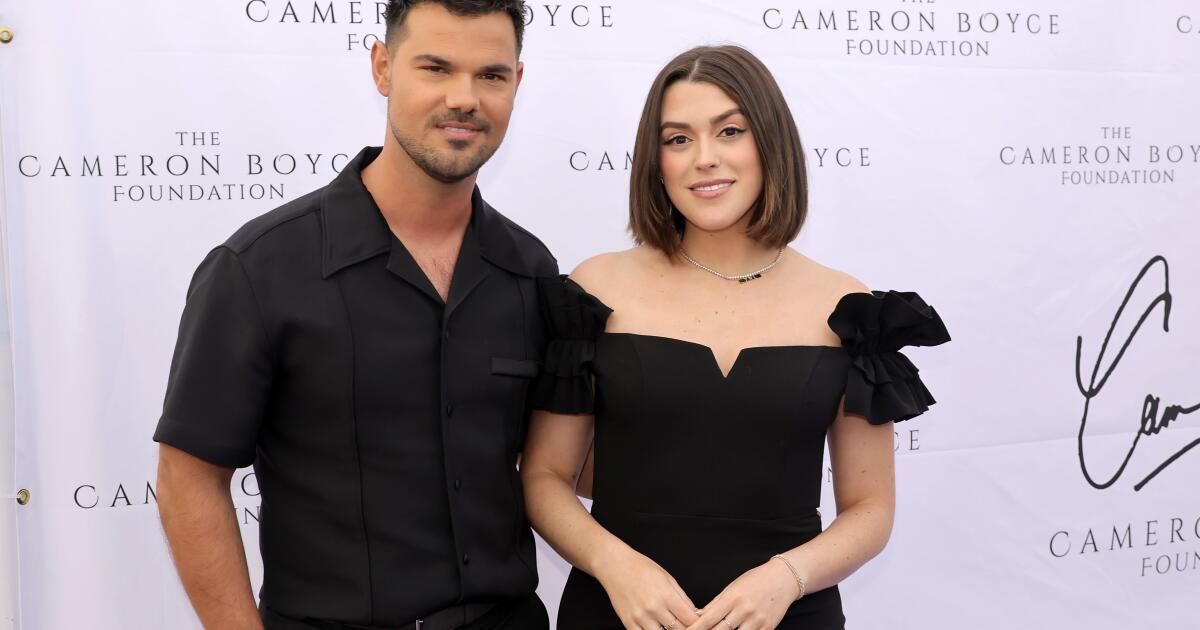
The two Taylor Lautners are expecting a baby.
“What’s better than two Taylor Lautners?”
That’s what the couple — call him Taylor and her Tay — wrote Thursday in a social media post announcing that a newborn was in their future.
The couple included four photos: The first showed the “Twilight” franchise star, 34, kissing the belly of his 29-year-old wife as she stands in a field holding sonogram images. The others showed them having fun in that same field as they celebrated the news.
That last one was in black and white and a little blurry, but it showed her sitting in a low chair, hands on her belly, cracking up as he sat low by her side with a big smile on his face. The sonogram made its way through all of the baby-on-board photos.
The couple offered no further details about the baby, including the due date.
Taylor Lautner met the former Taylor Dome in December 2017, and the two went public with their couplehood the next October and got married in November 2022 after a yearlong engagement. She was a registered nurse when they met; he was a few years off playing werewolf Jacob Black in the blockbuster franchise that brought a sparkly vampire-human love story to life.
While co-stars Kristen Stewart and Robert Pattinson, who played Bella Swan and Edward Cullen, have charted distinctive acting careers since 2012, when “The Twilight Saga: Breaking Dawn — Part 2” debuted, Taylor has hung back a bit. He met Tay after his sister set them up with invites to the same game night.
Tay, by the way, was Team Edward, crushing on Pattinson more than Lautner when she experienced the “Twilight” franchise. “I was too young for Jacob’s abs,” Tay told Cosmopolitan in a 2025 profile of the Lautners.
“Yeah, when I was walking around in my little booty jean shorts and ripping my shirt off and my abs were on big screens, she’s 11 years old, throwing a ‘Twilight’ birthday party,” he told the magazine. Tay was “a breath of fresh air” for him after years of dating women who worked in the spotlight.
That list famously included Taylor Swift, his co-star in “Valentine’s Day,” with whom he coupled up for several months before that 2010 movie came out.
“Now I have my priorities straight,” Taylor Lautner told Cosmo. “If I do a project and it doesn’t go as planned, I’ll still be coming home to my family that’s always going to be there.”
And soon that family will be more than two.
Movie Reviews
Movie reviews reveal A Poet and All That’s Left of You dominate March with perfect 100% scores – Art Threat
Show summary Hide summary
Two masterpieces just shattered critical consensus on Rotten Tomatoes. Both A Poet and All That’s Left of You have garnered rare perfect 100% scores from critics, dominating March 2026’s excellence rankings. These dual releases represent a historic moment for international cinema.
🔥 Quick Facts
- A Poet: 100% Rotten Tomatoes score from critics celebrating Simón Mesa Soto‘s Colombian drama
- All That’s Left of You: 100% Certified Fresh multi-generational Palestinian epic by Cherien Dabis
- Release Timeline: Both films expanding dramatically in theaters March 2026 after festival triumphs
- Critical Moment: Rare simultaneous perfect scores elevate international storytelling into mainstream spotlight
A Poet Achieves Unanimous Critical Acclaim
Simón Mesa Soto‘s A Poet stands as one of 2026’s finest achievements. Starring Ubeimar Rios as Oscar Restrepo, a once-promising writer turned tragic failure, the film examines fatherhood’s weight with devastating wit and elegance. The Colombian-Swedish-German co-production premiered at Cannes Film Festival’s Un Certain Regard section last year and has conquered every distribution market since.
The ensemble cast includes Rebeca Andrade, Guillermo Cardona, and Humberto Restrepo, delivering layered performances that anchor the film’s four-chapter structure. Critics hailed the film as a triumph of tone, mixing tragicomic observation with genuine emotional devastation. The New York Times called it “The Romance of Misery”, recognizing its ability to find beauty in human failure. The film’s philosophical depth and formal precision explain its unprecedented critical consensus.
| Title | A Poet (Un Poeta) |
| Director | Simón Mesa Soto |
| Lead Actor | Ubeimar Rios as Oscar Restrepo |
| Rotten Tomatoes | 100% Certified Fresh |
| Theatrical Status | Expanding in March 2026 |
All That’s Left of You Shatters Records as Palestinian Saga
Cherien Dabis wrote, directed, and starred in All That’s Left of You, a sweeping three-generational epic set in the Occupied West Bank spanning decades of family trauma and resilience. Featuring Saleh Bakri, Mohammad Bakri, Adam Bakri, and Maria Zreik, the film follows a teenage boy swept into a pivotal protest with consequences that ripple through his family’s future.
Produced by Watermelon Pictures, the film premiered at Sundance Film Festival 2025, where it immediately earned Certified Fresh status and near-universal praise. Filming relocated to Cyprus, Greece, and Jordan after production complications, yet the result feels seamlessly authentic. Critics point to Dabis’s multi-media mastery (she directs, performs, and produces) as essential to the film’s emotional authority. The film’s scope rivals the greatest epics while maintaining intimate character work that defines recent international cinema.
All That’s Left of You arrived in selected theaters on January 9, 2026 and steadily expanded throughout early March. The film’s 100% Rotten Tomatoes score reflects not just critical respect but genuine reverence for Dabis’s artistic vision. This achievement represents Palestinian cinema reaching its greatest artistic and commercial moment.
Why These Two Films Dominate March 2026’s Conversation
Rarity defines these simultaneous perfect scores. A Poet and All That’s Left of You occupy the rare 100% Tomatometer tier reserved for films of historic excellence. The 2026 FilmFare recognized both as front-runners for major awards, acknowledging how they’ve elevated the expectations for drama itself. Industry observers note that achieving perfect critical consensus in today’s fractious landscape represents not consensus but unanimous recognition of artistic achievement.
Both films reflect cinema’s global moment. Simón Mesa Soto‘s Colombian vision and Cherien Dabis‘ Palestinian perspective prove that international storytelling now commands the cultural conversation. Rotten Tomatoes‘ Official Rankings place both films in its exclusive Certified Fresh top tier. March 2026 becomes the month cinema decided: universal critical acclaim belongs to filmmakers willing to transcend borders.
“All That’s Left of You is a sweeping multigenerational epic that captures the thematic breadth of great cinema while exploring what it means to endure generational trauma.”
— Rotten Tomatoes Critics Consensus, Officials
The Future of International Cinema Starts Now
Both films expand to more theaters through March 2026 and beyond. A Poet hits streaming services and digital platforms simultaneously, making it accessible to audiences beyond Select Release cities. All That’s Left of You continues rolling out across regional markets, having already secured international distribution. Industry observers expect both to capture major festival awards at upcoming spring cinema celebrations.
These perfect scores matter beyond accolades. They signal to studios, streamers, and investors that audiences hunger for international voices and authentic storytelling. March 2026 becomes a watershed moment where Colombian drama and Palestinian cinema proved they belong in the conversation with any major market release. The critical paths of A Poet and All That’s Left of You forecast how cinema itself will evolve toward greater global representation.
Where Can Film Lovers Watch These Perfect-Score Masterpieces?
Both films remain available in theatrical releases across the United States and expanding internationally. A Poet plays select theaters with plans to widen release through spring 2026, while All That’s Left of You continues broader theatrical circulation. Check major ticketing platforms for showtimes and streaming availability. International audiences should consult local cinema schedules for release dates and language availability. These 100% Rotten Tomatoes achievements deserve the big screen experience both directors envisioned.
Sources
- Rotten Tomatoes – Official Tomatometer scores and Critics Consensus for both films
- The New York Times – Critical analysis and reviews of A Poet’s artistic achievement
- Watermelon Pictures – Official distribution and production information for All That’s Left of You
Give your feedback
★★★★★
Be the first to rate this post
or leave a detailed review

Grass fire burning thousands of acres in Quay County

2 Candidates Emerge in NC State’s Coaching Search

Former North Dakota deputy remains free on bail despite new charge

Remains of Ohio airmen killed in Iraq will be brought back March 29

Rapper Snoop Dogg to star in, produce ‘God of the Rodeo’ film shot in Oklahoma

Florida High School Football Rankings: Top 25 teams – Oct. 21

How old is Bo Nix? What to know about Oregon quarterback ahead of 2024 NFL Draft

Cleary's 21 help Le Moyne down Central Connecticut State 69-64 in OT

99th annual Pony Swim held in Virginia

Indiana Members Credit Union announced as new anchor tenant at Bottleworks District

WATCH: Senate hearing goes silent after Angel Father confronts top Dem over daughter’s death

US diplomat Marco Rubio denounces settler violence, tolls in Hormuz strait

Iran-linked hackers have breached FBI Director Kash Patel’s personal emails | CNN Politics

Live: CPAC 2026 Day 2

Video: Will ICE Change Under Its New Leader?
-

 Detroit, MI1 week ago
Drummer Brian Pastoria, longtime Detroit music advocate, dies at 68
-

 Movie Reviews1 week ago
‘Youth’ Twitter review: Ken Karunaas impresses audiences; Suraj Venjaramoodu adds charm; music wins praise | – The Times of India
-

 Sports6 days ago
IOC addresses execution of 19-year-old Iranian wrestler Saleh Mohammadi
-

 New Mexico5 days ago
Clovis shooting leaves one dead, four injured
-
 Business1 week ago
Disney’s new CEO says his focus is on storytelling and creativity
-

 Technology5 days ago
YouTube job scam text: How to spot it fast
-

 Tennessee4 days ago
Tennessee Police Investigating Alleged Assault Involving ‘Reacher’ Star Alan Ritchson
-

 Texas1 week ago
How to buy Houston vs. Texas A&M 2026 March Madness tickets