Business
Tens of thousands of Kaiser Permanente healthcare workers launch five-day strike


Tens of thousands of Kaiser Permanente healthcare workers in California and Hawaii walked off the job early Tuesday as they urged the nation’s largest not-for-profit medical provider to increase salaries and address staffing shortages.
Up to 31,000 registered nurses, nurse anesthetists, pharmacists, midwives, physician assistants, rehab therapists, speech language pathologists and other specialists are involved in the planned five-day strike.
“We’ve been really clear, our workers are trying to keep up and catch up with the cost of inflation,” said Charmaine Morales, president of United Nurses Assns. of California/Union of Health Care Professionals, known as UNAC/UHCP.
Morales said the union’s request to raise wages a total of 25% over four years was necessary to compensate for the far smaller increases workers received in their 2021 contract negotiations, when they received a 2% raise in the first year. She also said the company neglected to meet with various groups of workers at planned bargaining sessions last week to discuss solutions to short-staffing.
“We need to be able to hire more permanent staff. We’re looking for long-term solutions to staffing burnout,” Morales said.
The union has proposed an internal registry of on-call nurses who are union members, so that the company doesn’t have to rely on contract traveling nurses. Morales said the proposal “didn’t go anywhere.”
As striking workers picketed at facilities across Southern California, Kaiser Permanente called the strike “unnecessary and disruptive” and said the demands would “dramatically increase” its current $6.3-billion annual payroll. The company also insisted that staffing was not central to the union’s demands.
Kaiser spokesperson Candice Lee said in an email that while the union’s “public messaging emphasizes staffing and other concerns, the core issue in this negotiation is wages. That’s the reason for the strike.” Lee said that Kaiser’s staffing ratios meet or exceed all California-mandated nurse-to-patient ratios, and that the company “has been proactive in hiring and retaining staff to ensure we deliver the care our patients expect and deserve.”
The company has called the workers’ request for a 25% salary increase “out of step with today’s economic realities and rising health care costs.” Kaiser’s offer of a 21.5% pay raise would increase payroll by nearly $2 billion by 2029, the company said.
“To support this level of increase, we’re reducing internal costs and optimizing operations. Anything beyond 21.5% will require us to further increase rates for our members and customers, at a time when health care costs are increasingly unaffordable and many of them are having to make the difficult choice to go without coverage,” read a statement on the company’s website.
The company said it has plans to fill in care gaps during the strike, and has hired 7,600 temporary nurses, clinicians and other staff as substitutes. Many of those personnel have worked at Kaiser Permanente before and are familiar with its facilities, Kaiser said. The company also noted that 1,000 of its employees volunteered to be reassigned to work in strike locations.
The union’s collective bargaining agreements with Kaiser Permanente expired Sept. 30. Negotiations between the union and the company over wages and benefits have been ongoing for about three months, although some of the union workers have been in talks since March.
The first day of the strike — which is planned to continue until 7 a.m. Sunday — coincided with the onset of a potent storm that swept across Los Angeles early Tuesday.
Surgical nurse Tonja Sweeney marched with hundreds of others from a nearby park to Kaiser South Bay Medical Center through a downpour early that morning. The crowd of drenched healthcare workers carried signs, and their blue ponchos whipped in the wind.
Sweeney, 54, who has worked at Kaiser Permanente for 20 years, had been on the picket line for hours. “I’m super soaking wet, but it’s OK. We’re advocating for the right things,” Sweeney said.
The Harbor City facility was among 20 sites that were picketed across the state, with most of them concentrated in Southern California. Actions are planned in Hawaii and Oregon later in the week.
Sweeney said she often struggles to manage five patients, particularly if other staff members, such as nutritionists and aides, are tied up. If two patients, for example, are delirious upon waking from surgery, they both need someone to sit by their bedsides, even as a third or fourth patient may need assistance walking to the toilet.
“It’s not easy to walk away from our patients, but if we don’t advocate for them, who will?” Sweeney said. “We’re the people taking care of them. It’s hard but we have to do it.”
Romy Timm, a physical therapist, joined the picket line with other union members on strike.
Timm said problems of short-staffing are prevalent for physical therapists as well, and at least ten of her co-workers in recent years have reduced their work hours to part-time from full-time because it became too exhausting for them to consult with 16 to 20 new patients a week.
“We often work on paperwork through our lunches,” Timm said.
Timm, who for six years worked as an ergonomist for the company, would evaluate workspaces for nurses and pharmacists who had filed requests because they were starting to experience repetitive stress injuries from long hours caring for patients or filling prescriptions, she said.
Demands for higher wages come amid rising healthcare costs. Average monthly premiums for families with employer-provided health coverage in California’s private sector nearly doubled in 15 years. Costs rose from just over $1,000 in 2008 to almost $2,000 in 2023, according to an analysis of federal data by KFF Health News, which is not affiliated with Kaiser. That increase is far greater than the rate of inflation.
Some major medical facilities face other financial headwinds, with uncertainty of federal funding due to impending Medicaid cuts. Facilities including Sharp HealthCare, UC San Diego Health and UCSF Health have in recent months announced plans to cut public health services and conduct hundreds of layoffs.



There’s a new type of money spreading rapidly across the internet, propelled by the crypto boom. It’s supposed to be worth a dollar, but it’s not issued by any government. Called a stablecoin, it is a digital currency that is subject to very little legal oversight — and its growing popularity has recently transformed it into a $300 billion market.
You can use stablecoins to buy things online, make investments or send money abroad with minimal fees.
Hundreds of different brands of stablecoins exist now, with more to come. The Trump family introduced its own version this year. Walmart has been exploring one, as have major banks, tech companies and others.
And as big businesses flock to the cryptocurrency, so have bad actors. When pushing for stablecoin legislation in March, Senator Bill Hagerty, Republican of Tennessee, said the United States could not ignore the use of these digital dollars for “illicit activities by drug cartels, foreign terrorist organizations and state actors.”
Financial experts worry that the increasing adoption of these cryptocurrencies could pose large risks to the financial system. You can use them to easily move official money into digital currencies and back again. But they do not come with deposit insurance, like money in a savings account from a bank will have. There are no fraud protections. And there is scant regulation in place to make sure people are not using them for illegal transactions.
Stablecoin companies “enjoy the privileges of being a bank without the responsibilities,” said Corey Frayer, a former official at the Securities and Exchange Commission focused on crypto policy and a director at the Consumer Federation of America, a consumer advocacy group.
The mechanics of how stablecoins work are straightforward. You can buy them, usually from a large online crypto exchange, in a matter of minutes with a wire transfer or credit card. The coins sit in your digital wallet, available for cheap and fast transactions anywhere in the world.
Imagine you want to buy this pair of Nike Air Force 1 shoes. They cost $222 from Crepslocker, a British online reseller of luxury goods. Here’s what happens at checkout:
Mani Fazeli, the vice president of product at Shopify, said that since cryptocurrency regulations were still evolving, consumer protections can differ from traditional card payments. He added that the company worked with regulated partners to handle compliance for different parts of the process for payments.
Until recently, stablecoins served two main purposes: buying other cryptocurrencies and making risky crypto bets. But new regulations, including the GENIUS Act that President Trump signed into law this year, legitimized them for traditional payments and banking.
As it becomes more mainstream, many people may not even know they’re using stablecoins for transactions, said John Collison, a founder of Stripe, a payments company.
He cited Félix Pago, a popular app that allows people to send money transfers through WhatsApp and other platforms. Using Stripe technology, Félix Pago converts money into stablecoins to cut out foreign exchange fees, but doesn’t advertise cryptocurrency anywhere on its website.
“For me, this is a sign of the maturity of the industry and the utility of the technology,” Mr. Collison said in an interview.
The lack of transparency worries Mr. Frayer. He predicts that payment companies will slip stablecoins into updated terms of service, so consumers unknowingly agree to crypto transactions every time they swipe their card. But those transactions “will come with none of the protections” that Americans expect, like chargebacks and fraud protection, he said.
Mr. Frayer warns that the proliferation of the coins echoes a dangerous era in American finance. In the 19th century, before federal regulations, private banks issued their own currencies that frequently collapsed, wiping out people’s savings.
Here’s how stablecoins in your crypto wallet differ from a traditional bank deposit:
A niche invention that grew bigger than nations’ G.D.P.s
Five years ago, stablecoins were mostly niche assets for crypto traders. Today, they’re worth more than the yearly economic output of Greece.
Tether, one of the most well-known issuers of stablecoins, made $13 billion in profit last year, according to company disclosures, just from the interest on customer funds. It now has roughly $180 billion in circulation. Circle, which issues the stablecoin USDC, has about $78 billion.
The Rise of Tether and Circle
To understand why that matters, you need to understand Treasury bills, or T-bills.
T-bills are essentially short term loans taken by the U.S. government to fund its operations, accounting for 20 percent of all U.S. debt. They’re considered some of the safest investments in the world because the United States is very unlikely to default on its debt, especially over shorter time periods. So banks, pension funds, foreign governments and money market funds all heavily invest in this market as a way to safely park enormous amounts of cash while earning a return.
Now, stablecoin issuers are some of the biggest purchasers of Treasury bills. Circle and Tether together hold roughly $136 billion in T-bills, according to an analysis of their financial statements, putting them on par with large nations and institutional investors.
Top Purchases of Treasury Bills in 2024
With the passage of the GENIUS Act, the Trump administration’s signature crypto policy, the adoption of stablecoins is projected to skyrocket.
The Federal Reserve estimates that the total market could be worth $3 trillion in five years. That’s nearly the entire 2024 gross domestic product of France, according to the World Bank.
Industry giants are celebrating. “We love, we love the GENIUS Act,” said Rubail Birwadker, the global head of growth at Visa, which has expanded into stablecoin payments. He added that the new regulation “makes it so much easier for more legitimate banks, technology companies, others to actually enter the ecosystem because they know exactly what they’re getting into.”
Mr. Frayer, the Consumer Federation of America director, said the law fell far short of existing regulations for financial firms. It hands financial power to companies, he argued, that “fundamentally don’t believe that the federal government has any role in regulating financial transactions.”
A coin that provides all of the power, with none of the oversight.
Because stablecoins exist in a regulatory gray zone, Tether has become a favorite currency of criminals and money launderers.
ISIS has used it to fund operations, according to the U.S. Financial Crimes Enforcement Network.
Russian oligarchs moved millions of dollars in Tether across borders to evade sanctions in Europe, the Treasury Department said.
On Telegram, underground channels openly advertise weapons and narcotics, accepting Tether payments while promoting “zero fees” and untraceable transactions.
In a statement, a Tether spokesperson said the company worked closely with law enforcement agencies and that it regularly froze assets of bad actors. “Blockchain transactions are traceable in ways that cash and traditional banking channels are not,” the company said. “Criminals predominantly use cash along with every form of money, but digital assets create immutable records that law enforcement can trace.”
The risks of stablecoins extend beyond criminal use. Because they have connected crypto markets directly to traditional finance, failures in either system can spread to the other.
When the price of Bitcoin slid recently, people used stablecoins to cash out, according to data from CoinMarketCap, an industry firm. The overall value of the number of Circle stablecoins decreased nearly 3 percent over a 13-day period.
The sell off was relatively slow, happening over the course of nearly two weeks. But had withdrawals happened more rapidly, it could have meant something much more damaging. Here’s how that could have played out.
The value of cryptocurrency crashes, pushing investors into stablecoins, in part to help them cash out of their investments.

As crypto continues to tumble, stablecoin companies begin to sell Treasury bills in order to pay back customers.
T-bills, as a result, lose their value, affecting bank and money market fund reserves.
A crash could also work in the other direction, a danger that became clear two years ago.
Banks or money market funds go under.
In March 2023, Silicon Valley Bank collapsed.
The money that is backing stablecoins disappears.
Circle had $3.3 billion trapped in the failed bank, causing its USDC currency to plunge to 87 cents per coin.
Panic cascades, sending cryptocurrency into free-fall.
Crypto exchanges froze withdrawals, margin calls resulted in forced selling and the contagion spread to Bitcoin and Ethereum.
The crisis ended only when federal regulators guaranteed all Silicon Valley Bank deposits. The episode, however, exposed a critical vulnerability: Unlike bank deposits, stablecoin holdings have no federal safety net, so customers are at risk if the issuer falters. Had Circle lost its $3.3 billion, many everyday users would simply have been out of luck.
The risk isn’t just hypothetical. Stablecoin issuers have a checkered record when it comes to managing customer funds, according to Hilary Allen, a professor at American University.
In 2021, for example, Tether reached a settlement with the New York attorney general after investigators found it had falsely claimed to hold sufficient assets to match the amount of Tether in circulation, according to court documents. Had there been a surge in withdrawals, Tether might not have been able to cover all its stablecoin holders.
On Nov. 26, S&P Global, a ratings firm, downgraded its assessment of Tether’s holdings to “weak,” the firm’s lowest rating, citing “persistent gaps in disclosure” and overreliance on high risk assets like bitcoin, gold and corporate bonds.
In a statement, a Tether spokesperson said its currency “has remained stable through banking crises, exchange failures, and extreme market volatility.” Since the New York attorney general settlement years ago, Tether has increased its holdings of safe assets, the company said.
Tether’s checkered history nonetheless does not inspire confidence, according to Ms. Allen. Any doubt about solvency, she said, could generate a run.

SACRAMENTO — Julianna Arnold wasn’t alarmed when her teen daughter first joined Instagram.
Many people her age were using it. And her daughter Coco had a social life and other hobbies, like track and gymnastics, to balance out her time online.
“It was music and dancing videos and it seemed innocent,” said Arnold, who resides in Los Angeles, explaining that she would look over the content Coco watched.
But Arnold said a man used Instagram to target her daughter while they were living in New York in 2022, sending private messages and acting like a “big brother” to earn her trust. Two weeks after her 17th birthday, Coco met him near her home — and died after taking a fentanyl-laced fake Percocet that he provided.
Similar stories are playing out nationwide as parents grapple with how to protect their children from a myriad of threats online.
As the state is home to many tech giants, Gov. Gavin Newsom has said California is paving the way for legislative restrictions on social media and artificial intelligence. But while child safety advocates agree progress was made at the state capital this year, they argue there’s still a long way to go and plan to fight for more protections when legislators reconvene in January.
“I would say California is definitely leading on this,” said Jai Jaisimha, co-founder of the Transparency Coalition, a nonprofit researching the risks and opportunities associated with AI. “[But] I would love to see a willingness to be a bit stronger in terms of understanding the impacts and taking action faster. We can’t afford to wait three or four years — harm is happening now.”
A survey last year from the Pew Research Center found nearly half of U.S. teens ages 13 to 17 say they’re online “almost constantly.” Nine in 10 teens said they use YouTube, and roughly 6 in 10 said they use TikTok and Instagram. Fifty-five percent reported using Snapchat.
During the recent legislative session, Newsom signed a slate of legislation intended to make the internet safer, particularly for minors.
One new law requires operating system providers to ask account holders for the user’s age when setting up equipment such as laptops or smartphones. The system providers then send a signal to apps about the user’s age range so content can be adjusted for age-appropriateness. Another measure requires certain platforms to display warning labels about the adverse mental health effects social media can have on children.
A third new law requires companion chatbots to periodically remind users they are not interacting with a human and to put suicide prevention processes in place to help those who show signs of distress. A companion chatbot is a computer program that simulates humanlike conversations to provide users with entertainment or emotional support.
Newsom, however, vetoed what was arguably the most aggressive bill, saying it was too broad and could prevent children from accessing AI altogether.
Assembly Bill 1064 would have prohibited making companion chatbots available to minors if the chatbots were “foreseeably” capable of promoting certain behaviors, like self-harm, disordered eating or violent acts. It would also have required independent safety audits on AI programs for children.
“That is one piece that we are going to revisit next year,” said Sacha Haworth, executive director of the Tech Oversight Project. “We are in conversations with members’ offices and the governor’s office about getting that legislation to a place where he can sign it.”
Another organization is taking a different approach.
Common Sense Media Chief Executive Jim Steyer has launched a campaign for a state ballot initiative, dubbed the California Kids AI Safety Act, to take the issue directly to voters. Among other provisions, it would strictly limit youth access to companion chatbots and require safety audits for any Al product aimed at children or teens. It would also ban companies from selling the personal data of users under 18 without consent.
Steyer added that AB 1064 had widespread support and likely would have been signed were it not for the tech industry’s aggressive lobbying and threats to leave the state.
“In the world of politics, sometimes you have to try and try again,” Steyer said. “[But] we have the momentum, we have the facts, we have the public and, most of all, we have the moral high ground, so we are going to win.”
Ed Howard, senior counsel and policy advocate for the Children’s Advocacy Institute at the University of San Diego, said one of its goals for next year is to give more teeth to two current laws.
The first requires social media platforms to provide a mechanism for minors to report and remove images of themselves being sexually abused. The second requires platforms to create a similar reporting mechanism for victims of cyberbullying.
Howard said the major platforms, like TikTok, Facebook and Instagram, have either not complied or made the reporting process “incredibly difficult.”
“The existence of such imagery haunts the survivors of these crimes,” he said. “There will be a bill this year to clean up the language in [those laws] to make sure they can’t get away with it.”
Howard believes legislators from both sides of the aisle are committed to finding solutions.
“I’ve never before seen the kind of bipartisan fury that I have seen directed at these [tech] companies,” he said.
Lishaun Francis, senior director of behavioral health for Children Now, said the organization is still exploring potential legislative priorities for 2026.
She explained they often take a measured approach because stronger legislation tends to get tied up in lawsuits from the tech industry. Meta, Google and TikTok, for example, are challenging a California law enacted last year that restricts kids’ access to personalized social media feeds.
“We are still trying to do a little bit more research with our young people about how they want to interact with AI and what they think this should look like,” Francis said. “We think that is an important missing piece of the conversation; you’ve just got a bunch of 40-and-up adults in the room talking about technology and completely ignoring how young people want to use it.”
David Evan Harris, senior policy advisor for the California Initiative for Technology and Democracy, said he’s keeping an eye on Washington as he prepares for the state session.
“There are people in Congress and in the White House who are trying to make it impossible for states” to regulate AI, he said. “They want to take away that power from the states and not replace it with any type of federal regulation, but replace it with nothing.”
The White House has a draft executive order on hold that would preempt state laws on artificial intelligence through lawsuits and by withholding federal funds, Reuters reported Saturday.
When advocates speak out at the statehouse next year, Arnold will be among them. Since her daughter died three years ago, she has co-founded Parents Rise — a grassroots advocacy group — and works to raise awareness about the risks youth face online.
Even before Coco was targeted by a predator, Arnold said technology had already taken a toll on their lives. Her once-lively daughter became addicted to social media, withdrawing from activities she used to love. Arnold took Coco to therapy and restricted her time online, but it resulted in endless fights and created a rift between them.
“You think your kid is safe in their bedroom, but these platforms provide a portal into your home for predators and harmful content,” Arnold said. “It’s like they’re just walking through the front door.”

Oracle founder Larry Ellison was on the cusp of conquering Hollywood.
Just four months earlier, he had bankrolled his son David’s $8-billion acquisition of the storied Paramount Pictures.
Now the Ellison family had designs on scooping up Warner Bros. Discovery, too, offering to buy the entire company for at least $60 billion. The bold play had suddenly thrust this Silicon Valley titan and his son, David — chief executive of the newly-merged Paramount Skydance — into one of the most powerful positions in the film and TV industry.
By most outward appearances, Warner Bros. Discovery was theirs for the taking. Wall Street analysts, Hollywood insiders and even some of the other bidders expected Paramount to prevail. After all, it was backed by one of the world’s richest men. And it even had the blessing of President Trump, who openly expressed his preference for the Paramount bid.
But Ellison’s crowning moment was ruined when Netflix swooped in Friday announcing its own blockbuster deal.
The streamer snapped up Warner Bros. in a $82.7-billion deal for the Burbank-based film and television studios, HBO Max and HBO, delivering a massive blow to Ellison and his son, David.
In the Paramount bid, Larry Ellison was once again the primary backer. But the Warner Bros. Discovery board believed the Netflix offer of $27.75 a share, which did not include CNN or other basic cable channels, was a better deal for shareholders.
The announcement stunned many who had predicted that Paramount would prevail in the contentious auction. It also marked a rare defeat for Ellison, who was outmaneuvered by none other than Netflix’s co-Chief Executive Ted Sarandos and his team.
Analysts and multiple auction insiders told The Times several factors complicated the process, including Paramount’s low-ball offers and hubris.
“This is a bad day for for Paramount and for the Ellisons,” said Lloyd Greif, president and chief executive of Greif & Co., a Los Angeles-based investment bank. “They were overconfident because they underestimated the competition.”
Representatives of Paramount and Warner declined to comment. A representative for Ellison at Oracle did not respond to requests for comment.
Characteristically, Ellison is not backing down, say sources close to the tech mogul who were not authorized to comment. Paramount — whose chief legal counsel is the former head of the U.S. Justice Department’s antitrust division during the first Trump term — is preparing for a legal battle with Warner Bros. over the handling of the auction. They are expected to urge the Securities & Exchange Commission and the Department of Justice to investigate claims that the Netflix deal would be anticompetitive and harmful to consumers and theater owners.
Paramount’s lawyers sent Warner Bros. Discovery Chief Executive David Zaslav a blistering letter Wednesday, accusing the studio of rigging the process in favor of a “single bidder” and “abdicating its duties to stockholders.”
What went wrong
Several sources said Paramount’s first mistake was making low-ball offers.
Paramount submitted three unsolicited bids by mid-October, the first for $19 a share. Warner’s board of directors unanimously rejected all of the bids as too low.
Top Warner Bros. executives were incensed, feeling that the Ellisons had just shown up in Hollywood and now were throwing their weight around to take advantage of Warner Bros.’ struggles.
Paramount had Larry Ellison guaranteeing its Warner bid with $30 billion of his Oracle stock, according to one knowledgeable person who was not authorized to comment.
But as the price of Warner went higher, Paramount needed considerably more money. It turned to private equity firm Apollo Global Management.
In late October, Warner opened the bidding to other suitors. Netflix and Comcast jumped in. Paramount’s leaders seemed to underestimate Netflix, according to several people close to the auction. A senior Netflix executive had publicly downplayed its interest.
“Maybe Netflix was playing possum,” said Paul Hardart, a professor at New York University’s Stern School of Business.
Paramount “thought they were the only game in town,” said a person close to the auction who was not authorized to comment.
At one point, Paramount’s team seemed more concerned about the movements of Comcast Chairman Brian Roberts, who had visited Saudi Arabia, reportedly on theme park business.
David Ellison and RedBird’s Gerry Cardinale were scrambling to line up Middle Eastern sovereign wealth funds to provide more financing for their offer.
“They were going around trying to get money from elsewhere and that probably sowed some doubts among the board at Warner Bros. Discovery,” Hardart said.
Paramount’s negotiations with wealth funds for Saudi Arabia, Qatar and the United Arab Emirates were widely noted, people close to the auction said.
“It invited skepticism of the strength of the Paramount commitment,” said C. Kerry Fields, a business law professor at the USC Marshall School of Business.
When Oracle stock started dropping amid concerns of an AI bubble, it left Paramount‘s bid in a more precarious position.
Worries over Trump ties
In Hollywood, Larry Ellison’s close ties to Trump dampened enthusiasm for Paramount’s bid.
Oracle is among a group of U.S. investors expected to hold a majority stake in the U.S. business of TikTok, after the hugely popular video sharing app is spun out from Chinese parent company ByteDance — in no small part due to the influence and support from Trump.
This summer, Paramount agreed to pay $16 million to settle Trump’s lawsuit against CBS for its edits of a “60 Minutes” interview with Kamala Harris, as it was seeking to gain regulatory approval for the Ellison Skydance takeover. Days later, Paramount’s CBS announced that it was ending Stephen Colbert’s late-night talk show, citing its financial losses.
David Ellison in October made a controversial hire of the Free Press founder Bari Weiss to run CBS News — which delighted the president.
“Larry Ellison is great, and his son, David, is great,” Trump told reporters in mid-October. “They’re big supporters of mine.”
After Trump’s reported intervention, Paramount agreed in late November to distribute Brett Ratner’s “Rush Hour 4,” a project that had been shelved amid sexual assault allegations against the director highlighted in a Los Angeles Times report. Ratner has disputed all the allegations against him.
“They were in the pole position with the Trump administration, but then that [position] started to be not as appealing to people,” Hardart said.
Last month, there was a meeting at the White House to discuss Paramount’s bid and the threat of Netflix, sources said. That same week, David Ellison was among the guests at a White House dinner hosted by Trump for Mohammed bin Salman, the crown prince of Saudi Arabia.
A report in the Guardian also raised alarm bells among some foreign regulators, one knowledgeable person said. The newspaper reported, citing anonymous sources, that White House officials had informally discussed with Larry Ellison several female CNN anchors whom Trump disliked and wanted fired should Paramount succeed in buying Warner.
People close to Paramount contend that Zaslav and his mentor, John Malone, who serves as a Warner board member emeritus, were biased against Paramount and that Zaslav is angling to retain his mogul status.
Paramount ultimately submitted six offers to Warner, including a final $30 a share offer, but none were as strong as Netflix’s proposal, said two people involved with the auction.
Paramount executives knew last Monday that they had been bested, according to people close to the company. Two days later, they lobbed a missive at Warner: “WBD appears to have abandoned the semblance and reality of a fair transaction process,” Paramount’s lawyers wrote.
Netflix said Friday its deal won’t close for a year to 18 months, the anticipated time it will take to win regulatory approval. That’s far from guaranteed, however, given possible antitrust concerns over Netflix’s market dominance.
Now they’re girding for fight with Warner Bros. Discovery over its handling of the auction.
Until recently, Larry Ellison was perhaps best known in Hollywood circles for playing himself in an “Iron Man 2” cameo during which Tony Stark refers to him as the “Oracle of Oracle” — and as the father who quietly bankrolled the film business careers of his children, David and Megan.
Those who know Larry Ellison say he should not be counted out.
At 81, a determined and resolute Ellison has shown no signs of slowing down. Although he stepped down as Oracle’s CEO in 2014, he remains its executive chairman and chief technology officer — and continues to be deeply involved in the company and its growing tentacles.
Larry Ellison, third from right at the White House with President Donald Trump, SoftBank CEO Masayoshi Son and OpenAI CEO Sam Altman, appears to announce Stargate, a new AI infrastructure investment.
(Andrew Harnik / Getty Images)
“He keeps reinventing the company. Right when you think that they can’t figure it out, they figure it out and they’re pretty resilient,” said Brent Thill, a tech analyst at Jefferies.
The son of a 19-year-old unwed mother, Ellison grew up in a modest walk-up apartment on Chicago’s South Side, where he was raised by her aunt and uncle.
As he told Fox Business, “I had all the disadvantages necessary for success.”

Larry Ellison at the Oracle OpenWorld 2018 conference in San Francisco.
(Bloomberg via Getty Images)
Smart and headstrong, Ellison attended the University of Chicago, but dropped out and drove to California in a used Thunderbird. He got a job as a bank computer programmer, the first of several computer jobs at various companies.
In the early 1970s, Ellison began working on early databases for a company called Ampex. As the story goes, it became the precursor to Oracle’s systems.
By 1977, Ellison co-founded Oracle with $1,200 and ideas deeply inspired by an IBM research paper. The start-up transformed how companies and organizations stored, managed and retrieved huge volumes of data. The software company quickly became an influential tech giant. Oracle’s first contract was with the CIA.
In 1986, Oracle went public and seven years later Ellison landed for the first time on Forbes billionaire’s list, with a net worth of $1.6 billion.
Even among the ego-driven billionaire eccentrics of Silicon Valley, Ellison stood out. “The Difference Between God and Larry Ellison” is the title of a 1997 biography — one of at least 10 tomes examining the life of Larry.
Unlike many of his tech titan peers, who preferred quiet pursuits and carefully crafted public personas, Ellison reveled in his flamboyant escapades and the attention it attracted.
Ellison has flown fighter jets for fun, won the America’s Cup, twice (in 2010 and 2013), collected super yachts, mansions and samurai swords.
As both Oracle’s and Ellison’s fortunes swelled, he earned a reputation for ruthlessness. For years, his archnemesis was Microsoft founder Bill Gates. During the rival’s antitrust trial in 2000, Ellison not only admitted to hiring private investigators to go through Microsoft’s garbage but he also defended his actions, calling the move his “civic duty.”
Mike Wilson, one of Ellison’s biographers, called him “the Charles Foster Kane of the technological age.”
At Oracle, Ellison pushed to expand into cloud computing, healthcare and, more recently, artificial intelligence, forging close partnerships with AI chipmaking behemoth Nvidia, Meta and xAI.
Hollywood, however, was the domain of Ellison’s children, David and Megan, whom he had with his third wife, Barbara Boothe. They divorced shortly after Megan was born.

Larry Ellison and his children, the producers Megan Ellison and David Ellison.
(Lester Cohen / WireImage)
The Ellison scions grew up with their mother on a horse farm in Woodside, in the San Francisco Bay Area, and spent time with their father during school breaks, sailing around the world on one of his super yachts.
Early on, the tech entrepreneur set up trusts for his children with large tranches of stock in Oracle and later NetSuite, an enterprise software company he helped finance, that went public in 2007. Over time, the trusts, in addition to their independent holdings, have made David and Megan phenomenally wealthy.
With Ellison’s deep pockets, both pursued filmmaking. Megan launched Annapurna, an indie production company behind such acclaimed movies as “Zero Dark Thirty” and “Her.” David, after a brief, unsuccessful stint as an actor and producer of the 2006 flop “Flyboys,” established Skydance Media, bankrolling a slew of massive box office and television hits such as “Top Gun: Maverick,” “Star Trek” and “Grace and Frankie,” later broadening into animation, sports and gaming.
“David made money, his sister made the art,” said Stephen Galloway, dean of Chapman University’s Dodge College of Film and Media Arts.
And Larry Ellison often stepped in.
In 2018, he shepherded a major reorganization of Annapurna after the company stumbled into hundreds of millions in losses amid several box office misfires.
It was Ellison who put up the bulk of his son’s $8-billion bid to buy Paramount, the iconic studio, as well as CBS, MTV and other properties — and he holds nearly 78% of the newly formed company’s stock, making him its largest shareholder.
The Ellison family announced plans to remake the fabled Paramount studio through major investments, leveraging technology and building on popular franchises including “Top Gun,” “Star Trek” and “Yellowstone.”
And they aren’t ready to walk away from Warner Bros.
If history has proven anything, Ellison is always up for a fight.
Times staff writer Queenie Wong contributed to this report.

AP top 25 poll: Indiana jumps Ohio State in Bowl Season college football rankings

Where Will Oklahoma Land on Sunday’s College Football Playoff Bracket Reveal?

How to Watch Oregon Ducks Women’s Basketball vs. UCLA Bruins

Causes revealed of two Saturday fires in Harrisburg

Pinnick's 5 TD passes help UC Davis beat Rhode Island 47-20 in FCS playoffs

Florida High School Football Rankings: Top 25 teams – Oct. 21

Cleary's 21 help Le Moyne down Central Connecticut State 69-64 in OT

How old is Bo Nix? What to know about Oregon quarterback ahead of 2024 NFL Draft

99th annual Pony Swim held in Virginia

Video: ‘It Didn’t Have to Happen This Way:’ U.Va. Faculty Call for Review of Police Response to Protests

Congress faces holiday crunch as health care fix collides with shrinking calendar

European Greens declare Usula von der Leyen`’s EPP enemy number one

National parks fee-free calendar drops MLK Day, Juneteenth and adds Trump’s birthday

Map: 7.0-Magnitude Earthquake Shakes Alaska

Hegseth hints major defense spending increase, reveals new details on Trump’s anti-narcoterrorism operations
-

 Politics5 days ago
Trump rips Somali community as federal agents reportedly eye Minnesota enforcement sweep
-

 Ohio3 days ago
Who do the Ohio State Buckeyes hire as the next offensive coordinator?
-

 News5 days ago
Trump threatens strikes on any country he claims makes drugs for US
-

 World5 days ago
Honduras election council member accuses colleague of ‘intimidation’
-

 Texas1 day ago
Texas Tech football vs BYU live updates, start time, TV channel for Big 12 title
-
 Politics1 week ago
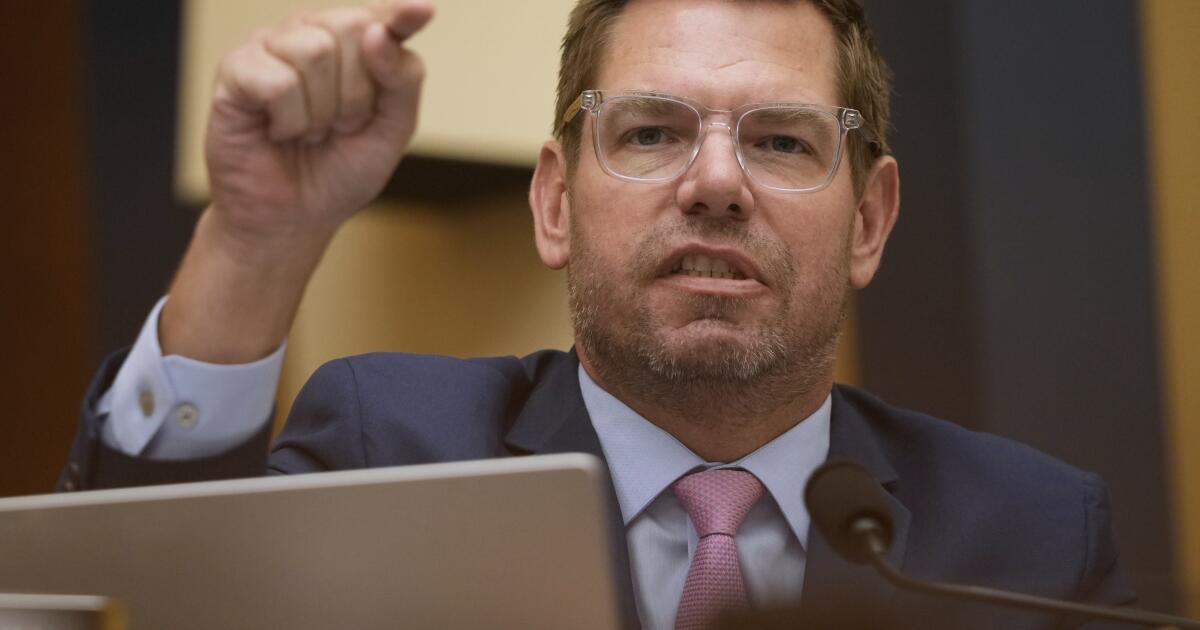
Rep. Swalwell’s suit alleges abuse of power, adds to scrutiny of Trump official’s mortgage probes
-

 Alaska21 hours ago
Howling Mat-Su winds leave thousands without power
-

 Politics5 days ago
Trump highlights comments by ‘Obama sycophant’ Eric Holder, continues pressing Senate GOP to nix filibuster