Business
23andMe sells gene-testing business to DNA drug maker Regeneron


Bankrupt genetic-testing firm 23andMe agreed to sell its data bank, which once contained DNA samples from about 15 million people, to the drug developer Regeneron Pharmaceuticals for $256 million.
The sale comes after a wave of customers and government officials demanded that 23andMe protect the genetic data it had built up over the years by collecting saliva samples from customers.
Regeneron pledged to comply with 23andMe’s privacy policy, which allows customers to have their personal information deleted upon request.
“We have deep experience with large-scale data management,” Regeneron co-founder George D. Yancopoulos said in a statement. The company “has a proven track record of safeguarding the genetic data of people across the globe, and, with their consent, using this data to pursue discoveries that benefit science and society.”
23andMe filed for bankruptcy in March after failing to generate sustainable profits by providing medical and ancestry-related genetic testing to more than 15 million customers.
About 550,000 people had subscribed to the company’s two primary services, which hasn’t been enough to keep the company afloat. One of those services, Lemonaid Health, was not part of the sale and will be wound down, 23andMe said in a statement.
As part of 23andMe’s Chapter 11 bankruptcy, a judge approved the appointment of a privacy ombudsman to monitor the sale process and ensure compliance with privacy policies related to the genetic material submitted by customers.
That material, and the genetic data it produced, was 23andMe’s most valuable asset. The company has said any buyer must comply with current privacy protections and federal regulations.
Regeneron said it will continue to run 23andMe’s personal genomic services once the sale closes. The judge overseeing the bankruptcy must approve the sale before it can be completed.
In the months leading up its bankruptcy, 23andMe tried to attract a buyer while struggling to end a class-action lawsuit related to a 2023 data breach that gave hackers access to customer information. The company will try to resolve those claims as part of the bankruptcy.
The case is 23andMe Holding Co., number 25-40976, in the U.S. Bankruptcy Court for the Eastern District of Missouri.
Church and Smith write for Bloomberg.



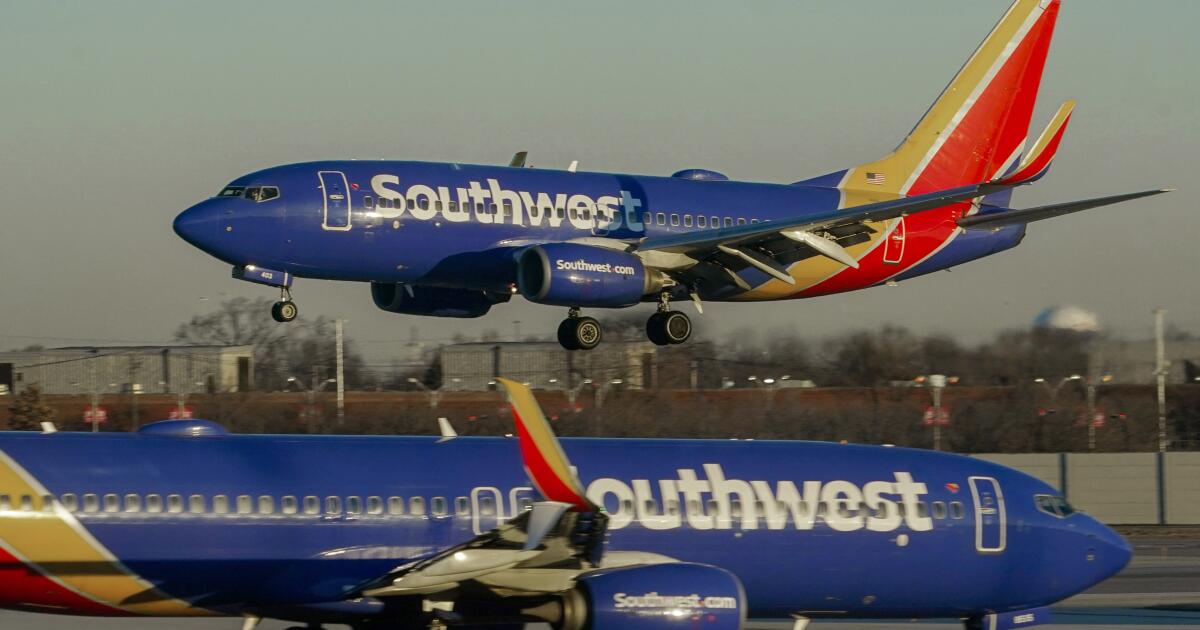
After nearly 60 years of its unique and popular open-seating policy, Southwest Airlines flew its last flight with unassigned seats Monday night.
Customers on flights going forward will choose where they sit and whether they want to pay more for a preferred location or extra leg room. The change represents a significant shift for Southwest’s brand, which has been known as a no-frills, easygoing option compared to competing airlines.
While many loyal customers lament the loss of open seating, Southwest has been under pressure from investors to boost profitability. Last year, the airline also stopped offering free checked bags and began charging $35 for one bag and $80 for two.
Under the defunct open-seating policy, customers could choose their seats on a first-come, first-served basis. On social media, customers said the policy made boarding faster and fairer. The airline is now offering four new fare bundles that include tiered perks such as priority boarding, preferred seats, and premium drinks.
“We continue to make substantial progress as we execute the most significant transformation in Southwest Airlines’ history,” said chief executive Bob Jordan in a statement with the company’s third-quarter revenue report. “We quickly implemented many new product attributes and enhancements [and] we remain committed to meeting the evolving needs of our current and future customers.”
Eighty percent of Southwest customers and 86% of potential customers prefer an assigned seat, the airline said in 2024.
Experts said the change is a smart move as the airline tries to stabilize its finances.
In the third quarter of 2025, the company reported passenger revenues of $6.3 billion, a 1% increase from the year prior. Southwest’s shares have remained mostly stable this year and were trading at around $41.50 on Tuesday.
“You’re going to hear nostalgia about this, but I think it’s very logical and probably something the company should have done years ago,” said Duane Pfennigwerth, a global airlines analyst at Evercore, when the company announced the seating change in 2024.
Budget airlines are offering more premium options in an attempt to increase revenue, including Spirit, which introduced new fare bundles in 2024 with priority check-in and their take on a first-class experience.
With the end of open seating and its “bags fly free” policy, customers said Southwest has lost much of its appeal and flexibility. The airline used to stand out in an industry often associated with rigidity and high prices, customers said.
“Open seating and the easier boarding process is why I fly Southwest,” wrote one Reddit user. “I may start flying another airline in protest. After all, there will be nothing differentiating Southwest anymore.”
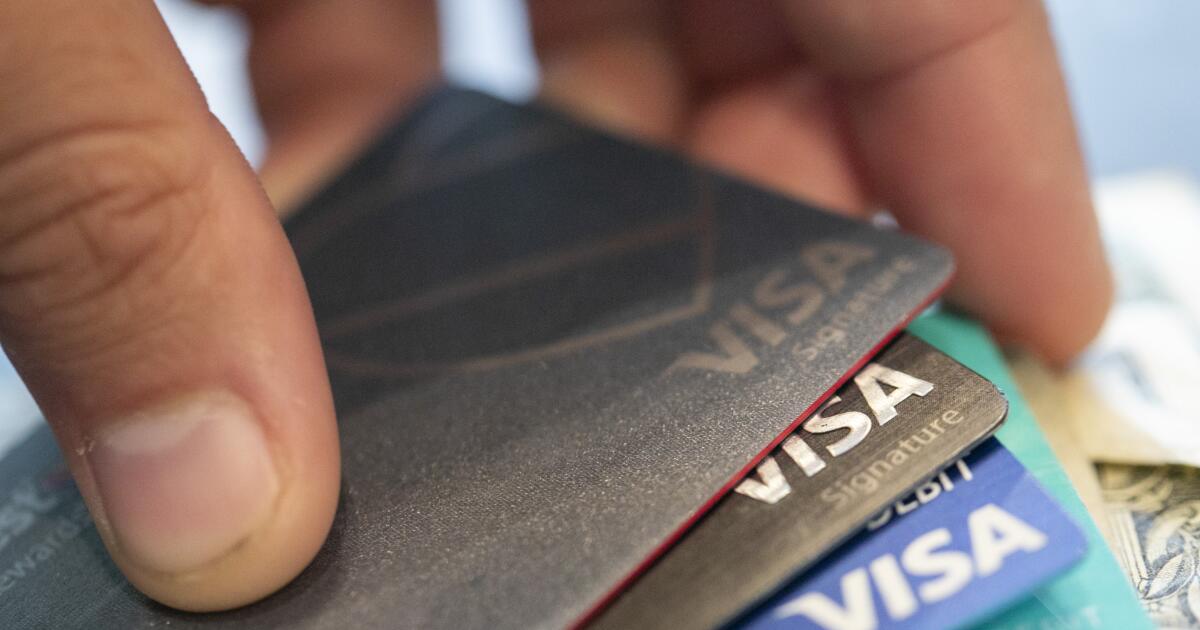
Behind the credit card, ubiquitous in American economic life now for decades, stand a very few gigantic financial institutions that exert nearly unlimited power over how much consumers and businesses pay for the use of a small piece of plastic. American consumers and small businesses alike are spitting fire these days about the cost of credit cards, while the companies profiting from them are making money hand over fist.
We are now having a national conversation about what the federal government can do to lower the cost of credit cards. Sens. Bernie Sanders (I-Vt.) and Josh Hawley (R-Mo.), truly strange political bedfellows, have proposed a 10% cap. Now President Trump has too. But we risk spinning our wheels if we do not face facts about the underlying structure of this market.
We should dispense with the notion that the credit card business in the United States is a free market with robust competition. Instead, we have an oligopoly of dominant banks that issue them: JPMorgan Chase, Bank of America, American Express, Citigroup and Capital One, which together account for about 70% of all transactions. And we have a duopoly of networks: Visa and Mastercard, who process more than 80% of those transactions.
The results are higher prices for consumers who use the cards and businesses that accept them. Possibly the most telling statistic tracks the difference between borrowing benchmarks, such as the prime rate, and what you pay on your credit card. That markup has been rising steadily over the last 10 years and now stands at 16.4%. A Federal Reserve study found the problem in every card category, from your super-duper-triple-platinum card to subprime cardholders. Make no mistake, your bank is cranking up credit card rates faster than any overall increase.
If you are a small business owner, the situation is equally grim. Credit cards are a major source of credit for small businesses, at an increasingly dear cost. Also, businesses suffer from the fees Visa and Mastercard charge merchants on customer payments; those have climbed steadily as well because the two dominant processors use a variety of techniques to keep their grip on that market. Those fees nearly doubled in five years, to $111 billion in 2024. Largely passed on to consumers in the form of higher prices, these charges often rank as the second- or third-highest merchant cost, after real estate and labor.
There is nothing divinely ordained here. In other industrialized countries, the simple task of moving money — the basic function of Visa and Mastercard — is much, much less expensive. Consumer credit is likewise less expensive elsewhere in the world because of greater competition, tougher regulation and long-standing norms.
Now some American politicians want caps on card interest rates, a tool that absolutely has its place in consumer protection. A handful of states already have strict limits on interest rates, a proud legacy of an ethos of protecting the most vulnerable people against the biblical sin of usury. Texas imposes a 10% cap for lending to people in that state. Congress in 2006 chose to protect military service members via a 36% limit on interest they can be charged. In 2009, it banned an array of sneaky fees designed to extract more money from card users. Federal credit unions cannot charge more than 18% interest, including on credit cards. Brian Shearer from Vanderbilt University’s Policy Accelerator for Political Economy and Regulation has made a persuasive case for capping credit card rates for the rest of us too.
At the very least, there is every reason to ignore the stale serenade of the bank lobby that any regulation will only hurt the people we are trying to help. Credit still flows to soldiers and sailors. Credit unions still issue cards. States with usury caps still have functioning financial systems. And the 2009 law Congress passed convinced even skeptical economists that the result was a better market for consumers.
If consumers receive such commonsense protections, what’s at stake? Profit margins for banks and card networks, and there is no compelling public policy reason to protect those. Major banks have profit margins that exceed 30%, a level that is modest only compared with Visa and Mastercard, which average a margin of 45%. Meanwhile, consumers face $1. 3 trillion in debt. And retailers squeeze by with a margin around 3%; grocers make do with half that.
The market won’t fix what’s wrong with credit card fees, because the handful of businesses that control it are feasting at everyone else’s expense. We must liberate the market from the grip of the major banks and card processors and restore vibrant competition. Harnessing market forces to get better outcomes for consumers, in addition to smart regulation, is as American as apple pie.
Fortunately, Trump has endorsed — via social media — bipartisan legislation, the Credit Card Competition Act, that would crack open the Visa-Mastercard duopoly by allowing merchants to route transactions over competing networks. Here’s hoping he follows through by getting enough congressional Republicans on board.
That change would leave us with the megabanks still controlling the credit card market. One approach would be consumer-friendly regulation of other means of credit, such as buy-now-pay-later tools or innovative payment applications, by including protections that credit cards enjoy. Ideally, Congress would cap the size of banks, something it declined to do after the 2008 financial crisis, to the enduring frustration of reformers who sought structural change. Trump entered the presidency in 2017 calling for a new Glass-Steagall, the Depression-era law that broke up big banks, but he never pursued it.
Fast forward nine years, and we find rising negative sentiment among American voters, groaning under the weight of credit card debt and a cascade of junk fees from other industries. Populist ire at corporate power is rising. The race between the two major parties to ride that feeling to victory in the November midterm elections and beyond has begun. A movement to limit the power of big banks could be but a tweet away.
Carter Dougherty is the senior fellow for anti–monopoly and finance at Demand Progress, an advocacy group and think tank.

Lockheed Martin, PG&E Corp., Salesforce and Wells Fargo are teaming up to help firefighters and emergency responders prevent, detect and fight wildfires more quickly.
On Monday, the four companies said they’re forming a new venture called Emberpoint to advance technology while making wildfire prevention more affordable.
“The ultimate vision is, you know, eliminating megafires in the United States, and maybe beyond that,” said Jim Taiclet, Lockheed Martin’s chief executive, president and chairman, in an interview.
The Emberpoint team and its technologies will be created in the coming months and demonstrations are expected some time this year. Wells Fargo is helping to fund the investment and partners have already committed more than $100 million to the new venture, Taiclet said.
Lockheed Martin already makes aircraft and satellites to fight wildfires, but the company has also worked on integrating data from the space, ground and air to help predict where a fire might start so firefighters and helicopters can better position themselves. A lightning strike, downed power lines, improperly extinguished campfires and other events can spark wildfires. The venture’s first service will focus on firefighting intelligence.
PG&E has wildfire mitigation efforts, such as installing power lines underground in high-risk areas, and has weather stations equipped with AI-powered cameras to help detect wildfires. The company will bring its expertise to this new venture but plans to seek regulatory approval to share information with its partners as part of this new venture.
“We can actually share and return to our customers the investments they’ve made in wildfire technology, and return those investments back to customers while making our own system safer and making the state safer,” PG&E Corp. Chief Executive Patti Poppe said.
San Francisco software company Salesforce, which is behind messaging app Slack and a platform that helps companies deploy AI agents, will help organizations coordinate so they can respond to wildfires faster. The company will also help bring data from different streams into a “unified, real-time response engine.”
AI agents can help firefighters better combat a blaze by providing information such as the blaze’s perimeter and the most dangerous areas, Taiclet said.
The partnership comes as wildfires across the globe become larger and more destructive, damaging homes, businesses and other buildings while also disrupting power. In California, where warmer temperatures, drier air and high winds fuel flames, wildfires have caused billions of dollars in damage and claimed lives. Last year, the Eaton and Palisades fires killed more than two dozen people and destroyed more than 16,000 structures, with the estimated loss totaling more than $250 billion.
The path of destruction left by wildfires has prompted major tech companies such as Nvidia and Google, along with startups and universities, to experiment with artificial intelligence to improve firefighting and detection. Drones, sensors, satellite imagery, autonomous aircraft and cameras are among tools used to manage and fight wildfires.
Lockheed Martin has teamed up with tech companies before to help battle wildfires. The defense and aerospace contractor, headquartered in Maryland, also has offices and employees throughout California, including Silicon Valley. It has roughly 10,000 employees in California.
In 2021, the company partnered with Nvidia along with state and federal forest services to create a digital version of a fire that allows firefighters and incident commanders to better understand how it spreads and find the best ways to put it out.
Last year, the California Department of Forestry and Fire Protection said it was working with Sikorsky, a Lockheed Martin company, on a five-year initiative that would enhance autonomous aerial firefighting technologies. The effort also includes exploring the development of an autonomous Sikorsky S-70i Firehawk helicopter, an aircraft used to drop gallons of water onto flames. Sikorsky has worked with California software company Rain to test out autonomous wildfire suppression technology as well.
And Lockheed Martin has built satellites that help U.S. forecasters get images of wildfires, hurricanes and severe weather conditions.
“If we can get prediction better, detection quicker and response more robust, I think we’ve had a real chance at making a big difference here for safety of both the citizens and the firefighters,” Taiclet said.

Polaris to lay off 200 Wisconsin workers, close facility in Osceola

W.Va. Senator calls for CPS reform after death of 11-year-old girl from Taylor County

Sage-grouse local working groups swiftly disbanded by Game and Fish

Crypto Crime Wave Fueled by Chinese-Language Money Laundering | PYMNTS.com

Global brand in an EFL world – Wrexham’s finances explained as club eye Premier League

Florida High School Football Rankings: Top 25 teams – Oct. 21

Cleary's 21 help Le Moyne down Central Connecticut State 69-64 in OT

How old is Bo Nix? What to know about Oregon quarterback ahead of 2024 NFL Draft

99th annual Pony Swim held in Virginia

Indiana Members Credit Union announced as new anchor tenant at Bottleworks District

Video: F.A.A. Ignored Safety Concerns Prior to Collision Over Potomac, N.T.S.B. Says

Democrats demand Kristi Noem be fired or warn impeachment will follow

EU Commissioner Virkkunen urges US to respect EU digital rules

Families of killed men file first U.S. federal lawsuit over drug boat strikes

Video: New Video Analysis Reveals Flawed and Fatal Decisions in Shooting of Pretti
-

 Sports1 week ago
Miami’s Carson Beck turns heads with stunning admission about attending classes as college athlete
-

 Illinois5 days ago
Illinois school closings tomorrow: How to check if your school is closed due to extreme cold
-

 Pittsburg, PA1 week ago
Sean McDermott Should Be Steelers Next Head Coach
-

 Lifestyle1 week ago
Nick Fuentes & Andrew Tate Party to Kanye’s Banned ‘Heil Hitler’
-

 Pennsylvania1 day ago
Rare ‘avalanche’ blocks Pennsylvania road during major snowstorm
-

 Sports1 week ago
Miami star throws punch at Indiana player after national championship loss
-

 Cleveland, OH1 week ago
Northeast Ohio cities dealing with rock salt shortage during peak of winter season
-
 Science1 week ago
‘It is scary’: Oak-killing beetle reaches Ventura County, significantly expanding range