Science
Commentary: The doctor who helped save her is in another state, and telemedicine follow-up is prohibited

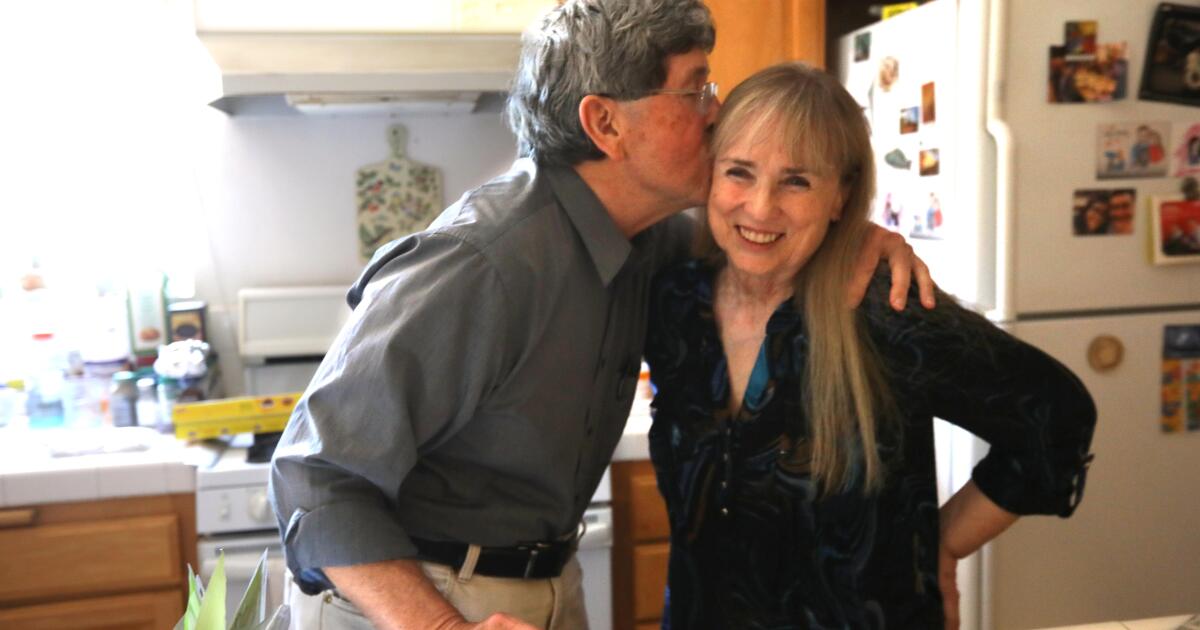
In her fight against an aggressive form of cancer, Santa Clarita Valley resident Robin Clough is winning, for now.
But in her fight for the right to have telemedicine followups with the out-of-state doctor who helped save her life, she is losing. And legislation that would have eased the way for her and other California patients who are in remission to get continued care across state lines just died in Sacramento.
Clough and her husband, Dr. Gene Dorio, a house-call geriatrician I’ve written about several times, were driving home from a medical appointment the other day when I reached them by phone. Clough, still doing well four years after a diagnosis of anaplastic thyroid cancer, said people can’t believe it when she tells them about the prohibition on communications with her doctor in Texas.
“They’re like, ‘That’s absurd,’” Clough said.
And the problem isn’t limited to California, which is one of about 30 states with tight restrictions on interstate telemedicine.
“There are tens if not hundreds of thousands of cases,” said Dr. Helen Hughes, a Johns Hopkins pediatrician and leading advocate for reforms that would remove barriers between patients and the care they need.
Huges said that during the COVID-19 pandemic, telemedicine flourished by necessity. That included cases in which a patient in one state was being treated by a doctor in another state. But there’s been a gradual return to prohibiting doctors from providing care to patients in states where they are not licensed to practice.
Patients with cancer and various chronic diseases are affected. But so are students who attend college out of state and can’t check in with their doctors back home. And someone who participates in a clinical trial could run into interstate restrictions.
These conflicts will become more common, said Hughes, as medical technology evolves, with scattered locations providing specialty care for chronic, critical and rare conditions. There won’t be “experts on everything in every state,” said Hughes, so patients who are able will seek out the latest breakthroughs and best care.
Dr. Shannon MacDonald, a Massachusetts radiation oncologist and Harvard professor who treats rare pediatric malignancies, sees patients from across the country.
“I treat them with a type of radiation that’s not available in every state,” she told me.
In the past, MacDonald said, she continued to care for those patients, sometimes meeting with parents by video conference to review scans taken in their home state. That saved the families the time and money needed to travel back to Massachusetts with a sick child.
But hospital administrators have been pulling the plug on those types of arrangements.
“Giving medical advice to an out-of-state patient over the phone can put me at risk of losing my license, and, in states such as California and New Jersey, of criminal charges as well,” MacDonald wrote in a guest opinion piece for the Wall Street Journal.
This is the very problem Robin Clough has run into. She was diagnosed in 2022 with anaplastic thyroid cancer and underwent chemotherapy and radiation, but the cancer persisted. Her doctor at Cedars-Sinai knew an oncologist at the MD Anderson Cancer Center in Houston, a leader in treating anaplastic cancer. Clough traveled there for targeted immunotherapy treatment, and about a month later, the cancer was in check.
“I was supposed to be gone, but I’m not,” Clough told me two years ago in the kitchen of her home. “So every day is ‘Wow,’ you know? I get to see my daughters, and in the process of this I had my first grandchild.”
Clough had several telemedicine followups with her Houston doctor, which was legal under California law that allows interstate telemedicine for patients with life-threatening conditions. But the law does not apply to patients in remission, and so Clough is forced to travel to Texas for continued care.
Clough and Dorio are members of California’s advisory senior legislature, and they proposed a bill to allow patients in remission to continue interstate care. It led to S.B. 1002, introduced in February by Sen. Roger Niello (R-Sacramento).
“Some of us are in remission or with no evidence of disease,” Clough testified at a hearing on the bill. “That does not mean we are cured. We are still in jeopardy of recurrence and require careful continuity of care monitoring by our out-of-state specialist.”
But at that same hearing, representatives of the Medical Board of California and the California Medical Assn. pushed back. They argued that out-of-state doctors are not licensed to practice in California and might be unfamiliar with state laws and standards of care, putting patients at risk and making oversight and disciplinary action difficult.
The bill passed in the Senate but failed in the Assembly, with support from only one Democrat. Assemblyman Marc Berman (D-Menlo Park), who heads the committee where the bill died, voted against the remission amendment and said there are “multiple ways out-of-state doctors can continue to provide care to state residents.”
A doctor can get a license in California, the patient can travel to where the doctor is licensed, or the doctor can consult with the patient’s in-state doctor. Otherwise, Berman said, if an out-of-state doctor commits “malpractice or negligence, there’s no recourse for the California patient.”
Berman told me he’s sympathetic to the plight of Clough and others, and he’s open to further discussion. But under current law, he said, an out-of-state doctor can have a video conference with a patient and that patient’s in-state doctor, and he supports that practice.
When I put that to MacDonald, she said, “I’m in clinic today, and I have 35 patients.” Imagine the complication, she said, of coordinating a video conference with an equally busy doctor in another state. As for getting licensed in other states, MacDonald said it would involve hours of paper work and cost about $90,000 to get a license in every state, with periodic renewals required.
Niello told me he got involved when he heard about Clough’s case. He said her Houston treatment center is a premier facility, and “for California to opine that it’s not good enough for us” is a strange concept. He said he thinks it’s “actually kind of cruel” to restrict communication between a patient and “the doctor who … guides” that patient to a “renewed life.”
The senator said that if he is re-elected in the fall, he’ll reintroduce the bill. Meanwhile, advocates are pursuing lawsuits on behalf of patients whose access to interstate care is restricted. And Johns Hopkins has launched a three-year program to research remedies, including waivers in the case of long-established doctor-patient relationships.
Dorio said there are thousands of cancer mutations for which there are thousands of therapies, and in the modern world of medical advances and telehealth capability, no one is served by restricting access to care. He and Clough have twice traveled to Houston for followups that could have been done by video conference, but not everyone can afford to do the same, he said.
Dorio and Clough are about to take their third trip to Texas, and his California driver’s license, he noted, is good in every state. So why do physicians, who all must meet uniform national standards of education and training to become doctors, have to get a license in every state?
“We’re going to look back one day,” Dorio said, “and see how ridiculous this is.”
steve.lopez@latimes.com

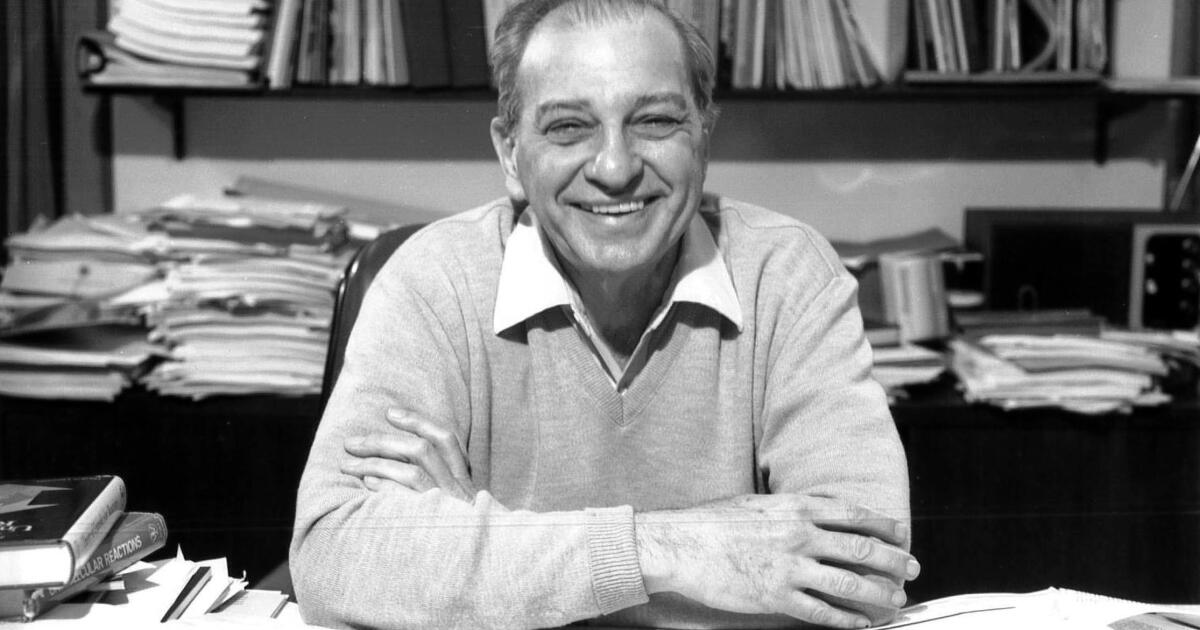
Rudolph Marcus was perplexed. It was 1955 and Marcus, a 31-year-old associate professor of chemistry still in the early stages of his career, had found an elementary mistake in the work of an esteemed scientist.
“Something doesn’t add up,” Marcus thought..
Marcus had discovered a calculation that violated the law of conservation of energy, a bedrock scientific principle, tucked inside a new theory on electron behavior. This frustrated Marcus because he otherwise liked the innovative theory that had been proposed by Willard Libby, a physicist who had helped develop the atom bomb.
Marcus set out to fix the problem, but ended up doing much more. Within a month, he had developed an elegant formula that would upend scientific understanding of how molecules use energy and eventually win him the Nobel Prize.
“When I got the result it was the most exciting moment that I’d ever had in science in my life,” he recalled in a Caltech oral history interview in 1993. “There was just such exhilaration. … It came out in such a simple form. It really was a thing of beauty — to me, anyway.”
Marcus, a Caltech professor for nearly half a century and a longtime Pasadena resident, died peacefully Thursday at home, Caltech and his family said. He was 102.
“Rudy Marcus’s career exemplified the beauty and reach of fundamental science, and he will be deeply missed,” said Caltech President Ray Jayawardhana. “He was a visionary scientist who transformed our understanding of chemical reactions at their most elementary level, [and] laid the conceptual foundations that continue to shape advances in clean energy, catalysis, electronics, and beyond.”
Marcus, who would have turned 103 on Tuesday, was at work on three separate research papers at the time of his death, his family said.
Marcus first published his conclusions on “electron transfer reactions” in 1956 and continued to refine them over the next nine years. His ideas were controversial until they were confirmed by experiments over three decades. In 1992, he was awarded the Nobel for chemistry.
The Marcus Theory, as it came to be known, provides a mathematical way to determine how fast or slow, or in what direction, electrons jump between molecules without breaking chemical bonds. It expanded scientists’ knowledge of a wide spectrum of processes, such as how plants gain energy from sunlight, how animals use oxygen and food as fuel, and how batteries use chemicals to create electricity.
He was also known for his part in what was called the RRKM theory, named for the four scientists, including Marcus, who developed it. It describes how energy is released from the chemical reactions of molecules in the gas phase.
“The RRKM theory is one of the outstanding theories of chemical physics,” said Harold Johnson, a physics professor at UC Berkeley, in 1985. “Marcus took a good theory developed in the 1920s and ‘30s, brought it up to date in 1951 and made it complete. All kinds of people in chemistry use it.”
Rudolph Arthur Marcus was born July 21, 1923, in Montreal, the only child of American-born Myer Marcus and English-born Esther Marcus, both of Jewish Lithuanian descent. His father had various jobs, selling picture frames at one point, later managing a fruit store. When he was 3, his family moved to Detroit, then returned to Montreal when he was 9.
While his father had little interest in education, Marcus found academic inspiration in two uncles who were doctors, a great-uncle who could speak nine languages and, mostly, his mother.
“She liked school so much that she went to the last grade twice, because she couldn’t afford to go on,” Marcus recalled in a 1991 interview with the Chemical Heritage Foundation.
In high school, he developed a love for mathematics: “If the teacher said do every alternate problem, I’d do every problem, just simply for the fun of doing it.”
At Montreal’s McGill University, he majored in chemistry, partly because an advisor said that as a Jew he would have a harder time finding a job in mathematics. He received his bachelor’s degree in 1943 and a PhD in 1946, both in chemistry and both from McGill.
Marcus did his first postdoctoral research in Ottawa, but in 1949 he jumped at the chance to study theory — instead of hands-on, experimental chemistry — at the University of North Carolina. Within his first few days there, Marcus met Laura Hearne, a graduate student in sociology, and they married six months later. They would have three sons together and remain married until her death in 2003.
In 1951, Marcus landed at the Polytechnic Institute of Brooklyn as an assistant professor. It was there, four years later, that he had his Nobel-winning insight.
“We’ve heard of ‘eureka’ and, yes, there was this eureka moment,” he recalled. “I’ve never solved a problem so quickly, before or after.”
In 1958, he was naturalized as an American citizen.
In 1964, Marcus left Brooklyn’s Polytechnic to be a chemistry professor at the University of Illinois. He spent 14 years there — even turning down a professorship at England’s Oxford University because he didn’t want to uproot his family — before coming to Pasadena and the California Institute of Technology in 1978. Caltech was his home for the rest of his career, though he stepped down from teaching at the age of 95.
“Enough is enough,” he joked in 2023. “They should really have somebody who really knows something.”
The Nobel and its $1.2-million prize did little to change Marcus. A 1994 Los Angeles Times profile noted that he continued to walk to work most days from his home just off the Pasadena campus, and still drove a 16-year-old car. He said proudly that when Laura met Sweden’s King Carl Gustav XVI, she was wearing a homemade dress.
Around the Caltech campus, Marcus remained so unaffected and so focused on his research that one colleague quipped that he “must have spent his million dollars on a new sweater.”
Said Marcus: “It’s best if one doesn’t think too much about prizes and things. That puts the focus in the wrong place, which should be on your work … on a particular problem and how you should solve it.”
Marcus is survived by sons Alan, Kenneth and Raymond; four grandchildren; one great-grandson; and his long-term colleague and companion Maria-Elizabeth Michel-Beyerle.
In 2023 Caltech held a symposium in honor of Marcus’ 100th birthday. As family, friends and colleagues dropped by his table to offer congratulations, he confessed that he was eager to get back to the office. He had a new experiment he was excited to work on.
“The main thing is finding something that you enjoy doing, that preferably doesn’t harm others, and that tests whatever aptitude one has, that tests one’s ingenuity,” he said of his approach to life. “It’s almost like a kind of a game. You against nature.”

It was after 3 a.m. Thursday when Joe Swann got word from someone at a bar perched on the banks of the Guadalupe River in Ingram, Texas, that rising floodwaters had triggered a new flood warning device. The alarm was flashing a bright light and blaring orders.
“Move away from the tower,” the device warned, alerting a nearby campground. By the time Mr. Swann arrived to see it for himself, campers were already leaving for higher ground.
Mr. Swann and his company, River Sentry, had installed 100 of the eight-foot-tall devices along the Guadalupe in the year since a deluge surged down the river and shocked the Hill Country region last July 4, killing dozens of people, many of them children at summer camp. Government money and philanthropic investment have also funded other flood siren systems that kicked in when Hill Country flooded again this week, devastating many of the same areas as last summer’s tragedy.
This time, the systems worked, though they could not prevent at least two deaths. In Kerrville, where floods wrecked areas still in the process of recovering from last summer’s deluge, Mayor Joe Herring Jr. said all residents were accounted for as of Thursday night.
“We had better warning,” he said in a phone interview.
“I’m thankful to the state of Texas and the Upper Guadalupe River Authority for working to install an automated, data-driven warning system,” he added. “And that helped save lives today.”
But the latest disaster also underscored a need to continue investing in improved forecasting and warning systems, said Phil Bedient, a professor at Rice University working on such a project.
“It’s wonderful to have that warning going off,” Dr. Bedient said of the new siren systems. “You’ve got to have more than that to have a bona fide early flood warning system.”
Texas made significant investments in flood warning systems after the tragedy last July. The state legislature and Gov. Greg Abbott, a Republican, approved $50 million for warning systems, rain and river gauges and other flood infrastructure.
Much of that was in place before this week’s storms, including sirens that blared across Kerr County, home to the worst of the flooding last summer.
Other work is still ongoing.
The Upper Guadalupe River Authority, a group responsible for guarding the health of the river, installed new sirens in May. It plans to install more river and rain gauges and develop software to help predict flooding, according to its website. An authority official could not be reached for comment.
Dr. Bedient and colleagues at the University of Texas, Arlington, are using $4 million from the state to develop a system to monitor rainfall on radar and use computer models to compare that data with a range of flooding scenarios. The goal is to increase the lead time for warning systems like flood sirens, he said.
“They will then know to turn sirens on even before the flood gets there,” Dr. Bedient said.
Researchers at Texas Tech University are using another $24 million in state funds to increase radar coverage and capability for meteorological analysis across Hill Country and other parts of rural Texas where flood risks are high but forecasting can be spotty.
River Sentry installed devices, including the ones that alerted campers in Ingram, using private fund-raising led by the owners of Camp Mystic, where 28 children and counselors died in last July’s floods. Each device cost $8,000, said Ian Cunningham, the company’s CEO.
The company, based in the Austin area, plans to add more capabilities, including connecting the network of devices wirelessly and adding small, portable sensors that people can keep with them to receive flood alerts and call for help when needed, Mr. Cunningham said.
Mr. Cunningham also works as an American Airlines pilot, but because he has two daughters who attend summer camp, he used his background in the U.S. Navy to lead River Sentry’s quick work to build the flood warning system.
“We can’t have what occurred last summer occur here again,” Mr. Cunningham said.
Pooja Salhotra contributed reporting.
Science
After wildfires destroyed 95% of this California tribe’s forests, members uncovered 1,200 ancestral sites
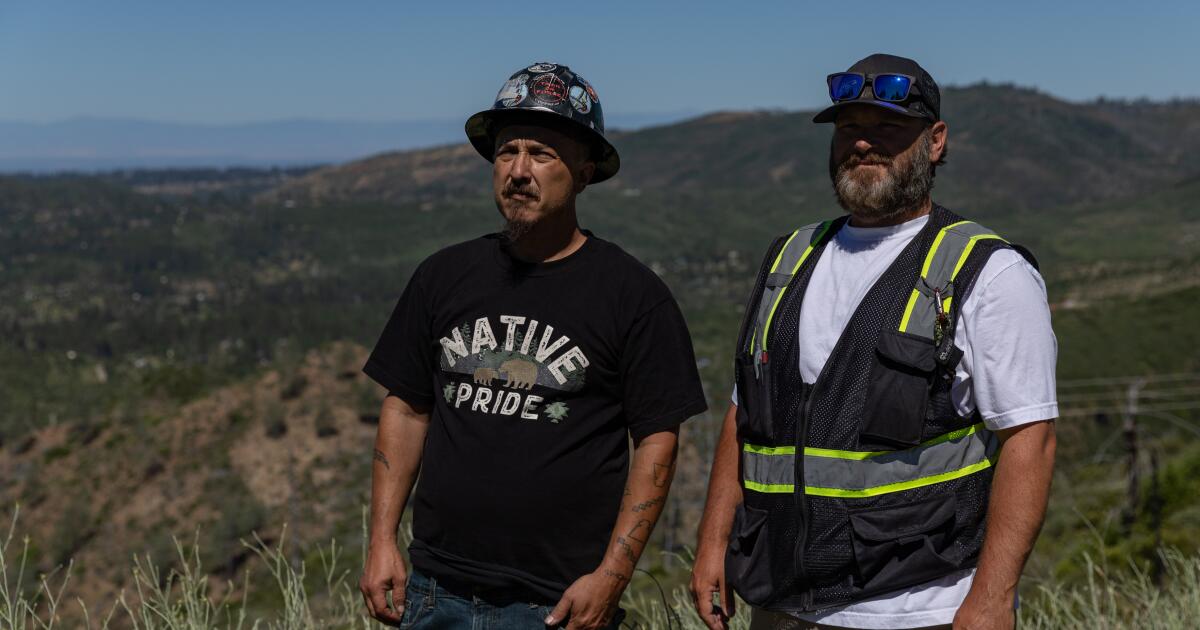
CONCOW, Calif. — Until recently, when members of the Konkow Valley Band of Maidu pulled up a map of their ancestral land in the foothills of the Sierra Nevada, only about two dozen of their historic sites appeared.
Disease, violence and forced labor had separated California tribe members from their history. Without routine Indigenous fire to clear out the foothills, the landscape — much of it now managed by the U.S. Forest Service — grew dense with conifers, obscuring the signs of their enduring presence.
As a result, archaeologists’ picture of the tribe’s past was spare. No more than 500 people. Going back about 3,000 years — a fraction of the time other tribes are known to have lived in the state.
Then the forests burned.
In less than a decade, wildfires destroyed forests across 95% of the tribe’s homelands. The Forest Service turned to the tribe for help healing the land. As members walked the wide-open moonscape, they found evidence of their vibrant history everywhere.
Now just a few years later, their map shows more than 1,200 sites.
Each one is itself a collection: Arrowheads. Rock art. Milling stations where ancestors used cups carved into rock faces to grind salmon, manzanita berries and bay leaves. The circular pits of winter houses, where they sat around a fire under a cedar roof.
A milling station found by the Konkow Valley Band of Maidu in their tribal homelands.
(Sara Nevis / For The Times)
Now, as Tribal Chairperson Matthew Williford Sr. walks these lands, he imagines a much more vibrant past than the one traditionally portrayed by archeologists.
For millennia, upward of 5,000 ancestors living in the basin, many trekking to higher elevation to gather food in the summertime. Husbands venting about domestic life as they shaped their arrowheads on one side of the hill; wives doing the same at the milling stations on the other side.

Matthew Williford Sr., Konkow Valley Band of Maidu tribal chairperson, stands in Plumas National Forest.
(Sara Nevis / For The Times)
Now, to better understand the tribe’s past, the Konkow Valley Band of Maidu is teaming up with a new generation of archaeologists. On a recent day in the Plumas National Forest, Matthew O’Brien, an anthropology professor at Chico State University, worked alongside a handful of students and tribal members.
The team excavated a house pit, carefully carrying artifacts to a rudimentary lab of folding tables and camp chairs, where students weighed them, measured them with calipers and assessed their chemical makeup with an expensive tool called an XRF analyzer. People offered explanations for how their ancestors used the artifacts.
For O’Brien, this form of archeology is worlds apart from the practice of the past. Tribal people are not voiceless historical subjects to study but active collaborators helping to understand and protect the past.
In the 20th century, “the government put archaeologists in charge of stewarding the past. In places like the United States, that leads to some serious ethical issues because what we’re in charge of protecting is not our own culture,” O’Brien said. Now, “it’s our job to help repair that relationship.”
It’s an irony lost on no one that the same policies that disconnected tribal members from their history also enabled the fires that then allowed them to rediscover it.
Even before California gained statehood, Gold Rush lawmakers banned tribes from lighting fire to rejuvenate and thin out forests. That same law also allowed white Californians to force Indigenous adults and children into labor, which separated “at least a generation of children and adults from their families, languages, and cultures,” the state later acknowledged.
Meanwhile, the federal government refused to ratify treaties to establish reservations for tribes whose homelands lay within newly created California, leaving tribes like the Konkow Valley Band of Maidu landless. By the early 1900s, Forest Service officials were working aggressively to squash lingering sentiment among white ranchers that intentional fire was productive. Any fire that started on Forest Service land, the policy became, ought to be contained by 10 a.m. the next morning.
The Konkow Valley Band of Maidu did what they could. Tribal members drove around in a beat-up Buick flinging matches out the window. Eventually those efforts landed one elder in jail for arson.
The open forests of oak, dogwood and a few pines, once routinely thinned and maintained with low-intensity “good” fire, became thick with conifers, to the delight of the Forest Service. Now five to six times denser, the trees formed yet another barrier between the tribe and its history — yet a fragile one. When fire inevitably ignites within so much wood in such a tight space — through lightning or human error — it does not burn gently.

A statue stands in a lot charred by the Camp fire, which tore through Paradise, Calif., in 2018.
(Noah Berger / Associated Press)
In 2018, the Camp fire ripped through Butte County, burning 150,000 acres and killing 85 people. Three years later, the Dixie fire ravaged nearly a million acres. In its wake, a world covered in ash. Waterways turned into black sludge. A foul smell of sulfur lingered in the air.
“It was sickening,” Williford said. “Just disgusting.”

Material to be burned is piled in an area of Plumas National Forest that the Konkow Valley Band of Maidu helps manage.
(Sara Nevis / For The Times)
“The land used to repay us, or acknowledge us, by giving us what we needed,” Williford said, standing on a dirt road overlooking the valley. “There were Native generations that were disconnected, unplugged. … We feel lucky that it’s our opportunity to reconnect, to let the land know that ‘Hey! We’re still here!’”
Restoration work with the Forest Service — surveying sites, planting trees and bringing back good fire — continues to unearth long-lost artifacts. And the most exciting data from O’Brien’s team is yet to come:
The team plans to carbon-date a piece of charcoal from the house pit it excavated to see just how long ago tribal ancestors sat around its hearth.
It was an ancient fire, not the recent ones, that preserved some dead wood, and with it, a lasting elemental fingerprint saying, “We were here.”
-

 Maine1 minute ago
Platner replacement should support single-sex private spaces and sports at school | Opinion
-

 Maryland7 minutes ago
BGE reports 28,874 customers without power across Maryland
-

 Michigan13 minutes ago
Taylor Farms recall: Check your fridge for iceberg lettuce products sold in Michigan amid cyclosporiasis outbreak
-

 Massachusetts19 minutes ago
Woman killed in Taunton car crash
-

 Minnesota25 minutes ago
New air quality alert issued through Monday for Minnesota
-

 Mississippi31 minutes ago
David Turner, a three-time Mississippi State football assistant, announces retirement
-
 Missouri37 minutes ago
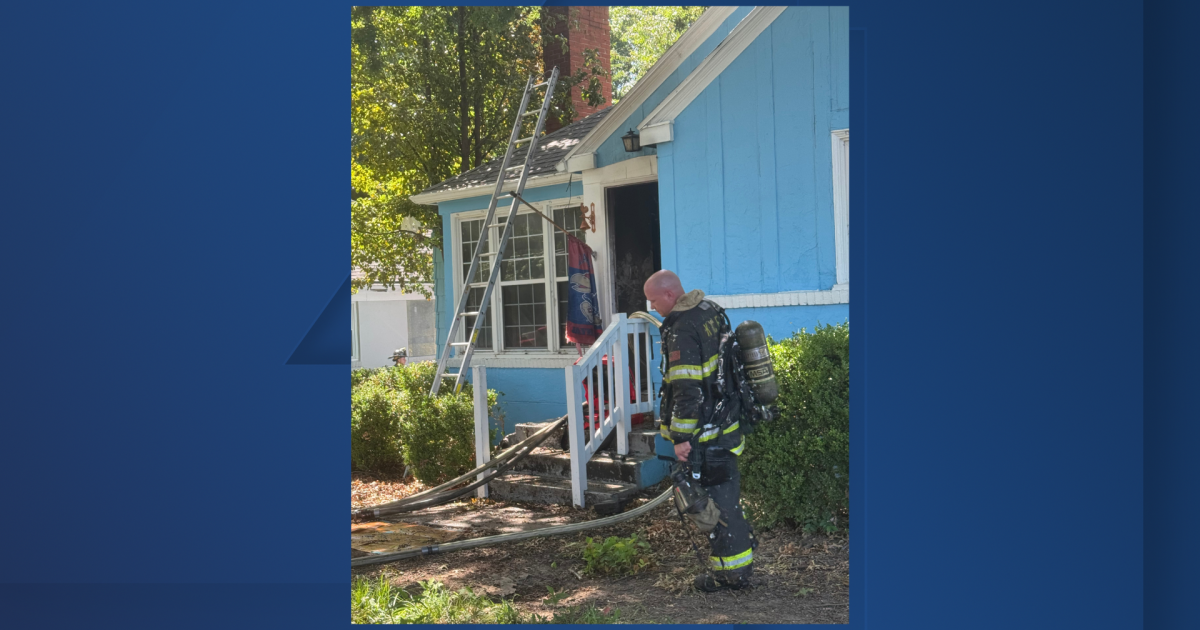
1 woman, 1 firefighter injured in Saturday morning fire in Kansas City, Missouri
-

 Montana43 minutes ago
Central Montana Fair main events kick off Wednesday

