Washington
Washington looking for solutions to looming water challenges | Cascadia Daily News


WOODINVILLE — For four straight years, at least parts of Washington have been in a drought, as snowpack has failed to meet historical norms amid climate change.
This year, all of Washington is experiencing drought, after a wet winter scuttled by warmer temperatures, according to state officials.
Washington state leaders are looking for ways to deal with the ongoing water challenges, which state Ecology Director Casey Sixkiller calls “our new normal.”
A new initiative, called Washington’s Water Future, will lead roundtable discussions across the state this summer, with recommendations delivered to Gov. Bob Ferguson before the 2027 legislative session begins in January. Local and tribal governments, utilities, industry leaders, environmental groups and community organizations will be at the table.
Officials announced the effort Wednesday at King County’s Brightwater Treatment Plant near Woodinville.
“It’s clear we need to take steps to protect our water supply,” Ferguson said in a pre-recorded video. “We need secure water supplies so we can grow our economy, support our agriculture industry, protect healthy fish runs and preserve tribal resources.”
Sixkiller said the work is about whether Washington will shape the future of water in the state, or just react to it.
“Washington is a water state,” Sixkiller said. “Water shapes our landscapes, our communities, our economy, and for many a way of life passed down through generations. We all know that where there’s water, there’s life, but these days, we don’t have to look very hard to see that our relationship with water is changing.”
Climate change is causing precipitation in the winter to fall more as rain than snow, with less stored naturally in the mountains for the summer, when farms and fish are competing for the dwindling resource. This system, dependent on snowpack, is becoming less reliable, Sixkiller said.
By 2080, the Puget Sound region is expected to get less than half of its normal snowpack, with wintertime stream flows increasing by half and a corresponding drop in the summertime, the agency director said.
“The cost of inaction is already showing up in drought emergencies, flood damage, stressed salmon runs and uncertainty for communities trying to plan their future,” Sixkiller said.
Last year, the Department of Ecology took the unprecedented step to curtail surface water usage in the Yakima River Basin, where the effects of drought are more severe. The move has drawn accusations of mismanagement against the state.
In an interview, Sixkiller said it’s too soon to say whether his agency will need to do the same this year, but noted the state declared a drought earlier than usual to give water managers in the area more time to prepare.
The statewide drought declaration last month unlocked $3 million in grants to respond to the effects.
The harms already
The Yakima-Tieton Irrigation District, which serves 28,000 acres, is bracing for its canal system to “blow out” after a wildfire burned it in 2024, and subsequent flooding and debris slides further damaged it, said Jon DeVaney, president of the Washington State Tree Fruit Association.
“This is a clear example of the need to, not only plan long term, but be prepared to see that hole that we’re already in get a little bit deeper,” DeVaney said.
The low flows and higher temperatures are treacherous for Washington’s salmon. And fish hatcheries are grappling with dwindling water. The Suquamish Tribe, for example, hasn’t been able to expand a hatchery because of the lack of water, Chairman Leonard Forsman said.
Forsman, also president of the Affiliated Tribes of Northwest Indians, acknowledged the priorities when thinking about the future of water availability are “people and farms, and then fish habitat comes in later.”
“And we need to try to balance that,” he said.
Meanwhile, data centers the tech sector is building to support artificial intelligence and other technologies are also driving demand for water.
Some of the ideas
In responding to the state’s water needs, Sixkiller said “all solutions and all ideas are on the table.”
He was responding to a question about desalination, a process turning salt water into potable water that communities in more arid climates have turned to in addressing water shortages. Arizona, for one, is pursuing the idea. Sixkiller called the water scarcity in the American southwest a “very big red flag of what could happen here.”
The city of Lynden in Whatcom County has grown rapidly over the past 15 years, Mayor Scott Korthuis said. So the city, located along the Nooksack River, has had to find innovative approaches to securing water.
For one, the city now recycles discharged water from the local Darigold dairy plant into the river, as a source of drinking water.
The city is also working on an aquifer recharge project to take water from the river during high flows and store it underground until it’s needed later. Sixkiller cited this type of work as an idea to be explored in the Washington’s Water Future roundtable discussions.
“There are a range of untapped solutions from different areas, from different ways to store water and to recycling,” Korthuis said, noting financial, legal and regulatory obstacles.
Aging water infrastructure that will need to be replaced or upgraded provides an opportunity for innovative solutions, Sixkiller said.
King County Councilmember Claudia Balducci noted the new initiative’s acronym matches that of the World Wrestling Federation, saying there will be some “smackdowns” in these discussions. The tongue-in-cheek comment worried state Rep. Davina Duerr, D-Bothell.
“I’m afraid it’ll be a smackdown on the Legislature for funding, and whatever else,” she said.
Washington State Standard is part of States Newsroom, the nation’s largest state-focused nonprofit news organization.


Donald Trump’s plans to build a skyline-altering arch in the nation’s capital won initial approval Thursday from a key federal commission, but its members put off a decision on whether a federal law that limits building heights should be applied to this project.
Despite overwhelming public opposition, the National Capital Planning Commission voted to approve preliminary site and building plans for the 250ft (76m) arch the Republican president wants to build on a traffic circle at the Virginia end of the Memorial Bridge from Washington.
The project, one of several being pursued by Trump in his quest to reshape parts of the nation’s capital to his liking, moved a step closer to reality with the vote.
Staff had recommended in its report on the project that the commission grant such approval and request a series of changes so the arch would comply with the Height of Buildings Act. The suggested changes included redistributing the heights among the main structure of the arch, the habitable roof, where an observation deck is planned, and the statues that would top it.
But commissioners, led by chair Will Scharf, voted to continue deliberations on whether the law indeed applies.
The staff report said the commission has long applied the law in its approval process. Scharf said the applicant, which is the interior department, had, as requested, provided a legal analysis that he said makes a “compelling argument” that the law “is not binding on the federal government”.
The interior department oversees the federal land where the arch would be built.
Eight of the 12 commissioners, including Scharf and two others appointed by Trump, voted for preliminary approval. One was against, and the remaining three commissioners voted present.
“This is a complex project,” Scharf said before the vote. He said a vote on final approval could come at the agency’s next meeting, in September.
All 12 commissioners listened to a summary of the staff report and its recommendations, and heard from several dozen people who had signed up to testify about the project.
As the commissioners met, construction continued at the White House on a $400m ballroom Trump is building there and crews draped tarps over the stone columns at the north entrance to the mansion, where work is being done to scrape off layers of paint.
Some of those who testified against Trump’s project opposed building a celebratory arch so close to Arlington national cemetery. Others suggested it would be more appropriate for a neighborhood near the Capitol and sporting venues.
Opponents say the arch is too big and would disrupt the carefully designed view between the Lincoln Memorial and Arlington national cemetery that was meant to symbolize the reunification of the north and the south after the civil war.
The arch would be more than twice as tall as the Lincoln Memorial, which is 99ft (30m) tall, and close to half the height of the Washington Monument, at about 555ft (169m) tall.
Concerns about vehicular traffic and pedestrian safety also were expressed on Thursday. Others insisted that Congress must approve the arch – a position Trump disagrees with.
The US Commission of Fine Arts, a separate federal agency, approved the design for the arch in May. The National Capital Planning Commission oversees construction on federal land in the city and began reviewing the arch plan in June.
Trump had said last year that the arch could be paid for with unused funds from the hundreds of millions of dollars he said he has raised from corporations, donors and other wealthy people to pay to build a new $400m ballroom at the White House.
But, as it turns out, some public money will be used for the ballroom project, as well as the arch. The White House has not released a cost estimate for the arch.

The Washington Commanders are retiring John Riggins’ No. 44 during the upcoming NFL season, the team announced Thursday.
The Hall of Fame running back will be honored in a ceremony at halftime of the team’s game against the Los Angeles Rams on Nov. 8.
“There are certain players whose impact goes far beyond statistics, championships and accolades: They become woven into the identity of a franchise,” controlling owner Josh Harris said in a statement. “John Riggins is one of those players. …Our fans not only admired him, they identified with him. He is authentic, unapologetically himself and deeply connected to the people around him. John has meant so much to this franchise, our fans and the game of football.”
Riggins is the organization’s all-time leading rusher with 7,472 yards and 79 touchdowns on 1,988 carries and helped the team win the Super Bowl in the 1982 season.
The fan favorite nicknamed “Riggo” was the MVP of that Super Bowl for his performance best known for his memorable 43-yard TD run in the fourth quarter that put Washington ahead of the Miami Dolphins. He was inducted into the Pro Football Hall of Fame in 1992.
Riggins is the seventh player to have his number retired by the team, joining Sammy Baugh, Bobby Mitchell, Sean Taylor, Sonny Jurgensen, Darrell Green and Art Monk. Green, Monk and Riggins have all happened since Harris’ group took over from longtime owner Dan Snyder.

-
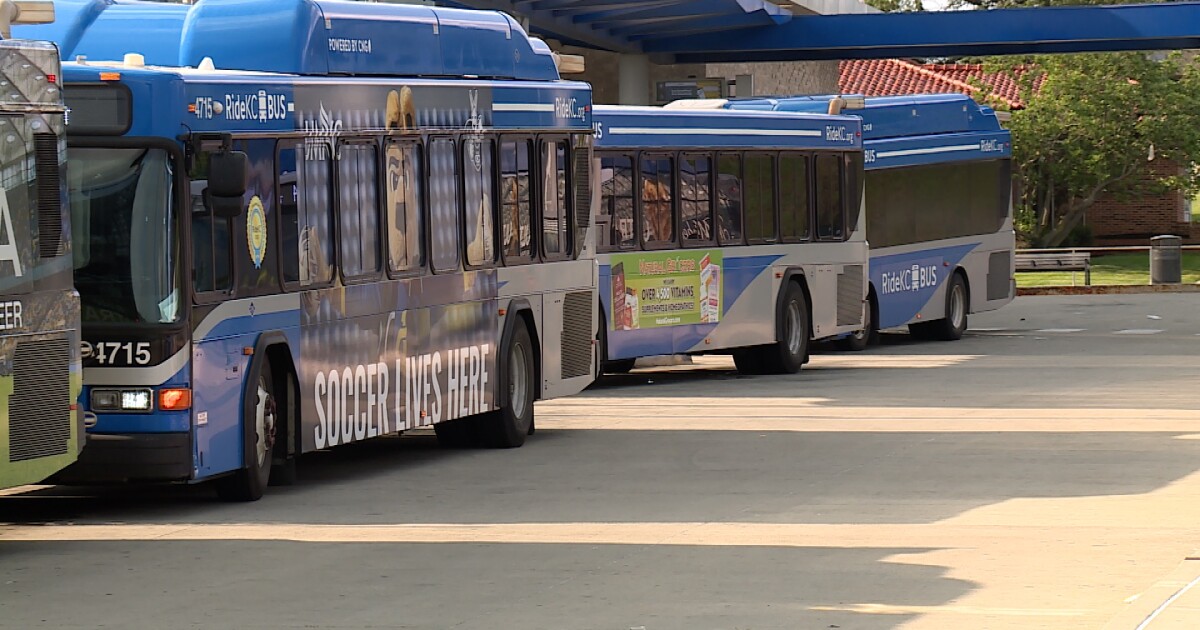 Kansas7 minutes ago
Kansas City to reduce bus transit frequency, extended hours after World Cup matches end
-

 Kentucky10 minutes ago
Public Health Student Hollie Hagan found her calling in rural Kentucky
-

 Louisiana15 minutes ago
Inside the lab at the heart of Louisiana’s mosquito-borne disease prevention network
-
 Maine22 minutes ago
Meet 16 obscure Maine Democrats shaping Graham Platner’s replacement
-

 Maryland25 minutes ago
Justice Department sues Maryland over immigration policies
-

 Michigan30 minutes ago
How two Michigan stamping plants power Stellantis turnaround plan
-

 Massachusetts37 minutes ago
3 hospitalized after vehicle crashes into Danvers business
-

 Minnesota40 minutes ago
Minnesota voter registration review finds county record errors

