Lifestyle
A Fashion Revolution at the Met


Fashion has always sat uncomfortably in the great art institutions of the West, the question of whether it belonged under the same roof as masterworks and heroic marbles a subject of perennial debate. After all, these creations weren’t hung on a wall or put on a pedestal; they were (cue dismissive sniff) worn. They may have been a part of pop culture, but could they really be classed with high culture?
In London and Paris the answer was to relegate dress to separate museums of decorative arts — the Victoria & Albert and Musée des Arts Décoratifs. And in New York, while the Metropolitan Museum of Art may have swallowed its pride in 1946 and deigned to accept the clothes, it put the new fashion department in … the basement. Talk about a metaphor for museum hierarchies.
This week, however, the Condé M. Nast galleries, a 12,000-square-foot permanent space, is being unveiled for the Costume Institute. The galleries have replaced the former museum gift shop, just to the right of the information desk in the Great Hall. Rather than being hidden below ground, the fashion department is now the first thing people see when they enter the museum.
Shh. Listen. Hear that? It is the sound of 80 years of argument ending.
And it is a reflection of the simple fact that it is now fashion that gets people through the doors of these august — some might say old — institutions. It’s the thing everyone can relate to and comfortably opine on, unlike, say, de Kooning, because, hey, everyone wears clothes.
If in doubt, simply consider that of the 10 most-visited Met exhibitions in modern history, half of them were Costume Institute exhibitions. No other department is represented more than once. Or consider “Costume Art,” the exhibition that opens the new space.
This year’s fashion blockbuster — the one celebrated by the Met Gala on Monday night — “Costume Art” both acknowledges fashion’s role as the new entry point to the museum and makes the case for why the change is long overdue. It’s as if the exhibition were holding out its hand and saying to all who enter, “Hello, let me be your guide to the treasures we have throughout this place.”
The show suggests that fashion — or “the dressed body” — is the essential connective tissue of the 17 different departments and 19 collecting areas of the Met, the one element present in every discipline, no matter what century or art form is under discussion. It does this by pairing approximately 200 garments and accessories with 200 pieces of art borrowed from across the museum’s six miles of galleries.
You see the connection from the moment you enter the soaring new space, through an anteroom just off the Great Hall, dedicated to what is now termed “naked dressing.” Think Dilara Findikoglu’s 2023 sheer dress with strategically placed coils of hair, like Lady Godiva fashion cosplay, paired with an 18th century Venetian bronze nude, the hands strategically placed just like the hair. That’s one way to hook ‘em.
The Museums Special Section
It’s no accident that the entry also includes a double-sided vitrine that houses four mannequins. Two of them face outward toward the grand staircase and wear sheer body stockings, one by Vivienne Westwood and one by Andrea Adamo, each with a silver fig leaf over their nether regions. Andrew Bolton, the Costume Institute’s curator in charge, has never been afraid of playing to the crowd.
Created by Miriam Peterson and Nathan Rich of the architecture firm Peterson Rich, which also designed the exhibition, the galleries have been conceived to fit seamlessly into the existing semiology of the museum. They are floored in white granite, replete with classic pedestals and platforms, and bathed in a soft glow (since fabric is too fragile to be exposed to daylight, this has been created by recessed uplighting). It’s as if the new galleries had always been there; as if fashion had always belonged.
Rather than dress up the exhibition with fancy scenography, or guest film directors as Bolton has often done in the past, the space allows the interplay between fashion and the rest of the galleries to sit front and center. It is, after all, a relatively straightforward idea: an Issey Miyake molded gold breastplate and a mini-me Etruscan cuirass! A Fortuny pleated Delphos gown and a Greek terra-cotta vase featuring a figure in a pleated gown! A Rei Kawakubo for Comme des Garçons armless felted construction and a stone Henry Moore with the exact same curves.
And really, it’s hard to argue with the connection between Van Gogh’s “Irises” and the Yves Saint Laurent jacket that reproduced that painting in sequins, or the Loewe shirt by Jonathan Anderson that did the same on a feather-festooned couture version of a concert tee.
But such banal relationships are actually few and far between in the show, which is after something deeper and more complicated. There is, thankfully, no Mondrian “Broadway Boogie Woogie” with matching dresses in the exhibition; no Warhol soup cans and Warhol soup can shifts.
Warhol is represented, natch, but by a Richard Avedon portrait of the artist’s bullet-scarred torso, juxtaposed against a Coperni dress, its slashes resected with silver spirals. Even those Van Gogh irises turn out to be linked not just by flowers, but by the mental health struggles of the men who made the works, the way both the designer Chet Lo’s gowns covered in little knit spikes and Picasso’s “The Blind Man’s Meal” reflect the importance of tactile understanding.
Indeed, the organizing principle of the show, rather than chronology, is the body itself: both the kinds of bodies that distinguish us, and the bodily experiences we share. And that is the product of a fairly radical rethinking of how fashion relates to art.
For decades, the justifications for considering fashion as an art form involved denaturing it, separating it from its practical purpose and corporeal reality, and focusing instead on its textile value — embroidery, beading, decoration — or its construction. With this show, Bolton is slyly subverting that idea, suggesting instead that it is fashion’s dependence on the body itself that makes it central to any and all art practices: That the real connective issue between fashion and art is the way in which both are used to challenge and shape perception — of the body, of beauty; of who we are and how we see. Understanding the one helps to understand the other.
That’s why the clothes in this exhibition often sit atop the art, a subtle upending of the traditional status quo that speaks to both Bolton’s thesis and the department’s new status. It’s also why the exhibit layout serves to guide you through a maze of bodily types in its two main galleries, the Thom Browne gallery, and the Michael Kors and Lance Le Pere gallery. Among them are the classical body, the corpulent body, the disabled body, the pregnant body, the inscribed body, the anatomical body and the mortal body.
(The terminology, the product of consultation with different interest groups, can be a little abstruse, but the taxonomy has led to one real change: the creation of mannequins beyond the unrealistically thin and sylphlike.)
You don’t have to get any of this to enjoy the show, of course. It may be less magical than some Costume Institute shows such as 2011’s “Alexander McQueen: Savage Beauty,” 2018’s “Heavenly Bodies: Fashion and the Catholic Imagination,” and even last year’s “Superfine: Tailoring Black Style.” But it is delightful to happen upon an unexpected treasure, such as a miniature Egyptian Omphale figure that seems to glow from within, or Fred Tomaselli’s 1992 work “Behind Your Eyes,” a life-size male nude with a body built out of pills that the Met acquired in 2019 but that has never been shown. Or, for that matter, to discover the beauty in the blood red venous structures of a Robert Wun gown, like a flayed dress.
The fashion masters (Worth, Vionnet, Kawakubo and so on) are all here, sure, like the old masters, but so are many more names most people will not know. As a sign of what sort of role fashion is going to play in the Met going forward, “Costume Art” is a clear statement of intent.
The last room in the exhibition acts as a bookend to the first, focusing not on nudity, but on skin itself before disgorging visitors into the Byzantine galleries. Anders Bergstrom’s wrenching “Brown Bag Test,” which wrestles with early-20th-century racism and the way skin tones were used for discrimination, is there, along with Christian Louboutin’s set of “Hot Chick” stiletto shoes in eight different shades of nude. Both are set against the backdrop of the original brick and concrete outer wall of the Met, which was hidden when the Great Hall and grand entry staircase were added in 1902.
The wall was uncovered when the gift shop was demolished, and it has been left in its original state, as if to remind you that it, too, has been here all along. It’s just that, like the foregrounding of fashion in art, it took this long for everyone to realize it. Now that they have, there is room for an even more interesting question: What’s next?
Cinematography by Jensen Gore.
Costume Art
Members Preview, May 5, 7-9; opens May 10 — Jan. 10, 2027, Metropolitan Museum of Art, 1000 Fifth Ave., 212-535-7710; metmuseum.org.



Lifestyle
Terry Tempest Williams on why women with big ideas get labeled ‘crazy’ : Wild Card with Rachel Martin

A note from Wild Card host Rachel Martin: I met Terry Tempest Williams about 25 years ago at a writer’s conference in Yosemite Valley. I was a young reporter who was there to do a story about how literature was addressing climate change and she made such a huge impression on me. I had never heard someone talk about the natural world the way Terry did and she had a spiritual depth I hadn’t encountered in my life at that point.
To this day, Terry’s writing always reorients me towards what is good, what is beautiful, and what is true. Her newest book is called “The Glorians.”

For its upcoming Los Angeles venue, experiential art firm Meow Wolf will focus on the art of storytelling, with a specific eye toward skewering our city’s moviemaking magic. To help bring that vision to life, Meow Wolf has entered into a creative partnership with Titmouse, one of L.A.’s most renowned independent animation houses.
The Hollywood-based studio behind popular series such as “Big Mouth” and “Star Trek: Lower Decks” will create animation that will be shown throughout the West L.A. venue, which is on target for a late 2026 opening at the Howard Hughes entertainment complex.
It’s a move that represents a shift for Santa Fe, N.M.-based Meow Wolf. Over the last decade-plus, the art collective has grown beyond its anything-goes, punk-meets-psychedelic roots into an organization with full-scale, maximalist installations in its hometown, Denver, Las Vegas, Houston and the Dallas suburbs. In the past, Meow Wolf kept most of its media in-house.
As part of its larger-than-life participatory art installations, Meow Wolf L.A. will feature a mix of live action and animation, the former filmed by Meow Wolf in its Santa Fe studio. Meow Wolf’s James Stephenson, a senior VP with the company and its creative director of emerging media, said the degree to which the L.A. exhibition will lean into various animation styles necessitated an outside partner. Titmouse’s work, in development by a number of directors with contrasting tones, will be shown on a variety of formats, ranging from cinema screens to full-room projections.
“I really believe in animation as an art form, and I know the Titmouse folks do too,” Stephenson says. “Animation is made by artists. It’s made by artists with their own hands. It’s something that is still very rooted in craft.”
Meow Wolf’s L.A. space is set in a former cinema complex, and will champion its location, taking guests on a journey through a converted movie house and beyond, into a sci-fi-inspired fantasyland with sentient spaceships and a 30-foot-tall mushroom tower. Meow Wolf creatives have spoken of the fantastical movie theater as one that will feature animated, self-aware candy before attendees enter the main exhibition space, making Titmouse’s work some of the first art guests will encounter. Titmouse co-founder Chris Prynoski has said the studio has lined up at least six directors for the exhibit.
An in-progress art installation destined for Meow Wolf L.A. at the art collective’s Santa Fe, N.M., headquarters. The L.A. exhibition will feature animation from Titmouse.
(Gabriela Campos / For The Times)
Titmouse, says Stephenson, is the right partner because “they’re known less for a house style, and more for a house vibe.” Over the years, Titmouse has been behind such diverse shows as “Scavengers Reign,” owning a Jean Giraud influence rooted in French and Spanish surrealism, the lively “Jentry Chau vs. the Underworld,” with an unique color palette that took inspiration from anime and Chinese mythology, the exaggerated comic book feel of Adult Swim’s “Metalocalypse,” and the approachable yet expressive tone of “Star Trek: Lower Decks.”
“Meow Wolf’s vibe is similar to Titmouse’s vibe,” Stephenson says. “It’s artist-first, artist-driven, independent and kinda edgy. They are always trying to find the edge of what’s possible. They try to see how far they can go, and it’s done for fun and in the spirit of taking risks.”
Prynoski says working with Meow Wolf will give Titmouse a sense of artistic freedom it doesn’t always have when delivering content for more traditional Hollywood partners. He says the multi-director approach is a callback to the early days of Warner Bros. Animation, when individual creators put their own stamp on Looney Tunes material.
“I use Bugs Bunny as an example,” Prynoski says. “You’ve got a Friz Freleng Bugs Bunny short. You’ve got a Chuck Jones Bugs Bunny short. You’ve got a Tex Avery Bugs Bunny short. They’re all different versions of Bugs Bunny, and people who are really paying attention can tell which director directed each one. Even though to the layman, these are all Bugs Bunny, but if you lined them up, they are drawing in different styles, sensibilities and techniques.”
Prynoski says that was a centerpiece of his pitch to Meow Wolf, noting that characters will reappear in multiple installations, each handled by a different artist. Meow Wolf L.A., in fact, will be the firm’s most character-driven exhibition, as guests will follow the storylines of three main protagonists throughout the space.
In announcing the partnership, Meow Wolf and Titmouse released an image from an animated work directed by Luca Vitale. It features a key character having a moment with a hummingbird and it’s done in an elegant, slightly anime-influenced style. It’s an image full of movement, reflecting a character in transition with inviting pastels and bold dashes.
“I like that image because I think it captures some of the sense of wonder that we want people to feel,” Stephenson says. “The character is having an encounter with the elusive nature of creativity and reality in a way that makes them have a different perspective of what’s possible.”
Other contributing animation directors to Meow Wolf L.A. include Space Dawg, Felix Colgrave, Alexander Vanderplank and Phimémon Martin, and Jun Ioneda.
Titmouse’s partnership with Meow Wolf will extend beyond the L.A. exhibition. The two will be working on the development of Meow Wolf New York, which is slated to open some time after Los Angeles, and are collaborating on a planned animated series, which Prynoski is spearheading.
Meow Wolf exhibits are the result of sometimes hundreds of disparate artists coming together in a shared space. Distilling that into a signature, singular style for a series could be a challenge. Stephenson pinpoints some guiding principles.
“You really need to feel the hand of the artist,” he says. “You need to feel a DIY aesthetic. You need to feel the materiality. Those are very specific to what we are.”

The Kennedy Center on June 28, with its facade signage still covered by a tarp and scaffolding.
Alex Wroblewski/AFP via Getty Images
hide caption
toggle caption
Alex Wroblewski/AFP via Getty Images
On Wednesday, a federal appeals court denied President Trump’s request to stop the removal of his name from Washington, D.C.’s Kennedy Center. The signage on the building has been covered with tarp and scaffolding since June 13, but in a court filing last month, the center’s current executive director said that Trump’s name has been removed.
In their decision, three judges from the U.S. District Court of Appeals for the District of Columbia Circuit said that the president had failed to prove that the arts center would be “irreparably injured” without Trump’s name attached to it.

NPR requested comment from the Kennedy Center, but did not receive an immediate reply.
This latest round of court decisions is part of the ongoing litigation filed by Rep. Joyce Beatty, D-Ohio, against President Trump and the board of the Kennedy Center. In a statement emailed Wednesday to NPR, Beatty said: “Today’s ruling again affirms that this administration’s efforts to rename the Kennedy Center were unlawful. His name no longer desecrates this sacred memorial, which belongs to the American people. Now it is time for the Trump administration to accept this, comply with the law, and take the tarps down.”
In previous court filings, Trump’s legal team had asserted that removing the president’s name from the arts complex, both on the physical building and in its digital materials, would inflict irreparable harm in both time and money already spent. In the denial, the three judges — Patricia Millett, Robert Wilkins and Gregory Katsas — wrote that since Trump’s name has already been removed, “a stay would not avert those harms.”
Furthermore, Trump had claimed that without his name attached, future fundraising would be threatened “and [will] contribute to the financial decline of the Center.” In response, the appeals judges wrote: “Appellants, however, have failed to support this assertion with any specific facts or evidence. They offer only the conclusory assertions of the Kennedy Center’s Executive Director that were made in a factually unsupported declaration.” The center’s current executive director, Matt Floca, specializes in physical plant management.
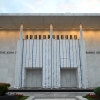
The presiding judge in the case, Christopher R. Cooper, has ordered that the center provide him a status report on the center’s operation and programming before the end of this month. As of Wednesday, the center’s calendar lists a small roster of programs, including outdoor free movie screenings, workshops for children, and five free live performances in July on its Millennium Stage. In the past, the Kennedy Center presented over 2,000 arts and education events each year, including free daily Millennium Stage performances.

-

 Los Angeles, Ca4 minutes ago
California teen e-biker baiting police to chase tracked by drone, arrested
-

 Detroit, MI24 minutes ago
Our picks for state\nSenate from Wayne Co. | Endorsements
-

 San Francisco, CA34 minutes ago
Man reported missing in San Francisco
-

 Dallas, TX39 minutes ago
How to buy France World Cup semifinal soccer tickets in Dallas
-

 Miami, FL46 minutes ago
Miami-Dade Schools names six semifinalists for superintendent
-

 Boston, MA49 minutes ago
Lawsuit: ICE detained East Boston father despite legal status
-

 Denver, CO54 minutes ago
Victor Marx wins GOP primary for Colorado governor, defeating veteran lawmaker after unorthodox campaign
-

 Seattle, WA1 hour ago
Widower of pregnant woman who was shot to death in Seattle sues homelessness authority

