Business
This Rivian spinoff is reinventing e-bikes in California with screens, software and swappable seats


Rivian Automotive has attracted die-hard fans by building a battery-powered truck with enough muscle for off-roading as well as the acceleration and suspension to comfortably glide through city streets. Its little brother — a company called Also — is trying to do the same for e-bikes.
The Palo Alto company wants to reinvent the battery-driven bicycle using a powerful generator and software to change the look, feel and capabilities of two-wheelers. Also announced its flagship bike last October and is preparing to begin deliveries later this year.
E-bike enthusiasts often need separate bikes for different uses. Some bikes are good for carrying kids and cargo, others for daily city commutes. Another type is good for biking rough mountain paths.
Also claims its e-bikes can do it all by swapping out a few key components and pressing a button, so the bike behaves differently depending on the day’s needs.
“Let’s take the same approach as Rivian, the latest and most modern EV approach in architecture, but re-optimize it for smaller-than-car modes,” said Chris Yu, president and co-founder of Also. “The best EVs have new features and new capabilities that come through a software update every few weeks.”
Also’s e-bike, dubbed the TM-B, starts at $3,500 and can travel up to 28 miles per hour. Many e-bikes are available for around $1,000, though some high-end options go for more than $5,000.
Also President Chris Yu poses with an Also e-bike at the company’s headquarters April 13 in Palo Alto.
(Jess Lynn Goss / For The Times)
The company is betting that the $57-billion global e-bike market and $3-billion U.S. market have room for a new player with a unique offering. It’s also making a four-wheel electric vehicle with pedals designed to deliver cargo.
Yu, a Stanford-educated aerodynamics engineer and former bike racer, had done an internship at NASA and ten years at bicycle manufacturer Specialized before he met Rivian Chief Executive RJ Scaringe in 2021. The two hit it off, and Yu joined Rivian in 2022 to work on a new secret project to develop smaller electric vehicles.
Also split off from Rivian in 2025. Irvine-based Rivian owns a minority share in it.
Also, which employs about 300 people, would not share whether it was profitable or how many bikes it plans to produce per year. In a promotional video earlier this year, an Also employee said the company hopes to eventually produce hundreds of thousands of units per year.
Like Rivian, Also makes all the major parts of its products, from the handlebars to the circuit boards. Also wants to offer e-bike riders the same software-powered ease and customization that has become standard in high-end electric cars from Rivian and Tesla.
“We can really craft an experience that mirrors a modern car-like experience,” Yu said. “We’re taking that recipe and applying it to this really fast-moving electrification of smaller things.”
Its TM-B e-bike is decked out with features, including Bluetooth, GPS, Wi-Fi, a built-in touchscreen, and software that supports over-the-air updates. Riders can switch out their bike’s seat and wheels depending on whether they are riding to work, dropping off kids or tackling a mountain trail.

A rack of motor and transmission components for e-bikes and other vehicles at Also headquarters in Palo Alto.
(Jess Lynn Goss / For The Times)
The company is hitting the market during a rocky period for the e-bike industry. After a pandemic-era boom in demand that led to a proliferation of options, many e-bike companies have struggled with slowing interest and rising costs.
Rad Power Bikes, once a leading brand in the U.S., filed for Chapter 11 bankruptcy in late 2025 and was sold to Life Electric Vehicle Holdings in January for $13.2 million, a 99% drop from its peak valuation. Its competitor, Juiced Bikes, collapsed in 2024. Late last year, Porsche scrapped its plans to launch its own e-bikes, citing a cooling market in its statement.
David Zipper, a micromobility expert and senior fellow at the MIT Mobility Initiative, said he isn’t convinced there’s heavy demand for a product like the TM-B.
“I have never met anyone who said, ‘I really wish my bike could take over-the-air updates,’” he said. “Part of the beauty of the bicycle is its simplicity.”
Yu hopes Also’s bikes will speed up the electrification of micromobility, but Zipper said the bikes’ complexity and price point might hinder that mission.
“A lot of people won’t feel like they can afford it, and for that reason, I don’t necessarily see it as being transformational,” Zipper said. “They have a lot of interesting technology, but if we’re trying to really change American transportation, I’m not sure that a luxury, software-enabled e-bike is the first place I’d look.”
Yu said electric micromobility is going to surge as more cities ban combustion engines from certain areas. Hanoi banned gas-powered two-wheel vehicles in the city center and Paris closed a core part of the city to cars last year.
Also is partnering with Amazon to use its four-wheel electric vehicle, called the TM-Q, to expand Amazon’s micromobility delivery fleet across Europe and the U.S. Also did not share when its delivery vehicles would be deployed.

“We can really craft an experience that mirrors a modern car-like experience,” said Also President Chris Yu, pictured at the company’s headquarters earlier this month. “We’re taking that recipe and applying it to this really fast-moving electrification of smaller things.”
(Jess Lynn Goss / For The Times)
“There are hundreds of millions of smaller-than-car vehicles today that will, almost without debate, electrify over the next decade,” Yu said.
The TM-B and TM-Q rely on the same underlying technology, but are designed for different use cases, Yu said. They differ from other products on the market in the way the pedaling mechanism works — the e-bikes have no chains.
“There’s no physical connection between your input and the result of the bike moving,” Yu said. “It’s all software. We turn your leg power into electrical power, we send that electrical power to the battery, and then the battery sends it to the wheel.”
Also’s engineers have worked to mimic the feeling of riding a real bike and shifting gears even without a chain connecting the pedals to the wheels. Riders can choose an electric-assist level that makes pedaling easier or harder.
The bike charges to full battery in a couple of hours and has a range of 25 to 100 miles, depending on the level of electric assist used.
Its battery is a removable block that can charge separately from the bike and even be used as a power bank at the beach or on camping trips.

A close-up look at the motor and transmission mechanism of an Also e-bike, which charges to full battery in a couple of hours.
(Jess Lynn Goss / For The Times)
Using more software and fewer moving parts makes Also’s e-bikes more efficient, durable and easier to handle, the company says. It also lets the bikes perform differently depending on need.
Ed Benjamin, chairman of the Light Electric Vehicle Association, said Also’s approach reflects the direction the small EV industry is heading in.
“The future of electric two-wheelers is going to be driven by software,” he said. “In new cars, the software provides safety features, comfort features and efficiency features. The same thing is going to happen with bikes.”



Business
Many indie festival films struggle to get distribution. Alamo Drafthouse is trying to change that
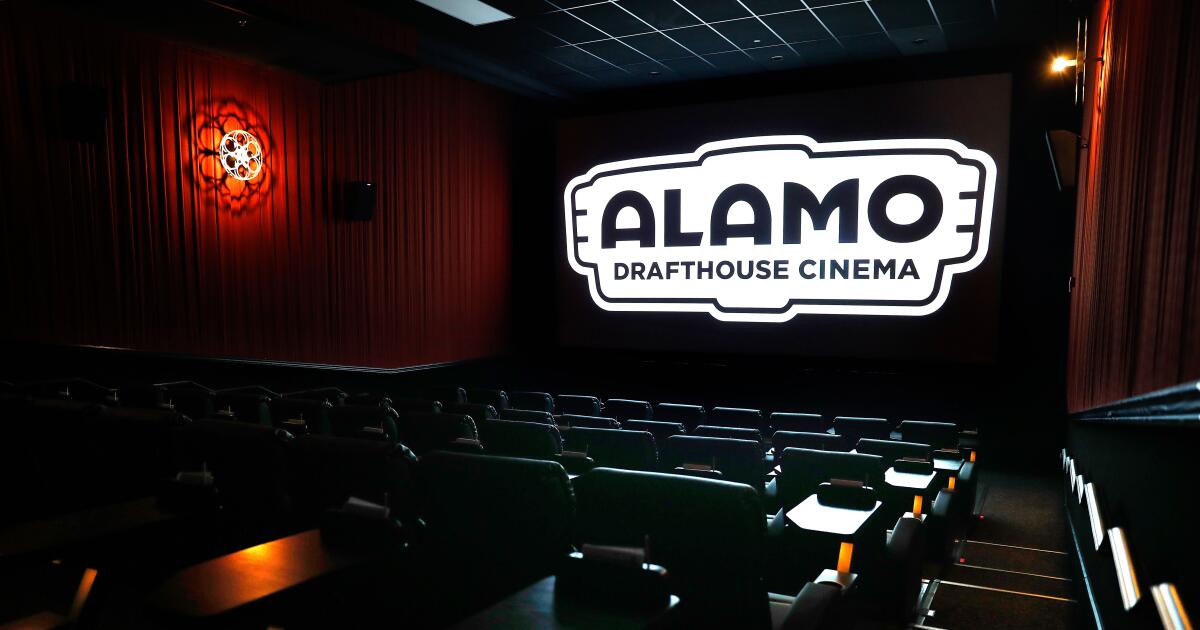
Dine-in movie theater chain Alamo Drafthouse Cinema is launching a new initiative to show unreleased independent films that had successful festival runs, a move that comes as specialty films have struggled to gain distribution.
The Alamo Exclusives program, announced Wednesday, will give limited theatrical runs to films that showed at festivals including Sundance, the Toronto International Film Festival, Tribeca Festival and South by Southwest festival, as well as Alamo’s own Fantastic Fest.
The idea is to help showcase films that received critical acclaim, but did not secure distribution or acquisition deals. The chain will not acquire these films, but instead will enter into agreements with filmmakers to exhibit their films on Alamo Drafthouse screens. By showing these films to audiences on the big screen, these films could get the momentum they need for further opportunities.
The program’s first film will be the documentary “Butthole Surfers: The Hole Truth and Nothing Butt,” which debuted last year at South by Southwest and chronicles the history of the punk rock band.
The film will be shown in Alamo Drafthouse theaters for a limited time later this summer.
The Austin-based chain, which is owned by Sony Pictures, has a long history of curating indie films for its audiences, giving Alamo Drafthouse confidence that its viewers want to see these kinds of movies, company chief executive Michael Kustermann said in a statement.
“Time and again, they’ve shown they’ll come out to support bold, original films when given the opportunity,” he said. The new Alamo Exclusives “gives us another way to champion filmmaker-driven films that deserve to be discovered and connect them with the wider Alamo Drafthouse audience.”
The initiative comes at a difficult time for indie films. Since the pandemic upended the movie business, traditional studios and distributors have had less appetite for risk, including betting on smaller indie films out of festivals.
And as the 2023 dual writers’ and actors’ strikes thinned out theatrical lineups, that aversion to uncertainty became a push for reliable and profitable hits.
“Too many incredible films premiere at festivals and then never receive the theatrical life they deserve,” Lisa Dreyer, director of Fantastic Fest and film innovation at Alamo, said in a statement. “We are actively searching for films across all genres, from horror to comedy, to everything in-between, to champion in this new, exciting way.”
The recall of a popular chip brand over salmonella concerns was recently upgraded to the U.S. Food and Drug Administration’s highest level, just ahead of the Fourth of July holiday and countless backyard barbecues.
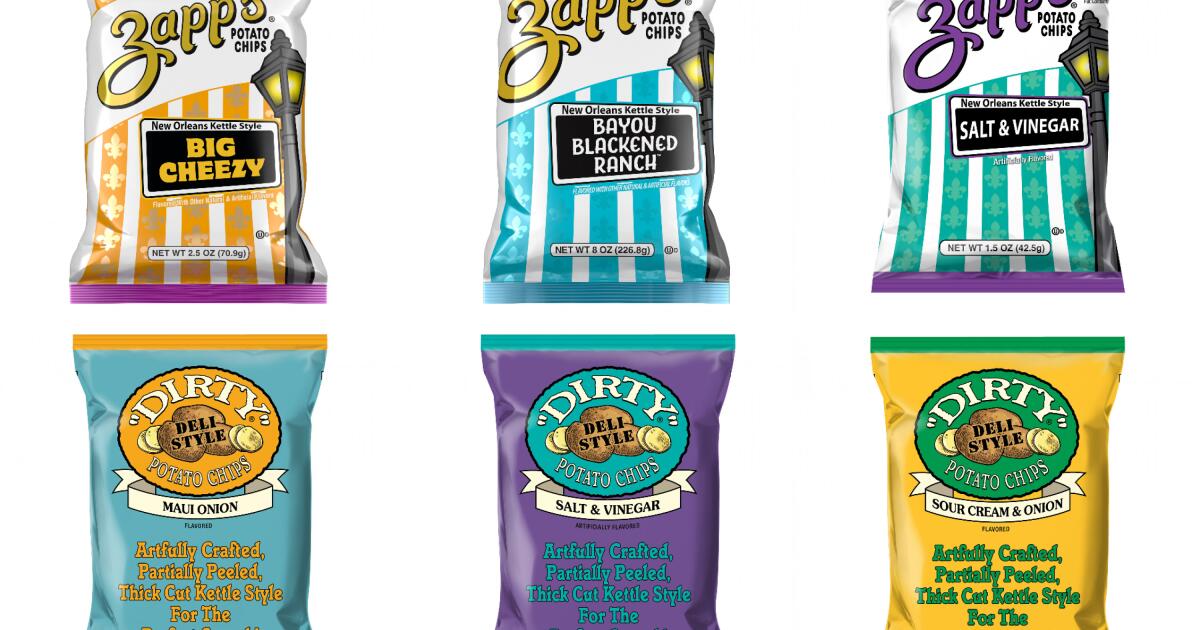
On June 24, the FDA designated the recall of several varieties of Zapp’s and Dirty brand potato chips as Class I, meaning it’s “a situation in which there is a reasonable probability that the use of or exposure to a violative product will cause serious adverse health consequences or death.”
FDA has classified the following items as Class I:
Zapp’s
- 1.5-ounce Zapp’s Bayou Blackened Ranch Kettle Chips
- 2.5- and 8-ounce Zapp’s Bayou Blackened Ranch Potato Chips
- 1.5- and 8-ounce Zapp’s Big Cheezy Potato Chips
Dirty
- 1.5- and 2-ounce Dirty Brand Salt and Vinegar Potato Chips
- 2-ounce Dirty Maui Onion Chips
- 2-ounce Dirty Sour Cream and Onion Potato Chips
The chips are produced by Utz Quality Foods, LLC, which on April 28 issued a recall after learning “that a seasoning containing dry milk powder, sourced from California Dairies, Inc. and supplied by a third-party supplier, may contain the presence of Salmonella.”
Salmonella can lead to sometimes deadly infections in elderly people, young children and those with weakened immune systems, according to the FDA.
More than 680,000 bags are included in the recall.
Anyone who has these products should not eat them and should discard them immediately.
What to look for
Salmonella is a foodborne illness that can be fatal to young children, pregnant women, older adults and people with weakened immune systems, according to the National Institutes of Health.
Symptoms may develop 12 to 72 hours after infection, according to the FDA.
The FDA said that people with strong immune systems infected with salmonella may experience fever, diarrhea (which may be bloody), nausea, vomiting and abdominal pain. The illness can last four to seven days.
In rare cases, the infection may produce more severe illnesses such as arterial infections, endocarditis and arthritis, the agency added.
What to do if infected
If you contract salmonella, the Centers for Disease Control and Prevention recommends drinking plenty of fluids to prevent dehydration.
The CDC advises consulting a doctor before taking antidiarrheal medicine or antibiotics. If severe symptoms continue after two days, seek medical help, the agency says.
Because those with diarrhea can spread salmonella to others, it’s also recommended to avoid sharing food or preparing meals for others, sexual contact and swimming in public pools, and to stay home while sick.
Times staff writer Jasmine Mendez contributed to this report.

The Minions took over theaters this weekend as Universal Pictures and Illumination’s “Minions & Monsters” won the top spot at the box office, though with a lower-than-expected domestic haul.
The animated movie, which follows the Minions’ takeover of Hollywood, took in $61.4 million in the U.S. and Canada for the five-day Fourth of July holiday weekend, according to studio estimates. That haul was lower than analysts’ expectations for a domestic opening of about $68 million. The movie’s three-day total was $36.4 million.
But the Minions performed well internationally, bringing in about $85 million. In total, “Minions & Monsters” made $159.9 million worldwide on a production budget of about $85 million.
The film is the latest in the powerhouse franchise that began with “Despicable Me” in 2010. Across its previous six installments, the “Despicable Me” and “Minions” franchise has made more than $5.6 billion at the global box office. The last movie, 2022’s “Minions: The Rise of Gru,” made more than $940 million worldwide.
“Minions & Monsters” marks the lowest opening for the franchise. Part of the issue could be timing — the box office can be negatively affected when the Fourth of July lands on a Saturday, said Paul Dergarabedian, head of marketplace trends at Rentrak.
Walt Disney Co. and Pixar’s “Toy Story 5” came in second at the box office this weekend with a domestic three-day gross of $31 million. Angel Studios’ biopic “Young Washington” ($20.8 million), Warner Bros. and DC Studios’ “Supergirl” ($9.6 million) and Universal’s “Disclosure Day” ($6 million) rounded out the top five, according to Rentrak.
The haul for “Minions & Monsters,” coupled with the strong holdover performance of “Toy Story 5,” proved again that family films are making a dent in the summer box office.
“Toy Story 5” has now brought in a total of $764.3 million worldwide, and last month, Universal, Illumination and Nintendo’s “The Super Mario Galaxy Movie” crossed $1 billion at the global box office, becoming the first film of any kind to do so this year.
The rest of the summer theatrical lineup is also expected to bring in audiences and push domestic box office totals closer to pre-pandemic figures. Next week, Disney will release its live-action “Moana,” followed by Christopher Nolan’s “The Odyssey” and Sony Pictures’ “Spider-Man: Brand New Day.”
To date, the summer box office is now about $2.3 billion, a nearly 12% increase compared with the same period a year ago, according to Rentrak data. Compared with pre-pandemic 2019’s numbers, however, it is still down about 7%.
-

 Virginia4 minutes ago
How Virginia became the world’s data center capital and how it’s going – WTOP News
-
Washington7 minutes ago
Question of the week: What does Santana Moss think of Washington’s WR depth?
-

 Wisconsin12 minutes ago
Wisconsin Supreme Court puts ICE detainers suit on hold pending appeal
-

 West Virginia19 minutes ago
DEP Report: Parkersburg plant had prior fire containment issues
-

 Wyoming22 minutes ago
History of Laramie Jubilee Days: It Started As A One-day Fiddlers Contest And Chariot Race
-

 Crypto27 minutes ago
U.K.’s sanctions on cryptocurrency exchanges signal new focus on illicit digital financing – Compliance Week
-

 Finance34 minutes ago
UK Watchdog Urged to Consider Broader Oversight of AI Financial Firms | PYMNTS.com
-
Fitness37 minutes ago
How ‘exercise snacking’ can help you stay on track in winter


