Utah
Utah coach Morgan Scalley gifts $2 million to Utes football program


SALT LAKE CITY — Utah football coach Morgan Scalley is putting his money where his mouth is.
The newly-named head coach and longtime supporter of Utah athletics has stepped up the game by gifting the football program $2 million, the university announced Thursday.
“The University of Utah and particularly Utah athletics have been an extremely important and influential part of my life for as long as I can remember,” Scalley said in a statement. “My love for this place includes a vision of where we can go and what we can achieve, and it will require an increased effort from everyone who shares in that vision.
“Liz and I simply wanted to do something for this amazing place that shows our faith in and commitment to the future of this incredible university, and how excited we are for what’s to come.”
Scalley, who played safety at Utah and was an assistant coach for 18 years, was named head coach in December after longtime coach Kyle Whittingham stepped down and later took the Michigan head coaching position.
“I’m one of you,” Scalley declared at his introductory press conference in January. “All of you that are sitting in here that went through the same thing: I’m a fan. I’m a Ute. Have been forever, will be.
“When that time comes and I’m done, someone else will step up; I understand that. It’s not about me, it’s not about one person; it never will be. It is about these guys, it is about the players, and players win championships — teams win championships, not individuals. So while my name is going to be out there, and this is history, and I get it and I love it, it’s all about the guys.”
For Scalley, it was an opportunity to show his commitment to the university by donating to it in a significant way as he prepares to enter his first season as the program’s head coach.
“This extraordinary commitment by Morgan and Liz Scalley speaks to everything that makes them special and demonstrates their absolute love for the University of Utah,” athletics director Mark Harlan said in a statement. “Coach Scalley’s vision for the future of the Utah football program is not just a dream, but something that he actively works to bring to reality every day.”
Utah football will open up its spring camp on March 19.



State Sen. Todd Weiler previously shared a six-post thread about opponents of the Box Elder data center allegedly being paid by China.
(Rick Egan | The Salt Lake Tribune) Sen. Todd Weiler, R-Woods Cross, says a few words during a ceremonial bill signing to highlight landmark legislation that establishes Utah as a national leader in protecting kids online, in the Gold Room at the Capitol, on Friday, April 4, 2025.

Three firefighters were killed Saturday while battling two wildfires near the Colorado-Utah border, the U.S. Wildland Fire Service announced.
Emily Barker, 38, was from Michigan; Nick Hutcherson, 27, was from Arizona; and Sydney Watson, 26, was from Alabama.
Loved ones and friends started sharing tributes on social media, and FOX 13 News spoke to the loved ones of Emily Barker.
It all started when Sarah Brubeck was looking for a roommate in Colorado.
“Emily answered a random Craigslist ad,” Brubeck said. “We didn’t even know we had so much in common, so we had multiple hockey bags in our garage and multiple snowboards.”
Little did Brubeck know, she was getting a lot more than just a roommate.
“Grew to be more sisters than friends,” she said.
3 firefighters killed in wildfires
Just a couple of states over, Barker had touched the life of Kayla Lindsey.
“I met her when I was doing my interagency fire season with USFS and BLM Idaho,” she said. “You cannot see Emily and not want to talk to her.”
However, both friends’ worlds came crashing down when they heard the news that three firefighters did not make it while responding to the Knowles Fire along the Colorado-Utah border.
“One of our teammates was like, ‘Hey, Emily, let us know you’re safe,’ and she didn’t respond,” Brubeck said. “I just assumed she was out of service, and she would respond when she could, but she couldn’t.”
“I saw it first on Facebook,” Lindsey said. “I just kept reading it over and over, like, ‘That’s not the Emily Barker, I know that’s not my Emily.’”
Barker had died during a burn-over incident, something that hits close to home for Lindsey.
“I remember my first state fire, we pulled our shelters, and that’s never a good feeling. You never want to have to hear the words, ‘Get to your safety zone,’” she said. “I couldn’t imagine as strong as Emily was, how scared she must have felt when that happened, because that’s a terrible way to go.”
“She was more than life itself,” Lindsey added through tears. “She took so much interest in every person she met. She loved her job.”
While the world is getting to know Barker as a hero, her friends said it’s who she’s been all along.
“Showing up to house sit for free while we’re on our honeymoon or offering to carry someone’s hockey bag — she just gave of herself constantly,” Brubeck said.
“Didn’t matter how much she didn’t have in her cup, she always tried to fill everyone else’s,” Lindsey added. “I just wish we had more Emilys in the fire service.”
A wildland firefighter who knew the victims in Utah released the following statement:
“It’s times like these we’re reminded how truly dangerous our jobs are. Fire is the only natural disaster we ask men and women to stand in front of and stop. While we are often successful, sometimes the power of fire overtakes us, despite our best efforts and safest decision making. As we see so much criticism online about how we do our jobs, please remember our ultimate goal is to get every firefighter home safely. Saturday, we failed. The loss of Emily, Nick, and Sydney is burned in our souls. Our agencies and firefighters are hurting. We appreciate the public support now. And we hope that continues long after this has been forgotten for most of you. Because, for us, it is never forgotten. Every decision“It’s times like these we’re reminded how truly dangerous our jobs are. Fire is the only natural disaster we ask men and women to stand in front of and stop. While we are often successful, sometimes the power of fire overtakes us, despite our best efforts and safest decision making. As we see so much criticism online about how we do our jobs, please remember our ultimate goal is to get every firefighter home safely. Saturday, we failed. The loss of Emily, Nick, and Sydney is burned in our souls. Our agencies and firefighters are hurting. We appreciate the public support now. And we hope that continues long after this has been forgotten for most of you. Because, for us, it is never forgotten. Every decision, every pause in action, is because of a lost firefighter. To our fallen comrades… we’ll take it from here.”

SALT LAKE CITY (KUTV) — A part-time wildland firefighter is asking Utah leaders for more job protections after he said he was told he would lose his full-time job for accepting a call to respond to the Iron and Cherry fires.
Israel Justice has worked as a part-time wildland firefighter for 22 years. For the past seven years, he has also worked full time for an Ogden-based mechanical company.
Justice said his employer had previously accommodated the emergency nature of wildfire deployments, but that recently changed.
“This job requires, you know, last-minute, kind-of show-up-and-go,” Justice said. “They call you, and you have to leave immediately and respond to these incidents.”
MORE | Wildfire
Justice is currently assigned to the fire line. He said he does not know whether he will have a job to return to when his assignment ends.
“They were recently bought out by a larger corporation, and they’re not willing to work under the same terms we had before, where I would be free to leave and come back,” Justice said.
2News reached out to the company to ask about its unpaid leave policy, what has changed and whether Justice will have a job to return to. The company did not respond.
Justice said the uncertainty has forced him to choose between job security and answering a critical call for help.
“I don’t believe it’s asking much that these companies make a small sacrifice so we can come out here and serve,” he said.
Justice said he wants wildland firefighters to receive employment protections similar to those provided to National Guard members and certain volunteers.
“We’re out here doing the same job, putting our lives on the line to help others,” Justice said. “We’re out here serving and doing our part for the country, and all I ask is that we get a little protection so that when we get back home, we know we’ll still have a job and can continue to care for our families.”
Justice said the pressure of fighting a wildfire while not knowing whether he will be able to support his family when he returns makes an already dangerous job even more difficult.
He has written to Gov. Spencer Cox and Rep. Blake Moore asking for stronger employment protections for wildland firefighters and informing them of his situation. He said he has not heard back.
Rep. Moore provided the following statement:
“Our office hasn’t heard from this constituent about his situation, but we would encourage employers where they can to allow their employees to go fight the fires. I’m grateful to the many firefighters and first responders working to keep our communities safe, and I’m praying for their safety during this time.”
____
-

 World5 minutes ago
World’s oceans experience hottest June ever, scientists say more heat ahead
-
 News32 minutes ago
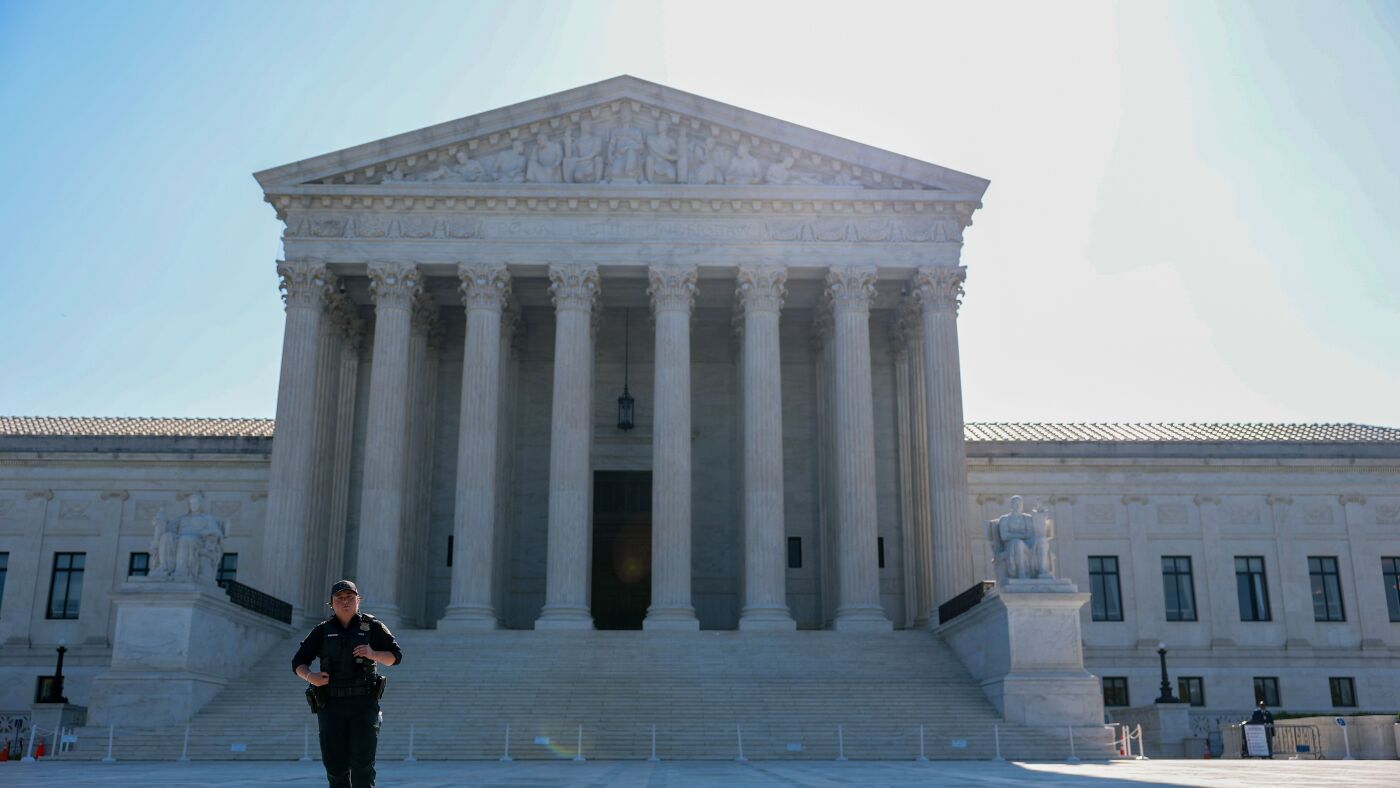
What the Supreme Court did on the final day of its term
-

 Los Angeles, Ca2 hours ago
Los Angeles County man convicted of sex trafficking, abusing woman he was dating
-

 Detroit, MI2 hours ago
Detroit Tigers tee off on New York Yankees with 5 homers in win
-

 San Francisco, CA2 hours ago
Popular brewery shutters San Francisco location amid industry woes
-

 Dallas, TX2 hours ago
Eight arrested after repeated attempts to enter World Cup matches without tickets
-

 Miami, FL3 hours ago
Reports: Heat add potent bench scorer in Tim Hardaway Jr.
-

 Boston, MA3 hours ago
Boston Pops gearing up for major July 4th celebration: ‘You only turn 250 once’ – Boston News, Weather, Sports | WHDH 7News

