San Diego, CA
San Diego Zoo Safari Park’s Elephant Valley: Get closer to elephants


San Diego — Before we see elephants at Elephant Valley in the San Diego Zoo Safari Park, we come face to face with destruction, only the wreckage is beautiful. A long, winding path takes guests around and under felled trees. Aged gray tree hunks form arches, for instance, over bridges that tower over clay-colored paths with hoof prints.
The design is meant to reorient us, to take us on a trail walked not by humans but traversed and carved by elephants, a creature still misunderstood, vilified and hunted for its cataclysmic-like ability to reshape land, and sometimes communities.
“It starts,” says Kristi Burtis, vice president of wildlife care for the Safari Park, “by telling the story that elephants are ecosystem engineers.”
Elephant Valley will open March 5 as the newest experience at the Escondido park, its aim to bring guests closer than ever to the zoo’s eight elephants, which range in age from 7 to 36, while more heavily focusing on conservation. The centerpiece of the 13-acre-plus parkland is a curved bridge overlooking a savanna, allowing elephants to walk under guests. But there are also nooks such as a cave that, while not previewed at a recent media event, will allow visitors to view elephants on their level.
In a shift from, say, the Safari Park’s popular tram tour, there are no fences and visible enclosures. Captive elephants remain a sometimes controversial topic, and the zoo’s herd is a mix of rescues and births, but the goal was to create a space where humans are at once removed and don’t impede on the relative free-roaming ability of the animals by keeping guests largely elevated. As an example of just how close people can get to the herd, there was a moment of levity at the event when one of the elephants began flinging what was believed to be a mixture of dirt and feces up onto the bridge.
“Our guests are going to be able to see the hairs on an elephant,” Burtis says. “They can see their eyes. They can see the eyelashes. They can see how muscular their trunks are. It’s really going to be a different experience.”
Elephant Valley, complete with a multistory lodge with open-air restaurants and bars, boasts a natural design that isn’t influenced by the elephant’s African home so much as it is in conversation with it. The goal isn’t to displace us, but to import communal artistry — Kenyan wood and beadwork can be found in the pathways, resting spaces and more — as a show of admiration rather than imitation.
“We’re not going to pretend that we’re taking people to Africa,” says Fri Forjindam, now a creative executive with Universal’s theme parks but previously a lead designer on Elephant Valley via her role as a chief development officer at Mycotoo, a Pasadena-based experiential design firm.
“That is a slippery slope of theming that can go wrong really fast,” she adds. “How do we recognize where we are right now, which is near San Diego? How do we populate this plane with plants that are indigenous to the region? The story of coexistence is important. We’re not extracting from Africa, we’re learning. We’re not extracting from elephants, we’re sharing information.”
But designing a space that is elephant-first yet also built for humans presented multiple challenges, especially when the collaborating teams were aiming to construct multiple narratives around the animals. Since meetings about Elephant Valley began around 2019, the staff worked to touch on themes related to migration and conservation. And there was also a desire to personalize the elephants.
“Where can we also highlight each of the elephants by name, so they aren’t just this huge herd of random gray creatures?” Forjindam says. “You see that in the lodge.”
That lodge, the Mkutano House — a phrase that means “gathering” in Swahili — should provide opportunities for guests to linger, although zoo representatives say reservations are recommended for those who wish to dine in the space (there will also be a walk-up, to-go window). Menus have yet to be released, but the ground floor of the structure, boasting hut-like roofing designed to blend into the environment, features close views of the elephant grazing pool as well as an indoor space with a centerpiece tree beneath constellation-like lighting to mimic sunrises and sunsets.
Throughout there are animal wood carvings and beadwork, the latter often hung from sculptures made of tree branches. The ceiling, outfitted with colorful, cloth tapestries designed to move with the wind, aims to create less friction between indoor and outdoor environments.
There are, of course, research and educational goals of the space as well. The Safari Park works, for instance, with the Northern Rangelands Trust and Loisaba Conservancy in Kenya, with an emphasis on studying human-elephant conflict and finding no-kill resolutions. Nonprofits and conservation groups estimate that there are today around 415,000 elephants in Africa, and the African savanna elephant is listed as endangered by the International Union for Conservation of Nature.
Studies of the zoo’s young elephants is shared with the Reteti Elephant Sanctuary in the hopes of delivering care to elephant youth to prevent orphanage. Additionally, the Safari Park has done extensive examination into the endotheliotropic herpes virus. “The data that we collect from elephants here, you can’t simply get from elephants in the wild,” Burtis says.
One of the two entrances to Elephant Valley is outfitted with bee boxes; bees are known to be a natural elephant deterrent and can help in preventing the animals from disrupting crops or communities. To encourage more natural behavior, the plane is outfitted with timed feeders in an attempt to encourage movement throughout the acreage and establish a level of real-life unpredictability in hunting for resources. Water areas have been redesigned with ramps and steps to make it easier for the elephants to navigate.
With Elephant Valley, Forjindam says the goal was to allow visitors to “observe safely in luxury — whatever that is — but not from a position of power, more as a cohabitor of the Earth, with as much natural elements as possible. It’s not to impose dominance. Ultimately, it needed to feel natural. It couldn’t feel like a man-made structure, which is an antiquated approach to any sort of safari experience where animals are the product, a prize. In this experience, this is the elephant’s home.”
And the resulting feel of Elephant Valley is that we, the paying customers, are simply their house guests.



So Justin Verlander is calling it quits, effective at the season’s end.
There’s Padres-related history to explore with Verlander, 43.
With it comes many groans.
San Diego passed on Verlander as part of the infamous, franchise-rocking decision to draft Mission Bay High School’s Matt Bush with the first overall pick in 2004.
Had the Padres chosen Verlander and tweaked the Old Dominion alum’s delivery, as the Tigers did soon after selecting him No. 2 overall, the best innings-eater of his generation could’ve headed San Diego’s rotation for many years.
As a National Leaguer, Verlander would’ve pitched against pitchers, rather than designated hitters. His annual ERA would’ve fallen by about a half run, per DH and no-DH data of that time.
The Padres would’ve boasted a generational monster atop their rotation as soon as 2006, when Verlander won the American League rookie of the year award with Detroit, while the San Diego rotation featured next year’s NL Cy Young winner, Jake Peavy.
Recall also that Petco Park, from its opening in 2004 until its remodel in 2012, played as big as Yellowstone National Park.
Not that the DH rule greatly impeded Verlander, a nine-time All-Star.
Many times over, the ace rewarded Tigers general manager Dave Dombrowski and scouting director Greg Smith for drafting him one spot after Kevin Towers and Bill Gayton — their options reduced by Padres owner John Moores’ stated opposition to drafting Scott Boras-assisted prospects Jered Weaver and Stephen Drew — selected Bush, the easy-to-sign but troubled shortstop turned pitcher.
Verlander helped Detroit reach its first two World Series in decades. He led the league in innings three times as part of chewing up 200-plus innings in eight consecutive seasons.
Dombrowski had displayed an unwavering faith in betting big on hard throwers.
Unfazed by power-righty Kyle Sleeth breaking down soon after he took him third overall in 2003, Dombrowski and Smith, a former Padres scout, became dead set on taking Verlander if the Padres didn’t.
Why didn’t Towers and Gayton choose Verlander?
Foremost, the Padres generally didn’t like him as much as the Tigers did.
In fact, they preferred Weaver and Drew.
But Moores all but blocked his scouts there. He was openly critical of their adviser, Boras, saying he didn’t trust him. The two had clashed in the Kevin Brown talks that ended with Brown joining the Dodgers, months after Brown had led the Padres to the 1998 World Series.
Moores was subjected to other kinds of pressure, too. Legal complaints had delayed Petco’s construction. Those complaints all failed in court. But in the interim, the price of steel rose. Padres ownership bore that cost.
Even though Moores’ baseball staffers whiffed on Verlander and failed miserably in choosing Bush, Moores put them in a tough spot. He in effect removed two players who would both pan out as big leaguers.
Someone with the Tigers correctly foresaw that shortening Verlander’s stride would sharpen his control. Untroubled by his 21-18 college record and bursts of subpar accuracy, the Tigers’ duo touted the 6-foot-5, 240-pounder’s “electric” combination of size, velocity and a powerful curveball.
Signing Verlander wasn’t easy.
David Verlander, the pitcher’s father and a union organizer with experience in sticky negotiations, said a contractual impasse led him to negotiate directly with Smith, leading to a deal, per CWA-Union.org.
The sides agreed on a $3.12 million signing bonus, which was less than the $3.15 million bonus the Padres paid to Bush, who was advised by Jeff Moorad.
The Boras-advised Weaver and Drew, who went 12th and 15th to the Angels and Diamondbacks, respectively, got $4 million apiece — but they and Verlander each got major league contracts, increasing the value of all three deals.
It wasn’t until close to the 2005 draft that Weaver was signed. He nonetheless returned great value to the Angels.
Verlander went on to pitch for the Astros after GM Jeff Luhnow obtained him at age 34 from Detroit.
Verlander became a better pitcher with Houston, benefiting from the tech-and-data-driven edges the Astros provided him. Verlander embraced high-speed camera data, eventually dropping his two-seam fastball and limiting his rising fastball to high in the zone. Prodded by high-speed imagery, he adjusted his slider grip.
He won his second and third Cy Youngs with the Astros, and now stands 266-159 with a 3.33 career ERA in nearly 3,600 innings.
For baseball’s hungriest fanbase, he represents a case of what might have been.
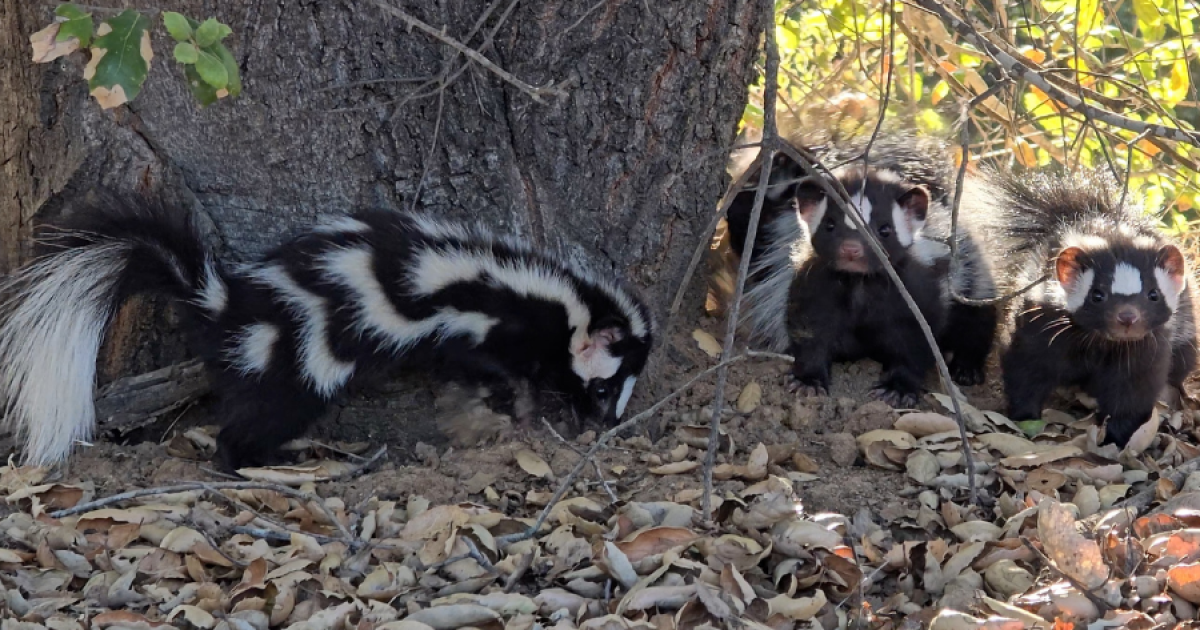
RAMONA (CNS) – Four rare western spotted skunks were released back in the wild after weeks of rehabilitation and socialization at the San Diego Humane Society’s Ramona Wildlife Center, officials announced Wednesday.
The successful release marks a major milestone for a species rarely seen in wildlife rehabilitation. The group included one orphaned skunk that was flown more than 400 miles by Flying Tails Animal Rescue from Sierra Wildlife Rescue in Northern California to join an orphaned group in Ramona, according to the SDHS.
The four skunks were returned to a carefully selected, remote habitat in Valley Center after reaching the necessary weight and developmental milestones to thrive on their own.
Western spotted skunks are a rare sight for the Humane Society’s Project Wildlife team. While the wildlife center typically handles hundreds of striped skunks each year, admitting six spotted skunks from different litters in one season is unusual. Spotted skunks are generally found in remote forested areas and are not as common in urban neighborhoods, officials said.
“We have never seen this many western spotted skunks in a single season before,” said Autumn Welch, wildlife operations manager at the Ramona Wildlife Center. “Because they are more reclusive than striped skunks, they require very specific care and even more secluded release sites to ensure they can stay wild.”
Socialization is critical for orphaned spotted skunks. During their stay at the Ramona Wildlife Center, the group became a bonded unit — exploring, digging and sleeping together, according to SDHS officials. Experts say these social cues prevent habituation to humans and teach the orphans natural skunk behaviors.
While four members of the group have returned to the wild, two spotted skunks remain in care at the facility. The smallest skunk was moved to an outside pre-release habitat and introduced to a slightly older skunk in late June.
Wildlife officials said by keeping the pair together, the wildlife team ensures the younger skunk will have a companion to learn from until they are both ready to be released, likely within the next month or two.
Anyone who finds an injured, sick or orphaned wild animal is encouraged to visit sdhumane.org/wildlifehelp or call 619-299-7012.
Copyright 2026, City News Service, Inc.

SAN DIEGO (FOX 5/KUSI) — A 33-year-old man was sentenced Tuesday to 325 years to life in prison for sexually abusing two 6-year-old girls, in addition to a slew of other felony sex abuse charges, according to the San Diego County District Attorney’s Office.
Christopher T. Gardner was convicted of 15 felony sex abuse charges, which included molesting the two girls, who were relatives of his, over a five-year period.
The abuse reportedly first came to light when one of the victims told a friend in confidence during a sleepover that she had been touched inappropriately. The friend then told her mother, who contacted law enforcement.
After Gardner was arrested, a third victim came forward, who was also a relative. Now a young adult, the victim said that when she was 7-8 years old, Gardner sexually assaulted her.
During the nine-day trial, the first two victims reportedly testified to multiple vulgar acts of sexual abuse by Gardner.
“Predators who rob children of their innocence and inflict lifelong trauma do not belong in our communities,” DA Summer Stephan said. “This sentence sends an unmistakable message to abusers: you will be held accountable. I am deeply grateful to our specialized sexual abuse prosecution team for their dedication in bringing a measure of justice to the survivors.”
-

 Nebraska4 minutes ago
Nebraska softball coaching staff finalized with a contract extension
-

 Nevada11 minutes ago
Odd and beguiling ‘Rose of Nevada’ will haunt viewers
-

 New Hampshire14 minutes ago
New Hampshire Gov. signs law requiring schools to out trans kids
-

 New Jersey19 minutes ago
What to know about Freedom Fuel Network as Trump urges cheaper gas prices in Pennsylvania, NJ
-
North Carolina24 minutes ago
NC Lottery Powerball, Pick 3 Day results for July 8, 2026
-

 New Mexico26 minutes ago
Wild rat in New Mexico tests positive for the plague after 4 confirmed cases in dogs
-

 North Dakota34 minutes ago
Today in History, 1975: Earthquake rattles portions of Minnesota and the Dakotas, including Fargo-Moorhead
-

 Ohio41 minutes ago
Is another team ready to take over the top of the Big Ten from Indiana and Ohio State?

