Business
Meta, TikTok and others agree to teen safety ratings


Meta, TikTok and Snap will be rated on their teen safety efforts amid rising concern about whether the world’s largest social media platforms are doing enough to protect the mental health of young people.
The Mental Health Coalition, a collective of organizations focused on destigmatizing mental health issues, said Tuesday that it is launching standards and a new rating system for online platforms. For the Safe Online Standards (S.O.S.) program, an independent panel of global experts will evaluate companies on parameters including safety rules, design, moderation and mental health resources.
TikTok, Snap and Meta — the parent company of Facebook and Instagram — will be the first companies to be graded. Discord, YouTube, Pinterest, Roblox and Twitch have also agreed to participate, the coalition said in a news release.
“These standards provide the public with a meaningful way to evaluate platform protections and hold companies accountable — and we look forward to more tech companies signing up for the assessments,” Antigone Davis, vice president and global head of safety at Meta, said in a statement.
TikTok and Snap executives also expressed their commitment to online safety.
Parents, lawmakers and advocacy groups have criticized online platforms for years over whether they’re protecting the safety of billions of users. Despite having rules around what content users aren’t allowed to post, they’ve grappled with moderating harmful content about self-harm, eating disorders, drugs and more.
Meanwhile, technology continues to play a bigger role in people’s lives.
The rise of artificial intelligence-powered chatbots has heightened mental health concerns as some teens are turning to technology for companionship. Companies have also faced a flurry of lawsuits over online safety.
This week, a highly watched trial over whether tech companies such as Instagram and YouTube can be held liable for allegedly promoting a harmful product and addicting users to their platforms kicked off in Los Angeles.
TikTok and Snap, the parent company of disappearing-messages app Snapchat, settled for undisclosed sums to avoid the trial.
In opening statements, one of the lawyers representing the California woman who alleges she became addicted to YouTube and Instagram as a child said the products were designed to be addictive.
Tech companies have denied the allegations made in the lawsuit and say internal documents are being twisted to portray them as villainous when there are other factors, such as childhood trauma, leading to the mental health issues of some of their users.
Meta Chief Executive Mark Zuckerberg is expected to testify at the Los Angeles trial. Another trial over a lawsuit that alleges Meta failed to protect children from sexual exploitation and violated New Mexico’s consumer protection laws also kicked off this week.
The new ratings were also announced on Tuesday on Safer Internet Day, a global campaign that promotes using technology responsibly, especially among young people. Companies on Tuesday, such as Google, outlined some of the work they’ve done around safety, including parental controls to set time limits for scrolling through short videos.
The ratings will be color-coded, and companies that perform well on the tests will get a blue shield badge that signals they help reduce harmful content on the platform and their rules are clear. Those that fall short will receive a red rating, indicating they’re not reliably blocking harmful content or lack proper rules. Ratings in other colors indicate whether the platforms have partial protection or whether their evaluations haven’t been completed yet.
“By creating a shared framework for accountability, S.O.S. helps move us toward online spaces that better support mental health and well-being,” Kenneth Cole, the fashion designer who founded the Mental Health Coalition, said in a statement.
A website for S.O.S. states that technology companies didn’t influence the development of the new standards and they aren’t funding the project. The Mental Health Coalition, though, has teamed up with Meta in the past on other initiatives. Meta and Google are also listed as “creative partners” on the coalition’s website.
The coalition, which is based in New York, didn’t immediately respond to an email asking about its funding.
Companies have published their online rules and data on content moderation. Those that are interested in participating in the project voluntarily hand over documents on policies, tools and product features.

Business
Many indie festival films struggle to get distribution. Alamo Drafthouse is trying to change that
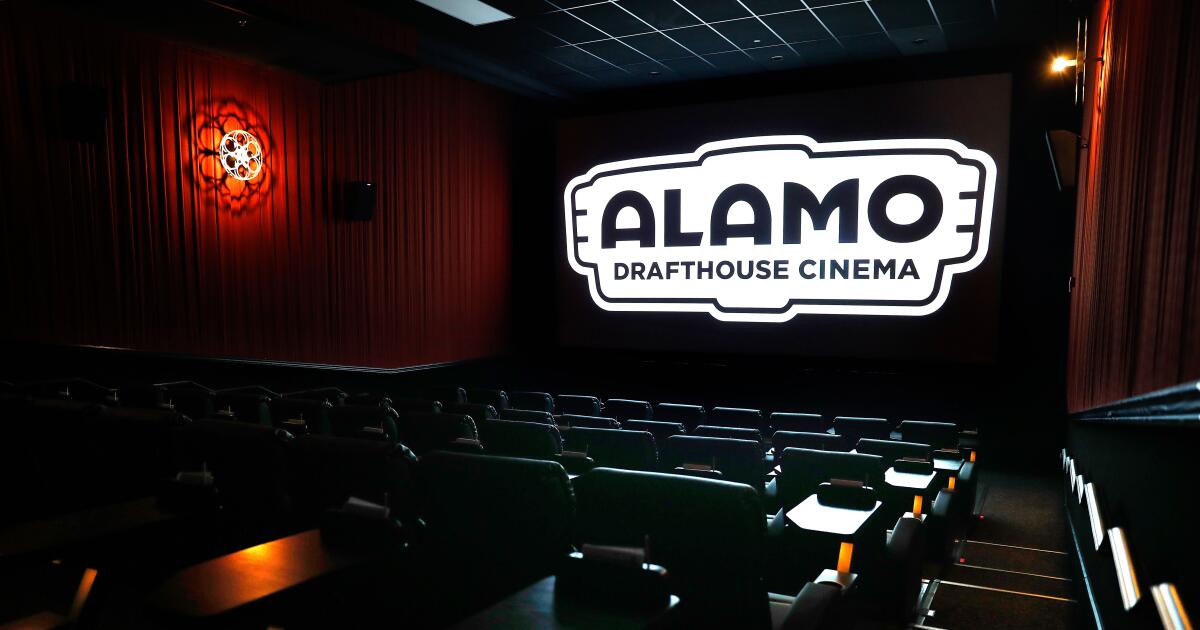
Dine-in movie theater chain Alamo Drafthouse Cinema is launching a new initiative to show unreleased independent films that had successful festival runs, a move that comes as specialty films have struggled to gain distribution.
The Alamo Exclusives program, announced Wednesday, will give limited theatrical runs to films that showed at festivals including Sundance, the Toronto International Film Festival, Tribeca Festival and South by Southwest festival, as well as Alamo’s own Fantastic Fest.
The idea is to help showcase films that received critical acclaim, but did not secure distribution or acquisition deals. The chain will not acquire these films, but instead will enter into agreements with filmmakers to exhibit their films on Alamo Drafthouse screens. By showing these films to audiences on the big screen, these films could get the momentum they need for further opportunities.
The program’s first film will be the documentary “Butthole Surfers: The Hole Truth and Nothing Butt,” which debuted last year at South by Southwest and chronicles the history of the punk rock band.
The film will be shown in Alamo Drafthouse theaters for a limited time later this summer.
The Austin-based chain, which is owned by Sony Pictures, has a long history of curating indie films for its audiences, giving Alamo Drafthouse confidence that its viewers want to see these kinds of movies, company chief executive Michael Kustermann said in a statement.
“Time and again, they’ve shown they’ll come out to support bold, original films when given the opportunity,” he said. The new Alamo Exclusives “gives us another way to champion filmmaker-driven films that deserve to be discovered and connect them with the wider Alamo Drafthouse audience.”
The initiative comes at a difficult time for indie films. Since the pandemic upended the movie business, traditional studios and distributors have had less appetite for risk, including betting on smaller indie films out of festivals.
And as the 2023 dual writers’ and actors’ strikes thinned out theatrical lineups, that aversion to uncertainty became a push for reliable and profitable hits.
“Too many incredible films premiere at festivals and then never receive the theatrical life they deserve,” Lisa Dreyer, director of Fantastic Fest and film innovation at Alamo, said in a statement. “We are actively searching for films across all genres, from horror to comedy, to everything in-between, to champion in this new, exciting way.”
The recall of a popular chip brand over salmonella concerns was recently upgraded to the U.S. Food and Drug Administration’s highest level, just ahead of the Fourth of July holiday and countless backyard barbecues.
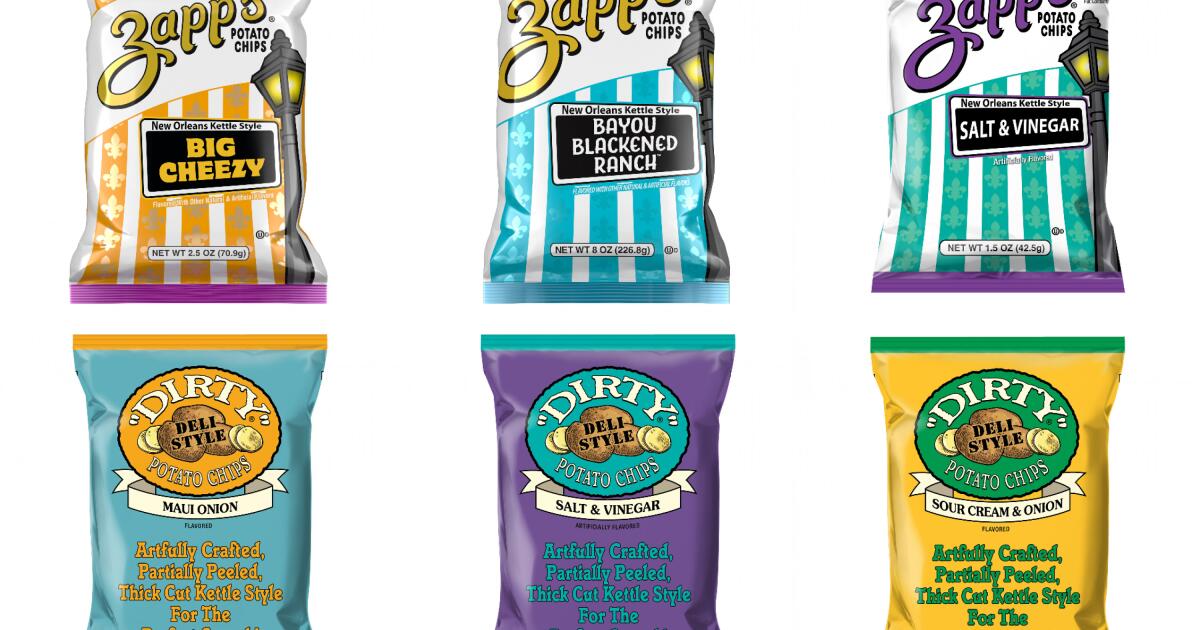
On June 24, the FDA designated the recall of several varieties of Zapp’s and Dirty brand potato chips as Class I, meaning it’s “a situation in which there is a reasonable probability that the use of or exposure to a violative product will cause serious adverse health consequences or death.”
FDA has classified the following items as Class I:
Zapp’s
- 1.5-ounce Zapp’s Bayou Blackened Ranch Kettle Chips
- 2.5- and 8-ounce Zapp’s Bayou Blackened Ranch Potato Chips
- 1.5- and 8-ounce Zapp’s Big Cheezy Potato Chips
Dirty
- 1.5- and 2-ounce Dirty Brand Salt and Vinegar Potato Chips
- 2-ounce Dirty Maui Onion Chips
- 2-ounce Dirty Sour Cream and Onion Potato Chips
The chips are produced by Utz Quality Foods, LLC, which on April 28 issued a recall after learning “that a seasoning containing dry milk powder, sourced from California Dairies, Inc. and supplied by a third-party supplier, may contain the presence of Salmonella.”
Salmonella can lead to sometimes deadly infections in elderly people, young children and those with weakened immune systems, according to the FDA.
More than 680,000 bags are included in the recall.
Anyone who has these products should not eat them and should discard them immediately.
What to look for
Salmonella is a foodborne illness that can be fatal to young children, pregnant women, older adults and people with weakened immune systems, according to the National Institutes of Health.
Symptoms may develop 12 to 72 hours after infection, according to the FDA.
The FDA said that people with strong immune systems infected with salmonella may experience fever, diarrhea (which may be bloody), nausea, vomiting and abdominal pain. The illness can last four to seven days.
In rare cases, the infection may produce more severe illnesses such as arterial infections, endocarditis and arthritis, the agency added.
What to do if infected
If you contract salmonella, the Centers for Disease Control and Prevention recommends drinking plenty of fluids to prevent dehydration.
The CDC advises consulting a doctor before taking antidiarrheal medicine or antibiotics. If severe symptoms continue after two days, seek medical help, the agency says.
Because those with diarrhea can spread salmonella to others, it’s also recommended to avoid sharing food or preparing meals for others, sexual contact and swimming in public pools, and to stay home while sick.
Times staff writer Jasmine Mendez contributed to this report.
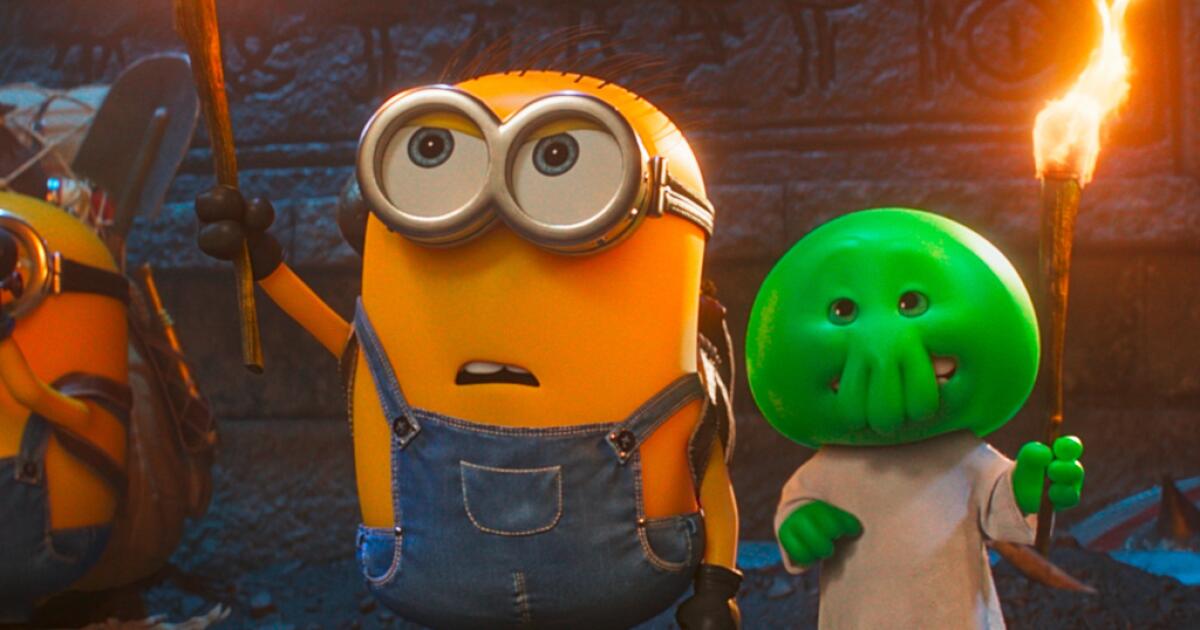
The Minions took over theaters this weekend as Universal Pictures and Illumination’s “Minions & Monsters” won the top spot at the box office, though with a lower-than-expected domestic haul.
The animated movie, which follows the Minions’ takeover of Hollywood, took in $61.4 million in the U.S. and Canada for the five-day Fourth of July holiday weekend, according to studio estimates. That haul was lower than analysts’ expectations for a domestic opening of about $68 million. The movie’s three-day total was $36.4 million.
But the Minions performed well internationally, bringing in about $85 million. In total, “Minions & Monsters” made $159.9 million worldwide on a production budget of about $85 million.
The film is the latest in the powerhouse franchise that began with “Despicable Me” in 2010. Across its previous six installments, the “Despicable Me” and “Minions” franchise has made more than $5.6 billion at the global box office. The last movie, 2022’s “Minions: The Rise of Gru,” made more than $940 million worldwide.
“Minions & Monsters” marks the lowest opening for the franchise. Part of the issue could be timing — the box office can be negatively affected when the Fourth of July lands on a Saturday, said Paul Dergarabedian, head of marketplace trends at Rentrak.
Walt Disney Co. and Pixar’s “Toy Story 5” came in second at the box office this weekend with a domestic three-day gross of $31 million. Angel Studios’ biopic “Young Washington” ($20.8 million), Warner Bros. and DC Studios’ “Supergirl” ($9.6 million) and Universal’s “Disclosure Day” ($6 million) rounded out the top five, according to Rentrak.
The haul for “Minions & Monsters,” coupled with the strong holdover performance of “Toy Story 5,” proved again that family films are making a dent in the summer box office.
“Toy Story 5” has now brought in a total of $764.3 million worldwide, and last month, Universal, Illumination and Nintendo’s “The Super Mario Galaxy Movie” crossed $1 billion at the global box office, becoming the first film of any kind to do so this year.
The rest of the summer theatrical lineup is also expected to bring in audiences and push domestic box office totals closer to pre-pandemic figures. Next week, Disney will release its live-action “Moana,” followed by Christopher Nolan’s “The Odyssey” and Sony Pictures’ “Spider-Man: Brand New Day.”
To date, the summer box office is now about $2.3 billion, a nearly 12% increase compared with the same period a year ago, according to Rentrak data. Compared with pre-pandemic 2019’s numbers, however, it is still down about 7%.
-

 Indianapolis, IN2 minutes ago
Former Colts center Ryan Kelly opens up about life after retirement
-

 Pittsburg, PA5 minutes ago
Pittsburgh Public Safety responds to third teen takeover in 7 days on Fourth of July
-

 Augusta, GA17 minutes ago
Cushman & Wakefield Brokers $87M Sale of Apartment Community in Augusta
-

 Washington, D.C20 minutes ago
The hottest T-shirts in DC are from Metro – WTOP News
-

 Cleveland, OH25 minutes ago
Medical examiner identifies woman found dead in backyard of Cleveland home
-

 Austin, TX32 minutes ago
How much daylight are we losing in Texas this month?
-

 Alabama35 minutes ago
Sweet Home 250 draws thousands to Montevallo for Alabama’s o…
-

 Alaska40 minutes ago
A frozen ground under Alaska’s tundra looks like ordinary soil from above, but scientists have put a $43 trillion price tag on what happens when it thaws

