Colorado
Denver Broncos defeat Bills 33-30 in overtime at Mile High, will host AFC Championship game


The Broncos are advancing in the playoffs after defeating the Buffalo Bills in overtime on Saturday in Denver by a score of 33-30. In eight days, they’ll host the AFC Championship game for the eighth time in franchise history.
Denver cornerback Ja’Quan McMillian intercepted Buffalo quarterback Josh Allen on a deep toss in overtime, quarterback Bo Nix orchestrated a drive — in which the Bills were flagged for pass interference twice — and kicker Will Lutz secured the win with a 23-yard field goal in another frantic finish for the (15-3) Broncos. It was their thirteenth comeback win this season.
There were several surprises in the first playoff game in the Mile High City since Jan. 24, 2015, including:
– A touchdown scored by a Broncos offensive lineman for the first time in the playoffs in franchise history. Tackle Frank Crum caught a pass from Nix in the second quarter and rumbled into the endzone for the first Denver touchdown of the game.
– Five turnovers created by the Broncos defense, which wasn’t known during the regular season as a unit that generated lots of turnovers.
Nix went 26 for 46 for 279 yards, with three passing touchdowns and an interception in the game. He is only the 22nd quarterback in league history to lead his team to a conference championship game within his first two seasons.
“We found a way to win again and our defense made stops,” Nix told CBS Sports reporter Tracy Wolfson after the game. “I’m proud of our guys. I’m proud of this organization, I’m proud of the way we compete, we fight. We’re just never out of it.”
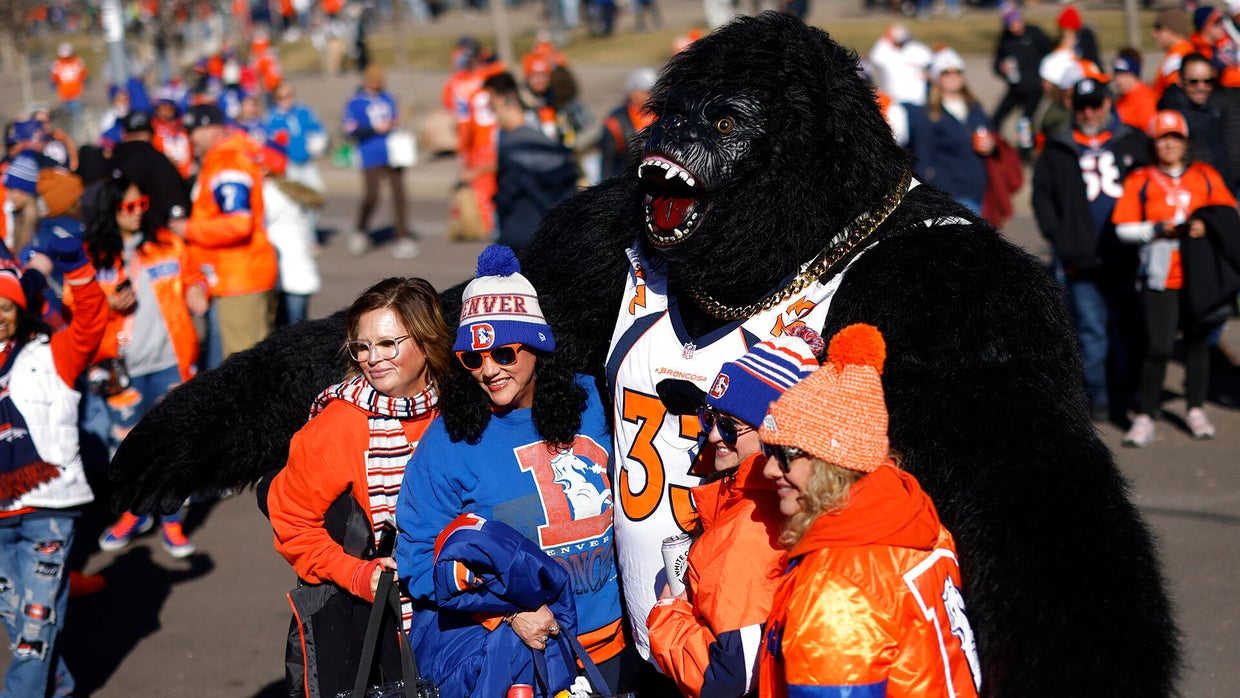
Denver will now wait until Sunday afternoon to learn their next playoff opponent. They’ll face the winner of Sunday afternoon’s battle between the Patriots and the Houston Texans in New England. That game kicks off at 1 p.m. Mountain Time.

The Broncos have played in 10 AFC Championship games previously. Seven of those have been played in Colorado — Denver has only lost one of those home-hosted championship games.
With Saturday’s win at Empower Field at Mile High, Broncos head coach Sean Payton now has 10 postseason wins under his belt, which moves him into a tie with three coaches for 16th-most postseason wins by a head coach in NFL history: Bill Walsh, Bud Grant and George Seifert.


A weekend ascent of one of Colorado’s most storied peaks turned fatal Sunday. Rocky Mountain National Park officials say a climber died on Kiener’s Route on the upper east face of Longs Peak, the 14,259-foot summit west of Estes Park, per KMGH. Search and rescue teams were alerted early Sunday afternoon; a Teton County helicopter assisted in the recovery, which wrapped up Monday morning.
Authorities have not released the climber’s identity or explained what went wrong, and the investigation is ongoing. More than 70 people have died climbing Longs Peak, the park’s tallest mountain, since the park was founded more than a century ago, per the Coloradoan. Indeed, the very first ascent via Kiener’s Route in 1925 proved fatal, per USA Today. The route—temporarily closed but since reopened—is considered the least technical way up Longs’ steep east face, requiring “intermediate alpine climbing skills” and a day or two of climbing, the outlet reports.

With wildfires burning across many Western states, wildland firefighters gathered Sunday to pay tribute to three of their own who died after they were trapped by flames a week ago.
Emily Barker, Nick Hutcherson and Sydney Watson were remembered as courageous public servants who left a lasting impact on the communities where they worked.
“They showed up to make order out of chaos day after day with purpose, dedication and heart,” U.S. Wildland Fire Service Chief Brian Fennessy said during a memorial service in Grand Junction, Colorado, near where the firefighters died while battling flames on the Colorado-Utah border.
While that fire is now almost entirely contained, nearly 40 large fires are still going strong across the West. Most of the current fires are scattered around Colorado, Utah and New Mexico while there are wildfires in eight other states — from Alaska to Arizona.
Over the holiday weekend, more evacuations in Colorado were ordered across four counties where the Aspen Acres fire had burned about 136 square miles (352 square kilometers) south of Colorado Springs.
The fire had damaged or destroyed more than 200 structures as of Sunday, authorities said. National Guard soldiers were sent in Friday to help with staffing checkpoints on roads near the fire zone.
Months of dry weather and a record lack of snow this past winter in some places along with erratic winds have been fueling the fires.
The three firefighters killed on June 27 in western Colorado were members of a Helitack crew that sometimes drops into remote areas by helicopters.
Barker, Hutcherson and Watson and two others who sustained burn injuries were overcome by flames from fast-moving fires in Mesa County. They had deployed emergency protective shelters, which are considered a “last resort” for firefighters when there is no other way out.
Fennessy, the Wildland Fire Service chief, said Sunday that “the weight of this tragedy is felt way beyond our wildland fire community.”
Photos of the firefighters were set up on the stage at the memorial service alongside flowers and flags.
They worked jobs that require courage, selflessness, strength and heart, said Sarah Fisher, the U.S. Forest Service’s deputy chief for fire and aviation management.
“The work demands long days, heavy burdens and quiet acts of bravery,” she said. “We will remember them, we will honor their legacy and we will carry their light forward.”
Emily Barker
Barker, 38, had so much spirit, and the people around her always strived to be a better person by her presence, said Sarah Brubeck Schnurbusch, a friend and former roommate.
Barker was from Clinton Township, Michigan, and liked hiking, skiing, dirt biking and playing hockey. She loved firefighting.
“I’ve never seen someone so excited to go to work,” Brubeck Schnurbusch said. She added that her friend helped pave the way for many women in the industry.
Barker was a trailblazer, first working as a teacher “shaping young lives,” Fennessy said.
“She didn’t just live in wild places, she helped to shape them, care for them and make them better,” he said.
Nick Hutcherson
Hutcherson, 27, served in the U.S. Navy and had plans to become a physical therapy doctor, according to the Kaibab National Forest in northern Arizona where he was assigned. He was also an active member of the Northern Arizona Deaf and American Sign Language community.
Hutcherson, who was from Glendale, Arizona, “embodied the spirit of public service” Fennessy said.
He was a dedicated practitioner of Muay Thai martial arts who trained in Flagstaff.
His favorite saying was “easy day,” Fennessy said, “because Nick had an uncommon ability to face hard things with optimism, humility and a smile.”
Sydney Watson
Watson, 27, was from Warrior, Alabama, and a graduate of the University of Tennessee Southern, where she was a pitcher on the softball team, the university said.
In 2023, she participated in a program in North Carolina organized by the Women-in-Fire Prescribed Fire Training Exchanges, the group said. In her application, she said she wanted to see more women on the fire line and to learn from other women in the field, the university said.
“From the time she was very young, she knew she wanted to be a firefighter someday,” Fennessy said.
“I have no doubt she inspired many young women to become a firefighter,” he said.
Colorado
Showers and thunderstorms forecast for Colorado’s high country as wildfires rage across the state

Following several days of hot, dry weather, Colorado’s Western Slope is poised to see a period of rainy skies with possible thunderstorms ahead of what meteorologists expect to be an active monsoon season arriving later this summer.
Beginning Tuesday, a wave of energy is expected to track across the Northern and Central Rockies, leading to a significant uptick in thunderstorm activity statewide, according to a July 6 report from OpenSnow Meteorologist Alan Smith.
The forecast shows a moderate-to-high chance of showers and thunderstorms across the High Country beginning Tuesday afternoon, with patchy smoke lingering from the morning through the early afternoon due to active fires located across Southeast Utah and Southern Colorado.
Wednesday is expected to bring more of the same, with up to a 40% chance of showers and thunderstorms and possible wind gusts up to 25 miles per hour across the northern and central mountains, according to the National Weather Service. Thunderstorms could become more scattered with limited moisture on Thursday, followed by a return to clear skies by Friday.
Temperatures across the northern and central mountains are forecast to sit in the 70s and 80s throughout the week, with some areas, including Glenwood Springs and Steamboat Springs, reaching into the 90s by the weekend as hot and dry conditions once again take hold of the region.
Little-to-no impact on wildfire risk
While stronger storms throughout the week could produce locally heavy rain in some of the mountains, drier air at lower elevations could lead to a “dry thunderstorm” setup when paired with gusty winds and limited rainfall, especially on Thursday, Smith wrote in the report.
The possibility of dry thunderstorms — bringing lightning strikes on dry vegetation with no rain to extinguish the resulting sparks — could heighten wildfire risk in drought-stricken regions of the state.
“There is still some concern about what thunderstorm outflow winds could do to ongoing wildfires if these fires themselves do not receive meaningful rain,” Smith wrote.
Gillian Felton, a Grand Junction meteorologist with the National Weather Service, said it’s hard to say whether the upcoming showers will impact the state’s extreme fire risk. Because the showers and thunderstorms forecast for this week likely won’t be dropping a significant amount of precipitation, it presumably won’t do much to impact existing wildfires across the state.
Much of Colorado’s Western Slope remains in the highest level of drought as of July 2, according to the U.S. Drought Monitor.
“Even though we are getting this push of moisture, it’s really rather weak,” Felton said. “While some localized areas might see more precipitation than others, overall, this moisture moves through quickly and we get right back to very dry, very hot conditions.”
Is monsoon season officially here?
Though this week’s rainy forecast marks a temporary uptick in moisture, Felton said it doesn’t yet signal the start of Colorado’s monsoon season.
“We pretty quickly will return to drier weather,” Felton said. “By Friday, anomalously dry air moves back in, and we’re looking at very hot and very dry conditions this weekend. This little push of moisture we’re getting is nice, but it’s going to be quite short-lived.”
Although hot and dry conditions will take hold across Colorado’s mountains over the weekend, confidence is growing that significant monsoon moisture could surge into the Western U.S. sometime during the week of July 13, though it will likely hit the Northern and Central Rockies before it arrives in Colorado.
“The core of this monsoon moisture surge is coming out of the Gulf of California with strong southerly flow, which may favor Arizona, Utah, Wyoming, Nevada, Eastern Idaho, and the Sierra (Nevada) in California,” Smith wrote in the report. “But this moisture should eventually spread into Western Colorado as well, which is in great need of meaningful rains given the ongoing fire situation.”
Longer-range models are hinting at an overall active monsoon for the second half of July and into August, according to Smith.
-

 Hawaii5 minutes ago
Redesigned Hawaii IDs begin rolling out statewide
-
 Idaho8 minutes ago
All lanes blocked on I-84 in Payette County due to multiple brush fires, officials say
-

 Illinois13 minutes ago
Lake Geneva boat accident, 3 kids drowned; Illinois school district responds
-

 Indiana20 minutes ago
Baby abducted in Marshall County found safe in northwest Indiana
-

 Iowa23 minutes ago
Iowa City Man who ran over people in homeless encampment sentenced to nearly two decades in prison
-
Kansas28 minutes ago
Kansas Lottery Mega Millions, Pick 3 winning numbers for July 7, 2026
-

 Kentucky35 minutes ago
US 51 Cairo bridge to remain closed for period of time
-

 Louisiana38 minutes ago
Heart of Louisiana: Lafitte Wetlands

