Lifestyle
Timothée Chalamet, a Neil Diamond tribute band and more in theaters for Christmas


Timothée Chalamet in Marty Supreme.
A24
hide caption
toggle caption
A24
A ping pong hustler for the ages, a Neil Diamond interpreter for the ’80s, choral music both comic and spiritual, plus tormented teens, twisted families, and a giant snake on the loose. It’s quite the jolly holiday at your local cineplex.
They join a new Avatar sequel, a Bradley Cooper-directed drama, and more in theaters.
Marty Supreme
In theaters Thursday
YouTube
I feel as if I should tell you to speed-read this review, preferably with Fats Domino’s “The Fat Man” blaring in your ear. Josh Safdie’s adrenaline-fueled, screwball comedy about a table tennis hustler who dreams of world domination — in a sport that hasn’t registered yet with the American public — is a mesmerizing cinematic tour de force. Timothée Chalamet plays Marty Mauser (loosely based on real-life 1940s and ’50s U.S. ping pong champ and petty criminal Marty Reisman), graduating from determined kid-with-a-passion to aggrieved also-ran-in-full-melt-down mode, attracting and then alienating everyone he comes across. We meet him as a New York shoe salesman having storeroom trysts with his married childhood sweetheart (Odessa A’zion) and prepping for a bout in England for which he can’t even afford plane fare.
Marty establishes with a series of heists and scams that he’s got no problem cheating or stealing to get there, then regales the press with a pugnacious racist routine that lands him on front pages before his first serve. Chalamet’s live-wire approach is neatly countered by a serenely sensual turn by Gwyneth Paltrow as an aging movie star who finds Marty amusing and alarming in about equal measure. And the film’s just getting started at that point, careening towards a championship in Japan with the propulsive, harrowing, rush-to-judgment feel of Safdie’s Uncut Gems mixed up with dizzying comedy. It’s a thrill ride, pure and simple. — Bob Mondello
Song Sung Blue
In theaters Thursday
YouTube
Mike and Claire Sardina, the real-life, blue-collar Milwaukee couple who formed a Neil Diamond tribute act in the 1980s, get the sequin-and-spangle treatment in this Hugh Jackman and Kate Hudson love-fest. Writer and director Craig Brewer keeps the music central and the sentiment tolerable as the couple meets cute, bonds quick, and forms a musical act known professionally as Lightning and Thunder. The stars are well-matched and appealing — Hudson does a winning Patsy Cline impersonation, and Jackman completely nails Neil Diamond’s sound and bearing. The couple’s story, which has more downs than ups, doesn’t quite match the mood of a movie determined to be ever-and-always-up. Still, the stars are engaging, the supporting cast great fun, and the music rousing. — Bob Mondello
Anaconda
In theaters Thursday
YouTube
The original Anaconda movie came out almost 30 years ago, sending an assortment of ’90s movie stars down the Amazon, where they were menaced and occasionally crushed and/or devoured by giant deadly snakes. That film, starring Jennifer Lopez and Ice Cube, was a hit that spawned a handful of lightly regarded sequels.

Heavy on meta references to the original film, the new Anaconda is not quite a reboot, it’s not quite a sequel, and it’s played for laughs. Jack Black and Paul Rudd star as lifelong friends who grew up wanting to be filmmakers. But they’ve followed different career paths — Paul Rudd’s character is a struggling actor whose biggest role was a bit part on the TV show S.W.A.T., while Jack Black’s character makes wedding videos while yearning to shoot something more creative. They gather their old friends and collaborators — played by Thandiwe Newton and Steve Zahn — and head to the Amazon to shoot a meta reimagining of Anaconda. As you can imagine, this proves harder than it sounds. — Stephen Thompson
The Plague
In limited theaters Wednesday
YouTube
The first image is an eerie, underwater shot — sun-dappled blues, greens, and greys — its peace suddenly exploded as bodies plunge into the pool. Middle school boys, limbs all akimbo, almost literally at sea, as they struggle for equilibrium. It’s an apt beginning for the story of a youngster trying to figure out where he fits in among the cliques at a summer water polo camp. Ben (Everett Blunck) is the camp newbie, Jake (Kayo Martin) its smirking cool kid who picks up on his fellow campers’ idiosyncrasies and exploits them.
He tells Ben that Eli (Kenny Rasmussen), a withdrawn boy with a rash, has the “plague” and must be avoided. Ben, seeing the obvious pain the outcast is in, can’t square that with his own sense of decency, but also doesn’t want to be ostracized, and his attempt to split the difference leads the film into Lord of the Flies territory. Charlie Polinger’s directorial debut looks breathtaking, feels unnerving, and traffics cleverly in body-horror tropes as it basically establishes that 12-year-old boys are savages who should never be without adult supervision. — Bob Mondello
Father Mother Sister Brother
In limited theaters Wednesday
YouTube
You might expect Jim Jarmusch to look at family relationships with a certain eccentricity, but not necessarily in the elegantly framed way he does in this triptych about adult children and the parents they don’t begin to understand. The Father segment casts Adam Driver and Mayim Bialik as siblings who are stiff with each other, and even less comfortable with their garrulous con man of a dad (Tom Waits). Driver’s come with provisions and cash, Bialik’s come armed with an arched eyebrow, and Waits is ready for them both.
The second part, Mother, finds a sublimely chilly Charlotte Rampling hosting an awkward once-a-year tea for her daughters, one primly nervous (Cate Blanchett), the other pink-haired and boisterous (Vicky Krieps). And the final third, Sister Brother, finds Indya Moore and Luka Sabbat bonding in their recently deceased parents’ now-empty Paris apartment. This segment seems less about estrangement, until you realize how little they actually know about their dear departed folks. There are running jokes about Rolexes, the expression “Bob’s your uncle,” and toasts to tie things together, along with a sweet, reflective tone that makes this one of the year’s most compassionate films. — Bob Mondello
The Choral
In limited theaters Thursday
YouTube
Director Nicholas Hytner and screenwriter Alan Bennett, who previously teamed up on The Madness of King George, The History Boys, and The Lady in the Van, are plumbing shallower depths in this gentle dramedy about an amateur chorus in 1916. When their choirmaster leaves to fight in World War I, grieving mill owner Roger Allam, who funds the chorus, reluctantly hires Dr. Guthrie (Ralph Fiennes), a gifted choirmaster but a divisive choice in this intensely nationalistic moment — because he’s spent the last few years in Germany. He also exhibits “peculiarities” (code for being gay) but this seems less important to the locals.
Fiennes is briskly dismissive of local traditions, snippy about English appreciation for the arts, and celebrated enough in music circles to persuade composer Edward Elgar (Simon Russell Beale) to let them perform his oratorio “The Dream of Gerontius.” Elgar is less thrilled when he discovers the chorus is turning the oratorio into a story about the war, casting its elderly hero as a young soldier and generally making it what later generations would call “relevant.” It’s all sweet and sentimental, and though it’s being released during awards seasons, feels as if it really wants to be considered for best picture of 1933. — Bob Mondello
No Other Choice
In select theaters Thursday
YouTube
“I’ve got it all,” says paper factory supervisor Man-su as he hugs his family at a barbecue in the backyard of his elegant Korean home. He’s grilling some eels given to him by the paper company’s new American owners, secure in the knowledge that this must mean they value him. This being a social satire by director Park Chan-wook, it’s reasonable to expect he will shortly be dealt a blow, and one day later, he’s been axed. (The film is based on Donald E. Westlake’s 1997 horror-thriller novel The Ax). He’s distraught but can’t express, or even really understand, that he feels he has lost his manhood, his mojo, and his reason for being.
On top of that, his industry is consolidating, so finding another job before his severance pay runs out and he loses his house (his childhood home) will be tricky. Asked if he’d consider a job outside the paper industry, Man-su (Lee Byung-hun) says that for him there is “no other choice,” echoing the words his American bosses uttered about bringing down costs as they did layoffs. But with the end of severance payments looming, he hatches a plan to knock off his job market competition one by one. Isn’t this mass murder? Well, he has “no other choice.”
At first it seems as if we’re in serial-killer comedy territory, but the filmmaker widens the frame to include narrative side trips — a stepson who’s stealing cellphones, a daughter who’s a cello prodigy, a wife who’s working for a dentist that Man-su suspects has designs on her. Oh, and pig-farm trauma from his youth, and a passion for greenhouse gardening. Director Park has a lot going on, and a final paper-plant-mechanization sequence suggests that all these stabs at human agency may just have been humanity’s last gasp. — Bob Mondello
The Testament of Ann Lee
In limited theaters Thursday
YouTube
Ambitious, stylized, intense, and thoroughly unorthodox, Mona Fastvold’s religious biopic tells the story of Shakers founder Ann Lee (a wild-eyed, fiercely committed Amanda Seyfried) as a full-scale musical drama. That’s not to say there are finger-snapping tunes. The score adapts 18th century Shaker spirituals, and the choreography involves the thrusting limbs and clawing fingers of the seizure-like dancing that earned this puritan sect of “Shaking” Quakers their nickname.
We meet Ann as a pious youngster more interested in spiritual matters than matters of the flesh. Marriage to a man who enjoys inflicting pain during sex, and the deaths of her four children in infancy lead Ann to the conclusion that lifelong celibacy is among the keys to salvation. With the help of her younger brother (Lewis Pullman), she finds adherents to a religious philosophy that also emphasizes gender equality and simple living, and leads them to found a utopian, crafts-based community in America. Director Fastvold and her co-writer Brady Corbet (the couple flipped roles from last year’s The Brutalist) serve up Ann’s spiritual journey in ecstatically musical terms, which is at once distancing and … well, ecstatic, though it pales a bit over the course of two-and-a-quarter hours. — Bob Mondello


Can you say no to a friend’s wedding?
Getty Images/Getty images
hide caption
toggle caption
Getty Images/Getty images
Are we spending too much on other people’s weddings?
Going to a friend’s weddings can be so fun and meaningful… but it can also really hurt your wallet. A survey by LendingTree found that 31% of people who had been to a wedding in the past five years had accrued debt to attend. So what’s driving up the cost of weddings for guests? And what makes it so hard to say no to these expenses?
Brittany breaks it down with Allyson Rees, senior analyst at trend forecasting firm WGSN, and Annie Joy Williams, assistant editor at The Atlantic.
This episode was produced by Liam McBain, with additional support from Corey Antonio Rose. It was edited by Neena Pathak. Our Supervising Producer is Cher Vincent. Our Executive Producer is Barton Girdwood. Our VP of Programming is Yolanda Sangweni.

After the eight-day-long fire in a 500,000-square-foot Boyle Heights warehouse, eastern Los Angeles residents are contending with putrid smells, soot and potentially hazardous airborne chemicals after heavy plumes of smoke spread throughout the city. But those who grow food in nearby neighborhoods may also be wondering: How will the fires affect the plants and produce in my garden?
The Boyle Heights warehouse, owned by Lineage — a global temperature-controlled storage facility operator — housed 85 million pounds of frozen food and other products. In the days since the fire, local emergency visits for smoke inhalation and throat pain spiked while agencies still scramble to measure the amount of PM 2.5 — harmful fine particles — and heavy metals, like lead and arsenic, in the air.
According to researchers, any toxic airborne chemicals would likely stem from the charred foam insulation, metal exterior, burned solar panels and any lithium batteries that might have been present inside the warehouse.
After a fire, heavy metal particles can spread through ash and smoke over gardens and inhibit growth, said Olukayode Jegede, an agricultural toxicologist and assistant professor at UC Davis. Since the warehouse fire is so recent and cleanup has just begun, Jegede said the precise impact on gardens can’t be measured until comprehensive soil tests are conducted in the area.
While the L.A. city government hasn’t announced plans for soil testing, the Contaminant Level Evaluation and Analysis for Neighborhoods project at USC is offering free contaminant testing for Boyle Heights and East L.A. residents. Residents can collect soil samples and deliver them to Boyle Heights City Hall and other locations for an evaluation of lead, arsenic, chromium and mercury levels.
The good news is produce, plants and roots can still be preserved. According to Jegede, many of the soil tests conducted last year in the Altadena area after the Eaton fire showed that gardens and poultry were not as contaminated as one might expect.
“Quite a number of the soils we tested [in Altadena] were not really contaminated,” Jegede said. “We weren’t seeing many soils with concerning elevated levels of metal, so gardeners should not be too alarmed when these things happen.”
Nevertheless, there are several measures that gardeners can take to keep themselves, their children, plants and produce safe from potentially harmful contaminants stemming from the fire. Researchers, gardening experts and horticulturists offered some guidance on the handling, recultivation and cleanup that can keep you and your garden in good health.
How do I remove ash and contaminants from my garden?
Altadena horticulturist Leigh Adams said Boyle Heights plants and produce already live in a difficult environment, surrounded by industrial warehouses that spread contaminants daily.
“That area has been used industrially for 100 years, and the soil is impacted by many, many, many things,” Adams said. “Low-income neighborhoods and gardens usually don’t have a lot of resistance against dominant manufacturing.”
This means that the contamination of gardens in eastern L.A. won’t be as catastrophic as compared with those in Altadena, a more suburban environment, Adams said. But fallen ash still poses major health risks if ingested or inhaled.
An advisory from University of California Agricultural and Natural Resources last year recommended suiting up in an N95/KN95 mask, long sleeves, pants, close-toed shoes and gloves before attempting to deal with ash in the garden to limit exposure to potentially toxic contaminants. The advisory added that individuals should make sure all of this gear is cleaned thoroughly before bringing it back inside.
Once in the proper gear, Adams recommends removing the top two inches of topsoil from gardens, where the highest concentration of contaminants will settle after a fire. Using a plastic bag to collect the soil and disposing of it in the garbage — not green yard waste bins — will help to reduce the spread of airborne chemicals.
Gardeners with raised beds are advised to remove approximately six inches of soil, because excess ash can raise the pH level and prevent nutrients from soaking into the soil bed.
After this, watering the garden gently but plentifully will help to promote soil health and get rid of most of the ash present on plant leaves and stems. Adams said replacing the top two inches of soil with store-bought mulch or straw will help to contain any remaining ash and prevent it from spreading any further.
Experts say to avoid using leaf blowers if ash is present in the garden because they can send particles airborne. Doing so will increase the likelihood of heavy metal particles, which can carry lung irritants and carcinogens, being spread and inhaled.
A Boyle Heights resident keep a watchful eye on the fire at the 5,000-square-foot commercial building, which stores 85 million pounds of frozen food.
(Genaro Molina / Los Angeles Times)
Is it safe for me to eat produce from my garden?
Several studies, including one from the UC Cooperative Extension of Sonoma County, have shown that consuming produce in a fire-affected area poses minimal health risks.
Jegede said most root vegetables like potatoes and carrots, along with any fruit that has an outer layer, can be washed to remove potential contaminants, even if they were covered in ash. Peeling the outer layer of your produce can also help to reduce potential risks, he said.
Lettuce and other leafy foods with multiple layers pose a higher risk of contamination, but with a vigorous wash and peeling the outer layers, even the greens can be saved. The County of Los Angeles Department of Public Health recommends soaking leafy produce and fuzzy fruits like peaches in a 10% white vinegar and 90% water mixture.
Jegede said if the leaves or fruit are too delicate to wash or ash is still visible, it would be best to dispose of the produce.
How can I tell if my soil is contaminated?
After ridding your garden of visible ash, you might wonder how to tell if your plants will still thrive in the soil.
At-home soil tests that measure for alkaline, fertility and pH levels are widely available and can be purchased for $15 to $100 (for more detailed results) online. But Jegede said these tests can’t tell the full story of soil health.
Comprehensive soil testing is “something you can’t do properly at home,” Jegede said. “In labs, we are testing for metals like lithium and zinc, stuff that an at-home test will not show … If it comes to the point that you’re worried about your soil, I would just send it out to a lab.”
Wallace Laboratories in El Segundo, Babcock Laboratories in Riverside, Waypoint Analytical in Anaheim and other labs offer more detailed soil tests that measure heavy metal particles in addition to other fertility factors. Prices at Wallace Laboratories can range from $115 to $295 for a complete compost test.
The soil below two inches should be unharmed, Adams said, so long as new compost is set and plants are watered plentifully, which will promote natural biological cycles.
“What you’re doing is capping the soil, so that moisture stays in there, and instead of being dirt, it’s a living system called soil,” Adams said. “The more carbon we can get into our soil, the better.”
What can I do to help my soil recover?
For the last 12 years, Adams has been working with Metabolic Studio, a Los Angeles-based art and research hub focused on environmentalism, on methods for bioremediation, the practice of using additional fungi, plants and compost to decontaminate ash and break down contaminants.
Adams said straw, mushrooms, corn, rye and sunflowers are great bioremediators that can help to repair damage to soils. She said certain samples she’s worked on with Metabolic Studio have gone from testing at high heavy metal levels to nearly contaminant-free.
But for a more immediate fix, wash your produce, water your plants and have a little patience during ash cleanups. Your garden should look better in no time, Adams and Jegede said.

Inde Navarrette and Michael Johnston in Obsession.
Focus Features
hide caption
toggle caption
Focus Features
Two big horror films, Obsession and Backrooms, just smashed all box office expectations. So much of their success has been driven by Gen Z, which is now the biggest moviegoing demographic. But what makes a movie a Gen Z movie? Today we’re bringing you an episode of NPR’s It’s Been a Minute. Host Brittany Luse talks about this trend with Sam Adams and Reanna Cruz.
If you want to hear more about these movies, check out these episodes:
In ‘Obsession,’ love hurts. It really, really, really hurts.
‘Backrooms’ brings YouTube horror to the big screen
Zendaya brings ‘The Drama,’ we bring the spoilers
Connect with Pop Culture Happy Hour:
Letterboxd / Facebook
Our weekly newsletter
Support Pop Culture Happy Hour+
-

 California6 minutes ago
How California Effectively Legalized an Open-Air Sex Market
-

 Colorado8 minutes ago
Julian Lewis Says Deion Sanders’ Colorado ‘Wasn’t Really Looking at Defenses Much’ Last Season
-
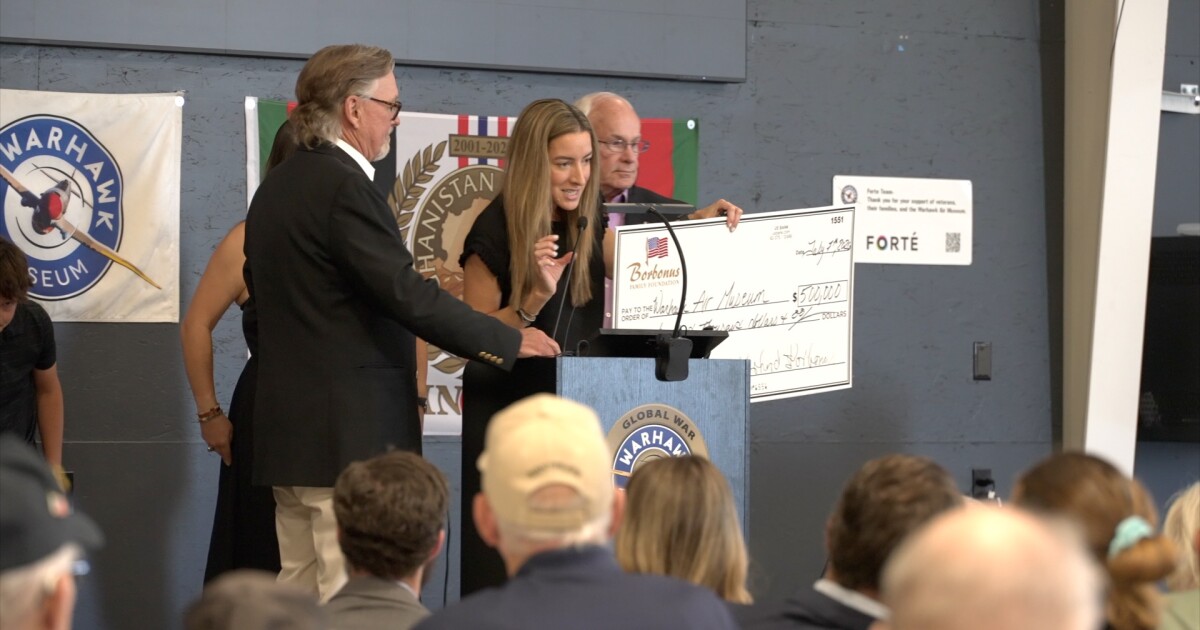 Idaho14 minutes ago
Warhawk Air Museum receives $500K grant honoring fallen Idaho soldier
-

 Connecticut14 minutes ago
Several beaches closed to swimming due to potential bacteria in the water
-

 Delaware21 minutes ago
Delaware Libraries Introduce Digital Literacy Specialists Program – State of Delaware News
-

 Florida24 minutes ago
Video shows man attack Florida deputies in snake-and-gator-infested canal, sheriff says
-

 Georgia29 minutes ago
Georgia Supreme Court upholds convictions of men in deadly shooting during gas station carjacking
-

 Hawaii36 minutes ago
Chinese communist party member arrested in Hawaii on visa fraud charge | Honolulu Star-Advertiser

