North Dakota
Letter: A tax cut that fueled North Dakota’s Main Street


North Dakota has long been defined by its resilience and economic self-sufficiency, thanks to the vast network of small businesses. From the family farms to the local oil service companies, small businesses are the true economic engines of the state. A new law that cemented permanency of the 20% Small Business Deduction and other pro- small business tax relief is a critical victory for the heart of North Dakota’s economy, and it is a testament to the advocacy of leaders like Rep. Julie Fedorchak and Sens. John Hoeven and Kevin Cramer.
Of North Dakota businesses, 98.8% are small businesses. They employ over 57% of our state’s workforce, providing the jobs and services that sustain our communities. Many of these businesses are pass-through entities, where the profits of the business are taxed as personal income for the owner. Before Congress’ action, a massive tax hike loomed for over 33 million small business owners at the end of 2025. Making the 20% deduction permanent eliminated this threat, providing long-term certainty and stability for North Dakotan business owners.
Making this deduction permanent has been NFIB’s top federal legislative priority for nearly a decade. A study by EY shows exactly why this deduction is so critical for small businesses and the economy. The study found that the deduction will increase North Dakota’s economic activity by $226 million annually, resulting in the creation of 4,000 jobs each year.
This tax relief extends far beyond a single deduction. The legislation also made permanent marginal tax rate cuts first passed in the 2017 Tax Cuts and Jobs Act, preventing what could have been up to a 4% tax increase. Lower marginal rates free up business income that can be used for hiring, wages and benefits, expanding operations, and upgrading equipment.
Additionally, the tax law provides relief through other vital pro-small business provisions. The increases to the Section 179 expensing cap and Section 168(k) bonus depreciation are particularly significant for a state like North Dakota. Our economy relies heavily on capital-intensive industries like agriculture and energy. For a farmer needing to purchase a new combine or an oil company buying a drilling rig, these expensing provisions allow them to deduct the cost of major purchases.
The new law also addresses the burdensome administrative side of business. By increasing reporting thresholds for forms 1099-K, 1099-NEC, and 1099-MISC small businesses gain much-needed relief from time-consuming paperwork related to independent contractors or digital payment systems. This reduces the time and resources small business owners must spend on compliance, allowing them to focus on growing their business and investing in their communities.
In the end, this law is more than a collection of tax code changes – it’s a pro-small business vote in support of North Dakota’s entrepreneurial spirit. For a state where self- reliance is a point of pride, providing tax certainty and reducing regulatory burdens is the most meaningful support a legislator can offer.
Fedorchak’s experience and dedication to these issues ensure that North Dakota’s small business community will have a voice that truly understands its needs, securing a prosperous future for our Main Streets for years to come.
North Dakota small businesses are grateful for the leadership of Fedorchak, Hoeven and Cramer. NFIB looks forward to building on this massive victory to make it easier for small businesses to grow and flourish.
Don Larson is the North Dakota state director for the National Federation of Independent Business.

North Dakota
Challengers declare victory after ND Supreme Court rules against Legislature’s attempt to alter term limits

BISMARCK — A constitutional ballot measure to amend the state’s term limits law as proposed by the Legislature will not appear on November’s ballot, the North Dakota Supreme Court ruled Thursday, siding with petitioners who argued the Legislature exceeded its authority and violated the state constitution in proposing the changes.
“The people’s voice was heard,” Grand Forks County Commissioner Terry Bjerke said in reaction to the news.
Bjerke was a member of the sponsoring committee behind the successful 2022 effort to pass a term limits initiative, which amended the state constitution by capping legislative term limits to eight years in the House and eight years in the Senate. The amendment, which became article XV of the state constitution, also included a clause barring the Legislature from making constitutional changes to term limits.
During the 2025 session, however, lawmakers narrowly approved Senate Concurrent Resolution 4008, in which the legislature proposed Constitutional Measure 1, a ballot measure to amend the term limits language to allow legislators to decide in which chamber they want to serve their 16 years, and to repeal the clause limiting the legislative assembly’s authority to propose an amendment to alter or repeal term limits.
Bjerke and former Minot legislator Oley Larsen brought the lawsuit challenging the validity of the Legislature’s action in January, and the state Supreme Court
heard oral arguments in the case
this spring.
“Those term limits may only be altered by a measure proposed by the people rather than the Legislative Assembly. And yet a few years later, the Legislative Assembly is doing what they are prohibited from doing,” attorney Zachary Wallen argued on Bjerke and Larsen’s behalf.
Tanner Ecker / The Bismarck Tribune
The Legislature’s attorneys argued the clause prohibiting legislative proposals to alter the constitutional term limits language “infringes on our republican form of government” by “limiting the people’s ability to vote on amendments proposed by their elected officials.”
Justice Jon Jensen seemed skeptical of that argument during the April 2 hearing, questioning whether a second vote was appropriate.
“The public did speak on this. The public spoke on it when it passed the original constitutional amendment and they said, ‘Legislature, you don’t even get to propose a change.’ They have already spoken on it,” Jensen said. “You want a second shot, or a second bite at the apple, not a first one, a second.”
In Thursday’s ruling, all five justices sided with Bjerke and Larsen.
“We … conclude the Legislative Assembly’s adoption of S.C.R. 4008 violated N.D. Const. art. XV … and declare S.C.R. 4008 and Constitutional Measure 1 void … We enjoin the Secretary of State from placing Constitutional Measure 1 on the November 2026 general election ballot,” the ruling said.
Bjerke thanked the legal team that worked on behalf of their lawsuit, and said he was grateful the court reached the conclusion it did.
“I’m thrilled that what the people voted on and approved has been validated,” Bjerke said.
He added that the Legislature had “multiple opportunities” to address term limits prior to 2022’s initiated measure and chose not to, and gave a nod to the country’s coming milestone and the process by which voters expressed their support for term limits.
“We’ve lasted 250 years,” Bjerke said. “I have two words for those elected leaders who think they aren’t: everyone’s replaceable.”
North Dakota
Fargo woman convicted in North Dakota fraud case now faces charges in Minnesota: A deeper dive

FARGO, N.D. (Valley News Live) – A North Dakota woman who was sentenced to 180 days in jail in Cass County for defrauding healthcare providers and Medicaid programs is now facing additional fraud charges in Minnesota.
Christine Marie Pryor, 55, pleaded guilty in November 2024 to theft by deception involving more than $50,000. She was sentenced to first serve 180 days with a 3-year sentence suspended. She received credit for 44 days already served.
Pryor was ordered to pay $82,584.78 in restitution to Southeast Human Services in Fargo, where she worked between 2018 and 2019.
How the scheme unfolded
According to court documents, Pryor worked at multiple healthcare facilities in North Dakota and Minnesota between 2018 and 2023, using the identities and credentials of three licensed professionals without their knowledge. She submitted fraudulent Capella University diplomas and transcripts to gain employment.
Investigators say Pryor admitted she searched state licensing websites for therapists who shared her first name, then used those therapists’ last names and license numbers when applying for jobs.
At Southeast Human Services, where she worked as a Licensed Addiction Counselor, Pryor earned $55,584.82 while providing therapy services to approximately 150 patients. She also opened her own counseling center, NIAM Brain Injury Center, in Fargo between 2020 and 2021, and worked at The Lotus Center in Moorhead, Minnesota, from 2021 to 2023.
Court documents say the three licensed professionals whose identities were used told investigators they had no knowledge of Pryor’s actions and did not give her permission to use their information.
Two additional charges against Pryor in North Dakota, unauthorized use of personal identifying information, were dismissed on motion of the state.
Additional charges in Minnesota
Pryor is also facing charges in Minnesota. Minnesota Attorney General Keith Ellison announced on Tuesday charges against Pryor in Clay County District Court for six theft offenses and six identity theft offenses related to defrauding Minnesota’s Medicaid program of more than $150,000.
According to the Minnesota complaint, Pryor claimed to provide psychotherapy and alcohol and drug counseling services to Medicaid recipients despite having no license or credentials to do so. Prosecutors allege she used the credentials and identities of three licensed professionals while claiming to provide Medicaid-funded services to 169 clients.
The Minnesota charges were filed as part of National Health Care Fraud Takedown Day, a joint effort involving the Department of Justice and more than 40 state Medicaid Fraud Control Units.
Copyright 2026 KVLY. All rights reserved.
North Dakota
NCAA Set to Change Unpopular Football Rule Just in Time for North Dakota State’s FBS Jump

North Dakota State playing in the FCS playoffs and College Football Playoff in back-to-back years? It’s likelier than you think.
That’s because on Wednesday, according to a report from Ross Dellenger of Yahoo! Sports, the NCAA Division I cabinet voted to repeal a rule that effectively barred teams transitioning from FCS to FBS from playing in postseason games in their first FBS seasons. The Bison are making that move along with Sacramento State in 2026.
The reported change has been a long time coming; the rule has hampered teams from immediate bowl eligibility for decades. Its good intentions of dissuading teams from rashly making the FCS-to-FBS leap have been rendered obsolete in recent years by the fact that programs generally arrive in FBS more prepared than ever before.
Consider the number of new FBS teams that have had to work within the provision in the past decade alone
That list includes: Liberty (home for the holidays at 6–6 in 2018), James Madison (8–3 in 2022 under coach Curt Cignetti, and barely able to play in a bowl at 11–1 in ’23 due to a lack of bowl-eligible teams), Jacksonville State (8–4 in ’23 before backing in like the Dukes), Missouri State (7–5 in 2025, also backed in) and Delaware (6–6 in ’25, ditto).
James Madison in particular became a cause célèbre in ’23 because it started the season 10-0, climbing as high as No. 18 in the AP Poll in mid-November. Then-Virginia attorney general Jason Miyares bandied about suing the NCAA before the Dukes lost 26–23 to Appalachian State, an event that caused the program to back off and accept a bid to play Air Force in the Armed Forces Bowl. James Madison lost that game 31–21, by which time Cignetti had left for Indiana.
There was a time when the FCS-to-FBS jump was an imposing one, and the NCAA did not want to incentivize making it lightly—not even a proud Florida A&M program could make a mid-2000s attempt at a jump stick. However, the Flames, Dukes and other teams have shown it’s not so great a climb for programs with the right resources and management.
Now the Bison and the Hornets stand to benefit.
How far can North Dakota State and Sacramento State go in the near term?
The Bison opened 12–0 last year before a shock loss to Illinois State in the FCS playoffs’ second round, so that question may answer itself. North Dakota State does not play a single Power 4 team—a potential strength-of-schedule albatross if it has designs on really surging. A potential roadblock: the fact that the Bison have to visit the Mountain West’s two favorites, UNLV (Oct. 10) and New Mexico (Oct. 24).
It’s a different story for the Hornets, a 7–5 squad a year ago whose move to the FBS is widely seen as a gamble on their growth potential. Sacramento State also does not play a major-conference team, but has a breakneck travel schedule ahead of it—the Hornets will visit Ypsilanti, Mich.; Bowling Green, Ohio; Muncie, Ind.; Mount Pleasant, Mich. and Honolulu. Combine that with a first-year coach—Oakland native and ex-MC Hammer choreographer Alonzo Carter—and it could be a long FBS debut in California’s capital.
More College Football From Sports Illustrated
Listen to SI’s college sports podcast, Others Receiving Votes, below or on Apple and Spotify. Watch the show on SI’s College YouTube channel.
 Add us as a preferred source on Google
Follow
-

 Technology11 minutes ago
Android 17’s new foldable gaming mode could make flippy phones more fun
-

 World14 minutes ago
Shark attack survivor wakes from 10-day coma and shares first words with family at her hospital bedside
-

 Politics19 minutes ago
Trump administration pledges $150M in aid, deploys Navy warships after deadly Venezuela earthquakes
-

 Sports29 minutes ago
Second Lady Usha Vance joins celebrity-filled crowd for Team USA’s group-stage finale in LA
-

 Technology34 minutes ago
Debt collection letter for debt you don’t owe? What to do now
-
 Business41 minutes ago
Newsom blesses Uber ballot measure truce — but fight over car crash lawsuits continues
-
 Entertainment44 minutes ago
La Cruz offers a musical memorial to Pulse shooting victims on Pride Month
-
 Politics56 minutes ago
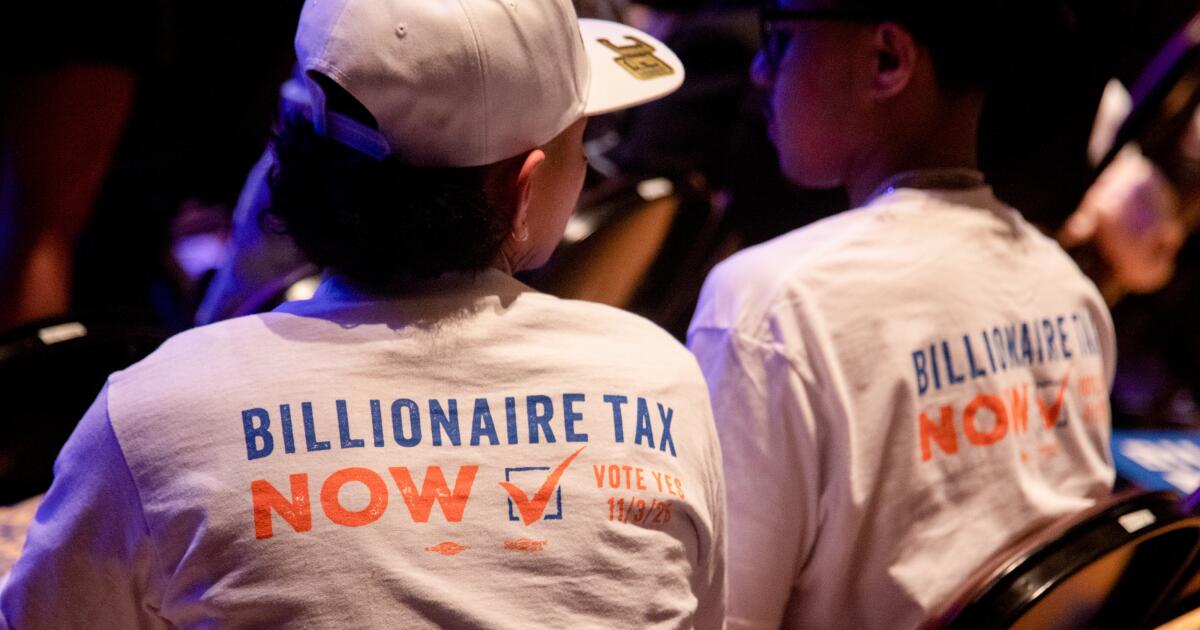
Controversial billionaire tax proposal will appear on November ballot

