Politics
Commentary: By stooping to conquer, Sacramento Democrats show their pettiness and arrogance


There are plenty of reasons to dislike Carl DeMaio, if you so choose.
The first-term San Diego assembly member is MAGA to his marrow, bringing Donald Trump’s noxious politics and personal approach to Sacramento. For Democrats, the mere mention of his name has the same effect as nails applied to a chalkboard.
Fellow Republicans aren’t too fond of DeMaio, either.
Party leaders worked strenuously — and far from successfully — to keep DeMaio from being elected last fall. They accused him of criminal wrongdoing. Allies spent millions of dollars to boost his GOP rival.
Republican foes “cite his relentless self-promotion, his criticism of his party and his tendency to take credit for victories he played little or no part in to help him fundraise and elevate his political brand,” CalMatters wrote in a harsh January profile.
None of that, however, excuses the silly and juvenile behavior of the Assembly’s majority Democrats last week when the chamber took up a resolution commemorating Pride month.
DeMaio, the Assembly’s first openly gay Republican member, rose on the floor to voice his objections. Usually lawmakers have around five minutes to offer their remarks without interruption.
Not this time.
DeMaio complained that the resolution — larded with more than three dozen whereas-es — strayed far afield from a straightforward commendation, endorsing some “very controversial and extremist positions” opposed even by members of the LGBQT+ community.
“This is not about affirming the LGBT community,” DeMaio said. “It’s about using them as a political pawn to divide us.”
You can agree or disagree with DeMaio. You can embrace the resolution and its myriad clauses with all your heart, or not. That’s beside the point.
About 90 seconds into his remarks, DeMaio was interrupted by the Assembly member presiding over the debate, Democrat Josh Lowenthal of Long Beach, who said he had a “very important announcement” to make.
And what was the pressing matter that couldn’t possibly wait a second longer? Wishing another Assembly Democrat a happy birthday.
Cheers and applause filled the chamber.
DeMaio resumed, only to be interrupted a short time later. Lowenthal deadpanned that he’d forgotten: It had been another Democratic lawmaker’s birthday just a few days earlier. More cheers and applause.
DeMaio resumed and then was interrupted a third time, so Lowenthal could wish “a very, very happy birthday” to a third Democratic Assembly member, who was marking the occasion the next day.
The response in the chamber, laughter mixed with more whoops and cheers, suggested the hazing by Lowenthal and fellow Democrats was great good fun and oh-so-clever.
It wasn’t.
It was petty. It was stupid.
And it bespoke the arrogance of a super-majority party too used to having its way and bulldozing Sacramento’s greatly outnumbered Republicans.
A few things are worth noting here, seeing as how California is supposed to be governed by a representative democracy.
DeMaio’s political peers may not be terribly enamored of the freshman lawmaker. But he was the clear-cut favorite of voters in San Diego, who sent him to the Assembly by a whopping 57% to 43% margin. Their views and voices deserve to be heard.
Democrats may be California’s majority party, enjoying a sizable registration advantage. They hold 60 of 80 seats in the Assembly and 30 of 40 in the state Senate. But the state has nearly 6 million registered Republicans. There are doubtless many more in California who support the party, or at least its policies and broad philosophy, but choose not to formally affiliate with the GOP.
They, too, deserve to be heard.
A not-insignificant number of California residents feel overlooked, ignored and unrepresented by Democrats and their hegemonic rule over Sacramento. The frustration helped spawn the fruitless and wasteful 2021 attempt to recall Gov. Gavin Newsom — which cost taxpayers more than $200 million — and fuels the perennial fantasy of a breakaway rural state called Jefferson.
To a larger point: One-party rule is not good for California.
“When you’re competing, you’ve got to be sort of on your toes,” said Thad Kousser, a UC San Diego political science professor who’s researched the difference between states with two vibrant political parties and those ruled by one or the other.
“When you’re solidly in control, you don’t feel like you need to prove it to voters,” Kousser went on. “You can write off certain areas of the state. You can ignore legislators in the other party, because you don’t think the shoe will ever be on the other foot.
“None of that,” Kousser concluded, “is good for democracy.”
It’s been well over a decade since Gov. Arnold Schwarzenegger left office and Republicans wielded meaningful clout in Sacramento. The last time the GOP controlled the Assembly was when Bill Clinton was in the White House. Gerald Ford was president the last time Republicans had a majority in the state Senate.
That’s not likely to change anytime soon.
In the meantime, Democrats don’t have to love their fellow lawmakers. They don’t even have to like them. But at the very least, Republicans elected to serve in Sacramento should be treated with respect.
Their constituents deserve as much.


NEWYou can now listen to Fox News articles!
“Two down and two to go” blared the new wanted poster targeting the two remaining fugitive sons of infamous Mexican cartel kingpin Joaquin “El Chapo” Guzman-Loera, who is serving life-plus-30-years in Colorado’s federal supermax prison.
On Monday, ICE posted a new wanted poster for two members of “Los Chapitos” — Ivan Archivaldo Guzman Salazar and Jesus Alfredo Guzman Salazar, two of El Chapo’s sons with his first wife, Alejandrina Maria Salazar-Hernandez.
After El Chapo’s final capture in 2016, control of the powerful Sinaloa Cartel shifted to Ismael “El Mayo” Zambada. Following Zambada’s arrest during the Biden administration, leadership passed to Guzman’s four sons.
MEXICAN SENATOR ACCUSES SHEINBAUM OF SHIELDING ‘NARCO-POLITICIANS’ AFTER US CARTEL INDICTMENT
Both the Trump administration in the U.S. and the Sheinbaum administration in Mexico have said they are focused on cracking down on cartel’s new leadership.
“Two down and two to go with $10 million reward,” the wanted poster read, with Xs over the faces of the already captured Joaquin Guzman Lopez and Ovidio Guzman Lopez.
The two captured Chapitos are reportedly cooperating with authorities and have not yet been sentenced, but Ivan and Jesus remain “armed and dangerous,” according to ICE.
ICE NABS ACCUSED MS-13 KILLER HIDING IN NORTHERN VIRGINIA SUBURB
El Chapo Guzman arrives in the United States after his capture in Mexico. (AP File)
The two fugitives are charged with conspiracy to distribute a controlled substance and operating a continuing criminal enterprise.
Two of Guzman’s four sons have already been captured through Operation Take Back America, an initiative seeking the “total elimination of cartels and transnational criminal organizations” in order to protect U.S. communities from violent crime.
U.S. Attorney for the Northern District of Illinois Andrew Boutros said in a recent statement that efforts to capture El Chapo’s sons are the latest steps “in our efforts to bring to justice drug lords and other dangerous criminals who poison the American public with illegal and harmful drugs and who otherwise engage in violence and corruption to carry out their and their enterprises’ wide-reaching criminal activities.”
US MILITARY KILLS TWO ALLEGED NARCO-TERRORISTS IN LATEST EASTERN PACIFIC STRIKE ON DRUG-TRAFFICKING VESSEL
Joaquin “Shorty” Guzman, center, is escorted by soldiers during a presentation at the Navy’s airstrip in Mexico City. (Reuters/Edgard Garrido)
SIGN UP TO GET THE POLITICS NEWSLETTER
In his plea agreement, Guzman Lopez admitted that he and his cartel associates committed violence against law enforcement officials, rival drug traffickers and members of their own organization to protect the Sinaloa Cartel’s trafficking operations.
CLICK HERE TO DOWNLOAD THE FOX NEWS APP
Fox News Digital reached out to ICE and DHS for additional comment and information on the mission to capture the two at-large Chapitos.

WASHINGTON — President Trump said Monday that he called the president of FIFA to dispute a red card that would have barred the American striker Folarin Balogun from playing in Monday’s elimination game with Belgium, acknowledging an extraordinary intervention by a head of state in the sport’s disciplinary process.
“I asked for a review because I didn’t think it was a foul,” Trump told reporters during an event in the Oval Office. “I am good at this stuff. I didn’t think it was a foul. I thought it was two great athletes that crashed into each other and got entangled.”
FIFA subsequently rescinded Balogun’s suspension, the first time the governing body has reversed a red-card penalty during a World Cup in 64 years. Belgium has protested the decision, and a hearing is scheduled for Monday to determine whether Balogun’s reinstatement will stand.
Trump said it would be a “stain” on the World Cup to let the penalty stand, and even called the referee who issued the card “suspect” with a questionable past, though he did not provide evidence to support the accusation.
While many in the United States joined the president in celebrating the reversal, others blasted its adverse impact on the integrity of the sport.
The Belgium team has protested the penalty reversal, with the country’s soccer federation saying it was “astonished” by the ruling.
“We are not defending the national team or federation. We are defending football,” Belgian coach Rudi Garcia said.
The episode has drawn attention to Trump’s close relationship with Gianni Infantino, the president of FIFA. In December, Infantino presented Trump with the inaugural FIFA Peace Prize, an award the governing body created after Trump was passed over for the Nobel Peace Prize. That decision is now the subject of an ethics complaint, backed by members of the European Parliament, who argue it compromised FIFA’s political neutrality.
Trump appeared to downplay the significance of his call to Infantino.
“I can’t tell him what to do, and I don’t believe he made the decision,” Trump said. “I think it was a committee that made the decision, and they made the right decision, because number one, it wasn’t a foul, and you want to see a game with your best players.”
But he said it would be “very unfair” and “terrible” to not let Balogun play. He said it would be the equivalent of barring Argentina’s Lionel Messi or Portugal’s Cristiano Ronaldo — both global superstars — because they “ran” or “bumped” into someone on the field.
“We have to have our best players, and they have to have their best players. And if we win or we lose, it’s fair,” Trump said. “Let’s say we lost [Balogun] and we lose the game — it would be a terrible thing.”

Secretary Burgum condemns vandalism targeting National Mall amid new threats
Interior Secretary Doug Burgum reacts to a disturbing pattern of vandalism targeting the National Mall, including the Lincoln Memorial Reflecting Pool, which suffered significant damage. Burgum details the restoration efforts, the deployment of security and the arrest of seven individuals involved. He stresses that such acts are an attack on the country and will be prosecuted to the full extent of the law.
NEWYou can now listen to Fox News articles!
President Donald Trump and his Interior Department are declaring an America 250 victory over algae in the Lincoln Reflecting Pool.
Trump shared photos on Truth Social on Sunday showing the pool and the reflection of the Washington Monument appearing clear and blue, and made a call out with a “Wanted” poster for vandals.
“The U.S. Park Police is seeking the public’s assistance in identifying the individual in the notice below in connection with a Destruction of Government Property investigation related to the Reflecting Pool,” Trump wrote Sunday on Truth Social.
Trump also shared an Interior Department statement crediting “advanced nanobubbler technology” and National Park Service cleanup work.
FORMER US OLYMPIAN DAVID HEARN INDICTED IN ALLEGED REFLECTING POOL VANDALISM
President Donald Trump is touting the algae cleanup and the prosecution of vandals from the Lincoln Reflecting Pool, with the water proving clear and refective in this July 3 photo. (Finn Gomez/Getty Images)
“The advanced nanobubbler technology very effectively killed the algae that has plagued every Lincoln Reflecting Pool reopening — most infamously Obama’s reopening — since 1922,” Dei Gratia Minerals founder Greg Wischer, Interior’s deputy assistant secretary for land and minerals management, wrote in a letter shared with Interior Secretary Doug Burgum and Trump.
“The Reflecting Pool water is crystal clear, and our National Park Service team is now vacuuming up the dead algae resting on the bottom of some parts of the Reflecting Pool — just like the destroyed Iranian Navy resting on the bottom of the Persian Gulf.”
The photos shared by Trump show the Reflecting Pool stretching toward the Washington Monument under blue skies. One image appears to show the pool from the Lincoln Memorial end, while a second closer view shows the Washington Monument reflected in the water.
Trump also shared a U.S. Interior Press social media post hailing the technological success, quoting that Wischer memo.
YOSEMITE, GRAND CANYON LEAD NOTABLE LIST OF NATIONAL PARK CAMPGROUNDS FOR AMERICA’S 250TH
Pete Folch carries an American flag during a morning run past the Reflecting Pool as the city prepares for July 4th festivities on July 3, 2026, in Washington, D.C. (Joe Raedle/Getty Images)
“The vacuuming is the final maintenance step after refilling the pool, and it will be complete in a few days,” his memo continued. “Already, the section of the Reflecting Pool closest to the Lincoln Memorial has been vacuumed up, and the beautiful American Flag Blue coating on the bottom of the pool can be seen clearly.”
Trump’s Interior Department has praised the technology for overcoming past challenges in keeping the pool clear, including dunking on former President Barack Obama.
“Previous administrations — most notably under Obama — failed to maintain the Reflecting Pool, and after refilling the pool, the water would quickly become murky and thick with massive clumps of algae floating on the surface,” the memo concluded.
INTERNAL EMAILS EXPOSE HOW JULY 4TH BASH IS BEING DERAILED BY DEM-RUN COUNTY: ‘OFFENSIVE’
Police said the incident happened on Friday at around 3:36 p.m. at the Reflecting Pool on the grounds of the Lincoln Memorial in the nation’s capital. (U.S. Park Police)
“The photos below show how the nanobubbler technology and vacuuming have been incredibly effective, making the water crystal clear with the American Flag Blue coating shining brightly on the bottom of the pool.
“As our National Park Service team noted, the Reflecting Pool is now so ‘blue’ that the Fake News Media, which has been staked out at the Reflecting Pool for weeks, has fled!”
The 6.75 million-gallon pool has been targeted by Trump critics and leftist anti-Trump activists for attacks both verbally and physical, Burgum discussed with ABC’s “This Week” on Sunday.
“The Reflecting Pool has been a big success,” he said. “And we’ve got 340 million people in this country that are celebrating 250. We did have a few vandals, but all that’s going to be repairable, and that’ll all be fixed in the coming weeks as we go forward.”
People look out at the Reflecting Pool and Washington Monument from the steps of the Lincoln Memorial ahead of July 4 festivities on July 03, 2026, in Washington, D.C. (Joe Raedle/Getty Images)
Burgum now believes that the pool might not require a full draining after its “multiple gashes that add up to 350 feet,” he added.
“We don’t know if we need to drain the whole thing or not because, you know, the cutting happened on the edge, and, of course, it slopes from the edge,” according to Burgum.
“We may be able to partially drain it and do the repair. To be able to fix it, we may not have to drain the whole thing, but it could go very quickly.”
CLICK HERE TO DOWNLOAD THE FOX NEWS APP
While the media and Trump critics are pointing to added costs of the reflecting pool refurbishment, Burgum pointed to the vandalism causing that.
“We weren’t expecting that we were going to have a small group of people that wanted to try to destroy effectively what is part of the Lincoln Memorial,” Burgum told ABC. “There’s plenty of cameras around the Lincoln statue and around the memorial, but the Reflecting Pool had gone for, you know, decades without vandalism.”
-

 Culture10 minutes ago
Try This Quiz on Literary Quotations About American Life
-
 Lifestyle16 minutes ago
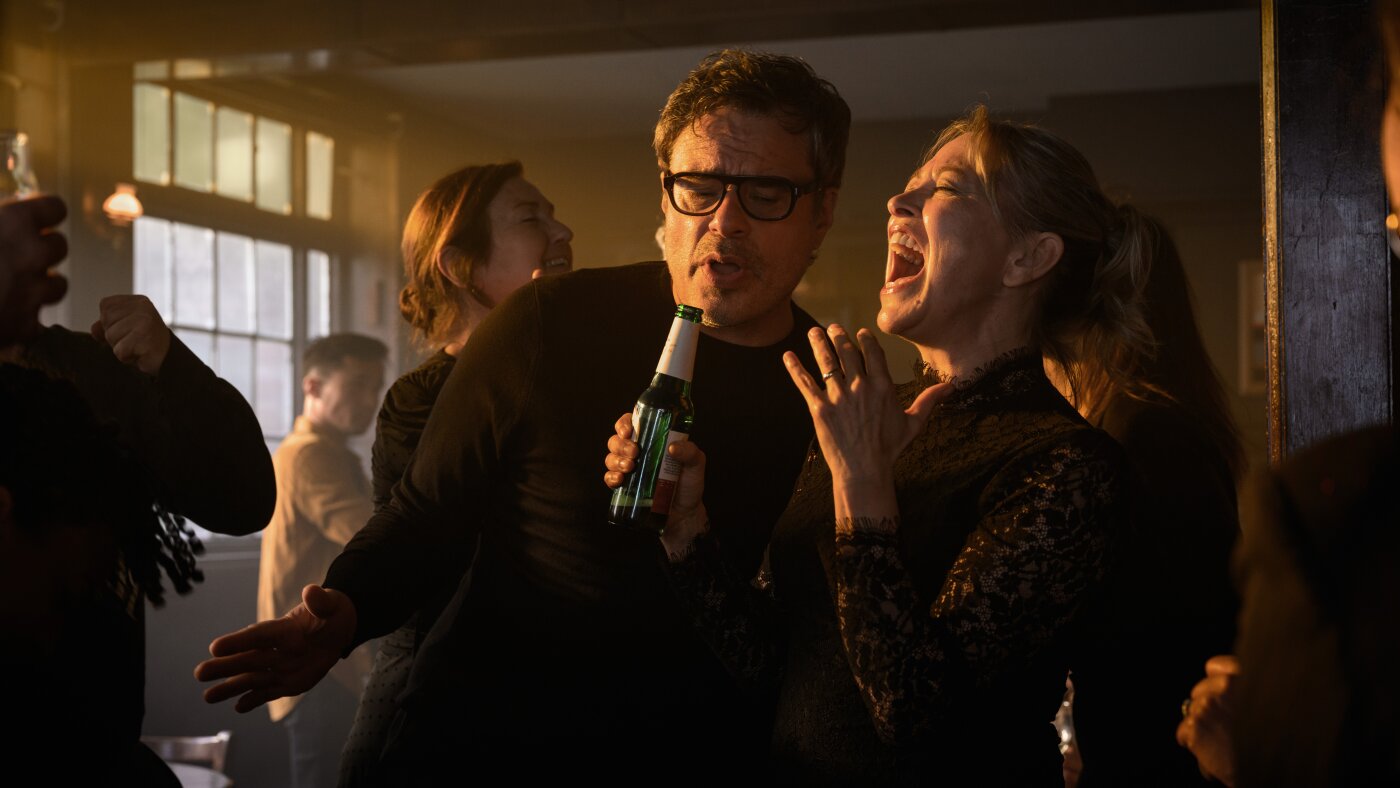
‘Alice and Steve’ might be a mess — but it’s also too fun to stop watching
-

 Technology24 minutes ago
America’s greatest idea is still under threat
-

 World31 minutes ago
Zelenskyy pressures US and Europe for more ‘air defense’ assistance amid ongoing war with Russia
-

 Politics34 minutes ago
ICE renews hunt for El Chapo’s last two fugitive sons with massive reward
-

 Health46 minutes ago
Biohacker hoping to live to 160 reveals alarming diagnosis: ‘My stomach is eating itself’
-

 Sports49 minutes ago
FIFA president addresses Trump call amid scrutiny over decision on USA World Cup star
-

 Technology54 minutes ago
Fake Booking.com travel credit scam targets travelers

