Seattle’s LGBTQ community members say they hope that this Friday’s World Cup “Pride Match” between Egypt and Iran, two countries where homosexuality is criminalized, can be an opportunity to change minds.
West
Republicans demand answers on blue state health program accused of leaking patient data to Big Tech

NEWYou can now listen to Fox News articles!
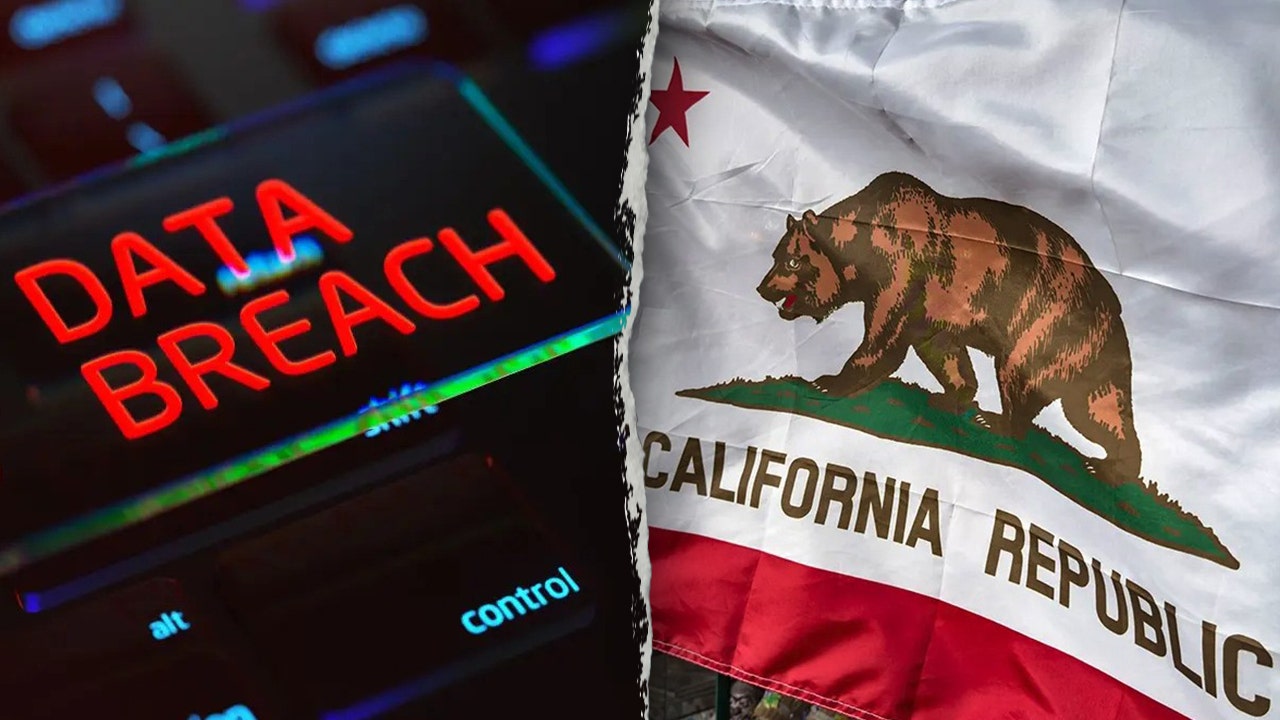
FIRST ON FOX: House Republicans are putting California’s state-run public health insurance exchange on notice with a letter demanding answers about its leaking of private patient data to third-party entries as part of a marketing effort.
Spearheaded by several Republicans on the House Energy and Commerce Committee, the letter to Covered California, which facilitates public health insurance for millions of Californians, seeks answers to numerous questions about its alleged leak of private patient data to third-party entities, such as LinkedIn and Google.
“Ensuring the confidentiality of health information is a foundational obligation for entities operating within the health insurance ecosystem,” the letter, signed by five Republican leaders in the House, states. It points out how federal privacy protections, in particular those stemming from the Health Insurance Portability and Accountability Act (HIPAA), establish certain “expectations” for how organizations like Covered California must handle patient information.
Additionally, in California, the law requires consumers provide permission to certain organizations before their medical information can be disclosed to third-parties.
OVER 8M PATIENT RECORDS LEAKED IN HEALTHCARE DATA BREACH
“Recent reports and public filings raised questions about whether those expectations were met in this case, and whether existing oversight mechanisms are sufficient to detect and prevent improper disclosures,” the Republicans’ letter asserted.
House Republicans are demanding answers from California’s public health insurance marketplace after it was uncovered the program was sharing sensitive patient information. (Getty Images/CyberGuy.com)
Following public criticism in late April, alleging that Covered California was passing sensitive patient data to LinkedIn via a network of “trackers” on its website, the state-run health insurance exchange removed them.
The criticism stemmed from a forensic analysis by two investigative nonprofits, which found Covered California’s website was sharing patients’ answers to questions, such as whether one is pregnant, or how many prescription drugs they use, or how often they see doctors, were being passed to LinkedIn without the patients’ knowledge or consent. Other questions included demographic information and other sensitive personal data, and Covered California subsequently admitted to sharing patients’ Social Security numbers.
In total, Covered California had more than 60 active “trackers” on various data points, according to Cal Matters, one of the investigative nonprofits that uncovered the leaked data. Cal Matters, in their investigation, pointed out how the average number of trackers across more than 200 government websites it investigated was only three.
Following the Cal Matters report that led to public criticism, Coverd California subsequently explained that the “trackers” it had functioning on its website were part of an advertising campaign initiated in February 2024, and upon discovery of the data sharing, it removed them in April the following year.
5.5 MILLION PATIENTS’ INFORMATION EXPOSED BY MAJOR HEALTHCARE DATA BREACH
Covered California, a state healthcare portal, had more than 60 active “trackers” on various data points, according to Cal Matters, one of the investigative nonprofits that uncovered the leaked data. (Kurt “CyberGuy” Knutsson)
“Covered California leverages LinkedIn’s advertising platform tools, including LinkedIn Insight tags, which are pieces of code added to a website to help track how visitors interact with the site. This tool allows us to better understand consumer behavior and deliver tailored messages to help consumers make informed decisions about their health care options,” Covered California said in a public statement put out following the Cal Matters report. “While the review is still ongoing, Covered California has identified that some sensitive data was inadvertently collected by the tags, including first names, the last four digits of Social Security numbers, and other sensitive health information like pregnancy status.”
The state health insurance exchange added that it was reviewing its entire website to ensure no more analytical tools were improperly collecting or sharing sensitive patient data.
Meanwhile, days after Cal Matters brought the data-sharing concerns involving Covered California to light, a class-action lawsuit was filed against LinkedIn and Google, accusing the companies of operating software enabling them “to intercept sensitive and confidential communications of Covered California customers.”
The letter from House Republicans marks the latest attempt to increase pressure on the California-run public health insurance exchange. Republicans are demanding answers to questions pertaining to its data sharing, including during the period of time it was allegedly sharing info with LinkedIn, as well as questions about what Covered California is currently doing to protect its patients’ data.
BLUE SHIELD EXPOSED 4.7M PATIENTS’ HEALTH DATA TO GOOGLE
GOP Reps. Brett Guthrie and Jay Obernolte, both of whom serve on the House’s Energy and Commerce Committee, helped spearhead the enhanced investigative measures against California’s public health insurance marketplace. (Getty Images)
“Americans deserve to know that their sensitive health data is secure and being handled prudently,” Chairman Guthrie said following transmission of the letter to Covered California. “We are hopeful that California will be transparent and forthcoming about this apparent data security failure as we launch our investigation.”
“The unauthorized sharing of private health data with third-party advertisers— including pregnancy status, prescription drug use, and Social Security information— is deeply troubling,” added California Rep. Jay Obernolte, a fellow Republican on the House Energy and Commerce Committee who helped spearhead the letter to Covered California alongside Guthrie. “We’re seeking answers because the people of California deserve accountability and transparency when their privacy is compromised.”
When reached for comment, Covered California acknowledged receipt of the letter from Guthrie, Obernolte, and others on the House Energy and Commerce Committee, adding that they were currently reviewing its requests and plan to respond by the provided July 1 deadline. Google and LinkedIn declined to provide comment for this article.
Read the full article from Here

Continue Reading
San Francisco, CA
First of its kind queer museum in San Francisco Chinatown amplifies Chinese LGBTQ artists

On one side of the world, Xiangqi Chen can be punished for her LGBTQ+ activism. But on the other, the activist and artist is lauded as a trailblazer — the architect behind the first of its kind Chinese queer art museum.
The irony that she left her home in China and found a public platform for her LGBTQ+ artistic expression in San Francisco’s Chinatown — the country’s oldest — is not lost on her.
“Here in San Francisco Chinatown, I still continued my journey and met so many like-minded community members and friends,” Chen told The Associated Press through an interpreter. “It kind of actually encouraged me and gave me lots of strength to do what I know is my mission, my calling.”
The OUT Museum opened with a rainbow-ribbon cutting at the end of May — between Asian American Pacific Islander Heritage Month and Pride Month. Situated across from the Chinese Historical Society of America Museum, the bilingual museum is giving recognition to a demographic that has long felt invisible. It seems like an ideal fit in the progressive city at a time when some cities, states and the federal government are restricting or banning certain LGBTQ+ rights.
To start, the museum is only open on Saturdays and is one room with fewer than a dozen artworks by artists from China and the Chinese diaspora. But there is hope to expand the museum’s exhibits and days of operation.
Museum allows Chinese artists to fully tell their stories
While still living in China, Chen launched a Kickstarter for a proposed museum six years ago — more than 2,000 donated on the platform. But she knew it likely wouldn’t be built there. In 2022, she came to the U.S. on a J-1 visa as a visiting scholar at Georgetown University. By 2024, Chen gained attention in San Francisco for her role in an exhibition at the Asian Art Museum. That led to a residency with the Chinese Culture Center of San Francisco.
The organization was “proud to be the incubating space for the OUT Museum prototype,” executive director Jenny Leung said in an email.
The level of support that followed amazed Chen.
“I got so many chances to connect with the local Asian American queer community and even the Chinatown community in general,” she said.
Interest soon followed from longtime collaborators and younger artists who reached out via Instagram. They are represented in the inaugural exhibition, which includes photography, zines and an interactive installation where visitors use thread to trace their self-discovery journey with gender and sexuality.
For Hong Kong-born artist Dixon Ngai, this museum offers an outlet to tell his story as mainstream media typically overlook the Chinese LGBTQ+ community. He contributed a hand-painted, Chinese porcelain wine pot inspired by the Cantonese opera “Di Nü Hua,” or “The Flower Princess.”
Ngai said the OUT Museum, unlike other exhibitions, is very specific to the experience of the Chinese queer community, allowing “more people to see our voice.”
Museum affirms evolving attitudes toward LGBTQ+ presence
Since the museum’s opening, Chen has been “one hundred percent moved” by unexpected feedback from one particular demographic: Chinese immigrants, both queer and straight, who have lived in California for decades.
A 60-year-old transgender man who visited shared how he immigrated to the U.S. in the 1970s for crucial gender-affirming care. There was also a mother looking to connect with her gay adult son.
“She later emailed me saying that she’s so grateful for all the events the art museum has organized,” Chen said. “Her son came out to her, and she’s very proud of her son and she wants to express gratitude.”
These reactions are proof the museum is elevating the visibility of Chinese, Chinese American and Asian American LGBTQ+ people, said author and activist Helen Zia, a museum advisory board member. It also shows how attitudes have shifted, she said, as it would have been difficult to mount even 20 years ago.
“There were Asian churches who would have demonstrations week after week with thousands of people just condemning same-sex couples,” Zia said, recalling the response from the Chinese community in 2008 when she handed out pro-gay marriage flyers in Oakland’s Chinatown. “We got people yelling at us, spitting.”
Later that year, Zia and her wife were among many couples who wed after the California Supreme Court rejected a same-sex marriage ban. Even today, she says the museum’s presence sends a needed message.
“See our humanity,” Zia said. “Here’s the beautiful art that we create and imagine and contribute to the world.”
LGBTQ+ life in mainland China
versus the US
Being homosexual in China means living under the radar and discriminatory policies. In 2001, the Chinese Psychiatric Association stopped listing homosexuality as a mental disorder. But LGBTQ+ couples still cannot marry or adopt. They are also limited in their right to publicly advocate. When Chen lived in Shanghai, she ran a grassroots center for lesbians. One of the reasons she left was because during the pandemic the government started cracking down on spaces for LGBTQ+ activism.
She likely could not even put on an art show, let alone a museum.
“From 2013 to 2015, that kind of art exhibition by queer artists (could) exist, but only if you don’t explicitly show or tell the audience that your work or yourself identify as queer or LGBTQ,” Chen said. “But not nowadays.”
That Shanghai center is how Zia met Chen a decade ago. Zia was doing research for a book and toured the center.
“She’s been just incredibly brave in China, creating a center that attracted a lot of state attention,” Zia said.
A key difference Chen has noticed among American-born Chinese LGBTQ+ people versus those in China is they are more educated about gender and sexual identity and have more access to support.
Under the second Trump administration, LGBTQ+ rights are increasingly under threat. President Donald Trump’s administration has targeted gender-affirming care and sought to ban transgender people in the military. Some anti-Pride lawmakers recently proposed “Nuclear Family Month.”
San Francisco also recently dealt with shifting LGBTQ+ attitudes after Giants baseball players wrote Bible verses on Pride Night hats.
Nevertheless, the Chinese artists say the social landscape here is a breath of fresh air.
“Here in San Francisco, in California, we enjoy the air of freedom, there is equal human rights, there is security,” Ngai said. “So, we are very proud to be ourselves.”
This Sunday, Chen will proudly walk in her first San Francisco Pride Parade. She will plug the museum while dressed fittingly as a woman warrior from a Cantonese opera.
“I think completing this opening will be a start for me. It’s not the end,” Chen said. “We still have a long way to go.”
___
Tang reported from Phoenix.
Denver, CO
Denver Broncos Foundation launches extension of ‘ALL IN. ALL COVERED.’ emphasizing youth football participation

DENVER (KKTV) – In extension of the Denver Broncos Foundation’s helmet distribution program, they have launched the “ALL IN. ALL COVERED.” Statewide Youth Football Participation Program, in partnership with Every Kid Sports and Good Sports.
Over the course of five years, the program will aim to reduce financial barriers to play by providing financial support and essential equipment to increase youth participation in tackle and flag football.
The Foundation will fund registration fees for underserved youth through Every Kid Sports, while increasing access to both individual and shared team equipment through Good Sports.
The program aims to serve more than 17,000 children across Colorado, using football as a pathway to drive equitable access and sustained participation in sport.
“We’re excited to work with Every Kid Sports and Good Sports to grow youth football participation across Colorado and help open doors to the sport for both boys and girls,” said Bobby Mestas, Broncos Senior Director of Youth & High School Football.
Coaches and players from across the Pikes Peak Region had their first look at the new helmets they received for free from the Denver Broncos Foundation back last year.
Copyright 2026 KKTV. All rights reserved.
Seattle, WA
Iran and Egypt to play in Seattle ‘Pride Match’ despite earlier complaints | The Jerusalem Post

Seattle revels in its reputation as a welcoming place and Pride flags are visible all over the city, all year round. Its June Pride weekend is one of the biggest in the United States.
So, ahead of December’s World Cup draw, it was only natural that local organizers designated the June 26 match to be held in the city as a “Pride Match.”
Then the draw happened — and the two teams scheduled to play the game were Egypt and Iran.
Egypt’s Football Association urged global soccer governing body FIFA to prevent any Pride-related activities, arguing such events clashed with the Muslim-majority country’s cultural and religious values. The governing body in Iran, where same-sex relations can carry the death penalty, filed an objection with FIFA.
Some in Seattle have doubts over the teams in the ‘Pride Match’
But in Seattle, there is no question that the Pride Match will go ahead as planned.
“The World Cup is going to come and go in three weeks,” Hedda McLendon, from Seattle’s local World Cup organizing committee, told Reuters. “The Pride celebration … has happened on this weekend for 50-plus years.
“It is going to happen this weekend, it is going to happen long after the World Cup.”
Some in the city’s LGBTQ community had mixed feelings given the participants, said Jon Cairns, 49, manager of local LGBTQ+ club Kremwerk.
Cairns, however, said his own view was that it provided a platform to promote acceptance that only the world’s biggest sporting event could offer.
“My reaction is let’s have them,” he told Reuters. “International sports is one of the biggest brokers historically of social change and individual rights and freedoms worldwide, including in the U.S.”
He cited black U.S. sprinter Jesse Owens’ four gold medals at the 1936 Olympic Games in Nazi Germany and Tommie Smith and John Carlos’ raised-fist protest in 1968 as moments where “only international sports could reach that big of an audience.”
“They’re not going to turn off the World Cup on state television in Iran or Egypt to block out a Pride flag in the audience,” Cairns said.
The Pride Match is “a host city initiative” and separate of FIFA, a spokesperson for soccer’s governing body told Reuters.
Seattle’s LGBTQ community sees an opportunity
Egypt and Iran’s involvement in the Pride Match is not the first time the World Cup has grappled with stark differences in attitudes between hosts and visitors.
In 2022 World Cup host Qatar, the emir said visitors should “respect our culture” when asked about gay people attending the tournament.
FIFA threatened yellow cards for captains wearing the “OneLove” armband, citing its rules against political slogans. Teams including England and the Netherlands that had been planning to wear the armbands to protest Qatar’s laws against same-sex relationships abandoned the plan.
For Ryan Webster, a 40-year-old lifestyle manager who was at Kremwerk the weekend before Pride, Seattle’s “Pride Match” was an opportunity to show solidarity with people in countries where their sexuality was outlawed.
“I’m choosing to believe that this is our moment to allow the members of the LGBTQ community that come from those countries to have the opportunity to celebrate themselves in totality that they might not have otherwise,” he said outside the club, which will host a watch party for Friday’s game.
Inside, ‘Venus Fengz’ lip-synced to Cher’s “Believe” before introducing fellow drag performers to the stage, clapped and cheered by a raucous crowd.
Fengz, who only wanted to provide their stage name, said Pride coinciding with the World Cup would bring increased visibility, anticipating perhaps some new audience members.
“I think it’s always great for us to be able to share space and share places with people who don’t have the same experiences as us,” they told Reuters.
“Sometimes you just have to be the bigger person and show grace where you can and know that everyone is a human learning (from) different experiences, but also it can get hard — because you’re on the shorter end of the stick, always trying to have to explain yourself around people who don’t grow up with the same worldview.”
-

 Los Angeles, Ca39 minutes ago
Clue may identify SUV in Long Beach hit-and-run that left woman injured
-

 Detroit, MI1 hour ago
Ilitch Companies creates gaming platform, expands beyond Detroit
-

 San Francisco, CA1 hour ago
First of its kind queer museum in San Francisco Chinatown amplifies Chinese LGBTQ artists
-

 Dallas, TX1 hour ago
These children were sold for sex. Then the system failed them again
-

 Miami, FL1 hour ago
Hard Rock Cafe lets Downtown Miami lease lapse after 30-plus years
-

 Boston, MA1 hour ago
Federal judge in Boston bars Trump from implementing proof of citizenship requirement to vote – The Boston Globe
-

 Denver, CO2 hours ago
Denver Broncos Foundation launches extension of ‘ALL IN. ALL COVERED.’ emphasizing youth football participation
-
Seattle, WA2 hours ago
Iran and Egypt to play in Seattle ‘Pride Match’ despite earlier complaints | The Jerusalem Post


