Lifestyle
Inside the daring L.A. party that's like Studio 54 for 'the dreamers and the outcasts'


On the tip of Cahuenga Boulevard in Hollywood, beyond the vape-scented sidewalks and partygoers waiting for their ride-shares, there’s a velvet-roped portal to another dimension. Every first Saturday of the month, those in the know gather at the historic Spotlight nightclub for Simon Says, the city’s most daring, avant-garde LGBTQ+ party.
It’s a scene that defies easy description: Nipple tassels twirl beside kabuki-painted faces; “My Fair Lady” hats tilt above bodices constructed from yellow caution tape; liberty spike hairstyles collide with exposed flesh; and professional dommes in fishnet bodysuits playfully flog (with permission) their friends while goddesses with antlers sip drinks on velvet couches wedged between potted palms.
1
2

1. Daffne E. Cruz, left, and Daniella “Ellez” Herrera at Simon Says. 2. D’Mahdnes LaVaughn and Nathan Sierra. (Chiara Alexa / For The Times)
This isn’t Studio 54, though it shares the same spirit. It’s Hollywood reimagined. And if Simon Says, you’d better bring it.
Seductively clad dancers, including longtime host Love Bailey, flank the stage where DJs spin a fusion of New Wave, late-stage disco and early bloghouse that attracts L.A.’s queer creative underground. It’s not uncommon for celebrities like singer-songwriter Adam Lambert, electronic-pop star Slayyyter, queer streaming network co-founder Damian Pelliccione, contestants from “RuPaul’s Drag Race” and film director John Waters to pop by for a visit.
The vast majority of attendees identify as LGBTQ+, and while the door is technically open to all, it’s the ones who show up transformed — glistening, feathered, glammed out — who are whisked in the quickest. Founder and executive producer Andrés Rigal, part master of ceremonies and part fairy godmother, prowls the line, handpicking the most striking attendees and sending them past the bouncer with a nod and a smile.

Reese Rush and Andrés Rigal.
(Chiara Alexa / For The Times)
“We do run an old-school nightlife door, rewarding those who show up in stunning looks,” Rigal says. “If they’re wearing an elaborate costume they’ve been gluing together all week just to be at Simon or are a trans person all the way in the back by themselves in heels — ouch — I will give them that special moment and make them feel seen.”
Rigal is one of Los Angeles’ most prolific nightlife producers, with a reputation that precedes him. Numerous Simon Says attendees told The Times that they initially came to the party simply because they saw Rigal’s name on the flier.
Cassie Carpenter, an entertainment reporter who identifies as asexual, makes it a point to attend every event Rigal puts on. Dressed in a revealing keyhole dress and towering beehive wig, Carpenter comes to Simon Says for the ambience and the chance to dress in drag.

Cassie Carpenter.
(Chiara Alexa / For The Times)
“I hate to get in full glam for a subpar party; it’s a waste of lip gloss,” she says. “Simon Says is always worth it. I’ve met amazing people and ran into surprising old friends. Friendship is everything when you’re asexual.”
Mostly known for large-scale fêtes that attract the likes of Katy Perry, Kesha and Paris Hilton, Rigal has been a feature in the city’s queer party scene since the mid-2000s when he revamped Avalon’s former Spider Club into the boho-chic nightclub Bardot and unveiled one of the city’s longest-running and most popular Pride events, SummerTramp.
If Simon Says sounds familiar, it’s because it had a short-lived moment in 2012 when Rigal’s company, Andrés Rigal Presents, introduced it at the now-closed A-lister club Smoke & Mirrors.
Grasping onto the coattails of the waning mid-aughts, Simon Says failed to conjure much interest at the time. Rigal thinks it might have been too early to cash in on the hipster-indie-sleaze era, as “everyone was still coming out of their American Apparel hangover.” Simultaneously juggling a number of other events such as Evita, Rasputin and Mr. Black, Rigal decided to shelve Simon Says for the time being.
Toward the end of 2023, pining for a more intimate party that wouldn’t draw crowds in the thousands, Rigal discussed reviving Simon Says with his partners Daisy O’Dell, Sean Patrick and Mark Hunter. An opportunity to host it at the Spotlight, a new Hollywood club housed in the bones of one of L.A.’s oldest gay bars, presented itself, and the party kicked off at the beginning of last year.
1

2

1. A masked partygoer, left, with Drake James. 2. Wang Newton. (Chiara Alexa / For The Times)
On Saturday, Simon Says will celebrate its one-year anniversary, with music by Felix Da Housecat and house DJs Patrick and O’Dell.
The small-capacity venue sees around 700 partygoers through each night, each of whom pays $10 to dance from 10 p.m. to 2 a.m.
Motivation for guests to arrive early comes in the form of a limited-edition zine that may contain a photo of people from the previous month’s event.
Co-founder Hunter, better known as the photographer Cobrasnake, has compiled these tactile time capsules printed in black-and-white since Simon Says’ first iteration in 2012. The goal is to highlight the party’s best-dressed guests. As the back of the zines say: “Turn a look, get in the book.” Although the zine is free, only a handful are printed, scattered around the venue at the start of each night, and you won’t know if you’re in the zine until you look through it.
Queer fashion designer Drew Arvizu, 25, has attended all but two of Simon Says’ events in the last year. He’s become a party fixture not just due to his regular attendance but because of the over-the-top bespoke outfits he dons.
1

2

1. Drew Arvizu. 2. Colin Campbell, left, Drew Arvizu and Pat Posey holding a Simon Says zine. (Chiara Alexa / For The Times)
For the inaugural Simon Says, he wore a horned luchador mask and polka dot clown suit; in November 2024, he balanced a four-foot, 20- to 30-pound vintage Las Vegas showgirl headdress atop his head; and in March 2025, he flaunted one of his own creations: a floor-length yellow taxicab-checked tube dress with intentional cutouts across the breasts and groin area.
“Simon Says reminds me of why I love nightlife, and it’s definitely an incentive to pull out my sewing machine,” Arvizu says. “These zines are keepsakes from a moment in my life, and I hope I keep them forever.”
Christian Morris, a pansexual, nonbinary artist from Inglewood, attended his first Simon Says in March dressed in a tiger stripe suit, blond mullet wig and Aladdin Sane-inspired lightning bolt face makeup. Describing the event as “feeling plugged into a queer power source,” Morris noticed the partygoers didn’t just want to go to the event; they wanted to be the event.

Christian Morris.
(Chiara Alexa / For The Times)
“From the leather and chain looks to the queens in long black and yellow spiral dresses to the woman dancing on a speaker in a gold sequin romper outfit, everywhere I looked people felt hot and haute and danced with abandon,” he says.
And apparently, miracles can happen at Simon Says. Despite hardly ever meeting romantic partners on nights out, Morris left with the phone number of a “funny, super smart, sexy” crush he met on the dance floor, and the two scheduled a picnic date for the following week.
An element of romance permeates the Spotlight’s interior, with an intimate dance space and a sumptuous lounge area outfitted with Persian rugs, Victorian-style furniture and steam trunks that double as coffee tables. Also, there’s no need to leave your drink behind or grab your coat if you want a quick nicotine pick-me-up when you’re at Simon Says. Thanks to a grandfathered-in back patio, which includes the venue’s second bar, one can smoke indoors because the area doesn’t have a roof.
“Being in the space just makes me feel at home with the couches, the rugs on the dance floor and the fact that you can often find a place to sit even if you’re not paying for bottles,” says pop musician Morganne Yambrovich, 27, who came to Simon Says in March to celebrate her first night out after ending an eight-year relationship.
To mark this transformation and get back in touch with a creative side she’d kept dormant during her relationship, Yambrovich spent six hours wrapping craft wire around hair extensions to create her look for Simon Says. The resulting piece was a pair of butterfly wings braided into her hair intended to symbolize her recent metamorphosis.
“If you go out in certain neighborhoods, everyone’s going to look the same. But there’s no such uniform at Simon Says,” she says. “Most people show up in the most creative expressions of themselves. For instance, I would not wear a giant hair sculpture and butterfly makeup to Tenants of the Trees [a bar in Silver Lake].”
1

2

3

1. Carter Daniel. 2. Phoenix Lee. 3. A partygoer with Ian Lomas, center, and Francisco Alcazar. (Chiara Alexa / For The Times)
As the adage goes, those who turn a look probably will get into Simon Says’ book, but those who don’t quite turn a look will still get into the party. That’s because the event is about inspiring others as much as it is creating a safe space for self-expression. On any given night, you’re likely to find three generations of partygoers at the club — Gen Z, millennials and Gen X — and yes, straight people are welcomed with open arms.
“Once we gather under the disco ball, identities blur,” Rigal says. “On the dance floor, we become something shared, something bigger.”
Rigal and his team make a point of meeting with security and staff before every event to ensure that the ethos of welcoming all is maintained throughout the night. Although the bathrooms are divided by gender — and marked with Basquiat-style dinosaur imagery — on the nights when Simon Says takes over the Spotlight, those designations are ignored, and the toilets become unisex. There are no VIP sections either, and while it can get chaotic, everyone is allowed on the stage. When this reporter descended the stage stairs to the dance floor, a security guard offered their hand for support.
“It’s kind of like making a salad,” Rigal says. “The more ingredients touching one another, the better. I want all of my spaces, especially Simon, to be melting pots of interaction. When you allow the space to be free, you are more likely to have these really incredible moments, and I don’t want to rob anyone of that.”
In recent months, some Simon Says attendees have funneled political statements into their fashions. Longtime friends Colin Campbell, 63, and Pat Posey, 46, coordinated red and black looks for a recent party. Posey wore a mini dress featuring the colorway, while Campbell dyed his beard red and black and donned a red and black pigtail wig and shirt with the slogan “Resist Fascism.”
1

2

1. Colin Campbell’s colorful beard. 2. Pat Posey. (Chiara Alexa / For The Times)
After the November presidential election, the friends experienced their first hate crime in Hollywood when a car passing by shot them with airsoft pellets and yelled a gay slur. Now more than ever, Campbell and Posey stress the importance of being visible and fighting back, and fashion is their chosen vehicle for doing so.
“We dance to celebrate ourselves, to recharge our batteries, to have the energy to put up with the ignorance and hate that is spewed at us every day,” says Posey, who started cross-dressing after moving to L.A. six years ago. “At Simon Says, everyone is welcome. Bring your true freak, and let it fly.”
Inspired by Campbell and Posey, to whom he has grown close through Simon Says, Arvizu has started imbuing political messages into his clothing as well. For a recent red-carpet event, he wore a shirt with the message “Protect trans youth,” and at the December Simon Says party, he dressed in rainbow from head to toe.
As the 2001 Basement Jaxx tune “Where’s Your Head at” thumped through the speakers at the March event, one partygoer dressed as a cowboy initiated a spontaneous dance-off with another partygoer dressed in a vintage Vietnam War vet uniform.
1

2

1. Cocoa Rigal. 2. Omarr Herrera. (Chiara Alexa / For The Times)
“Work it out, work it out!” cheered the cowboy, Ricardo Logan, 36, who included light blue in his outfit for trans solidarity.
His dance partner, tax and accounting professional Omarr Herrera, 44, a stranger until this moment, gurgled back, “Ahhhh, I love you!”
It’s moments like these that remind Rigal why he created this party.
“Queer nightlife is a sanctuary,” he says. “For the kid arriving in L.A. from a conservative hometown, for someone pushed out of their family, for the dreamers and the outcasts — this is where they find kinship, voice and vision. That metamorphosis is the heartbeat of everything I do.”

Lifestyle
Terry Tempest Williams on why women with big ideas get labeled ‘crazy’ : Wild Card with Rachel Martin
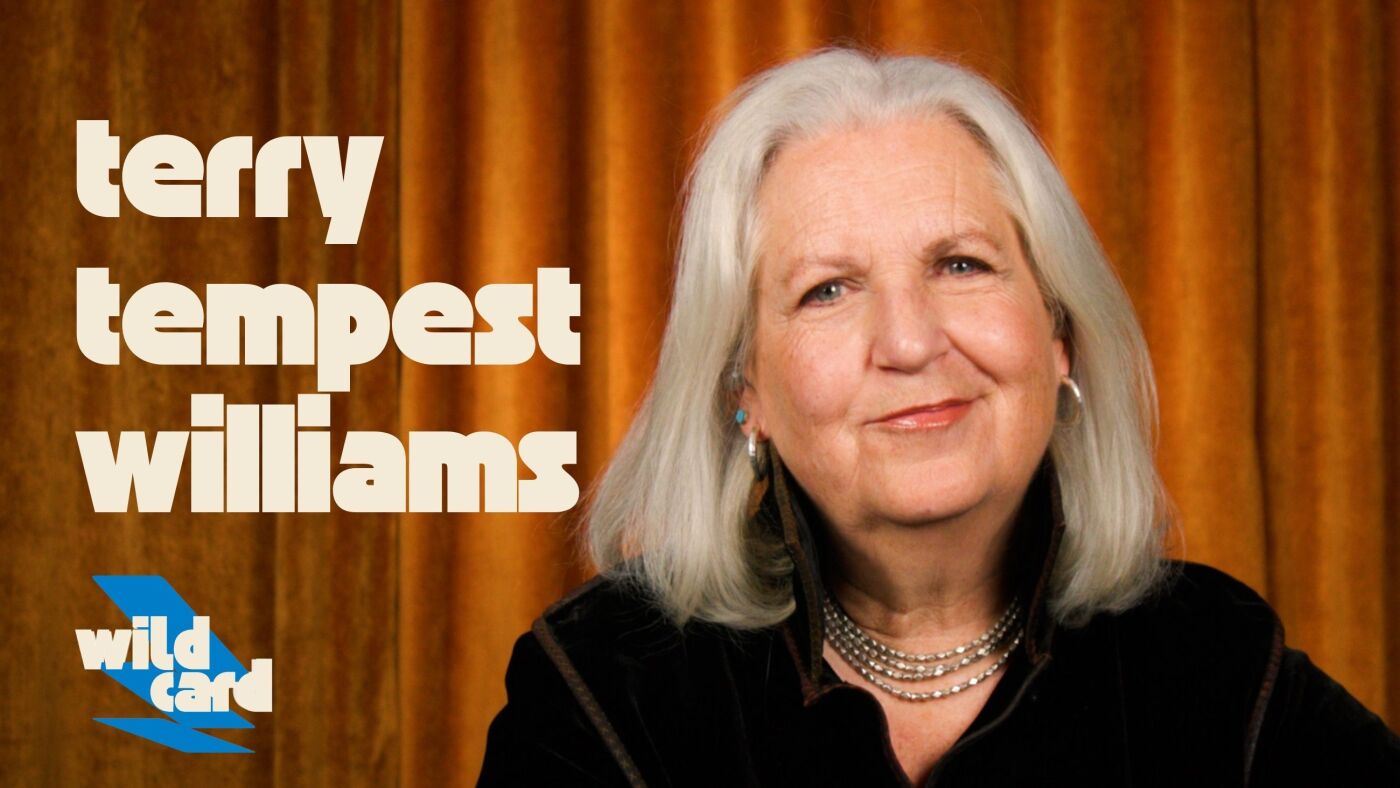
A note from Wild Card host Rachel Martin: I met Terry Tempest Williams about 25 years ago at a writer’s conference in Yosemite Valley. I was a young reporter who was there to do a story about how literature was addressing climate change and she made such a huge impression on me. I had never heard someone talk about the natural world the way Terry did and she had a spiritual depth I hadn’t encountered in my life at that point.
To this day, Terry’s writing always reorients me towards what is good, what is beautiful, and what is true. Her newest book is called “The Glorians.”

For its upcoming Los Angeles venue, experiential art firm Meow Wolf will focus on the art of storytelling, with a specific eye toward skewering our city’s moviemaking magic. To help bring that vision to life, Meow Wolf has entered into a creative partnership with Titmouse, one of L.A.’s most renowned independent animation houses.
The Hollywood-based studio behind popular series such as “Big Mouth” and “Star Trek: Lower Decks” will create animation that will be shown throughout the West L.A. venue, which is on target for a late 2026 opening at the Howard Hughes entertainment complex.
It’s a move that represents a shift for Santa Fe, N.M.-based Meow Wolf. Over the last decade-plus, the art collective has grown beyond its anything-goes, punk-meets-psychedelic roots into an organization with full-scale, maximalist installations in its hometown, Denver, Las Vegas, Houston and the Dallas suburbs. In the past, Meow Wolf kept most of its media in-house.
As part of its larger-than-life participatory art installations, Meow Wolf L.A. will feature a mix of live action and animation, the former filmed by Meow Wolf in its Santa Fe studio. Meow Wolf’s James Stephenson, a senior VP with the company and its creative director of emerging media, said the degree to which the L.A. exhibition will lean into various animation styles necessitated an outside partner. Titmouse’s work, in development by a number of directors with contrasting tones, will be shown on a variety of formats, ranging from cinema screens to full-room projections.
“I really believe in animation as an art form, and I know the Titmouse folks do too,” Stephenson says. “Animation is made by artists. It’s made by artists with their own hands. It’s something that is still very rooted in craft.”
Meow Wolf’s L.A. space is set in a former cinema complex, and will champion its location, taking guests on a journey through a converted movie house and beyond, into a sci-fi-inspired fantasyland with sentient spaceships and a 30-foot-tall mushroom tower. Meow Wolf creatives have spoken of the fantastical movie theater as one that will feature animated, self-aware candy before attendees enter the main exhibition space, making Titmouse’s work some of the first art guests will encounter. Titmouse co-founder Chris Prynoski has said the studio has lined up at least six directors for the exhibit.
An in-progress art installation destined for Meow Wolf L.A. at the art collective’s Santa Fe, N.M., headquarters. The L.A. exhibition will feature animation from Titmouse.
(Gabriela Campos / For The Times)
Titmouse, says Stephenson, is the right partner because “they’re known less for a house style, and more for a house vibe.” Over the years, Titmouse has been behind such diverse shows as “Scavengers Reign,” owning a Jean Giraud influence rooted in French and Spanish surrealism, the lively “Jentry Chau vs. the Underworld,” with an unique color palette that took inspiration from anime and Chinese mythology, the exaggerated comic book feel of Adult Swim’s “Metalocalypse,” and the approachable yet expressive tone of “Star Trek: Lower Decks.”
“Meow Wolf’s vibe is similar to Titmouse’s vibe,” Stephenson says. “It’s artist-first, artist-driven, independent and kinda edgy. They are always trying to find the edge of what’s possible. They try to see how far they can go, and it’s done for fun and in the spirit of taking risks.”
Prynoski says working with Meow Wolf will give Titmouse a sense of artistic freedom it doesn’t always have when delivering content for more traditional Hollywood partners. He says the multi-director approach is a callback to the early days of Warner Bros. Animation, when individual creators put their own stamp on Looney Tunes material.
“I use Bugs Bunny as an example,” Prynoski says. “You’ve got a Friz Freleng Bugs Bunny short. You’ve got a Chuck Jones Bugs Bunny short. You’ve got a Tex Avery Bugs Bunny short. They’re all different versions of Bugs Bunny, and people who are really paying attention can tell which director directed each one. Even though to the layman, these are all Bugs Bunny, but if you lined them up, they are drawing in different styles, sensibilities and techniques.”
Prynoski says that was a centerpiece of his pitch to Meow Wolf, noting that characters will reappear in multiple installations, each handled by a different artist. Meow Wolf L.A., in fact, will be the firm’s most character-driven exhibition, as guests will follow the storylines of three main protagonists throughout the space.
In announcing the partnership, Meow Wolf and Titmouse released an image from an animated work directed by Luca Vitale. It features a key character having a moment with a hummingbird and it’s done in an elegant, slightly anime-influenced style. It’s an image full of movement, reflecting a character in transition with inviting pastels and bold dashes.
“I like that image because I think it captures some of the sense of wonder that we want people to feel,” Stephenson says. “The character is having an encounter with the elusive nature of creativity and reality in a way that makes them have a different perspective of what’s possible.”
Other contributing animation directors to Meow Wolf L.A. include Space Dawg, Felix Colgrave, Alexander Vanderplank and Phimémon Martin, and Jun Ioneda.
Titmouse’s partnership with Meow Wolf will extend beyond the L.A. exhibition. The two will be working on the development of Meow Wolf New York, which is slated to open some time after Los Angeles, and are collaborating on a planned animated series, which Prynoski is spearheading.
Meow Wolf exhibits are the result of sometimes hundreds of disparate artists coming together in a shared space. Distilling that into a signature, singular style for a series could be a challenge. Stephenson pinpoints some guiding principles.
“You really need to feel the hand of the artist,” he says. “You need to feel a DIY aesthetic. You need to feel the materiality. Those are very specific to what we are.”

The Kennedy Center on June 28, with its facade signage still covered by a tarp and scaffolding.
Alex Wroblewski/AFP via Getty Images
hide caption
toggle caption
Alex Wroblewski/AFP via Getty Images
On Wednesday, a federal appeals court denied President Trump’s request to stop the removal of his name from Washington, D.C.’s Kennedy Center. The signage on the building has been covered with tarp and scaffolding since June 13, but in a court filing last month, the center’s current executive director said that Trump’s name has been removed.
In their decision, three judges from the U.S. District Court of Appeals for the District of Columbia Circuit said that the president had failed to prove that the arts center would be “irreparably injured” without Trump’s name attached to it.

NPR requested comment from the Kennedy Center, but did not receive an immediate reply.
This latest round of court decisions is part of the ongoing litigation filed by Rep. Joyce Beatty, D-Ohio, against President Trump and the board of the Kennedy Center. In a statement emailed Wednesday to NPR, Beatty said: “Today’s ruling again affirms that this administration’s efforts to rename the Kennedy Center were unlawful. His name no longer desecrates this sacred memorial, which belongs to the American people. Now it is time for the Trump administration to accept this, comply with the law, and take the tarps down.”
In previous court filings, Trump’s legal team had asserted that removing the president’s name from the arts complex, both on the physical building and in its digital materials, would inflict irreparable harm in both time and money already spent. In the denial, the three judges — Patricia Millett, Robert Wilkins and Gregory Katsas — wrote that since Trump’s name has already been removed, “a stay would not avert those harms.”
Furthermore, Trump had claimed that without his name attached, future fundraising would be threatened “and [will] contribute to the financial decline of the Center.” In response, the appeals judges wrote: “Appellants, however, have failed to support this assertion with any specific facts or evidence. They offer only the conclusory assertions of the Kennedy Center’s Executive Director that were made in a factually unsupported declaration.” The center’s current executive director, Matt Floca, specializes in physical plant management.
The presiding judge in the case, Christopher R. Cooper, has ordered that the center provide him a status report on the center’s operation and programming before the end of this month. As of Wednesday, the center’s calendar lists a small roster of programs, including outdoor free movie screenings, workshops for children, and five free live performances in July on its Millennium Stage. In the past, the Kennedy Center presented over 2,000 arts and education events each year, including free daily Millennium Stage performances.
-

 Los Angeles, Ca1 hour ago
California teen e-biker baiting police to chase tracked by drone, arrested
-

 Detroit, MI1 hour ago
Our picks for state\nSenate from Wayne Co. | Endorsements
-

 San Francisco, CA2 hours ago
Man reported missing in San Francisco
-

 Dallas, TX2 hours ago
How to buy France World Cup semifinal soccer tickets in Dallas
-

 Miami, FL2 hours ago
Miami-Dade Schools names six semifinalists for superintendent
-

 Boston, MA2 hours ago
Lawsuit: ICE detained East Boston father despite legal status
-

 Denver, CO2 hours ago
Victor Marx wins GOP primary for Colorado governor, defeating veteran lawmaker after unorthodox campaign
-

 Seattle, WA2 hours ago
Widower of pregnant woman who was shot to death in Seattle sues homelessness authority

