Education
Judge Orders Tufts Student’s Detention Case Moved to Vermont


A federal judge ordered Friday that the case to free Rumeysa Ozturk, a Tufts student from Turkey, from immigration detention should be moved to a court in Vermont, denying a government demand to hold the proceedings in Louisiana, where she is being held.
Ms. Ozturk, a legal resident on a student visa, was swept up by the government as part of what the Trump administration has described as a campaign against antisemitic activists on campus.
In a hearing on Thursday, a lawyer for the American Civil Liberties Union argued that the government had stealthily transferred her from Massachusetts, where she was arrested, to Louisiana without informing her lawyers where she was. The lawyer, Adriana Lafaille, suggested the government was seeking a court that would favor its case.
Louisiana has one of the most conservative appeals courts in the country.
Government lawyers told the court that Ms. Ozturk had been moved to Louisiana because there was not an available bed for a female detainee in New England, and that there was no intent to withhold information about her location.
In her ruling on Friday, Judge Denise Casper of U.S. District Court in Boston, said that Vermont was the proper venue because Ms. Ozturk was being held there overnight at the time that her lawyers — not knowing where she was — filed a petition for her release in Boston.
Normally, a petition to free someone would be filed in the jurisdiction where the person was confined.
Judge Casper wrote that she was transferring the case to Vermont “in the interest of justice.”
“The irregularity of the arrest, detention and processing here is coupled with the failure to disclose Ozturk’s whereabouts even after the government was aware that she had counsel and the petition was filed in this court,” the judge wrote.
On March 25, federal agents in plain clothes, some in masks, surrounded Ms. Ozturk on the street in front of her apartment in Somerville, Mass., took her phone and handcuffed her. Her lawyers were unable to find her for almost 24 hours as the agents drove her through New Hampshire to Vermont before putting her on an early morning plane to Louisiana, where she is now being held in the South Louisiana ICE Processing Center in Basile.
In a statement after Ms. Ozturk’s arrest, the Department of Homeland Security said it sought to deport her because she had “engaged in activities in support of Hamas, a foreign terrorist organization that relishes the killing of Americans.”
The only evidence that has surfaced against her is an opinion essay critical of Israel’s conduct of the war in Gaza that she and other students wrote and published in the student newspaper. But the university has said that the essay met its standards, and that it had not received any information that would warrant her arrest.
The judge’s decision is one of two defeats for the government this week in such cases. On Tuesday, a New Jersey federal judge ruled that the case to free Mahmoud Khalil, a recent Columbia University graduate whom the government is also seeking to deport, would remain in New Jersey, instead of being transferred to Louisiana. He also is being held in a center there as the court fight proceeds.



In our national memory, George Washington is a mythic figure, cast in metal, carved in stone. His leadership, first as general, then as president, is so intertwined with the roots of this country that it is sometimes hard to separate the man from the idea of America. How does one imagine the living presence of such an icon, much less embody him?
There is a small fraternity of men bold enough to try. At historical parks and commemorations from Virginia to Seattle, these interpreters (their preferred term) transform themselves into Washington. Each has his own approach, but what all their representations seek to capture is a legacy that has endured from his time to ours. If America, at least in part, is an idea, then our national project becomes, like theirs, an act of interpretation, an imperfect attempt to translate some idealized vision into the messy reality of our own time.
— Ezekiel Kweku
“By some strange quirk
of genetics, I have
Washington’s exact
dimensions. Where my
sleeves fall on my wrist,
the size of my chest, the
size of my thighs, where
the breeches fall to my
knees, are all identical.”
John Koopman, 67, often performs
while riding his horse, Bear. He
has portrayed Washington for 20 years.
James Fryer, 70, wears a replica of a general’s uniform that Washington designed himself. He recently completed training to portray Washington for the nonprofit Historic Philadelphia.
“Some people portray George as a marble statue. I don’t do a marble George. I am interested in talking to everyone, even those who yell at me because George was a slave owner. I want to respect them, try to educate them, or maybe even inspire them.”
Vern Frykholm, 77, was moved to bring his interpretation of Washington to Washington State, where he lives, after seeing a 2011 performance in Pennsylvania.
Dean Malissa, 73, signs his personal
correspondence, including emails,
as Washington did: “Your Most Humble
and Obedient Servant.” He became
the Official George Washington
at Mount Vernon in 2004, and held
that role for nearly 20 years.
“I describe him sometimes as just a dude. I look at him and think, I could see myself in the same world, making similar bad decisions or similar good decisions.”
Daniel Cross, 39, portrayed a young Washington at Virginia’s Colonial Williamsburg until last year. He now works with organizations around the country.
Curt Radabaugh, 62, has 13,000 history books in his personal library, including several hundred about Washington. He is a veteran of the U.S. Marines and a retired police officer.
“He’s a mentor, a father
figure, and not only in the
sense that he’s a patriarch
of the country. Because
I grew up without a
father, he kind of became
my surrogate father.”
Brian Hilton, 58, says he researches
Washington’s era every morning before
his children get up and at night after
they go to bed. He is a high school history
teacher near Richmond, Va.
Daniel Shippey, 57, partners on interpretations with his wife, Kelly, who portrays Martha Washington. Kelly researched 18th-century hair techniques to create her husband’s costume hairstyle. They live in Virginia.
“You’re playing the myth of George Washington as well as the historical figure. I make his voice a little firmer and deeper than it probably was in real life. I play him a little funnier than he probably was. In reality, if you came to see him, he probably wouldn’t talk to you as much as I do.”
Doug Thomas, 53, is Washington’s second cousin nine times removed.
John Godzieba, 67, has reenacted
the crossing of the Delaware as
Washington every Christmas for the
past 16 years at Pennsylvania’s
Washington Crossing Historic Park.
“In many ways I don’t look like him. My eye color is wrong. My nose is wrong. My hair color is wrong. I wouldn’t have cast myself in this role.”
Ron Carnegie, 64, has portrayed Washington at Colonial Williamsburg for 20 years.
Ryan Williams, 37, is a veteran who specializes in playing a young Washington during the French and Indian War. He lives in Virginia.
“Some people portray
Washington almost
like a superhero.
I like to bring out that
he has faults. He’s a
person like you or me.”
Michael Grillo, 64, is a historical
tailor who hand-sews his own clothes
for reenactments. He also makes
period props, including two American
battle flags and pewter mugs
engraved with Washington’s crest.
Martin Schoeller is a photographer and director known for his close-up portraits of everyone from world leaders and celebrities to female bodybuilders. For this project, he used a large format camera to photograph 13 historical interpreters of George Washington — many of whom arrived in full uniform — over three days in Virginia and New York City.
Additional reporting by Tenzin D. Tsagong. Interviews have been edited and condensed for length and clarity. Top quotes from Brian Hilton, Daniel Shippey and Daniel Cross.
Produced by Sara Barrett, Danny DeBelius and Sam Whitney. Additional production by Olivia James.
One task the robots can take from us? Cleaning. Especially hard-to-access windows. So when writers Caroline Mullen and Evan Dent found this little guy — whose government name is “EcoVacs Winbot Mini” — they were intrigued. Could he clean the uncleanable? Caroline and Evan put their robot friend to the test at both the Wirecutter office and a high-rise apartment. Is a robo-window cleaner more effective than scrubbing yourself?

new video loaded: School Year Cut Short and Aid Delivery Slowed Amid Fuel Crisis in Cuba

By McKinnon de Kuyper
June 22, 2026
-
 Entertainment44 seconds ago
Lucas Museum to give free annual passes to South L.A. neighbors, host community preview day
-
 Lifestyle6 minutes ago
Meow Wolf taps famed L.A. animation house for its new Los Angeles venue
-
Politics13 minutes ago
Column: Trump decries ‘communism’ while his government takes ownership of companies
-
 Science16 minutes ago
‘I’d rather my house burn down than get cancer’: Herbicide use upends California’s fight to save forests
-
 Sports21 minutes ago
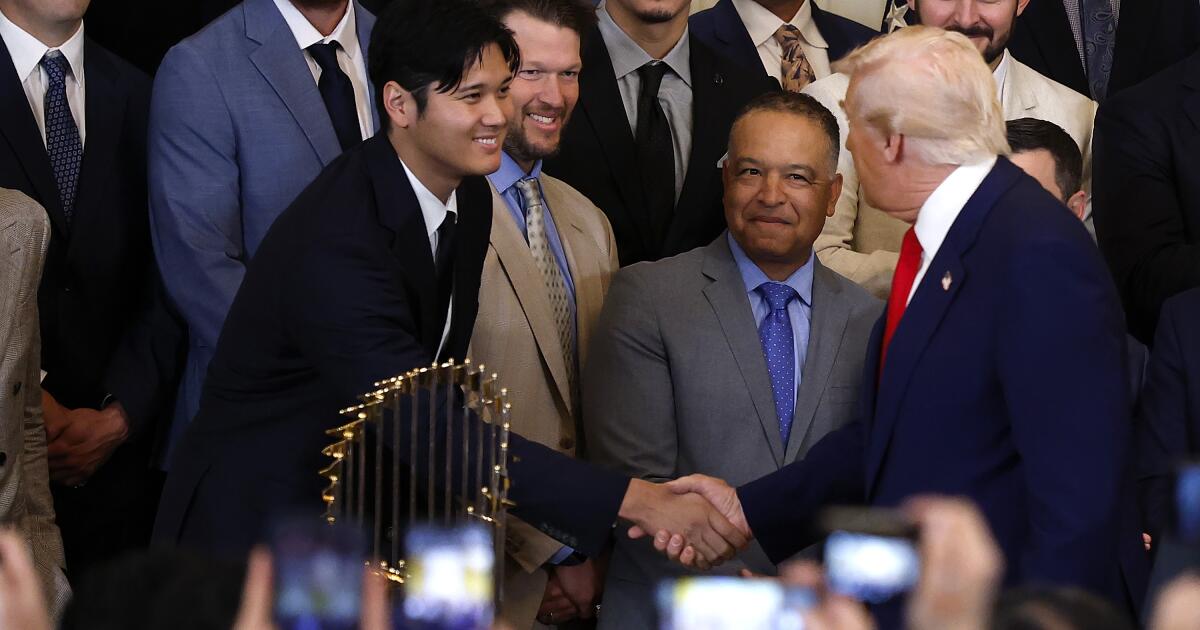
Dodgers scheduled to visit White House in late July to celebrate 2025 World Series win
-

 World31 minutes ago
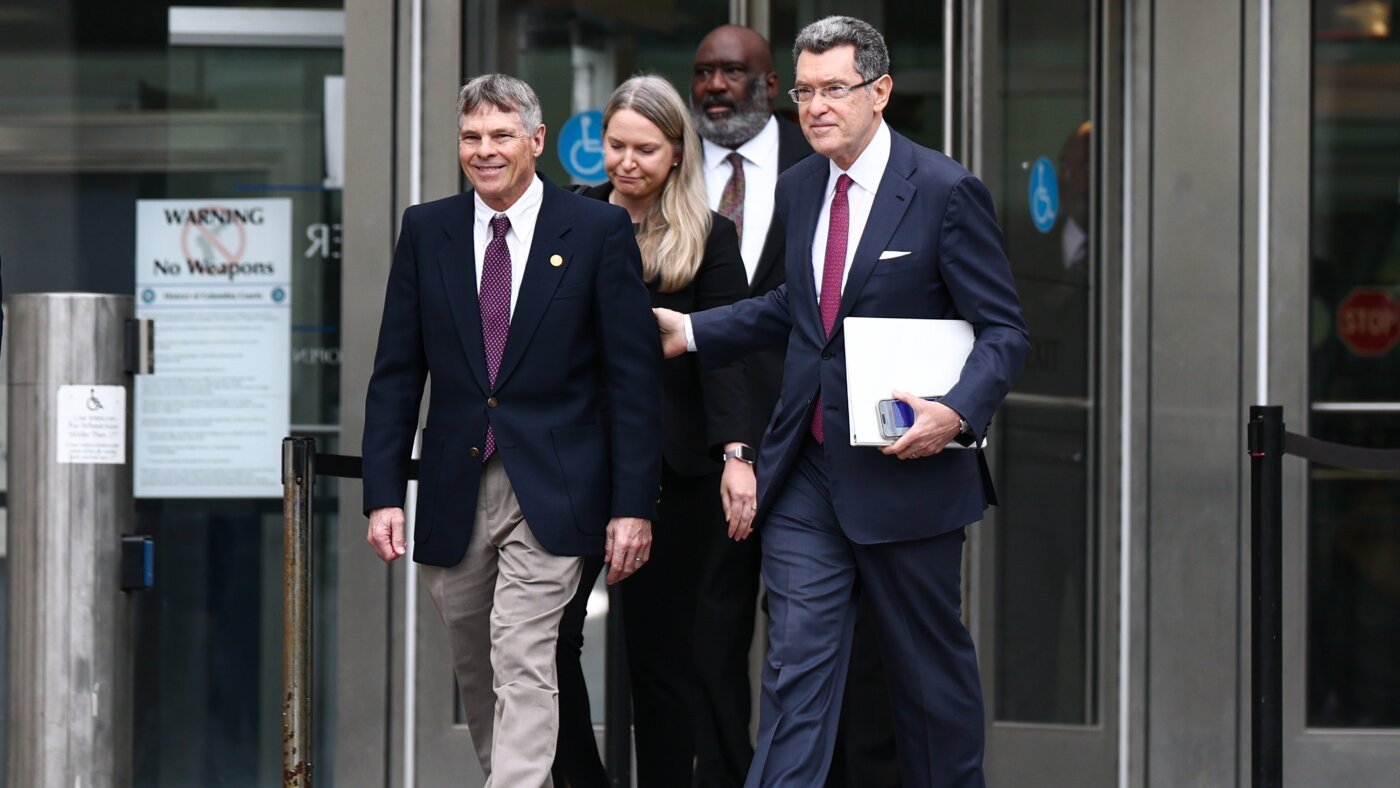
Former US Olympian pleads not guilty in DC reflecting pool vandalism case
-
 News58 minutes ago
Former Olympian pleads not guilty in reflecting pool vandalism charges
-

 Los Angeles, Ca2 hours ago
Heat advisory, beach hazards in effect as Southern California sizzles


