Northeast
Maine state budget vote descends into debate over trans athletes and Laurel Libby's censure

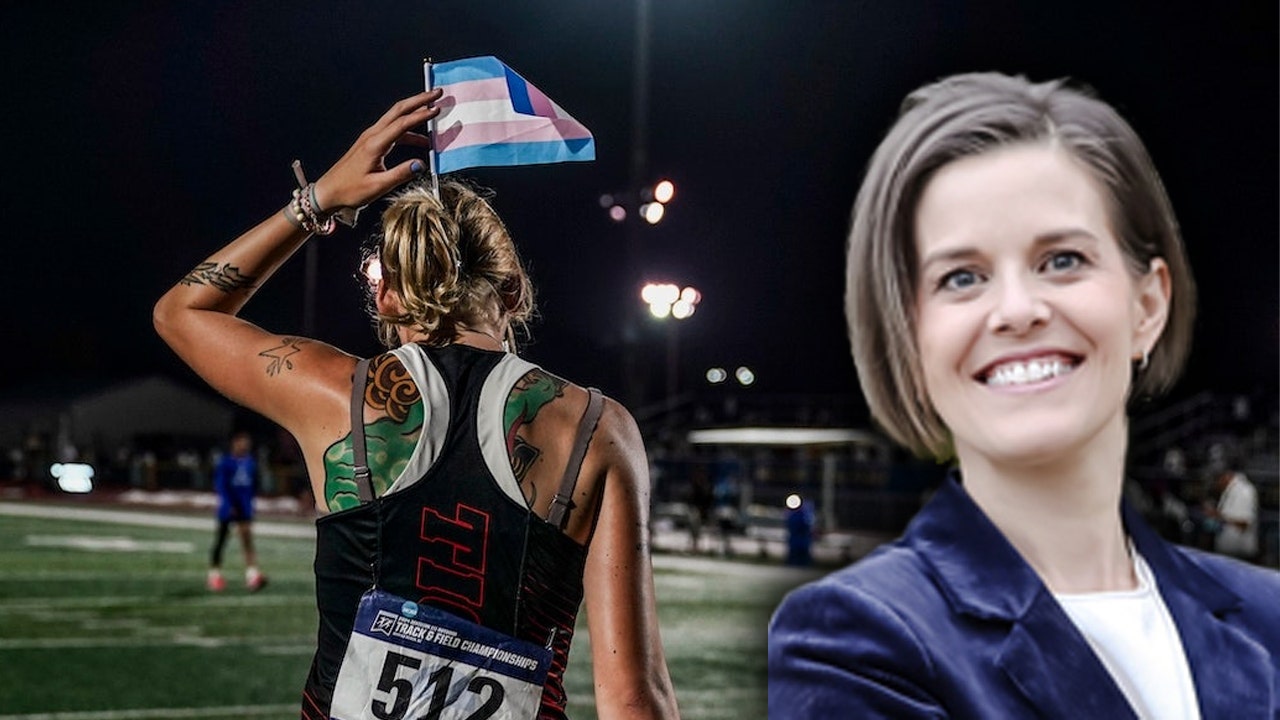
The Maine state legislature voted on its biannual budget Thursday night, but the session was delayed by a prolonged debate over transgender athlete inclusion and the censure of Republican Rep. Laurel Libby.
Libby, who was censured by Maine’s Democratic majority and Speaker Ryan Fecteau for a social media post identifying an underage trans athlete, proposed several amendments to the state’s budget via a loophole in the state legislative policy.
Libby submitted 10 floor amendments to the budget Tuesday before the deadline to do so, which isn’t prevented by a censure. So, Libby was permitted to speak and present those amendments during Thursday’s session. One of those amendments was not related to the budget, but was a proposal to keep trans athletes out of girls sports.
However, when Libby did speak to present her amendments, multiple Democrats protested, instigating a debate with Republican representatives.
“During that floor amendment presentation process, there ended up being a floor debate … between the Republicans and Democrats regarding my censure. So, there was essentially a second vote regarding the censure, reaffirming the Democrats’ commitment to silencing my voice and my vote,” Libby said.
The Maine State House at dawn, Jan. 3, 2024, in Augusta, Maine. (AP Photo/Robert F. Bukaty)
In addition to Libby’s proposal to ban trans athletes from girls sports, she proposed multiple budget bills that would have lowered taxes and government spending. These proposals included a repeal of a tax on solar energy, a repeal of free community college and a repeal of a recent 1% payroll tax.
But Libby’s amendments were not even considered, and Democrats moved to have the amendments indefinitely postponed.
TRUMP ADMIN RESPONDS TO MAINE’S RELUCTANCE TO BAN TRANS ATHLETES FROM GIRLS SPORTS
“I was not able to speak to them, to advocate for them and push for the benefit that they would bring to Maine people,” Libby said.
Ultimately, the budget that passed did not include any Republican input. The Maine House approved the $11.3 billion spending plan by a 74-67 vote along party lines. The Senate passed it 18-17 with two Democrats joining Republicans in opposition.
Libby was censured Feb. 25 because of a social media post of hers that identified a minor by name with a photo. Libby’s post pointed out that a transgender track and field athlete had taken first place at a Maine girls pole vault competition after the athlete competed as a boy just one year earlier.
“It’s a remarkable double standard as there are public photos of this individual in many places, on social media and even some posted by his school. And, so, yes, this post went viral, but this was an individual who participated in a public event, who publicly stood on a podium and accepted a championship medal that rightfully belonged to the girls standing on the second-place spot,” Libby previously told Fox News Digital.
Libby filed a lawsuit against Fecteau and Maine House Clerk Robert Hunt, which seeks to have her voting and speaking rights restored.
Libby represents more than 9,000 constituents in Maine’s House District 90, and six of them have signed onto the lawsuit as plaintiffs because the censure has prevented her from carrying out other legislative actions to serve those constituents.
“The speaker’s actions did not just disenfranchise me but disenfranchised the thousands of constituents that I represent, and that’s the bigger picture here; the fact that the speaker, in his eyes, retaliated against me because he doesn’t like what I have to say,” Libby previously told Fox News Digital.
Follow Fox News Digital’s sports coverage on X, and subscribe to the Fox News Sports Huddle newsletter.
Read the full article from Here



PA Gov. Shapiro wants $4.7 billion from reserves to balance budget
Gov. Josh Shapiro’s rainy day-fund request to balance his 2026-27 budget proposal would be the largest in state history.
The Pennsylvania House of Representatives added two session days to its calendar this week while the Senate took off for an early holiday as another state budget will not be finalized on time.
House Speaker Joanna McClinton added voting sessions for 11 a.m. July 1 and 9:30 a.m. July 2. Senate Republicans voted to return at the call of President Pro Tempore Judy Ward, frustrating some Democrats.
Changes to the calendar throughout the year are routine, McClinton’s press secretary, Nicole Reigelman, told USA TODAY Network Pennsylvania. “Nothing specific led to it,” she said.
A late budget would mark the fifth time in as many years elected state officials missed the statutorily mandated June 30 deadline. Last year, it was not signed until Nov. 12.
“We’re walking out the door while the House is in session the next two days and the governor is in place to work with us here to get this done,” Sen. Vincent Hughes, a Democrat from Philadelphia, said on the Senate floor before voting against the recess that Republicans passed.
The Senate is not scheduled to return to session until Sept. 28. After July 2, the House’s next scheduled return is also Sept. 28. Both chambers could be called back at any time.
“I am highly confident we are well on track to deliver a responsible budget that will recognize our unique status as a divided government and deliver a responsible product to the people of Pennsylvania with no negative impacts,” Senate Majority Leader Joe Pittman, a Republican who represents Indiana County, said on the Senate floor. “There’s no reason we can’t conclude our work early next week.”
Minority Leader Jay Costa, a Democrat from Allegheny County, disagreed and said returning July 5 would be inappropriate.
“Some may characterize talks as hopeful and seem to be coming together,” Costa said from the floor. “Based on my recent conversations, that doesn’t seem to be the case.”
But a budget could be getting close, according to one Republican state representative who requested anonymity. “There’s going to be very little policy in the budget,” the representative told USA TODAY Network Pennsylvania. “I take it to mean that there aren’t going to be major policy changes and negotiations will center around dollars and cents.”
The House passed a $53.3 billion budget plan in April with a bipartisan vote, but the Republican-controlled Senate has not acted on it. It would cost roughly 5.6% more than the state spent in the fiscal year that ends June 30.
“The Senate hasn’t passed a budget,” Reigelman said. “We’re proud that we got them something more than two months ago.”
That budget was performative, according to Republican Senate Majority Caucus Chair Kristin Phillips-Hill, who represents York County.
“It was really cute,” Phillips-Hill told USA TODAY Network Pennsylvania. “There is not enough money from taxpayers to pay for the budget they sent us. To me, that’s completely unacceptable.”
Republican legislators have opposed Gov. Josh Shapiro’s proposal to use $4.7 billion of rainy day funds to balance the budget. GOP leaders in the House and Senate have said excessive spending could downgrade the state’s credit rating and lead to future tax increases.
Pennsylvania’s Independent Fiscal Office projects a worsening deficit for the state that could reach $8.3 billion in three years.
Pittman said in an interview earlier in June that this budget has a “much different feel” since it lacks a big issue hanging over lawmakers the way a debate over mass transit funding lingered in 2025.
“We have an opportunity to pay our bills and reduce the deficit we’re facing and hopefully not dip into reserves any more than is absolutely necessary,” Pittman said June 26 in an interview on Indiana County radio station WCCS 101.1FM.
Proposals in the budget include new revenue from legalizing recreational marijuana and skill games. The state Legislature has until mid-October to decide if Pennsylvania will allow skill games after the state Supreme Court ruled on June 15 that they are illegal.
“The question is, how, given the Supreme Court ruling where they said these are slot machines, how do you delineate that taxation approach?” Pittman asked during his interview. “If we don’t do anything, these machines are gone. Period.”
State oversight for skill games would include licensing and regulations through the state’s Gaming Control Board. Slot machines in a casino are taxed at 52%, Pittman said.
The Independent Fiscal Office maintains that Shapiro’s revenue estimates for recreational marijuana and skill games exceed their own estimates by $4.4 billion over the next three fiscal years.
Mark Walters is the USA TODAY Network Pennsylvania statehouse reporter. Reach him atmwalters@usatodayco.com.

Hear about the $30 million in infrastructure money for Tidewater
Pawtucket’s Tidewater Landing project gets $30 million for infrastructure
PROVIDENCE – Former CVS executive Helena Foulkes still leads Gov. Dan McKee by double-digits in the Democratic primary race for governor, but her whopping 34-point lead of last April has shrunk to 20 points in the wake of McKee’s TV attack ads, according to a new University of New Hampshire Survey Center poll.
The survey sampled 337 likely 2026 Democratic state primary voters, 145 likely Republican state primary voters and 664 likely general election voters between June 18 and June 23.
Among the key findings of the survey:
If the Democratic primary had been held while the survey was underway, 42% of likely primary voters would have chosen Foulkes and 22% would have chosen McKee, with restaurant owner Gregory Stevens and Wil Gregersen each getting 1%, the poll said. Thirty-one percent of respondents were undecided.
“Pluralities of moderates (46%), liberals (46%), and progressives (46%) support Foulkes, while two-thirds of socialists (66%) are undecided. McKee does best among those aged 65 and older (31%) but still trailsFoulkes (46%) among this group,” according to this poll.
McKee has narrowed the gap somewhat since the last UNH poll in April, when 45% of likely primary voters chose Foulkes and only 11% McKee.
Bottom line: Incumbent McKee, a former Cumberland mayor and lieutenant governor who has been governor since his predecessor Gina Raimondo quit mid-term in March 2021, “remains quite unpopular among likely Democratic primary voters: only 18% have a favorable opinion of him, 56% have an unfavorable opinion,” according to the poll released on Tuesday, June 30.
And then there’s this: In a hypothetical matchup between Foulkes, whoever emerges as the Republican nominee and independent Ken Block, the poll showed 38% of likely general election voters would vote for Foulkes, 22% would vote for the Republican nominee and 19% for Block.
If, however, McKee won the Democratic nomination, the potential matchup “would be very close,” with both McKee and Block getting 27% of the likely general election vote and the GOP nominee 23%; 2% would vote for another candidate. Twenty-one percent were undecided, according to the poll.
The poll is the latest in a string of bad news for the 74-year-old McKee, including his failure to clinch the endorsement of the state Democratic Party on June 20.
Depending on how you do the math, he fell three votes short of the endorsement, making him the first Democratic governor in Rhode Island to fail to win his party’s endorsement for a reelection bid since the modern primary system was created in 1948.
In the days since, Foulkes has racked up city and town Democratic committee endorsements, while McKee has only won endorsements from Pawtucket and North Providence Democrats. On Tuesday, June 30, he touted one more from the East Providence Democratic City Committee.
But McKee campaign spokeswoman Sophie Mestas hailed the poll as evidence that “the more Rhode Islanders learn about Helena Foulkes – a corporate executive who built her career on cutting healthcare access and fueling the opioid crisis – the more they want no part of her empty promises.
“More Rhode Islanders now view her unfavorably than favorably, and it’s not hard to see why,” Mestas said. “Rhode Islanders know the difference between a Governor who delivers for them and an executive who cashed in at their expense – and they’re choosing the Governor who’s always fought for working families.”
Her statement reflects disputed allegations in McKee’s TV ads about Foulkes’ record.
On the Republican front, those surveyed chose retired comedian Elaine Pelino, who has campaigned almost exclusively on Facebook (38%), over the state GOP’s endorsed candidate, Aaron Guckian (19%), an advance man and driver for former Gov. Donald Carcieri who most recently worked for the Rhode Island Dental Association.

-

 Pennsylvania3 minutes ago
What to know as Pennsylvania’s state budget deadline arrives
-

 Rhode Island6 minutes ago
Foulkes still holds 20-point lead over McKee, but gap is narrowing
-

 South-Carolina11 minutes ago
Live nightly lottery drawings hit ABC15 as SC Education Lottery partner
-

 South Dakota18 minutes ago
130 mph straight line winds devastate South Dakota wind farm – Oklahoma Energy Today
-

 Tennessee21 minutes ago
Former Tennessee baseball pitcher Garrett Stallings called up by Milwaukee Brewers
-

 Texas26 minutes ago
Texas man admits embezzling $3.2 million to pay student loans, fuel online gambling, prosecutors say
-

 Utah33 minutes ago
‘I was duped’: Utah senator apologizes for sharing Kevin O’Leary’s ‘Chinese Communists’ claim
-

 Vermont36 minutes ago
Outright Vermont calls Supreme Court transgender athlete ruling ‘devastating’

