Education
New York Ends Funding for 2 Yeshivas That Fail to Teach Basic Skills


A decade after allegations first surfaced that schools operated by New York’s Hasidic Jewish community were denying children a basic education, the state government is for the first time cutting off funding for schools it says have refused to improve.
The New York State Education Department will no longer provide crucial funding for two all-boys Hasidic schools in Williamsburg, Brooklyn, and will ensure that all of their students are enrolled in different schools by the fall. The effective closure of the two schools, which are known as yeshivas, is the strongest action taken in New York to crack down on schools over their failure to comply with education law.
And it’s a move that many Hasidic leaders and even critics of the yeshiva system doubted the state would ever make.
That’s partially because of the long and tangled process that the state created to penalize schools found to be breaking the law, which mandates that all children receive an adequate secular education, even in private schools.
Resisting outside oversight into religious education has become perhaps the top political priority for the Hasidic community, which has long maintained a significant influence in local politics and tends to vote as a bloc.
The insular community’s yeshivas, which rely heavily on taxpayer dollars, teach religious lessons in Yiddish and Hebrew for most of the school day, and offer little instruction in English or math.
The two schools that the state is effectively closing are part of a larger group of yeshivas that have not made sufficient progress, said Rachel Connors, a spokeswoman for the Education Department. Most of those schools have not yet faced any consequences for failing to boost their secular education.
But the leaders of the two schools, Yeshiva Talmud Torah of Kasho and Yeshiva Bnei Shimon Yisroel of Sopron, which are housed in three locations in Williamsburg, refused even to meet with education officials to work on an improvement plan.
“In December 2024, the department wrote to noncompliant schools, inviting them to meet and urging them to re-engage in the process to avoid the consequences associated with final negative determinations,” Ms. Connors said in a statement. “Schools that did not re-engage have been deemed schools that do not provide compulsory education.”
The two yeshivas were part of an investigation into Hasidic schools that began after yeshiva graduates filed a complaint with the state in 2015, claiming that the education they had received had left them unprepared to navigate the world as adults.
When education officials in 2019 visited one of the Sopron locations, which is now effectively being shuttered, inspectors “did not observe any instruction, taught in English, in the core academic subjects of English, history, mathematics and science,” according to a report released by the city’s Education Department.
Spokespeople for a group that represents yeshivas did not respond to requests for comment. But an article published Friday in Yeshiva World News, a Hasidic news outlet, offered some insight into the community’s reaction.
“It is always wiser to make your case to government rather than to refuse to respond,” the editorial read. “That makes it seem like they had something to hide. The yeshivas should have demonstrated pride and confidence in their students.”
The editorial also noted that the yeshivas were not being judged on their curriculum or “approach to education.” Instead, their funding was being cut off because they had not engaged with the government.
Indeed, the state’s move, which was first reported by The Jerusalem Post and not publicized by the state’s Education Department, underscores how much some yeshivas have defied government efforts to bolster secular education.
Scrutiny of the schools ramped up following a 2022 New York Times investigation, which found that scores of all-boys Hasidic schools in Brooklyn and the lower Hudson Valley did not provide a basic secular education despite receiving hundreds of millions of dollars in public funding. The report also discovered that teachers in some yeshivas had used corporal punishment.
The following year, city and state education officials determined that 18 Hasidic yeshivas were not providing a basic nonreligious education.
The state, however, provided those schools with multiple opportunities to demonstrate their commitment to improving their secular studies.
A spokeswoman for Mayor Eric Adams, a longtime political ally of the Hasidic community, said that the city would defer to the state on this issue but otherwise declined to comment.
Adina Mermelstein Konikoff, the director of Yaffed, a group of former yeshiva students that supports secular education, said in a statement that she hoped the state’s move “serves as a wake-up call for other schools that continue to disregard essential academic standards.”



In our national memory, George Washington is a mythic figure, cast in metal, carved in stone. His leadership, first as general, then as president, is so intertwined with the roots of this country that it is sometimes hard to separate the man from the idea of America. How does one imagine the living presence of such an icon, much less embody him?
There is a small fraternity of men bold enough to try. At historical parks and commemorations from Virginia to Seattle, these interpreters (their preferred term) transform themselves into Washington. Each has his own approach, but what all their representations seek to capture is a legacy that has endured from his time to ours. If America, at least in part, is an idea, then our national project becomes, like theirs, an act of interpretation, an imperfect attempt to translate some idealized vision into the messy reality of our own time.
— Ezekiel Kweku
“By some strange quirk
of genetics, I have
Washington’s exact
dimensions. Where my
sleeves fall on my wrist,
the size of my chest, the
size of my thighs, where
the breeches fall to my
knees, are all identical.”
John Koopman, 67, often performs
while riding his horse, Bear. He
has portrayed Washington for 20 years.
James Fryer, 70, wears a replica of a general’s uniform that Washington designed himself. He recently completed training to portray Washington for the nonprofit Historic Philadelphia.
“Some people portray George as a marble statue. I don’t do a marble George. I am interested in talking to everyone, even those who yell at me because George was a slave owner. I want to respect them, try to educate them, or maybe even inspire them.”
Vern Frykholm, 77, was moved to bring his interpretation of Washington to Washington State, where he lives, after seeing a 2011 performance in Pennsylvania.
Dean Malissa, 73, signs his personal
correspondence, including emails,
as Washington did: “Your Most Humble
and Obedient Servant.” He became
the Official George Washington
at Mount Vernon in 2004, and held
that role for nearly 20 years.
“I describe him sometimes as just a dude. I look at him and think, I could see myself in the same world, making similar bad decisions or similar good decisions.”
Daniel Cross, 39, portrayed a young Washington at Virginia’s Colonial Williamsburg until last year. He now works with organizations around the country.
Curt Radabaugh, 62, has 13,000 history books in his personal library, including several hundred about Washington. He is a veteran of the U.S. Marines and a retired police officer.
“He’s a mentor, a father
figure, and not only in the
sense that he’s a patriarch
of the country. Because
I grew up without a
father, he kind of became
my surrogate father.”
Brian Hilton, 58, says he researches
Washington’s era every morning before
his children get up and at night after
they go to bed. He is a high school history
teacher near Richmond, Va.
Daniel Shippey, 57, partners on interpretations with his wife, Kelly, who portrays Martha Washington. Kelly researched 18th-century hair techniques to create her husband’s costume hairstyle. They live in Virginia.
“You’re playing the myth of George Washington as well as the historical figure. I make his voice a little firmer and deeper than it probably was in real life. I play him a little funnier than he probably was. In reality, if you came to see him, he probably wouldn’t talk to you as much as I do.”
Doug Thomas, 53, is Washington’s second cousin nine times removed.
John Godzieba, 67, has reenacted
the crossing of the Delaware as
Washington every Christmas for the
past 16 years at Pennsylvania’s
Washington Crossing Historic Park.
“In many ways I don’t look like him. My eye color is wrong. My nose is wrong. My hair color is wrong. I wouldn’t have cast myself in this role.”
Ron Carnegie, 64, has portrayed Washington at Colonial Williamsburg for 20 years.
Ryan Williams, 37, is a veteran who specializes in playing a young Washington during the French and Indian War. He lives in Virginia.
“Some people portray
Washington almost
like a superhero.
I like to bring out that
he has faults. He’s a
person like you or me.”
Michael Grillo, 64, is a historical
tailor who hand-sews his own clothes
for reenactments. He also makes
period props, including two American
battle flags and pewter mugs
engraved with Washington’s crest.
Martin Schoeller is a photographer and director known for his close-up portraits of everyone from world leaders and celebrities to female bodybuilders. For this project, he used a large format camera to photograph 13 historical interpreters of George Washington — many of whom arrived in full uniform — over three days in Virginia and New York City.
Additional reporting by Tenzin D. Tsagong. Interviews have been edited and condensed for length and clarity. Top quotes from Brian Hilton, Daniel Shippey and Daniel Cross.
Produced by Sara Barrett, Danny DeBelius and Sam Whitney. Additional production by Olivia James.
One task the robots can take from us? Cleaning. Especially hard-to-access windows. So when writers Caroline Mullen and Evan Dent found this little guy — whose government name is “EcoVacs Winbot Mini” — they were intrigued. Could he clean the uncleanable? Caroline and Evan put their robot friend to the test at both the Wirecutter office and a high-rise apartment. Is a robo-window cleaner more effective than scrubbing yourself?

new video loaded: School Year Cut Short and Aid Delivery Slowed Amid Fuel Crisis in Cuba

By McKinnon de Kuyper
June 22, 2026
-
Culture18 minutes ago
Which Version of the ‘Odyssey’ Should You Read?
-
 Lifestyle21 minutes ago
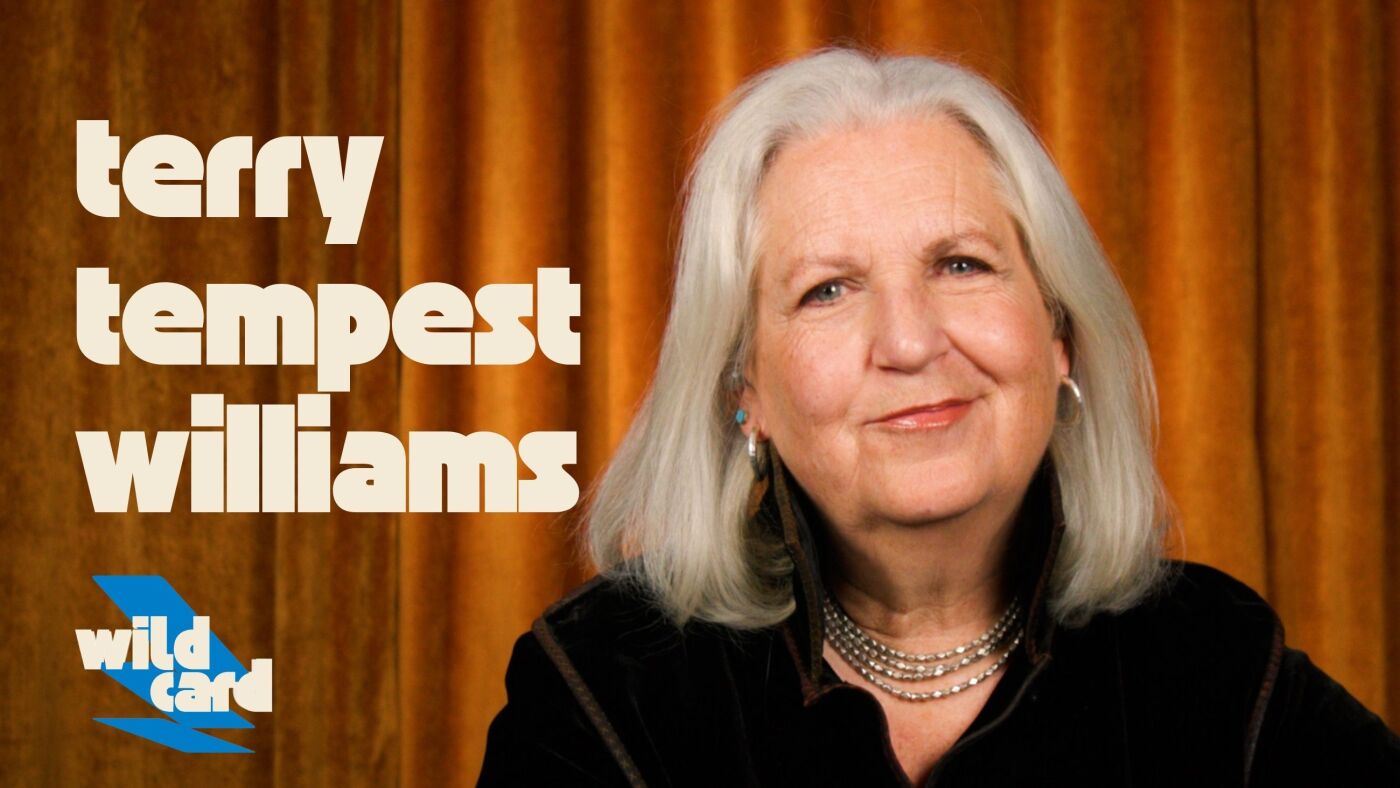
Terry Tempest Williams on why women with big ideas get labeled ‘crazy’ : Wild Card with Rachel Martin
-

 Technology33 minutes ago
Google’s Nest Thermostat has hit its best price of the year
-

 World36 minutes ago
Argentinian flight instructor jumps to death from plane, 22-year-old student forced to land alone
-

 Politics41 minutes ago
Omar’s disclosures erased millions, leaving her with potential negative net worth. She won’t explain why.
-

 Health48 minutes ago
Dr Oz links obesity to chronic disease surge, says GLP-1s can ‘jumpstart’ better health
-

 Sports51 minutes ago
Pirates star pitcher makes unfortunate history after being taken out in middle of perfect game bid
-

 Technology56 minutes ago
Medical identity theft follows you into the doctor’s office

