Business
With Los Angeles in need of housing, downtown's empty office towers have appeal


The shimmering office towers of the downtown Los Angeles skyline conceal a hard truth — much of the space is empty.
In the years since the pandemic, which upended workplace norms and evaporated demand for office space, landlords downtown have watched in frustration as the value of their office buildings has plummeted. More than a few have faced foreclosure, leaving owners anxious about the need to get tenants back in their buildings or find another use for the millions of unused square feet.
An uptick in office lease signings has led some to hope the office rental market has hit bottom, but others, like landlord and developer Garrett Lee, believe there’s a more reliable path forward than trying to convince tenants to return: converting offices into apartments.
The idea took on new urgency this month as wildfires destroyed thousands of homes in Los Angeles’ Pacific Palisades neighborhood and Altadena, a community in the foothills just north of the city, exacerbating the region’s long-running housing shortage. Downtown is zoned for some of the densest residential development in Los Angeles County.
“We have an unprecedented need for housing right now,” Lee said. “There needs to be an even greater effort than before to build housing of all unit types and rent levels.”
Lee is president of Jamison Properties, a prolific converter of midsize, older L.A. office buildings into apartment buildings. Now, Jamison is about to plow fresh ground by turning into housing a glossy 32-story office tower built on the edge of downtown in 1987.
Efforts to create a second act for underused office towers that were the height of prestige a generation ago are part of a larger drama playing out in a financial center that has lost much of its shine in the years since the pandemic. Restaurants and shops have struggled with the departure of many workers while homelessness and a sense that sidewalks aren’t safe has risen and helped lead to the departure of some office tenants.
“Downtown is torn between believers in downtown and nonbelievers who say it’s gone downhill and isn’t coming back,” Lee said. “We see a very big split between the two.”
While many downtown office buildings built before World War II already have been converted to residences or hotels, the eye-catching skyscrapers built in the late 1980s and early 1990s have mostly remained offices. A successful makeover of Jamison’s L.A. Care tower at 1055 W. 7th St. could set an example for repurposing prominent office towers that were built relatively recently and designed to house corporate businesses for decades to come.
The city is close to adopting a new building code that will make it easier for developers to get approvals to convert offices built after 1975. A previous code for conversions that focused on buildings erected before that year, when construction standards were less stringent, led to a boom in office, apartment, condo and hotel conversions starting in the early 2000s.
Jamison is close to securing city approval to convert 1055 W. 7th St. “with very little structural retrofit,” Lee said, which will reduce construction costs by about 10% and save a lot of time compared to the company’s previous conversions of midcentury office buildings, which required significant improvements to meet city seismic codes.
The ability to convert some office buildings to residential use without going through a full structural retrofit is a game changer for developers in another way too, Lee said. They can leave rent-paying office tenants in place while they convert empty floors to apartments, instead of having to empty the whole building for the retrofit.
“You can skip a floor or go around them,” he said of office tenants. “That really opens things up for converting 30-year-old buildings” like the ones that dominate the downtown skyline.
Lee plans to start work this year on 1055 W. 7th St., which will be converted to 686 apartments. Newer office towers like that one are “night and day” more attractive to convert to housing than midcentury buildings from the 1950s and ‘60s, he said, and should command higher rents.
“The bones are so much better,” he said, with floor-to-ceiling windows and panoramic views. Much of the mechanical, electrical and plumbing system can be reused “because it’s still very adequate to today’s standard.”
Floor by floor, though, the buildings get a complete makeover.
“We fully gut the interiors,” Lee said, removing the walls, lighting and plumbing that served office occupants. When the floors are stripped down to the concrete, developers are ready to rebuild them as apartments.
Wedbush Securities is leaving its downtown Los Angeles offices in Wedbush Center after 24 years and moving to smaller quarters in Pasadena.
(Michael Blackshire / Los Angeles Times)
There’s room at 1055 W. 7th St. to create amenities such as a gym and co-working space so tenants have a place to do their jobs outside of their apartments. Other tenant attractions probably will include a theater, golf simulator, karaoke room and card room — amenities Jamison added in earlier conversions in Koreatown.
Jamison has tentative plans to convert another downtown office building to housing, the 10-story World Trade Center at Figueroa and Third streets, which dates to 1975. It’s unclear how many other office buildings are good candidates for residential conversion, but there is a lot of space going unused — CBRE estimates that more than a third of the 32.4 million square feet in 70 buildings in downtown’s Central Business District is available. That is more than triple the amount considered to be a healthy balance between tenant and landlord interests. When “shadow” office space that is leased but not occupied is considered, overall availability is nearly 37%.
Downtown’s apartment market remained resilient coming out of the pandemic even as the office market stumbled. The neighborhood has about 90,000 residents, a slightly higher population than Santa Monica or Santa Barbara, said Jessica Lall, head of real estate brokerage CBRE’s downtown office. They live in 47,000 residential units, most of which are apartments rented at market rate.
The addition of more residents through conversions and new builds could help restore a sense of life to the Financial District.
Before the pandemic, downtown’s sidewalks often were crowded with office workers going out to eat, shop or take meetings in other buildings. There were homeless people, but a sense of order prevailed on the busy blocks where thousands were employed by law firms, financial institutions and other white-collar companies.
The sense of order has not returned, said office investor John Sischo, who has worked in the real estate business downtown since the 1980s.
The drop in pedestrian traffic caused by workers staying at home during the pandemic and continuing to work remotely has been a drain on the vibrancy and sense of security in the Financial District, which is depressing office leasing and hampering the neighborhood’s comeback, Sischo said.

A 32-story office building in the 1000 block of West 7th Street will be converted to 686 apartments.
(William Liang / For The Times)
“Homelessness is out of control,” he said. “People don’t feel safe coming downtown and you’ve lost all the momentum relating to the desire to live here.”
The changing nature of downtown is one of the reasons Wedbush Securities is moving to Pasadena’s Lake Avenue, “which has recovered more fully from the pandemic,” President Gary Wedbush said.
Wedbush announced in October that it will leave behind Wedbush Center, an office building overlooking the Harbor Freeway, for smaller offices in Pasadena meant to accommodate employees who now work remotely much of the time.
The pullback in leasing also has contributed to plummeting office building values and sales of prominent skyscrapers at deep discounts. Among them was 55-story Gas Company Tower, which sold last year to the County of Los Angeles for $200 million, far less than its appraised value of $632 million in 2020.
Making residences out of struggling office buildings is considered environmentally desirable and can be far cheaper than building new apartments or condos from the ground up, but most landlords are hoping the office rental market is bottoming out and may begin to recover this year.
Leases were signed for more than 600,000 square feet of office space in the fourth quarter that ended Dec. 21, a 21.7% increase from the previous quarter. More than half of that involved renewals of existing leases, with some companies expanding their offices even as others contracted.
Those gains are only a small step forward for a downtown that has been burdened with excess office space since the building boom of the 1980s and early ‘90s.

A 32-story office building in the 1100 block of South Olive Street, where Olympics organizer LA28 rented 160,000 square feet.
(William Liang / For The Times)
The biggest office lease in all of Los Angeles in the fourth quarter was by LA28, the private group organizing and paying for the 2028 Summer Olympics and Paralympic Games in Los Angeles. CBRE said LA28 rented 160,000 square feet in USC Tower, a high-rise on Olive Street a few blocks from the Los Angeles Convention Center, Crypto.com Arena and L.A. Live. LA28 is expected to move downtown later this year from Westwood.
Other new leases downtown are in the works, CBRE broker John Zanetos said. Upward leasing trends in other cities is promising for Los Angeles, he added.
“What we’re experiencing in downtown L.A. is similar to what is happening in Seattle, San Francisco and other cities, which tend to recover in front of Los Angeles in historic real estate cycles,” Zanetos said. “We saw their urban cores start rebounding in the third or fourth quarters and we think that bodes well for Los Angeles.”

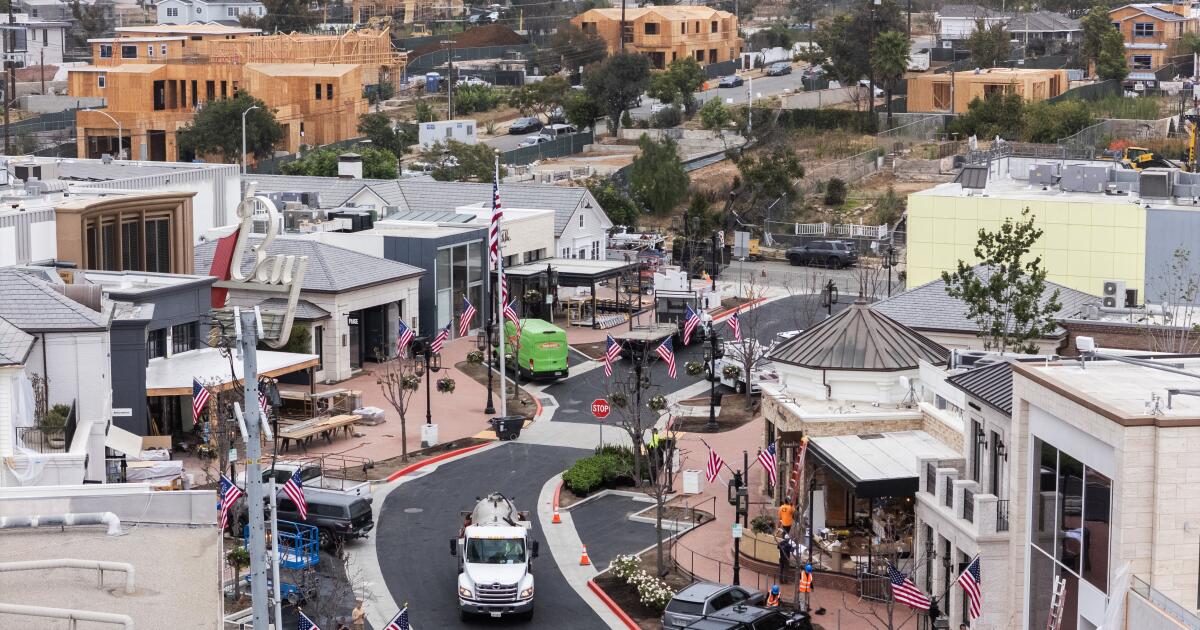
The luxury shopping center in Pacific Palisades will reopen next month after more than $100 million in renovations forced by the January 2025 wildfire that devastated the Los Angeles neighborhood.
Palisades Village will reopen Aug. 15, owner Rick Caruso announced Wednesday. The outdoor center survived the blaze that destroyed homes and other businesses but needed refurbishment to eliminate contaminants that the fire could have spread.
Crews are putting finishing touches on mall buildings after tearing them down to the studs, treating the wood and rebuilding the walls, Caruso said.
“Everybody’s working, and stores are moving their products in,” he said. “It’s a really cool feeling that people have really locked arms and are working together.”
An electrician installs lighting for a restaurant at Rick Caruso’s Palisades Village on Thursday. The shopping center is scheduled to reopen mid-August.
(Myung J. Chun / Los Angeles Times)
Pacific Palisades resident Allison Polhill, who is rebuilding the home of 30 years that her family lost in the blaze, said she is “thrilled” at the prospect of returning to the mall she used to frequent. Its comeback is a boost for the community, she said.
“Every single step that we make to reopen our commercial corridors is going to bring more people back into the Palisades,” said Polhill, who expects to move back into her home at the end of August.
A total of 6,822 structures were destroyed in the Palisades fire, including more than 5,500 residences and 100 commercial businesses, according to the California Department of Forestry and Fire Protection.
Caruso previously attributed the mall’s survival to the hard work of private firefighters and the fire-resistant materials used in the mall’s construction.
The $200-million shopping and dining center opened in 2018 with a movie theater and a roster of upmarket tenants, including Erewhon, which may be the only grocer in the heart of the fire-ravaged neighborhood when it opens.
Caruso’s company was able to fill the mall with tenants despite the long shutdown.
Palisades Village is 99% leased, with the majority of tenants returning, said Jackie Levy, chief financial and revenue officer. Nearly one-third of the shops and restaurants are new to the property.

A firefighter carries a hose back to his rig while walking through a destroyed home from the Palisades fire in Pacific Palisades on Jan. 7, 2025.
(Genaro Molina / Los Angeles Times)
Last year, Pacific Palisades-based fashion designer Elyse Walker said she would reopen her eponymous store in Palisades Village after losing her 25-year flagship location on Antioch Street to the inferno.
Other neighborhood shops destroyed in the fire that are reopening at the mall include K Bakery and Loomey’s Toys, which caters to children up to age 12 and used to be across the street from Palisades Elementary Charter School.
“It’s been a journey and I’m excited because I wasn’t sure that there was going to be a place to come back to,” said toy store owner Amanda Rastegar. “Hopefully we can bring some of that magic back.”
Rastegar’s home in the Palisades survived but was damaged by the fire. The family returned about eight weeks ago. Her last memory of the fire was a burning supermarket.
“I just couldn’t wrap my brain around what was happening,” she said. “By the time I left, Gelson’s was on fire.”
Among the returning tenants is Angelini Ristorante & Bar. Well-known Los Angeles chef Gino Angelini said he will be in the kitchen next month for a return of the Italian restaurant.
“We won’t do a big celebrity open,” he said. “We want to have a very soft opening and see our customers come back.”

Construction takes place at Rick Caruso’s Palisades Village on Thursday. The shopping center is scheduled to reopen mid-August.
(Myung J. Chun / Los Angeles Times)
An elaborate celebration would not feel “correct for me,” Angelini said, because the devastation has been “very sad” for so many.
Other new tenants include local chef Nancy Silverton, who has agreed to move in with a new Italian steakhouse called Spacca Tutto. Women’s activewear retailer LESET will open its first West Coast location.
Caruso said he is optimistic that customers will return to the center, even though many Pacific Palisades residents are still dispersed. One tracking system estimated that about 30% of the Village’s customer base was impacted by the fire, he said.
“That means 70% did not get impacted, so there’s a lot of customers still left out there,” Caruso said. Historically, the center drew customers from as far away as Beverly Hills and Calabasas, as well as Malibu, Brentwood and Santa Monica.
He also hopes many will be inspired to visit the revived mall.
“I believe in the goodness of people and I believe that people are going to want to support the Palisades,” he said. “They’re going to want to be there and support the businesses that have had the courage and the heart to reopen.”

Walmart is rapidly expanding its network of electric vehicle chargers designed for customers to use while they shop.
The network could help fill gaps in EV infrastructure in states with greater need for chargers. Walmart, which has more than 5,000 locations in the U.S. and hundreds in California, says more than 90% of Americans live within 10 miles of one of its stores.
The chargers also offer an incentive for customers to choose Walmart — Walmart Plus members will receive a 10% discount off an average price of $0.46 per kilowatt-hour of energy at the company’s chargers.
Walmart chargers are already available at more than 75 locations in 17 states, with Texas boasting the most charging stations, followed by Florida and Arizona.
Matthew Nelson, Walmart’s director of energy policy, said last week on LinkedIn that the network will soon reach 29 states, including California.
“We are delivering on the promise of affordable, reliable and convenient charging,” Nelson said in his post.
According to Walmart’s website, six charging stations are coming to California soon, though the company did not offer a specific timeline.
The chargers will be installed at stores in Antelope, Brea, Fresno, Stockton, Suisun City and Vallejo.
Most charging sites in California will include eight to 16 fast-charging stalls, said Walmart spokesperson Kelsey Bohl.
The company first announced plans in April 2023 to install its own EV chargers at Walmart and Sam’s Club stores, with a goal of installing thousands of chargers by 2030. Partnering with ABB E-Mobility and Alpitronic, it added 25 new charging sites this past May and six more in June.
“Walmart is building a leading retail-integrated EV fast-charging network, focused on delivering an affordable, reliable and convenient charging experience where customers already shop,” Bohl said in an emailed statement. “Customers can charge while they shop, access stations through the Walmart app they already use, and benefit from affordable pricing.”
The charging stations already available include 612 individual charging stalls using 400-kilowatt chargers. Each stall has a dual charging cord with both Combined Charging System and North American Charging Standard connectors. The standard connectors, designed by Tesla, are smaller and lighter than the combined systems.
The primary way to pay for the chargers is through the Walmart app, but the company is also experimenting with built-in credit card readers to allow those without the app to use the stations.
Customers can check charger availability on the Walmart app. The company said the chargers will be available 24 hours a day.

Robotaxis could be turning into robocops.
A self-driving Waymo reported two teens to San Mateo, Calif., police on Monday after they were found drinking alcohol and shooting toy guns in the back of the vehicle.
According to a social media post from the San Mateo Police Department, officers detained two 15-year-olds after the Waymo they were riding in contacted the department and stopped in a parking lot until law enforcement arrived.
“Parents do you know where your teens are?” the San Mateo Police Department wrote on Facebook following the incident. “Waymo does!”
Officers removed both teens from the vehicle and determined they were using toy guns to shoot Orbeez out the windows. Orbeez are small, water-absorbing beads sold at toy stores.
“Toy guns, water guns, and BB guns all pose real dangers, especially to an untrained eye,” the Police Department said. “The simple handling of them can cause fear in [passersby].” “
A video posted on Facebook shows at least five officers and a police dog responding to the scene and approaching the Waymo with their weapons raised.
Waymo did not immediately respond to a request for comment.
Waymo vehicles have internal cameras and microphones that may be used in an emergency or to “promote safety and security,” according to Waymo’s online support page.
The cameras are also used to ensure the vehicles are clean and to help find lost items, according to the support page.
The company said it does not use facial recognition or other biometric identification technologies to identify individuals.
“In more urgent circumstances, support may access live video during a trip,” the Waymo page said.
The San Mateo Police Department’s Facebook post has garnered nearly 60 comments, with one user accusing Waymo of “snitching.”
“At least they got a designated driver?!” one user commented.
-

 Alaska4 minutes ago
Outmigration, inflation, choice schools: Alaska school closures likely to continue without changes
-
 Arizona7 minutes ago
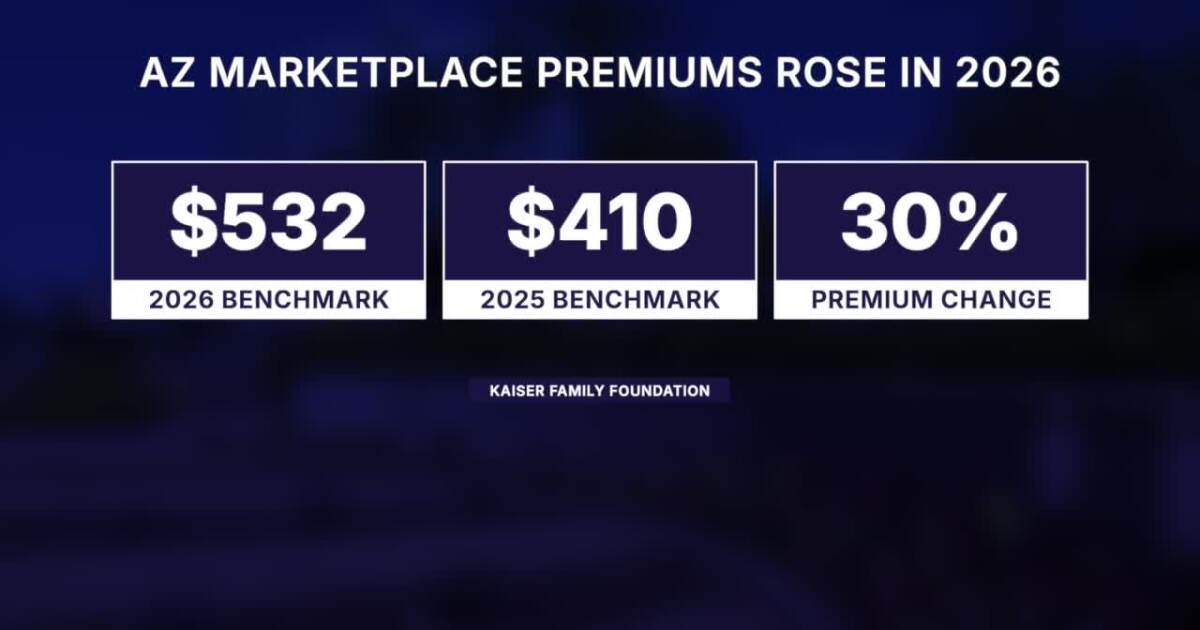
WATCH: Arizona’s health insurance marketplace is seeing dropping enrollment
-

 Arkansas12 minutes ago
ARKANSAS SIGHTSEEING: Randolph County can claim many firsts in Arkansas | Northwest Arkansas Democrat-Gazette
-

 California19 minutes ago
Toddler sustains brain injury in fall after California childcare worker threw him into the air, lawsuit says
-

 Colorado22 minutes ago
‘Saleabration’ comes back to Colorado Springs for third year
-

 Connecticut27 minutes ago
‘It’s a neighborhood effort’: Improvements made to Quinnipiac River Park
-

 Delaware34 minutes ago
Kids get hands-on learning during summer camp at Delaware County Technical School
-

 Florida37 minutes ago
Iranian drones in Cuba could threaten South Florida, officials warn

