Midwest
Kansas secretary of state launches 2026 GOP gubernatorial bid for seat held by 2-term Democrat

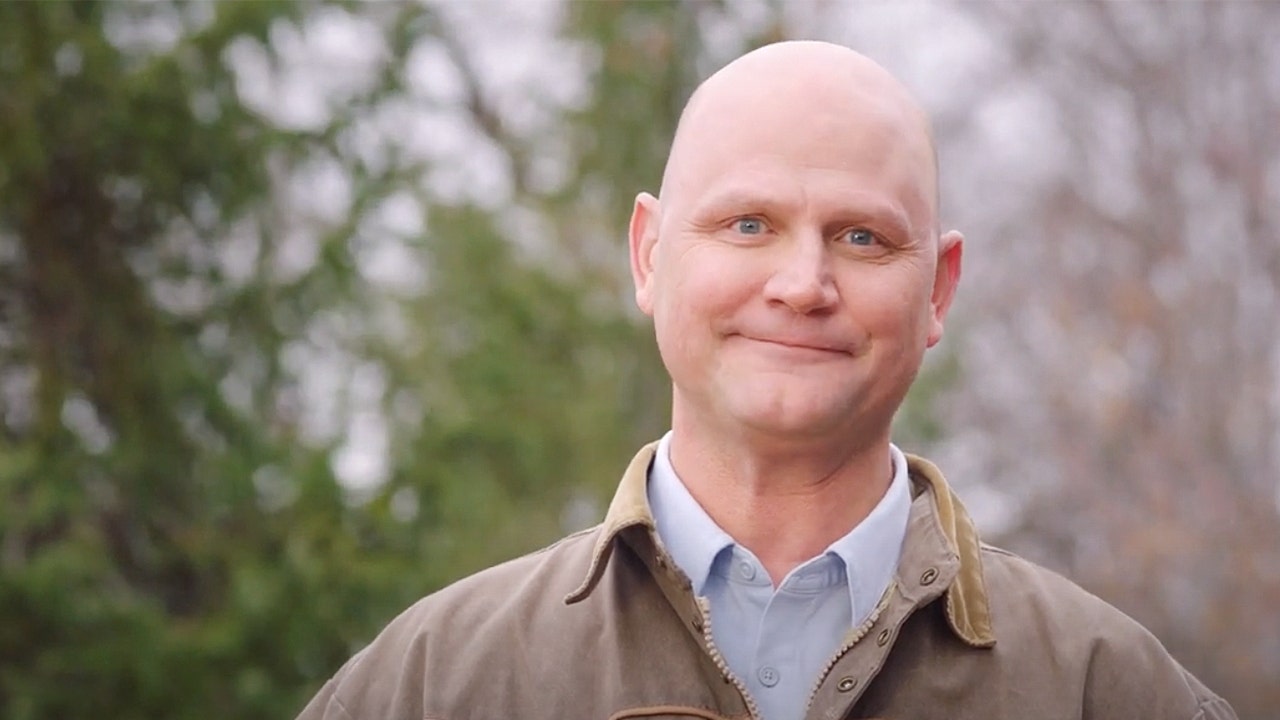
FIRST ON FOX: Kansas Secretary of State Scott Schwab is launching a campaign for the state’s Democrat-held governor’s seat in 2026, announcing his run exclusively with Fox News Digital on Wednesday.
Schwab, who is running as a Republican, is seeking to replace Kansas’ Democrat Gov. Laura Kelly, who will have held the seat for eight years when her term ends next cycle.
“We need to return to the values and principles that have always fueled us, and gave me the strength to lead in Topeka,” Schwab, Kansas’ two-term secretary of state, said in a press release shared with Fox News Digital. “I have a proven conservative record. And a servant’s heart. It’s important for Kansas to take the right path.”
Schwab was first elected to the Kansas House of Representatives in 2002, serving as speaker pro tempore of the state’s House of Representatives before being elected secretary of state in 2018.
KANSAS GOVERNOR VETOES BILL BANNING TRANSGENDER TREATMENT TO MINORS, ABORTION RESTRICTIONS
Scott Schwab is running for the Kansas governor’s seat in 2026. (Schwab for Kansas)
“A Christian, a father, and a believer in the American dream. I believe that to do something great, you need to throw off the chains holding you back,” Schwab said in his official campaign launch. “For Kansas, that’s big government, and that is why I am running for Governor.”
TRUMP’S CONVINCING 2024 VICTORY SETS HOUSE GOP UP FOR HOME-FIELD ADVANTAGE IN 2026 MIDTERMS
Schwab noted his alignment with President-elect Donald Trump on several key issues as one of the reasons he is launching a bid for governor.
Specifically, Schwab noted in his first campaign ad that, if elected, he intends to stop China from buying farmland, increase security as it pertains to elections and cut property taxes.
Scott Schwab, who won the Republican primary for Kansas secretary of state, addresses a watch party during an election night gathering on Aug. 7, 2018, in Overland Park. (John Sleezer)
The candidate, who made his Christian faith a focal point of his campaign launch, also highlighted that he wants the U.S. to return to the “values that have always fueled us.”
Although the state currently has a Democrat governor, its leadership is predominantly Republican, with two GOP senators and three of its four congressional seats held by Republicans.
Kelly, who has served two terms as governor, insinuated that she might not seek re-election in the 2026 midterms.
“It is really time for me to move on and to let others come up and serve,” Kelly told KCUR’s Up To Date in 2024.
Kansas Gov. Laura Kelly (AP Photo/J. Scott Applewhite/File)
Georgia Gov. Brian Kemp, the recently elected chair of the Republican Governors Association, said the Kansas race is going to be a top priority for the GOP in 2026.
“I’m going to be very engaged, you can rest assured, to making sure that my [successors] are Republican,” Kemp, who is term-limited next cycle, previously told Fox News Digital.
“We’ll be working with the Trump administration and a lot of other people to make sure that that’s happening not only in Georgia, but in other states around the country, in places like Kansas, where we have a Democratic governor right now, in places like Arizona, where we have a really good shot at winning the governor’s races. So we’re going to be on offense.”
Read the full article from Here

North Dakota
Finding a hero: Efforts to identify North Dakota soldier Irvin C. Ellingson’s remains took years

DAHLEN, N.D. — Four years ago, Lon Enerson started writing a book about his uncle, Staff Sgt. Irvin C. Ellingson, and the work to identify his remains.
As Enerson stood in front of the Dahlen Lutheran Church on Saturday, June 20, a casket inside waited for the
funeral and burial
of Ellingson, a soldier who waited 81 years to come home.
“I never thought I would get the final chapter,” Enerson said.
Enerson, along with scores of Ellingson relatives, waited to hear about the identification of Sgt. Ellingson from Joint Base Pearl Harbor-Hickam in Honolulu, Hawaii, where efforts took place to identify soldiers who died in a Tokyo prison fire during World War II. Ellingson was the third to be identified, with 10 successfully identified so far.
There were a number of Gold Star families — those whose relatives died in the line of duty — present at the Ellingson funeral. Enerson had attended a funeral at Arlington National Cemetery of the second person to be identified.
“We’re cheering for each other,” he said.
Ellingson was 25 and serving as a radar observer on a B-29 in the Pacific Theater when, on April 14, 1945, his plane was shot down during a bombing mission over mainland Japan. He was captured alongside 61 other Air Corps members, interrogated and held at a Tokyo prison. A few weeks later, on May 26, an Allied bombing run over Japan sparked a fire at the prison, killing Ellingson and the others.
The Ellingson family’s wait to bring home his remains began that year, and 81 years later, it finally happened. Enerson said the passion his grandparents felt when Ellingson died filtered down to him and his generation. It created, he said, a “common bond that we needed to get him home.”
In 2018, Enerson received a letter from Michael Krehl, instigator of the search to identify and recover the remains of the prison fire soldiers. Krehl was told by the Defense POW MIA Accounting Agency (DPAA) about a process involving DNA that could identify the remains. To get the remains — interred at the American Cemetery in Manila — to Hawaii to start the identification process, 60% of the 62 families of the soldiers had to submit DNA, since the remains were commingled.
Enerson’s mother had died the year before, but two uncles, Bud and Dennis Ellingson, were still alive. They both gave their DNA, along with Enerson.
“I called them, and they were overwhelmed to tears,” Enerson said. “I said ‘I’m going to give the DPAA your address and they’re going to send you DNA sample kits.’ So we got three Ellingson DNA there. Sibling DNA is like gold.”
Barbara Geisler, a family genealogist who found Enerson so he could be sent the letter, prayed over Ellingson’s casket at Saturday’s funeral.
She said the group had to find the families for both missing and identified soldiers.
“We went for the missing first. We thought it was most important,” she said.
Eric Hylden / Grand Forks Herald
Though the Ellingson family submitted their DNA, by November of 2021 the percentage of given DNA was stuck at 59.68%, Enerson said. The family went to Washington, D.C., to speak with 17 senators, including North Dakota Sens. John Hoeven and Kevin Cramer, who signed a bipartisan letter to then-Secretary of Defense Lloyd Austin to get the remains.
As the letter went through, one more person submitted DNA to get over the 60% threshold, Enerson said. In spring 2022, the caskets were brought to the lab in Hawaii to begin the identification process.
Kristen Grow and Melissa Menschel were two forensic anthropologists involved in the process. Grow led the Tokyo Prison Fire project in 2024 and Menschel joined last year. They said the process involves an inventory of the remains, taking samples, finding what remains go together and looking at chemical signatures of the bones. There are also forensic odontologists who analyze teeth.
Both Grow and Menschel were present for the funeral and burial.
From 2022 to 2025 seven groups of Ellingsons visited the lab to “potentially be in that same place as Irvin would be,” Enerson said.
“There was no guarantee all along, but we always told them that the Ellingson family does have one guarantee — and that is that we’re not going to stop looking for him,” he said.
Last summer, the family got the call that Ellingson had been identified. The family was told his remains would be escorted home and a full military honors funeral would be provided all at government expense. In September, the family formed a committee made up of family members to map out the details. Enerson said the family decided upon three days of celebration.
Terry Ellingson, Enerson’s cousin, said it “takes a village to get this done.”
“Everybody decided to take care of a certain area,” he said Saturday. “It all got done, but it took a lot of contacts. Even this morning, we were short of buses for people to go to the cemetery. (And then came) a call that Midway Public Schools would provide a couple more buses for us.”
Through it all, Enerson held tight to one sentence within a deceased personnel file he received. It contained all the information the government went through to locate Ellingson.
“The sentence goes like this: ‘Sgt. McGrath saw Staff Sgt. Irvin Ellingson being interrogated at the Kempeitai military headquarters in Tokyo, leaving with 2nd Lt. Andrew Litz, to the Tokyo Military Prison,’” Enerson said. “That was a sentence that I hung onto, and we all hung onto.”
Enerson noted that 2nd Lt. Litz’s nephew and niece were at the Saturday funeral, too.
Enerson has been collecting information through the eight-plus years it took to get Ellingson home. Four years ago, people told him, “Lon, if something happens to you, no one’s going to know (this information),” he said.
“So, I started writing a book,” he said.
His sister, Jane Wood, is editing.
“He’s almost to 400 pages,” she said.

Eric Hylden / Grand Forks Herald


Why artists are dropping out of the Great American State Fair
Musicians cancel appearances at the Great American State Fair after questions over Freedom 250 and claims the July Fourth event is nonpartisan.
As several states pull out of the Great American State Fair in Washington, D.C., questions are coming up closer to home — Is Ohio still participating?
Massachusetts and North Carolina won’t participate in the fair, according to USA TODAY. Reports also indicate that Connecticut, Illinois, Maine and Oregon are also expected to skip the event, with some states citing a combination of financial and political concerns as reasons for opting out.
Here’s what we know about Ohio’s role in the event so far.
Is Ohio skipping the 2026 Great American State Fair?
Ohio has confirmed its participation with a booth titled “Ohio: The Heart of it All,” which showcases state parks and childhood development. The governor’s office began the planning process for the booth in February, shortly after the Great American State Fair was announced, said Lisa Peterson director of communications in the governor’s office.
The Great American State Fair, organized by Freedom 250, is a 16-day exposition that will be displayed on the National Mall from June 25 to July 10.
Additionally, Ohio will host a stop from the “Freedom Truck,” a traveling exhibit tied to Freedom 250. The exhibit will appear at the Ohio State Fair in Columbus. Organizers describe the Freedom Truck as a mobile museum that visits existing fairs and community events, not a version of the Great American State Fair itself.
When does the ‘Freedom Truck’ stop in Ohio?
The Freedom Truck is scheduled to be at the Ohio State Fair from July 27 through Aug. 10, 2026 at the Ohio Expo Center in Columbus.
The exhibit includes interactive and historical exhibits about the founding of the United States, according to organizers.
The mobile museum will be open from 10 a.m. to 9 p.m. Monday through Friday, and from 9 a.m. to 9 p.m. on weekends, with the final day closing at 6 p.m.
What is the Great American State Fair?
The Great American State Fair is a 16-day event planned for June 25 through July 10 on the National Mall in Washington, D.C. Organized by Freedom 250, the fair is part of a broader effort to mark the nation’s 250th anniversary with state exhibits, food, entertainment and cultural programming, according to USA TODAY.
President Donald Trump announced he will headline the Freedom 250‑organized Great American State Fair and hold an “America Is Back” rally, the publication reports.
America250 vs. Freedom 250: What’s the difference?
The Great American State Fair is part of Freedom 250, a Trump-backed initiative to celebrate the country’s 250th anniversary.
That effort is different from America250, the official, congressionally-authorized program coordinating nationwide commemorations. Meanwhile, America 250‑Ohio, the Ohio Commission for the U.S. Semiquincentennial, is the official state-level partner to the national America250 effort.
South Dakota
Rounds, Office of the Inspector General requesting first-hand accounts of poor mail service in South Dakota

google-site-verification: google9919194f75dd62c5.html
-

 New Hampshire3 minutes ago
Masked men with baseball bats terrorize 12-year-old during NH home invasion
-

 North Carolina8 minutes ago
Henri Veesaar’s North Carolina exit proves to be costly beyond belief
-

 New Jersey8 minutes ago
8 Somerset County Cops Named In ‘Major Discipline’ Report Released By NJAG Office
-

 New Mexico15 minutes ago
Feds allowed millions of fentanyl pills to ‘walk’ on New Mexico streets: DEA Whistleblower
-

 North Dakota23 minutes ago
Finding a hero: Efforts to identify North Dakota soldier Irvin C. Ellingson’s remains took years
-

 Ohio30 minutes ago
Is Ohio at the Great American State Fair? Latest as some states opt out
-

 Oklahoma33 minutes ago
Woman hospitalized after house fire in northeast Oklahoma City
-
Oregon38 minutes ago
Puffins return to the Oregon Coast: where and when to see them


