Midwest
Two federal death row inmates refuse Biden's commutation in continued fight to prove their innocence

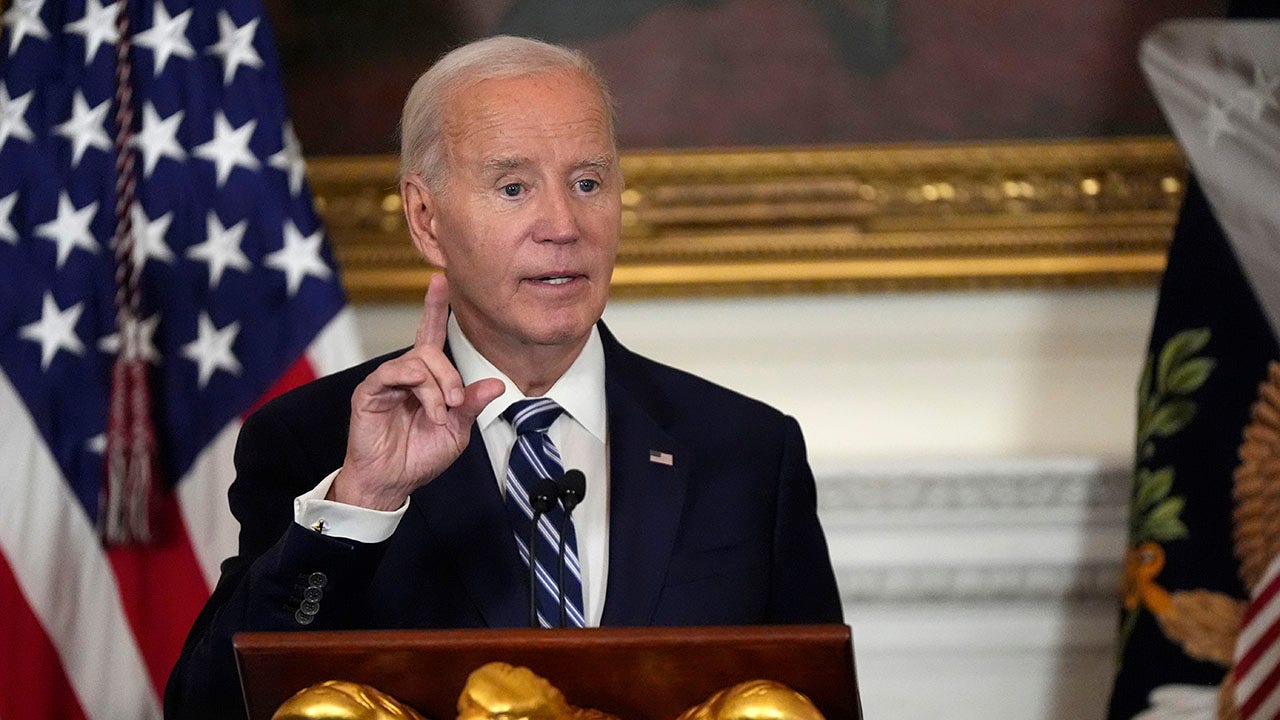
Two of the 37 inmates on federal death row whose sentences were commuted to life without parole last month by President Biden are rejecting clemency.
Shannon Agofsky, 53, and Len Davis, 60, who are both in the U.S. Penitentiary in Terre Haute, Indiana, are refusing to sign the paperwork to accept the president’s clemency action due to the legal avenues they are afforded on death row, according to court documents.
The pair filed emergency motions in federal court on Dec. 30 requesting an injunction to block the change to their death sentences, saying that accepting their commutations would remove the heightened scrutiny that death penalty appeals receive.
Heightened scrutiny is a legal process in which the courts examine cases like death penalty appeals closer for errors because these cases are a matter of life or death.
BIDEN COMMUTES SENTENCES OF 37 FEDERAL DEATH ROW INMATES IN FINAL MONTH OF PRESIDENCY
Two of the 37 federal inmates on death row whose sentences were commuted to life without parole by President Biden are rejecting clemency. (AP Photo/Manuel Balce Ceneta)
“To commute his sentence now, while the defendant has active litigation in court, is to strip him of the protection of heightened scrutiny,” Agofsky’s filing reads. “This constitutes an undue burden, and leaves the defendant in a position of fundamental unfairness, which would decimate his pending appellate procedures.”
Davis, a former New Orleans police officer, “has always maintained that having a death sentence would draw attention to the overwhelming misconduct” against the Justice Department, he wrote in his filing.
But, as Davis noted, case law on this issue is “quite murky” and there is no guarantee the two inmates can have their death sentences restored.
Notably, the Supreme Court ruled in 1927 that a president may grant reprieves and pardons without the convict’s consent. Both inmates wrote in their filings that they never requested commutation.
BIDEN’S RATIONALE BEHIND CHRISTMAS PRESENT FOR DEATH ROW KILLERS FOGGY AT BEST: EXPERT
A jury convicted Agofsky in the 1989 murder of Dan Short, an Oklahoma bank president. His body was found in a lake after prosecutors said Agofsky and his brother, Joseph Agofsky, kidnapped and killed Short before stealing $71,000 from the bank.
Joseph Agofsky was found not guilty of murder, but was sentenced to life in prison for the robbery. He died behind bars in 2013.
Shannon Agofsky was sentenced to life in prison after he was convicted on murder and robbery charges. He was later convicted in the 2001 stomping death of fellow inmate, Luther Plant, while he was incarcerated in a Texas prison. A jury recommended a death sentence in that case in 2004.
A Texas jury recommended Shannon Agofsky be sentenced to death after he was convicted of killing a fellow inmate while incarcerated. (AP)
Agofsky said in his filing last week that he is disputing how he was charged with murder in Plant’s death and that he is also seeking to “establish his innocence in the original case for which he was incarcerated.”
His wife, Laura, who married him in 2019 over the phone, told NBC News that his lawyers had encouraged him to seek a presidential commutation, but he refused because he was afforded legal counsel crucial in his appeals as a death row inmate. She said her husband still has lawyers helping him in his case.
She told the outlet that her husband only having his sentence commuted is “not a win for him” because she believes there is evidence that can prove his innocence.
“He doesn’t want to die in prison being labeled a cold-blooded killer,” she said.
POTENTIAL 2028 DEM HOPEFUL FOLLOWS BIDEN LEAD, COMMUTES 15 DEATH-ROW SENTENCES ON FINAL DAY AS GOVERNOR
Davis was found guilty in connection with the 1994 murder of Kim Groves, who had filed a complaint against him as a police officer on allegations he beat a teenager in her neighborhood. Prosecutors charged Davis with violating Groves’ civil rights after accusing him of hiring a drug dealer to kill her.
A federal appeals court tossed out Davis’ original death sentence, but it was reinstated in 2005.
Davis “has always maintained his innocence and argued that federal court had no jurisdiction to try him for civil rights offenses,” his filing reads.
Only three of the 40 men on federal death row are still facing execution following President Biden’s commutations last month. (AP Photo/Sue Ogrocki, File)
Both Davis and Agofsky are urging a judge to appoint a co-counsel in their requests for an injunction of the commutations.
The Justice Department issued a moratorium on executions during the Biden administration, but President-elect Trump has vowed to expand federal executions when he returns to the White House later this month.
“I am more convinced than ever that we must stop the use of the death penalty at the federal level,” Biden said in a statement last month. “In good conscience, I cannot stand back and let a new administration resume executions that I halted.”
The three federal death row inmates who were not granted clemency were Dzhokhar Tsarnaev, who was convicted in the 2013 Boston marathon bombing; Dylann Roof, who was found guilty in the 2017 mass shooting at a Charleston, South Carolina, church; and Robert Bowers, who was sentenced for the 2018 mass shooting at a Pittsburgh Synagogue.
Read the full article from Here

North Dakota
Finding a hero: Efforts to identify North Dakota soldier Irvin C. Ellingson’s remains took years

DAHLEN, N.D. — Four years ago, Lon Enerson started writing a book about his uncle, Staff Sgt. Irvin C. Ellingson, and the work to identify his remains.
As Enerson stood in front of the Dahlen Lutheran Church on Saturday, June 20, a casket inside waited for the
funeral and burial
of Ellingson, a soldier who waited 81 years to come home.
“I never thought I would get the final chapter,” Enerson said.
Enerson, along with scores of Ellingson relatives, waited to hear about the identification of Sgt. Ellingson from Joint Base Pearl Harbor-Hickam in Honolulu, Hawaii, where efforts took place to identify soldiers who died in a Tokyo prison fire during World War II. Ellingson was the third to be identified, with 10 successfully identified so far.
There were a number of Gold Star families — those whose relatives died in the line of duty — present at the Ellingson funeral. Enerson had attended a funeral at Arlington National Cemetery of the second person to be identified.
“We’re cheering for each other,” he said.
Ellingson was 25 and serving as a radar observer on a B-29 in the Pacific Theater when, on April 14, 1945, his plane was shot down during a bombing mission over mainland Japan. He was captured alongside 61 other Air Corps members, interrogated and held at a Tokyo prison. A few weeks later, on May 26, an Allied bombing run over Japan sparked a fire at the prison, killing Ellingson and the others.
The Ellingson family’s wait to bring home his remains began that year, and 81 years later, it finally happened. Enerson said the passion his grandparents felt when Ellingson died filtered down to him and his generation. It created, he said, a “common bond that we needed to get him home.”
In 2018, Enerson received a letter from Michael Krehl, instigator of the search to identify and recover the remains of the prison fire soldiers. Krehl was told by the Defense POW MIA Accounting Agency (DPAA) about a process involving DNA that could identify the remains. To get the remains — interred at the American Cemetery in Manila — to Hawaii to start the identification process, 60% of the 62 families of the soldiers had to submit DNA, since the remains were commingled.
Enerson’s mother had died the year before, but two uncles, Bud and Dennis Ellingson, were still alive. They both gave their DNA, along with Enerson.
“I called them, and they were overwhelmed to tears,” Enerson said. “I said ‘I’m going to give the DPAA your address and they’re going to send you DNA sample kits.’ So we got three Ellingson DNA there. Sibling DNA is like gold.”
Barbara Geisler, a family genealogist who found Enerson so he could be sent the letter, prayed over Ellingson’s casket at Saturday’s funeral.
She said the group had to find the families for both missing and identified soldiers.
“We went for the missing first. We thought it was most important,” she said.
Eric Hylden / Grand Forks Herald
Though the Ellingson family submitted their DNA, by November of 2021 the percentage of given DNA was stuck at 59.68%, Enerson said. The family went to Washington, D.C., to speak with 17 senators, including North Dakota Sens. John Hoeven and Kevin Cramer, who signed a bipartisan letter to then-Secretary of Defense Lloyd Austin to get the remains.
As the letter went through, one more person submitted DNA to get over the 60% threshold, Enerson said. In spring 2022, the caskets were brought to the lab in Hawaii to begin the identification process.
Kristen Grow and Melissa Menschel were two forensic anthropologists involved in the process. Grow led the Tokyo Prison Fire project in 2024 and Menschel joined last year. They said the process involves an inventory of the remains, taking samples, finding what remains go together and looking at chemical signatures of the bones. There are also forensic odontologists who analyze teeth.
Both Grow and Menschel were present for the funeral and burial.
From 2022 to 2025 seven groups of Ellingsons visited the lab to “potentially be in that same place as Irvin would be,” Enerson said.
“There was no guarantee all along, but we always told them that the Ellingson family does have one guarantee — and that is that we’re not going to stop looking for him,” he said.
Last summer, the family got the call that Ellingson had been identified. The family was told his remains would be escorted home and a full military honors funeral would be provided all at government expense. In September, the family formed a committee made up of family members to map out the details. Enerson said the family decided upon three days of celebration.
Terry Ellingson, Enerson’s cousin, said it “takes a village to get this done.”
“Everybody decided to take care of a certain area,” he said Saturday. “It all got done, but it took a lot of contacts. Even this morning, we were short of buses for people to go to the cemetery. (And then came) a call that Midway Public Schools would provide a couple more buses for us.”
Through it all, Enerson held tight to one sentence within a deceased personnel file he received. It contained all the information the government went through to locate Ellingson.
“The sentence goes like this: ‘Sgt. McGrath saw Staff Sgt. Irvin Ellingson being interrogated at the Kempeitai military headquarters in Tokyo, leaving with 2nd Lt. Andrew Litz, to the Tokyo Military Prison,’” Enerson said. “That was a sentence that I hung onto, and we all hung onto.”
Enerson noted that 2nd Lt. Litz’s nephew and niece were at the Saturday funeral, too.
Enerson has been collecting information through the eight-plus years it took to get Ellingson home. Four years ago, people told him, “Lon, if something happens to you, no one’s going to know (this information),” he said.
“So, I started writing a book,” he said.
His sister, Jane Wood, is editing.
“He’s almost to 400 pages,” she said.

Eric Hylden / Grand Forks Herald


Why artists are dropping out of the Great American State Fair
Musicians cancel appearances at the Great American State Fair after questions over Freedom 250 and claims the July Fourth event is nonpartisan.
As several states pull out of the Great American State Fair in Washington, D.C., questions are coming up closer to home — Is Ohio still participating?
Massachusetts and North Carolina won’t participate in the fair, according to USA TODAY. Reports also indicate that Connecticut, Illinois, Maine and Oregon are also expected to skip the event, with some states citing a combination of financial and political concerns as reasons for opting out.
Here’s what we know about Ohio’s role in the event so far.
Is Ohio skipping the 2026 Great American State Fair?
Ohio has confirmed its participation with a booth titled “Ohio: The Heart of it All,” which showcases state parks and childhood development. The governor’s office began the planning process for the booth in February, shortly after the Great American State Fair was announced, said Lisa Peterson director of communications in the governor’s office.
The Great American State Fair, organized by Freedom 250, is a 16-day exposition that will be displayed on the National Mall from June 25 to July 10.
Additionally, Ohio will host a stop from the “Freedom Truck,” a traveling exhibit tied to Freedom 250. The exhibit will appear at the Ohio State Fair in Columbus. Organizers describe the Freedom Truck as a mobile museum that visits existing fairs and community events, not a version of the Great American State Fair itself.
When does the ‘Freedom Truck’ stop in Ohio?
The Freedom Truck is scheduled to be at the Ohio State Fair from July 27 through Aug. 10, 2026 at the Ohio Expo Center in Columbus.
The exhibit includes interactive and historical exhibits about the founding of the United States, according to organizers.
The mobile museum will be open from 10 a.m. to 9 p.m. Monday through Friday, and from 9 a.m. to 9 p.m. on weekends, with the final day closing at 6 p.m.
What is the Great American State Fair?
The Great American State Fair is a 16-day event planned for June 25 through July 10 on the National Mall in Washington, D.C. Organized by Freedom 250, the fair is part of a broader effort to mark the nation’s 250th anniversary with state exhibits, food, entertainment and cultural programming, according to USA TODAY.
President Donald Trump announced he will headline the Freedom 250‑organized Great American State Fair and hold an “America Is Back” rally, the publication reports.
America250 vs. Freedom 250: What’s the difference?
The Great American State Fair is part of Freedom 250, a Trump-backed initiative to celebrate the country’s 250th anniversary.
That effort is different from America250, the official, congressionally-authorized program coordinating nationwide commemorations. Meanwhile, America 250‑Ohio, the Ohio Commission for the U.S. Semiquincentennial, is the official state-level partner to the national America250 effort.
South Dakota
Rounds, Office of the Inspector General requesting first-hand accounts of poor mail service in South Dakota

google-site-verification: google9919194f75dd62c5.html
-

 New Hampshire2 minutes ago
Masked men with baseball bats terrorize 12-year-old during NH home invasion
-

 North Carolina7 minutes ago
Henri Veesaar’s North Carolina exit proves to be costly beyond belief
-

 New Jersey7 minutes ago
8 Somerset County Cops Named In ‘Major Discipline’ Report Released By NJAG Office
-

 New Mexico14 minutes ago
Feds allowed millions of fentanyl pills to ‘walk’ on New Mexico streets: DEA Whistleblower
-

 North Dakota22 minutes ago
Finding a hero: Efforts to identify North Dakota soldier Irvin C. Ellingson’s remains took years
-

 Ohio29 minutes ago
Is Ohio at the Great American State Fair? Latest as some states opt out
-

 Oklahoma32 minutes ago
Woman hospitalized after house fire in northeast Oklahoma City
-
Oregon37 minutes ago
Puffins return to the Oregon Coast: where and when to see them


