News
Rudy Giuliani is held in contempt of court in $148 million defamation case


Rudy Giuliani leaves Manhattan federal court in New York, on Friday, Jan. 3, 2025.
Adam Gray/AP
hide caption
toggle caption
Adam Gray/AP
NEW YORK — Rudy Giuliani was found in contempt of court Monday for failing to properly respond to requests for information as he turned over assets to satisfy a $148 million defamation judgment granted to two Georgia election workers.
Judge Lewis J. Liman ruled after hearing Giuliani testify for a second day at a contempt hearing called after lawyers for the election workers said the former New York City mayor had failed to properly comply with requests for evidence over the last few months.
Liman said Giuliani “willfully violated a clear and unambiguous order of this court” when he “blew past” a Dec. 20 deadline to turn over evidence that would help the judge decide at a trial later this month whether Giuliani can keep a Palm Beach, Florida, condominium as his residence or must turn it over because it is deemed a vacation home.
Because Giuliani failed to reveal the full names of his doctors, a complete list of them, or of his other professional services providers, the judge said he will conclude at trial that none of them were in Florida or had been changed after Jan. 1, 2024. That was the date Giuliani says he established Palm Beach as his permanent residence.

Liman also excluded Giuliani from offering testimony about emails or text messages to establish that his homestead was in Florida.
The judge said Giuliani produced only a dozen and a half “cherry picked” documents and no phone records, emails or texts related to his homestead. He said he can also make inferences during the trial about “gaps” in evidence that resulted from Giuliani’s failure to turn over materials.
Liman said he would withhold judgment on other possible sanctions.
On Friday, Giuliani testified for about three hours in Liman’s Manhattan courtroom, but the judge permitted him to finish testifying remotely on Monday for over two hours from his Palm Beach condominium. By the time the judge issued his oral ruling, Giuliani was no longer present at all.
Joseph Cammarata, Giuliani’s attorney, noted in an email afterward that the election workers were not in the courtroom either and he called the outcome “no surprise.”
“This case is about lawfare and the weaponization of the legal system in New York City,” he said.
Cammarata said the state criminal case against President-elect Donald Trump and the civil litigation against Giuliani were “very similar. It’s the left wing Democrats trying to use liberal Judges in New York to win when they should lose on the merits.”
At the start of the hearing, Giuliani appeared before an American flag backdrop, which he said he uses for a program he conducts over the internet, but the judge told him to change it to a plain background. He also at one point held up his grandfather’s heirloom pocket watch and said he was ready to relinquish.

Giuliani conceded that he sometimes did not turn over everything requested in the case because he believed what was being sought was overly broad, inappropriate or even a “trap” set by lawyers for the plaintiffs.
He also said he sometimes had trouble turning over information regarding his assets because of numerous criminal and civil court cases requiring him to produce factual information.
Liman labeled one of Giuliani’s claims “preposterous” and said that being suspicious of the intent of lawyers for the election workers was “not an excuse for violating court orders.”
Giuliani, 80, said the demands made it “impossible to function in an official way” about 30% to 40% of the time.
After the ruling, the former mayor issued a statement through his publicist saying it was “tragic to watch as our justice system has been turned into a total mockery, where we have charades instead of actual hearings and trials.”
The election workers’ lawyers say Giuliani has displayed a “consistent pattern of willful defiance” of Liman’s October order to give up assets after he was found liable in 2023 for defaming their clients by falsely accusing them of tampering with ballots during the 2020 presidential election.
They said in court papers that Giuliani has turned over a Mercedes-Benz and his New York apartment, but not the paperwork necessary to monetize the assets. And they said he has failed to surrender watches and sports memorabilia, including a Joe DiMaggio jersey, and has not turned over “a single dollar from his nonexempt cash accounts.”
Giuliani said Monday that he was investigating what happened to the DiMaggio jersey and that he currently doesn’t know where it is or who has it.
Aaron Nathan, a lawyer for the election workers, declined to comment after Monday’s ruling.
The trial over whether Giuliani must surrender his Florida condominium and World Series rings is set for Jan. 16.
His lawyers have predicted that he will eventually win back custody of his personal items on appeal.


A Waymo robotaxi drives in San Francisco’s North Beach neighborhood this week.
Heather Diehl/Getty Images
hide caption
toggle caption
Heather Diehl/Getty Images
Police in San Mateo, Calif., posted Monday on social media that they had apprehended a pair of teenagers from a Waymo driverless robotaxi after the company alerted authorities to suspected criminal activity. It’s the latest incident involving video surveillance of passengers and others by autonomous vehicles — raising questions about the limits of privacy in such vehicles.
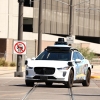
The Facebook post by the San Mateo County Police said: “Parents do you know where your teens are? @waymo does!”
The 15-year-olds were allegedly drinking alcohol and shooting toy guns from the car, according to the police. They said Waymo’s systems detected behavior that then triggered a safety response, after which the company disabled the vehicle and contacted police.
Waymo’s cars, equipped with an array of cameras, microphones and other sensors to monitor passengers and other nearby vehicles, are becoming more common in cities across the United States. Experts say the detention of the two teens in San Mateo highlights a potential — but not inevitable — trade-off between privacy and convenience. It also questions the extent to which companies similar to Waymo are required to hand over private data, including audio and video of passengers, in situations where a crime is suspected.
NPR reached out to Waymo, which is owned by Alphabet, the parent company of Google, for comment on the details of the San Mateo incident and how the company responded, but did not hear back. But on its website, the company says that as many as 29 cameras in its autonomous cars provide an all-around view and “are designed with high dynamic range and thermal stability, to see in both daylight and low-light conditions, and tackle more complex environments.”
“There already exist laws that govern duty to report or even duty to protect” for carriers such as Waymo, according to Alessandro Acquisti, a professor of information technology at the MIT Sloan School of Management. “The privacy problems arise when and if driverless carrier companies used such laws or ethical obligations as a pretext for blanket, indiscriminate accumulation of identifiable data for unspecified future purposes.”
That includes not just monitoring people inside the cars, but outside too. Take, for example, a hit-and-run investigation last year in Los Angeles. Media reported that the police inquiry was aided by video captured by a Waymo taxi that had a clear view of the crime. Critics suggested at the time that authorities were using the company’s vehicles as a mobile surveillance platform. And during 2025 protests in Los Angeles against Immigration and Customs Enforcement crackdowns, demonstrators vandalized Waymos, apparently angry that video recorded by the vehicles could be used by police, although there is no evidence that happened.
In a transparency report, Google says it received nearly 290,000 requests from governments worldwide in the first six months of 2025 for disclosure of user information across all its platforms, including Waymo. The company says that in more than 80% of the requests in those six months, some information was disclosed. “Google carefully reviews each request to make sure it satisfies applicable laws. If a request asks for too much information, we try to narrow it, and in some cases we object to producing any information at all,” the company says.
In an email to NPR, San Mateo Police Department spokesperson Jeanine Luna said that detaining the teens in the Waymo on Monday was “wholly appropriate” under the circumstances. “We received the call of a ‘firearm’ being shot from a moving vehicle,” she said. “Furthermore, the occupants were described as being possibly ‘intoxicated.’” she said.
“Being that the vehicle was disabled (the occupants had every right to exit the vehicle before police arrival, but they did not), a high-risk traffic stop was conducted to ensure the safety of all involved,” Luna added. “They were not arrested and were released to their parents, however, potential charges are still pending dependent on what the video from inside the vehicle shows.”
Autonomous taxis represent an ethical gray area
Robotaxis began to roll out across the U.S. in December 2018, when Waymo launched in Phoenix. These services have been used for less than a decade — so the norms surrounding them aren’t settled, experts agree.
The Facebook post may make Waymo passengers wonder what triggers a police intervention, says Irina Raicu, director of the Internet Ethics program at Santa Clara University. She has used Waymo’s driverless taxis and says ethically, the privacy issues surrounding them sit in a gray area. “There’s something about being in a car without another person that makes you think it’s private.”
“With all these recording devices, we don’t see them, [and] they’re not these obvious things being stuck in our faces,” Raicu adds.
That brings up a key issue: informed consent, Acquisti says.
“It is not clear the extent to which passengers … are reminded that when they step into the car, that they are being monitored, and most likely they are not told in its entirety how the data will be used,” he says.
Bruce Schneier, a cybersecurity and privacy expert and professor at the Munk School at the University of Toronto, believes that Waymo does have a compelling interest in protecting its vehicles. He compares monitoring a robotaxi via cameras to a human taxi driver keeping an eye on passengers in the rearview mirror.
“Maybe the driverless car comes back … and it has all of its cushions slashed, and it’s like, ‘Who the hell did that? Let’s go and look at the tape,’” Schneier suggests. “You can’t have sex in the back of a taxi, right? Someone would say, ‘Stop it.’”
He concludes that some supervision makes sense. In an Uber rideshare, he notes, “most of the time there’s a camera recording the back seat.” (Uber says on its website that it allows drivers to install such cameras for the purpose of “fulfilling transportation services.”)
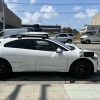
Waymo robotaxis, while a fairly common sight in the San Francisco Bay Area, are still a novelty in much of the country. And many people are hesitant to ride in one, according to a Pew Research Center poll published this month. The survey found that only 5% of Americans had ever ridden in a driverless car. Meanwhile, 71% of those polled said they would feel uncomfortable in one, with only 7% saying they would be “extremely or very comfortable” riding in one.
For that reason, experts who spoke with NPR said they were optimistic that it’s not too late to shift gears on privacy norms and policies surrounding these vehicles.
Acquisti doesn’t see why privacy measures can’t be built into driverless vehicles.
“I would immediately challenge the notion that people have to be monitored,” he says, noting that privacy-preserving technologies exist and can be installed.
“Driverless cars are coming, but they don’t have to come in this particular incarnation,” Raicu says. “They’re still being designed and redesigned. It’s early days.”

Donald Trump has terminated the remaining members of the independent, federal commission that assists election administration officials nationwide just a few months before the midterm elections, multiple outlets reported Thursday.
The remaining three commissioners of the four-member bipartisan commission were forced out on Thursday in different ways. The one Republican appointee resigned and the other two, Democratic appointees were notified of their terminations via email from the White House presidential personnel office.
“On behalf of President Donald J Trump, I am writing to inform you that your position as Commissioner of the Election Assistance Commission is terminated, effective immediately. Thank you for your service,” the email, seen by Reuters, said.
The White House did not immediately respond to a request for comment.
The Election Assistance Commission serves as a “national clearinghouse of information on election administration”, accredits testing laboratories and certifies voting systems, and maintains the national mail-voter registration form developed by the National Voter Registration Act of 1993, according to the commission’s website. The terminations follow Trump and top administration officials’ advocacy to change vote-by-mail requirements and investigations into the 2020 election outcome, which Trump lost to Democrat Joe Biden.
“It is irresponsible and dangerous that this Administration remains dead set on causing chaos for our election officials across this country,” Arizona secretary of state Adrian Fontes said in a Thursday statement. “This move undermines the integrity of nonpartisan election administration.”
The 2002 law that established the commission, the Help America Vote Act, states the president can appoint replacements to the commission.
It is unclear how Trump will move ahead with the commission.
Reuters contributed reporting

Former U.S. Olympian David Hearn (left) walks with his attorney Norman Eisen to speak to reporters and protesters gathered after his arraignment at the Superior Court of the District of Columbia in Washington, D.C. on Thursday.
Finn Gomez/Getty Images
hide caption
toggle caption
Finn Gomez/Getty Images
Former U.S. Olympic canoeist David Hearn pleaded not guilty to damaging the Lincoln Memorial Reflecting Pool in D.C. Superior Court Thursday morning.
Federal prosecutors charged Hearn with a single count of destruction of property causing more than $1,000 in damage to the pool.

Hearn has previously claimed, which his attorneys repeated during a short press conference outside the court, that he simply touched the water in the pool out of curiosity.
The Trump administration had just completed a $14 million renovation of the pool.
But shortly after the work finished, peeling paint and algae gathered in the water. The remodel has been largely criticized as a massive failure and waste of taxpayer dollars.

Superior Court Judge Carmen McLean released Hearn on his own recognizance. His next hearing is scheduled for Aug. 5.
Norm Eisen, one of Hearn’s attorneys, spoke to reporters outside of court following the hearing. He said the administration is using Hearn as a “scapegoat … for their own failures.”
“It is not a crime to touch the reflecting pool, to touch water in the United States of America,” he said.
Prosecutors say there is a host of evidence against Hearn.
This is a developing story.
-
 Sports2 minutes ago
Commentary: ‘I don’t want any handouts.’ Amid the Angels’ drought, a starry homecoming for Mike Trout
-

 World12 minutes ago
Does more World Cup history beckon for Norway? England stand in their way
-
News39 minutes ago
Waymo called the cops on teen riders, raising privacy concerns
-

 Los Angeles, Ca2 hours ago
O.C. police prep for beach, theme park ‘takeovers’ promoted on social media
-

 Detroit, MI2 hours ago
Detroit city leaders to DHS: Stop ICE pursuits which endanger the community
-

 San Francisco, CA3 hours ago
SF Supervisor Jackie Fielder hosts listening session after medical leave
-

 Dallas, TX3 hours ago
The Stewpot artists find healing, purpose and income through art in Dallas
-

 Miami, FL3 hours ago
Can Jason Marshall push for a starting spot – The Splash Zone 7/10/26

