Ohio
Campaign to end qualified immunity in Ohio gets final OK to begin gathering signatures


COLUMBUS, Ohio – The state Ballot Board approved an effort Wednesday to end “qualified immunity” in Ohio, clearing the road for organizers to begin gathering the 413,000 signatures required to place their proposal on a statewide ballot.
For more than a year, Republican Ohio Attorney General Dave Yost unilaterally blocked the organizers, claiming that the summary of their proposed amendment and its title were misleading, prompting intervention from the Ohio Supreme Court and a federal appellate court ruling against Yost.
But with the Ballot Board’s unanimous vote Wednesday agreeing that the proposal spans only a single subject, as the state constitution requires, organizers can begin the heavy lift of gathering signatures, which must come from 44 of 88 counties. Should they succeed, voters could enshrine the new rules in the state constitution via a simple majority vote.
If enacted, the new amendment would lower the legal bar for people to successfully sue government employees for constitutional violations – often, but not exclusively, police officers, prison workers and other law enforcement officials.
Qualified immunity is a legal doctrine that provides legal protection to government employees by only allowing lawsuits against them if a plaintiff can prove they violated a “clearly established” right, according to the Legal Information Institute at Cornell University. Ohio also has a state law that provides state and local governments a broad immunity for acts or omissions that led to injury or death, unless plaintiffs can prove the acts or omissions were “with malicious purpose, in bad faith, or in a wanton or reckless manner.”
The law reflects thinking that public workers like police officers must make fast decisions amid personal danger and deserve some amount of latitude.
Under the proposed amendment, a government actor could be found liable in a lawsuit for violations of constitutional rights if it’s proven by a preponderance of the evidence that a right was violated. It’s an easier standard to meet and would likely result in more successful lawsuits alleging things like the excessive use of force by officers.
Mark Brown, a constitutional law professor at Capital University who represented the organizers in their various lawsuits to defeat the early stage political opposition, told the Ballot Board that the proposal is simple in its aims. While the law enables criminal accountability for government wrongdoing, he said it is astonishingly rare for government employees to be held accountable for their violations of constitutional rights. He estimated that one tenth of 1% of lawsuits alleging constitutional violations by government officials succeed.
While the suits often revolve around law enforcement, he said it can include teachers who escape liability for the sexual abuse of students, or other government officials never held accountable for First Amendment violations regarding free speech or religious expression.
“The overall objective behind this initiative is compensation, deterrence, and protection,” he said.
While the hearing was ostensibly limited to whether the proposal spans a single or multiple subjects, it quickly delved into a debate on the merits ending qualified immunity.
Ohio Secretary of State Frank LaRose, a Republican, suggested the amendment would trigger a flood of frivolous lawsuits and act as a “reverse tort reform” forcing cities to pay out huge judgements they can’t afford. Ohio Sen. Theresa Gavarone, a Bowling Green Republican who sits on the board, at one point suggested the amendment spans as many as nine different subjects, but ultimately voted that it indeed complies with the single subject rule.
Several members of the public testified in support of the proposal. One woman said her son was murdered by an officer in 2017, and the amendment would pave a legal road to hold that officer to financial account for his crime. Another man, who said he was one of the plaintiffs suing Ohio State University after its physician sexually abused hundreds of students and student athletes in the 1980s and 1990s, said he wants the amendment to trump current laws that might shield now-Congressman Jim Jordan, formerly an assistant wrestling coach, who they have said failed to act on knowledge of the physician’s abuse. Jordan has denied he knew about the abuse.
Jake Zuckerman covers state politics and policy for Cleveland.com and The Plain Dealer.


Bruce Thornton was already grateful the Houston Rockets traded up with the New York Knicks to take him, but the former Ohio State star also quickly realized there was another incentive to landing in Texas.
After being projected by many mock drafts in the late 40s or early 50s entering the week, the Buckeyes’ all-time leading scorer sounds more than ready for his opportunity in Houston. He met with the media following the selection.
Were you anxious going into the night not knowing where you would land?
Bruce: For me, I’m not picky at all. Whoever wanted me and gave me, a kid from Fairburn, Georgia, an opportunity, I would be very blessed and very grateful. I’m so thankful for the Houston Rockets just taking a chance on me. And I’m going to do everything I can in my power to be the best player I can be for the Houston Rockets.
Did you know that you weren’t going to the Knicks at all?
Bruce: I knew at the last minute. Somebody said I got the wrong hat. I’m like, “What do you mean?” Then I heard the Houston Rockets. I’m like, “No state tax, so that’s even better.”
How does being a four-time team captain prepare you for the expectations of leadership as an NBA point guard?
Bruce: First, I want to thank my Lord and Savior, Jesus Christ, because without him, I wouldn’t be here right now. But for my experiences at Ohio State, being a four-year guy, it definitely helped me. The experience of just going through college, going through life and the stuff that you just go through, it definitely helped me prepare to talk to grown men at this level. But I feel like the experience I have at Ohio State is going to prepare me to be the best player I can be as a Houston Rocket.
What was the biggest challenge you had to overcome in order to get to this point in your life right now?
Bruce: I feel like for me, from a basketball standpoint, I didn’t make it to March Madness my first three years of college. A lot of people chose to leave and make better situations to get to March Madness, but I just wanted to do it at Ohio State. So I did everything I could. My coaching staff helped me. I did a lot of praying, using my faith to the best of my ability, and I got through it my senior year. One of the best feelings, I ever decided to stay at Ohio State for all four years.
Throughout your basketball journey, is there someone that you’ve considered a mentor or looked up to that shaped the player you are today?
Bruce: First, my mother. She sacrificed so much. She also played at the University of Georgia, so she taught me a lot of things like handling the cookie jar, make sure you hold your follow through, boxing out, stuff I didn’t want to hear at all. But she definitely helped me.
And my friends from back home. It was all of our dream to be in the NBA. And for them to have my support, and having a great support cast throughout this journey was a big thing. The village I had behind me throughout this journey really helped me get to the point I am right now.
When Rockets fans start watching you professionally, is there a part of your game that you think will surprise them the most?
Bruce: I think I’m a winner. I want to win everything I possibly can. I’m trying to impact winning. For me, I feel like everybody eats when everybody wins. So I do everything I can. Whatever they ask me to do, I’m going to make sure I do it at a high level and with a great attitude.
When people look back at your career 10 or 15 years from now, what do you hope they remember most about you?
Bruce: I just hope I’m just a kid that gave everything I got each and every night. When I put that jersey on, I’m just going to perform at the best I can each and every night. I’m never going to quit. I’m never going to stop giving up. So I hope everybody can take that one thing from me, that when you have the opportunity, take full advantage of it.
What do you think you will bring to the Houston Rockets in terms of your attitude, work ethic and willingness to get one percent better each and every day?
Bruce: I think it starts on defense. Me just getting to the ball, being disruptive and making big-time shots. We got great players like Sengun and KD at a very high level. So me just filling in my role at a high level, doing the things they need me to do and just impacting winning as much as I possibly can, and being a great teammate in the locker room.
What is the biggest adjustment you expect to have to make in the NBA?
Bruce: The biggest adjustment is probably playing over 100 games in a year. There’s a deep playoff team this year. So [it’s up to] me just adjusting my body, having the time management skills to play over 100 games and try to win a championship.
Follow


UC Bearcats coach Jordan Bischel, Nathan Taylor, Derrick Pitts/NCAA
UC Bearcats coach Jordan Bischel, Nathan Taylor, Derrick Pitts/NCAA baseball tournament in Starkville
Another non-conference weekend has been announced for the University of Cincinnati baseball team, as it will participate in the 2027 Nashville College Baseball Series at First Horizon Park March 5-7, 2027.
The rest of the field includes Ohio State, Vanderbilt and Virginia Tech.
The UC Bearcats and Ohio State Buckeyes have met 99 times previously, with the last meeting coming in head coach Jordan Bischel’s first season in 2024. The Bearcats and Commodores have met 13 times, with the last meeting taking place in 2004. Next year’s game will also mark the 53rd all-time meeting between Cincinnati and Virginia Tech. The two teams met annually from 1979 to 1991 as Metro Conference foes.
Earlier in the week, it was announced that UC would face Georgia Tech, Illinois, and Tennessee at the 2027 Live Like Lou Jax College Baseball Classic in Jacksonville, Florida.
More on College Baseball Series, First Horizon Park
.The College Baseball Series is a premier collection of early-season Division I college baseball tournaments.
First Horizon Park opened in 2015 and is the home to the Nashville Sounds, the Triple-A affiliate of the Milwaukee Brewers. The stadium is located in the Germantown neighborhood just north of downtown Nashville. Elements that make First Horizon Park one of the best venues in Minor League Baseball include a spacious 360-degree walkable concourse for an enhanced viewing experience; unique group outing spaces; an expansive suite level; LED ribbon boards; a nine-hole miniature golf course; and of course, the iconic guitar scoreboard.
UC Bearcats outfielder Derrick Pitts Invited to USA Baseball Collegiate National Team Training Camp
UC outfielder Derrick Pitts has been invited to the USA Baseball Collegiate National Team Training Camp. Pitts is one of just four Big 12 players to receive an invite and one of 53 players total invited to camp.
Should Pitts make the team, he would be the first Cincinnati player ever to represent the program on the squad.
The St. Louis native appeared in 58 games in 2026 and hit .329 with six home runs, 42 RBI, 12 doubles, and 49 runs scored while swiping 17 bases.
Pitts appeared on ESPN’s SportsCenter Top 10 Plays twice this season and his infectious energy captured the attention of ESPN’s broadcast crew during UC’s NCAA Tournament games in Starkville.
Shortly after the end of the season, Pitts announced his intentions to return to UC for his junior season in 2027, along with All-Americans Quinton Coats and Enzo Infelise.
USA Baseball Collegiate National Team schedule
The summer schedule will kick off with three days of exhibition doubleheaders for a combined six games between June 27-29 in Burlington and Cary, North Carolina, and Danville, Virginia. Following the three days of exhibition games, the annual Stars vs. Stripes series will begin June 30 at Segra Stadium in Fayetteville, North Carolina. The next three games will be held at the National Training Complex in Cary from July 1-3, and the series will return to Segra Stadium July 4 for the finale.
The Collegiate National Team, which will be named on July 5 following the conclusion of Training Camp, will then compete in the inaugural World Collegiate Baseball Championship at Taichung City Intercontinental Baseball Stadium in Taichung City, Taiwan, from July 11-15.
Rack up more honors for UC Bearcats Quinton Coats, Enzo Infelise
The postseason accolades keep coming for UC as Quinton Coats and Enzo Infelise both earned more All-America accolades on Thursday, June 25.
Coats was named a Third Team All-American by D1Baseball and Infelise was placed on Baseball America’s Freshman All-America squad.
It’s yet another All-America honor for Coats, who has now received the accolade from six outlets: ABCA/Rawlings, Baseball America, College Baseball Foundation, D1Baseball, NCBWA, and Perfect Game.
In addition, Coats was also named the NCBWA District 5 Player of the Year and earned All-Region honors from ABCA/Rawlings as well. The Olathe, Kansas native turned in one of the best offensive seasons ever by a Bearcat, setting single-season school records in home runs (28) and total bases (183) while tying the single-season RBI record (79). Coats hit .339 and slugged .738 and ended his season ranking among the Top 10 nationally in home runs, total bases, and RBI.
For Infelise, it’s his third Freshman All-America honor after also earning recognition from the NCBWA and Perfect Game. He led the Bearcats with a .374 batting average, hitting 10 home runs while adding 48 RBI, 10 doubles, and 38 runs scored. Infelise collected 85 hits in his first college season, the most among all freshmen in the country as of the end of UC’s season. That figure also ranks tied for seventh in a season in school history and is the most hits by a Bearcat since Lance Durham’s record-setting 99-hit season in 2009.
Infelise was named the Big 12 Conference Freshman of the Year and earned first-team all-conference honors last month.

COLUMBUS, Ohio — It’s almost America’s 250th birthday, and many Ohioans may already be planning their celebrations.
Many of those celebrations may include the use of fireworks. Prevent Blindness Ohio is warning about the potential dangers associated with the colorful explosives in light of its sixth annual Fireworks Safety Week, which runs from June 28 through July 4.
In a press release, the organization cites the U.S. Consumer Product Safety Commission in noting that there were 15 fireworks-related deaths and 13,000 injuries reported in 2025.
Most of the injuries were to hands and fingers, followed by the head, face and ears, with burns being the most common of all the injuries.
“The American Academy of Ophthalmology states that in the most severe eye injury cases, firework accidents can rupture the globe of the eye, cause chemical and thermal burns, corneal abrasions and retinal detachment — all of which can cause permanent eye damage and vision loss,” the release reads. “Fireworks-related eye injuries can combine blunt force trauma, heat burns and chemical exposure.”
The organization said it supports a ban on fireworks for all except licensed operators during public displays.
“We are thrilled to celebrate our nation’s 250th anniversary. We urge all Americans to celebrate safely by avoiding consumer fireworks,” said Amy Pulles, president and CEO of Prevent Blindness Ohio. “Accidents happen even during firework displays conducted by licensed professionals, so please use caution when attending those as well.”
For those who decide to use fireworks during their celebrations this year, the National Safety Council has the following safety tips:
-
“Never allow young children to handle fireworks
-
Older children should use them only under close adult supervision
-
Never use fireworks while impaired by drugs or alcohol
-
Anyone using fireworks or standing nearby should wear protective eyewear
-
Never hold lighted fireworks in your hands
-
Never light them indoors
-
Only use them away from people, houses and flammable material
-
Never point or throw fireworks at another person
-
Only light one device at a time and maintain a safe distance after lighting
-
Never ignite devices in a container
-
Do not try to re-light or handle malfunctioning fireworks
-
Soak both spent and unused fireworks in water for a few hours before discarding
-
Keep a bucket of water nearby to fully extinguish fireworks that don’t go off or in case of fire
-
Never use illegal fireworks”
Unless prohibited by local laws, Ohioans can discharge legal fireworks from 4 to 11 p.m. on July 3, 4 and 5, as well as the weekends before and after.
For more information on firework rules in Ohio, click here.
Interested in finding a Fourth of July fireworks show near you? Check out our list here.
-

 Texas4 minutes ago
Texas state school board approves mandated reading list including Bible passages
-

 Utah11 minutes ago
Utah, Salt Lake County awarded grants for community cleanup
-

 Vermont14 minutes ago
West Rutland man dies in hit-and-run, police seek vehicle
-

 Virginia19 minutes ago
Vandals smash windows of nearly 3 dozen cars in Arlington Mill
-

 Washington26 minutes ago
The Washington Capitals Select Oliver Suvanto | Washington Capitals
-
 Wisconsin29 minutes ago
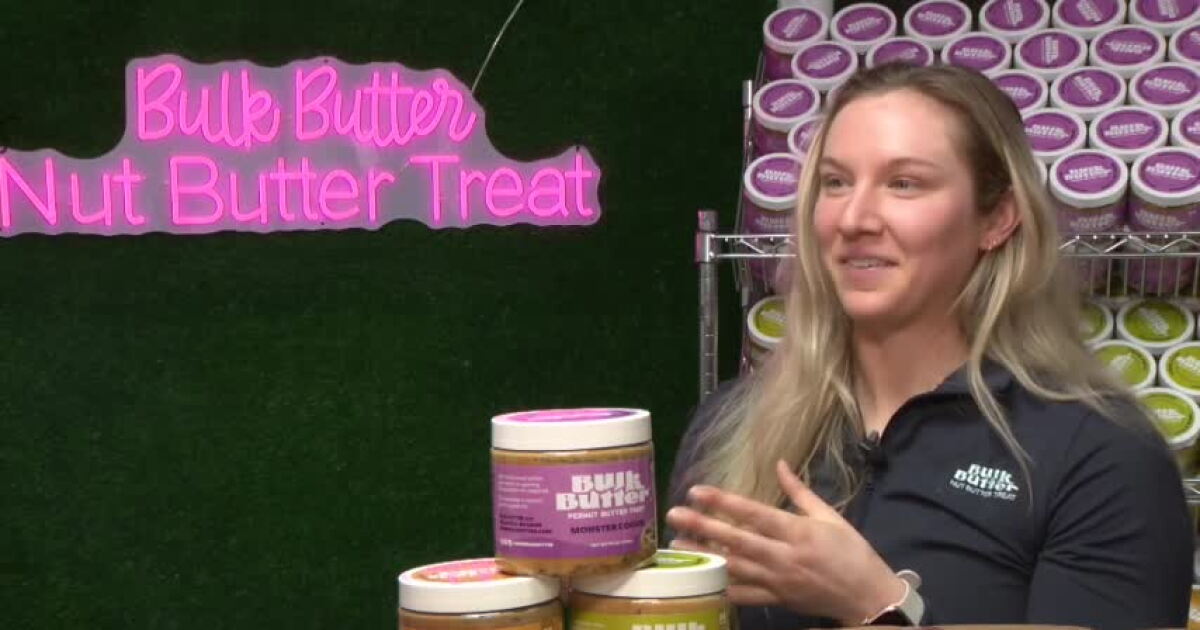
From bodybuilding to business: Wisconsin entrepreneur builds success with Bulk Butter
-

 West Virginia34 minutes ago
West Virginia First Foundation advances key initiatives at second quarterly board meeting
-

 Wyoming41 minutes ago
At 6,000-year-old crossing, Gov. Gordon OKs Wyoming’s first-ever designated pronghorn migration route – WyoFile

