San Diego, CA
San Diego County leaders call on EPA to fight South Bay sewage


CORONADO, Calif. (KGTV) — San Diego County Supervisor Terra Lawson-Remer is teaming up with several local officials in an attempt to get the Environmental Protection Agency to take action against the sewage crisis in the South Bay.
On Thursday morning in Coronado, Lawson-Remer is slated to speak alongside those officials and some South Bay residents, submitting a petition to the EPA to designate parts of the Tijuana River Valley as a “superfund site.”
A superfund site is part of a 1980 law that the EPA can use to free up federal funding to clean up hazardous waste sites around the country.
Those sites are meant to target toxic waste, not raw sewage — which normally falls under the Clean Water Act.
But Lawson-Remer wants the EPA to designate a six-mile stretch of the Lower Tijuana River Valley as a superfund site after decades of exposure to toxic chemicals, heavy metals, and pesticides.
In an agenda item from the County Board of Supervisors, Lawson-Remer said several other areas have been designated as superfund sites as a result of sewage in places like Washington and New York.
Local leaders say repairs to wastewater infrastructure on both sides of the border is happening too slowly to protect the South Bay.
ABC 10News has been talking to residents for years about the impact of sewage.
Morri Chowaiki owns a house in the South Bay, but said the fumes make his daughter sick.
“Crying and dry-heaving and actually ending up throwing up. And she’s like, ‘What is this? I can’t stay here,’” said Chowaiki. “My dream was to have a beach house for my kids to hang out in. They don’t want to be here; they literally don’t want to come. What’s the point?”
Lawson-Remer said more than 500 residents have signed the petition for a superfund site. If the proposal moves forward, the EPA will need to conduct an inspection of the area.
If the area is designated as a superfund site, the EPA will then be required to make a clean-up plan for the Tijuana River Valley and hold responsible parties accountable.
Similar cases have resulted in lawsuits and settlements against companies accused of polluting.

San Diego, CA
Elite California city set for mass illegal street vendor expansion as judge issues stunning verdict

San Diego seems to have no solution to its illegal street vendor problem and it’s only getting worse in many areas including the popular Balboa Park and Gaslamp Quarter.
Local business leaders are frustrated following the January 2026 California appeals court ruling, which forced the city officials to entirely halt the crackdown on street vendors.
“It’s a disaster,” Denny Knox, executive director of the Ocean Beach Main Street Association, told the San Diego Union Tribune last week.
An increasing number of street vendors are exploiting the court’s ruling and many don’t even bother to get a permit.
Executive Director of Gaslamp Quarter Association, Michael Trimble, said that street vendors block the sidewalks, making it difficult for the businesses in the area to function.
“The lack of action has also led to an escalation of activity, including new vendors setting up tents and selling goods without permits, health approvals or accountability,” said Trimble, the Union-Tribune reports.
Organized groups of hot dog vendors have returned to the Gaslamp Quarter—bringing associated hazards like open fires, blocked walkways, and the dumping of grease into storm drains.
“It’s so much of a slap in the face to merchants that have done things the legal way, the right way,” said Ruth-Ann Thorn, owner of Native Star boutique and Exclusive Collections Gallery in the Gaslamp Quarter, reports inewsource.
Officers can no longer impound vending carts and law enforcement in Ballpark District is restricted, SDPD’s Ashley Nicholes said in a statement, according to the Union-Tribune.
“Recent court rulings involving the city’s street vending ordinance have limited what police officers can do to enforce street vending laws,” Nicholes said.
San Diego’s tug-of-war with street vendors started in 2018 when the state law decriminalized aspects of street vending. The task to draft a vendor law fell into the laps of then-Mayor Kevin Faulconer in 2019, then passed on to Mayor Todd Gloria in 2021 and then Councilmember Jennifer Campbell.
The law, approved by the City Council in May 2022, banned vendors in Balboa Park, Little Italy, Ocean Beach and some beach areas during summer months. But, the merchants kept complaining about the lack of law enforcement and that led to the revision of the law in 2024.
The revised law made it easier for officials to impound vendors’ carts, limited free-speech protections, which didn’t include yoga classes on the beach and selling food.
After an immediate backlash, a federal appeals court ruling in June 2025 said the city’s ban on beach yoga classes is unconstitutional as they are protected under the First Amendment.
A California appeals court in the case of Imhotep Mustaqeem earlier this year ruled that San Diego’s revised 2024 street vendor law violated state law by establishing “overly restrictive” geographic no-vendor zones and restricted operating hours.
Imhotep Mustaqeem, a licensed vendor who had sold snacks outside Petco Park since 2009, sued the city after police impounded his cart under San Diego’s revised 2024 ordinance. While a lower court initially ruled against him, the Fourth District Court of Appeal ultimately vindicated Mustaqeem and quashed the 2024 street vendor law.

A California yoga instructor known as “Namasteve” is leveling up his warrior pose as he battles San Diego’s efforts to end his popular beachfront classes.
Steven Hubbard recently filed his third lawsuit over a 2024 city ordinance that prohibits teaching yoga to four or more people at local beaches and parks.
Hubbard, who’s been teaching yoga by the Pacific Ocean shoreline for 17 years, contends the local law violates his right to free speech because he doesn’t charge his students and instead accepts voluntary donations.
“It does set a dangerous precedent for government to be passing bans on specific types of speech that, for whatever reason, it doesn’t like,” Hubbard’s lawyer, Bryan Pease, told The Independent. “We don’t know why they decided yoga is something they want to target. They’ve never explained it, but it is concerning from a First Amendment perspective.”
Neither the San Diego mayor’s office nor the city attorney’s office replied to inquiries from The Independent.

The yoga ban is buried in a subsection of the San Diego Municipal Code that defines the “services” that are regulated at beaches and parks.
“Examples include massage, yoga, dog training, fitness classes, equipment rental, and staging for picnics, bonfires or other activities,” it says, marking the only time yoga is mentioned.
At the time the ordinance was introduced, Pease said, it was “put on the city council agenda as a sidewalk vending ordinance.”
“There was no public notice that they would be targeting the free and donation-based teaching of yoga in parks and beaches,” the lawyer said. “ I don’t even know that the city council members themselves knew what they were voting on.”
Videos posted on Hubbard’s “Namasteve Yoga” page on YouTube show scores of students following his instructions as they face the water in the Southern California sunshine.
San Diego park rangers issued Hubbard a total of 10 citations under the 2024 law, Pease said.
Some were for leading classes from his backyard while livestreaming on YouTube as students apparently watched on their devices by the beach, Pease said.
After Hubbard first challenged the 2024 ordinance in federal court, the judge overseeing the case denied a motion to block its enforcement, saying the First Amendment didn’t protect the teaching of yoga.
But that decision was reversed last year by the U.S. Court of Appeals for the Ninth Circuit, which ruled that Hubbard and fellow yoga teacher Amy Baack were “likely to succeed” in challenging the legality of San Diego’s public yoga ban.

“Teaching yoga is protected speech. The City’s prohibition on teaching yoga in shoreline parks is content-based and fails strict scrutiny,” according to the unanimous decision written by U.S. Circuit Judge Holly Thomas.
Hubbard has also filed two lawsuits in state court, with the most recent on June 22. It was first reported by the Times of San Diego.
It seeks unspecified damages for three tickets he received in May 2025, all of which charged him with giving a lecture without a permit.
The accusation came despite a ruling in the federal case that said requiring a permit to give a lecture “substantially overburdens” the right to free speech, according to Hubbard’s lawsuit.
All the citations issued against Hubbard were dismissed in April when the city attorney’s office didn’t appear in court to prosecute, Pease said.
Meanwhile, city lawyers have issued a series of subpoenas that seek “detailed GPS tracking information, all social media posts from all time and complete financial records for all financial transactions” involving Hubbard and Baack, Pease said.
Pease characterized the move as “pure harassment,” saying it seemed “calculated to have a chilling effect on people’s participation if they think their personal information is going to be obtained through these channels.”
“All that the city attorney has said to me about it is that it’s to prove that this is commercial activity, and they’re going to hire a financial expert to go through all these records,” he said.
A hearing on a motion to quash the subpoenas is scheduled for July 17 in state court, and pretrial discovery in the federal case is pending, with a deadline of August 28.
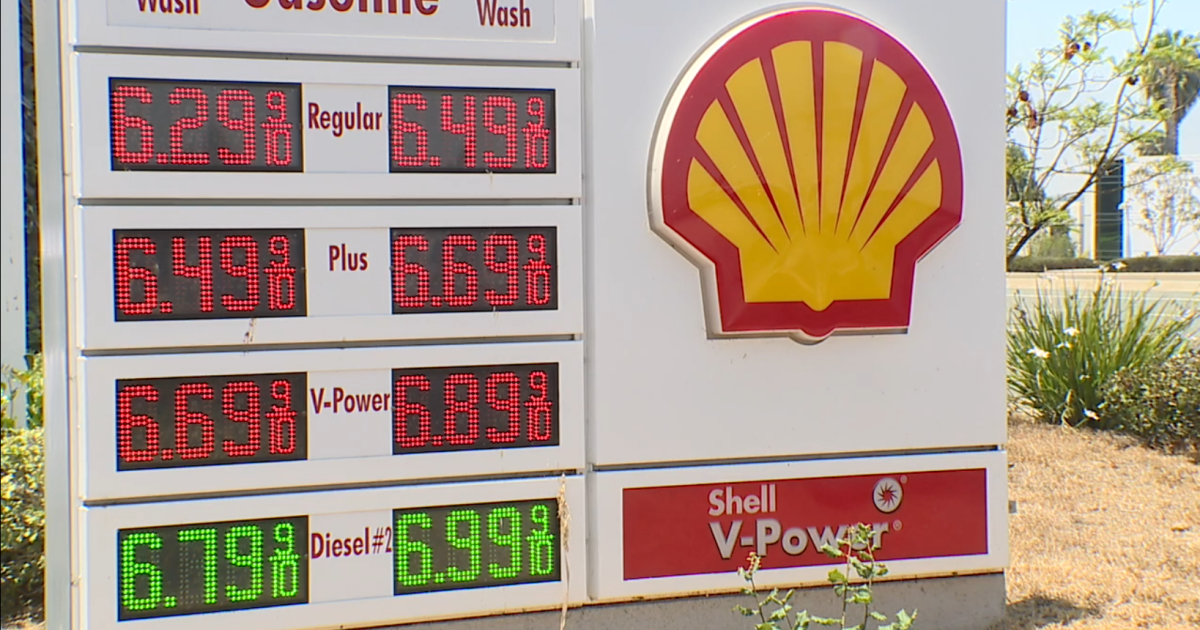
SAN DIEGO (CNS) — The average price of a gallon of self-serve regular gasoline in San Diego County dropped for the 44th time in 45 days today, falling eight-tenths of a cent to $5.42, its lowest amount since March 12. The average price has fallen 74.9 cents over the past 45 days, including eight-tenths of a cent Saturday, according to figures from the AAA and Oil Price Information Service. It is 9.8 cents less than one week ago and 53.2 cents less than one month ago, but 80 cents more than one year ago. The national average price dropped for the 43rd time in 45 days, falling six-tenths of a cent to $3.804, its lowest amount since March 17.
It has decreased 76 cents over the past 45 days, including 1.3 cents Saturday. The national average price is 6.3 cents less than one week ago and 41.6 cents less than one month ago, but 65.6 cents more than one year ago. “Crude oil prices have fallen to their lowest levels in months, dropping to the $60 a barrel range,” the AAA said Thursday. “Overall, gas prices remain the highest they’ve been in 4 years, but the downward trend since late May is welcome news during the busy summer driving season.”
Copyright 2026, City News Service, Inc.
-
 Business2 minutes ago
Orange County real estate investor pleads not guilty in $100 million bank fraud case
-
 Entertainment9 minutes ago
Tom Sandoval’s ex Victoria Robinson accuses him of abuse; her restraining order is denied
-
 Politics17 minutes ago
Trump heads to NATO as tensions simmer with Europe
-
 Science24 minutes ago
New FireSat satellites promise faster wildfire detection over California and beyond
-
 Sports27 minutes ago
U.S. hopes of a historic World Cup run on home soil shattered in loss to Belgium
-

 World39 minutes ago
Cuba sees nationwide power blackout for third time in six months
-
 News1 hour ago
The U.S. men’s run at the World Cup ends with a 4-1 Round of 16 loss to Belgium
-

 Los Angeles, Ca2 hours ago
L.A. man who violently crashed into Border Patrol agents sentenced to 5 years in prison

