CHARLESTON, W.Va. (WVDN) — U.S. Senator Shelley Moore Capito (R-W.Va.), a leader on the Senate Appropriations Committee, announced grants from various federal agencies and other organizations to deliver funds for projects she championed, including healthcare, education, research, environmental cleanup, infrastructure, economic development, and drug use prevention projects.
More information on each project can be found below:
HHS FUNDING: Senator Capito, Ranking Member of the Senate Appropriations Subcommittee on Labor, Health and Human Services, Education, and Related Agencies (Labor-HHS), announced grants from the U.S. Department of Health and Human Services (HHS) for a variety of health service projects in West Virginia.
$7,104,407 in HHS Maternal, Infant, and Early Childhood Home Visiting (MIECHV) funding to the West Virginia Department of Health and Human Resources (WV DHHR) (Charleston, W.Va.).
$2,500,000 in HHS funding to First Choice Services, Inc. (Charleston, W.Va.) to provide high quality insurance navigation services in West Virginia.
$2,398,129 in HHS Surveillance, Epidemiology, and Laboratory Science grant funding to the WV DHHR (Charleston, W.Va.).
$1,600,215 in HHS Preventive Health and Health Service Block grant funding to the WV DHHR (Charleston, W.Va.).
$1,575,743 in HHS Maternal and Child Health Services grant funding to the WV DHHR (Charleston, W.Va.).
$270,458 in HHS Rural Health Care Services Outreach program grant funding to West Virginia University (WVU) (Morgantown, W.Va.).
$228,000 in HHS research grant funding to WVU (Morgantown, W.Va.) to develop machine learning frameworks for public health intervention in rural America.
$199,122 in HHS Substance Abuse Prevention grant funding to Hampshire County (Romney, W.Va.).
$169,703 in HHS Health Resources and Services Administration (HRSA) grant funding to the WV DHHR (Charleston, W.Va.) for Pediatric Mental Care access.
DOL FUNDING: Senator Capito, through her role as Ranking Member of the Labor-HHS Appropriations Subcommittee, secured grants from the U.S. Department of Labor (DOL) for workplace safety and injury prevention.
$160,000 in DOL funding to Marshall University (Huntington, W.Va.) for education and training to help workers and employers recognize serious workplace hazards and employ injury prevention.
$149,933 in DOL funding to WVU (Morgantown, W.Va.) for education and training to help workers and employers recognize serious workplace hazards and employ injury prevention.
EPA FUNDING: Senator Capito, Ranking Member of the Senate Environment and Public Works (EPW) Committee, announced funding from the U.S. Environmental Protection Agency (EPA) and Fish and Wildlife Services (FWS) for a variety of programs in West Virginia, including funding made available through the Infrastructure Investment and Jobs Act (IIJA). Ranking Member Capito helped negotiate and craft portions of the landmark legislation.
$35,451,000 in EPA IIJA funding to the West Virginia Department of Environmental Protection (WV DEP) (Charleston, W.Va.) to support a fund that will distribute low-interest loans for water infrastructure projects.
$30,845,000 in EPA IIJA funding to the WV DEP (Charleston, W.Va.) to support a fund that will distribute low-interest loans for clean drinking water projects.
$12,726,000 in EPA funding to the WV DEP (Charleston, W.Va.) for capitalization grant funding for the state Clean Water State Revolving Fund (CWSRF) program.
$7,690,000 in EPA IIJA funding to the WV DEP (Charleston, W.Va.) for capitalization grant funding for the state Drinking Water State Revolving Fund (DWSRF) program.
$3,345,000 in EPA funding to the WV DEP (Charleston, W.Va.) for a capitalization grant for the CWSRF program with a primary purpose to address emerging contaminants. Emerging contaminants refer to substances and microorganisms, including manufactured or naturally occurring physical, chemical, biological, radiological, or nuclear materials, which are known or anticipated in the environment, that may pose newly identified or re-emerging risks to human health, aquatic life, or the environment.
$2,000,000 in EPA IIJA funding to the Raleigh County Recreation Authority (Beckley, W.Va.) for Brownfields cleanup projects.
$1,872,000 in EPA funding to the WV DEP (Charleston, W.Va.) for clean water projects.
$1,500,000 in EPA funding to the Bel-O-Mar Regional Council (Wheeling, W.Va.) to inventory, characterize, assess, and conduct cleanup planning and community involvement related activities at West Virginia Brownfields sites.
$500,000 in EPA IIJA funding to the New River Gorge Rural Development Authority (Beckley, W.Va.) to clean up a Brownfield site.
$500,000 in FWS funding to the Alliance for the Chesapeake Bay (Washington, D.C.) to improve forest habitats in the Chesapeake across West Virginia, Maryland, Pennsylvania, and Virginia.
$500,000 in FWS funding to Cacapon and Lost Rivers Land Trust (Capon Bridge, W.Va.) wildlife habitat conservation in the Cacapon and Lost RiversWatershed.
$741,514 in EPA funding to the WV DEP (Charleston, W.Va.) to support air pollution control efforts in West Virginia.
$439,000 in FWS funding to Trout Unlimited (Arlington, Va.) to protect native brook trout in West Virginia’s Eastern Panhandle.
$419,000 in FWS funding to the Interstate Commission on the Potomac River Basin (Rockville, Md.) to improve eel passage on the Potomac River in West Virginia and Maryland.
$269,500 in FWS funding to the West Virginia Land Trust (Charleston, W.Va.) to protect forests and working lands to restore James Spiny Mussel habitat.
$74,100 in FWS funding to Cacapon and Lost Rivers Land Trust (Capon Bridge, W.Va.) to protect biodiversity in West Virginia’s Cacapon Watershed.
DHS FUNDING: Senator Capito, a member of the Senate Homeland Security Appropriations Subcommittee, announced a variety of grants from the U.S. Department of Homeland Security (DHS), including the Federal Emergency Management Agency (FEMA).
$300,000 FEMA Emergency Preparedness Grant award to Camp Torah, Inc. (High View, W.Va.).
$150,000 FEMA Emergency Preparedness Grant award to the West Virginia Tree of Life Congregation (Morgantown, W.Va.).
$150,000 FEMA Emergency Preparedness Grant award to Emmanuel Baptist Church DBA: Emmanuel Christian School (Clarksburg, W.Va.).
$150,000 FEMA Emergency Preparedness Grant award to Enslow Park Presbyterian Church (Huntington, W.Va.).
$150,000 FEMA Emergency Preparedness Grant award to First Baptist Church of Saint Albans (St. Albans, W.Va.).
$150,000 FEMA Emergency Preparedness Grant award to Habitat for Humanity of the Mid-Ohio Valley (Vienna, W.Va.).
$150,000 FEMA Emergency Preparedness Grant award to the Herbert J. Thomas Hospital Memorial Association (South Charleston, W.Va.).
$150,000 FEMA Emergency Preparedness Grant award to Iskcon New Vrindaban, Inc. (Moundsville, W.Va.).
$149,250 FEMA Emergency Preparedness Grant award to Wheeling Country Day School (Wheeling, W.Va.).
$148,705 FEMA Emergency Preparedness Grant award to St. Michael Church and School (Wheeling, W.Va.).
$143,050 FEMA Emergency Preparedness Grant award to Shuck Memorial Baptist Church (Lewisburg, W.Va.).
$142,300 FEMA Emergency Preparedness Grant award to the Salvation Army Boys & Girls Club of Charleston (Charleston, W.Va.).
$141,050 FEMA Emergency Preparedness Grant award to St. Joseph the Worker Parish School (Weirton, W.Va.).
$116,000 FEMA Emergency Preparedness Grant award to Randolph Street Baptist Church (Charleston, W.Va.).
$101,074 FEMA Emergency Preparedness Grant award to Union Mission Ministries, Inc. (Charleston, W.Va.).
$58,000 FEMA Emergency Preparedness Grant award to Hope for Appalachia, LLC (Charleston, W.Va.).
$55,100 FEMA Emergency Preparedness Grant award to CenterPoint Bible Church (Falling Waters, W.Va.).
$35,803 FEMA Emergency Preparedness Grant award to Union Mission Ministries, Inc. (Charleston, W.Va.).
$24,249 FEMA Emergency Preparedness Grant award to the Diocese of Wheeling-Charleston (Wheeling, W.Va.).
$19,491 FEMA Emergency Preparedness Grant award to Union Mission Ministries, Inc. (Charleston, W.Va.).
$15,380 FEMA Emergency Preparedness Grant award to the African American Community Association of Jefferson County, W.Va.
NSF FUNDING: Senator Capito also secured grants from the National Science Foundation (NSF) for academic research projects at WVU, Concord University, and Marshall University.
$632,019 NSF award to WVU (Morgantown, W.Va.) for a project titled “CAREER: Advancing Fairness in Biometric Systems: Towards Security and Privacy Enhancement.”
$594,458 NSF award to WVU (Morgantown, W.Va.) for a project titled “NANOGrav Student Teams of Astrophysics Researchers Undergraduate Pathways (STARS-UP): Infrastructure for the Two to Four-Year College Transition.”
$400,000 NSF award to WVU (Morgantown, W.Va.) for a project titled “Course-Based Undergraduate Research: The Magnetic Analysis and Measurement Project.”
DOE FUNDING: Senator Capito announced grant funding from the U.S. Department of Energy (DOE) for a hydrogen project affecting West Virginia.
$909,269 in DOE funding for IN-2-Market Inc. (Follansbee, W.Va.) for a hydrogen project that will affect the community in and around Follansbee, W.Va.
DOT FUNDING: Senator Capito, a member of the Senate Commerce, Science, and Transportation Committee, also secured funding from the U.S. Department of Transportation (DOT) for a variety of projects.
$6,302,717 in DOT Federal Aviation Administration (FAA) funding to the City of Morgantown, W.Va. for a runway extension project at Morgantown Municipal Airport.
$6,529,858 in DOT funding to the U.S. Forest Service for road and bridge repair in northern West Virginia stemming from May 2023 storms.
$5,561,238 in DOT funding to the U.S. Forest Service for road and culvert repair in the South Fork of the Cranberry River Basin stemming from August 2022 storms.
$2,165,080 in DOT funding to the U.S. Forest Service for road and trail cleanup and repair in the Monongahela National Forest stemming from June 2019 storms.
$1,590,763 in DOT funding to the U.S. Forest Service for road and trail repair in the Monongahela National Forest stemming from May 2023 storms.
$250,032 in DOT funding to the U.S. Forest Service for road and trail repair in the Monongahela National Forest stemming from October 2017 storms.
$200,620 in DOT funding to the City of Fairmont, W.Va. for a project that will aim to reduce traffic congestion in the city.
EDA FUNDING: Senator Capito also secured funding from the U.S. Economic Development Administration (EDA) for several West Virginia projects.
$2,800,000 in EDA funding to the Greenbrier Airport Authority (Lewisburg, W.Va.) to construct a new hangar and increase airport service.
$1,033,698 in EDA funding to the Marshall University (South Charleston, W.Va.) to support expansion and redevelopment of the Marshall Advanced Manufacturing Center in South Charleston.
$799,926 in EDA funding to Eastern West Virginia Community and Technical College (Moorefield, W.Va.) to support development of a new Commercial Driver’s License (CDL) training program at Eastern West Virginia Community and Technical College.
$717,116 in EDA funding to WVU (Morgantown, W.Va.) to support expansion of the Vantage Ventures Accelerator program, providing technical assistance to small, technology-based businesses.
DOJ FUNDING: Senator Capito also announced three grants from the U.S. Department of Justice (DOJ) for victim of crime support programs.
$4,433,069 in DOJ funding to GO33 Justice and Community Services (Charleston, W.Va.) to assist and support victims of crime.
$1,308,132 in DOJ funding to GO33 Justice and Community Services (Charleston, W.Va.) for STOP (Services, Training, Officers, Prosecutors) Violence Against Women Formula grant funding.
$515,000 in DOJ funding to the Legislative Office of the State of West Virginia (Charleston, W.Va.) to assist and support victims of crime.
NPS FUNDING: Senator Capito also delivered grant funding from the U.S. National Parks Service (NPS) for two Land and Water Conservation (LWCF) projects.
$250,000 in NPS LWCF funding to the City of Morgantown, W.Va. for Morgantown’s Bike Skills Pump Track.
$113,515 in NPS LWCF funding to the Pleasants County Commission (St. Marys, W.Va.) to improve to renovate the Pleasants County Aquatic Center.
CHARLESTON, W.Va (WCHS) — As the conversation around two large transmission lines being built through parts West Virginia continues, the biggest question remaining is, will ratepayers be impacted?
The Valley North project is on the table and it would span from Putnam County to Frederick County, Maryland, totaling to 260 miles. Two new substations would also be built, one in Hardy County and the other in Frederick County Maryland.
According to the project website, these lines would strengthen the grid to deliver more reliable and affordable electricity to homes, hospitals, schools and businesses.
Energy Efficent West Virginia policy director, Emmett Pepper said, building these lines will not strengthen the power that we get at home.
Advertisement
“We have some of the least reliable electricity in the country here in West Virginia. That’s not because of the large transmission lines that we see their tower above us. It’s because of the local distribution lines, the ones that come close to our homes. While there can be some small amount of benefit potentially from the big transmission lines going in, it is the local lines that are the problem and that is not being addressed by this,” he said.
Lawmakers we spoke with earlier this month said between both transmission line projects, West Virginia could have to front the bill for anywhere between $440 million to $900 million.
“This is going to be more cost for rate payers and will not fix our problems here. There are other places in the region that have issues with transmission, but that’s not our issue,” Pepper said.
He said he’d like to see state leaders take action to ensure these costs don’t fall back on ratepayers.
“I think we need to have a rate payers’ bill of rights that would actually protect people and have a plan for how we’re going to deal with this so that it has less of an impact on rate payers,” he said.
Advertisement
Multiple open houses are scheduled for this project in West Virginia:
-Berkeley County, WV: July 7, 2026 | 4:00 – 7:30 p.m. Holiday Inn Martinsburg Foxcroft Ballroom
– Hampshire County, WV: July 8, 2026 | 4:00 – 7:30 p.m Bottling Works Event Center
– Tucker County, WV:July 8, 2026 | 4:00 – 7:30 p.m.Tucker County High School
– Hardy County, WV: July 9, 2026 | 4:00 – 7:30 p.m. Misty Mountain Event Barn
Advertisement
– Barbour County, WV: July 15, 2026 | 4:00 – 7:30 p.m. Philippi Middle School
– Lewis County, WV: July 16, 2026 | 4:00 – 7:30 p.m. Robert L. Bland Middle School
– Upshur County, WV: July 16, 2026 | 4:00 – 7:30 p.m. The Event Center at Brushy Fork
– Harrison County, WV: July 21, 2026 | 4:00 – 7:30 p.m. South Harrison High School
– Preston County, WV: July 21, 2026 | 4:00 – 7:30 p.m. Craig Civic Center
Advertisement
– Calhoun County, WV: July 22, 2026 | 4:00 – 7:30 p.m. Calhoun County Middle-High School
– Gilmer County, WV: July 22, 2026 | 4:00 – 7:30 p.m. Glenville State University Waco Center
– Braxton County, WV: July 23, 2026 | 4:00 – 7:30 p.m. Days Inn Flatwood Conference Center
– Grant County, WV: July 23, 2026 | 4:00 – 7:30 p.m. Landes Arts Center
– Kanawha County, WV: July 28, 2026 | 4:00 – 7:30 p.m. Sissonville Middle School
Advertisement
– Roane County, WV: July 28, 2026 | 4:00 – 7:30 p.m. Spencer Armory
– Jackson County, WV: July 29, 2026 | 4:00 – 7:30 p.m. Greene Center
– Putnam County, WV: July 29, 2026 | 4:00 – 7:30 p.m. Poca High School
The grim discovery was made on the morning of June 14 on Cabin Creek Road in Kanawha County. PHOTO: WCHS TV
CHARLESTON, W.Va. — A Putnam County man has been identified as the victim in a homicide from two weeks ago.
The Kanawha County Sheriff’s Office announced Tuesday afternoon that the victim was Joseph Lovett, 28, of Hurricane. Human remains were discovered near a burning vehicle in the 300 block of Cabin Creek Road on June 14. Those remains were sent to the Office of the Chief Medical Examiner to be identified.
Advertisement
Harold Patterson
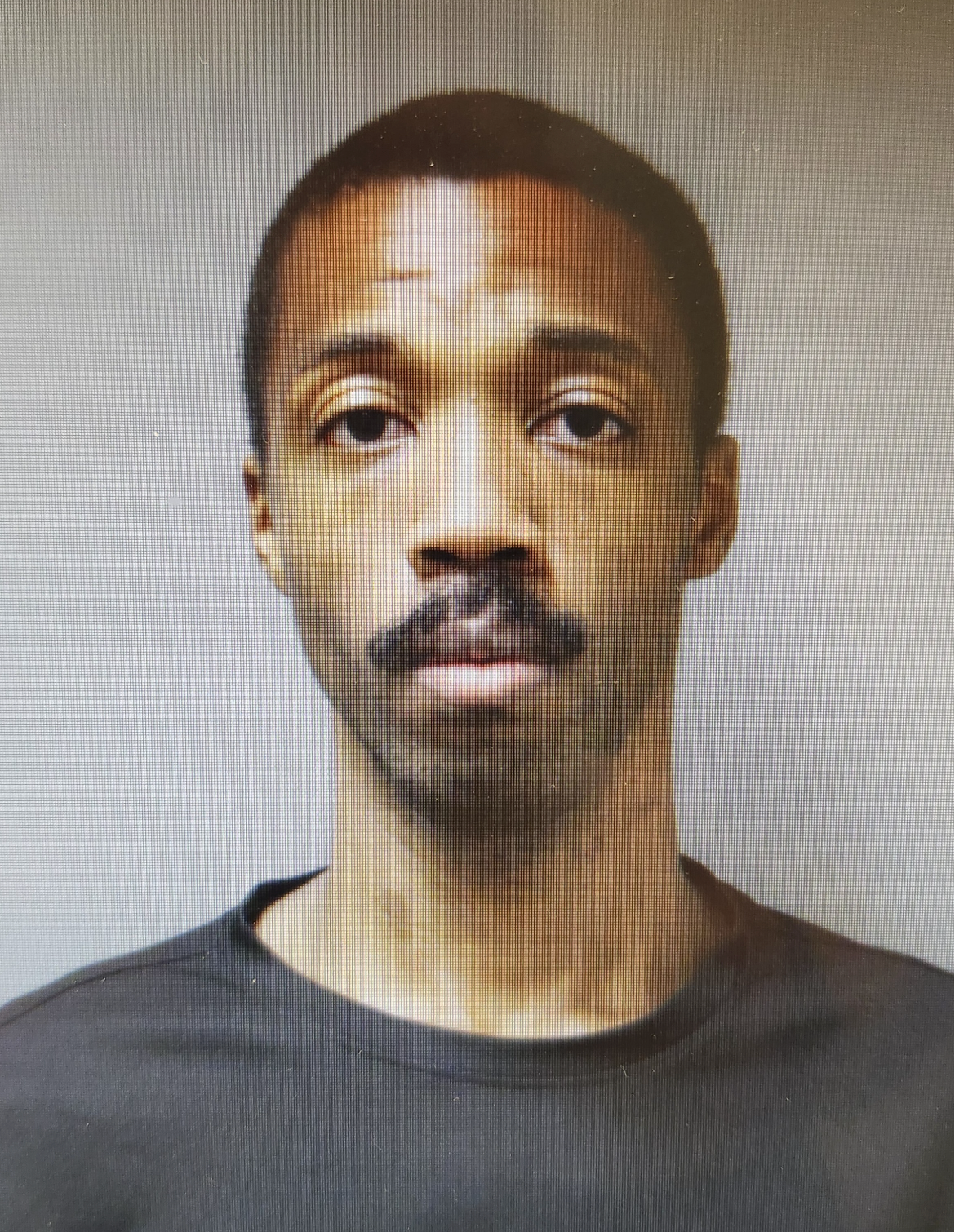
A man was already in custody in connection to Lovett’s death. A coordinated law enforcement effort from Kanawha and Putnam counties, in addition to North Carolina authorities, led to the arrest of Harold Patterson, 27, of Laurinburg, North Carolina, on June 16.
Patterson was charged with first-degree murder.
He’s being held in the Scotland County Detention Center in North Carolina, pending extradition back to West Virginia.
The Kanawha County Sheriff’s Office said the investigation is ongoing.
by Jasmine Milbourne, Mountain State Spotlight June 30, 2026
HUNDRED, W.Va, — Every day, Austin Hayes drives with his mom through the mountains of West Virginia’s northern corridor heading east to school. A once proud Hundred High School Hornet, Hayes is now an incoming junior at North Marion High School in Farmington.
After the consolidation of his high school in Wetzel County, Hayes decided to attend school in another county. His commute is about 20 minutes, but that’s only a fifth of the time some of his former classmates travel to their new school, Valley High.
“There’s a lot of kids that have to sit on the bus, that was the main complaint,” he said. “The bus times.”
Advertisement
In November 2024, the Wetzel County Board of Education voted to consolidate four of the county’s high schools into two. Students at Paden City High School would go to Magnolia High School and those at Hundred High School would go to Valley High School. By 2029, all students would go to one school.
Students in Wetzel County are hardly alone. Across West Virginia, public schools are rapidly closing. Political leaders are cutting taxes and funneling hundreds of millions of taxpayer money into a school voucher program, while wringing their hands about local school financial struggles.
Meanwhile students, parents and community members in Wetzel County want change. They’d like elected officials and bureaucrats to listen more to the people, fix the school funding formula and try to protect other communities from losing their schools.
Before the Wetzel County school board voted to consolidate, board members held public meetings at multiple schools in the county to hear the community’s concerns.
Hayes, then a student at Hundred High School, joined the teachers, staff and other community members who came out. He participated in football, basketball and track.
Advertisement
Austin Hayes, began attending school in Marion county after his previous school, Hundred High, in Wetzel County, consolidated with Valley High at the end of the 2024 – 2025 school year. Courtesy Photo
“A lot of Hundred students that go to Valley now, sit on the bus for at least an hour every day, just going one way, and it’s just unfeasible for a lot of Hundred students to have the same opportunities for after-school sports and stuff,” he said.
A mother of three, Abby Tennant’s youngest child attended Paden City High School before it shut down. “I loved Paden City,” Tennant said. “Everybody knew my daughter, they knew what was going on with her. She needed help. It was freely given.”
Tennant went to multiple board meetings, asking questions and raising concerns about what this would mean for the students. After the consolidation decision, she opted to put her daughter in school in another county.
Wetzel County school board member Jimmy Glasscock was the only member to vote against both consolidations. He said he was disappointed that the board didn’t listen to the voters in the county.
“We’ve lost our students, we’ve lost our communities, we’ve lost our teachers, we’ve lost our service personnel, we just continue losing, and we will continue losing,” he said.
Advertisement
Following the county school board’s vote to consolidate, the West Virginia Board of Education met and voted to approve the consolidation.
“I went to the state board meeting and spoke out against it as well, and honestly, that disappointed me just as much,” Hayes said. He said that neither the county nor the state school boards had adequately addressed concerns the community shared.
Since attending North Marion, Hayes doesn’t participate in as many extracurriculars or sports.
In this year’s legislative session, Sen. Jay Taylor, R-Taylor, sponsored a bill that would have required a county vote before closing schools. Although Taylor is a member of the Senate Education Committee, he said he doesn’t know why the bill didn’t come up for a vote.
“I wanted to protect rural schools,” Taylor said. He believes more money should be going to the students and that part of that change is fixing the funding formula.
Advertisement
School funding formula ‘outdated and convoluted’
Schools around West Virginia are hemorrhaging enrollment. State school board President Paul Hardesty warned in January that financial hardship and closures they were seeing in Hancock County were only the beginning. This month, he said up to 20 schools could close in the coming year.
Since 2019, 70 public schools have closed and over 30,000 students have left the West Virginia public school system. In the last year, Wetzel County Public Schools have lost over 150 students, dipping below 2,000 students in the county.
At the beginning of this year’s legislative session, House legislators heard from consultants they had hired to study the state’s public education system. The consultants told them they needed to rework the state’s school funding formula and cap the Hope Scholarship. Lawmakers made no changes to either.
Wetzel County is the biggest producer of oil and gas in the state, but the drilling boom hasn’t brought the prosperity that advocates predicted, as the school funding formula bases pay for teachers on enrollment. And the county’s enrollment doesn’t support the number of teachers on the payroll.
Del. Bill Bell, a fifth-grade teacher in Wetzel County, said, “The formula itself is outdated and convoluted.”
Advertisement
Bell campaigned during the Republican primary on strengthening public schools and ensuring that teachers and service personnel were compensated competitively. He lost.
Sen. Charles Clements, R-Wetzel, served as the vice chair of the Senate Education Committee. He sponsored a bill this year that would have updated the school aid formula mandating funding for 1,200 students per county even if enrollment falls below that. The education committee never put the bill on the agenda.
“We have a constitutional obligation to provide an education to the students in West Virginia,” Clements said. He is not running for reelection.
Clements’ bill was among several proposed changes to the formula. Other proposals included one by Del. Joe Ellington, R-Mercer, that would have created a block grant for all counties and a supplemental account for special needs students. Ellington introduced the legislation in February, and the clock ran out on the session while lawmakers were still talking about it. He did not respond to repeated requests for comment.
Beyond the classroom
Jessup Higgins, a 2026 graduate of Magnolia High School, is hoping to go to community college for electrical work. He was originally a student at Paden City before it closed.
Advertisement
“It was definitely a nerve-wracking transfer to Magnolia, because I didn’t know anybody there, and I had no idea what it was going to be like, because it’s probably three times the [size] school that I went to,” Higgins said.
He attended the Wetzel County Technical Education Center during his high school career. He said that aside from his family, he doesn’t plan to stay in Wetzel to explore other opportunities.
“[I’d] like to leave my hometown and go, you know, see what the world has to offer,” Higgins said. “And also, there isn’t a whole lot of money around here.”
Lisa Stillion, a retired nurse who taught in both Wetzel and Ohio counties believes the state needs to invest in broadband, infrastructure and technical education programs to keep its students.
“Our state just keeps losing people, and there’s nothing you can do to replace them, because the industry is just not here,” she said.
Advertisement
The Paden City High School building now houses a few small businesses.
In November 2025, the Wetzel County school board purchased land in Porters Falls to build a new campus that will include a new career and technical center. Part of pulling their resources together is making sure they have qualified teachers including those for technical education.
“I think these kids need to be better prepared for what’s going to be their career and their way of supporting themselves as they graduate,” Stillion said. “Not every kid’s going to college, and that mindset needs to be looked at.”
Born and raised in Paden City, Rodney McWilliams is a 1984 graduate of Paden City High School. He is a distinguished alumni award winner. McWilliams believes part of keeping people in the communities is making sure their schools stay open and investing in their students.
He said there aren’t many business or work opportunities in Paden City that would make people stay in the community otherwise. McWilliams is the president of the Paden City Foundation, a philanthropic organization that gives scholarships to Paden City High School alumni and supports various civic projects around the city.
He opposed the decision to consolidate the schools because he said the school was the main hub of the town.
“My interest is basically sentimental for myself and for people that hold the school near and dear, historical reasons,” he said. “And, also, to keep the town on the map.”
Advertisement
This <a target=”_blank” href=”https://mountainstatespotlight.org/2026/06/30/school-closures-impact-communities/”>article</a> first appeared on <a target=”_blank” href=”https://mountainstatespotlight.org”>Mountain State Spotlight</a> and is republished here under a <a target=”_blank” href=”https://creativecommons.org/licenses/by-nd/4.0/”>Creative Commons Attribution-NoDerivatives 4.0 International License</a>.<img src=”https://i0.wp.com/mountainstatespotlight.org/wp-content/uploads/2020/09/cropped-MountainStateSpotlight-Icon.png?resize=150%2C150&ssl=1″ style=”width:1em;height:1em;margin-left:10px;”>